




White Label Chatbot Comparison: Best Alternatives (2026)
Updated at Oct 27, 2026
15 min to read
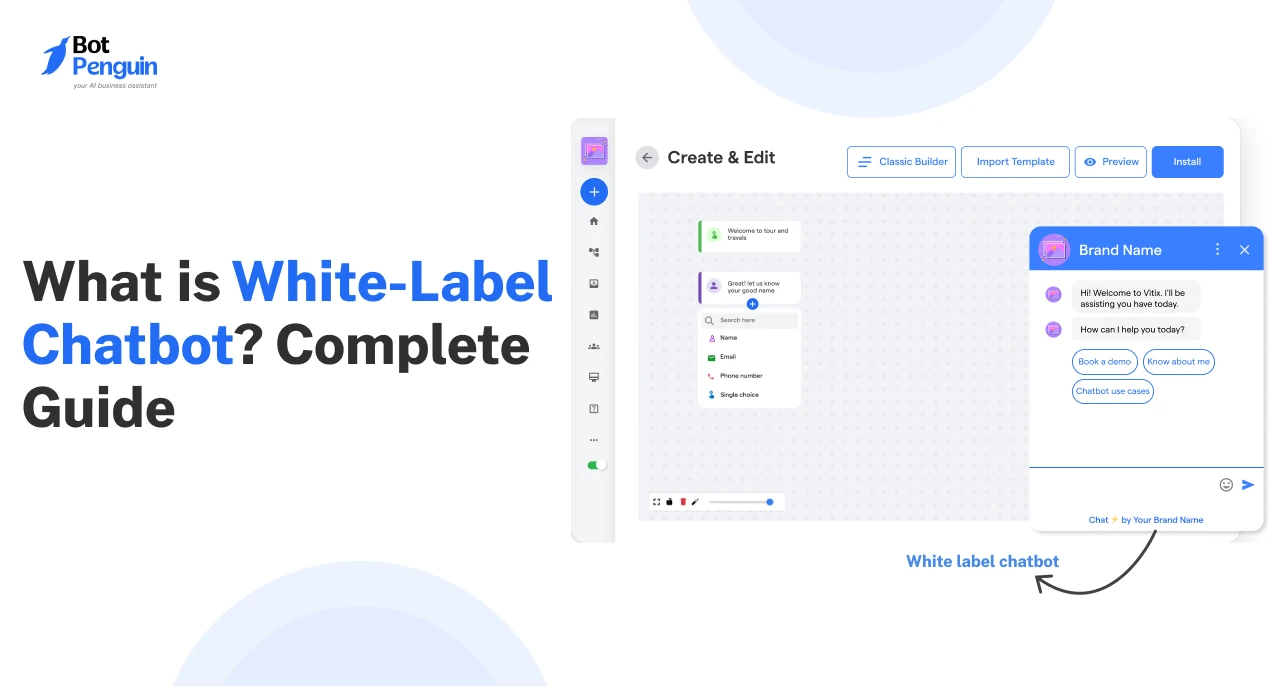
Agencies, SaaS companies, and IT consultants now get regular client requests for AI chat. Most of these businesses don’t build software, and their clients rarely have a technical team.
Building a chatbot in-house means hiring developers, managing hosting, and maintaining the product for years. Without another option, these requests often go unanswered.
The white label chatbot model removes that build step while the business keeps the client relationship. This guide explains how it works, the technology behind it, who uses it, and how setup works.
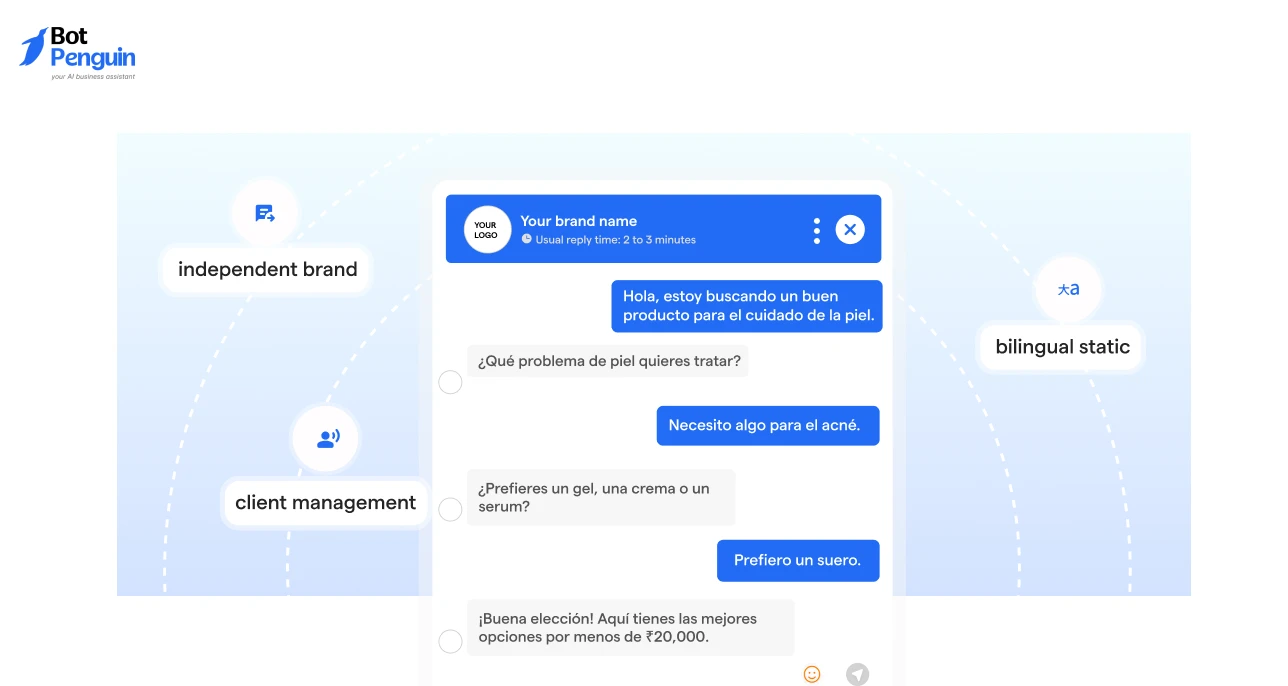
A white label chatbot is an AI chatbot built by a SaaS provider. A business licenses it, rebrands it, and offers it under its own name.
The business applies its own domain, logo, and color scheme. The underlying vendor stays invisible to end clients. The term “white label” comes from a blank label that any brand can place its name on.
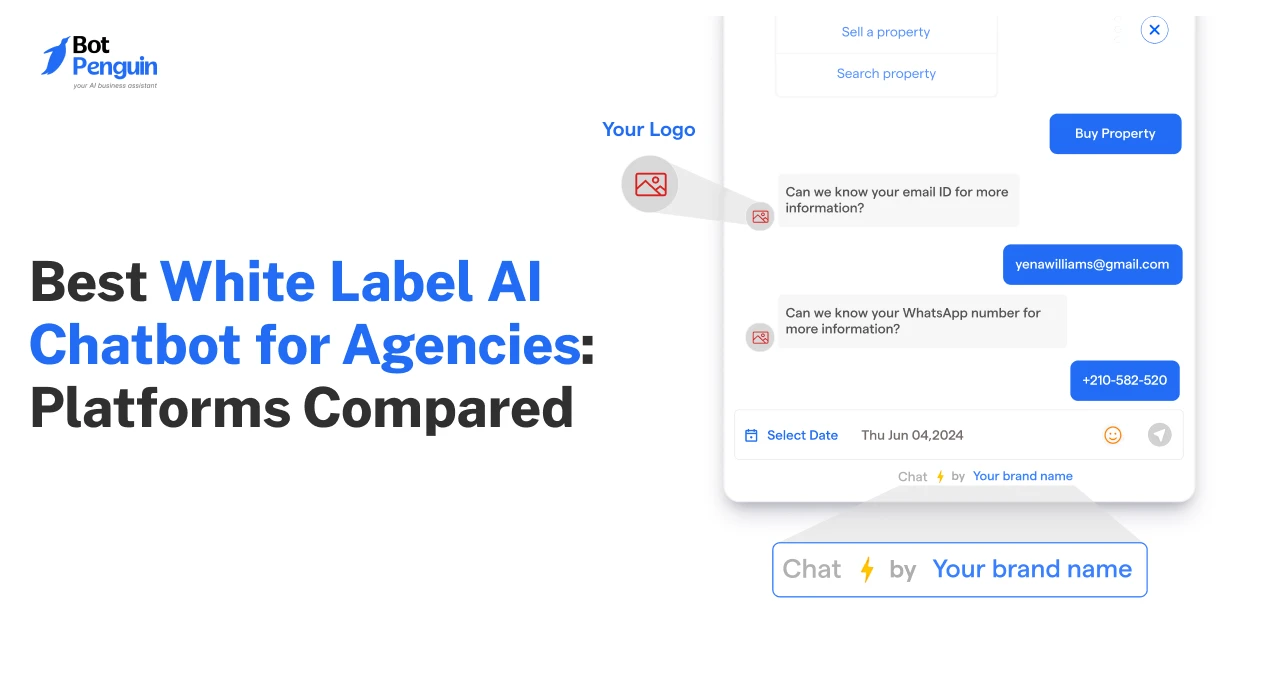
A true white label setup gives the business full control over the client-facing experience, including
These four elements separate white labeling from simple reselling or basic rebranding. To the client, the platform belongs to the business they work with, even though someone else built it.
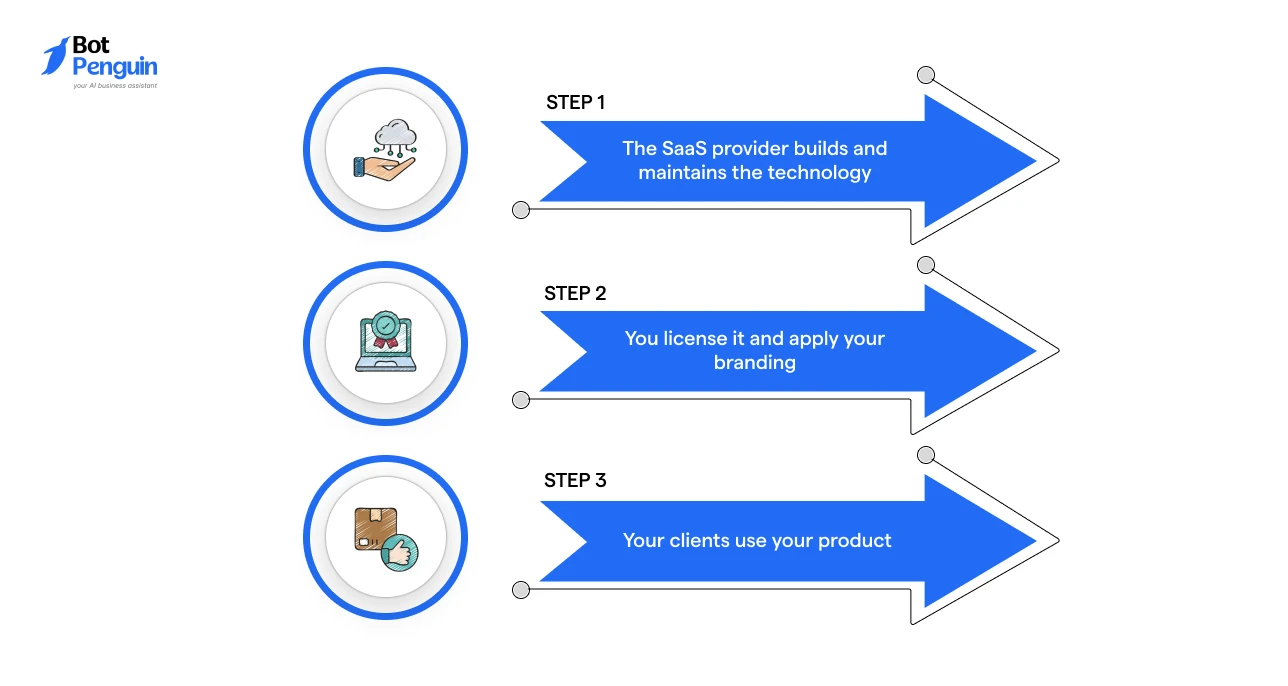
The model works in three stages.
The provider handles AI models, hosting, updates, bug fixes, and uptime. The licensing business does not manage the infrastructure.
The business connects its custom domain and adds its logo, color scheme, and client portal. Every touchpoint the client sees carries the business’s identity, not the vendor’s.
Clients log in, manage their chatbot, and interact entirely within the branded environment. The SaaS platform running underneath stays invisible.
The result is a working AI chatbot product under the business’s name, powered by the provider’s technology.
This type of chatbot runs on the same core technology as any modern AI chatbot. An extra layer handles branding and separate client accounts.
Multi-tenant architecture and the branding layer make white labeling possible. Without them, a business could use the chatbot but not present it as its own.
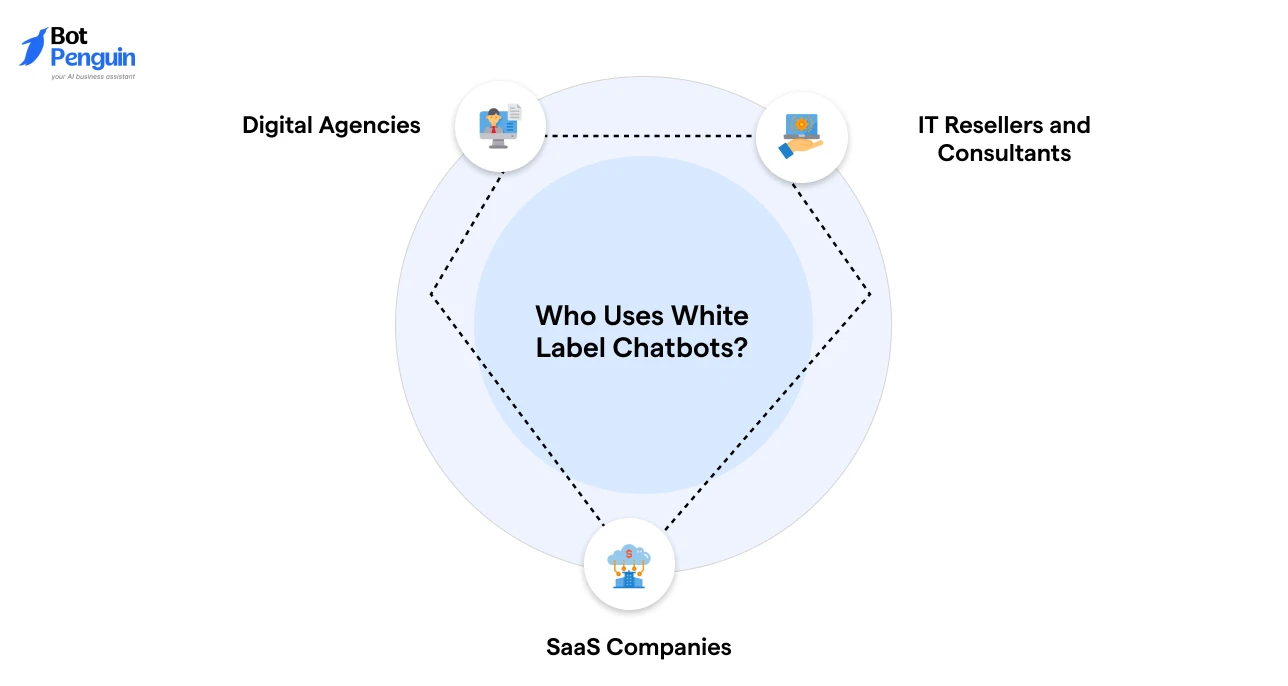
The model is used by several business types, most commonly digital agencies, SaaS companies, and IT consultants. Here's how each one typically uses it.
A 10-person marketing agency wants to add chatbot services to its client packages without hiring developers. It licenses a white label platform and applies its own branding.
The agency manages all client accounts from a single reseller dashboard. Each client sees the agency’s logo, domain, and portal. The underlying SaaS vendor is never visible.
The agency usually bundles the chatbot, setup, and ongoing management into one monthly service.
A CRM company wants to add an AI assistant inside its existing product. Instead of building one in-house, it integrates a white label AI chatbot.
It applies its own UI and launches the assistant as a native product feature. Its customers see a fully branded AI assistant inside the CRM. The vendor that built the chatbot stays invisible.
A freelance IT consultant works with local businesses such as restaurants, clinics, and retail shops. Each client needs automated customer communication but has no technical staff to manage it.
The consultant sets up each client on a separate account through the reseller dashboard. Every client sees a chatbot branded to their own business. The consultant runs all accounts from one login.
Use Cases of a White Label Chatbot
Beyond who offers it, here's what the chatbot itself typically does for the end client.
The way this model is built shapes what it does well and where it has limits.
In short, the model trades backend control for speed, with the provider owning the technology and the business owning the brand.
Five core components explain the difference between full white labeling and a simple logo swap.
White-Labeling Depth
White-labeling depth describes how much of the vendor’s identity is replaced. Full white labeling covers four areas:
Channel coverage refers to where the chatbot can talk to users. Common channels include:
On Instagram, a white label Instagram chatbot handles DMs, comment-triggered conversations, lead capture, and customer support. The same approach also applies beyond chat, as with white-label SMS marketing.
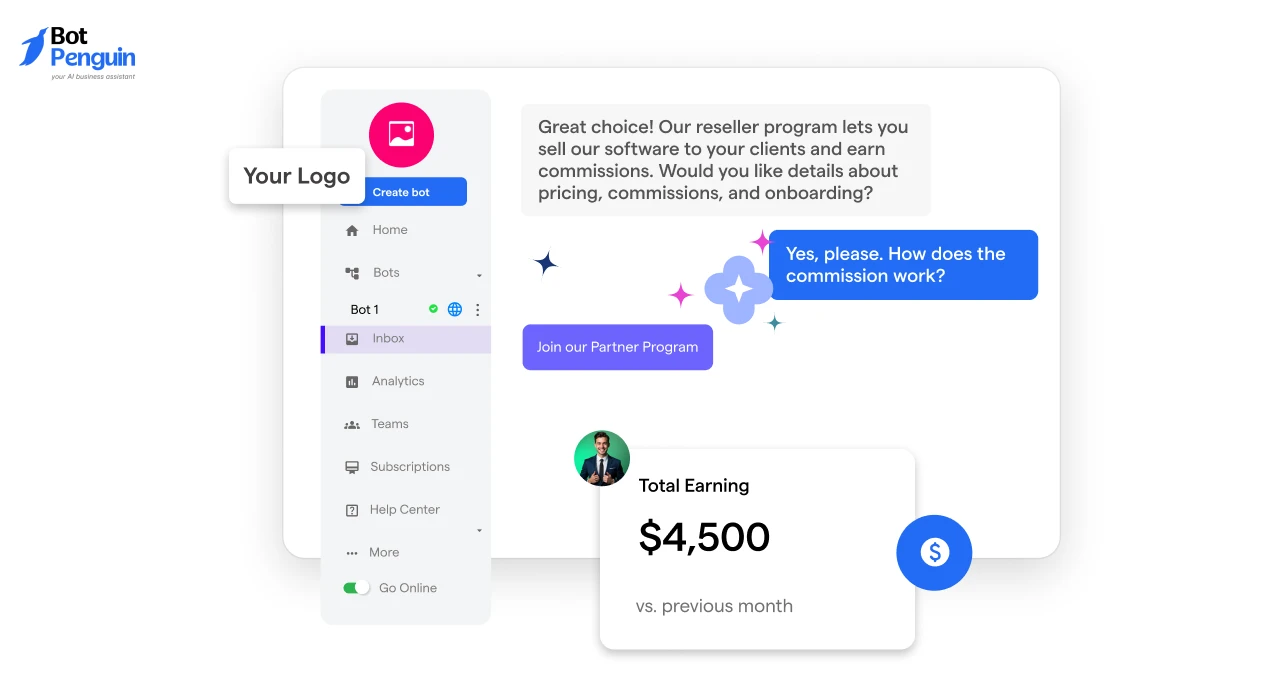
The reseller dashboard is the central control panel of the model. It lets one admin account manage many separate client accounts.
Integrations connect the chatbot to the tools a client already uses, so data moves between systems automatically.
Providers usually price these platforms in one of three ways:
The right model often depends on how many clients a business serves and how much each one uses the chatbot.
Setup usually follows three stages.
Planning. The business defines its target clients and the use cases it will offer, such as support, lead generation, or booking.
Designing the client-facing experience. The domain, logo, colors, and portal are set up. The conversation flows clients will see are then mapped out.
Training and testing. The chatbot is trained on the client’s content. It is then tested against real scenarios before it goes live.
Once the first client’s chatbot is live, the same setup can be repeated for each new client account.
A white label chatbot lets a business offer AI chat under its own brand while a provider runs the technology. The model works through licensed software, a branding layer, and a reseller dashboard. Agencies, SaaS companies, and IT consultants use it to add chatbot services without building software.
Launch your white label chatbot brand with BotPenguin
A white label chatbot is an AI chatbot built on a third-party SaaS platform that you rebrand and deliver to clients as your own product. Its definition comes down to three things: licensed technology, your branding, and your client relationship. Used by agencies, SaaS companies, and IT resellers who want to offer chatbot services without building the technology themselves.
The process runs in three steps. The SaaS provider builds and hosts the technology. You license it, apply your branding, and set up a client portal under your domain. Your clients log in, manage their chatbot, and interact entirely within your branded environment. The underlying platform stays invisible throughout. Learn how to start a white label chatbot business here
A white label chatbot uses existing, proven technology rebranded under your name - faster to deploy and significantly cheaper. A custom-built chatbot is developed from scratch for maximum flexibility but requires 3 to 6 months and a significant development budget. For most agencies and resellers, white label is the faster and more practical choice.
White label chatbots are used by digital agencies adding chatbot services to their client offering, SaaS companies embedding chatbot capability into their product, and IT consultants building a chatbot business under their own brand. Any business that wants to deliver chatbot technology without building it from scratch is a strong candidate for this model.
A white label chatbot usually includes custom domain support, full UI rebranding with your logo and colors, a branded login portal, a multi-tenant dashboard for managing multiple client accounts, support for channels like web, WhatsApp, and Instagram, integrations with CRMs and business tools, and an AI layer trained on each client’s content.
Not exactly. Rebranding typically means changing a logo or color scheme on an existing product. A white-label chatbot goes further; it gives you full branding control, including a custom domain, a branded login portal, the removal of all vendor references, and a reseller dashboard to manage multiple clients. Rebranding is cosmetic. White labeling is structural.
The primary white label chatbot benefits for agencies are recurring revenue, zero development cost, and full branding control. An agency can onboard a client, set up a branded chatbot on a custom domain, and charge a monthly fee, all without writing a single line of code. The vendor handles infrastructure and updates. The agency owns the client relationship and the margin.
A regular chatbot platform keeps its own branding visible throughout the product. A white label chatbot platform removes all vendor references and lets you deploy the technology entirely under your own brand. Your clients see your domain, your logo, and your portal. For agencies and resellers building a product business, that distinction is the difference between selling a service and owning a product.
Yes. Most white label chatbot platforms support integrations with popular CRMs like HubSpot, Salesforce, and Zoho, as well as e-commerce platforms and messaging channels including WhatsApp, Instagram, and website live chat.
With BotPenguin Whitelabel Get
✔Your brand ✔Your pricing ✔Your Logo ✔Your Profits
Apply for White Label ProgramCheckout our related blogs you will love.
Updated at Oct 27, 2026
15 min to read
Updated at Oct 9, 2026
8 min to read

Updated at Oct 9, 2026
12 min to read
Updated at Oct 6, 2026
9 min to read
Updated at Oct 1, 2026
11 min to read
Updated at Sep 28, 2026
19 min to read
Table of Contents
