


WooCommerce WhatsApp Integration: How to Set It Up
Updated at Oct 12, 2026
12 min to read
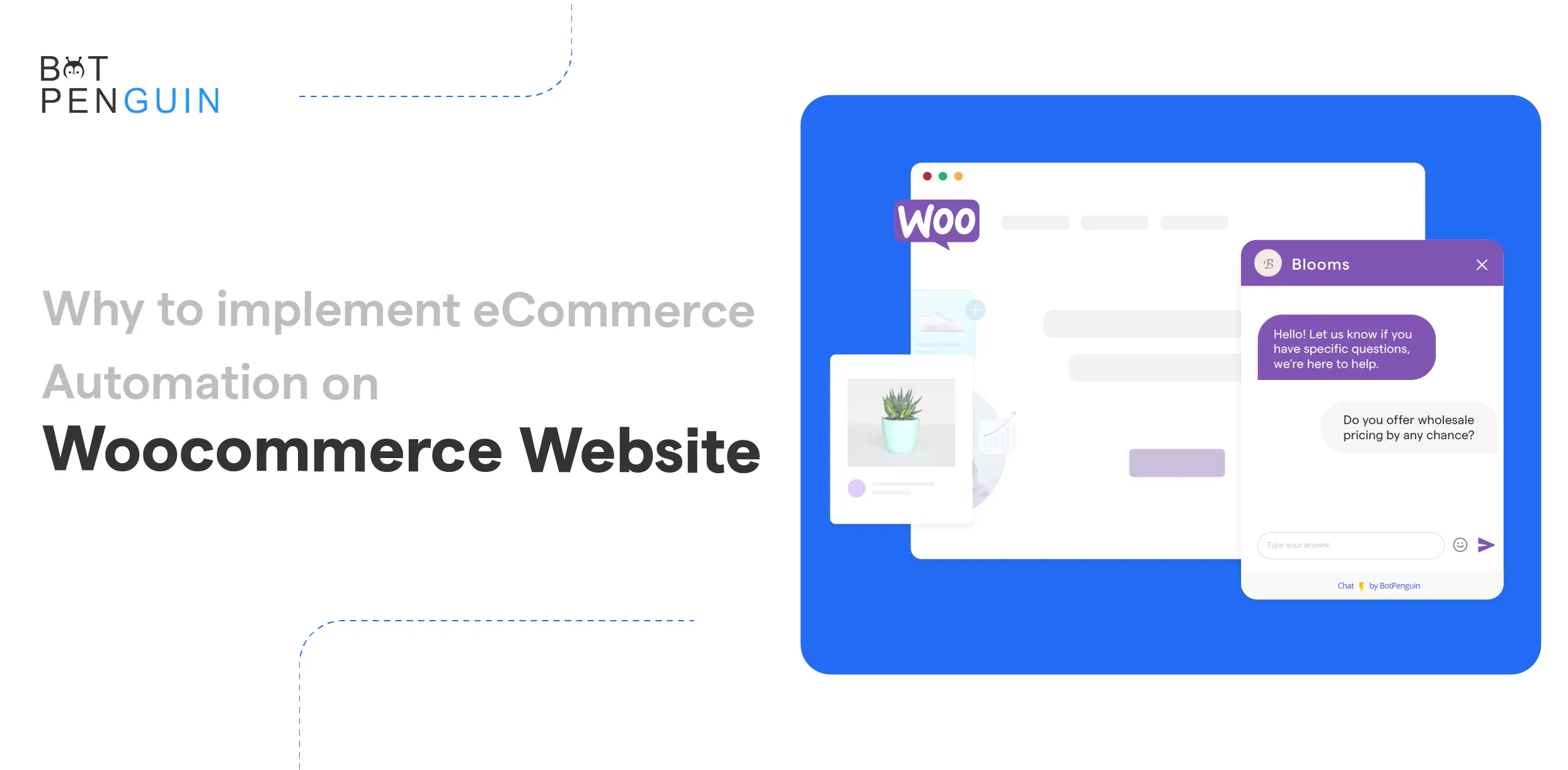
Ecommerce automation on WooCommerce covers inventory syncing, marketing follow-ups, order updates, and customer support, including chatbot-driven replies for common questions.
Manual work is quietly costing your store money. Ecommerce automation in WooCommerce aims to change that, yet most owners still update stock counts, chase down abandoned carts, and reply to the same customer questions by hand every day.
That works fine at low order volumes. As orders grow, manual tracking leads to stock mismatches, delayed replies, and missed follow-ups.
Each of these quietly costs sales, even when the store looks like it is running fine on the surface. Automation solves this by handling the repetitive parts in the background.
A small team can then run a bigger store without adding headcount or working longer hours.
Stock and order tracking are usually the first things to break down as a store grows. This section covers how automation keeps both accurate without requiring someone to check spreadsheets every hour.
Every WooCommerce store depends on accurate stock numbers. When a product sells out, but the listing still shows it as available, customers order items that cannot be fulfilled. That leads to cancellations, refunds, and buyers who may not return.
Inventory automation fixes this by syncing stock levels the moment a sale happens:
Stock counts update instantly across every connected channel, including marketplaces and point of sale systems
Low stock alerts flag products approaching zero, so restocking happens before customers are affected
No manual spreadsheet checks are needed to catch shortages
A flash sale or festive season spike can move dozens of units within minutes. Manual updates cannot keep pace with that speed, and the gap between an actual sale and an updated listing is where overselling happens.
Customers want to know where their order stands. Repeatedly answering that question by email or chat takes time away from other tasks. Automated order status updates remove that back and forth:
Order confirmation goes out right after checkout
Shipping notifications go out with tracking details once the order ships
No one on the team needs to type these updates manually
A large share of customer queries on any store are simple status checks. Removing that volume frees up the support team for questions that actually need a person's judgment.
Stock syncing and order status automation solve two of the most common operational problems on a growing WooCommerce store. Neither requires constant supervision once set up, and both directly reduce the number of avoidable customer complaints a store deals with.
For store owners comparing woocommerce automation tools, inventory and order syncing are usually where the clearest, fastest results show up before expanding into other areas like marketing or support.
Inventory and orders are only half the picture. Once stock and fulfillment run smoothly, the next place manual effort piles up is marketing, especially the repeated task of following up with customers who almost bought something.
Most stores lose a large share of potential sales to carts that get abandoned before checkout. A customer adds items, gets distracted, and never returns to complete the purchase. Chasing these customers manually is not realistic at scale.
Woocommerce automation tools handle this by triggering follow-up messages automatically based on customer behavior:
A reminder email or message goes out a few hours after a cart is abandoned
A second follow-up can include a small incentive if the first message does not convert
Messages stop automatically once the customer completes the purchase, so no one gets contacted after the fact
Abandoned cart flows are the most common starting point for marketing automation because the intent is already there. The customer picked products and started checkout, so the message only needs to remind them, not convince them from scratch.
A well-timed follow-up sequence typically includes:
An initial reminder shortly after the cart is abandoned
A follow-up message with product details or a limited-time offer
A final message before the offer expires, for stores using time-bound discounts
Each step targets a customer at a different point in their decision, rather than sending one generic reminder and hoping it works.
Marketing automation is not limited to abandoned carts. The same tools can handle:
Order confirmation follow-ups asking for reviews after delivery
Re-engagement messages for customers who have not purchased in a while
Product recommendation messages based on past purchase history
None of these require a person to manually track which customer needs which message. The automation runs based on triggers set up once, and applies consistently to every customer who matches the condition.
For store owners who already automated inventory and order updates, marketing follow-ups are usually the next area to set up, since the customer data needed for these flows is already being tracked by the store.
Inventory stays accurate, and marketing follow-ups run on their own, but customer questions still need answering every day. This is usually where manual work adds up fastest, since support requests come in constantly and most repeat the same handful of topics.
Order status, shipping timelines, return policies, and product availability make up the bulk of customer messages on any WooCommerce store. Answering each one individually takes time away from tasks that actually need a person's attention.
For stores deciding how to manage these conversations, understanding the differences between chatbots and live chat can help determine when to automate responses and when human support is needed.
Chatbot automation woocommerce setups handle these repetitive questions automatically, without a support agent typing the same answer multiple times a day:
An ecommerce chatbot answers order status questions using live order data, without a customer needing to log in and check manually
Common queries about shipping timelines, return policies, and product availability get answered instantly
Basic details are collected from a customer before handing off to a human agent, so the agent starts with context rather than from zero.
Support automation works best once inventory and order data are already accurate, since a chatbot pulling incorrect stock or shipping information creates more confusion than it solves. This is why support automation typically comes after inventory and marketing automation are already set up, not before.
A few resources worth checking before setting this up:
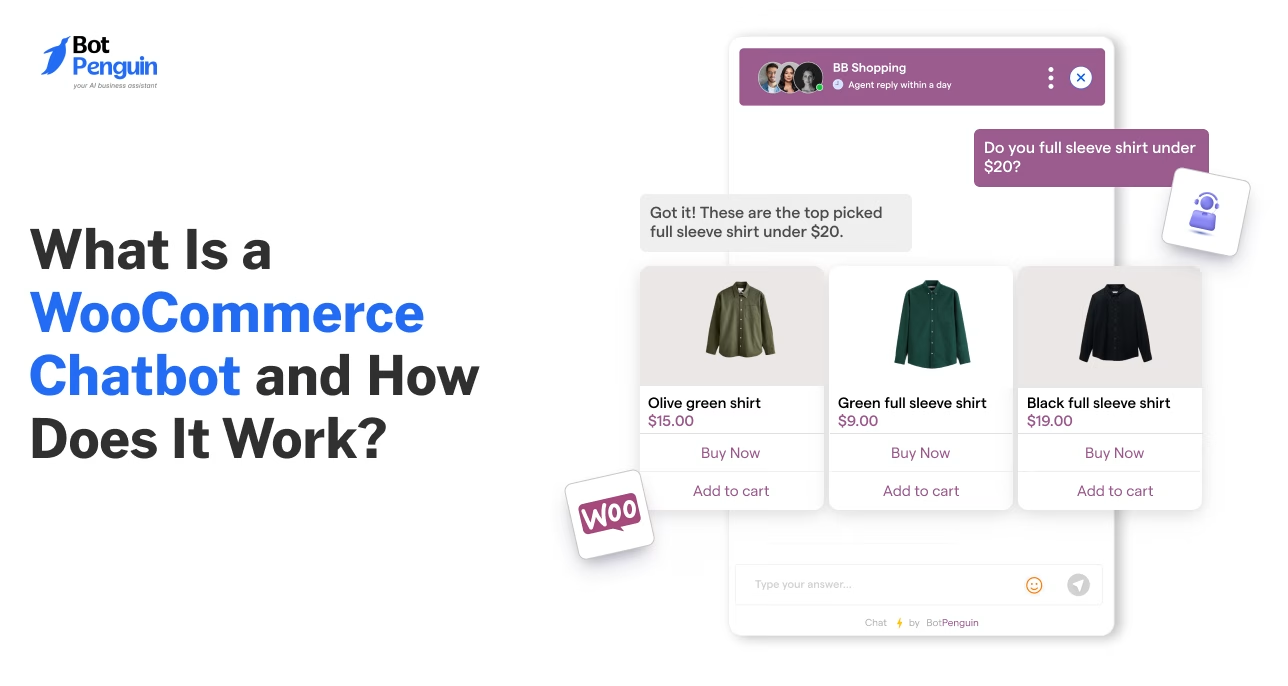
For a full breakdown of what a WooCommerce chatbot actually does, What Is a WooCommerce chatbot covers the basics in more depth
For the practical steps involved in getting one running, set up a WooCommerce chatbot walks through the setup process
The most immediate change after setting up chatbot automation is response time. Questions that used to wait in a queue for a few hours get answered within seconds, at any time of day, including outside business hours when no agent is online.
This matters most for stores with customers in different time zones, where a delayed response often means a customer buys elsewhere rather than waiting for a reply.
None of this replaces the support team. It removes the repetitive first layer of questions, so the team can spend time on issues that genuinely require judgment, like a damaged product or a billing dispute.
Inventory syncing, marketing follow-ups, order status updates, and customer support replies can all be automated. Most stores start with one area, usually inventory or abandoned cart emails, before expanding into others like chatbot-automated support once the initial setup shows results.
Yes. Chatbot automation specifically covers the customer support and sales conversation side of ecommerce automation. It works alongside inventory syncing and marketing follow-ups rather than replacing them, handling the repetitive questions that come in through chat or messaging channels.
No. Most stores start with one high-impact area, like cart recovery emails or basic chatbot FAQ replies, then expand into other automation types once they see measurable results from the first one. Trying to automate everything at once usually leads to a setup that is harder to manage.
Order status notifications and basic chatbot FAQ replies are common starting points. Both require minimal setup and address frequent, repetitive customer questions immediately, making them a practical first step before moving into more complex automation, such as abandoned cart flows or product recommendations.
No. It handles repetitive, predictable tasks so the support team can focus on complex issues that genuinely require a person's judgment, such as disputes or damaged products. Automation removes the repetitive first layer of questions rather than replacing the people handling support entirely.
Ecommerce automation in WooCommerce works best when it covers the entire store, not just one part. Inventory syncing keeps stock numbers accurate, so customers never order something that is already out of stock. Marketing automation follows up on abandoned carts without anyone manually tracking who left without buying. Customer support automation, including chatbot automated replies, handles the repetitive questions that would otherwise sit in a queue for hours.
None of these need to happen at once. Most stores start with one area, usually inventory or abandoned cart emails, and expand once that first setup shows results. What matters is starting somewhere, since every manual task left unautomated is time and revenue a growing store cannot fully recover.
If customer support is where you want to start, start automating your WooCommerce store and see what fits your setup.
Subscribe to Our Newsletter
Get the latest business insights straight into your inbox.
Checkout our related blogs you will love.
Updated at Oct 12, 2026
12 min to read
Updated at Oct 7, 2026
8 min to read
Updated at Oct 6, 2026
6 min to read
Updated at Sep 10, 2026
11 min to read
Updated at Aug 13, 2026
12 min to read
Updated at Aug 13, 2026
12 min to read
Table of Contents