White-label digital products have become a primary growth channel for agencies, SaaS founders, and entrepreneurs seeking to scale faster without building everything from scratch.
With rising client expectations and tighter margins, white-label digital products offer a practical way to launch, brand, and sell proven solutions under your own name.
This guide is built for agencies, consultants, and business owners looking to add new revenue streams, improve client retention, and move beyond time-based services.
You will learn which white label digital products are worth selling this year, how to evaluate them, and how to launch and scale them efficiently using the right platform.
Best Digital White Label Products Comparison
This table helps visually minded readers compare how each tool makes money, how agencies charge, and what actually drives ROI, without reading every section.
Top 9 White Label Digital Products to Sell This Year
Adding white-label digital products to your offerings enables agencies and entrepreneurs to unlock new revenue without building software from scratch.
These solutions are already proven in the market and can be rebranded, packaged, and sold under your own name.
Below are the top product categories with strong demand, recurring revenue potential, and real agency use cases.
Each category explains what the product does, who should sell it, why clients buy it, and how agencies monetize it. Two leading tools are listed under each category to help you evaluate options more quickly.
1. White Label Chatbot Platforms
White label chatbot platforms enable agencies to offer AI-powered conversational solutions under their own brand.
These platforms support lead handling, customer support, and automated engagement across websites and messaging channels.
They are in high demand because businesses want automation without having to build or maintain complex systems.
A. BotPenguin (Global)

BotPenguin is a no-code AI chatbot and AI agent platform designed for agencies and resellers.
It allows teams to deploy chatbots across websites, WhatsApp, Instagram, Facebook, and other channels under complete agency branding.
The platform focuses on recurring service delivery rather than one-time chatbot builds.
Pros:
- Complete white label branding, including logo, dashboard, and domain
- Supports multiple channels from a single interface
- No code builder suitable for non-technical teams
- AI agents, automation, live chat, and CRM integrations
- Strong security standards, including GDPR and HIPAA compliance
Cons:
- Annual platform license requires upfront investment
- Lower brand recognition compared to older U.S. vendors
- Very complex custom workflows may need platform support
ROI potential:
- Agencies control pricing and keep all client revenue. One or two clients often recover the license cost. Additional clients generate high-margin monthly income.
Best suited for:
- Agencies and consultants who want full ownership, recurring revenue, and fast deployment of AI chat automation without engineering resources.
B. MobileMonkey Customers.ai (U.S.)
MobileMonkey is a multi-channel chatbot and messaging platform focused on marketing and lead generation.
It supports website chat, Facebook Messenger, Instagram DMs, and SMS. Agencies commonly use it to build chat funnels and automate engagement as part of broader marketing services.
Pros:
- Easy-to-use interface designed for marketers
- Supports multiple messaging channels
- Broadcast messaging and drip campaign features
- Built-in live chat inbox and audience segmentation
- Strong integration with social advertising workflows
Cons:
- No complete white label branding for client-facing access
- Limited native AI capabilities compared to newer platforms
- Slower feature development in recent periods
- Pricing structure can be unclear for agencies
ROI potential:
- ROI is driven by service efficiency rather than direct software resale. Agencies typically bundle chatbot delivery into retainers or campaign packages to improve margins.
Best suited for:
- Marketing agencies focused on social media and lead generation that do not require complete white label ownership or advanced AI-driven automation.
2. White Label Social Media Management Tools
White label social media management tools help agencies manage content scheduling, publishing, approvals, and reporting under their own brand.
These tools centralize multiple client accounts on a single dashboard and enable agencies to present social media delivery as a branded, system-driven service rather than manual execution.
C. Social Pilot
SocialPilot is a social media management platform built for agencies. It supports scheduling and publishing across major networks, including Facebook, Instagram, LinkedIn, X, Pinterest, TikTok, and Google Business.
The platform offers white-label options, such as branded dashboards and client-ready reports, making it suitable for resale as part of agency services.
Pros:
- Strong white label capabilities for reports and client access
- Supports a wide range of social networks
- Bulk scheduling saves time for multi-client management.
- Competitive pricing suitable for agency margins
- Simple interface that is easy to onboard teams and clients
Cons:
- Limited social listening and sentiment analysis
- No unified inbox for managing all comments and messages
- Advanced analytics is more basic than premium tools.
- Full white label client access requires higher-tier plans.
ROI potential:
- SocialPilot offers high ROI due to low platform cost and broad client capacity. One mid-sized client retainer often covers the monthly subscription.
Agencies can scale to many clients without significantly increasing software costs, improving margins as volume grows.
Best suited for:
- Small to mid-sized agencies and freelancers managing multiple SMB clients who want a cost-effective, brandable social media platform without enterprise-level pricing.
D. Sendible (Global)
Sendible is a widely used social media management platform popular with agencies across Europe and global markets.
It combines scheduling, engagement, and reporting into a single system. White label features include branded reports, client dashboards, and optional custom domains for client access on agency plans.
Pros:
- Centralized inbox for comments and engagement
- Client approval workflows for content calendars
- Branded reports suitable for client presentations
- Strong integrations with Canva, Google Drive, and media tools
- Reliable support for agency-scale operations
Cons:
- Higher pricing compared to lighter tools.
- White features are available only on higher plans.
- Interface feels less modern than newer platforms.
- Costs increase as team size grows.
ROI potential:
- Sendible performs best at scale. When spread across multiple clients, platform costs become minimal relative to retainer revenue. Agencies benefit from improved efficiency, better client visibility, and higher retention driven by professional reporting and collaboration features.
Best suited for:
- Established agencies managing multiple clients with approval workflows and engagement needs, especially those serving mid-market or international customers who expect structured reporting and collaboration.
3. White Label CRM and Sales Automation Tools
White-label CRM and sales automation tools enable agencies to offer lead management, pipelines, and follow-ups under their own brand.
These platforms are the system clients use daily to track prospects and sales activity, making them among the most sticky and recurring white-label offerings.
E. GoHighLevel (U.S.)
GoHighLevel is an all-in-one CRM and automation platform built specifically for agencies. It allows agencies to fully rebrand the CRM, offer custom domains, and provide branded mobile apps.
Clients manage leads, pipelines, messaging, and automation inside what appears to be the agency’s proprietary system.
Pros:
- Designed from the ground up for white label resale
- Complete branding control, including logo, domain, and mobile app
- Combines CRM, email, SMS, workflows, and funnel tracking
- Strong automation for follow-ups and pipeline movement
- One platform can support many client accounts.
Cons:
The interface can feel overwhelming for first-time users.
- Requires onboarding effort for non-technical clients
- Pricing increases as client volume scales.
- Less flexible for deep custom CRM logic compared to enterprise tools
ROI potential:
- GoHighLevel offers a strong ROI through subscription resale. Agencies typically charge clients monthly access plus setup fees.
One platform license can support dozens of clients, generating high-margin recurring revenue with low churn once clients adopt it as their primary sales system.
Best suited for:
- Marketing agencies and consultants serving small and mid-size businesses that want to offer an all-in-one sales and marketing system under their own brand.
F. Zoho CRM via Partner Program (Global)
Zoho CRM is a widely adopted CRM platform used globally across industries. Through its partner program, agencies can resell and customize Zoho CRM as part of their service offerings.
While not fully white-labeled at the UI level, agencies position it as part of their managed solution.
Pros:
- Mature and reliable CRM used by millions of businesses
- Strong core CRM features for contacts, deals, and tasks
- Flexible customization for fields, workflows, and modules
- Integrates well with accounting, support, and marketing tools
- Competitive pricing for SMB clients
Cons:
- Limited front end white label branding
- Clients may recognize Zoho branding inside the product.
- Customization often requires technical configuration.
- Less agency-centric compared to platforms built for resale
ROI potential:
- ROI comes from long-term subscriptions and consulting services. Agencies earn through licensing margins, implementation fees, and ongoing support. Because CRM usage is daily and mission-critical, retention is high, and upsell opportunities are consistent.
Best suited for:
- Agencies and consultants working with established SMBs that need a stable CRM solution and are comfortable with partial branding rather than full white label ownership.
4. White Label Marketing Automation Platforms
White-label marketing automation platforms enable agencies to deliver automated email, SMS, and lead-nurturing systems under their own brand.
These platforms replace manual campaign execution with repeatable workflows, helping agencies offer ongoing marketing value while reducing hands-on effort and improving client retention.
G. ActiveCampaign via Agency Program (Global)
ActiveCampaign is a widely used marketing automation platform known for email marketing, customer journeys, and behavioral automation.
Through its agency and reseller programs, agencies can offer clients campaign automation while controlling access via custom domains and branded portals.
Clients experience the system as part of the agency service rather than a standalone tool.
Pros:
- Robust automation for email and customer journeys
- Advanced segmentation and personalization features
- Reliable delivery and analytics for performance tracking
- Strong ecosystem of integrations with CRM and ecommerce tools
- Suitable for managing multiple client campaigns at scale
Cons:
- Limited front end white label branding compared to agency-first platforms
- Platform complexity requires onboarding and training
- Pricing increases with contact volume
- Less control over complete interface branding
ROI potential:
- Agencies generate ROI through monthly retainers and setup fees. Once workflows are built, the ongoing effort is low. Clients stay long-term because campaigns run continuously. Automation improves campaign results, supporting higher pricing and longer contracts.
Best suited for:
- Agencies focused on email marketing, lifecycle campaigns, and data-driven automation that want enterprise-grade automation without building systems internally.
H. SharpSpring by Constant Contact (Global)
SharpSpring is a marketing automation platform built specifically for agencies. It offers email marketing, automation workflows, landing pages, and analytics, with strong white-label support.
Agencies can brand the platform, reports, and client portals to present it as their own marketing system.
Pros:
- Designed for agency resale and white label delivery
- Branded dashboards and client reports
- Built-in CRM light features for lead tracking
- Flat pricing model supports multiple clients
- Centralized management for agency teams
Cons:
- Interface feels dated compared to newer platforms
- Automation flexibility is lower than that of advanced enterprise tools
- Limited native AI features
- Smaller integration ecosystem than market leaders
ROI potential:
- SharpSpring delivers a predictable ROI through flat pricing and unlimited client usage. Agencies can resell access as part of bundled retainers, keeping margins stable as client volume grows. Retention is strong once clients rely on automated campaigns.
Best suited for:
- Mid-sized agencies seeking a resale-friendly automation platform with strong brand control and predictable costs.
5. White Label SEO Tools and Reporting Dashboards
White-label SEO tools and reporting dashboards enable agencies to present rankings, traffic, audits, and performance metrics under their own brand.
These platforms turn complex SEO data into client-friendly dashboards and reports, helping agencies demonstrate value, maintain transparency, and retain clients over long periods.
I. SE Ranking (Global)
SE Ranking is a comprehensive SEO platform that includes keyword tracking, site audits, backlink monitoring, and competitor analysis.
It offers robust white-label capabilities, allowing agencies to customize branding, apply their logo and colors, and host dashboards on a custom domain.
Clients interact with what appears to be the agency’s proprietary SEO system.
Pros:
- Full white label dashboards with logo and color customization
- Custom domain support for client access
- Accurate keyword rank tracking and site audits
- Automated SEO reporting saves manual effort
- Suitable for managing many client projects
Cons:
- Interface can feel dense for non-technical clients
- Advanced features require configuration and setup
- Limited cross-channel reporting outside SEO
- White label options are available only on higher plans
ROI potential:
- SE Ranking delivers strong ROI by reducing reporting time and enabling more clients with no additional staff. Agencies typically bundle reporting into SEO retainers, but some upsell dashboard access as a premium feature. High client retention makes long-term revenue stable.
Best suited for:
- SEO focused agencies and consultants that want deep SEO data presented through a branded client portal without building reporting infrastructure.
J. AgencyAnalytics (U.S.)
AgencyAnalytics is a reporting-focused platform built for marketing agencies. It aggregates SEO, Google Analytics, paid ads, and social data into live dashboards.
The platform is fully brandable, including dashboards, reports, and a mobile app that carry the agency’s branding.
Pros:
- Fully white labeled dashboards and PDF reports
- Combines SEO with analytics and marketing data
- Client-friendly interface focused on clarity
- Automated monthly reporting workflows
- Optional mobile app branded to the agency
Cons:
- Limited advanced SEO research compared to pure SEO tools
- Requires external tools for backlink and content analysis
- Pricing increases with the number of client accounts
- Focused more on reporting than execution
ROI potential:
- AgencyAnalytics improves ROI by reducing churn and increasing perceived value. Agencies often use it to justify retainers and secure renewals. Some charge extra for live dashboard access, creating an additional recurring revenue stream.
Best suited for:
- Marketing agencies that prioritize client communication, reporting clarity, and transparency across SEO and marketing performance.
6. White Label Email Marketing Software
White-label email marketing software enables agencies to deliver newsletters, promotional emails, and automated sequences under their own brand.
These platforms handle contact management, automation, and analytics while concealing the underlying provider, enabling agencies to offer email marketing as a branded, recurring service.
K. ActiveCampaign via Agency Program (Global)
ActiveCampaign is a mature email marketing and automation platform widely used by agencies. Through its agency and enterprise programs, agencies can operate email campaigns using custom domains and branded portals.
Clients experience the system as part of the agency service rather than a third-party tool.
Pros:
- Advanced email automation and customer journeys
- Strong segmentation and personalization capabilities
- Reliable deliverability and detailed analytics
- Integrates well with CRM and ecommerce systems
- Scales easily across multiple client accounts
Cons:
- Full white label interface control is limited
- Setup and onboarding require expertise
- Pricing increases with contact volume
- Interface complexity for non-technical users
ROI potential:
- ActiveCampaign delivers ROI through recurring retainers and setup fees. Once automations are built, the ongoing effort is low.
Clients stay long-term because email remains a core revenue channel, enabling agencies to justify premium pricing and secure stable contracts.
Best suited for
- Agencies that manage email marketing and lifecycle campaigns for growing businesses want enterprise-grade automation without having to build infrastructure.
L. MailerLite via Agency Dashboard (Global)
MailerLite is a lightweight email marketing platform popular with small and mid-sized businesses.
While it does not offer deep interface white-labeling, agencies can quietly manage client accounts and use custom sending domains to keep campaigns brand-neutral.
Pros:
- Simple interface suitable for SMB clients
- Strong deliverability and template builder
- Supports newsletters and basic automation
- Affordable pricing for agencies managing many clients
- Easy onboarding and fast campaign setup
Cons:
- Limited complete white label branding options
- Automation depth is lower than that of enterprise platforms
- Fewer advanced analytics features
- Less suitable for complex lifecycle workflows
ROI potential:
- MailerLite offers a strong ROI for agencies serving smaller clients. Low platform costs allow agencies to bundle email services into retainers or offer entry-level plans.
Retention is high because clients rely on ongoing email communication.
Best suited for:
- Agencies and consultants serving SMBs, coaches, and content-driven businesses that need reliable email campaigns without complex automation requirements.
7. White Label Website and Landing Page Builders
White-label website and landing page builders enable agencies to quickly create sites, funnels, and campaign pages under their own brand.
These platforms replace custom development with repeatable templates, branded editors, and managed hosting, enabling agencies to launch faster while maintaining ownership of the client experience.
M. Duda (U.S.)
Duda is a website builder designed specifically for agencies and SaaS providers.
It offers extensive white-label capabilities, including branded editors, custom domains for client logins, white-labeled notifications, and branded support portals.
Agencies can present Duda as their own website platform rather than a third-party builder.
Pros:
- Deep white label control across editor and client access
- Custom domains and branded client communications
- Fast site creation using templates and reusable sections
- Built-in hosting, security, and performance optimization
- Scales well for managing many client sites
Cons:
- Less flexibility for highly custom front-end designs
- Advanced customization requires learning platform specifics
- Pricing increases as site count grows
- Not ideal for complex web applications
ROI potential:
- Duda offers a strong ROI by turning websites into repeatable projects. Agencies often charge project fees plus monthly hosting and support.
One platform subscription can support multiple client sites, generating recurring revenue with high margins and minimal maintenance effort.
Best suited for:
- Web design and digital agencies that need to launch multiple client websites quickly while maintaining brand control and predictable delivery.
N. Webflow (Global)
Webflow is a design-focused website and CMS platform popular with agencies building high-quality marketing sites and landing pages.
On professional plans, agencies can replace Webflow branding in the editor, manage client billing, and present the CMS as part of their own service offering.
Pros:
- High design flexibility and clean code output
- Strong CMS for content-driven sites
- Suitable for complex layouts and animations
- Reliable hosting and performance built in
- Widely accepted by designers and marketers
Cons:
- Limited complete white label interface control
- Steeper learning curve for non-designers
- Less agency-focused than dedicated white label builders
- Client onboarding requires guidance
ROI potential:
- Webflow delivers ROI through faster build cycles and premium project pricing. Agencies can complete more projects per year and charge higher fees due to design quality. Hosting and maintenance plans add recurring revenue over time.
Best suited for:
Agencies focused on marketing sites, landing pages, and design-driven projects where visual quality and performance matter more than full white label depth.
8. White Label Analytics and Conversion Tracking Tools
White-label analytics and conversion tracking tools enable agencies to present marketing and business performance data under their own brand.
These platforms aggregate data from websites, ad platforms, SEO tools, and CRMs into branded dashboards.
The goal is to give clients clear visibility into ROI, conversions, and growth without exposing third-party software.
O. AgencyAnalytics (U.S.)
AgencyAnalytics is a reporting and analytics platform designed specifically for digital marketing agencies. It connects data from SEO tools, Google Analytics, paid advertising platforms, and social channels into a single dashboard.
Agencies can fully brand dashboards, reports, and client access portals, making the platform appear as an internal analytics system.
Pros:
- Fully white labeled dashboards, reports, and client portals
- Supports a wide range of marketing and analytics integrations
- Clear visualizations focused on KPIs and trends
- Automated report generation saves recurring effort
- Optional branded mobile app for client access
Cons:
- Focused on reporting rather than deep data analysis
- Depends on external platforms for raw data accuracy
- Advanced customization may require configuration time
- Pricing increases as the number of client accounts grows
ROI potential:
- AgencyAnalytics improves ROI by strengthening transparency and reducing client churn. When clients can clearly see progress and attribution, they are more likely to renew and expand engagements. Many agencies include reporting in retainers, while others charge extra for live dashboards, creating additional recurring revenue.
Best suited for:
- Marketing agencies that manage SEO, PPC, and multi-channel campaigns need a professional, client-friendly reporting layer to support long-term relationships.
P. Databox (Global)
Databox is a performance analytics platform that focuses on real-time reporting and business outcomes. It aggregates marketing, sales, and revenue data into live dashboards.
With its white label option, agencies can host dashboards on custom domains and send branded performance alerts and summaries to clients.
Pros:
- Real-time dashboards with goal tracking
- Strong focus on conversions, revenue, and ROI
- Supports marketing, sales, and CRM data sources
- Branded domains and email notifications
- Mobile-friendly dashboards for executives
Cons:
- White label functionality available as paid add-ons
- Dashboard layout customization is limited
- Requires careful setup to ensure accurate attribution
- Less suited for granular technical analysis
ROI potential:
- Databox helps agencies justify budgets by clearly tying activity to outcomes. Clients who understand performance are more confident in continuing and increasing spend.
Agencies also save time by automating reporting and alerts, thereby improving margins on fixed-fee contracts.
Best suited for:
- Agencies working with founders, executives, and growth teams who prioritize high-level performance clarity and fast decision-making.
9. White Label Online Course and Membership Platforms
White-label online course and membership platforms enable creators, agencies, and businesses to deliver training and digital content under their own brand.
These platforms provide the infrastructure to host courses, manage members, process payments, and track progress, while keeping the end-user experience fully branded and controlled by the seller.
Q. Thinkific Plus (Global)
Thinkific Plus is the enterprise version of Thinkific, built for businesses and creators who need complete white label control.
It enables fully branded learning portals, custom domains, branded course players, certificates, and email notifications. Learners interact only with the creator’s brand, never the underlying platform.
Pros:
- Full white label experience across login, courses, and emails
- Supports video lessons, quizzes, certificates, and communities
- Scales well for large student bases and multiple products
- Strong analytics for course progress and engagement
- Optional branded mobile app for learners
Cons
- Enterprise pricing may be high for solo creators
- Initial setup requires planning and configuration
- Limited design flexibility compared to custom development
- Best suited for serious course businesses
ROI potential:
- Thinkific Plus enables high-margin revenue by allowing courses and memberships to scale without additional delivery costs.
Once content is created, additional enrollments generate near pure profit. Many creators recover platform costs with a single successful launch and then scale revenue significantly.
Best suited for:
- Professional course creators, coaches, and agencies building branded academies or corporate training portals at scale.
R. Kajabi (Global)
Kajabi is an all-in-one platform for selling courses, memberships, and digital products.
On higher plans, creators can remove Kajabi branding, use custom domains, and present the platform as their own learning ecosystem. It combines content delivery with marketing and payment tools.
Pros:
- Combines courses, memberships, and email marketing
- Custom domains and brand-controlled learner experience
- Supports subscriptions and recurring memberships
- Built-in checkout and payment processing
- Simple interface for creators and students
Cons:
- Less flexible for complex learning paths
- Limited deep white label customization
- Higher pricing compared to basic LMS tools
- Less suitable for large corporate training programs
ROI potential:
- Kajabi delivers a strong ROI for creators focused on recurring memberships and digital products. Subscription-based models generate predictable monthly revenue, and upselling additional courses within the same platform increases customer lifetime value.
Best suited for:
- Coaches, consultants, and creators selling personal brand-driven courses and memberships with integrated marketing.
Why This Category Matters
Online education and memberships scale without proportional effort. A single course can be sold to hundreds or thousands of learners globally with the same infrastructure.
White-label platforms ensure creators retain full brand ownership, higher margins, and long-term audience relationships, rather than relying on third-party marketplaces.
How to Launch Faster with a White Label Platform
Once agencies decide to scale, speed becomes critical. Client demand already exists. Delays usually come from tool setup, branding limitations, and billing complexity.
The right platform removes these blockers and enables white-label digital products to be launched without operational drag.
Single Platform vs Stacking Tools
Stacking tools increases setup time and ongoing maintenance. Each tool adds configuration, support, and cost overhead. A unified platform simplifies delivery.
Agencies managing digital products in one system onboard clients faster and reduce internal coordination. Sales teams close faster when delivery is standardized.
Branding, Domains, and Client Dashboards
Clients expect clarity and ownership. Platforms that support custom branding, domains, and dashboards help agencies present white-label digital products as their own.
For example, agencies offering automation or support software can provide a branded interface. This strengthens trust and positions the agency as the primary provider.
Subscription Management and Billing Control
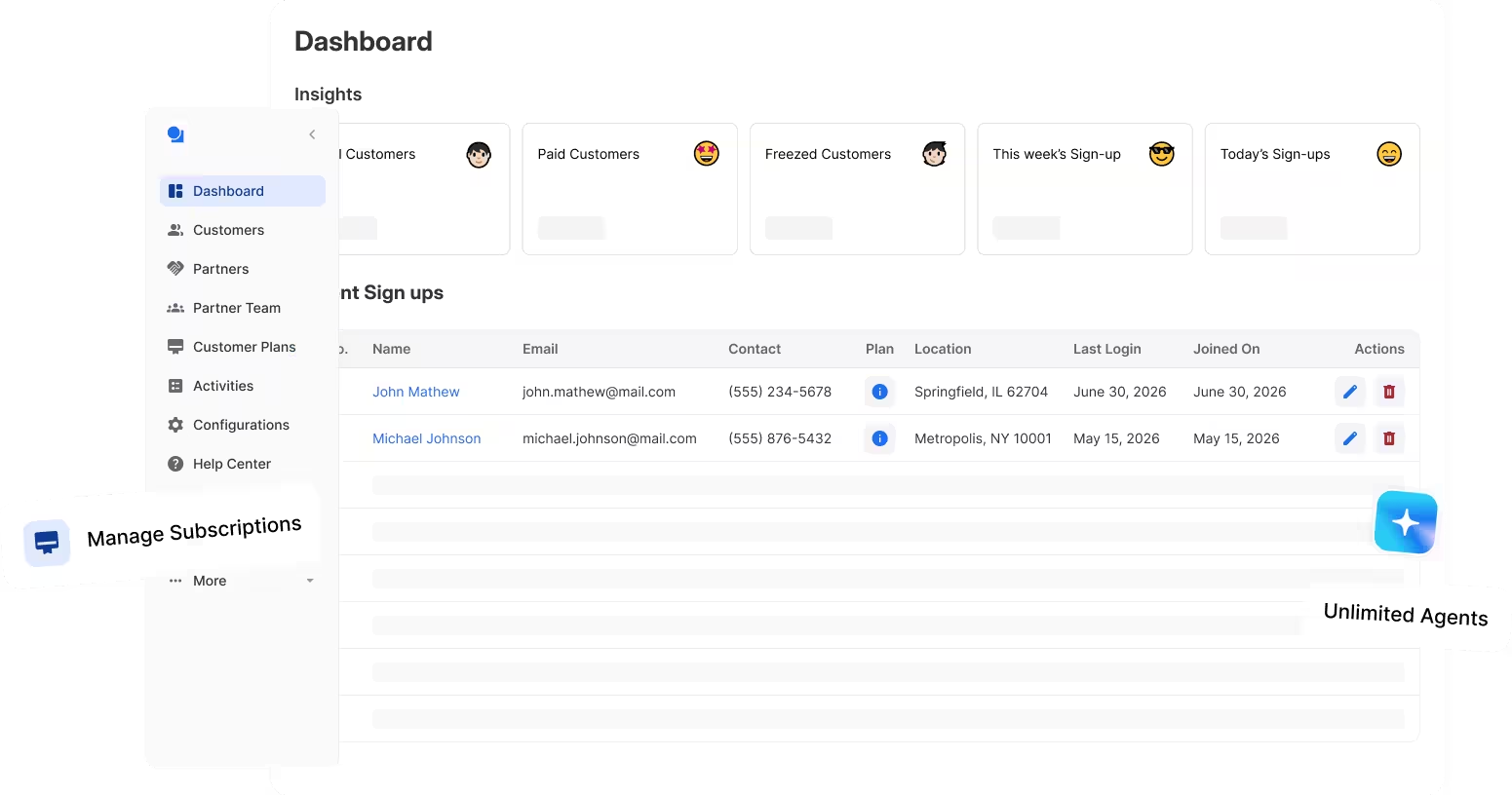
Recurring revenue requires billing control. Platforms that support subscriptions make it easier to sell white label digital products on a monthly plan.
Agencies can manage pricing, renewals, and upgrades internally. This supports predictable revenue and simplifies long-term client contracts.
Integrations and Long-Term Scalability
Growth depends on integration depth. CRM, analytics, and marketing systems must work together. Platforms built for white-labeling digital products reduce integration effort and support scaling as client volume increases.
Launching faster is about reducing complexity at every step. Agencies that choose platforms designed for scale spend less time on setup and more time selling and delivering value.
Conclusion
White-label digital products give agencies a scalable path beyond one-time services. By standardizing delivery and retaining control over branding, pricing, and client data, agencies unlock predictable recurring revenue and stronger client retention.
Growth becomes sustainable when products are aligned with real client needs and deployed consistently.
The right white-label platform reduces operational complexity, shortens delivery cycles, and allows agencies to focus on outcomes clients continue to pay for. In the long term, consistency and ownership matter more than volume.
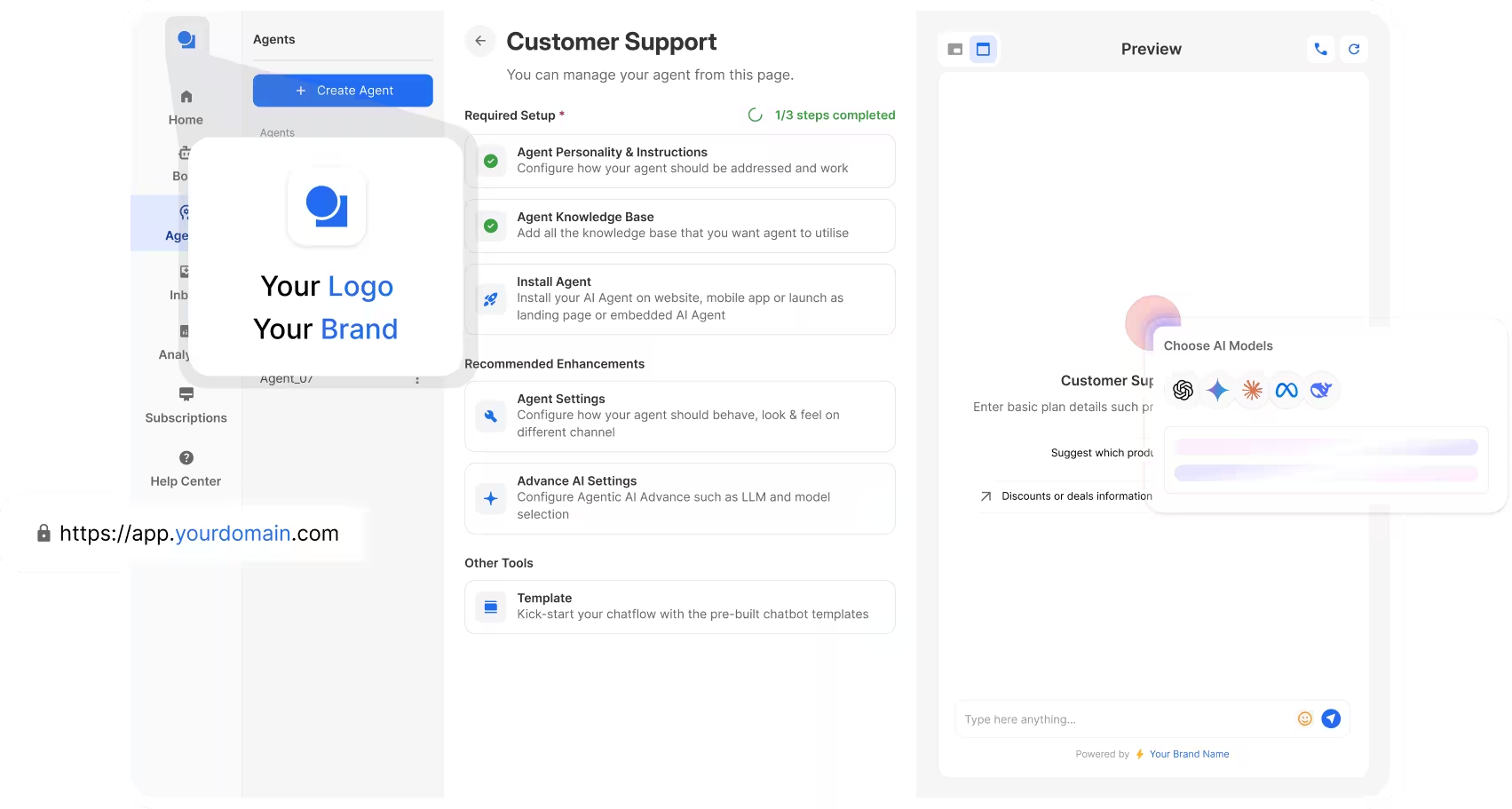
Why BotPenguin is Built for Selling White Label Digital Products
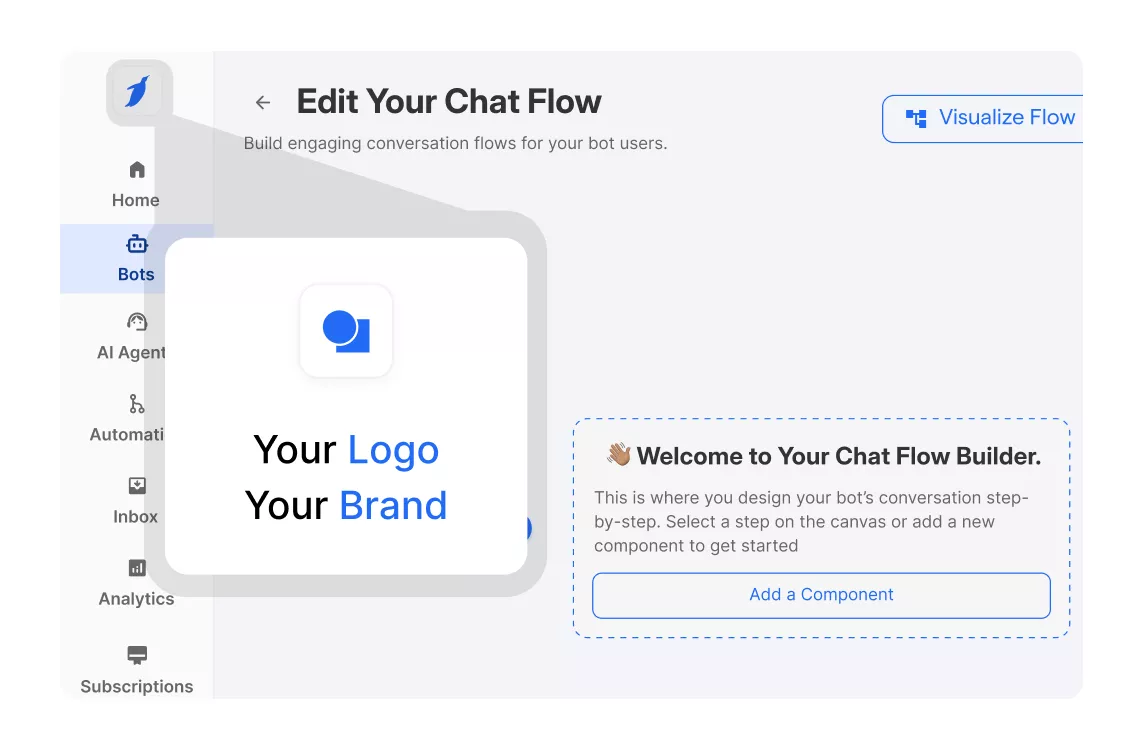
- Complete white label control across branding, dashboards, and domains
- AI agents, automation, and messaging in one unified platform
- Multi-channel deployment across web and messaging apps
- Standardized onboarding for faster client setup
- Reduced manual work, improving margins at scale
- Usage-driven recurring revenue instead of one-time projects
This makes BotPenguin a practical platform for agencies looking to sell and scale white label digital products efficiently.
Frequently Asked Questions (FAQs)
What White-Label Digital Products Do Most Agencies Start Selling First?
Agencies typically start with white-label digital products that can be deployed quickly and do not require client-side behavior change, enabling faster adoption and shorter sales cycles.
Which White-Label Digital Product Models Scale Best Without Increasing Delivery Effort?
White-label digital product models that rely on automation or background processing scale efficiently because delivery effort remains stable as client volume increases. White-label digital products are suitable for agencies transitioning from services to SaaS-like models.
How Can Agencies Sell Digital Products Online, White, Without Product-Market Risk?
Agencies reduce risk when selling white-label digital products online by choosing platforms with proven demand and focusing on packaging rather than product creation.
What Makes the Best White Label Digital Products More Profitable Than Custom-Built Solutions?
The best white label digital products eliminate development overhead and maintenance costs, allowing agencies to focus revenue on distribution and client relationships.
How Does BotPenguin Help Agencies Scale Using White-Label Digital Products?
BotPenguin enables agencies to deploy and manage white-label digital products from a single platform, reducing setup time while maintaining control over branding, pricing, and client delivery.