

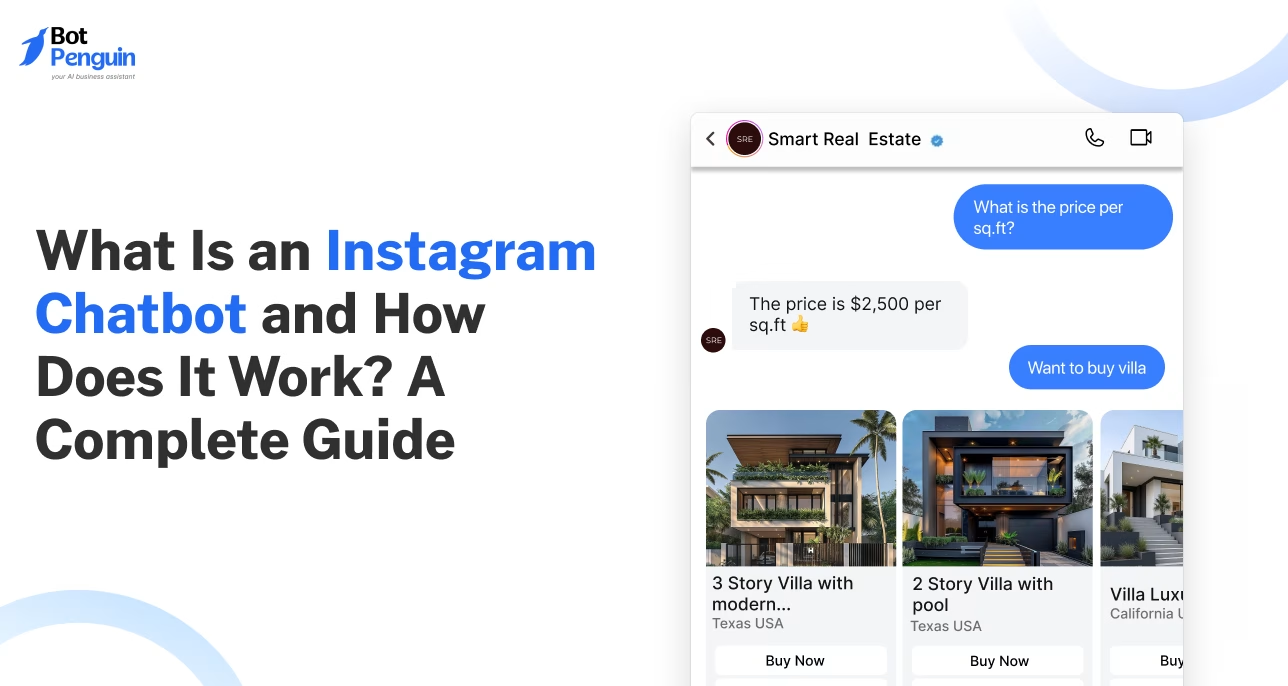
What Is an Instagram Chatbot and How Does It Work? A Complete Guide
Updated at Oct 8, 2026
12 min to read
Updated On Jul 17, 2026
9 min to read
Instagram DMs pile up fast, and every hour you take to reply is an hour a customer is deciding whether to wait for you or move on.
Manual replies work fine when the volume is small. But scale your following, and answering every DM and comment by hand stops being sustainable.
This is exactly where Instagram auto reply comes in. It triggers immediate, relevant responses based on keywords, comments, or specific actions, answering FAQs, routing people to the right page, and keeping conversations alive even when you're offline.
This guide breaks down how Instagram auto reply works, where it fits, and how to set it up correctly.
An Instagram auto reply keeps conversations active, guides customers to the next step, and creates a more consistent customer experience.
McKinsey research shows companies that improve customer experience see sales revenue grow by 2 to 7 percent and profitability rise by 1 to 2 percent.
Here’s why businesses should invest in Instagram auto reply options:
An Instagram DM auto reply acknowledges the message the moment it lands, so potential customers aren't left wondering if anyone's on the other end.
Questions about pricing, hours, delivery, or availability come up again and again.
Instead of typing out the same answers throughout the day, businesses can serve accurate information through predefined replies.
An Instagram autoresponder can direct users to book a demo, browse products, claim an offer, fill out a form, or connect with the right team based on their intent.
Different team members may answer the same question differently.
Auto replies help maintain consistent messaging, so customers get the same information no matter when they reach out.
Product launches, viral posts, influencer campaigns, and seasonal sales can trigger a surge in DMs.
Auto replies help businesses handle these spikes, so important inquiries don't get buried in a crowded inbox.
Next, we’ll learn how Instagram auto reply works, from detecting triggers to sending the right response.
Instagram auto reply works by recognizing a trigger, matching it with a predefined workflow, and sending the appropriate response.
Depending on the platform, replies can follow simple rules or use AI to carry on natural conversations. Here's what happens behind the scenes:
This way, an Instagram DM auto reply does more than send quick responses; it helps businesses manage conversations consistently while giving customers a smoother experience.
You can set up a basic Instagram DM auto reply without coding or advanced technical skills.
Meta Business Suite lets you acknowledge new messages, answer common questions, and inform customers when your team is unavailable. Follow these steps to get started:
Your Instagram profile must be a Business or Creator account before you can connect it to Meta Business Suite.
Open Instagram and go to your profile settings. Select Account type and tools, choose Switch to professional account, and follow the instructions.
A personal account does not provide the professional messaging controls required for this setup.
Open Meta Business Suite and sign in with the Facebook account that manages your business Page.
Go to the account settings, select the option to add an Instagram account, and complete the connection process. Make sure you grant permission to access and manage Instagram messages.
Your professional Instagram account must be connected correctly before its DMs can appear in the shared inbox.
Inside Meta Business Suite, open Inbox and select Automations or Automated Responses.
Choose Instagram as the channel. Menu names may vary slightly depending on the account and Business Suite version.
You should now see the available options for creating basic automated replies.
Select Instant Reply and turn it on for Instagram.
Write a short message that confirms you received the customer’s DM. You can thank them, mention your normal response time, or ask what they need.
For example: “Hey! Thanks for reaching out. We usually reply within a few hours. In the meantime, feel free to share what you're looking for.”
Keep the message useful. Avoid treating an instant reply like a long promotional pitch.
Set an Away Message for hours when your team is unavailable.
Choose the days and times when it should be sent. Then explain when the customer can expect a response.
For example: “We are currently offline, but your message is safe with us. Our team will reply after 9 AM tomorrow.”
This Instagram autoresponder helps manage expectations without leaving the customer uncertain.
Add frequently asked questions where the feature is available. Focus on topics such as pricing, opening hours, bookings, delivery, or product availability.
Native Meta responses are useful for simple messages.
For keyword triggers, qualifying questions, follow-ups, and longer workflows, you can set up Instagram automation through a chatbot platform such as BotPenguin.
As your message volume grows, BotPenguin can help turn these basic replies into structured chatbot workflows with keyword triggers, lead capture, follow-ups, and human handoff.
Send a message from another Instagram account.
Check whether the reply appears correctly, whether personalization works, and whether any included links open properly. Test the Instagram DM auto reply during both active and away hours.
Fix any unclear wording before making the automation part of your regular customer communication.
Once your DM replies are working, the next step is setting up automated responses for Instagram comments.
Instagram comment automation begins when someone leaves a comment on a selected post or reel.
A connected Instagram chatbot can detect the comment, publish a public response, and continue the conversation through a private message. Here is how to set it up:
A well-planned Instagram comment auto-reply turns comments into conversations. Test every trigger and follow-up before making the workflow live.
Once these six steps are in place, every qualifying comment can trigger the same reliable workflow, from a public reply to a personalized Instagram DM.
Not exactly. An Instagram autoresponder usually sends one fixed message after a trigger, such as a new DM or an away-hours message.
It typically can't branch based on what the customer says next.
Instagram auto reply, on the other hand, is a broader setup. It can include keyword triggers, comment-to-DM flows, follow-up questions, AI chatbot replies, and human handoff, adjusting the conversation path based on intent rather than sending the same static line every time.
For example, a comment saying “price” might trigger a DM with pricing details, then branch into a demo-booking question if the user replies “yes”, something a basic autoresponder can’t do.
Even a well-built Instagram auto reply can fail because of account settings, permissions, or incorrect triggers. Here are the most common issues and how to fix them:
Check that the automation is active, Instagram is selected as the channel, and your account is still correctly connected as a Business or Creator profile linked to the right Facebook Page and Meta Business Suite account.
Check spelling, capitalization rules, and trigger conditions, then test with the exact keyword from another account.
If users get the wrong response, look for overlapping triggers activating more than one workflow at once.
Add frequency limits or rules that prevent the automation from responding multiple times to the same user.
Repeated messages can feel spammy fast.
Check the platform's messaging permissions and confirm that the private message step is included and published in the workflow.
Meta may restrict standard automated follow-ups once the 24-hour messaging window closes. Ask the user to reply again before continuing the conversation.
Add a fallback message that sends the conversation to a human or lets an AI chatbot interpret the request.
This prevents dead-end replies that frustrate customers.
Review the business hours, schedule, and account time zone used by your Instagram autoresponder.
A single mismatch can throw off the whole schedule.
Most Instagram auto-reply issues come down to settings, permissions, or poorly defined triggers. Regular testing and clear fallback rules keep conversations running smoothly and prevent small errors from affecting the customer experience.
For teams managing more complex workflows, BotPenguin helps organize triggers, fallback replies, and human handoffs from one place. This makes Instagram automation easier to test, monitor, and improve.
Instagram moves fast, and people rarely enjoy waiting for a reply. An Instagram auto reply helps you stay responsive, even when you are busy or offline.
Start simple. Set clear triggers, write replies that sound natural, and test every message before it goes live. Make sure each response answers the question and gives people an obvious next step.
As your inbox grows, chatbot automation can handle keywords, follow-ups, lead capture, and human handoff. Keep checking what works and what feels awkward.
A good auto reply should feel helpful, not robotic. That keeps conversations moving without losing the personal touch.
Instagram auto reply monitors incoming DMs, comments, keywords, or account conditions. When a trigger matches, it sends the linked message, starts a workflow, or routes the conversation to a human agent.
Switch to a Business or Creator account, connect it to Meta Business Suite, open Inbox Automations, choose Instagram, write the reply, save the workflow, and test it from another account.
Yes. An Instagram auto reply bot can respond publicly to a comment, send a private DM, share the requested information, ask follow-up questions, and move qualified users into a longer conversation.
Basic Instagram auto reply features may be free through Meta Business Suite or selected chatbot plans. Advanced triggers, AI responses, analytics, integrations, and larger message limits usually require a paid plan.
Not exactly. An Instagram autoresponder usually sends a fixed message after a trigger. Instagram auto reply is broader and can include keywords, AI conversations, follow-ups, comment automation, and human handoff.
Check that the automation is active, Instagram is selected, permissions are connected, and the workflow is published. Also review trigger spelling, overlapping rules, schedules, and message limits before testing again.
Yes. AI can understand open-ended Instagram messages and generate contextual replies. Fixed triggers still work better for predictable questions, controlled steps, compliance-sensitive responses, and journeys that require a specific next action.
Turn Instagram DMs Into Business Conversations
Reply to DMs and comments, answer FAQs, qualify prospects, and route chats to the right team with an AI-powered Instagram auto reply bot. Stay responsive without monitoring your inbox all day.
Get Started NowCheckout our related blogs you will love.
Updated at Oct 8, 2026
12 min to read
Updated at Oct 8, 2026
10 min to read
Updated at Oct 8, 2026
10 min to read
Updated at Oct 6, 2026
9 min to read
Updated at Jul 28, 2026
12 min to read
Updated at Jul 28, 2026
9 min to read
Table of Contents
