




Top Real Estate AI Chatbot Platforms to Capture, Qualify, and Convert Property Leads Faster
Updated at Sep 25, 2026
12 min to read
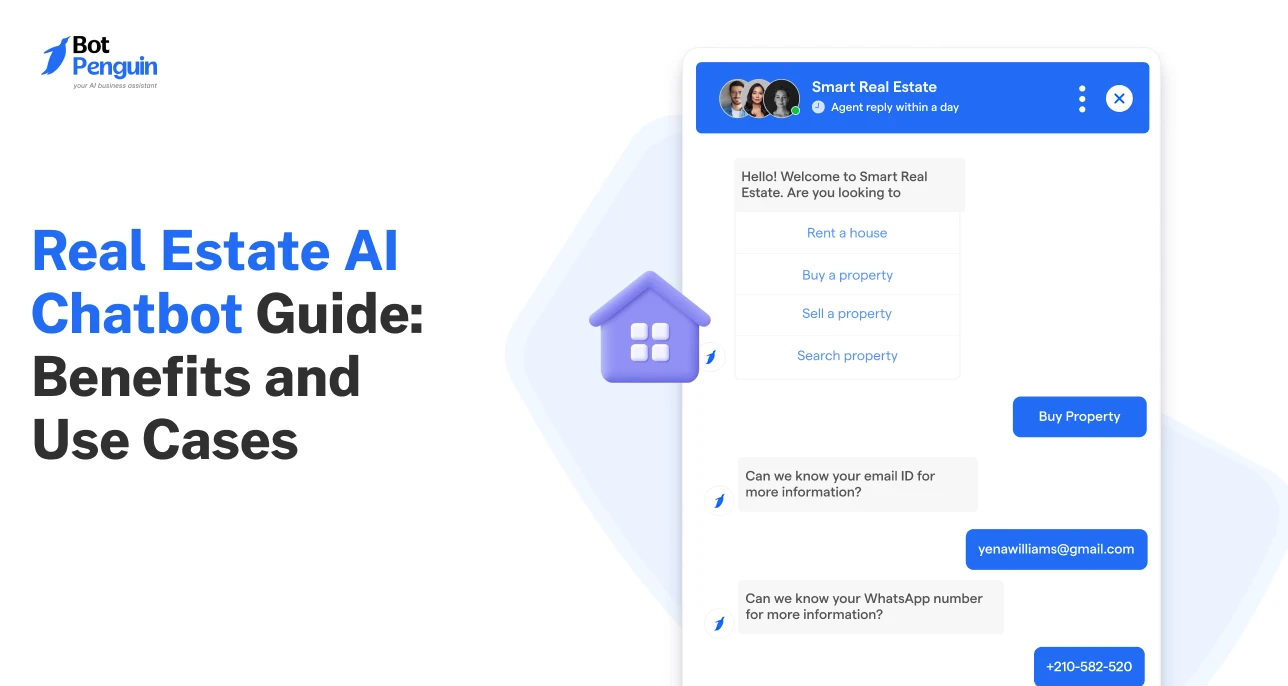
A real estate chatbot is a conversational tool that answers property questions, captures buyer details, qualifies leads, and books viewings. It gives prospects immediate help while minimizing routine work for agents and keeping promising conversations moving.
Property pitching is already a daunting job. Imagine having a virtual assistant that could pitch properties for you, while you worry about actual closings.
It could answer buyer questions, highlight property features, share prices, locations, and recommend listings based on what a prospect wants. Instead of repeating the same details to every lead, realtors can let a chatbot handle the early stages while focusing on serious buyers.
That is where a real estate chatbot fits in. It engages website visitors around the clock, qualifies leads before they reach an agent, and moves prospects closer to a decision. But how does it work, and what should brokers know before adding one?
In this guide, you'll learn how real estate chatbots work, what makes them different from generic bots, and how brokers can use them to convert more leads.
A real estate chatbot is a software tool that talks to website visitors and answers property questions around the clock. It helps brokers screen buyers, log lead details, and book tours without adding to an agent’s workload.
NAR reports that 51% of buyers found their purchased home online, while 43% began their home search by browsing properties online. (Source: National Association of REALTORS®, 2025)
Most brokerages do not adopt a chatbot for one single reason. It is usually a mix of lost leads, recurring questions, and slow response times that pushes teams to look for a better system.
Here are the problems that make an AI chatbot for real estate important:
Leads Go Cold Overnight: Buyers browse listings late at night and on weekends. A chatbot keeps the conversation going after office hours so interested prospects do not drift to a competing agency.
Agents Waste Time on Unqualified Buyers: It asks basic questions about budget, timeline, and location preference, then routes only serious buyers to agents. This saves hours otherwise spent on unqualified calls.
Repetitive Questions Eat Into the Day: Price checks, availability questions, and basic property details get answered instantly. Agents get more time to focus on negotiations and closings.
Slow Follow-Ups Lose Buyer Interest: Based on answers given during the chat, the bot pulls up matching homes right away instead of waiting for a follow-up email.
Conversations Get Lost Across Platforms: It works across the website, text messages, and social channels, so no lead conversation gets lost between platforms.
In practice, a real estate chatbot acts as the first line of response, keeping buyer interest warm until an agent is ready to step in.
If you’re looking to put this into practice, BotPenguin helps brokerages build AI chatbots that answer property questions, qualify leads, recommend listings, and connect serious prospects with agents across websites, WhatsApp, and social channels.
A real estate chatbot is a chain of small steps, each handled by a different piece of technology, working together in the background.
Here is what happens from the moment a visitor lands on the site to the moment an agent picks up the lead:
The moment a visitor lands on a listing page or the homepage, the chatbot opens with a contextual greeting.
Instead of a generic “How can I help?”, it references the property or page being viewed.
Using NLP, the bot parses the visitor's message to figure out their goal.
Someone asking about mortgage rates gets routed differently than someone asking to schedule a viewing for a specific listing.
The bot asks a short sequence of questions covering budget range, purchase timeline, and preferred location.
These answers can be scored or used to prioritize leads, so agents know which prospects need faster follow-up.
Based on the buyer’s preferences, the chatbot can query a connected MLS feed, property database, or a real estate scraper to surface matching listings and up-to-date property information during the conversation.
If the buyer wants to see a property, the bot checks the agent's calendar and offers open slots.
The tour gets booked without a single back-and-forth email.
When connected to a CRM, conversation details, contact information, preferences, and qualification data can be synced for agent follow-up.
Nothing sits in a chat log waiting to be entered manually.
Once a lead is qualified, the assigned agent gets notified with the full conversation history attached, so the first call picks up exactly where the bot left off.
Together, these steps turn a chatbot into a practical lead-handling layer that supports buyers before an agent steps in.
In the next section, let’s see how that process plays out in a real-world conversation flow.
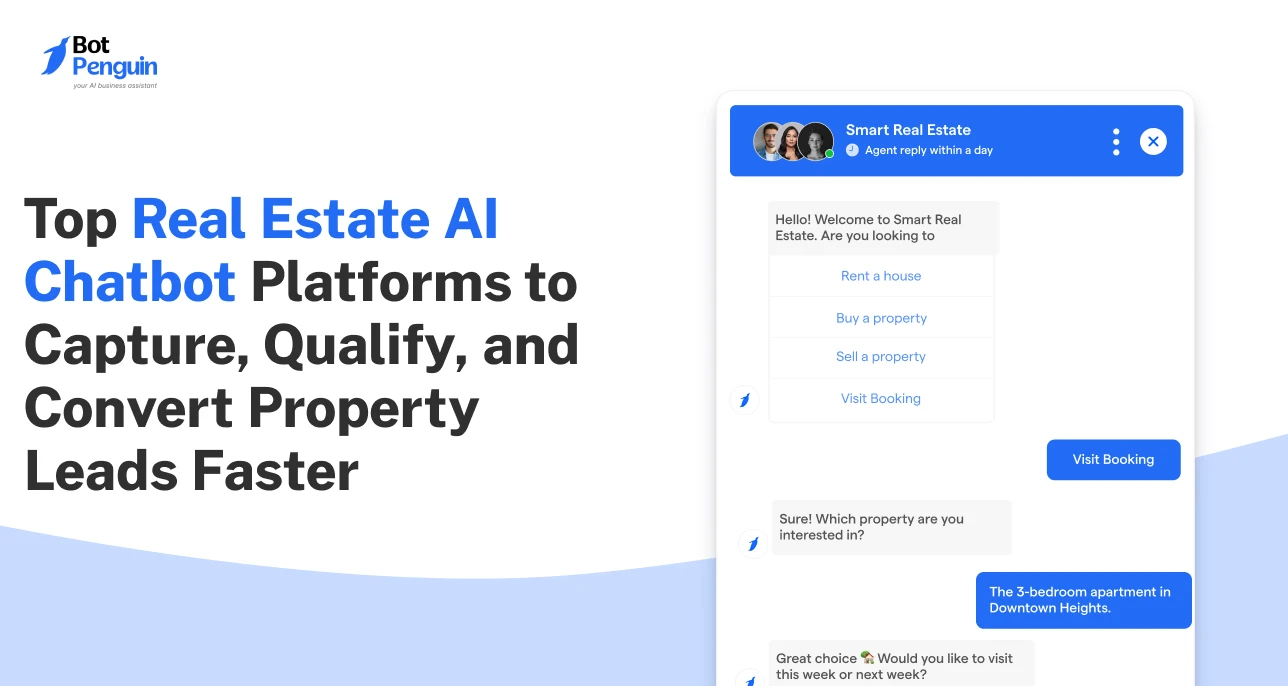
Now that we’ve seen how the process works behind the scenes, here’s what it can look like in a real buyer conversation:
Buyer: Hi, I’m looking for a 2-bedroom apartment in Austin.
Chatbot: Sure. What area and budget do you have in mind?
Buyer: South Austin, under $500,000
Chatbot: Got it. Do you prefer move-in ready or new construction?
Buyer: Move-in ready, with parking
Chatbot: I found a 2-bedroom option with parking for $485,000. Want the details or a viewing?
Buyer: A viewing
Chatbot: Saturday at 11 AM or 3 PM?
Buyer: 3 PM
Chatbot: Booked for Saturday at 3 PM. An agent will follow up with the property and visit details.
A simple exchange like this shows the real value: the chatbot qualifies intent, narrows options, and moves the buyer toward a booked viewing without unnecessary friction.
Some chatbots are generic bots dressed up with property templates, while others are designed around how brokerages and buyers actually communicate.
Before signing up for a platform, brokers should check for these capabilities:
MLS and IDX Integration: Choose a chatbot that can connect with MLS, IDX, or property databases to surface relevant listings using current buyer preferences.
CRM Sync: Make sure contact details, conversation history, preferences, and lead data can move into your CRM without creating extra manual work.
Omnichannel Support: Look for support across website, WhatsApp, Facebook, Instagram, and other channels where buyers already start property conversations. For phone-based engagement, explore an AI voice agent for real estate.
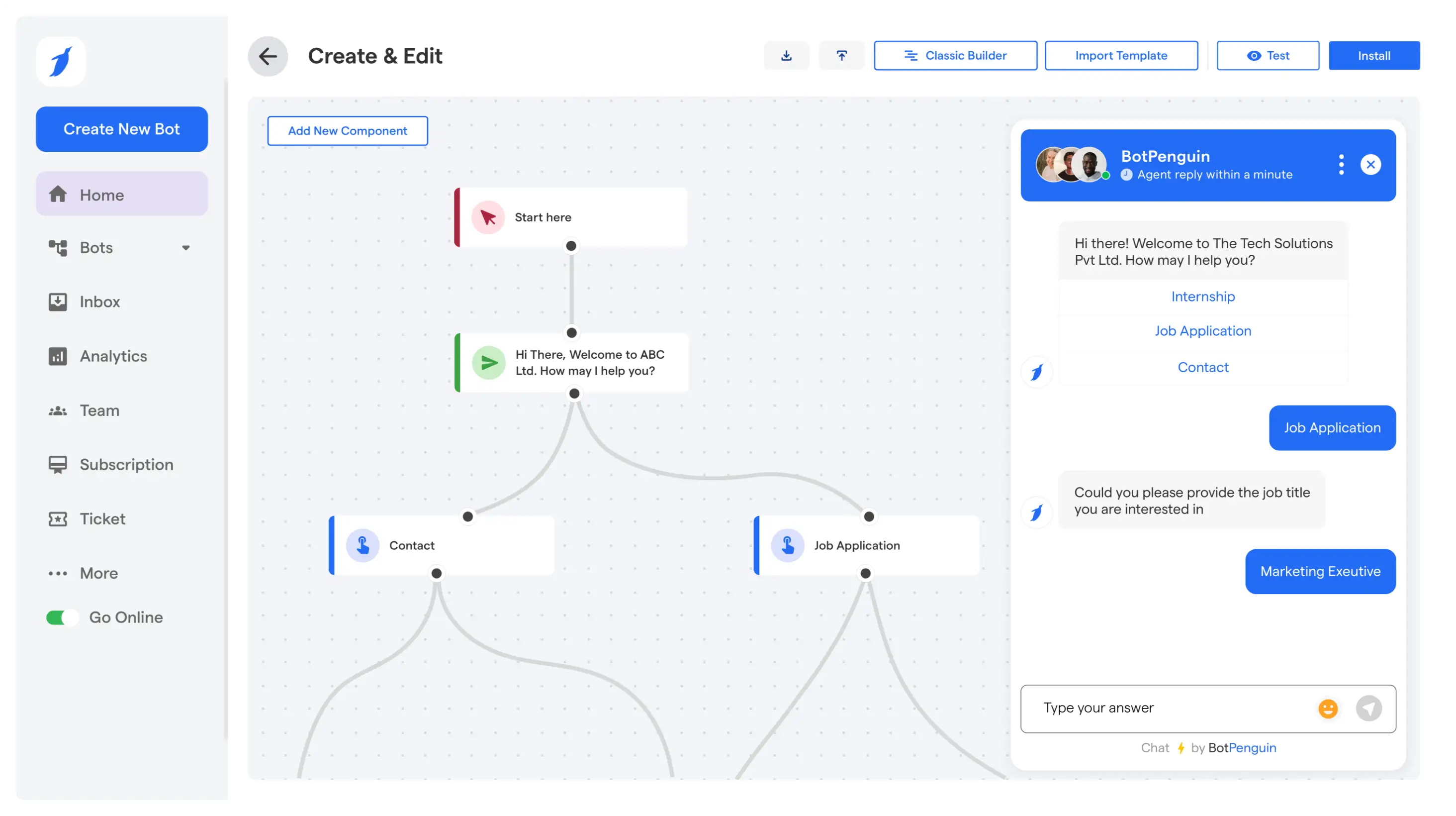
No-Code Builder: A visual no-code builder like BotPenguin can help teams update conversation flows, responses, and logic without depending on developers for every small change.
Knowledge Base Training: The chatbot should learn from your listings, FAQs, policies, and business information so responses stay relevant and grounded.
Human Handoff: Choose a platform that can transfer conversations to agents with context preserved, so buyers do not have to repeat themselves.
Integrations and APIs: Strong integrations with CRMs, calendars, automation tools, and business systems make the chatbot easier to fit into existing operations.
Conversation Analytics: Look for reporting on conversations, engagement, handoffs, and user behavior so teams can understand what is working and where buyers drop off.
A chatbot that integrates cleanly, hands off smoothly, and keeps improving from real conversations will outperform one that looks impressive in a demo but breaks down in daily use.
For a broader look at the technology available to property teams, explore AI tools for real estate agents.
Compare the best AI chatbots for real estate to see which platforms fit different lead generation, qualification, and property engagement needs.
When deployed well, a real estate chatbot handles tasks that stretch far beyond the first conversation, covering everything from lead capture to post-sale relationship building.
Here are six use cases worth knowing:
Each of these use cases has been explained below.
Buyers ask the same questions on every listing: price, square footage, availability. A chatbot answers these instantly, day or night.
This keeps visitors engaged instead of bouncing to a competitor site. Agents spend less time repeating basic details and more time on buyers ready to move forward.
A chatbot asks about budget, timeline, and location before a lead ever reaches an agent. Only serious buyers get flagged for a call.
This screening step protects agent time and improves close rates. Unqualified leads still get useful information, just without pulling anyone away from active deals.
Booking a property tour usually means several emails back and forth.
A chatbot checks agent availability and confirms a slot within the same conversation.
Buyers get a scheduled visit in minutes, not days. Agents receive a calendar invite with lead context attached, ready before the tour begins.
Most brokerages stop talking to clients after closing.
A chatbot can check in months later, ask for a review, and mention referral incentives if friends are house hunting.
NAR says REALTORS® typically generate 21% of their business through referrals from past clients and customers, highlighting post-sale relationship value. (Source: National Association of REALTORS®, 2025)
This keeps the brokerage top of mind long after the deal closes, turning past clients into a steady referral source.
Brokerages managing rental properties get flooded with maintenance requests. A chatbot collects the issue, categorizes urgency, and routes it to the right vendor automatically.
Tenants get faster acknowledgment, and property managers avoid sorting through repetitive messages.
Genuine emergencies get flagged immediately instead of sitting in a shared inbox.
A chatbot can support buyers in multiple languages, helping bridge language and time-zone gaps during an international property search.
These use cases show a real estate chatbot is less a single tool and more a system that touches nearly every stage of the buyer journey.
For real-world examples of how businesses put conversational automation to work, you can also explore BotPenguin’s case studies.
Choosing a chatbot platform for real estate comes down to one question: does it actually understand the sales cycle, or is it a generic bot with a property template slapped on?
BotPenguin supports the former, giving teams a practical way to automate buyer conversations, qualify leads, and keep agents focused on high-intent opportunities.
BotPenguin’s AI agents can be trained on property details, FAQs, policies, and business information, so responses stay grounded in what buyers need to know.
For outbound prospecting, explore how AI cold calling for real estate can help teams reach, qualify, and follow up with property leads at scale.
Real estate teams should not need a developer on standby to change a qualification question.
BotPenguin's no-code builder lets teams update flows, responses, and routing logic directly, keeping the chatbot as flexible as the market it operates in.
Teams can engage buyers across Website, WhatsApp, Instagram, Facebook, Telegram, Microsoft Teams, Phone, and other supported touchpoints from one conversational platform.
For channel-specific lead generation, explore how a WhatsApp chatbot for real estate and Facebook chatbot for real estate can support buyer engagement across messaging and social platforms.
Lead data should not live in a separate silo. Connect BotPenguin with CRM and business tools to capture lead information, preserve conversation context, and keep buyer data moving into existing workflows.
BotPenguin moves high-intent or sensitive conversations to a human agent with context intact, letting the conversation continue without starting over.
A language barrier should not cost a brokerage a buyer. BotPenguin supports property seekers in multiple languages, making it easier to engage international, NRI, and multilingual buyers across markets.
Protect buyer and customer conversations with enterprise-grade safeguards. BotPenguin is GDPR, HIPAA, and CCPA compliant, ISO certified, SOC 2 attested, and VAPT-assessed by a CERT-In empanelled auditor.
Together, these capabilities give brokerages a chatbot setup that stays connected to the buyers, agents, and systems behind every property conversation.
See what users say about the platform in these BotPenguin reviews. Teams comparing platforms can also review BotPenguin’s full feature list for a broader view of available capabilities.
A chatbot can underperform even with good technology behind it. Most failures come down to setup choices, not the tool itself.
Here are the mistakes brokerages run into most often:
Teams often turn on a chatbot without deciding what it should say first. This leads to vague answers and awkward conversations.
Solution: Map out the full conversation flow before launch, not after.
Listings change weekly, but many teams forget to update the chatbot's information. Buyers get outdated prices or unavailable properties.
Solution: Treat the knowledge base as a living document, updated weekly.
Some brokers let the bot handle every message, even ones needing empathy or judgment. Legal questions or price negotiations should not go fully automated.
Solution: Build in handoff triggers for anything beyond basic Q&A.
Many teams set up a chatbot and never check how it performs. Drop-off points and repeated questions reveal real problems.
Solution: Review conversation analytics monthly to catch weak spots early.
A chatbot is not a one-time install. Buyer needs shift, seasons change, and new listings come in constantly.
Solution: Schedule regular tuning so response quality never quietly declines.
Real estate is built on timing. A buyer asks a question, compares a few listings, and decides whether to keep going or move on.
A good real estate chatbot helps teams stay present in that moment. It can answer questions, qualify interest, book viewings, and keep leads warm until an agent steps in.
But the tool alone is not enough. The real difference comes from accurate data, smart handoffs, useful integrations, and regular updates.
Used well, a chatbot does not replace the agent. It clears the path, removes small delays, and gives serious buyers a faster route to the next conversation.
A real estate chatbot is an automated tool that answers property questions, captures lead details, qualifies buyers, suggests listings, books viewings, and supports prospects when agents are unavailable.
Real estate chatbots use conversation flows, AI, integrations, and property data to understand buyer intent, answer questions, collect preferences, recommend listings, sync lead details, and hand conversations to agents.
A real estate chatbot helps brokerages respond faster, capture more leads, reduce routine questions, qualify buyers earlier, book property visits, and keep prospects engaged outside regular business hours.
Yes. A real estate chatbot can ask about budget, preferred location, property type, and buying timeline. These answers help teams identify stronger prospects and route them to the right agent.
Yes. Many real estate chatbots can connect with CRM platforms to send contact details, buyer preferences, conversation history, and qualification data into existing sales workflows for faster follow-up.
Yes. When connected to a calendar or scheduling system, a real estate chatbot can show available time slots, collect buyer details, and confirm property viewings during the same conversation.
Look for MLS or IDX compatibility, CRM integrations, no-code management, omnichannel support, AI knowledge training, human handoff, multilingual support, analytics, and strong security and compliance features.
Common challenges include outdated listing data, weak conversation flows, poor CRM integration, over-automation, and missed handoffs. Regular updates, clear routing rules, and human oversight help prevent these issues.
Convert More Property Searches Into Viewings
Engage buyers, recommend relevant properties, answer questions, and book property visits with an AI chatbot for real estate agents.
Start NowCheckout our related blogs you will love.
Updated at Sep 25, 2026
12 min to read
Updated at Sep 24, 2026
14 min to read

Updated at Sep 24, 2026
8 min to read
Updated at Sep 17, 2026
15 min to read
Updated at Sep 16, 2026
12 min to read
Updated at Oct 19, 2026
11 min to read
Table of Contents