


Shopify Customer Service Chatbot: How It Improves Support
Updated at Oct 16, 2026
15 min to read
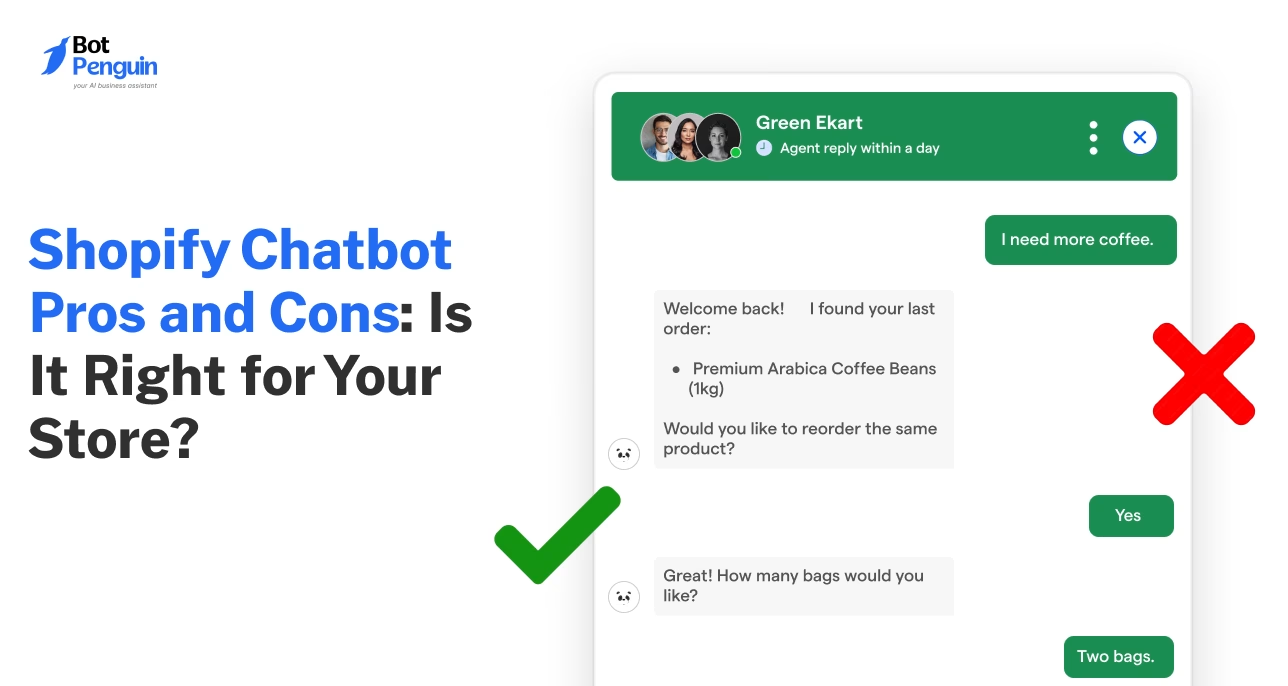
On the advantage side, Shopify chatbots answer routine questions, guide product discovery, and support customers after checkout. On the downside, they need accurate store data, regular updates, clear human handoff, and pricing that stays manageable as conversation volume grows over time.
Just like we weigh the good and the bad before starting any venture, investing in a chatbot deserves the same scrutiny.
For starters, it is easy to focus on AI’s promises, but the real value lies in what it delivers for your store. Does it improve customer experience? Does it save time? What limitations should you know before getting started?
A Shopify chatbot can answer customer questions, suggest products, and handle routine support. But it is not the right fit for every business.
This guide breaks down the real Shopify chatbot pros and cons, helping you decide whether a Shopify customer service chatbot is worth the investment.
For the broader mechanics, read what a Shopify chatbot does and how it works with store data.
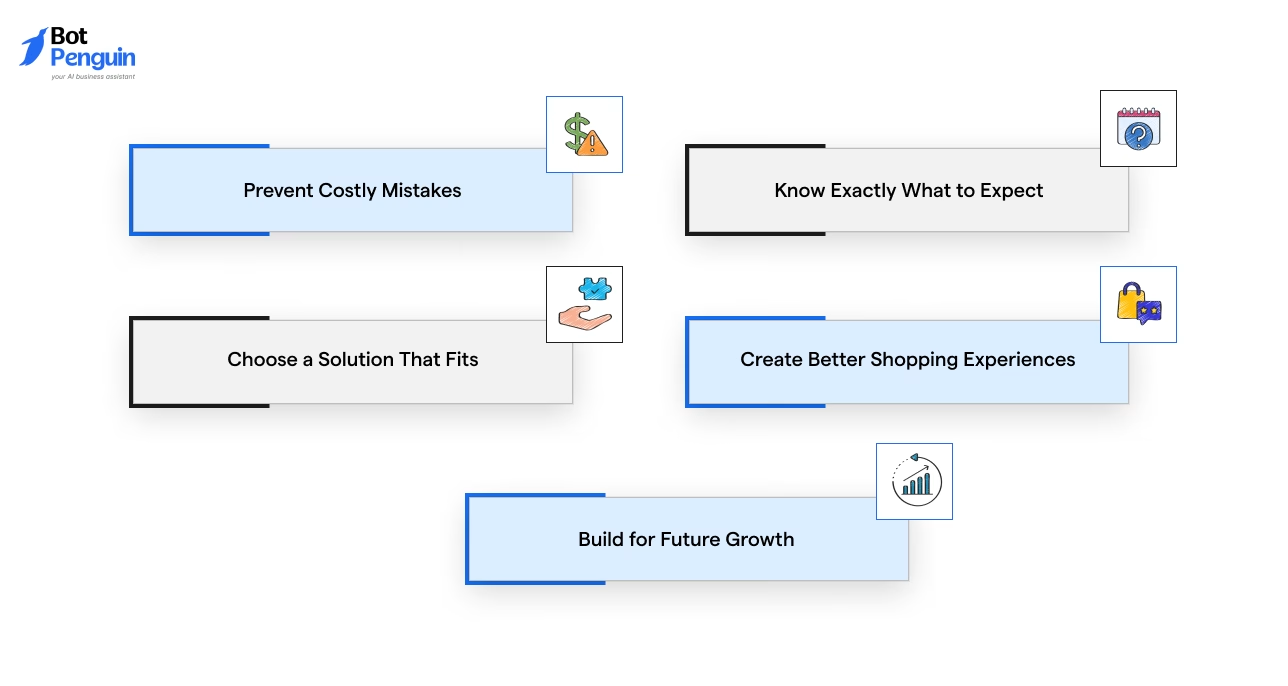
Before we jump in, looking at both the advantages and limitations helps you make a confident decision based on business outcomes rather than AI hype.
Gartner found that 56% of organizations felt high regret over their biggest tech purchase due to insufficient evaluation.
Here’s what a clear-eyed view of the pros and cons helps you do:
With these priorities clear, you can evaluate each Shopify chatbot advantage and limitation against your store’s actual needs.
If you are looking for a practical option, platforms like BotPenguin are worth considering. It offers Shopify integration, AI-powered support, human handoff, and flexible automation without forcing you into a heavy setup.
A Shopify chatbot’s deeper value appears across buying decisions, customer insights, team workload, and long-term store growth.
Strong customer service can support revenue growth, and a chatbot often becomes an early touchpoint in that experience.
Shoppers often leave because one small doubt remains unanswered. It may involve sizing, delivery, compatibility, or product availability.
A chatbot for Shopify can respond while the shopper is still considering the purchase. It can pull details from product pages, inventory data, or store policies.
That timing matters. A reply after someone leaves cannot influence the same buying decision.
Recurring questions often point to gaps across the store. Customers may repeatedly ask where orders are, how returns work, or which product suits their needs.
Chat records reveal what shoppers cannot find easily. Merchants can use those patterns to improve product pages, navigation, and policy content.
The chatbot becomes a steady source of practical customer feedback.
A Shopify AI chatbot can ask what a shopper needs before suggesting products. It may consider budget, use case, size, or previous purchases.
This creates a guided shopping experience without long menus or filters. Buyers can compare products through a simple conversation.
The experience feels closer to speaking with a helpful store assistant.
This becomes clearer when you examine how Shopify chatbot product recommendations use catalogue and shopper data.
Customer needs continue after checkout. Buyers still ask about order updates, returns, exchanges, and product usage.
A Shopify customer service chatbot can retrieve order details and explain the next step. Customers do not need to repeat the same information. This makes support feel faster and more connected.
Merchants focused on support can examine how a Shopify chatbot handles customer service tasks in greater detail.
Routine questions can take up hours each week. A chatbot handles predictable requests while staff focuses on situations needing judgment or empathy.
Support teams gain more time for unhappy customers, unusual requests, and valuable conversations.
The real benefit is not replacing people. It is helping them spend their time where human input matters most.
When shoppers share their budget, preferences, size, or intended use, they provide zero-party data directly.
Merchants can use these stated preferences to shape product recommendations, email flows, and relevant bundles.
The conversation also creates first-party data, such as common questions, interaction patterns, and support needs.
McKinsey found 71% of consumers now expect personalized interactions from companies.
Together, these insights reveal customer intent without relying on third-party cookies or paid audience data.
A store selling beyond its home market often loses buyers to a language gap. A shopper who cannot get an answer in their own language rarely stays to figure it out.
An AI chatbot can hold that conversation in multiple languages without a merchant hiring native-speaking staff for every region.
It opens a store to markets that would otherwise stay out of reach.
These advantages can make a Shopify AI chatbot genuinely valuable, but only when its setup also accounts for the limitations that come with it.
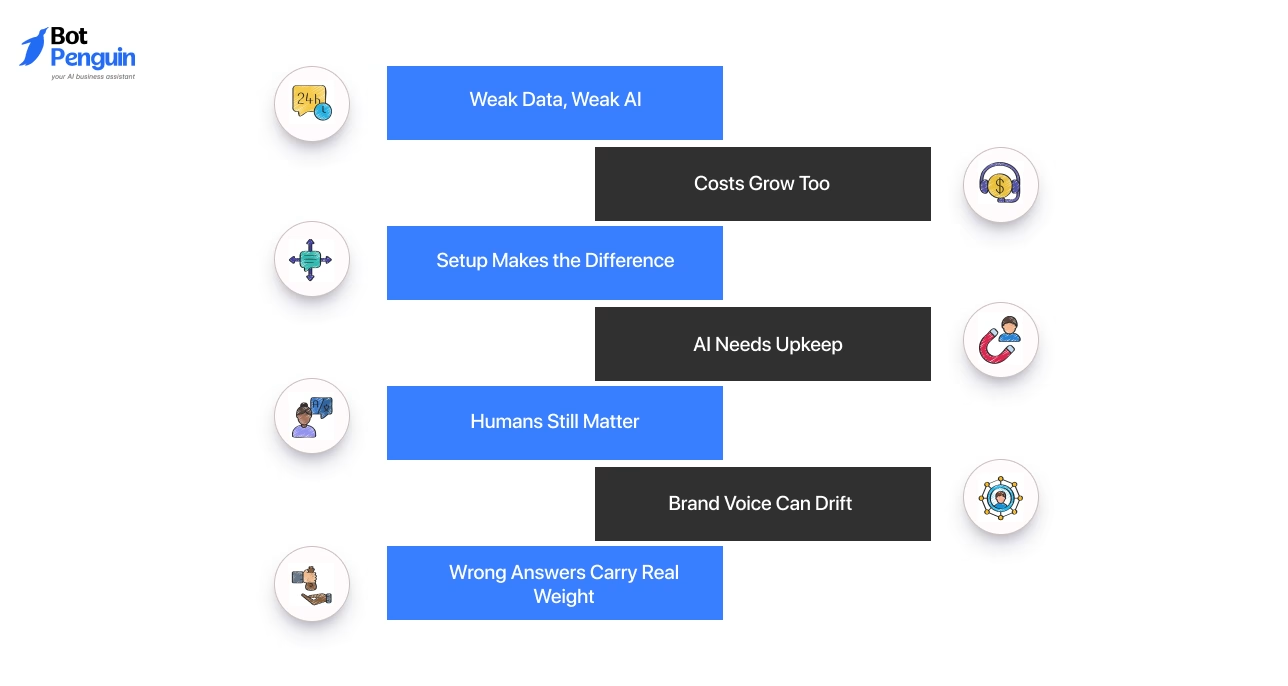
In practice, a Shopify chatbot succeeds because of the data behind it, the effort invested during setup, and how well it evolves with your store.
Understanding these limitations upfront helps you avoid expensive surprises later.
If product descriptions are incomplete, help center content is outdated, or shipping policies have changed, the Shopify chatbot simply repeats those gaps.
Better AI cannot compensate for poor business data.
Before evaluating chatbot platforms, make sure your store content is accurate, structured, and regularly updated.
As your store attracts more visitors, conversation volume increases, AI usage expands, and additional integrations become necessary.
Many businesses also move to premium AI models or add channels like WhatsApp and Instagram.
Looking only at the starting price often creates an unrealistic budget.
The quality of a chatbot depends less on the AI model and more on its implementation. Product recommendations, support flows, abandoned cart recovery, and order tracking all require thoughtful configuration.
Without proper workflows and Shopify integrations, even the most advanced chatbot feels unreliable.
The setup phase often determines the long-term value of your investment.
Product catalogs change, discounts expire, return policies evolve, and new collections are introduced throughout the year.
If the chatbot is not updated alongside those changes, customers begin receiving outdated information.
Regular reviews keep responses relevant and maintain customer trust over time.
Not every customer question has a scripted answer. Refund disputes, damaged orders, custom requests, or high-value purchase decisions often require judgment that AI cannot provide.
A well-designed Shopify customer service chatbot should recognize these situations quickly and transfer the customer to the right team.
The strongest customer experiences come from combining AI efficiency with human judgment, not one instead of the other.
A chatbot trained on generic prompts often sounds like every other chatbot.
Shoppers notice when the tone feels flat or scripted, especially for stores built on a distinct personality or niche appeal.
Getting the voice right takes deliberate prompt work, not a default setup.
A chatbot that misstates a return window, a discount, or a shipping promise puts the store in an awkward spot.
Customers tend to hold a business to what its chatbot told them, even when the information was incorrect. Thus, inaccurate chatbot answers can create real legal and financial risk.
Quick Fact: In a real case, a tribunal held a company liable for its chatbot’s inaccurate refund claim, treating the bot’s words the same as its website. (Source: CBS News)
These limits do not make a Shopify chatbot a poor choice. They show why setup quality, ongoing oversight, and realistic budgeting matter as your store grows.
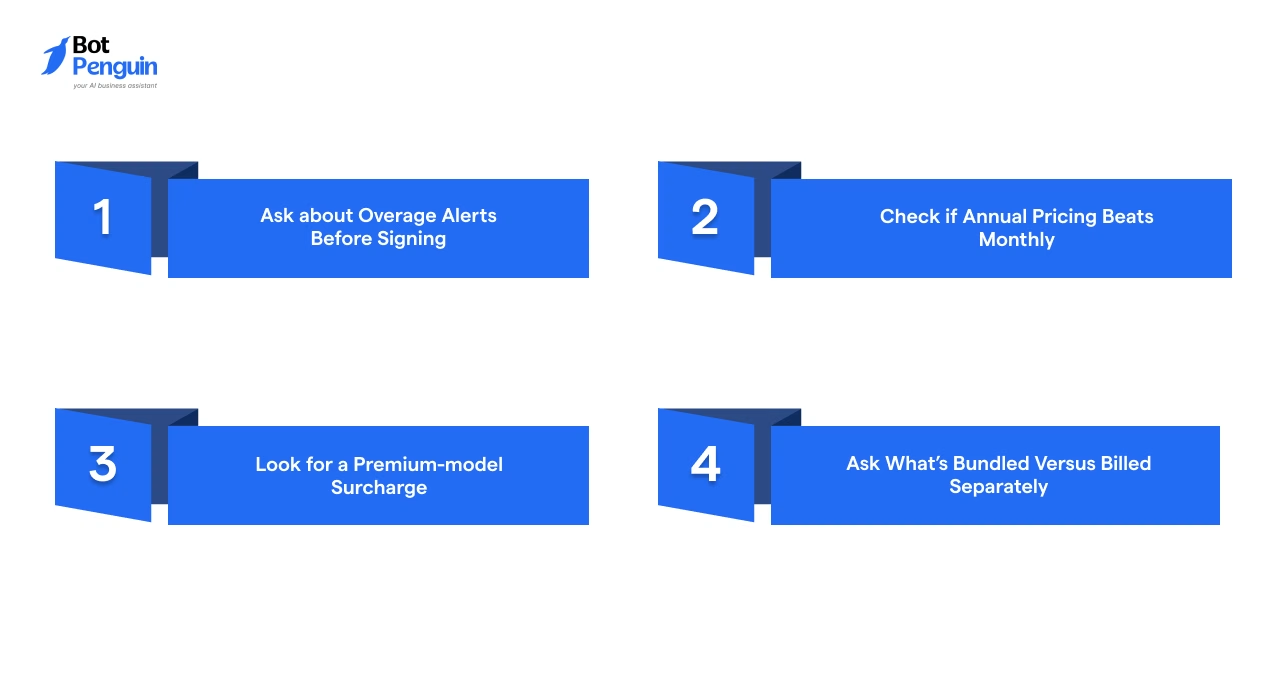
A Shopify chatbot may start as a small monthly expense. However, its total cost can change once traffic, orders, and customer questions increase.
Merchants should consider how pricing responds to actual usage.
Pricing structures vary widely: some platforms charge per conversation, others by agent seats, AI usage, or connected channels.
For example, a store handling 500 monthly conversations might fit comfortably in one plan and pay significantly more under a usage-based model once volume grows.
Here are the details worth checking before you commit:
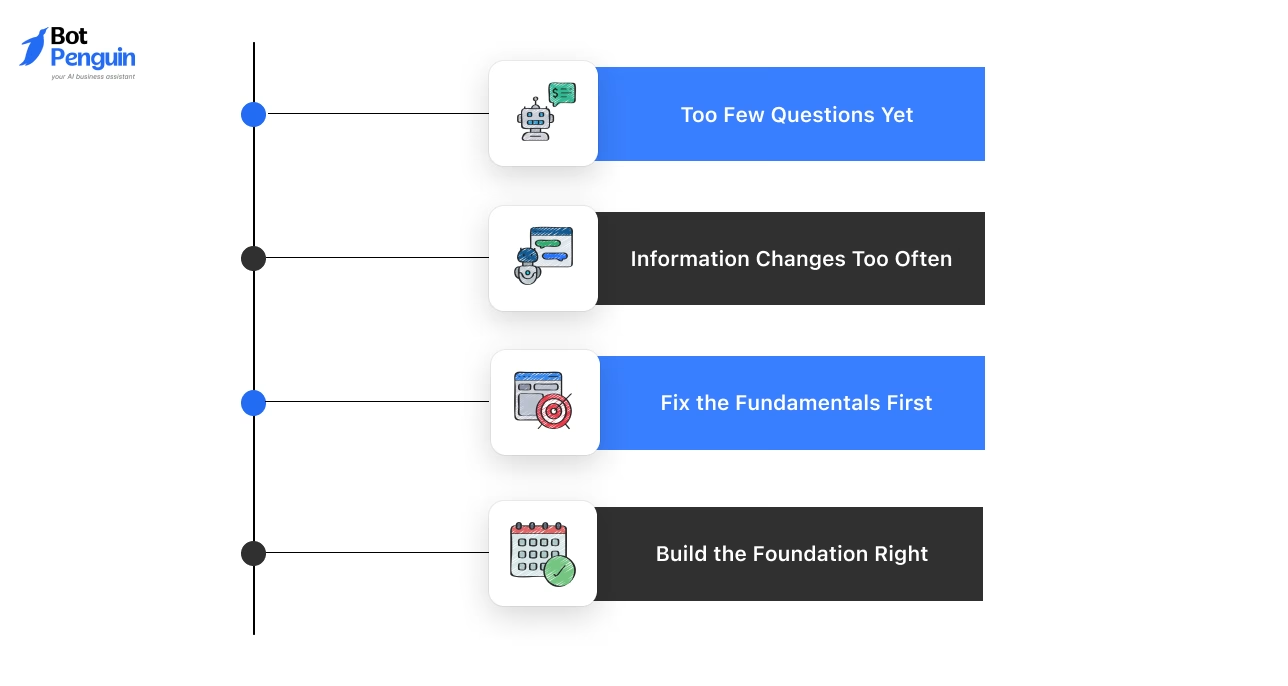
A Shopify chatbot delivers the best results when the basics of your store are already in place. If those fundamentals are missing, improving them first is usually the smarter investment.
If you only receive a handful of inquiries each week, a chatbot may not deliver enough value to justify the cost and setup effort.
As customer interactions increase, the return on investment becomes much clearer.
A Shopify chatbot depends on accurate product details, pricing, shipping policies, and support content.
If these are frequently updated but rarely maintained, customers can receive outdated or misleading answers.
If customers struggle because of unclear product pages, confusing navigation, or operational issues such as delayed fulfillment, a chatbot will not solve those problems.
Fixing the customer experience should come before introducing AI.
Start with a well-organized catalog, clear policies, and answers to your most common customer questions.
Once those pieces are in place, a Shopify chatbot becomes far more valuable, helping customers find information quickly while supporting your team more effectively.
At this stage, the next step is choosing a chatbot that fits your business instead of forcing you to adapt to the tool. BotPenguin, for example, connects with Shopify, supports AI-powered customer interactions, and lets you combine automation with human assistance as your store grows.
Most chatbot drawbacks come from weak setup, poor oversight, or unclear pricing. A few practical habits keep small issues from turning into customer problems.
Here’s a breakdown of the best practices that help you avoid the most common chatbot mistakes:
The goal is not to remove every limitation. It is to catch problems early and keep customers moving toward the right answer.
A Shopify chatbot can be a valuable investment, but only when it matches your store's needs. Looking beyond feature lists and understanding the real trade-offs helps you make a more confident decision.
The best chatbot is not necessarily the one with the most AI capabilities; it is the one that fits your products, customers, support volume, and budget.
Take time to evaluate your options, compare pricing models, and plan for future growth instead of focusing only on the starting cost.
A well-chosen chatbot can deliver lasting value, while the wrong one quickly becomes another tool that adds more complexity than it solves.
A Shopify chatbot offers faster replies, guided product discovery, and support outside business hours. Its main drawbacks include setup effort, content maintenance, incorrect answers, rising usage costs, and the need for human support when customer issues require judgment or empathy.
The biggest downside is unreliable information when store data, policies, or product details are outdated. Costs can also rise with conversation volume. Strong human handoff rules, regular reviews, and clear pricing help prevent these limitations from affecting customers or budgets.
Yes. A Shopify AI chatbot may misread wording, unusual requests, or questions outside its training data. It should admit uncertainty and transfer the conversation to a person instead of guessing, repeating irrelevant information, or leaving the shopper without an answer.
A Shopify chatbot is worthwhile when customer questions consume staff time or shoppers frequently need help before buying. Very small stores with inquiries may gain more by improving product pages, policies, and navigation before paying for chatbot software and setup.
No. A chatbot can handle routine questions, order updates, product guidance, and basic troubleshooting. Human agents remain necessary for disputes, damaged orders, sensitive complaints, unusual requests, and situations requiring flexibility, empathy, negotiation, or decisions beyond predefined store rules and policies.
Shopify chatbot costs may increase through conversation limits, AI usage, added channels, agent seats, integrations, or features. Merchants should compare pricing models, overage charges, upgrade triggers, and seasonal traffic needs rather than judging affordability from only the advertised monthly price.
Set clear human handoff rules, review conversations, keep product and policy information current, and test common customer wording before launch. Start with a few high-value tasks, monitor performance, and choose pricing that matches expected usage instead of projected growth alone.
Build a Smarter Shopify Customer Experience
Answer product questions, recommend the right items, and manage customer support with an AI chatbot built for growing Shopify stores.
Get Started NowCheckout our related blogs you will love.
Updated at Oct 16, 2026
15 min to read
Updated at Oct 15, 2026
15 min to read
Updated at Oct 14, 2026
7 min to read
Updated at Oct 13, 2026
9 min to read
Updated at Oct 13, 2026
11 min to read
Updated at Oct 13, 2026
8 min to read
Table of Contents