


Power Virtual Agents vs Copilot Studio for Teams: What Changed and When to Choose an Alternative
Updated at Oct 19, 2026
15 min to read
Do you feel like Microsoft Teams is a chatty monster you can't tame?
Imagine having a friendly teammate built right in, ready to answer your questions and lighten your load. That's the magic of a Microsoft Teams chatbot. Microsoft Teams chatbots can take on repetitive tasks, answer endless questions, and even schedule meetings, allowing users to focus on what matters.
In this article, you can explore the transformative power of Microsoft Teams chatbots in improving team collaboration and provide insights into how these AI-powered assistants can increase workplace efficiency, optimize communication, and support business growth.
From understanding the role of Microsoft Teams chatbots to choosing the best type of chatbot for your business, you explore the various ways to improve collaboration across your teams.
Every enterprise workflow consists of documented procedures, daily phone calls, dozens of to-do lists across different channels, or third-party software required for work efficiency. Sometimes, something as simple as finding a file or a location after a meeting can become a big challenge for employees.
Microsoft has introduced a solution called Every Workspace Ecosystem with various programmable extensions for enterprises to improve the work experience of employees. One of its features is the ability to develop and implement actionable chatbots.
Think of a chatbot as a friendly robot that you can chat with. They reside on a computer or phone and are designed to understand questions through text or voice commands. When a user asks a question or gives a command, the chatbot quickly scans its brain (combining rules and learned behavior) and provides the right answer or action.
However, in the context of Microsoft Teams, a Microsoft Teams chatbot is like an intelligent assistant that connects employees to other services and workflows in the organization to perform tasks of a different nature.
Before the so-called ChatGPT boom, chatbots in Microsoft Teams came in the form of Power Virtual Agents.
Power Virtual Agents was a no-code guided solution with a graphical user interface that could be easily integrated into the Teams platform. Designed for non-experts, any employee could expose an intelligent virtual agent to Teams without having to set up a development environment.
Power Virtual Agents were powerful chatbots that could answer questions from customers and other employees, and were connected to internal knowledge bases and services. They could also perform specific tasks and were easy to train. They worked in group chats and across multiple channels and were extensible with Microsoft Grap APIs, so the possibilities for customization and functionality were enormous.
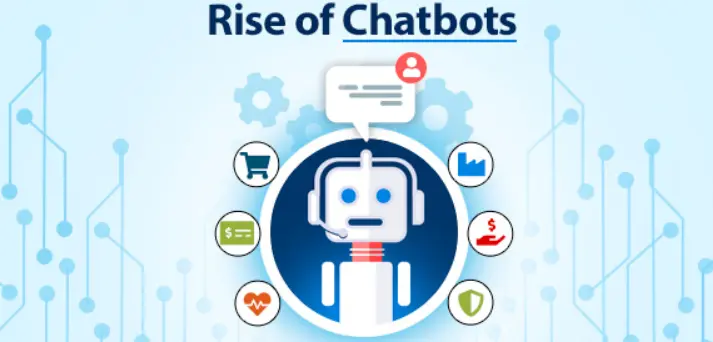
Chatbots are all around us today. It’s like everyone suddenly has an extra pair of hands. Need to schedule a meeting? Your chatbot got it. Looking for that report from last month? The chatbot is on it.
These chatbots such as Microsoft Teams chatbot are becoming more common in workplaces around the world, changing the way we work. They’re part of the team, even though they’re just lines of code. Here’s why they’re becoming so popular:
Time Savers: They cut down on the time you spend hunting for information or trying to figure out who to ask for help.
Stress Reducers: They take the guesswork out of work, answering your questions and reducing the "I don't know what to do" moments.
Friendly Helpers: They're designed to be approachable and user-friendly, so talking to a chatbot feels just as easy as chatting with a co-worker
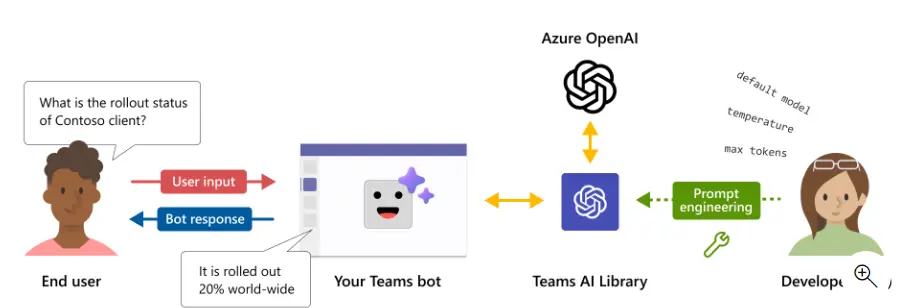
Working together like peanut butter and jelly – that’s collaboration at its best. Microsoft Teams chatbot is nudging teams closer together, making the back-and-forth as smooth as a playground slide. Let's see ways and use cases in which a Microsoft Teams chatbot can enhance team collaboration:
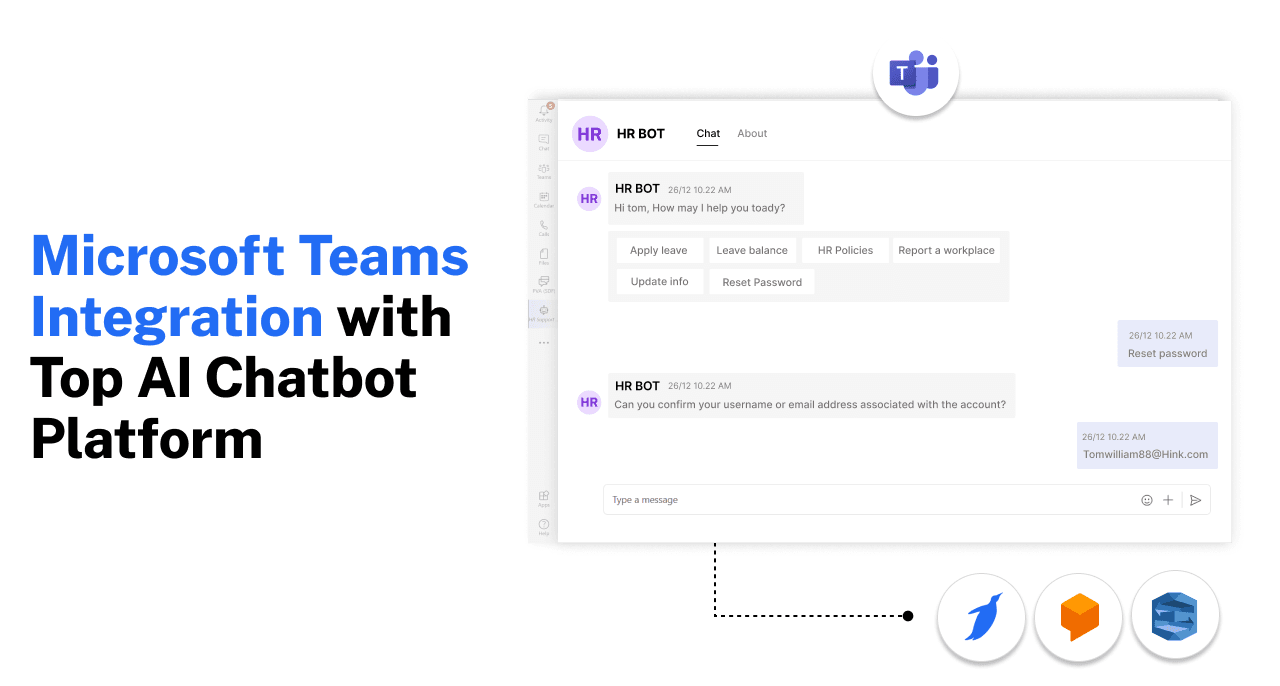
Let's imagine you're at work and have this digital genie in your Teams app. It's your chatbot. You ask it questions, and it gives you answers. You tell it to do stuff, and it does—no magic lamp needed. This is what Microsoft Teams Chatbot Automation feels like. It's a game changer, making chatting with coworkers fun and super efficient.
Chatbots can handle routine tasks like scheduling meetings, answering FAQs, and distributing documents, freeing up your team to spend more time on more strategic work.
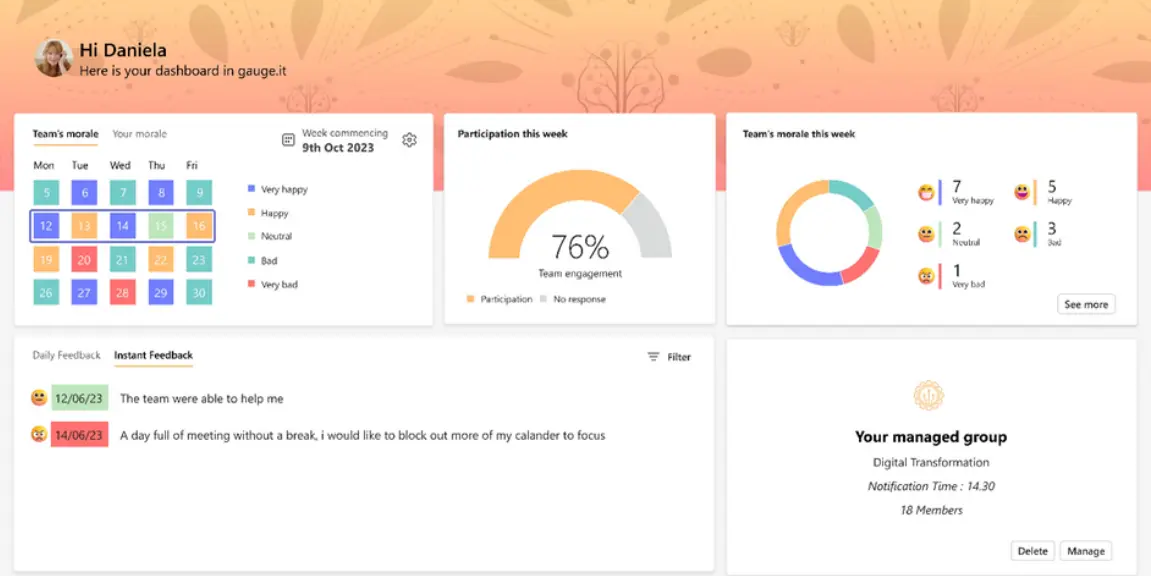
More and more people are working from home, remotely, and in different time zones. This makes it difficult to plan your work week, including aligning your colleagues' work hours, scheduling meetings, and sending messages without interfering with their free time.
This can lead to an "always on" mentality. The following new features of Microsoft Teams chatbots will help you increase transparency and achieve more without affecting your team's work-life balance:
Similar to delaying email delivery in Outlook, you can manually select a future delivery date and time for your chat message. Simply right-click on the Send button to schedule a send. You will also automatically receive scheduled send suggestions from Viva Insights if it is outside the recipient's working hours. With just one click, users can send chat messages with confidence that the message will be delivered when the recipient's working hours start. The scheduled delivery feature will be generally available in November and scheduled delivery suggestions are expected to be generally available by the end of the year.
Give your employees transparency by letting them decide where they'll work that day. They'll know if you're in the office or working from home, making it easier to coordinate face-to-face meetings. If anything comes up, update your plans in Outlook or Teams. Rest assured that all changes will be reflected in both Outlook and Teams. Private preview until the end of the year.
Let's see how you can make knowledge easily available with Microsoft Teams Chatbot for you team.
Suggested Reading:Exploring Chatbot Functionality in Microsoft Teams
Imagine a helper who never sleeps and never takes a break. That's exactly what the Microsoft Teams Customer Service Chatbot is. It is always ready to help customers and make them feel heard and satisfied.
In conclusion, the Microsoft Teams chatbot can significantly enhance Team collaboration. By enhancing communication, streamlining workflow, and repetitive tasks they can save a lot of time for the team enabling them to collaborate on issues of greater importance. By making relevant information easily accessible to everyone they also assist the team in onboarding. They also increase the efficiency of customer service thus enabling better feedback and insights and overall team harmony.
Finally, implementing Microsoft Teams chatbots is an approachable task with the right planning, selecting the best chatbot source, and smoothly integrating it into your workspace. The rise in the prevalence of these robots signals a shift towards a more streamlined, interconnected, and productive work environment in this digital age.
Ready to try a Microsoft Teams chatbot? You can try the free plan of BotPenguin and explore it's features further!
The Microsoft Teams chatbot enables faster communication, automates routine tasks, and allows easy accessibility to shared data, thus enhancing team collaboration.
Yes, the Microsoft Teams chatbot can facilitate communication across various departments, sending notifications and updates on tasks or projects as needed.
The Microsoft Teams chatbot can send reminders about project deadlines, share updates, and collect feedback automatically, simplifying project management.
Absolutely. The Microsoft Teams chatbot can be customized to handle specific tasks, respond to particular queries, or communicate with specific team members.
No. The Microsoft Teams chatbot merely automates routine tasks and communicates predefined messages, human interaction remains crucial for strategic deliberations and creative discussions.
Subscribe to Our Newsletter
Get the latest business insights straight into your inbox.
Checkout our related blogs you will love.
Updated at Oct 19, 2026
15 min to read
Updated at Oct 19, 2026
9 min to read
Updated at Oct 19, 2026
10 min to read
Updated at Oct 19, 2026
12 min to read
Updated at Oct 16, 2026
min to read
Updated at Oct 13, 2026
12 min to read
Table of Contents