BotPenguin vs Copilot Studio for Power Virtual Agents for Teams
Updated at Sep 10, 2026
15 min to read

BotPenguin, Dialogflow, Amazon Lex, Rasa, and IBM Watsonx Assistant compete for the best AI chatbot platform for Microsoft Teams. They differ in setup speed, customization, developer requirements, and control. The right choice depends on whether your team prioritizes no-code deployment speed or deeper technical flexibility.
Choosing the best AI chatbot platform for Microsoft Teams is rarely straightforward. Each option balances speed, flexibility, technical effort, and control differently.
Some teams need a Microsoft Teams AI chatbot without developer involvement. Others need deeper customization, tighter infrastructure control, or advanced development options.
Before comparing tools, understanding what a Microsoft Teams chatbot is helps establish the right evaluation criteria.
This guide compares BotPenguin, Dialogflow, Amazon Lex, Rasa, and IBM Watsonx Assistant. You will learn how each option differs in setup, customization, developer requirements, and control. The goal is to help you make a choice based on your team’s actual resources.
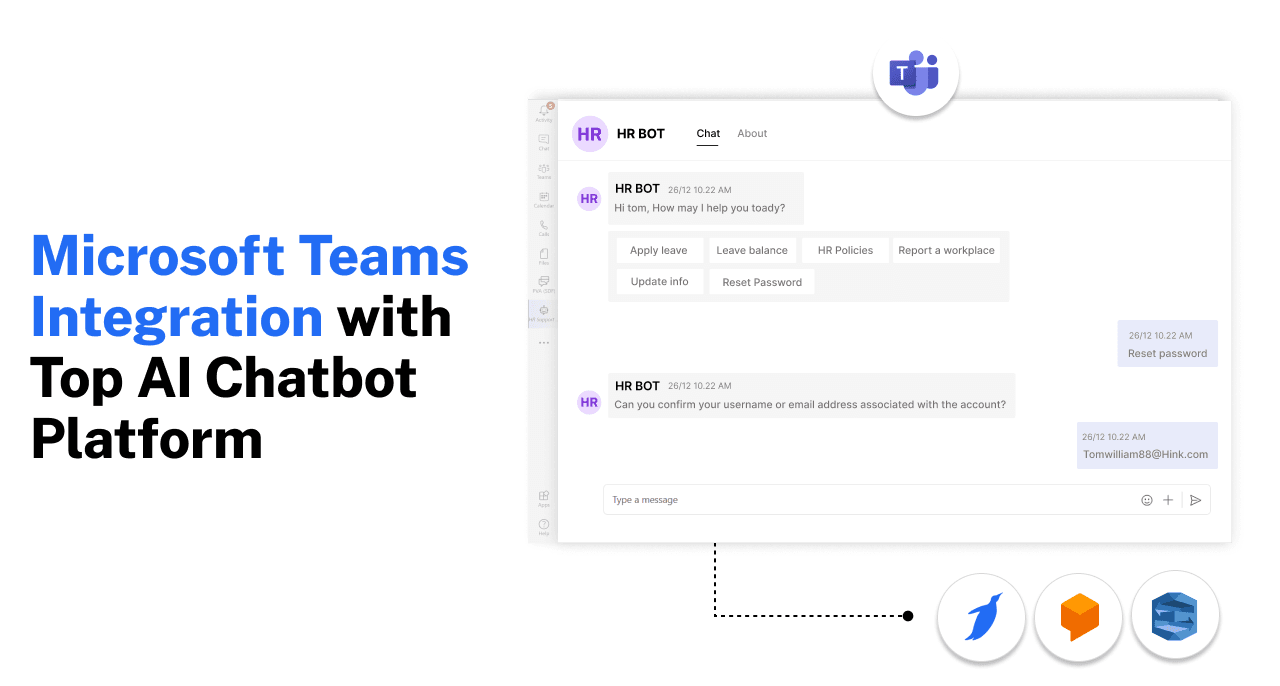
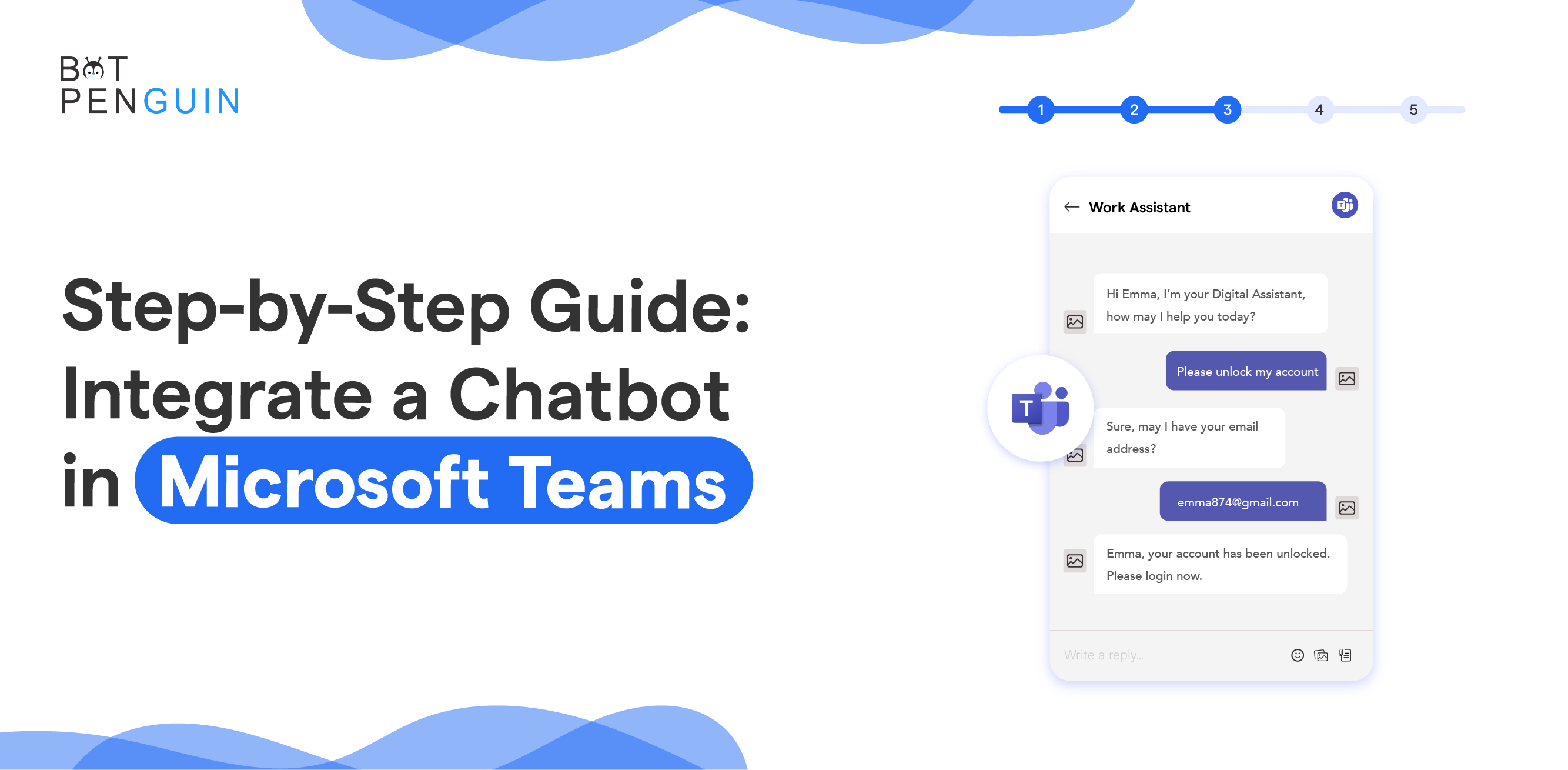
Teams often connect chatbots to Microsoft Teams to reduce repetitive internal requests. A Microsoft Teams AI chatbot can handle routine questions without interrupting employees.
It can support common tasks such as:
Answering recurring policy or process questions
Routing requests to the right team
Handling basic scheduling or status queries
Escalating complex issues to a person
The main advantage is access. Employees can get answers inside a tool they already use.
That reduces unnecessary switching between apps and support channels. It also helps teams standardize responses for common requests.
However, integration value depends on the chatbot platform behind it. Some tools prioritize quick setup and low technical effort. Others provide deeper customization and developer control.
That difference matters when comparing Microsoft Teams chatbot options. The right choice depends on your team’s technical resources, workflows, and expected level of control.
These tools serve different technical and operational priorities. The right choice depends on setup effort, customization, control, and available development resources.
Disclaimer: Platform features, pricing, and availability were verified as of August 2026. These details may change, so confirm the latest information on each provider’s official website before purchasing.
The best AI chatbot platform for Microsoft Teams depends on your resources. It also depends on how much control your team actually needs.
Best for: Teams wanting faster Microsoft Teams chatbot deployment without extensive development.
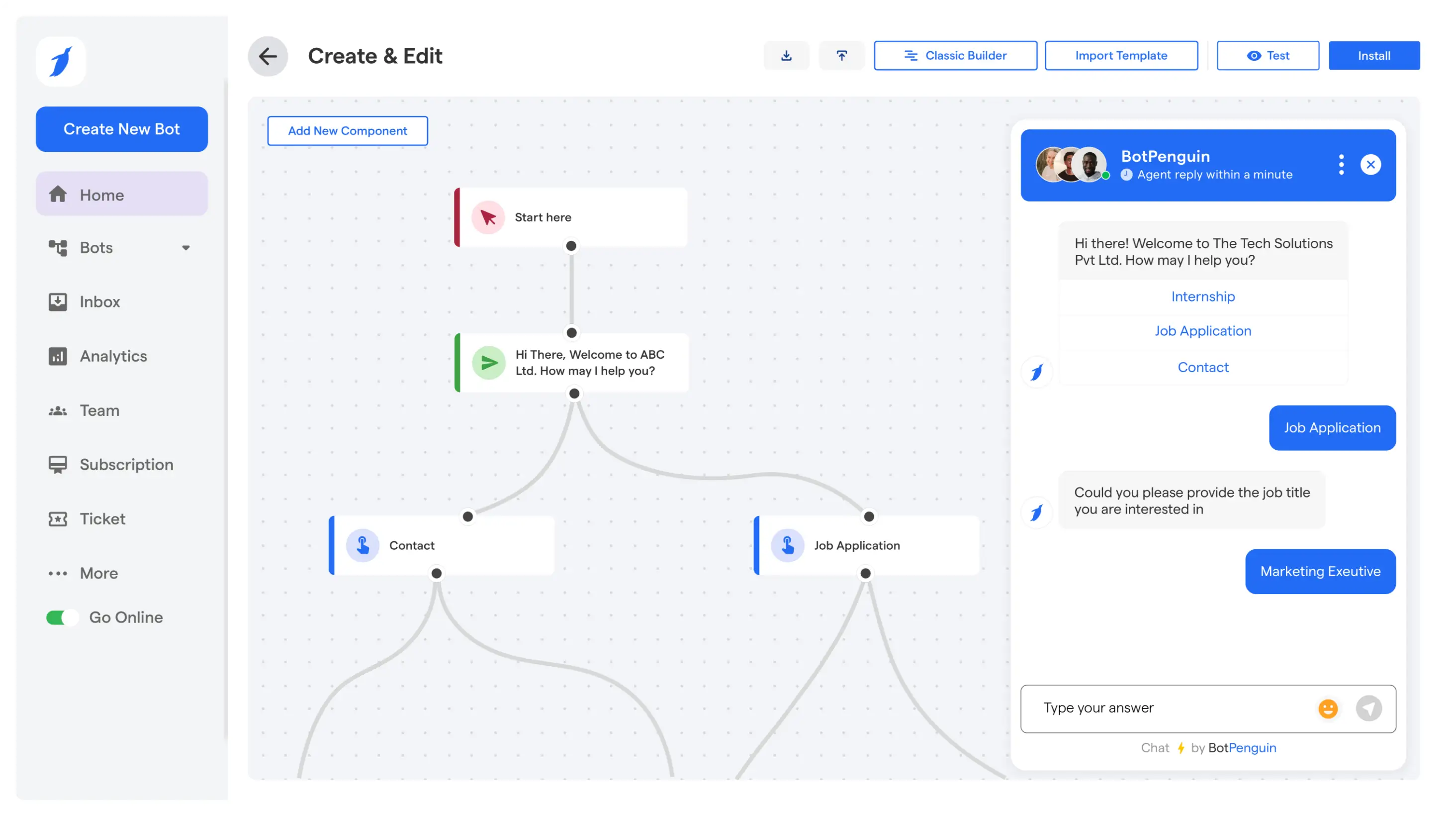
BotPenguin provides a no-code way to create and deploy chatbots in Microsoft Teams. Users can select Microsoft Teams, configure chatbot settings, customize conversations, and deploy the bot.
Key strengths:
No-code chatbot setup
Microsoft Teams deployment support
Customizable chatbot settings and chatflows
80+ integrations with business tools
Internal support and helpdesk automation
Workflow and meeting automation
Setup requirements: BotPenguin is designed for teams without extensive technical resources. Businesses can configure chatflows and Microsoft Teams settings without building the complete bot infrastructure themselves.
Pricing: Microsoft Teams support is included in BotPenguin’s King Plan at $99 per month. The plan includes 12,000 messages, unlimited chatbots, and 10 team members. The platform also offers MS Teams as an add-on for $100 per month.
Main limitation: Development-heavy teams may need deeper infrastructure control than BotPenguin provides.
Verdict: Choose BotPenguin when faster no-code deployment is the priority. It fits teams wanting Microsoft Teams automation without significant engineering involvement.
Best for: Teams already working extensively with Google Cloud.
Dialogflow provides strong conversational development capabilities. It suits organizations comfortable managing cloud services and technical integrations.
Key strengths:
Strong natural language understanding
Structured conversation flow design
Backend integration flexibility
Good fit for Google Cloud environments
Greater technical control than basic builders
Setup requirements: Microsoft Teams connectivity generally requires additional integration work. Development and cloud experience make implementation easier.
Pricing: Dialogflow follows a usage-based pricing model; it costs $0.007 per chat request. Additionally, Generative Playbooks cost $0.012 per chat request.
Main limitation: Setup usually requires more technical knowledge than simpler no-code tools.
Verdict: Choose Dialogflow when Google Cloud alignment and flexibility matter. Choose simpler tools when reducing development effort matters more.
Best for: Teams already building and operating workloads on AWS.
Amazon Lex supports text and voice conversational interfaces. Its strongest advantage is integration with the wider AWS ecosystem.
Key strengths:
Strong AWS ecosystem connectivity
Integration with AWS Lambda
Programmable backend logic
Suitable for technical conversational workflows
Flexible infrastructure options
Setup requirements: Teams may need developers to manage permissions, business logic, monitoring, and connected AWS services.
Pricing: Amazon Lex uses pay-as-you-go pricing. It charges $0.00075 per text request. Speech requests cost $0.004 each under its request-response model.
Main limitation: Its cloud flexibility adds configuration responsibilities.
Verdict: Choose Amazon Lex when AWS already supports your infrastructure. Consider a simpler tool for faster, business-managed deployment.
Best for: Development teams requiring maximum customization and control.
Rasa gives technical teams substantial ownership over conversation logic and deployment architecture. This makes it suitable for demanding or specialized use cases.
Key strengths:
Deep conversational customization
Strong developer control
Flexible deployment architecture
Custom business logic
Greater infrastructure ownership
Setup requirements: Rasa requires stronger technical resources than most options here. Developers typically manage configuration, integrations, and deployment.
Pricing: Rasa provides a Developer Edition alongside enterprise options. The Developer Edition is free, while the Enterprise pricing is custom and requires contacting Rasa directly.
Main limitation: The technical setup can be excessive for straightforward internal automation.
Verdict: Choose Rasa when developer control matters more than deployment speed. BotPenguin is a better fit when non-technical teams need faster implementation.
Best for: Enterprise teams with established IBM environments or advanced requirements.
IBM watsonx Assistant now positions its conversational offering through watsonx Assistant. It supports enterprise conversational workflows and Microsoft Teams integration.
Key strengths:
Enterprise-focused conversational capabilities
Microsoft Teams integration support
Advanced integration options
Suitable for larger organizations
Strong fit within IBM environments
Setup requirements: Teams need the required Microsoft permissions and access to configuration. Enterprise deployments may also involve additional technical planning.
Pricing: IBM Watsonx Assistant offers a free Lite plan. Its Plus costs $140 per month, while Enterprise starts at $6,000 per month.
Main limitation: Smaller teams may find the setup heavier than necessary.
Verdict: Choose IBM Watsonx Assistant when enterprise requirements drive the decision. BotPenguin remains simpler when no-code deployment speed matters more.
Each option solves a different implementation problem. Now, let’s consider the broader benefits a Microsoft Teams chatbot can bring to daily operations.
A Microsoft Teams AI chatbot can reduce routine workload inside daily conversations. The main gains come from faster access to information and better task handling.
These benefits become more useful when the chatbot supports existing workflows.
Teams often answer the same internal questions repeatedly.
A chatbot can handle common requests before they reach employees.
This is useful for policy questions, status checks, and basic support requests. It reduces unnecessary interruptions across departments.
A chatbot can respond immediately to routine questions. Employees do not need to wait for another team member.
Faster replies help support teams manage larger request volumes. They also improve access to information during busy periods.
Automation can remove small tasks that consume time throughout the day.
Employees can focus on work requiring judgment or expertise.
This is especially useful when the chatbot connects with business systems. Relevant data can be surfaced without repeated manual searches.
A chatbot can provide standardized answers for recurring questions. That reduces conflicting information across teams.
Consistent responses are useful for HR, IT, onboarding, and operational support. Teams can update shared information as processes change.
Automation should not handle every request. Complex or sensitive issues still need human involvement.
A well-configured chatbot can identify those cases and route them appropriately. This keeps routine requests automated without blocking access to people.
These gains depend heavily on the selected chatbot platform. Setup quality, integrations, and control determine how useful the automation becomes.
Choosing the best AI chatbot platform for Microsoft Teams requires more than comparing features. Teams should assess technical effort, integration complexity, customization, pricing, security, and long-term maintenance.
The sections below focus on those decision factors. They help determine whether your team needs faster no-code deployment or deeper developer control.
A no-code chatbot builder suits teams without dedicated conversational AI developers. Developer-focused tools suit teams that need deeper control.
Focus on three questions:
Who will manage the chatbot? Non-technical teams need simpler administration.
How much customization is required? Complex logic usually needs developer support.
How much maintenance can the team handle? Advanced tools demand more technical ownership.
A technically powerful platform creates little value if nobody can manage it efficiently.
A chatbot for Microsoft Teams should fit your existing business systems. Integration requirements can directly affect setup time and maintenance.
Check these areas before choosing:
CRM and helpdesk connectivity
Database and internal tool support
Existing cloud environment
API and webhook requirements
Authentication and permission complexity
Existing infrastructure can influence the decision. AWS teams may prefer Amazon Lex, while Google Cloud users may favor Dialogflow.
Customization and setup speed often pull in opposite directions. More control usually requires more technical effort.
Compare platforms based on:
Conversation logic flexibility
Workflow customization
Deployment time
Developer involvement
Ongoing configuration effort
Rasa favors deeper developer control. BotPenguin prioritizes faster no-code deployment.
Neither approach is universally better. The right choice depends on workflow complexity and available expertise.
Compare pricing models, not only headline prices. Subscription plans and usage-based pricing behave differently as conversation volumes increase.
A lower entry price can still create higher operational costs. Development and maintenance requirements should be included in the decision.
Security and long-term ownership matter beyond initial deployment. They affect both operational risk and future scalability.
Review:
Access controls and permissions
Data handling practices
Compliance requirements
Deployment options
Support availability
Long-term maintenance effort
If you are specifically evaluating Microsoft’s native option, you can refer to our comparison guide on BotPenguin vs. Microsoft Copilot Studio for Teams.
The final decision should match resources with requirements. Choose no-code speed when simplicity matters, and deeper control when technical flexibility justifies the added effort.
AI chatbots automate repetitive tasks, speed up responses, and reduce interruptions. Teams can handle routine requests faster, improve communication, and help employees focus on higher-value work instead of repeatedly answering common questions.
Yes. A no-code chatbot builder like BotPenguin can help teams deploy Microsoft Teams chatbots without the need for dedicated developers. This suits non-technical teams that need faster setup, easier management, and lower engineering dependence.
Dialogflow, Amazon Lex, BotPenguin, Rasa, and IBM Watson Assistant all support Microsoft Teams integration. Each differs in setup, customization, pricing, and developer control, so the right choice depends on your technical requirements.
An AI chatbot can answer common queries instantly and handle routine requests around the clock. This reduces wait times, supports higher request volumes, and escalates complex conversations to human agents when needed.
Yes, when configured correctly with a reputable provider. Look for encryption, access controls, secure data handling, authentication, and relevant compliance capabilities before connecting the chatbot with Microsoft Teams and business systems.
The best AI chatbot platform for Microsoft Teams depends on your team’s priorities.
Some businesses need faster deployment with minimal technical effort. Others need deeper customization, infrastructure control, and developer flexibility.
The right choice should match your available resources and long-term maintenance capacity. Pricing, integrations, security, and scalability should also support that decision.
BotPenguin is for teams that prefer a quicker no-code implementation without heavy engineering involvement. Teams needing deeper control may favor developer-focused alternatives.
If faster deployment matters more, consider a chatbot for Microsoft Teams that reduces setup complexity while supporting daily workflows.
Subscribe to Our Newsletter
Get the latest business insights straight into your inbox.
Checkout our related blogs you will love.

Updated at Sep 10, 2026
15 min to read

Updated at Sep 10, 2026
8 min to read

Updated at Sep 10, 2026
8 min to read

Updated at Sep 10, 2026
12 min to read

Updated at Sep 10, 2026
10 min to read

Updated at Sep 3, 2026
6 min to read
Table of Contents