


Best White-Label AI Agent Platforms for Agencies 2026
Updated at Sep 22, 2026
12 min to read

Building software from scratch is often a waste of time.
Most of what you need already exists, just not under your brand.
APIs and white label solutions let you skip the heavy lifting. Instead of starting from scratch, you plug into existing systems or rebrand complete platforms as your own.
Whether you're a SaaS founder, agency, or product team, both options help you move faster and cheaper.
In this guide, you'll learn what API and white label solutions are, how they work, when to use them, and how to choose the right one for your business.
Most digital tools you use rely on quiet connections running in the background.
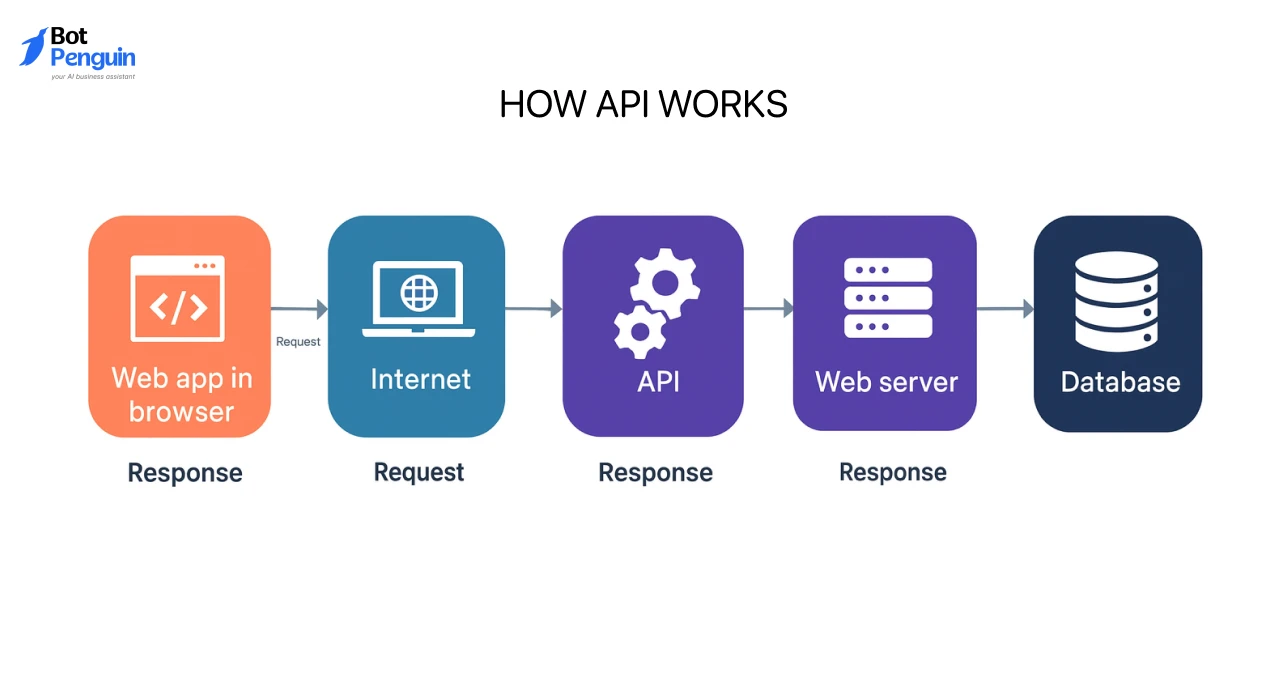
When you log in with Google, track an order, or make a payment, two systems communicate with each other. That exchange is made possible by an API.
An API is a simple way for software to share data without exposing everything behind the scenes. It keeps apps running smoothly and quickly.
This is why many teams compare API vs. white label solutions when deciding how to build or expand a product.
APIs show up everywhere, so understanding how they work makes it easier to choose the right approach for your business.
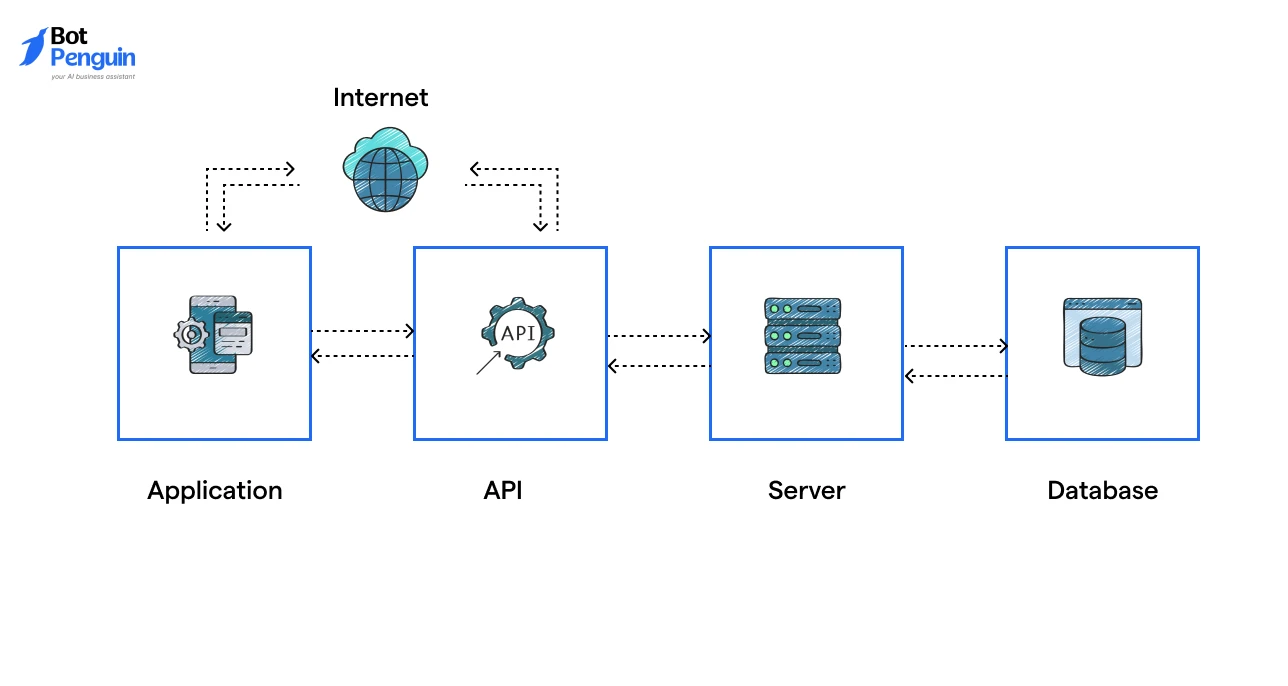
APIs aren’t just a concept; they’re the invisible layer that makes apps work together without you noticing.
They follow a simple idea: one app asks for something, the other app responds with exactly what’s needed. But behind that simplicity, there’s a clear process.
Each API has defined rules. These rules include endpoints, which are specific web addresses to which requests are sent.
Think of them as doors; each leads to a specific function, such as fetching user info or sending a message.
When an app sends a request, it uses common methods like GET to retrieve data or POST to send new information.
The system that receives the request processes it and sends back a response, often in a readable format like JSON, which the original app converts into something you can see and use.
Security is also baked in. Most APIs use access tokens, which act like digital passes to verify that requests come from a trusted source.
That’s why API and white label solutions rely heavily on well-documented, secure APIs; they protect user data while keeping systems tightly connected.
In short, APIs simplify complex communication. They allow apps to share just enough data, fast and securely, so users get a smooth experience without ever knowing what’s happening behind the scenes.
APIs appear in almost every workflow.
A CRM pulls leads from a website form. A store updates shipping details automatically. A payment tool confirms a transaction in seconds.
Teams use APIs to remove manual work and keep data synced across tools. For example, a support platform may connect chats and tickets via white label API integration.
Product teams rely on APIs to move information between dashboards, analytics, and notifications.
These everyday examples illustrate the practical differences between API and white-label models, especially when a business needs flexibility and control rather than a pre-made solution.
APIs keep modern tools connected and efficient. They give businesses more control over how data flows, which features are built, and how quickly things scale.
Now that you know how APIs work under the hood, it's easier to understand the value of something more plug-and-play. That’s where white label solutions come in, offering speed and simplicity for those who need ready-to-use platforms.
Not every business wants to build from scratch. Some just want to launch fast, look polished, and focus on growth, not code. That’s where white label solutions come in.
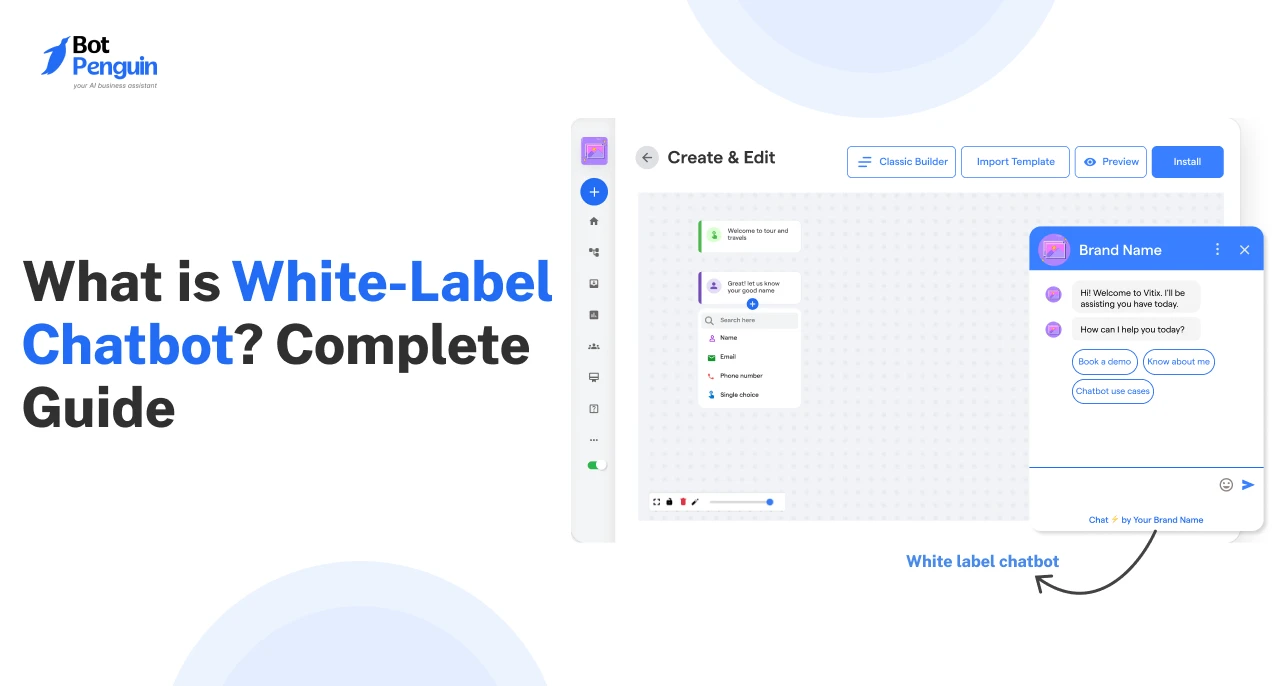
These are ready-made platforms you can rebrand and use as your own. You skip the heavy development and still offer a full product experience.
Think of a chatbot that looks like yours but runs on someone else’s backend. Or a dashboard with your logo, built and maintained by someone else. These tools help you deliver value without starting from scratch.
For companies comparing white-label API models to custom builds, this approach often saves time and reduces risk.
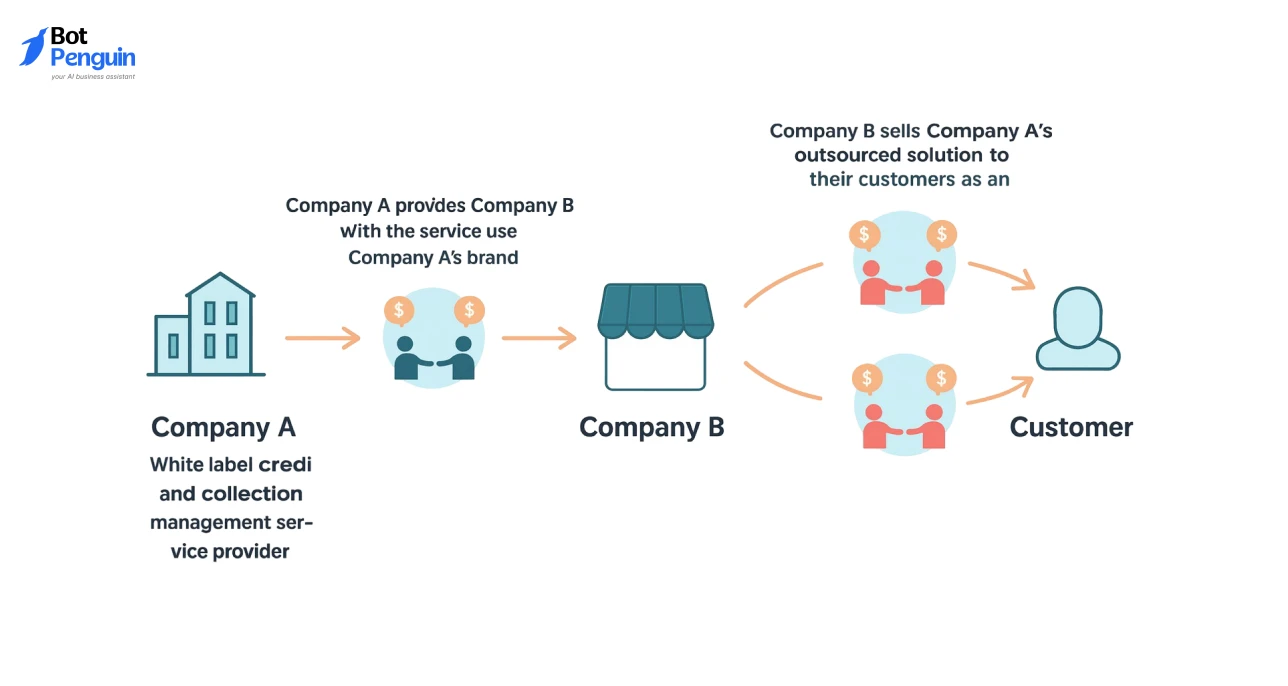
White label products are built to be reskinned. You don’t need to design them, write the code, or set up the infrastructure. Everything’s already there.
You get a complete product, like an AI agent, chatbot, CRM, or learning platform, and you customize just the visual parts. Add your brand name, logo, color scheme, and domain. That’s it.
From your customer’s perspective, it looks like something your team made.
Most providers make this even easier by offering a branded dashboard, custom login URLs, and, in some cases, mobile app versions. The core engine remains untouched. This makes white-label API setups scalable with minimal effort.
So while your customers use the tool, you manage the experience and maintain branding consistency. That’s what makes the white label API meaningful and practical: full control on the surface, minimal work underneath.
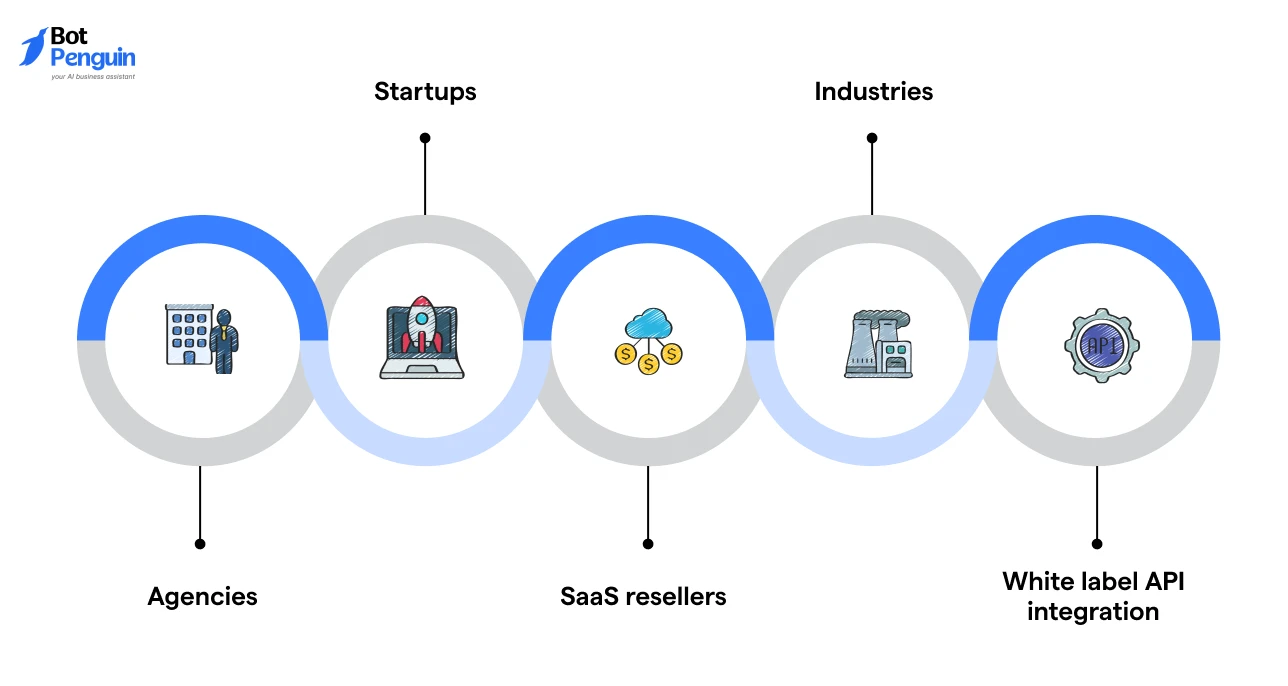
White label software is used in more places than you might think. Here’s how different businesses put it to work.
Whether you’re launching fast or scaling smart, white label use cases prove you don’t need to build everything yourself to offer real value.
White-label platforms solve a different problem than APIs do. They’re about speed, branding, and ease. You don't need to understand how things work under the hood; you just make it yours and go live.
But when a business needs greater control, tighter custom flows, or deeper integrations, white-label tools may fall short. That’s when the flexibility of APIs becomes hard to ignore. Let’s look at why some teams choose the API-first approach.
A white label API is a hybrid: an API you can integrate like any other, but the resulting product carries your brand, not the provider's. It gives agencies and SaaS resellers the deep-integration flexibility of an API with the branding control of a white label platform — without picking one over the other.
White label tools are great when the goal is speed and simplicity. But when a business needs more control over how things work and connect, APIs become the better option.
They allow teams to build features that fit their exact processes, rather than adapting to someone else’s structure.
Whether it’s a startup building a product from the ground up or an enterprise integrating new tools into an existing tech stack, API integration gives them the flexibility to do it their way.
This makes it a go-to choice for companies comparing API and white label solutions with long-term scalability in mind.
APIs give you the power to shape your own workflows. You are not locked into a fixed structure or interface. If your process is different, the API can adapt to it.
Let’s say you’re building a booking app. A white-label version may provide you with a pre-built system. But with APIs, you can control how bookings are handled, how notifications are sent, and what data gets stored. It’s your system, your rules.
This flexibility matters most when businesses grow. Scaling becomes easier when your system is built around your logic, not someone else’s template.
Businesses rarely use just one tool. They use CRMs, helpdesks, analytics, messaging platforms, and more. APIs make these tools communicate smoothly.
For example, a customer message can trigger a CRM update. A sale can push data to an analytics dashboard. APIs enable this flow without switching tabs or manually copying data.
With white label solutions, some of this is possible, but with APIs, it’s limitless. You decide what connects, how often, and in what format.
That’s the key difference. APIs offer open connectivity, while white label tools come with set boundaries.
APIs are about control and freedom. They let teams design systems around real needs rather than fit into predefined shapes.
But not every business has the time or resources to build everything itself.
That’s where white label platforms shine, offering a ready-to-go solution with just enough room for personalization. Let’s look at why some businesses prefer that path.
APIs give teams control, but not every business wants to build everything themselves. Some want to launch quickly, test ideas fast, and focus on selling rather than coding. This is where white label platforms become the smarter choice.
They offer ready-made systems that look and feel like your own product. You get full branding on the surface while the technical foundation is handled behind the scenes.
Startups use these platforms to go live without waiting months for development. Agencies use them to offer products under their own brand without writing a single line of code.
For many, this balance of speed and ownership makes white label API solutions a strong alternative to deep custom builds. Understanding what a white-label API means helps teams decide whether this approach fits their model.
White-label tools remove the biggest hurdle to launching software.
There is no need to hire developers or plan long product roadmaps. The product already exists. All you do is customize the look and feel.
Imagine creating a chatbot platform, onboarding portal, or analytics dashboard. With a white label setup, you simply add your logo, colors, domain, and brand language. Within days, you have a market-ready tool that feels like it was built in-house.
This makes it perfect for MVPs, client offerings, or early-stage ideas that need quick validation.
Teams exploring what a white label API is often realize it is less about code and more about ownership. You get your own branded product without the complexity of maintaining it.
This makes the white label API practical for businesses that value speed and presentation.
White label platforms are beneficial for businesses without technical staff.
Agencies, consultants, and small teams can sell software without needing developers or managing servers. They can focus on marketing, support, and client success.
A small agency can offer customer chat tools, appointment systems, or lead management solutions under its own brand. A training business can offer a learning platform without hiring a tech team. The provider handles the backend. You handle the customer relationship.
This is where companies often compare white label vs. API.
APIs require development and maintenance. White label products are plug-and-play. For many agencies, the simplicity of white-label systems is the deciding factor.
White label solutions give businesses a shortcut to launching polished, branded products without technical overhead. They offer a clear path for teams that want speed and presentation over deep development.
As helpful as they are, white label tools do not suit every scenario. To understand where each approach fits best, it helps to compare their strengths and limitations. That leads to the key differences between APIs and white-label solutions.
Agencies evaluating resale-ready platforms can also compare the best white label SaaS to resell
Both APIs and white-label solutions help businesses launch faster, automate processes, and save on development time. But they are built for very different needs.
An API lets your developers build and integrate custom functionality; a white-label solution is a ready-made product you rebrand and sell as your own. APIs give control and flexibility but require development and maintenance. White-label offers speed and full branding with minimal technical effort.
Choose an API when you need custom control and deep integrations; choose white label when you want to launch fast under your own brand.
Understanding the difference between API and white label systems helps you map your product strategy more clearly. Each option has strengths that matter at different stages of growth.
Below is a breakdown that simplifies the comparison.
APIs give freedom and power. White label platforms offer speed and convenience. When comparing API vs. white-label approaches, the best choice depends on your timeline, skills, and long-term goals.
Now that you have a clear side-by-side view, the next step is understanding when each option fits best. That becomes clearer as we move into the question of when to use API integration in your product strategy.
Use an API when you need custom functionality, deep integrations, and control over product behavior. Choose a white-label solution when speed, branding, and lower technical effort matter most.
Your development resources, launch timeline, and business model should guide the final decision.
APIs become the right choice when your product needs go beyond just a branded interface. They’re built for businesses that want precise control over how things function, connect, and scale.
If you're building something unique or expecting to change and grow it over time, API integration offers more freedom than any prebuilt tool can match.
Instead of adjusting your business to fit the tool, you shape the tool to suit your business.
If you already have developers in-house, APIs let your team build without limitations. You can develop features around your exact logic, run tests faster, and integrate with other systems however you choose.
For example, a travel company may want to sync booking data with internal dashboards, automate follow-ups, and control every data point along the way. With APIs, that’s entirely possible.
Teams comparing API and white-label solutions often find APIs more suitable when tech support is already in place.
Some businesses need features that go beyond what templates can offer.
You might want conditional flows, real-time updates, or custom logic to connect multiple apps.
A retail app, for instance, could use APIs to pull stock data, trigger price changes, and send custom offers based on user behavior. Prebuilt tools won’t handle that.
This is often where businesses leaning toward innovation pause on white-label setups and opt for a tailored API approach instead.
APIs are ideal when product behavior, not just appearance, drives your business. They let you build what you need, not just what’s available.
But if your goals lean toward faster execution and simpler workflows, white-label solutions might still be the smarter route. Let’s explore that next.
Not every business has the time or team to build from the ground up. Some just want to get a product out, validate an idea, or serve clients with a ready-made tool.
This is where white label solutions shine.
They help companies go live without writing code or managing infrastructure. Whether you’re testing an MVP, launching a side offering, or scaling services, white-label platforms take the heavy lifting out of it.
Understanding how and when to use a white-label API setup can help you stay lean without compromising quality.
Speed is one of the strongest reasons to go white label.
You don’t need to build, test, or maintain anything. The product is already working. All you do is add your brand and start selling.
Let’s say you want to offer a chatbot service. Instead of building it from scratch, you can use a platform that supports white labeling. Within days, you’re up and running with your own logo, color scheme, and domain.
This model is ideal for early-stage teams, solo founders, or internal departments testing a new idea.
Agencies, consultants, and service providers often want to expand their offerings without hiring developers. A white label platform lets them do that.
They can sell tools like CRMs, booking systems, or analytics dashboards under their own name.
Clients see a polished solution with your branding. Meanwhile, you focus on onboarding, support, and relationship-building, not on software development.
This makes API and white-label solutions a great combo, but in this case, the white-label model clearly wins for speed and scalability.
White label solutions are built for those who value speed, branding, and simplicity. They let you focus on customers, not code.
But what if you could get the flexibility of APIs and the speed of white label in one place? That’s what we’ll explore next.
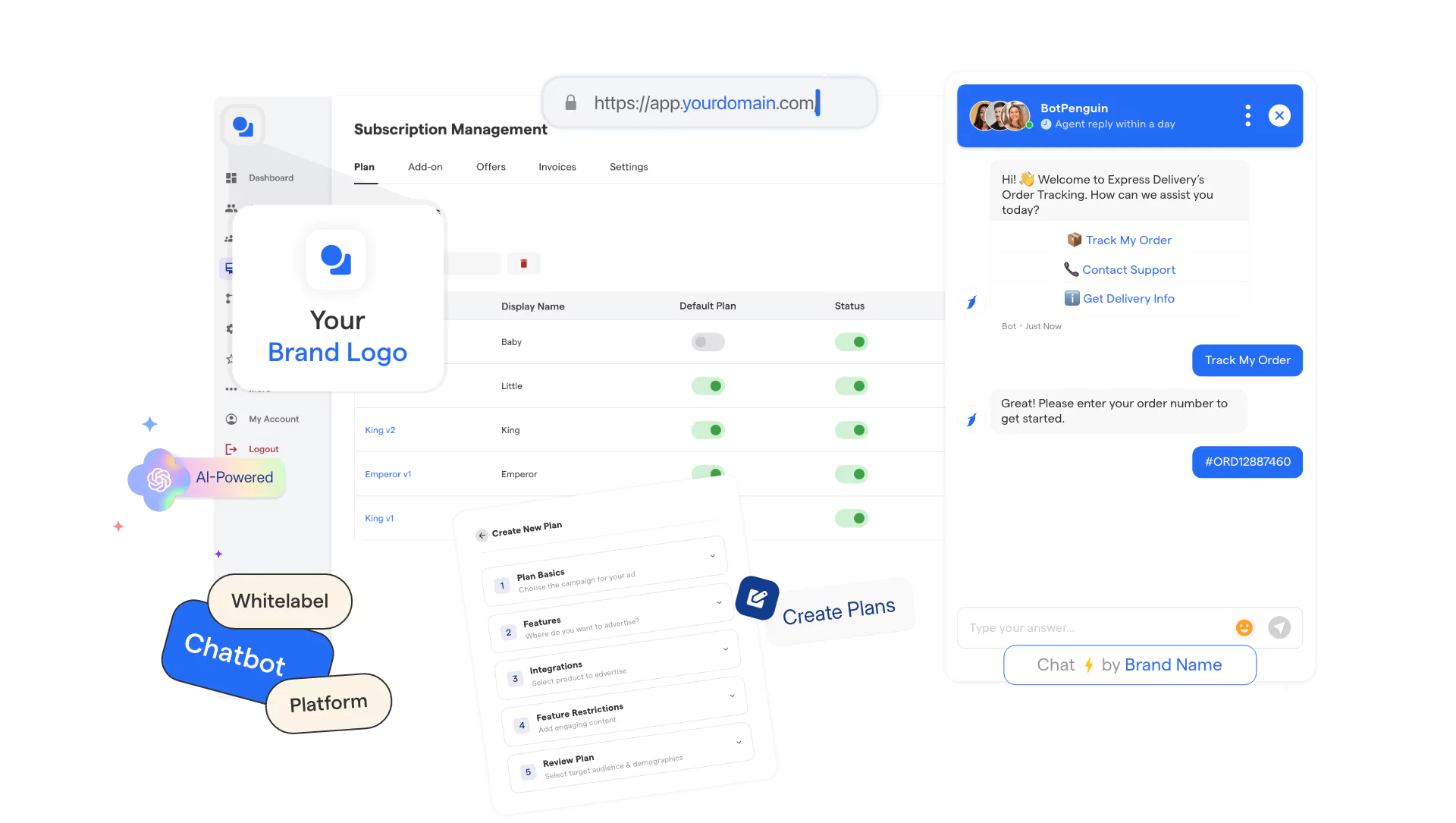
Sometimes, you need the best of both worlds. APIs give you control and customization. White label platforms provide you with speed and branding.
But what if you didn’t have to choose?
Some platforms combine both. They let you build custom logic while offering a ready-to-go, branded experience. If your business needs flexibility but also wants to move fast, this hybrid approach makes sense.
BotPenguin is one such platform, designed to support both developers and non-technical teams with powerful APIs and white-label solutions in one place.
BotPenguin offers a robust API layer that helps you automate, extend, and integrate across your existing tools.
Whether you want to trigger a WhatsApp message after a lead form submission or sync chatbot responses to your CRM, the APIs make it possible.
Teams can connect BotPenguin to tools like Zoho, HubSpot, Google Sheets, and more.
You can build dynamic workflows, enable real-time notifications, or auto-route conversations; all without being locked into rigid structures.
For businesses that need deep control, white-label API integration is a key feature.
BotPenguin makes that process clean and developer-friendly while supporting all the flexibility modern workflows demand. It bridges the gap between prebuilt convenience and technical depth, something many API and white label solutions fail to offer together.
Explore BotPenguin’s API to review its technical capabilities and available integration options.
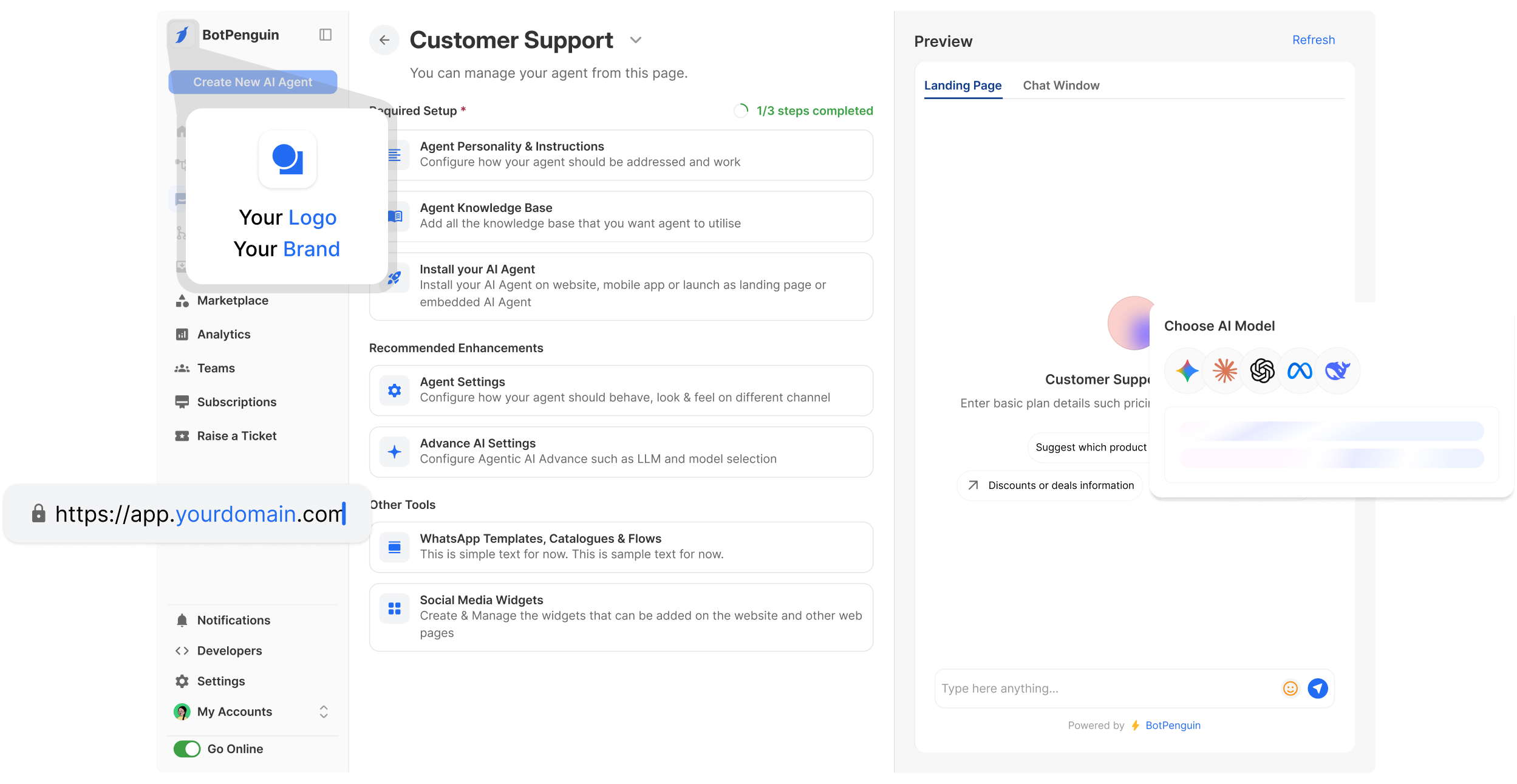
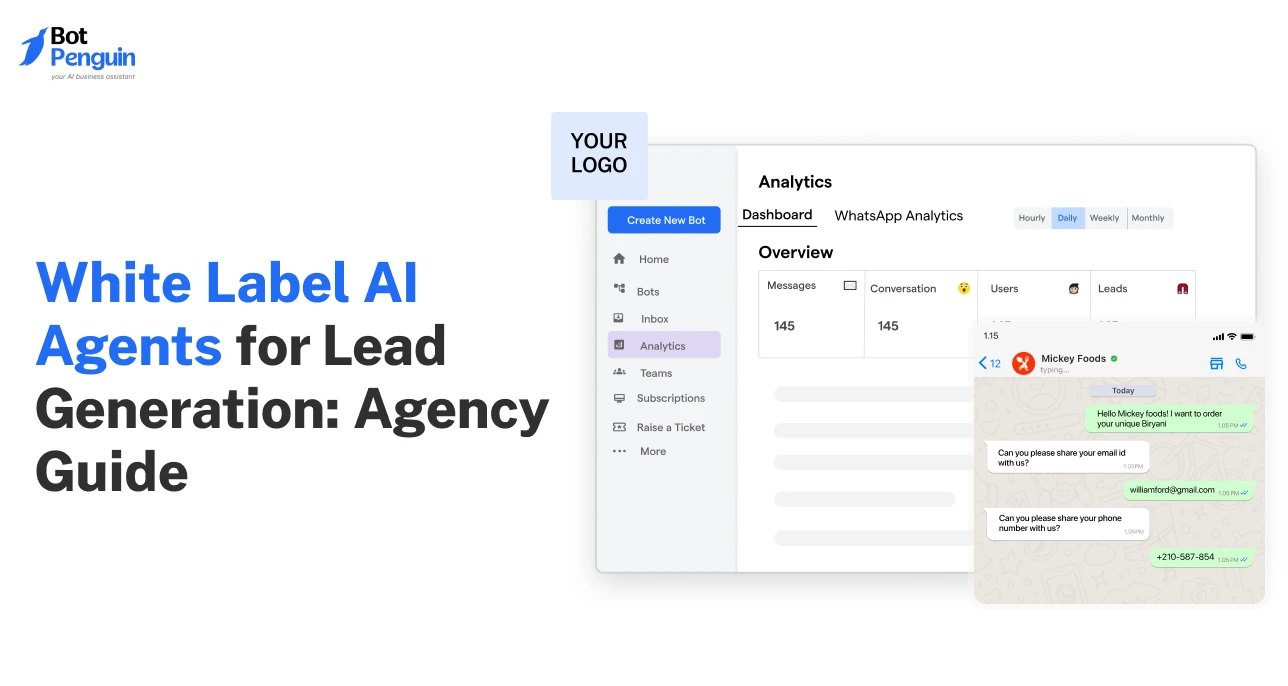
If you are a reseller, agency, or SaaS provider, BotPenguin’s white label dashboard gives you the tools to create a fully branded product.
From custom logos and domains to login portals and user roles, you manage the experience while BotPenguin powers the backend.
The platform is designed for scale. You can offer services like AI-powered chat, WhatsApp automation, and multi-channel support without writing code. This is white labeling done right.
It gives you a functioning product with the look and feel of your own solution.
Understanding the white label meaning in this context shows how powerful the model can be when paired with API access. You are not just rebranding; you are offering a scalable, intelligent product suite under your own name.
BotPenguin is built for teams that want more than templates.
With developer-ready APIs and a complete white label stack, it lets you build fast, scale smart, and own the experience inside and out. Whether you’re technical, non-technical, or somewhere in between, the platform meets you where you are.
There’s no one-size-fits-all choice; only what fits your goals best. APIs give you control, flexibility, and room to scale. White label tools offer speed, simplicity, and a ready-made experience to sell under your brand.
The value of API and white label solutions lies in giving you options. Some teams start with white label, then move to APIs as they grow. Others combine both from the start.
Think about what matters most right now: speed or control. Once you know that, the decision becomes easier.
But if you’re ready to explore both? BotPenguin offers the flexibility to match your needs!
So, start with a free demo today!
Look at uptime history, rate limits, authentication options, documentation quality, versioning policy, and support responsiveness. Platforms like BotPenguin provide developer-friendly APIs with strong documentation.
They can be, but you must verify compliance, hosting standards, encryption practices, and data ownership. BotPenguin is GDPR, HIPAA, and CCPA compliant, ISO certified, SOC 2 attested, and VAPT-assessed by a CERT-In empanelled auditor.
Beyond usage fees, expect costs for developer time, testing, monitoring, retries, scaling infrastructure, and ongoing maintenance. These are normal, but they add up if you plan only for the API price.
Not if branding options are strong. A good white label platform lets you control the UI, domain, email addresses, and even app names. BotPenguin, for instance, supports complete rebranding across dashboards, domains, and login screens.
If your value depends on unique workflows or deep integrations, choose APIs. If your priority is distribution, branding, or speed, white-label is better. If both matter, use a hybrid platform such as BotPenguin.
With APIs, success is stable custom workflows and smooth integrations. With white-label, success means fast launch, low support load, and steady reselling. Your success metric should match your reason for choosing the model.
API integration connects your existing system to another service's data or functions. A white label solution is a complete, pre-built product you rebrand and resell — no integration work required, but less control over how it works under the hood.
Subscribe to Our Newsletter
Get the latest business insights straight into your inbox.
Checkout our related blogs you will love.
Updated at Sep 22, 2026
12 min to read
Updated at Sep 9, 2026
17 min to read
Updated at Sep 4, 2026
10 min to read
Updated at Aug 7, 2026
14 min to read

Updated at Oct 9, 2026
12 min to read
Updated at Oct 8, 2026
10 min to read
Table of Contents
