


Most businesses don't build the products they sell. They find proven solutions, wrap them in expertise, and deliver results their clients couldn't achieve alone. That's the value added reseller model, and it's how thousands of agencies, IT firms, and consultants generate six-figure recurring revenue without writing a single line of code.
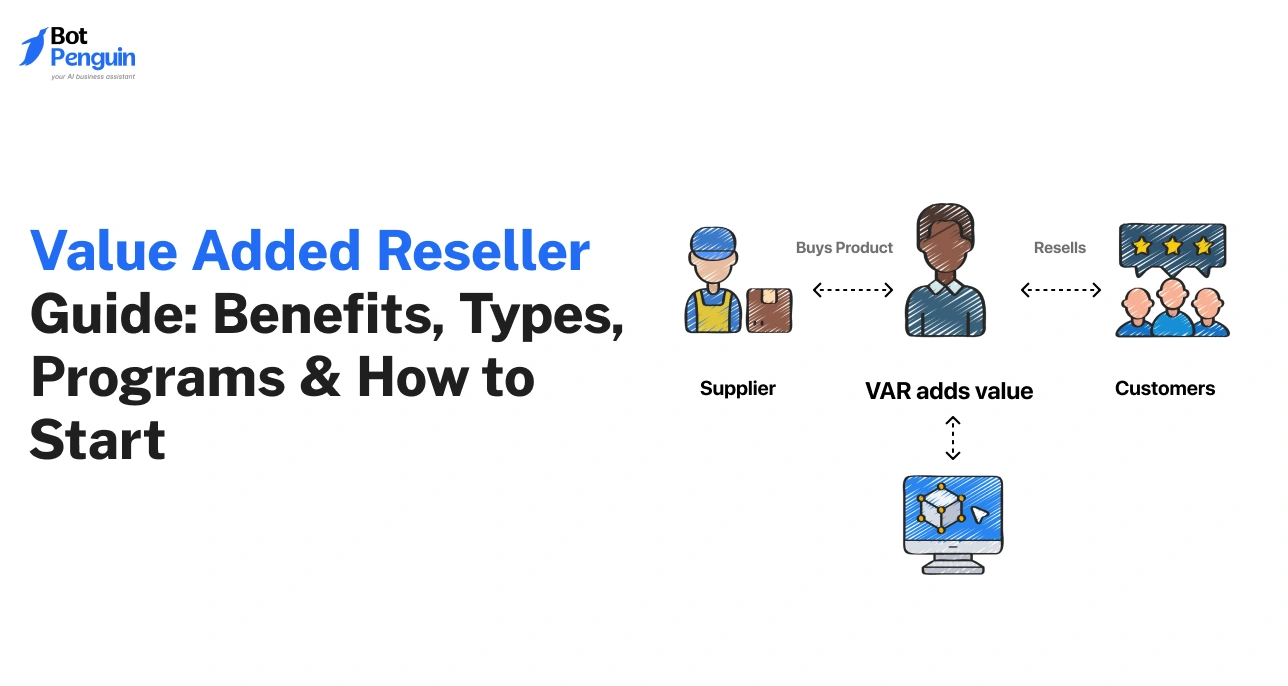
A value added reseller (VAR) purchases a product from a vendor, enhances it with services like customization, training, or support, and resells it as a complete solution. The margin isn't in the product. It's in the value you add around it.
This guide covers what a VAR is, real-world examples, how much VARs make, and how to start, including BotPenguin's chatbot reseller program for agencies looking for a low-barrier entry into recurring AI revenue.
What is a Value Added Reseller?
A value added reseller (VAR) is a company or individual that purchases a product from a vendor, adds enhancements such as customization, integration, training, or ongoing support, and resells it to customers as a complete solution.
Unlike a standard reseller who simply moves product, a VAR delivers measurable added value that justifies a higher price and builds longer client relationships.
VAR vs. Standard Reseller
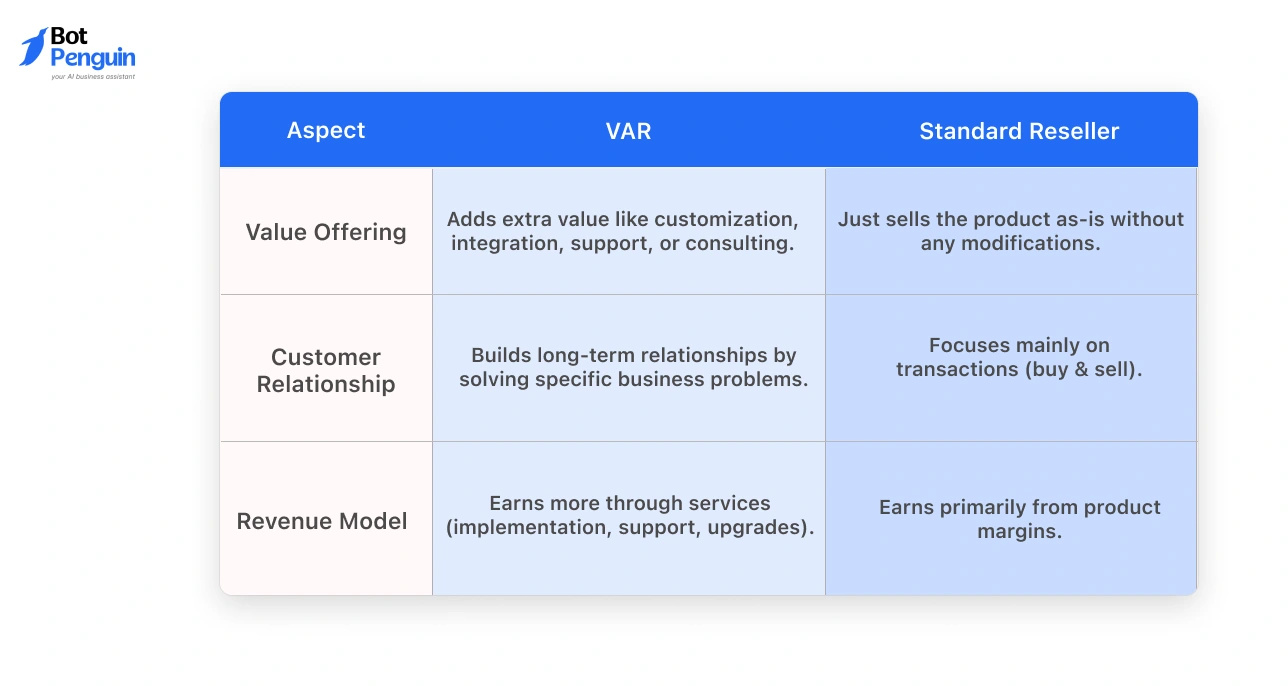
A standard reseller buys wholesale and sells at markup. No customization, no service layer, no expertise. Margins are thin because the product is the only differentiator.
A VAR wraps the product in services, charges a premium, and retains clients far longer because switching means losing the entire solution, not just a license.
VAR vs. System Integrator
A system integrator builds entire technology environments from scratch, combining hardware, software, and custom development into one architecture.
A VAR works within a narrower scope, enhancing and reselling a specific vendor's product rather than designing the foundation itself.
The lines blur at scale, but the core difference is simple: VARs leverage an existing product, system integrators build the product's environment.
Examples of Value Added Resellers
Value added reseller examples span every corner of the technology industry. Here are five of the most common:
- IT hardware resellers who configure and deploy servers and networking equipment
- SaaS resellers who onboard and train clients on CRM or ERP software
- Cybersecurity VARs who deploy and monitor firewall and endpoint protection tools
- Managed service providers who bundle cloud infrastructure with 24/7 support
- AI chatbot resellers who white-label and deploy automation platforms for clients
IT Hardware VAR — CDW
CDW purchases laptops, servers, and networking equipment from manufacturers like HP, Lenovo, and Cisco at partner pricing.
Rather than shipping bare hardware, CDW configures devices, migrates data, sets up networks, and manages ongoing IT support contracts.
The customer receives a fully operational IT environment, not a box. That service layer is what separates CDW from a distributor and why it generates over $20 billion in annual revenue.
SaaS VAR — CRM Resellers
Salesforce, HubSpot, and Zoho all rely heavily on VAR networks to reach markets their direct teams can't cover efficiently.
A SaaS VAR purchases licenses at a partner discount, then handles the full implementation: data migration, workflow automation, API integrations, and user training.
The client doesn't just get a login. They get a fully operational system built around their business, and the VAR earns recurring monthly commissions for as long as the client stays subscribed.
Cybersecurity VAR
A cybersecurity VAR resells endpoint protection, firewalls, or SIEM tools from vendors like CrowdStrike or Palo Alto Networks.
But the product alone isn't what clients are buying. They're buying deployment, configuration, 24/7 threat monitoring, and incident response.
Security software misconfigured is security software that doesn't work. The VAR's expertise is the actual product, and it commands premium recurring contracts that rarely churn.
Managed Service Provider as VAR
An MSP operates as a VAR by bundling cloud infrastructure, typically Microsoft Azure or AWS, with ongoing monitoring, maintenance, and helpdesk support.
The client gets one monthly bill, one point of contact, and a fully managed technology stack.
The MSP earns on the product margin plus the service retainer, making it one of the highest-margin VAR models available.
AI Chatbot VAR — BotPenguin Resellers
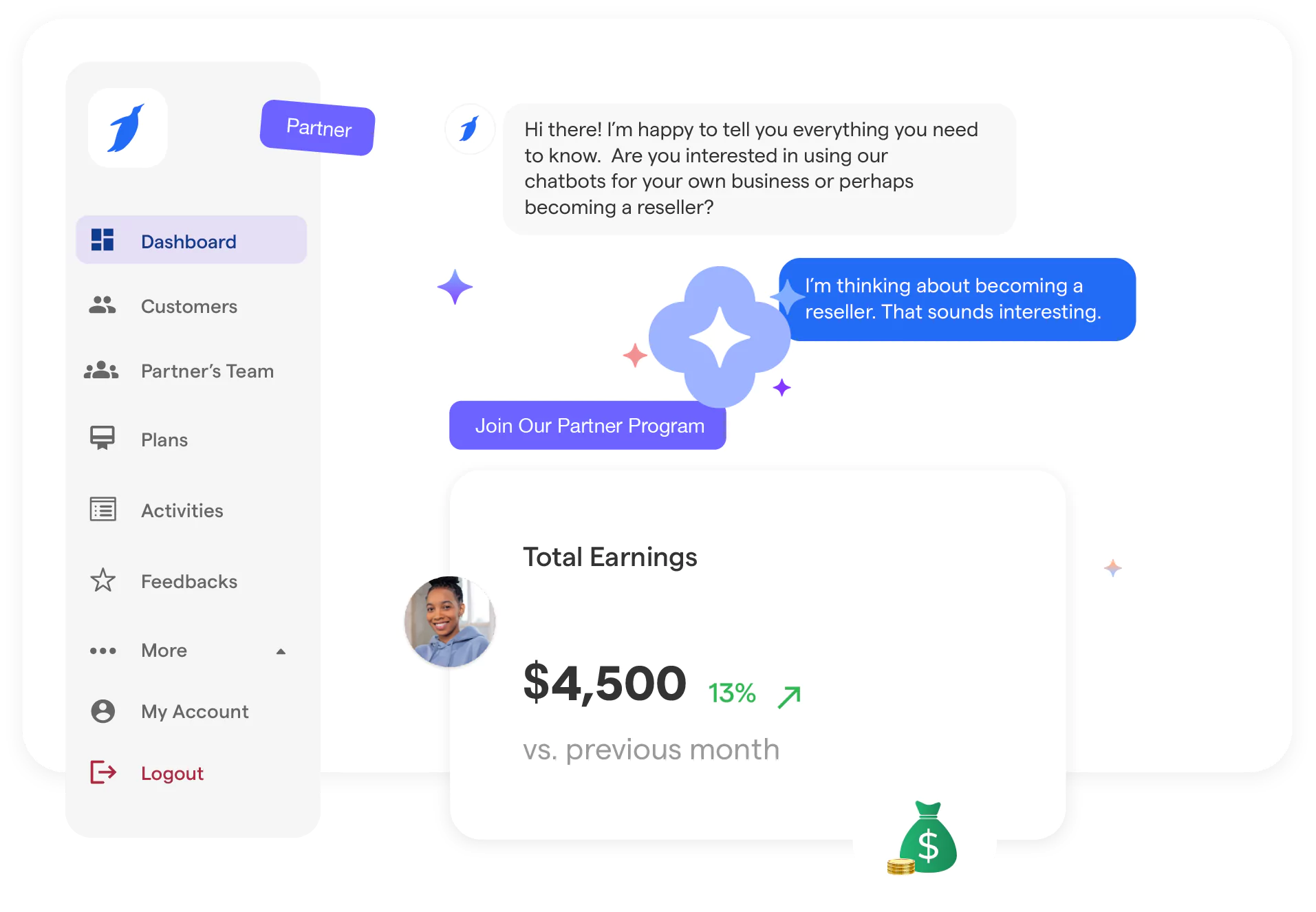
In the AI automation space, a VAR partners with a platform like BotPenguin to resell white-labeled chatbot solutions to their clients.
The VAR handles onboarding, configuration, CRM integration, and ongoing optimization. The client receives a branded AI chatbot across WhatsApp, website, Instagram, and more.
No infrastructure cost, no development team, no product risk. BotPenguin's reseller program is built for agencies and consultants who want to add AI automation to their stack and start earning from day one.
Do Value Added Resellers Make Money?
Yes, value added resellers make money — often significant amounts. VARs typically earn margins of 10–30% on the products they resell, plus additional revenue from services such as installation, training, and ongoing support.
Because most VAR programs are subscription-based, top performers build recurring monthly income that compounds as they add clients.
How VARs Generate Revenue
VARs don't rely on a single income stream. Most earn through three channels simultaneously.
Product Margin: The difference between what they pay the vendor and what they charge the client. On hardware this typically runs 5–20%. On SaaS it can reach 20–40% in recurring commissions.
Professional Services: Setup, customization, integration, and migration work billed separately as a project fee or hourly rate. On larger clients this often exceeds the product margin entirely.
Support Retainers: Monthly or annual contracts for ongoing maintenance, monitoring, and training. These are the most valuable because they are predictable, passive, and grow with the client over time.
Typical VAR Margins and Income Ranges
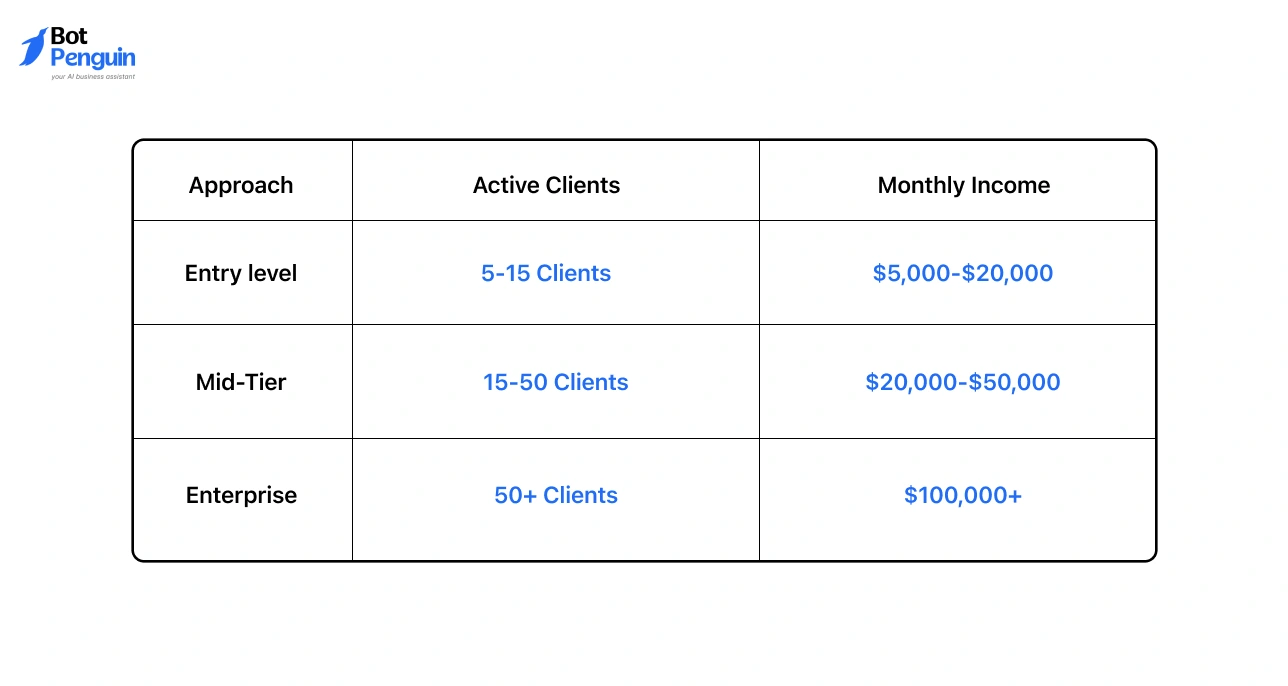
Income varies by industry and service scope, but general benchmarks suggest:
The most successful VARs focus on retention over acquisition. A client retained for three years is worth significantly more than three one-time deals.
If you want a low-barrier entry into recurring VAR income, BotPenguin's reseller program is one of the most accessible starting points available today. You earn monthly commissions on every active client with no infrastructure cost and no development overhead.
Value Added Reseller Benefits
The VAR model works because it creates value at every level of the chain. Resellers earn more, vendors reach further, and customers get better solutions.
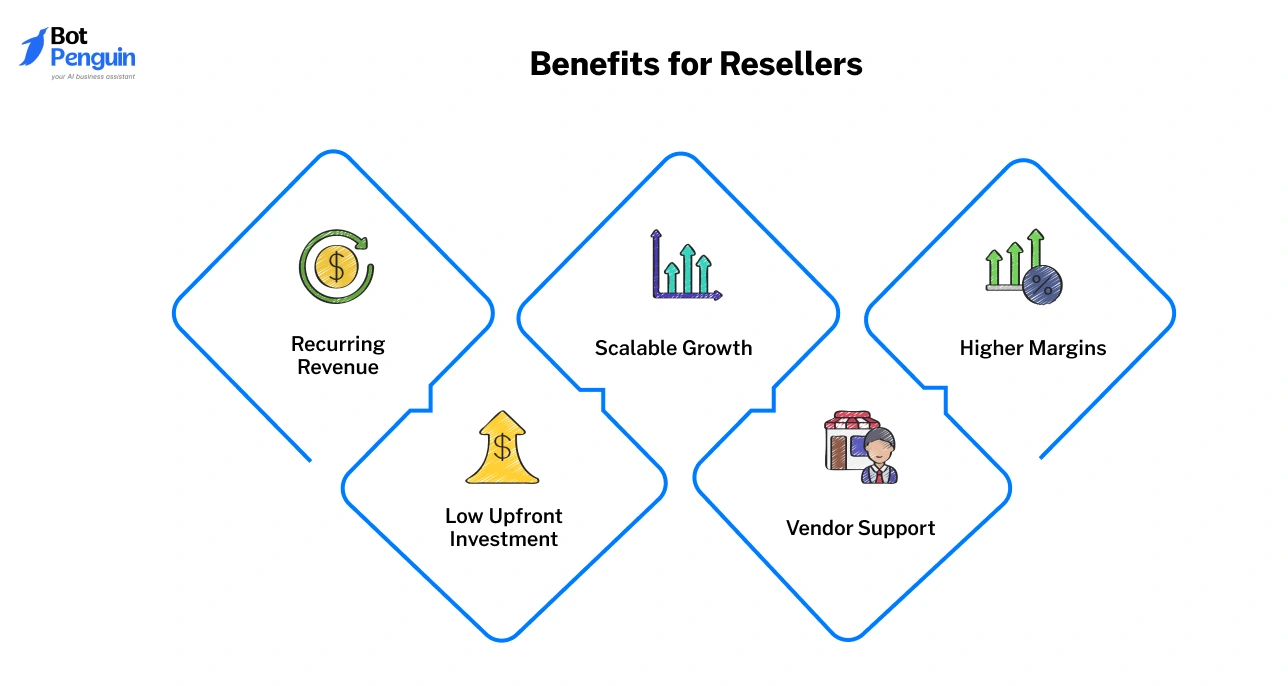
Benefits for Resellers
The reseller sits at the center of the VAR model, and the financial upside reflects that.
Recurring Revenue: Subscription-based programs generate monthly income that builds with every new client added and compounds over time.
Low Upfront Investment: No product development cost. The vendor handles R&D, updates, and infrastructure. You invest in relationships, not resources.
Scalable Growth: Adding revenue means adding clients, not building new products. Scale depends on your sales capacity, nothing else.
Vendor Support: Most programs include training, co-marketing materials, sales toolkits, and dedicated partner managers to help you close faster.
Higher Margins: The service layer justifies premium pricing that a pure-product reseller cannot command. You're selling a solution, not a SKU.
Benefits for Vendors
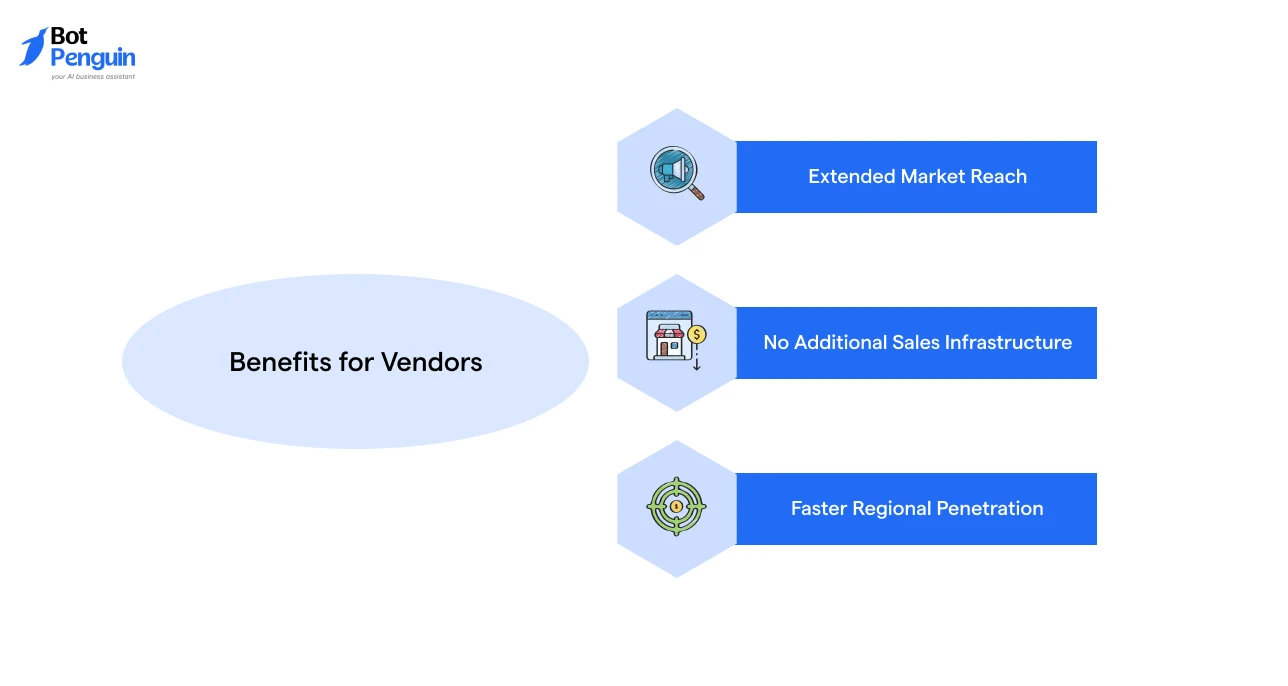
Vendors gain distribution without the cost of building it themselves.
Extended Market Reach: VARs sell into markets and verticals the vendor's direct team cannot cover efficiently or economically.
No Additional Sales Infrastructure: The reseller handles customer relationships, support, and upselling. The vendor scales revenue without scaling headcount.
Faster Regional Penetration: Local VARs have existing relationships and market knowledge the vendor simply doesn't have.
Benefits for Customers
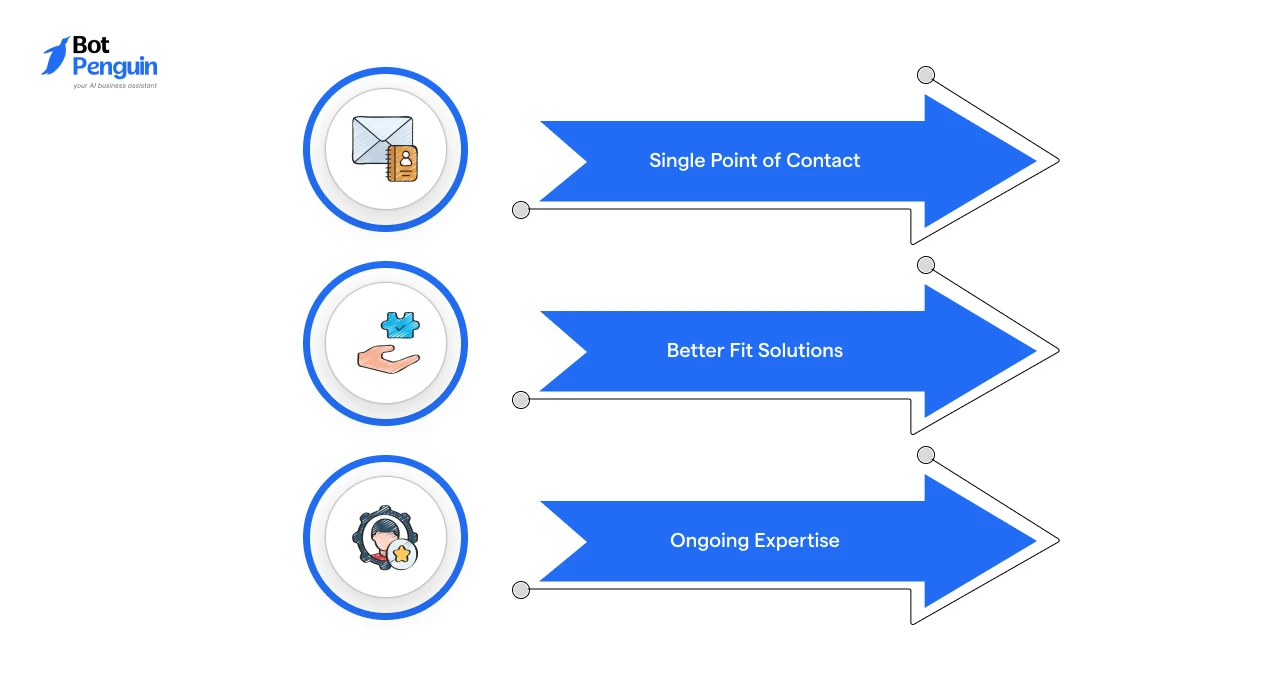
Customers get more than a product. They get a partner.
Single Point of Contact: One relationship for product, support, training, and customization. No vendor juggling, no finger pointing.
Better Fit Solutions: VARs configure products to the customer's specific environment rather than deploying a generic out-of-the-box setup.
Ongoing Expertise: Customers don't need in-house expertise for every tool they use. The VAR carries that knowledge on their behalf.
For all three sides of the model to work, someone has to take the first step. That's the reseller — and the next section shows exactly how to become one.
Types of Value-Added Resellers
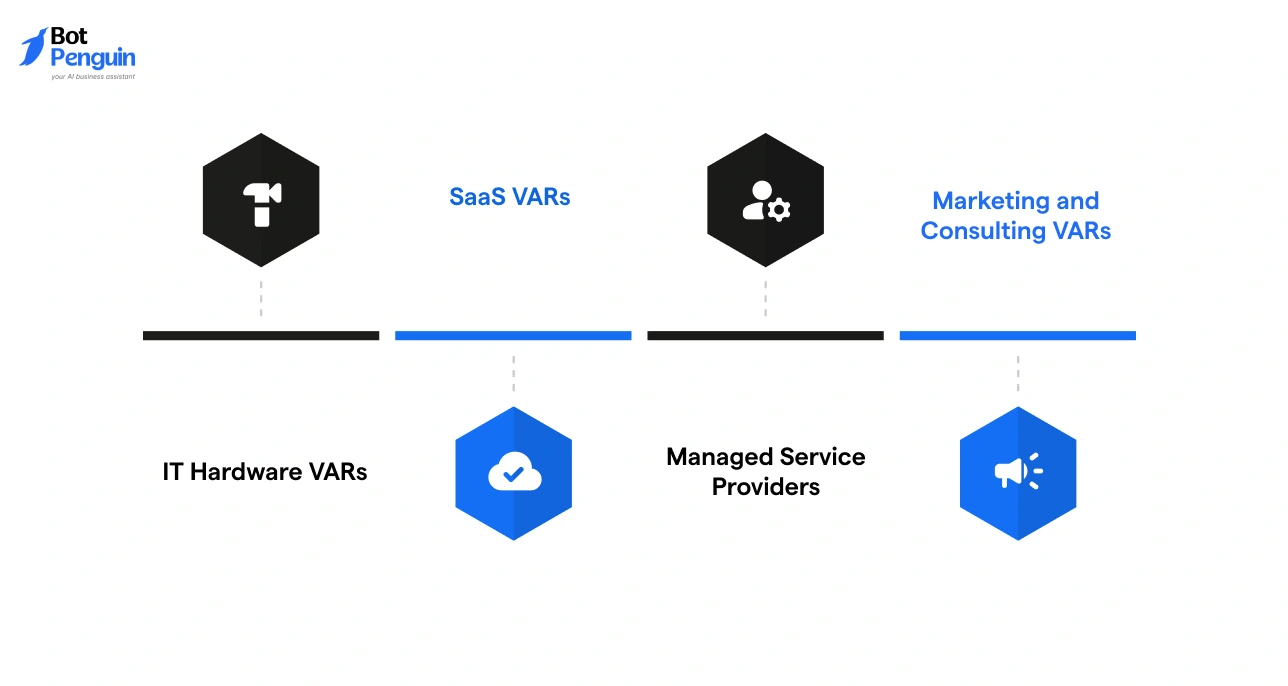
The value added reseller model does not follow one fixed pattern. It adapts to industries and customer needs. Some resellers specialize in hardware, others in cloud software.
Some build recurring revenue with IT services, while others blend technology with consulting.
Here are the main types of value added resellers and how they work.
IT Hardware VARs
These resellers focus on physical products such as laptops, servers, and networking equipment. Their value lies in turning hardware into a ready-to-use system.
Businesses save time and avoid setup headaches because the VAR handles installation, configuration, and support.
Example: An IT hardware VAR may deliver servers, install them at a client’s office, configure the network, and provide long-term maintenance contracts.
SaaS VARs
SaaS resellers work with cloud-based tools like CRM systems, automation software, or chatbot platforms.
They add value by managing onboarding, training staff, and integrating the software with other systems. This ensures customers actually use the software effectively instead of abandoning it.
Example: A SaaS VAR resells a CRM solution, migrates client data, sets up automation workflows, and trains the sales team to use it.
Managed Service Providers (MSPs)
MSPs combine hardware, software, and ongoing IT support into bundled service contracts. Clients prefer this because they only need one provider for critical systems. The value is in reliability and convenience.
Example: An MSP manages cloud storage, cybersecurity tools, and helpdesk support under one monthly subscription for a client.
Marketing and Consulting VARs
Agencies and consultants often act as resellers too. They bundle software with strategy or advisory services. This appeals to clients who want both the tools and the guidance to use them effectively.
Example: A marketing agency resells a chatbot platform, then creates campaigns and analytics dashboards around it for their clients.
The types of value added resellers show how flexible the model is. Whether the product is hardware, software, or expertise, the principle remains the same: resell proven solutions and add value that makes them indispensable.
Become a Partner

How to Become a Value Added Reseller
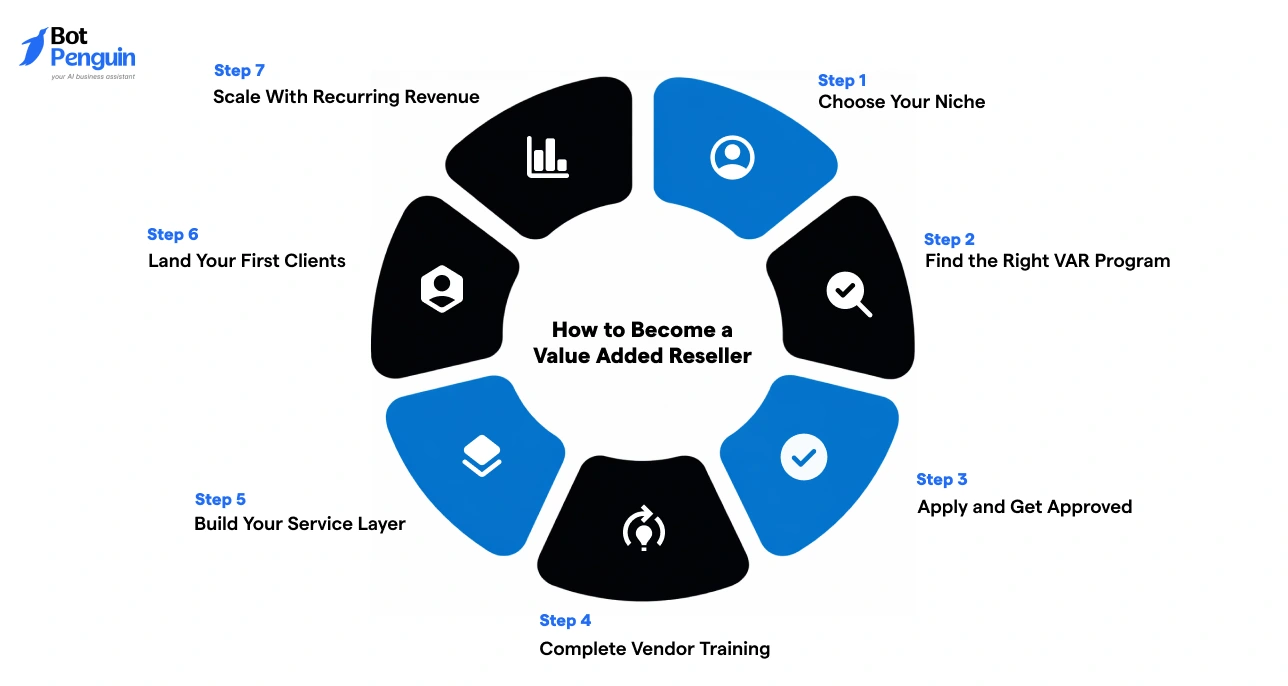
Becoming a value added reseller is more accessible than most people assume. Here is how to get started.
Step 1: Choose Your Niche
Pick a vertical you know well. Healthcare IT, eCommerce automation, SMB cybersecurity. Find vendors whose products serve that market directly.
Step 2: Find the Right VAR Program
Look for programs that offer competitive margins, marketing support, and a dedicated partner manager.
BotPenguin's reseller program offers white-label capability, recurring commissions, and full partner support with zero development requirement. One of the most accessible entry points for agencies and consultants.
Step 3: Apply and Get Approved
Submit your business credentials and any required documentation. Some programs need a revenue commitment or certification upfront. Others are straightforward to join.
Step 4: Complete Vendor Training
Most programs require a product knowledge assessment. Don't skip it. Certified resellers close more deals because clients trust their expertise.
Step 5: Build Your Service Layer
Decide what you'll add to the product. Onboarding, support tiers, integrations, training. Price it clearly so clients know exactly what they're paying for.
Step 6: Land Your First Clients
Start with your existing network. Offer a pilot engagement at a reduced rate. Get a case study. Get a testimonial. Then use both to close the next one.
Step 7: Scale With Recurring Revenue
Once you have three to five happy clients, double down. Ask for referrals, build case studies, and tap into your vendor's co-marketing programs for inbound leads.
What Is a VAR Agreement?
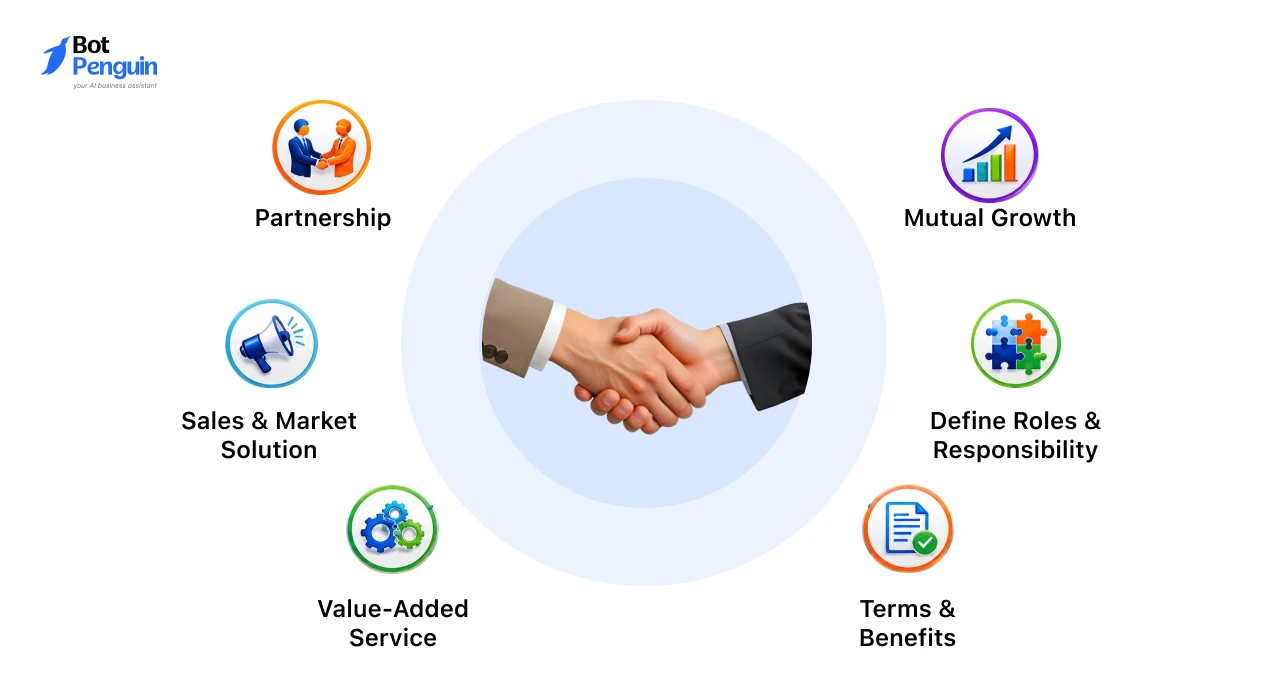
Before you start selling, you'll sign a VAR agreement with your vendor. Read it carefully. It covers:
Pricing and margins — what discount you get and whether it grows with volume.
Territory rights — are you protected from competing resellers in your market.
Branding rules — can you white-label the product or must you co-brand.
Support obligations — who handles client support, you or the vendor.
Liability terms — who is responsible if something goes wrong at a client site.
Territory protections and pricing guarantees are the most negotiable. Never sign without understanding both.
Minimum Requirements to Start a Value-Added Reseller Business
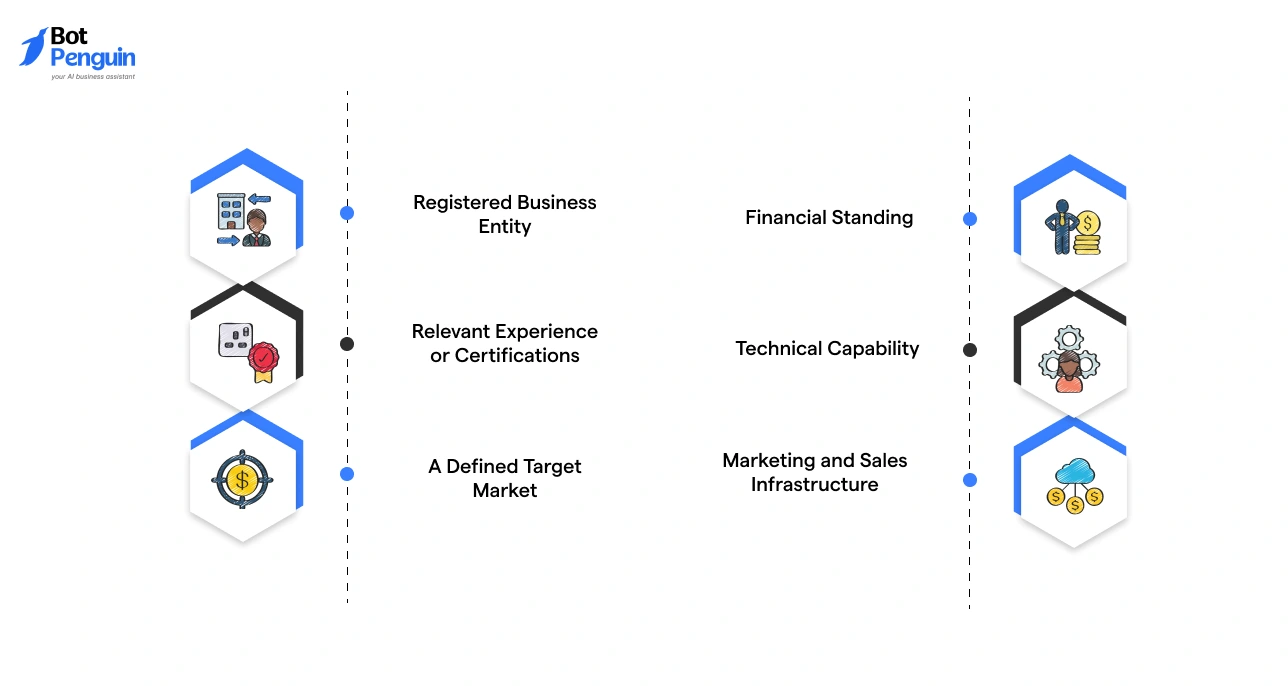
The entry bar for starting a VAR business is lower than most people expect. Here is what most programs require at minimum.
Registered Business Entity
You need to be a legally registered business. LLC, corporation, or sole proprietorship with a business license. Personal reselling is rarely eligible for partner pricing.
Relevant Experience or Certifications
Hardware and cybersecurity VARs typically need technical certifications like CompTIA, Cisco, or Microsoft. SaaS and AI platform resellers have a much lower bar — product training from the vendor is usually enough to get started.
A Defined Target Market
Vendors want to know you can actually sell to someone. Be ready to describe your target customer, their industry, and their company size before you apply.
Financial Standing
Some programs require minimum revenue commitments or annual fees. Others are free to join but ask you to hit sales targets to maintain your tier.
Technical Capability
You need to deliver on your service promises. That might mean hiring technical staff, subcontracting, or completing the vendor's certification program before you take on clients.
Marketing and Sales Infrastructure
A website, a LinkedIn presence, and a basic CRM are the minimum for appearing credible to business clients. Many programs evaluate your online presence as part of the application.
For AI and chatbot reseller programs like BotPenguin's, the barrier is significantly lower. No technical certifications, no infrastructure setup, no development experience required. A registered business and a target market is all you need to get started.
What to Look For in Value Added Reseller Programs
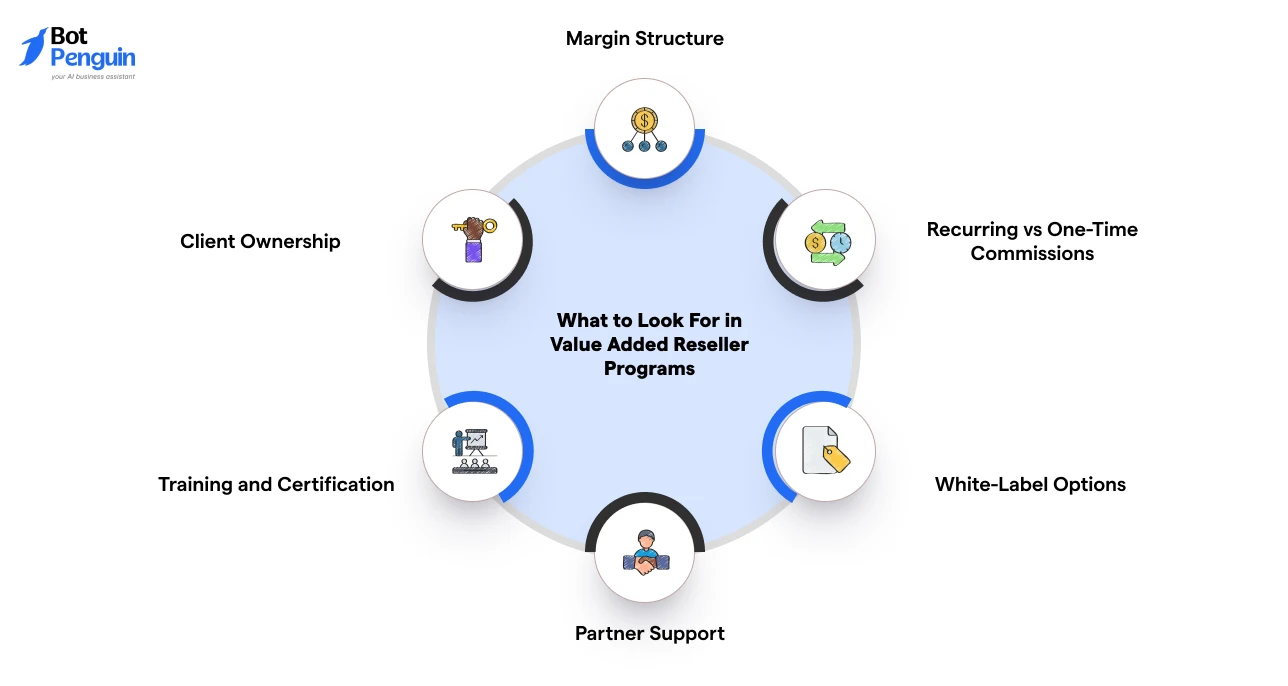
Not all VAR programs are built the same. Before committing to any partnership, evaluate it on these criteria.
Margin Structure
What percentage do you earn and is it flat or tiered? The best programs increase your margin as your sales volume grows, rewarding you for loyalty and performance.
Recurring vs One-Time Commissions
Recurring commissions on active subscriptions are significantly more valuable than one-time referral fees. Always prioritize programs that pay you every month a client stays, not just when you close the deal.
White-Label Options
Can you brand the product as your own? White-labeling dramatically increases your pricing power and strengthens your position as the client's primary solution provider rather than a middleman.
Partner Support
Does the vendor provide a dedicated partner manager, sales enablement tools, co-marketing funds, and technical support? The best programs invest in your success because your growth is their growth.
Training and Certification
Is onboarding fast and thorough? Strong training programs get you selling faster and give you the credibility to charge premium rates from day one.
Client Ownership
Do you own the client relationship or can the vendor sell directly to your clients? This is non-negotiable. If the vendor can bypass you and sell direct, your entire book of business is at risk.
BotPenguin's Chatbot Reseller Program
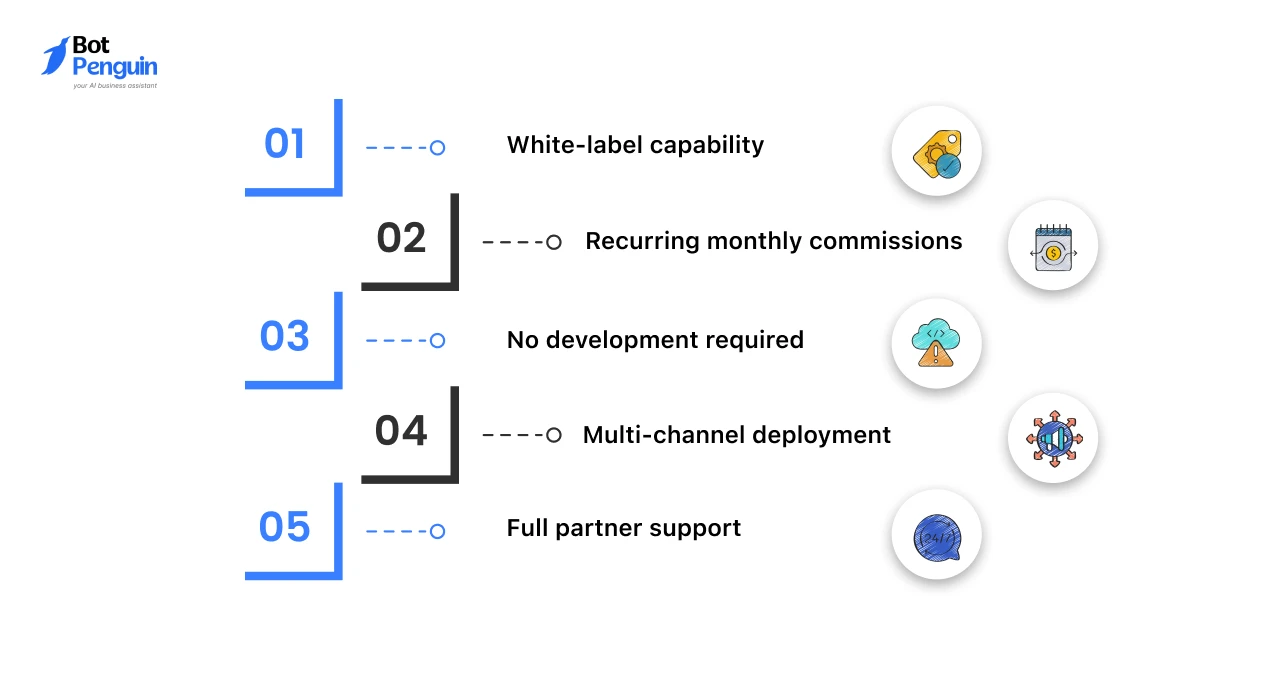
BotPenguin's reseller program is built specifically for agencies, consultants, and IT service providers who want to add AI automation to their offering without building anything from scratch.
White-label capability: Deploy chatbots under your own brand. Clients see your branding, not BotPenguin's.
Recurring monthly commissions: Earn on every subscription renewal. Your income grows every time a client renews, not just when you close a new one.
No development required: BotPenguin handles all infrastructure, updates, and AI model improvements. You focus entirely on clients.
Multi-channel deployment: Resell chatbots for WhatsApp, websites, Instagram, Facebook, Telegram, and more — covering your clients' entire digital presence from a single platform.
Full partner support: Access to marketing materials, onboarding support, and a dedicated partner team from day one. [INTERNAL LINK: BotPenguin partner program]
If you're looking for a VAR program that checks every box on this list, BotPenguin's reseller program is worth exploring. Start earning recurring revenue from AI automation without the overhead of building a product.
Value Added Resellers in Cybersecurity
Cybersecurity is one of the fastest-growing VAR categories in the technology industry, and for good reason.
Businesses don't buy security software the way they buy productivity tools. They can't afford to get it wrong. A misconfigured firewall or an unmonitored endpoint is all it takes for a breach that costs millions. That's why most organizations don't buy cybersecurity direct from vendors. They buy it from VARs.
What Cybersecurity VARs Do
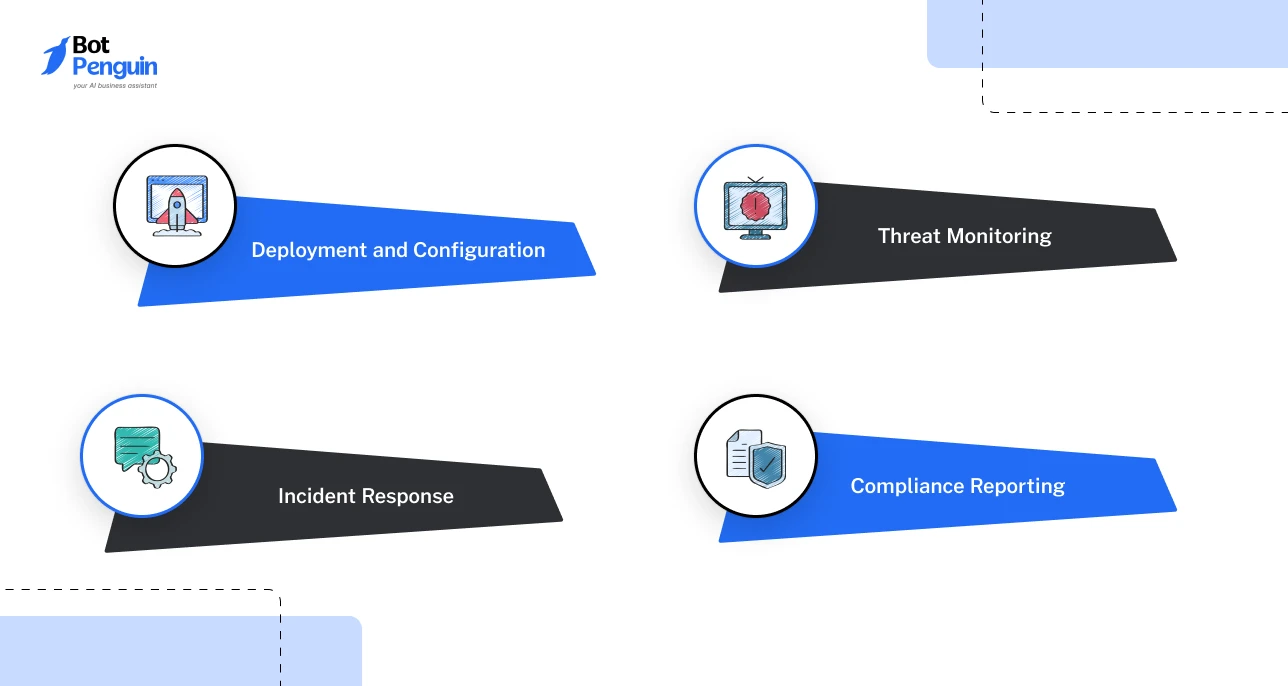
A cybersecurity VAR resells security tools from vendors like CrowdStrike, Palo Alto Networks, or Fortinet. But the product is only part of what they deliver.
Deployment and Configuration: Security tools require expert setup. The VAR handles installation, configuration, and integration with the client's existing infrastructure.
Threat Monitoring: Many cybersecurity VARs operate 24/7 Security Operations Centers that watch client environments in real time and respond before threats escalate.
Incident Response: When a threat is detected, the VAR acts. Isolating systems, removing threats, documenting the incident, and restoring normal operations.
Compliance Reporting: Industries like healthcare, finance, and retail face strict regulatory requirements. Cybersecurity VARs handle the documentation and reporting those frameworks demand.
Why Cybersecurity VARs Rarely Lose Clients
Security is not a discretionary spend.
Once a cybersecurity VAR is embedded in a client's environment — monitoring systems, managing compliance, responding to incidents — switching becomes genuinely risky for the client.
That stickiness translates into long-term recurring revenue that compounds year over year. High retention, high margin, and demand that only grows as cyber threats become more frequent and more sophisticated.
Mistakes to Avoid as a New VAR
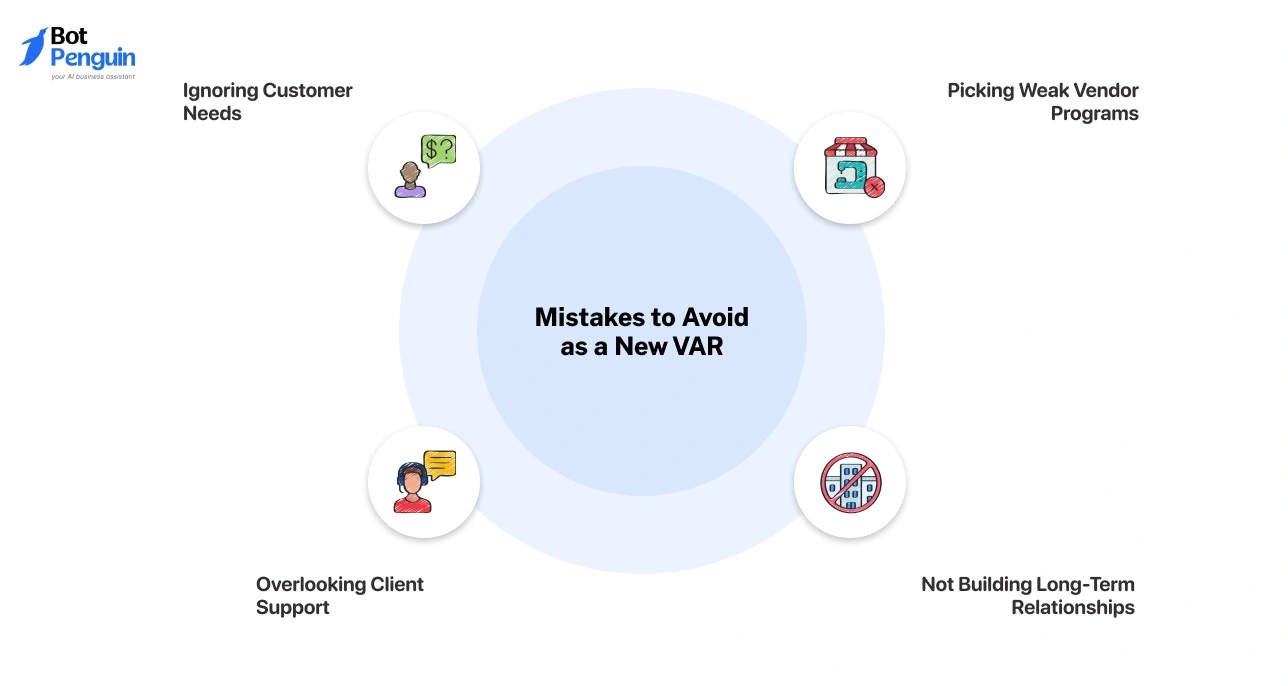
Joining a value added reseller program offers recurring revenue and growth, but success depends on more than just signing up.
Many first-time resellers fall into avoidable traps that weaken their business and reduce trust with clients. Recognizing these pitfalls early is essential for building long-term stability.
Ignoring Customer Needs
Selling without aligning to customer pain points is one of the biggest mistakes. When clients don’t see their problems solved, they leave quickly.
- Why it matters: A VAR succeeds only when it bridges the gap between what vendors offer and what customers expect. Ignoring needs turns the reseller into just another salesperson rather than a trusted partner.
Picking Weak Vendor Programs
Not all vendors provide strong support or fair commissions. Joining a weak program means more effort with fewer returns.
- Why it matters: Reliable vendors give resellers the tools, training, and incentives to grow. Weak programs limit profitability and make scaling difficult, no matter how good your sales strategy is.
Overlooking Client Support
The relationship doesn’t end once the product is delivered. Clients rely on guidance, troubleshooting, and updates to get full value from the solution.
- Why it matters: Without consistent support, clients lose trust and seek alternatives. Strong support keeps customers loyal and ensures recurring revenue.
Not Building Long-Term Relationships
Chasing quick sales creates short-term wins but weakens long-term income potential. Renewals and referrals only come from nurturing clients beyond the first transaction.
- Why it matters: VARs thrive on stability. Building strong relationships ensures steady revenue, deeper trust, and a stronger competitive position.
Avoiding these mistakes keeps a value added reseller aligned with customer needs, vendor strength, and long-term growth. With the foundation set, it’s useful to see how these principles work in real life by exploring examples of successful VARs across industries.
Value Added Reseller Program by BotPenguin
The real step forward comes when you join a program that makes the model profitable and easy to run. Not every vendor offers fair commissions, strong support, or tools that help you scale.
This is where BotPenguin’s value added reseller program stands out. It combines high earning potential with simplicity, making it accessible to consultants, agencies, and IT service providers who want to add automation and chatbots to their offerings without added complexity.
Why BotPenguin Stands Out
BotPenguin is built to remove friction. It offers an omnichannel AI Agent platform that works across WhatsApp, Facebook, websites, and more.
The platform requires no coding knowledge, which means resellers don’t need a technical team to deliver results for clients.
This user-friendly approach matters because customers value solutions that are quick to deploy and simple to manage. For a VAR, it means less time spent on troubleshooting and more time spent closing new deals.
Example: A digital marketing agency can resell BotPenguin’s chatbot, customize it for a client’s WhatsApp campaigns, and launch it within days without hiring developers.
Benefits of BotPenguin’s VAR Program
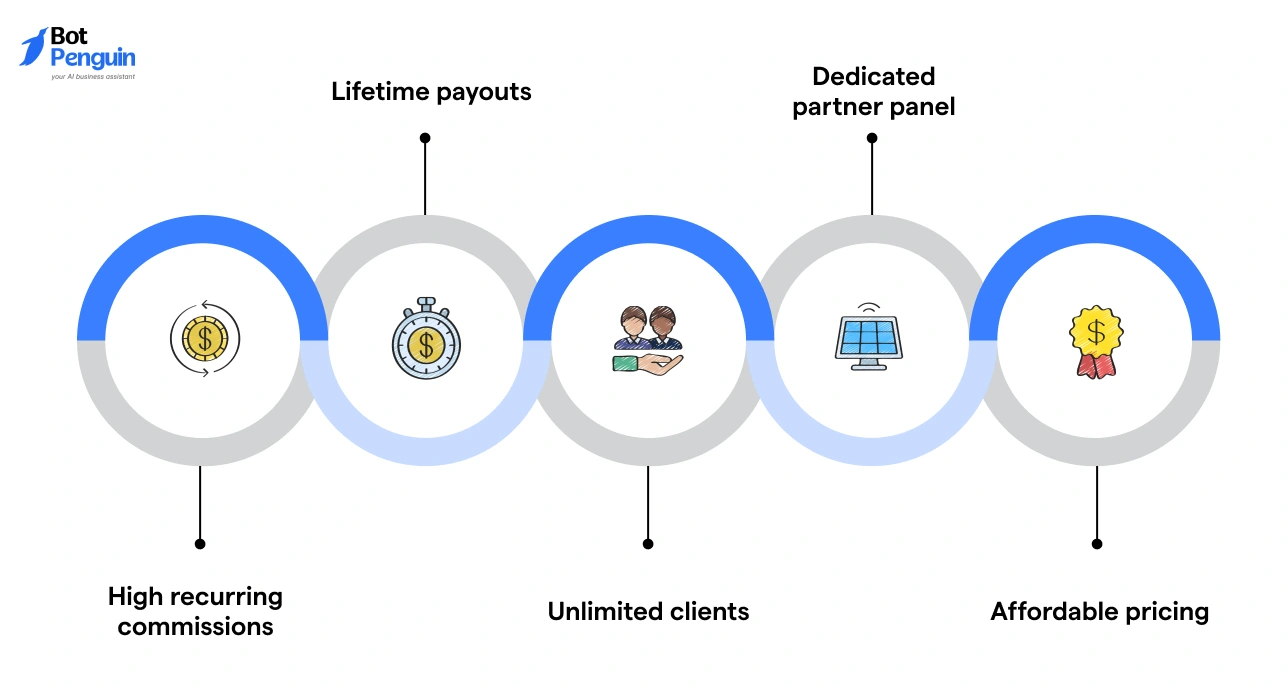
The program is designed to maximize value for resellers. Key benefits include:
- High recurring commissions: Each client you enroll adds ongoing income, not one-time payouts.
- Lifetime payouts: Earnings continue as long as your clients use BotPenguin.
- Unlimited clients: There are no caps, so growth depends only on how many customers you can onboard.
- Dedicated partner panel: Manage clients, track revenue, and access resources in one dashboard.
- Affordable pricing: Entry costs are low, making it easier for small agencies and consultants to start.
Together, these features give resellers the ability to grow revenue while keeping expenses predictable.
Example: An IT consultant can add chatbot services to their portfolio, enroll 30 clients, and generate steady recurring income without extra infrastructure.
How BotPenguin Helps You Scale
Scaling a reseller business is about handling more clients without increasing costs. BotPenguin supports this with automation, built-in integrations, and round-the-clock support.
Resellers don’t need to reinvent processes; everything is structured to help them grow.
- Automations reduce manual setup.
- Integrations connect AI Agents with CRMs and marketing platforms.
- Vendor support ensures smooth delivery for clients.
Example: A consulting firm using BotPenguin can serve multiple industries, from real estate to e-commerce, because the platform adapts easily. This flexibility allows them to scale across niches without extra training or staff.
The value added reseller program by BotPenguin combines strong financial incentives with practical tools to help resellers grow. It bridges the gap between opportunity and execution, offering a simple yet powerful path to recurring revenue.
Explore Now
Conclusion
The value added reseller model works because it solves a real problem on both sides of the market. Vendors can't reach every customer. Customers can't implement every product. VARs bridge that gap and get paid well for doing it.
The fundamentals are simple. Find a product worth selling. Build a service layer around it. Retain your clients. Let the recurring revenue compound.
Whether you're looking at IT hardware, SaaS platforms, cybersecurity tools, or AI automation, the model is the same. The difference is how quickly you can get started and how much overhead you take on in the process.
AI chatbot reselling through BotPenguin is one of the lowest-barrier, highest-potential entry points into the VAR model today. White-labeled, recurring, and fully supported — you bring the clients, BotPenguin handles the rest.
If you're ready to start, the reseller program is one conversation away
Frequently Asked Questions (FAQs)
What is the difference between a VAR and a distributor?
A distributor moves products in bulk from manufacturers to resellers or retailers. They rarely interact with the end customer and add no service layer. A VAR works directly with the end customer, adds customization or support, and takes full ownership of the client relationship. Distributors sell volume. VARs sell value.
Do VARs need to hold inventory?
Not always. Most modern VARs — especially in SaaS, cloud, and AI categories — operate without holding any physical inventory at all. They resell licenses, subscriptions, or access to platforms and earn commissions without ever touching a physical product. Hardware VARs may hold some inventory but increasingly work on a configure-to-order basis.
How long does it take to become a value added reseller?
It depends on the vendor and category. Hardware and cybersecurity programs can take weeks to months due to certification requirements. SaaS and AI platform programs like BotPenguin's can be set up in days. The faster the onboarding, the sooner you start earning.
Can a solo consultant become a value added reseller?
Yes. Many VAR programs are designed specifically for individual consultants and small agencies. You don't need a large team or a technical department to get started. Platforms like BotPenguin are built precisely for solo operators who want to offer AI automation services without building infrastructure.
What industries use value added resellers the most?
Technology is the dominant industry, but VARs operate across healthcare IT, financial services, retail, manufacturing, education, and telecommunications. Any industry that relies on specialized software or hardware and lacks the internal expertise to implement it is a natural market for a VAR.
Is white labeling the same as being a VAR?
Not exactly. White labeling means rebranding a product as your own. Being a VAR means adding value through services. Many VARs do both — white-label the product and wrap it in their own service offering — but you can be a VAR without white labeling, and you can white-label without adding any services.