


A Beginner's Guide to ChatGPT Prompt Engineering
Updated at Jul 28, 2026
10 min to read


Artificial Intelligence (AI) is one of the most widely used technologies. You can find that almost every industry is reaping the benefits of this technology. They can perform a variety of functions from speech recognition to text generation. According to the McKinsey Global Survey, sixty-five percent of companies are already using AI for at least one of their business purposes.
So, what about AI tools? They are also gaining equal popularity. These tools help you meet your business needs. They allow you to create content, perform data analysis, and much more.
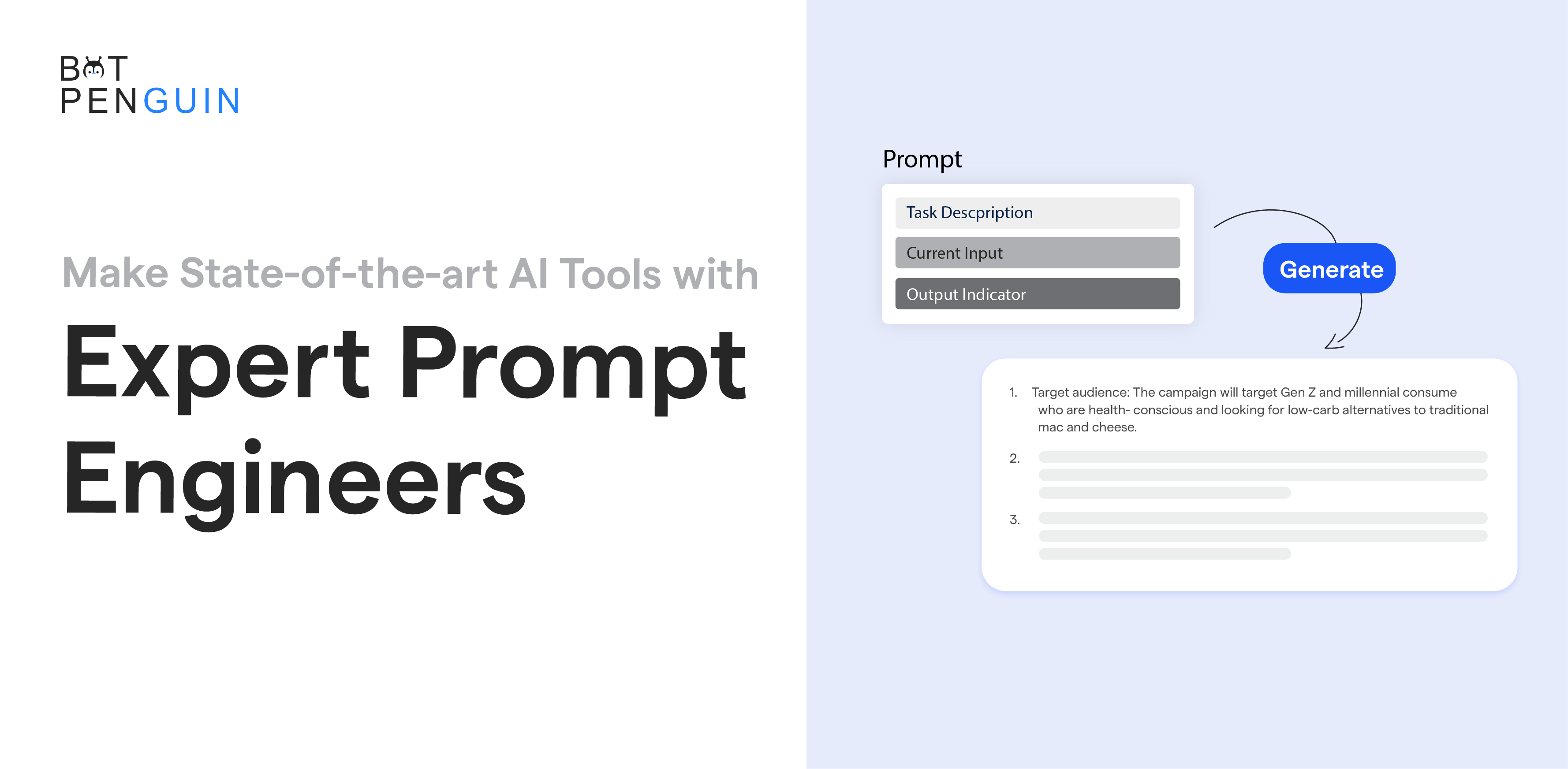
Prompt engineering is used to develop these AI tools. They fine-tune the prompts and ensure that these tools understand the intentions properly. Let us explore in detail the power of these AI tools and how prompt engineering plays an important role in shaping them.
However, before proceeding, let us briefly find out what AI tools are.
AI tools are software applications that can execute particular tasks and solve problems with the help of artificial intelligence algorithms. They can analyze data, understand patterns, make predictions, and boost decision-making.
These AI tools also have machine learning abilities and can recognize natural language processing. They help automate your tasks and optimize processes. You can use them in several industries like marketing, healthcare, finance, etc.
AI tools work with the help of machine learning, natural language processing, and computer vision. They provide you with solutions to predetermined issues. Let us elaborate further.
AI tools allow you to save time and resources, and increase productivity. They are also very adaptable. Let us examine these benefits in detail.
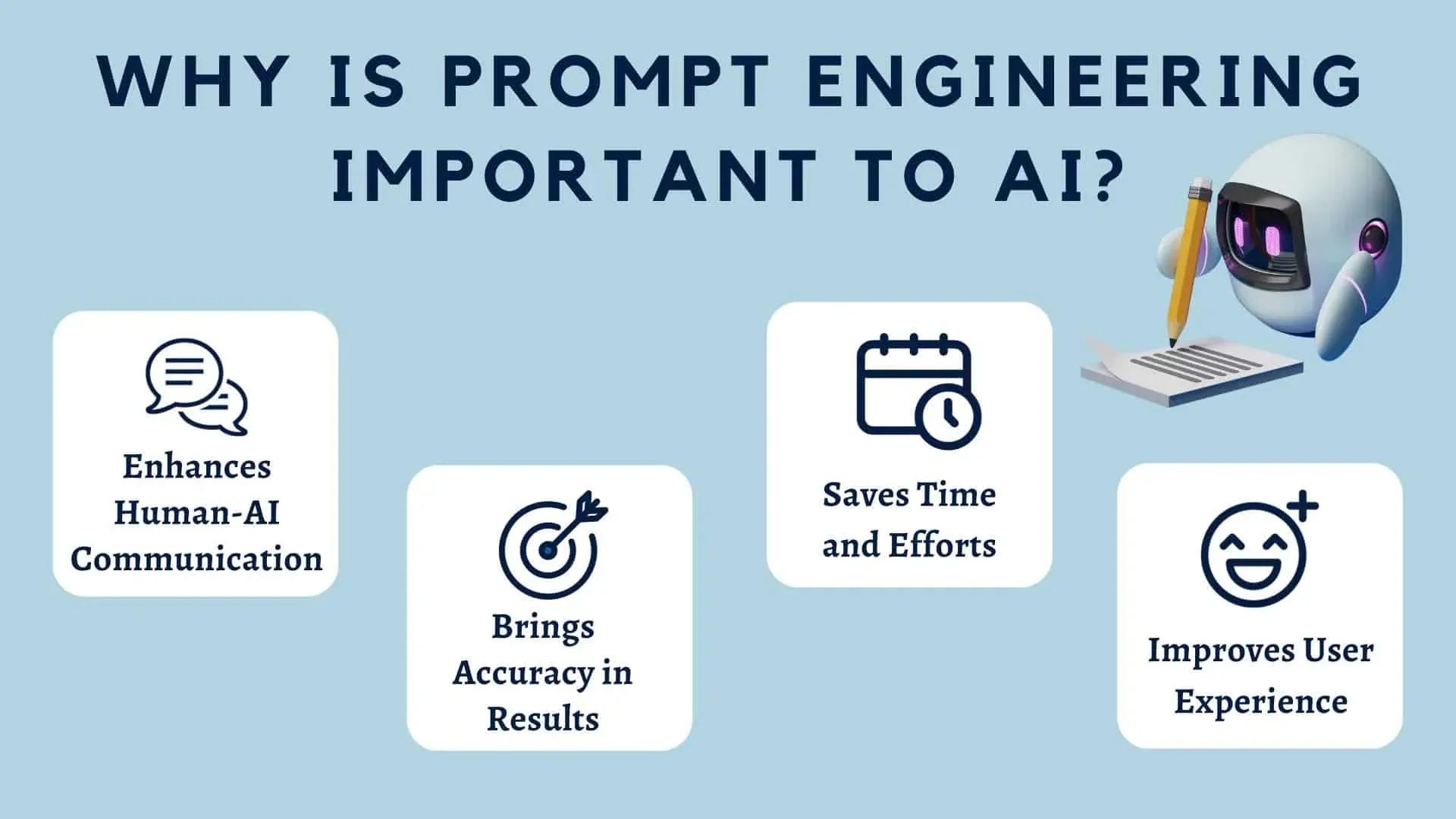
Prompt engineering is very important for AI language models to function appropriately. You have to use creativity, understand the model's abilities, and strategically define the questions or statements so that these AI tools provide the best relevant answers to your customers.
You can also communicate better with AI models with the help of prompt engineering. Let us look at a few more benefits they provide.
Suggested Reading:
How Prompt Engineering AI Works: A Step-by-Step Guide
Prompt engineering is used in several real-time applications. According to a report, e-commerce applications witnessed a 35% increase in customer engagement due to the use of prompt engineering. It helps to boost the abilities of generative AI in predicting customer preferences. Let us consider a few examples below.
Chatbots learn from pre-defined data during training. However, this data might become outdated. Hence, you can find several AI chatbots using vector databases. Here, recent and relevant data will be available. So, when you ask a query to these chatbots, they first consult this vector database for information. Prompt engineers can use this data while giving prompts to develop conversational content.
For example, if you are using the chatbot in customer support, prompt engineers can update it with recent data about your products or services. Hence, your customers can get the relevant details when they enquire.
Another area where you can use prompt engineering is content generation. Prompt engineers train the AI tools to provide accurate data as per requirements. For example, if you have a favorite author, and want to write a few lines in their style, you can specify the same to the AI tools. It will satisfy your request accordingly.
You can use prompt engineering effectively when you instruct the generative AI tools about the type of results required. You can also define the format in which the outputs should be displayed.
According to research, 61% of customers show interest in spending more on personalized experiences. Hence, you have to provide content according to their preferences to retain them. You can use prompt engineering and feed these generative AI tools about the preferences of your customers.
They can provide suggestions based on these data and also about the purchases made by similar customers. You can also take the help of feedback that your customers have left about your product and generate convincing texts to show that it meets your customers' requirements.
Though there are several best AI tools available, they need human assistance to function properly. You have to give correct instructions to these tools to get the desired results.
And, this is where expert prompt engineers come into the picture. These skilled engineers can efficiently create prompts that allow the best AI tools to prove their worth.
Let us consider a scenario where you can find prompt engineers at play in developing the best AI tools.
User: ChatGPT, tell me a joke, please!
ChatGPT: Why don't skeletons fight each other?
User: Ugh, why?
ChatGPT: Because they don't have the guts!
User: Seriously? That's the third lame joke in a row!
In the above example, your customer wants ChatGPT to generate a joke. But, it couldn't fulfill the requirement because your customer didn't provide more specific details. Prompt engineers have a very good understanding of these AI tools, and they give them various prompts to figure out the right instruction that helps generate the desired response.
They have good knowledge of what works and what doesn't and can fine-tune the prompt to respond according to the requirements.
You can find a few more reasons below to understand why prompt engineers are crucial.
System Performance: Prompt engineers optimize your system performance by reducing latency and improving response times.
Scalability: They design systems to scale effectively, and meet increasing user demands without sacrificing performance.
Real-Time Processing: They ensure responses occur within the required time frames for applications needing real-time data processing.
Error Handling: They implement robust mechanisms to detect and address issues quickly, minimizing downtime and disruptions.
Security: Prompt engineers also implement security measures in generative AI tools to protect against threats & vulnerabilities.
According to a McKinsey survey, 7% of people employed at organizations using AI, revealed that their organizations are actively on the hunt for prompt engineers. Hence, these people are very important to develop the best AI tools. There are several vital steps involved in creating these tools. Let us explore them in detail and understand the role of prompt engineers at each stage.
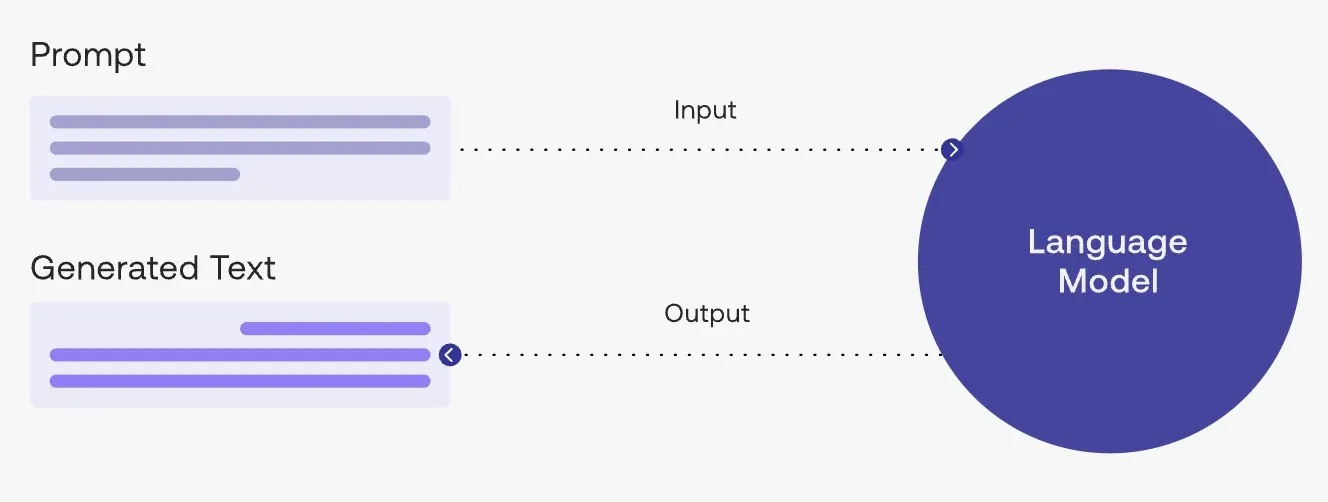
Understanding the Task: Here, you have to understand the tasks your AI tools have to perform. Prompt engineers work closely with developers to know about the intricacies of the task and then provide clear instructions to your tools.
Designing the Prompt: Once prompt engineers understand the task, they craft prompts that serve as instructions for your AI model. They must take care that these prompts are precise, clear, and tailored to get the desired responses from the model.
Testing and Iteration: In this step, prompt engineers perform extensive testing to evaluate the performance of your generative AI tools. Then, they analyze the outputs these tools produce, identify any inconsistencies, and iterate on the prompt to improve accuracy.
Fine-Tuning and Optimization: Here, prompt engineers fine-tune the prompts based on the insights gathered during testing. They optimize the prompts to improve your model's performance and ensure it meets the desired requirements.
Deployment and Monitoring: Once your AI tools are developed and optimized, prompt engineers have to supervise their deployment and monitor their performance in real-world scenarios. They continue to fine-tune the prompts based on feedback and data to boost your tool's functionality.
Let us now look at some examples of the best AI tools.
AI tools have changed the way industries operate and interact with their customers, allowing advanced automation and decision-making capabilities. Prompt engineers are those, who make these tools efficient with use-case-based customization. Let us consider a few of them.
According to Dashly, 50% of customers like to talk with AI chatbots. These AI-powered chatbots use natural language processing and machine learning to provide automated customer support. Prompt engineering is vital in crafting prompts that accurately capture customer queries.
These prompts guide the AI model in generating appropriate responses and delivering efficient, personalized customer service. Prompt engineers optimize prompts through testing and iteration to ensure the chatbot understands and addresses diverse customer needs.
And what better example than the BotPenguin?
BotPenguin houses experienced developers with 5+ years of expertise who know their way around NLP and LLM bot development in different frameworks.
And it doesn't stop there! They can help you in implementing some of the prominent language models like GPT 4, Google PaLM, and Claude into your chatbot to enhance its language understanding and generative capabilities, depending on your business needs.
AI tools uses deep learning algorithms to analyze and interpret images. You can find that prompt engineering is the one that makes the image recognition system a huge success. Here, prompts are given that specify which image has to be identified.
When you give clear and concise prompts to the AI model, it can recognize objects, patterns, or anomalies in images accurately. This can be very helpful in applications such as medical diagnostics, autonomous vehicles, and security systems.
A good example is Google Vision AI. It allows you to recognize and understand images. You can store numerous images, evaluate their quality, and search for desired products. This tool also allows reverse image searches. So, when you upload an image, it identifies websites and provides similar images.
Language translation software uses AI models to translate text from one language to another. You can find that prompt engineering plays a vital role in this process. It allows to provide clear prompts specifying the source and target languages.
Prompt engineers optimize prompts by addressing nuances in language structures and idiomatic expressions. This helps the AI model to produce highly accurate and natural translations.
One of the best AI tools you can try for language translation software is TextUnited. The platform allows you to upload files from your desktop, or Dropbox. You can even copy and paste text into this tool. Once you complete this process, specify your source and target languages, and select the machine translation option. The tool will notify you through an email and in the web app after it completes your translation.
The fraud detection system uses AI algorithms to identify fraudulent activities and patterns in financial transactions. You can use prompt engineering to design prompts that capture relevant transaction details while avoiding unnecessary technical jargon.
Prompt engineers configure your AI tools with prompts to detect suspicious transaction patterns. Hence, your system can detect and prevent fraud activities efficiently.
SEON is one of the best AI tools for fraud detection. It prevents fraudulent activities with the help of real-time data analysis. The tool allows you to customize the risk rules according to your regulatory requirements. Hence, you can implement effective fraud prevention strategies.
You would have come across Google and seen that it shows ads for things you are talking about over the phone or merely thinking about. Have you ever wondered how this happens? This is because, Google uses AI algorithms to analyze various data points, including your search history, browsing behavior, location, and even conversations (if you've given access to do so).
Prompt engineers can deploy the exact mechanisms to send personalized suggestions to customers or users for any business use case. By continuously refining and optimizing prompts, prompt engineers improve the recommendation engine's ability to provide highly relevant and engaging suggestions, enhancing user experiences.
A perfect example is Google Clouds Recommendation AI. It allows you to customize recommendations and provide the required results. You can explore various options like fine-tuning and displaying only the content that you want your customers to view. There is also a filtering option with which your customers can know about the currently available products.
Suggested Reading:
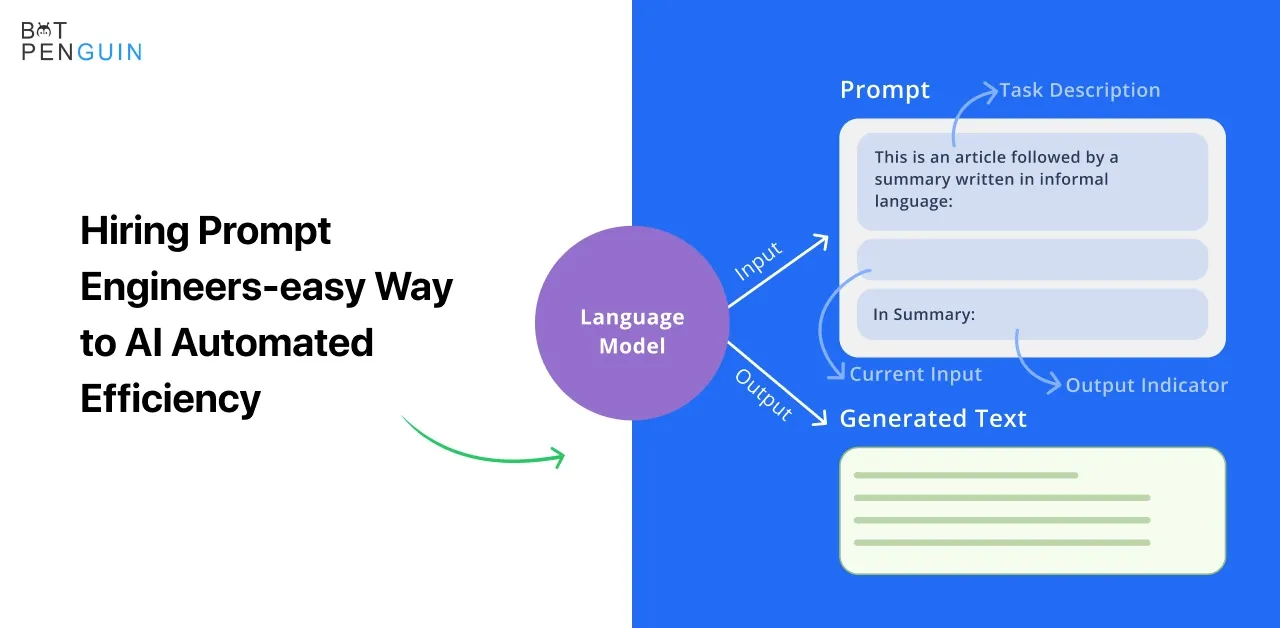
Hiring Prompt Engineers- easy way to AI automated efficiency
Prompt engineering is definitely going to play a crucial role in defining the way humans and AI tools interact with each other. Let us explore the potential future advancements in this field, ethical considerations, responsible use of AI tools, and the growing requirements for prompt engineers.
You can always find innovations or research in the field of AI, and the same applies to prompt engineering. Researchers are looking for a way to reduce the need for manual input to AI models. They are exploring methods through which the model can generate its own prompts when a context is given.
These tools can use natural language processing algorithms to analyze user inputs and recommend suitable prompts, streamlining the prompt engineering process.
Another experiment in the prompt engineering field is the inclusion of visual cues. Since multimodal AI models can already process text and images, researchers are trying the same in prompt engineering too.
As AI has begun to rule various industries, it is important to address the ethical concerns in prompt engineering. You should also ensure that AI tools are used responsibly. Prompt engineers play a critical part in reducing the ethical issues connected with AI applications. They must consider biases, fairness, and privacy issues when creating prompts.
Also, prompt engineers must prioritize transparency and accountability. They should create prompts that can help you understand the way AI tools interact. This transparency builds confidence among users. They can design prompts where the AI models can cite sources or provide clarity about their reasoning.
Responsible deployment of AI tools also involves considering the potential impact on human workers. Prompt engineers should ensure that AI systems complement human capabilities rather than replace them entirely.
They should focus on designing prompts that facilitate collaboration between humans and AI, allowing for productive interactions that leverage both strengths.
As organizations start integrating AI technologies into their services or processes, prompt engineers are very important to successfully adopt these AI tools. They will be the driving force that can use the generative AI tools to automate repetitive tasks and also develop innovative AI-powered tasks.
Prompt engineers bridge AI models and human users and ensure effective communication and meaningful interactions. They possess a deep understanding of both human language nuances and AI capabilities, making them vital contributors to the successful deployment of AI systems.
Prompt engineers design prompts and play an important role in regularly updating and optimizing them. They adapt prompts based on user feedback, monitor model performance, and iterate on prompts to improve the overall user experience.
Their expertise in prompt engineering enables AI tools to provide accurate, relevant, and context-aware responses, enhancing user satisfaction and trust.
The field of artificial intelligence (AI) never stops evolving and prompt engineers are the one who helps us to unleash the full potential of some of the best AI tools. Their deep understanding of human language nuances, AI capabilities, and ethical considerations enable them to design effective prompts that improve the AI systems' accuracy, relevance, and transparency.
As AI advances, prompt engineers must adapt and stay up-to-date to catch up with the changes. They have to ensure that these AI tools meet ethical considerations and are used responsibly.
When you want to hire expert prompt engineers for your business, consider BotPenguin as your go-to choice. Our professionals have years of experience with AI tools, from generative AI chatbots to prediction models.
We have worked on various popular language models, such as GPT-4, Llama, BERT, Claud, etc., optimizing their applications with well-crafted prompts.
Our designed prompts are used for AI tools deployed across various industries, such as healthcare, education, logistics, eCommerce, and more.
With our expertise, you can create state-of-the-art AI tools and utilize them to their fullest potential for your business needs.
Coding is not necessary. But, if you know how to use programming languages, it can be helpful when you work in prompt engineering. This is because prompt engineering is purely about understanding the workings of the language and using it effectively to get the desired results.
Prompt engineering is important because it ensures that your AI models provide accurate results. You have to create effective prompts that can guide their behavior and allow them to enable meaningful human-AI interactions.
You have to possess good knowledge of how to use natural language processing and large language models. Also, you require proficiency in programming languages like Python and must be experienced in working with large datasets and model fine-tuning techniques.
Businesses can benefit from prompt engineers' expertise by developing AI tools that are more accurate, efficient, and tailored to their specific needs.
This can lead to improved productivity, better decision-making, enhanced customer experiences, and, ultimately, a competitive edge in the market.
Current trends include exploring more efficient prompt engineering techniques, developing AI models with better understanding and reasoning capabilities, and integrating AI into various industries, such as healthcare, finance, and autonomous systems.
Subscribe to Our Newsletter
Get the latest business insights straight into your inbox.
Checkout our related blogs you will love.
Updated at Jul 28, 2026
10 min to read
Updated at Jul 25, 2026
9 min to read

Updated at Jun 1, 2026
11 min to read
Updated at Feb 12, 2026
7 min to read
Updated at May 29, 2024
10 min to read
Updated at Mar 14, 2024
12 min to read
Table of Contents