





HubSpot AI Agent: How It Works, Use Cases & Integrations
Updated at Oct 6, 2026
9 min to read
Businesses now treat conversational AI as a core part of their customer‐service and marketing stack. This surge is driven by customers who value instant answers and by businesses seeking to reduce support costs.
For founders, agencies, consultants, and SaaS resellers, this demand represents a new revenue channel. Instead of building a platform from scratch, you can join a chatbot reseller or white-label partner program and offer proven AI chatbot solutions to your clients.
This article explains what chatbot reseller programs are, how they work, how to sell AI chatbot solutions to clients, and how selling chatbots to small businesses can create recurring revenue.
A chatbot reseller program lets a business sell chatbot software and chatbot services without building the platform from scratch.
This means: A vendor builds the product. A reseller sells the product. A client buys the outcome. That is the basic model.
Most chatbot reseller programs give resellers access to an existing platform, an admin dashboard, knowledge base tools, usage controls, and support resources.
The reseller then packages that platform into a business offer. The offer may include setup, branding, bot training, analytics, monthly support, and workflow improvements.
A reseller can use two broad models.
Modern reseller programs also emphasize integration. That means, rather than forcing clients to replace their helpdesk or CRM, you can plug AI into their existing tools.
This focus on integration is why the traditional “add a logo” model is fading, and resellers today position themselves as AI integration partners rather than simple middlemen.
Chatbot reseller programs vary by branding control, service involvement, and revenue model. The right model depends on whether you want to sell software, sell services, or do both.
Here’s a quick breakdown of the prominent reseller program types:
Each of these models has been described briefly below:
This model gives the reseller the most control. The reseller owns branding, pricing, and the client experience.
White label programs work best for businesses that want recurring revenue under their own name.
If you're evaluating partner models, explore our chatbot reseller vs. white-label comparison to see how the two approaches differ in branding, margins, control, and scalability.
These programs keep the platform visible while allowing the partner to earn through setup, customization, and support.
This model suits service-led agencies that want faster delivery without owning the product layer.
These depict the lightest model. The partner refers customers and earns a commission, but does not manage onboarding, support, or product delivery. This model fits content-led or referral-led growth.
They combine software resale with integration, consulting, and workflow design. This model creates higher-value deals because the reseller sells outcomes, not just access.
Once you choose the right reseller model, the next step is understanding how these chatbot reseller programs actually operate in practice.
Want a real reseller example? See how Digiwah built its chatbot reseller business with BotPenguin.
Chatbot reseller programs work by separating product ownership from client revenue ownership.
The platform vendor builds and maintains the software, while the reseller packages, sells, configures, and manages the client relationship.
This reseller business model is quietly gaining traction today, with enterprise AI adoption becoming mainstream.
Many businesses also combine chatbot services with WhatsApp API reseller solutions to offer branded WhatsApp automation, customer support, and lead generation as part of a complete conversational AI package.
That structure is what makes the model commercially attractive. The vendor handles the technical layer. The reseller focuses on market execution.
Most chatbot reseller programs look simple on the surface, but the real complexity sits in how responsibilities are split behind the scenes.
Understanding who manages infrastructure, support, billing, and customization is key to building a scalable and profitable reseller setup.
This split matters because it removes the hardest part of software ownership. The reseller does not need to build core AI infrastructure, maintain uptime, or manage model improvements. The reseller can stay focused on revenue work, such as packaging, implementation, and retention.
These two reselling models may seem similar at first glance, but they operate very differently in the chatbot ecosystem.
A white label reseller focuses on branding and pricing control, owning the entire client experience under their name, while a chatbot service reseller goes beyond resale by delivering setup, training, integrations, and ongoing optimization.
For agencies, consultants, and operators looking to build recurring revenue, the real choice is between white label and service resale.
Chatbot reseller programs are growing because businesses want AI chat results without AI build cost.
Companies want faster customer response, lead capture outside office hours, and lower support cost per conversation. Companies also want these gains without hiring an internal AI team.
That demand favors reseller models.
Businesses buy instead of build because speed matters more than ownership in most cases.
A custom chatbot build takes time, budget, and technical oversight. A reseller offer can launch much faster. Many businesses accept that trade because the operational need is immediate.
Agencies and consultants enter this market because chatbot demand already sits inside their client base.
A marketing agency already manages traffic and lead generation. A web agency already manages site experience. A consultant already audits service workflows.
A chatbot offer thus fits naturally into those relationships.
Small teams can compete because the platform handles the hard technical layer.
A founder does not need a machine learning team. A consultant does not need to maintain model infrastructure. A reseller needs a niche, a sales motion, and a repeatable onboarding process.
Recurring revenue makes this attractive because the buyer's need is ongoing, not one-time.
A chatbot needs monitoring, retraining, flow updates, and performance review. That need supports monthly retainers, support fees, and usage-based packages.
Resellers can also explore practical ways to make money with AI bots by packaging chatbot services around specific business needs.
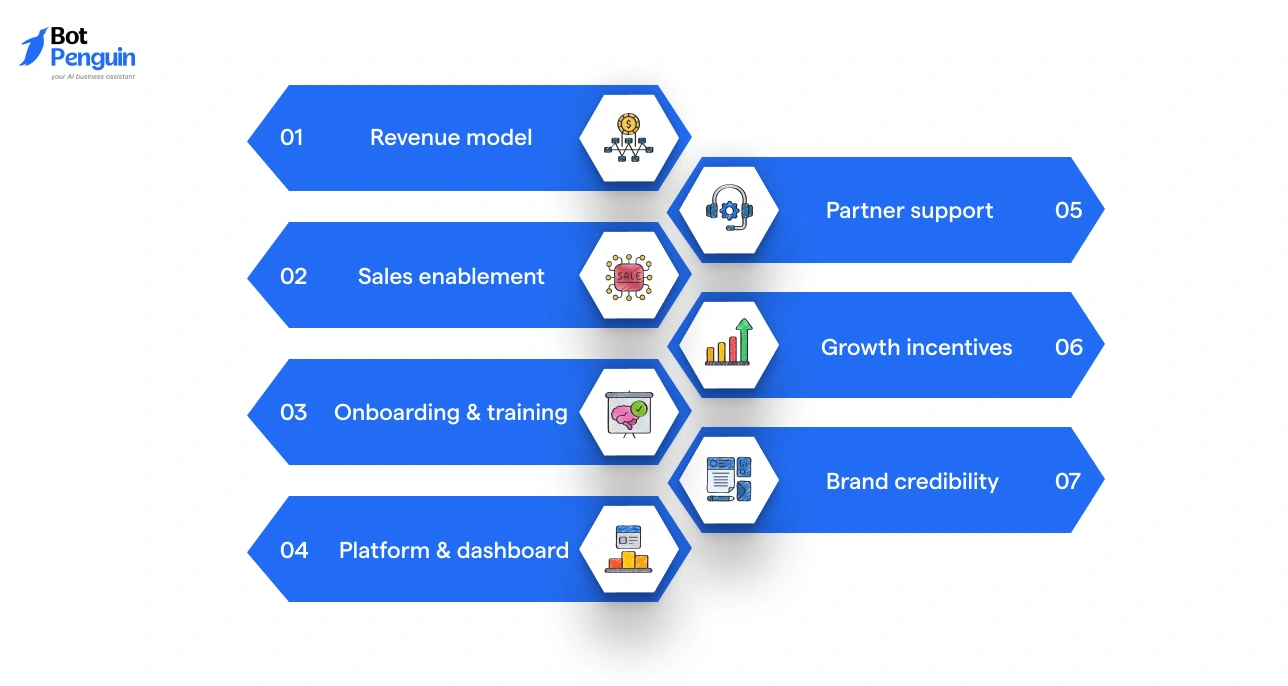
Choosing the right program directly impacts how fast you can sell, how much you earn, and how easily you scale.
Focus on these key factors:
The right choice comes down to balancing strong earning potential with the support and tools you need to sell confidently and scale sustainably.
Want to evaluate specific vendors? Compare top chatbot reseller platforms before deciding which program best fits your business.
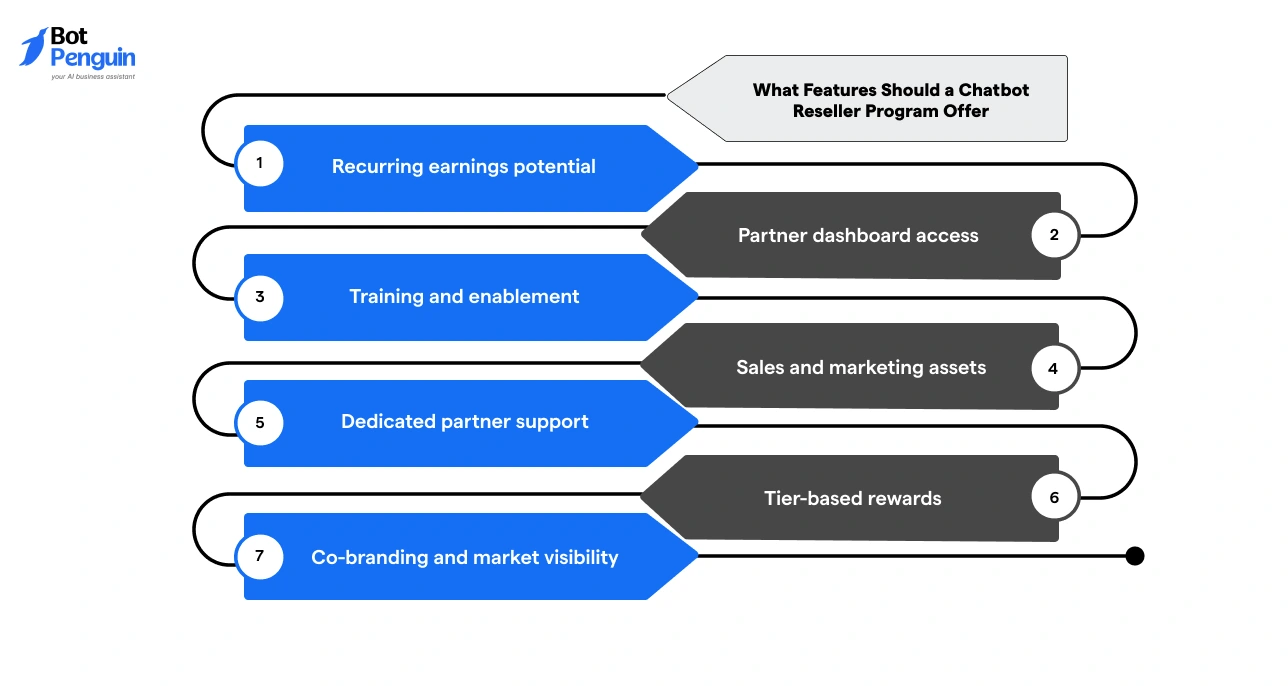
The best chatbot reseller programs offer features that support the reseller’s business model, not just the chatbot product itself.
These features will increase your chances of closing deals.
Starting a chatbot reseller business involves choosing a niche, evaluating reseller platforms, defining your services, and gradually building a client base.
Once the foundation is set, let's get to choosing how your reseller program will generate revenue.
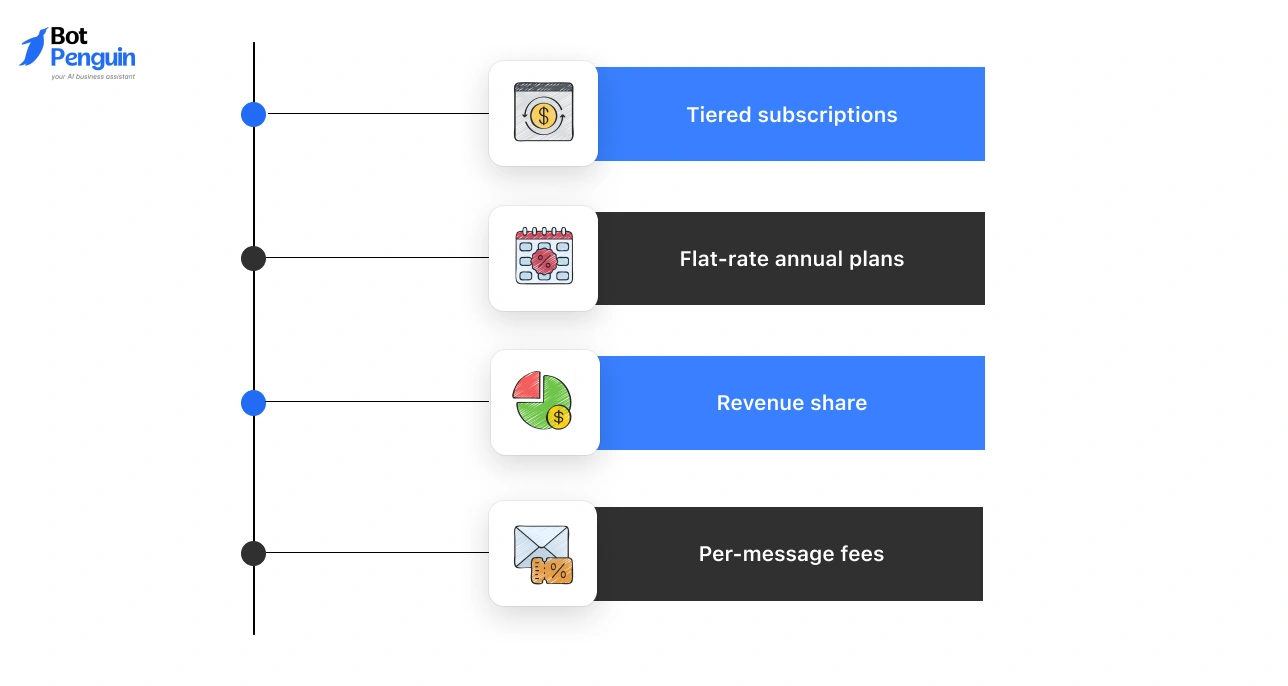
Chatbot reselling generates revenue through setup fees, recurring subscriptions, optimization services, and integrations. To ensure healthy margins:
Choose a reseller program with predictable pricing and room for service revenue.
Choose a program with clear, predictable pricing. Per‑resolution pricing can penalize success - your costs rise as the bot deflects more tickets. Flat‑rate plans are easier to scale.
Many chatbot reseller programs offer recurring commissions or revenue-sharing models and allow partners to earn additional income from setup, customization, integrations, and ongoing support.
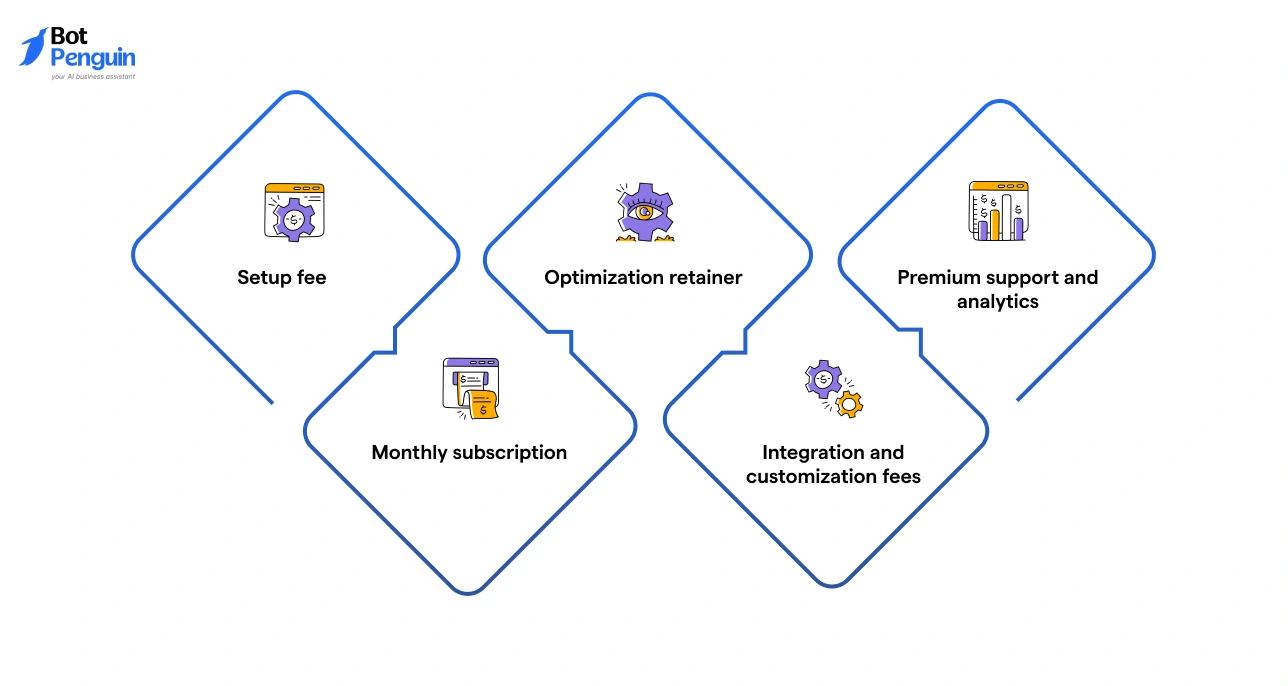
Chatbot reselling generates revenue through commissions, markups, recurring subscriptions, and value-added services layered on top of the core product.
Here’s what that includes:
Healthy margins usually come from charging for outcomes.
Subscription income creates stability, but setup, workflow design, integrations, and ongoing refinement often protect profitability far better than pure commission alone.
Project‑based work (e.g., building a bot and handing it off) generates short‑term revenue but no recurring income.
Monthly retainers, which bundle subscription fees with ongoing optimization and support, create predictable cash flow and deeper client relationships. For most resellers, recurring models are more scalable and valuable.
Looking for proven ways to grow your reseller income? Explore our guide on how to make money by becoming a chatbot reseller.
Small businesses buy chatbots to improve efficiency, capture leads, and deliver 24/7 service without hiring additional staff. When selling to SMBs:
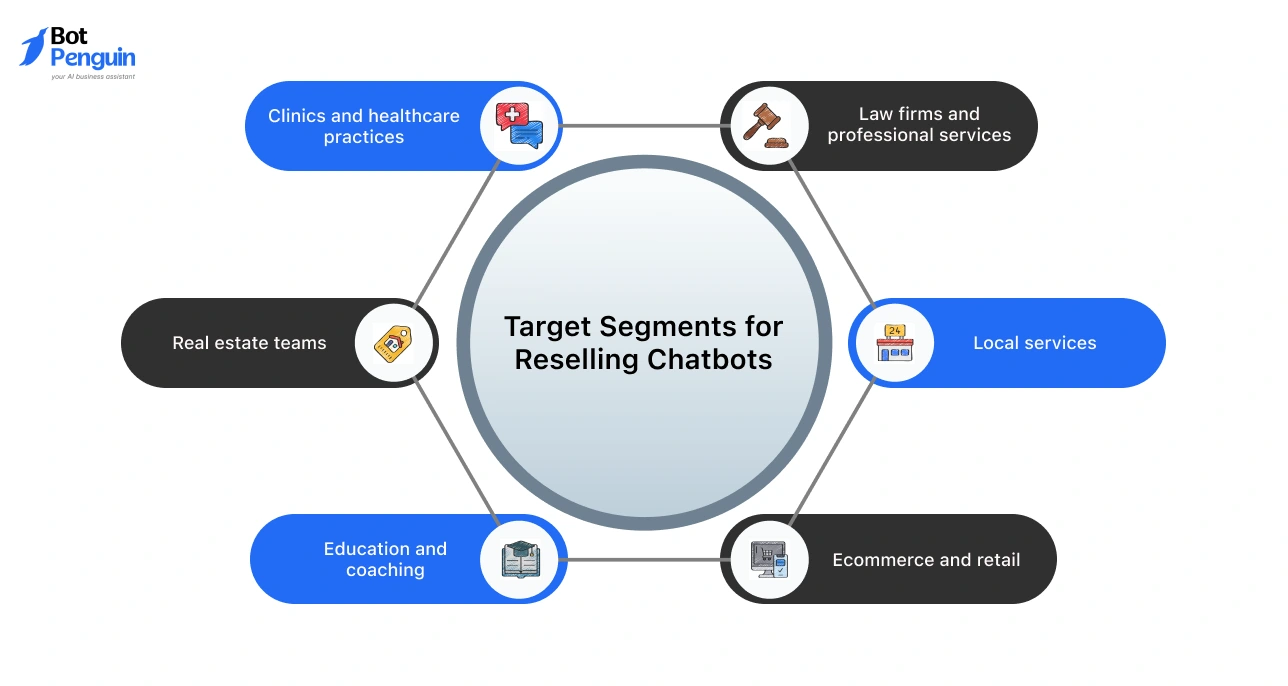
Focus on segments where chatbots solve immediate pain points:
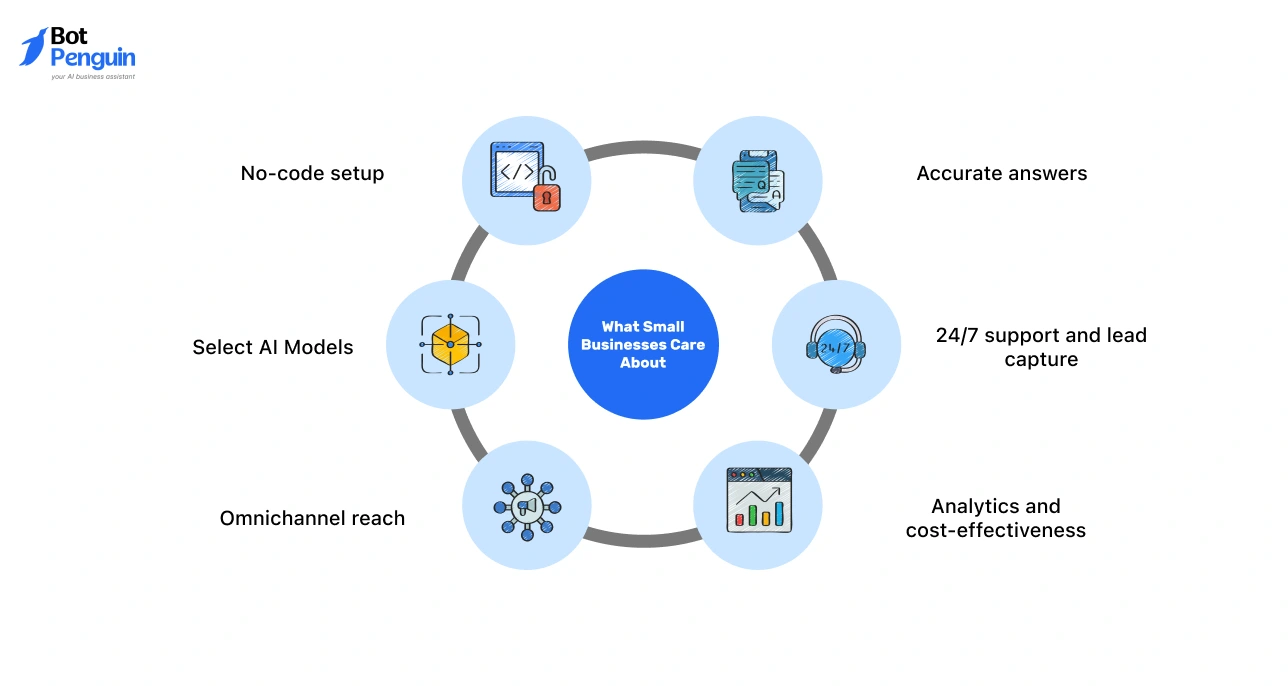
Small businesses value tools that save time and generate revenue. AI chatbots level the playing field for SMBs by offering fast, personalized service that customers now expect. Key needs include:
Lead with outcomes. Explain how the chatbot increases leads, reduces missed calls, and frees staff to focus on high‑value work. Use simple demos showing the bot booking an appointment or answering a common question.
Avoid AI jargon - small business owners care about solving their problems, not how the technology works. Highlight quick ROI and minimal effort: they can deploy a bot in minutes and start capturing leads immediately.
Addressing these objections will help you build trust, reduce hesitation, and close more deals with confidence.
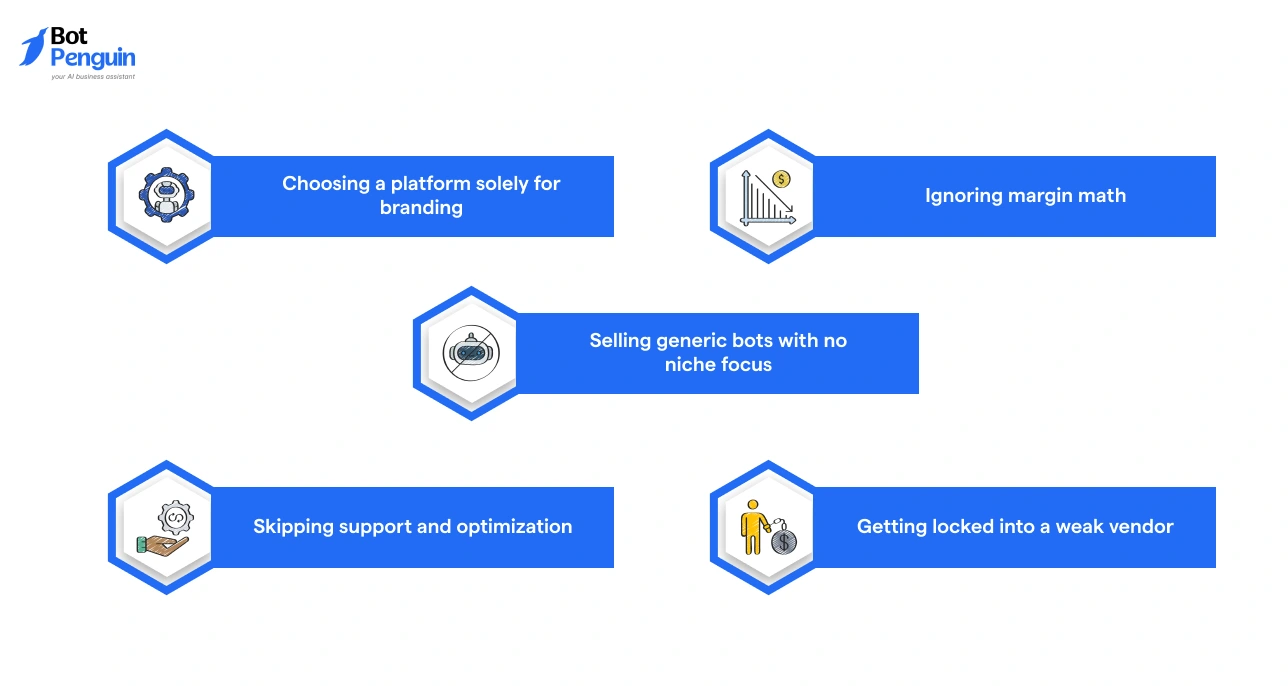
Several pitfalls can derail a chatbot reseller’s success. Avoid these common mistakes:
Avoiding these mistakes positions you to build scalable, high-retention chatbot reselling revenue with consistent client results.
Chatbot reseller programs work because they let businesses sell proven chatbot solutions without building the platform from scratch.
For agencies, consultants, freelancers, and solution providers, the model creates two clear opportunities: recurring subscription income and high-margin implementation services. The real advantage comes from packaging the chatbot around a niche problem, not from reselling software in a generic way. Businesses that want to expand beyond chatbot resale can also explore the AI agent reseller model to offer more advanced automation solutions.
When evaluating chatbot reseller programs, compare factors such as recurring revenue opportunities, partner support, AI capabilities, integrations, and onboarding.
Once you've narrowed down your options, you can choose the program that best aligns with your business goals.
It’s an arrangement in which a vendor provides the underlying chatbot platform, and a reseller rebrands and sells it as their own service. The reseller earns revenue through subscription fees, commissions, or value‑added services.
The vendor handles product development, hosting, and updates; the reseller focuses on sales, bot customization, and client support. Clients interact only with the reseller’s brand.
No. Most modern platforms offer no‑code interfaces for creating and training bots. However, basic technical understanding helps when integrating with CRMs or APIs.
Income depends on commission rate, pricing, client count, and service fees. Example: at a 30% commission on a $450 plan, you earn $135 per client per year.
Focus on outcomes (more leads, quicker service, cost savings), avoid technical jargon, and demonstrate quick ROI. Use no‑code platforms that allow SMBs to deploy bots within minutes.
Seek complete branding control, RAG‑based AI, omnichannel deployment, analytics dashboards, human hand‑off, integrations with existing tools, and predictable pricing.
Build Your Own AI Chatbot Reseller Business
Sell, customize, and manage chatbots for clients. Earn recurring revenue with subscriptions, setup fees, and ongoing optimization services, without building from scratch.
Get Started!Checkout our related blogs you will love.
Updated at Oct 6, 2026
9 min to read
Updated at Sep 28, 2026
12 min to read
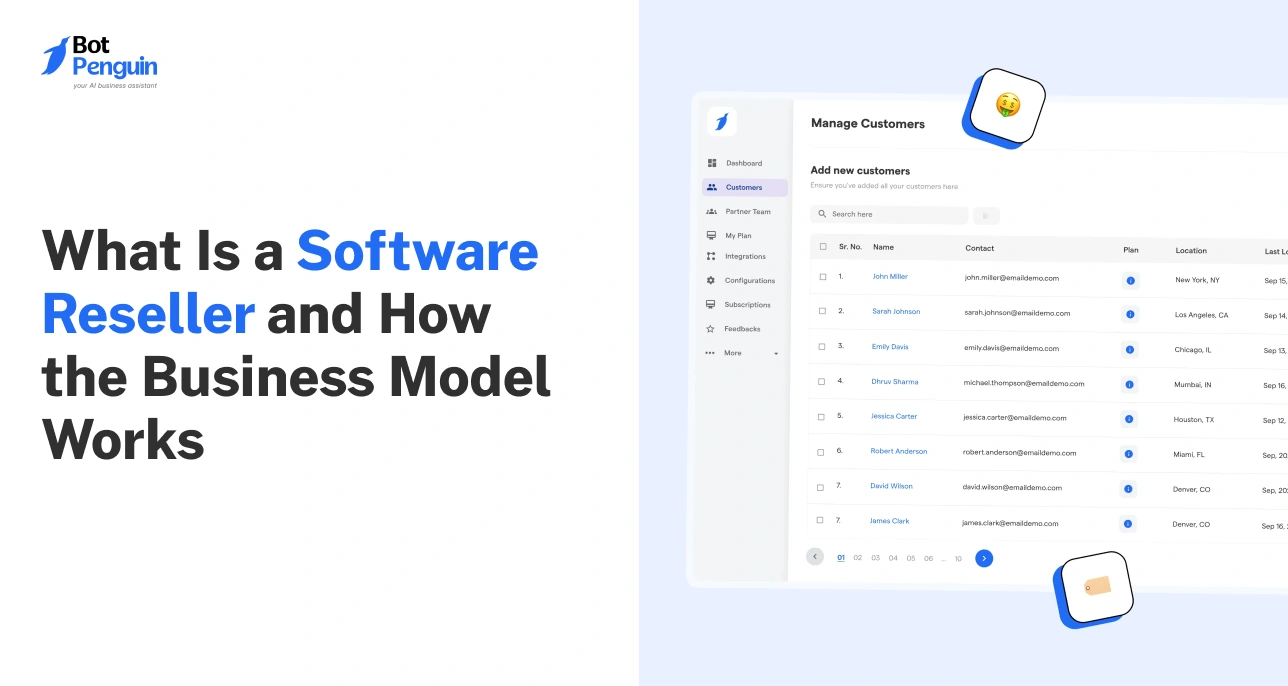
Updated at Sep 21, 2026
11 min to read
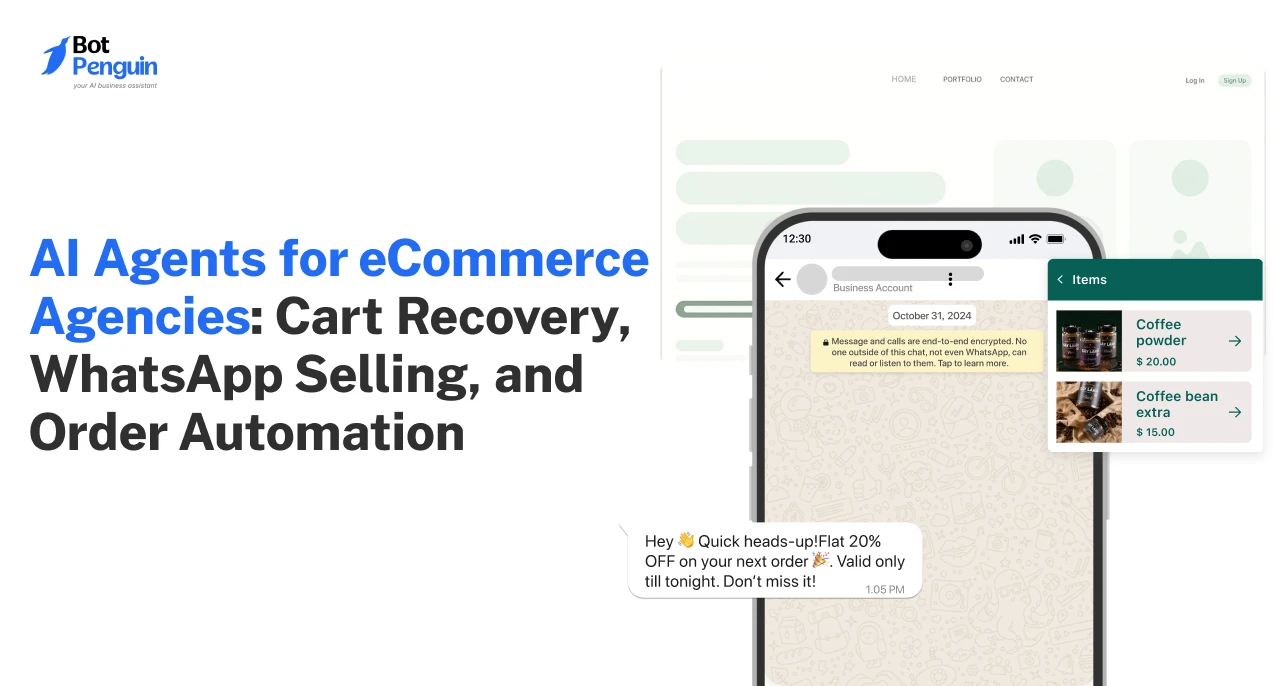
Updated at Sep 12, 2026
8 min to read
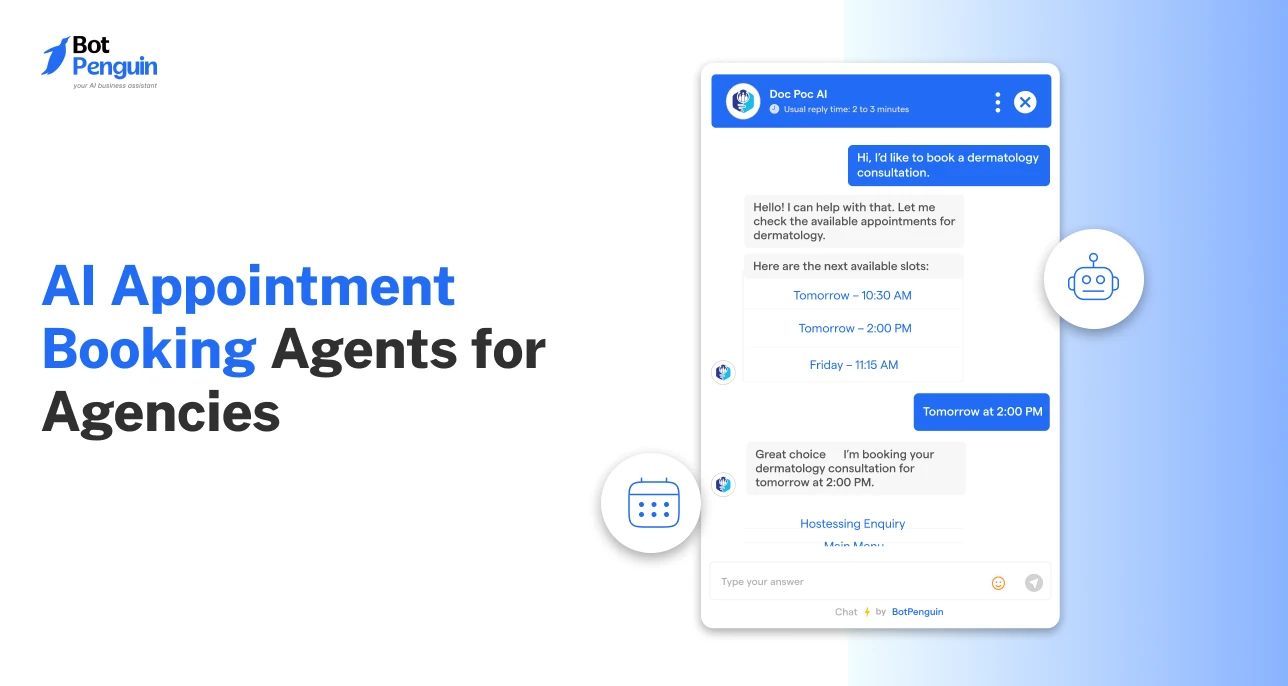
Table of Contents

