





How to Sell Chatbots to Local Businesses Without Building Them
Updated at Sep 30, 2026
15 min to read
Making money with chatbots is now a practical agency model.
Businesses want faster replies, better lead capture, and lower support load. Yet many lack the time or skills to build chatbot systems themselves.
That gap creates income opportunities for agencies, consultants, and SaaS entrepreneurs.
You can earn through setup fees, monthly retainers, revenue share, or white-label margins.
To choose the right model, compare chatbot reseller vs white label options based on branding control, pricing ownership, scalability, and client management.
This guide explains how to make money with chatbots, what income models work, how much resellers can earn, and what affects long-term profitability.
People make money with chatbots by packaging chatbot automation as a service. They help businesses automate lead capture, support, bookings, FAQs, and follow-ups without having to build the technology from scratch.
The income usually comes from setup fees, monthly subscriptions, revenue share, or margin-based reseller models. For WhatsApp-first clients, becoming a whatsapp api reseller can also help package WhatsApp automation with chatbot services.
The structure is straightforward:
Most mature platforms provide:
This allows you to build a chatbot automation business without product development costs.
For a closer look at program types, partner responsibilities, revenue models, and selection criteria, read our guide to chatbot reseller programs explained.
Most businesses lack the technical skills needed to build chatbot systems internally.
Building a chatbot from scratch requires:
For most companies, this is costly and time-intensive.
Buying chatbot automation gives them:
This demand gap creates an earning opportunity. Businesses need automation, while agencies can package and deliver it faster.
Not every reseller model offers the same earning potential. Upfront costs, margins, and revenue predictability vary considerably between physical products, software, AI services, and affiliate programs.
The comparison below shows why chatbot reselling can provide a stronger route to recurring income.
(Note: Margin ranges are illustrative industry examples and vary by provider, pricing model, client volume, and included services. BotPenguin's commission reseller program currently offers 30% recurring commission.)
Chatbot reselling combines relatively low startup costs with recurring earning potential. Partners can also charge separately for setup, customization, integrations, optimization, and ongoing support.
This gives chatbot resellers more control over income than physical-product sellers or affiliates. Instead of depending only on product margins or referral commissions, they can combine recurring earnings with service revenue.
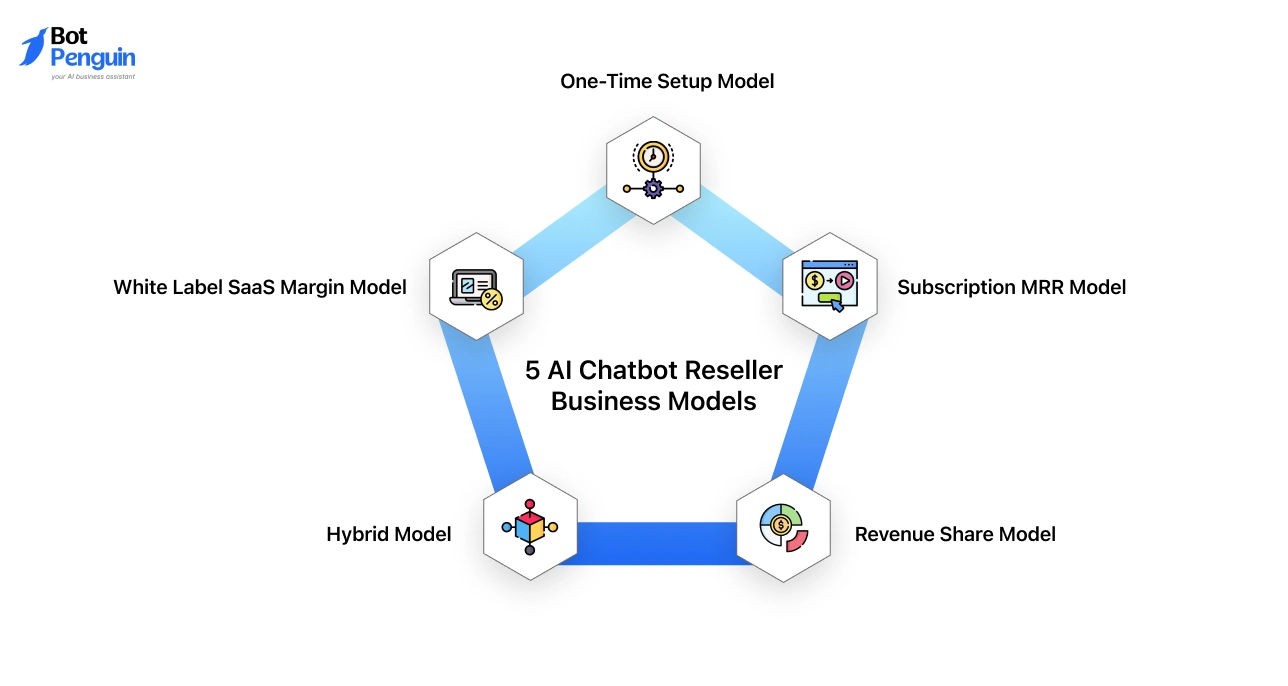
The best way to make money with AI bots depends on your revenue model, margin control, and retention strategy.
Below are the five most common chatbot income models. Each one works differently in terms of revenue mechanics, scalability, risk, and long-term value.
The one-time setup model is a project-based structure where you charge clients a fixed implementation fee to build and deploy a chatbot.
Illustrative example: The pricing and revenue figures below demonstrate how a one-time setup model can work. Actual fees and earnings depend on project scope, market, and client requirements.
$800 – $3,500 per implementation depending on complexity.
This model generates immediate cash but no recurring income.
If you close:
However, income resets every month.
Moderate. Revenue depends entirely on constant new sales.
Best suited for freelancers or agencies offering chatbot services as an add-on.
The subscription model mirrors SaaS economics. Clients pay a recurring monthly fee for chatbot access, maintenance, analytics, updates, and performance optimization.
Illustrative example: The pricing, MRR, ARR, churn, and valuation figures below are hypothetical examples used to explain the economics of this model. Actual results will vary.
$200 – $600 per month per client.
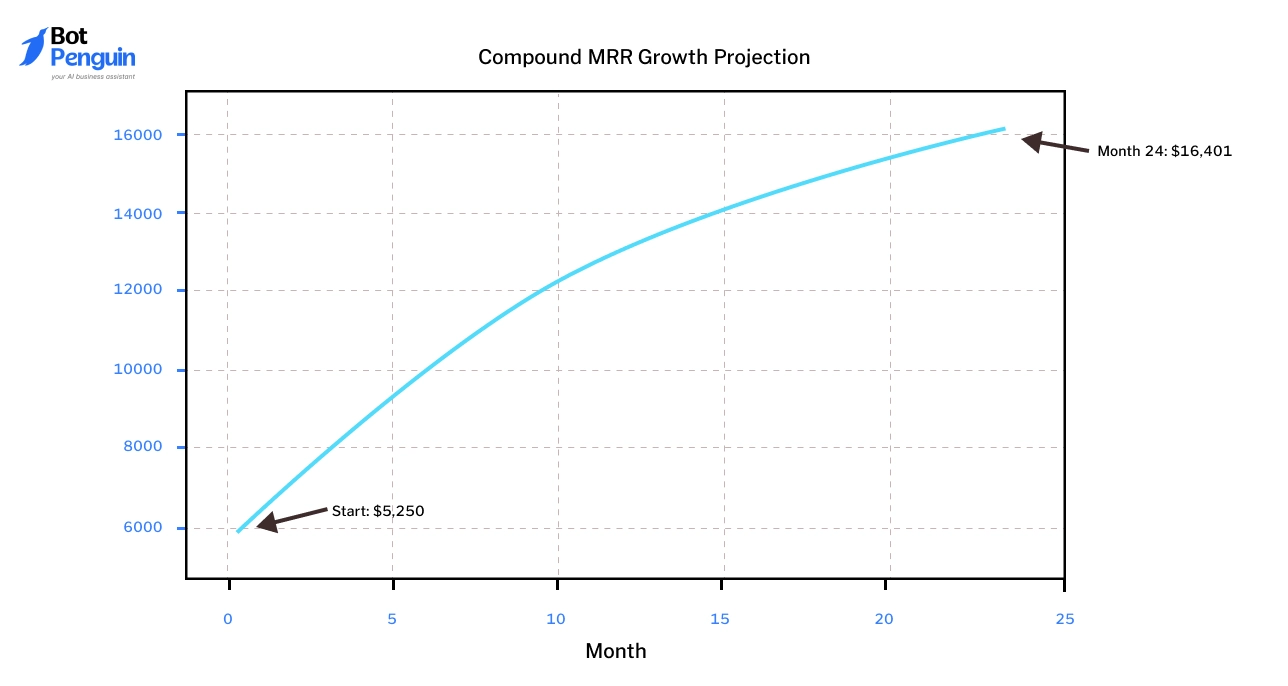
With 5% churn and moderate acquisition, MRR compounds over time.
Recurring revenue businesses:
For example, an agency generating $10K in MRR may be valued at 3–4x ARR, while a project-based agency may only sell for 1x annual profit.
Low to moderate. Requires retention management but is far more predictable than project income.
Ideal for agencies building long-term automation services.
In this structure, compensation is performance-based. Instead of charging high upfront fees, you earn a percentage of revenue or a fixed amount per lead generated.
Illustrative example: The commission rates, lead fees, client revenue, and reseller earnings below are hypothetical examples. Actual performance-based income depends on the agreement and attributable client results.
If a chatbot generates:
Your monthly income = $6,000
High upside, but unpredictable.
Best for high-ticket industries like real estate, healthcare, or B2B SaaS.
The hybrid model combines upfront fees, recurring subscriptions, and performance incentives.
Illustrative example: The fees, percentages, client counts, and revenue calculations below are hypothetical examples showing how a hybrid model may be structured.
This structure balances risk and reward.
Hybrid models often produce the healthiest revenue mix for growing AI agencies.
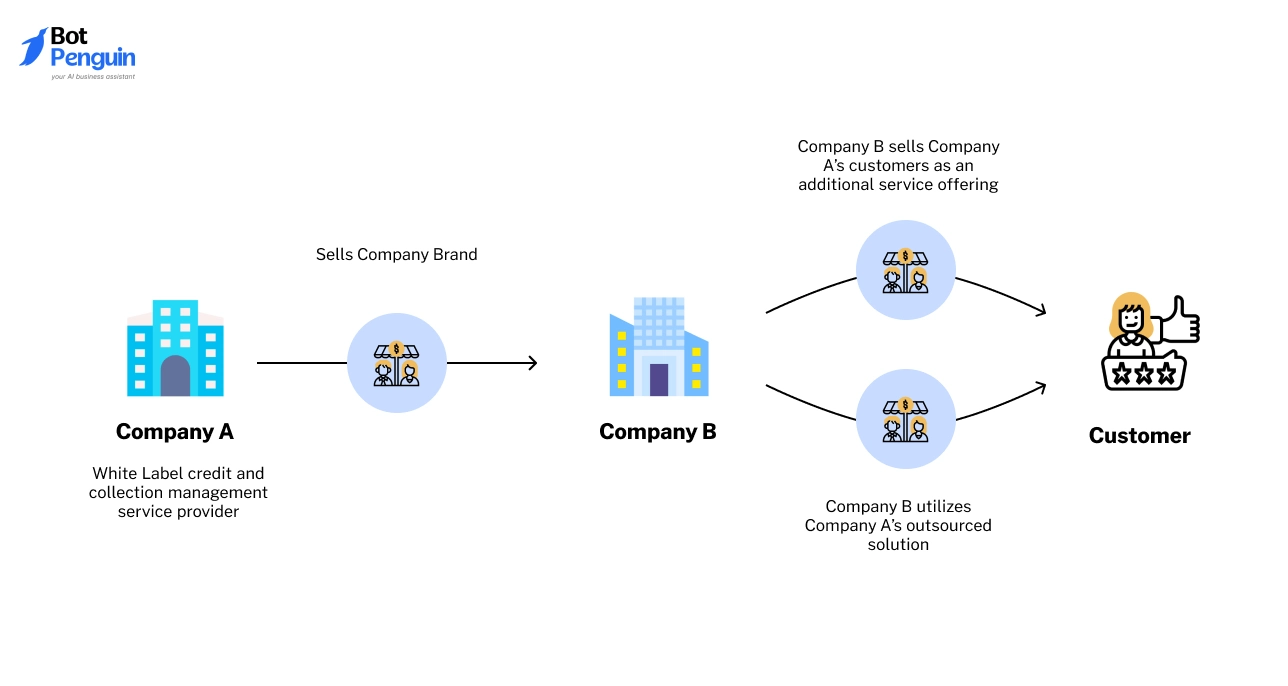
This model works when you resell a chatbot platform under your own brand and control pricing.
You pay the platform cost and charge clients at your own retail price.
Illustrative example: The platform cost, client pricing, margin, and client volume below are hypothetical and are included only to demonstrate the margin model.
Example:
With 30 clients:
$280 × 30 = $8,400 monthly gross margin
This model can increase pricing control and recurring margin. However, keep this section focused on income math, not a detailed white-label comparison.
For a deeper model comparison, read our guide on chatbot reseller vs white label.
Understanding chatbot reseller earnings is important before choosing a revenue model. Below are conservative earning projections based on recurring subscription pricing and platform margin structures.
Illustrative example: All earnings projections in this section use hypothetical client counts, pricing, platform costs, retention, churn, and upsell assumptions. They explain how reseller economics can work and that it should not be treated as an earnings guarantee.
Assumptions used in projections:
These figures show how chatbot reseller income can grow with client volume and retention.
This stage typically represents the first 60–120 days of structured outreach.
5 clients × $350 = $1,750 monthly revenue
At this level:
This stage proves viability. It does not yet represent scale.
At 20 active clients, the reseller operates as a structured automation agency.
20 × $350 = $7,000 monthly revenue
At this stage:
This income level often supports:
The business begins operating closer to a SaaS revenue model rather than a service business.
Reaching $10,000+ in monthly gross margin generally requires:
Example: 30 Clients at $400 per Month
30 × $400 = $12,000 monthly revenue
Add moderate upsells averaging $1,600 monthly across accounts:
Total Monthly Gross Margin ≈ $10,000
At this stage:
This is where chatbot reselling transitions from side income to scalable automation business.
Selling chatbots can be profitable when pricing power, platform cost, and client retention are managed well.
Gross margin formula: (Subscription Price – Platform Cost) × Active Clients
Increasing average pricing by even $50 per client can significantly increase total margin without increasing acquisition effort.
Retention is the core driver of long-term profitability.
Illustrative example: The retention period, subscription value, margins, client count, and resulting lifetime revenue below are hypothetical examples used to demonstrate retention economics.
Example:
Reducing churn from 6% to 3% monthly can increase annual stability by 15–25%.
This demonstrates that profitability is not purely acquisition-driven. It is retention-driven.
At 5 clients, the model is validated.
At 20 clients, income stabilizes.
With 30+ clients, the business operates like a recurring-revenue SaaS company.
The difference between modest income and $10K+ per month in chatbot reselling is:
Recurring revenue compounds when churn is controlled, and pricing is strategically positioned.
That is the financial reality behind successful AI chatbot reselling businesses. To see this business model in practice, explore Digiwah’s real reseller success story with BotPenguin.
Chatbot income grows when clients move from setup to recurring usage, renewals, and expansion.
A chatbot reseller business does not generate earnings through isolated transactions alone. It creates recurring income across a structured client lifecycle.
Once you choose your income model, the next step is sales execution. For that, read our guide on how to sell AI chatbots.
To properly evaluate income potential, earnings should be analyzed across four lifecycle stages: Introduction, Growth, Maturity, and Decline.
The Introduction phase begins when a client signs and onboarding starts.
Revenue characteristics:
At this stage, the primary objective is activation and stability. Errors in onboarding or unclear value delivery increase early churn risk. If a client exits during Introduction, lifetime value remains minimal.
Financial focus:
This phase determines whether revenue progresses to Growth or ends prematurely.
In the Growth phase, the chatbot is fully operational and integrated into daily processes.
Revenue characteristics:
This is where Monthly Recurring Revenue becomes stable. Acquisition cost is gradually offset, and recurring contribution strengthens.
Operational focus:
The longer clients remain in Growth, the stronger the revenue base becomes.
The Maturity phase represents stable, long term recurring contribution.
Revenue characteristics:
During Maturity, average revenue per client may increase through:
Maturity produces the highest cumulative gross margin per client. Extending this phase directly increases Client Lifetime Value without additional acquisition spending.
Decline begins when engagement decreases or renewal risk increases.
Revenue characteristics:
If churn occurs, Monthly Recurring Revenue from that account immediately stops. This caps total lifetime contribution and creates pressure to replace lost revenue.
Decline management requires:
Minimizing Decline duration and preventing churn are critical to maintaining revenue stability.
Earnings scale when more clients progress into Growth and remain in Maturity.
At early client counts, income reflects limited recurring contribution. As retention stabilizes and client volume increases, Monthly Recurring Revenue compounds.
Profitability depends on:
The model rewards consistency and lifecycle management rather than short term sales volume.
Monthly Recurring Revenue is not only influenced by new sales. It is directly affected by churn. Even moderate churn can neutralize strong acquisition efforts.
When churn rises, new client acquisition must increase simply to maintain revenue stability. When churn declines, recurring revenue compounds more efficiently.
Lower churn means fewer replacements are required to maintain stable Monthly Recurring Revenue. Over time, even small improvements in retention percentage materially increase total lifetime earnings.
In a structured chatbot reseller business, sustainable income is lifecycle driven. Acquisition initiates revenue. Growth stabilizes it. Maturity multiplies it. Decline reduces it. Retention management ultimately determines total profitability.
Platform selection directly affects margin, delivery speed, retention, and long-term earnings.
A weak platform limits pricing power and increases churn risk. A strong platform supports recurring revenue growth and operational stability.
Below are the decision-critical areas to evaluate.
Core product depth determines how effectively you can solve real business problems.
Evaluate whether the platform supports:
If the product relies only on basic rule based flows, scalability will be limited. Clients expect intelligent automation that reduces manual intervention. Product capability directly affects pricing authority and retention duration.
Modern businesses interact with customers across multiple touchpoints.
A scalable reseller platform should support:
Multi channel capability increases average revenue per client and improves stickiness. Clients are less likely to churn when automation is embedded across their communication ecosystem.
Automation delivers higher value when connected to operational systems. Assess whether the platform integrates with:
Strong integration reduces friction, increases workflow efficiency, and embeds the chatbot deeper into the client’s operations. Integration depth directly improves Client Lifetime Value.
Branding and pricing flexibility matter when they support stronger margins.
When evaluating this area, check whether the platform supports:
Keep the decision tied to margin, retention, and account expansion.
Wholesale pricing must allow sustainable margin spread.
Evaluate:
Healthy gross margin enables reinvestment in marketing, support, and growth. Thin spreads restrict scalability and compress long term earnings.
Operational reliability depends heavily on platform support quality.
Review:
Strong partner support reduces implementation errors and protects your client relationships. Poor support increases churn risk and operational strain.
Selecting the right chatbot reseller platform is a business strategy decision. It determines margin potential, scalability, and long term revenue stability.
Even with strong demand, execution errors can reduce chatbot income.
Most profitability issues stem from weak positioning, poor pricing, unclear onboarding, or poor retention management. Avoiding these mistakes improves recurring revenue performance.
Below are the mistakes discussed in detail.
Operating without a defined niche weakens positioning and reduces conversion efficiency.
Broad targeting increases competition, lengthens sales cycles, and creates more implementation work. Without industry specialization, it becomes harder to standardize workflows or prove clear expertise.
This affects close rates, delivery speed, and long-term retention.
Many resellers price only for the initial setup and underestimate the cost of ongoing optimization and client support. Subscription fees that do not account for reporting, workflow refinement, and integration maintenance compress margins over time.
Sustainable pricing must reflect continuous service requirements. Underpricing leads to operational strain and reduced profitability.
An inconsistent onboarding process increases early-stage churn. Without a structured activation framework, expectations remain unclear, implementation errors increase, and measurable value is delayed.
Early churn significantly reduces Client Lifetime Value because revenue accumulation stops before a meaningful margin is generated. A defined onboarding system improves activation success and retention stability.
Focusing only on acquisition while neglecting churn control destabilizes Monthly Recurring Revenue. Even steady new client acquisition cannot offset high attrition.
Without monitoring engagement metrics and renewal risk, revenue erosion occurs silently. Retention management must be proactive and supported by transparent reporting and periodic performance reviews.
Positioning AI chatbots as fully autonomous solutions creates unrealistic expectations. Automation improves response efficiency and workflow management, but it does not replace complex human judgment in every scenario.
Overstating capability leads to dissatisfaction and the erosion of trust. Clear scope definition protects client relationships and supports long-term retention.
Avoiding these structural mistakes strengthens operational control, improves retention duration, and increases the long-term profitability of a chatbot reseller business.
BotPenguin supports partners who want recurring chatbot income without having to build the platform themselves.
You can package chatbot automation, WhatsApp automation, website chat, AI agents, and support workflows for clients. Partners can also expand into an AI agent reseller model to offer advanced automation beyond basic chatbot services.
BotPenguin handles the platform, infrastructure, updates, security, and integrations.
This helps you focus on pricing, packaging, client acquisition, reporting, and retention.
For more details on partnerships, explore our chatbot reseller program.
Making money with chatbots depends on the model you choose.
Setup fees create quick cash flow. Monthly subscriptions create predictable revenue. Revenue share adds upside. White-label margins offer stronger pricing control when the business matures.
The strongest chatbot income models combine clear packaging, healthy margins, strong retention, and measurable client outcomes.
BotPenguin gives partners the platform, integrations, and support needed to package chatbot automation without building the technology from scratch.
If your goal is recurring income, start with the model that fits your resources. Then scale through retention, account expansion, and stronger client outcomes.
Yes. You can make money with chatbots through setup fees, monthly subscriptions, revenue share, and white-label margins. The most stable income usually comes from recurring models where clients pay monthly for chatbot access, optimization, reporting, and support.
How much do chatbot resellers earn depends on client count, pricing, platform cost, and retention. As an illustrative example, 20 clients paying $350 per month would generate $7,000 in monthly revenue before platform costs.
Yes, selling chatbots can be profitable when you control pricing, keep platform costs low, and retain clients for several months. Profitability improves when the model includes recurring revenue, upsells, and clear reporting.
The AI automation market is expanding faster than supply in many local and industry-specific segments. Generic chatbot services face competition, but niche-focused providers still have strong income opportunities. Positioning, specialization, and retention strategy determine competitiveness more than market saturation.
With an established platform like BotPenguin, setup time is short because the infrastructure, hosting, and AI capabilities are already in place. Your earning timeline depends on niche selection, pricing, outreach, onboarding, and retention.
Technical development skills are not required if you partner with a platform that manages infrastructure and AI deployment. However, understanding automation workflows, client use cases, and performance metrics is important for long-term retention and profitability.
Industries with high inquiry volumes, repetitive queries, or structured lead-qualification processes tend to adopt AI chatbots more quickly. Demand is particularly strong where response speed directly impacts revenue or customer satisfaction.
Differentiation comes from vertical specialization, measurable performance outcomes, integration depth, and lifecycle management. Selling generic chatbot access is less effective than offering automation solutions tied to specific business outcomes.
Yes. Many partners begin with a reseller structure to validate chatbot reseller income. They may later move toward white-label control when they need stronger branding, pricing ownership, and client account control.
Ready to Sell AI Chatbots Under Your Brand?
Choose BotPenguin’s Reseller or White Label program and start building predictable Monthly Recurring Revenue without development overhead.
Explore Partnership OptionsCheckout our related blogs you will love.
Updated at Sep 30, 2026
15 min to read
Updated at Aug 21, 2026
9 min to read
Updated at Oct 10, 2026
9 min to read
Updated at Oct 9, 2026
8 min to read

Updated at Oct 9, 2026
12 min to read
Updated at Oct 8, 2026
10 min to read
Table of Contents

