



The healthcare sector is experiencing a digital transformation, with artificial intelligence (AI) agents at the forefront of improving patient care and operational efficiency.
According to a recent HIMSS survey, over 60% of hospitals are actively exploring AI integrations, but only 23% have achieved full HIPAA compliance with their AI solutions.
This gap underscores the critical need for secure, compliant AI technologies in clinical environments.
As data breaches in healthcare rose by 55% in 2023, hospitals are under increasing pressure to protect patient health information (PHI) while leveraging AI’s potential.
In this article, we explore what makes an AI agent HIPAA compliant, why it matters, and how hospitals can successfully build and deploy these cutting-edge solutions.
What Are HIPAA Compliant AI Agents?
HIPAA (Health Insurance Portability and Accountability Act) sets the standard for protecting sensitive patient data in the United States.
To be considered HIPAA compliant, AI agents must adhere to strict technical and administrative safeguards for any system that interacts with PHI.
Key Requirements for HIPAA Compliance in AI Agents Include:
- Data Encryption: All PHI must be encrypted both at rest and in transit, preventing unauthorized access during data exchange or storage.
- Access Controls: Only authorized personnel should have access to PHI, with robust authentication and authorization mechanisms in place.
- Audit Trails: Systems must log all interactions with PHI, enabling traceability for security audits and breach investigations.
- Data Minimization: AI agents should only collect and process the minimum necessary PHI required to perform their functions.
- Secure Hosting: Cloud or on-premises infrastructure must meet HIPAA security standards, including regular risk assessments and business associate agreements (BAAs).
Core Elements of HIPAA Compliance for AI Agents
Why is This Important?
- Hospitals face severe financial and reputational risks if found non-compliant.
- Patients expect their data to be handled with the utmost confidentiality.
- Regulatory agencies can conduct audits at any time—compliance is not optional.
By embedding these safeguards into AI agents, hospitals can confidently harness automation while staying within the boundaries of federal law, positioning themselves as trustworthy stewards of patient data.
Next, we’ll explore the specific types of HIPAA compliant AI agents and how they address hospital needs.
Why Hospitals Need HIPAA Compliant AI Agents
As hospitals increasingly turn to digital solutions, the need for HIPAA compliant AI agents has become critical.
These intelligent systems can streamline operations, safeguard sensitive data, and transform the patient and staff experience.
Understanding the necessity behind adopting such agents is essential to appreciating their role in modern healthcare environments.
Pain Points in Hospital Operations
Hospital operations are notoriously complex.
Staff frequently juggle administrative tasks, patient care coordination, and regulatory documentation.
For example, a busy admissions desk might process hundreds of patient records daily, leaving room for delays and errors.
Common pain points include:
- Manual data entry, which is time-consuming and error-prone.
- Fragmented communication between departments, leading to inefficiencies.
- Difficulty in rapidly triaging and routing patient inquiries, especially during peak hours.
- Overwhelmed scheduling systems that cause appointment bottlenecks.
When these issues persist, they not only slow down workflows but also impact patient satisfaction and clinical outcomes.
HIPAA compliant AI agents can automate repetitive tasks, facilitate seamless communication, and ensure that sensitive data is handled securely at every stage.
Risk of Non-Compliance
Failing to adhere to HIPAA regulations can have severe repercussions for hospitals. Non-compliance exposes organizations to:
- Hefty financial penalties.
- Legal actions and reputational damage.
- Loss of patient trust.
For instance, a data breach due to improper handling of protected health information (PHI) can result in millions of dollars in fines and irreversible harm to a hospital’s reputation.
HIPAA compliant AI agents are designed to minimize these risks by:
- Enforcing strict access controls.
- Maintaining audit logs for every interaction.
- Ensuring end-to-end encryption of PHI.
These safeguards are not just regulatory obligations—they are crucial business imperatives that protect both the institution and its patients.
Emotional Impact on Patients & Staff
Beyond operational and regulatory concerns, there is a profound emotional dimension.
Patients often feel anxious and vulnerable when navigating hospital processes, especially if they encounter long waits or miscommunication.
Staff, on the other hand, may experience burnout from administrative overload and the constant pressure to avoid mistakes.
Consider a scenario where a patient repeatedly receives conflicting appointment information.
This can lead to frustration, missed visits, and diminished confidence in the care provided.
Similarly, staff spending hours on repetitive data entry may feel disengaged from their core purpose: patient care.
HIPAA compliant AI agents can:
- Provide timely and accurate responses to patient queries.
- Reduce administrative burdens on staff, allowing them to focus on meaningful work.
- Foster a more supportive and stress-free environment for everyone involved.
By addressing these multifaceted challenges, HIPAA compliant AI agents are not just a technical upgrade—they are a strategic necessity for hospitals committed to delivering safe, efficient, and compassionate care.
As we explore the core features that set these AI agents apart, it becomes clear why thoughtful implementation is key to reaping their full benefits.
Core Features of HIPAA Compliant AI Agents
To create trustworthy and efficient AI agents for hospitals, it is essential to prioritize both regulatory adherence and operational excellence.
HIPAA compliant AI agents play a pivotal role in safeguarding Protected Health Information (PHI) while streamlining hospital workflows.
This section explores the foundational features that ensure AI agents not only meet strict HIPAA requirements but also deliver measurable value for healthcare providers.
Data Encryption and PHI Safeguards
Protecting sensitive patient information is non-negotiable for hospital AI solutions.
HIPAA requires strict measures to ensure the confidentiality, integrity, and availability of PHI.
Key Aspects of Data Encryption & PHI Safeguards:
- End-to-End Encryption: All data—whether at rest or in transit—is encrypted using industry-standard protocols such as AES-256 and TLS 1.2+. This ensures PHI is unreadable to unauthorized users.
- De-identification of Data: AI agents are designed to remove or mask identifiers from datasets whenever feasible, reducing risk in case of data exposure.
- Role-Based Access Control (RBAC): Access to sensitive data is strictly limited based on user roles, ensuring only authorized personnel can interact with PHI.
- Regular Security Audits: Ongoing vulnerability assessments and penetration testing help identify and mitigate emerging threats.
Data Encryption Workflow for Hospital AI Agents
Patient Data Collected → Data Encrypted in Transit → Processed by AI Agent → Results Encrypted at Rest → Access granted via RBAC
Encryption Methods and Their Application
Audit Trails and Access Controls
Maintaining detailed records of all data interactions is a core HIPAA requirement.
Audit trails and granular access controls ensure transparency and accountability within hospital environments.
Critical Elements:
- Comprehensive Logging: Every instance of data access, modification, or sharing is automatically logged with timestamps and user IDs.
- Automated Alerts: Real-time notifications are generated for any unusual access patterns or policy violations.
- Permission Management: Administrators can define, review, and update permissions for every user and AI process.
- Regular Review Cycles: Scheduled reviews of audit logs help identify compliance gaps and support incident investigations.
Benefits of Robust Audit and Access Management:
- Facilitates rapid breach detection and response
- Simplifies compliance reporting during HIPAA audits
- Enhances trust among patients and hospital staff
Seamless EHR Integrations
AI agents derive their clinical value by integrating deeply with Electronic Health Record (EHR) systems.
Seamless integration is vital for operational efficiency and data integrity.
Key Features of EHR Integration:
- Standards-Based APIs: Utilization of HL7, FHIR, and other healthcare protocols to enable secure, interoperable data exchange.
- Real-Time Data Sync: AI agents can read and update patient records instantly, ensuring up-to-date insights for clinicians.
- Minimal Workflow Disruption: Integration is designed to be non-intrusive, preserving clinicians’ established routines.
- Data Consistency Checks: Built-in validation mechanisms prevent data corruption or duplication across systems.
EHR Integration Capabilities
Multilingual and 24/7 Support
Hospitals operate around the clock and serve diverse communities.
HIPAA compliant AI agents must be able to communicate in multiple languages and provide reliable, always-on support.
Essential Capabilities:
- Multilingual Natural Language Processing (NLP): Supports patient and staff interactions in multiple languages, reducing barriers to care.
- Around-the-Clock Availability: AI agents remain operational 24/7, handling routine queries, appointment scheduling, and urgent alerts without interruption.
- Accessibility Compliance: Interfaces are designed to meet ADA and WCAG standards, ensuring inclusion for all users.
- Scalable Support Models: AI agents can manage large volumes of simultaneous interactions, adapting to peak hospital workloads.
Benefits:
- Increases patient and family satisfaction
- Reduces manual workload for staff during off-hours
- Promotes equitable access to care
Customizable Workflows for Hospitals
Every hospital has unique processes and compliance standards.
The most effective HIPAA compliant AI agents offer robust customization to fit organizational needs.
Custom Workflow Features:
- Drag-and-Drop Workflow Builders: Non-technical staff can tailor AI-driven processes for admissions, discharges, scheduling, and more.
- Pre-Built Compliance Templates: Out-of-the-box workflows align with key HIPAA and hospital policy requirements.
- Dynamic Decision Trees: AI agents can adapt responses and actions based on patient data or situational context.
- Continuous Improvement Tools: Performance analytics and feedback loops allow ongoing refinement of AI workflows to meet evolving hospital needs.
In short
Choose Workflow Template → Map Data Inputs → Set Access Controls → Launch and Monitor → Iterate Based on Analytics
Implementing HIPAA compliant AI agents in hospitals demands a precise balance of security, interoperability, accessibility, and customization.
By focusing on these five core features—data encryption, audit trails, EHR integration, multilingual support, and customizable workflows—healthcare organizations can confidently leverage AI to improve patient care while maintaining the highest standards of compliance and trust.
For Those Considering the Deployment of AI in Hospital Settings, Understanding These Foundational Features is the First Step Toward Building or Selecting the Right Solution.
In the Following Sections, We’ll Explore the Step-by-Step Process of Building a HIPAA Compliant AI Agent Tailored to Your Hospital’s Unique Needs.
How to Build a HIPAA Compliant AI Agent
With the critical need for privacy and security in healthcare, building a HIPAA compliant AI agent for hospitals demands a carefully structured process.
Not only must these agents deliver operational efficiency and improve patient experience, but every step from model selection to deployment must align with the regulatory standards that safeguard protected health information (PHI).
Let’s explore the essential building blocks for crafting such robust AI systems.
Choosing the Right AI Model
Selecting an AI model suitable for healthcare is foundational.
The model must be capable of understanding complex medical language, handling sensitive patient details, and supporting diverse hospital workflows.
For example, a natural language processing (NLP) model trained on medical dialogues can effectively triage patient inquiries or support administrative staff.
Key considerations for model selection:
- Privacy by design: Opt for models that allow on-premise deployment or support secure cloud environments.
- Customizability: Ensure the AI can be tailored to unique hospital protocols.
- Auditability: The model should log interactions for compliance reviews.
Table: AI Model Evaluation Criteria for HIPAA Compliance
Integrating with Hospital EHR Systems
A HIPAA compliant AI agent is only as effective as its integration with the hospital’s Electronic Health Record (EHR) systems.
This connection enables real-time access to patient data, appointment scheduling, and documentation, all while maintaining compliance.
Scenario: Imagine a patient calls to reschedule an appointment.
The AI agent securely accesses the patient’s EHR, verifies identity, updates the schedule, and sends a confirmation—all without exposing PHI unnecessarily.
Best practices include:
- Using standardized APIs (like HL7 FHIR) for interoperability
- Ensuring access controls restrict data visibility to only what is essential
- Supporting seamless data exchange while tracking every access event
Implementing Secure Data Pipelines
Transmitting and processing PHI demands rigorous data security.
Secure data pipelines are critical to protect information during transfer and storage.
Core safeguards:
- End-to-end encryption: From the user's device to the AI backend, data remains encrypted.
- Role-based access control: Only authorized users and systems can interact with sensitive data.
- Regular vulnerability assessments: Continuous testing for security gaps.
Secure Data Pipelines for HIPAA Compliance
- Data input (voice/text) → Encrypted transmission → AI processing in secure environment → Encrypted storage/output
Testing for HIPAA Compliance
Before deployment, thorough testing ensures the AI agent complies with HIPAA regulations. This process involves:
- Security audits: Simulating attacks and data leaks to identify vulnerabilities.
- Compliance checklists: Verifying adherence to HIPAA Privacy, Security, and Breach Notification Rules.
- User acceptance testing: Engaging clinical and administrative staff to validate workflows.
Example: A hospital runs simulated patient queries through the AI, ensuring PHI is masked where required and access logs are generated for every interaction.
Deploying and Monitoring AI Agents
Deployment is not the finish line. Ongoing monitoring guarantees continued compliance and operational excellence.
Key steps:
- Deploy in secure environments: Use HIPAA-compliant cloud or on-premise solutions.
- Continuous monitoring: Automated alerts for unusual data access or system errors.
- Periodic reviews: Update the AI with regulatory changes and feedback from hospital staff.
Scenario: After deployment, a dashboard alerts administrators if the AI agent attempts unauthorized EHR access, allowing immediate intervention.
Building a HIPAA compliant AI agent is a multi-layered process, but when executed with diligence, it unlocks transformative potential for hospitals.
By following these steps, hospital leaders can confidently integrate AI into sensitive workflows while safeguarding patient trust.
In the following section, we’ll dive into advanced use cases that illustrate how these agents bring practical value to daily hospital operations—demonstrating the real-world impact of compliant, secure AI integration.
Advanced Use Cases in Hospitals
As hospitals continue to adopt digital transformation, HIPAA compliant AI agents are reshaping daily operations and patient care.
These intelligent solutions go far beyond basic chatbots.
They are now instrumental in streamlining complex workflows, ensuring regulatory compliance, and enhancing the patient experience.
Below, we explore advanced use cases that highlight how these AI-powered tools are making a difference in real-world hospital settings.
AI Voice Agents for Patient Scheduling
Managing patient appointments is a time-consuming task for hospital staff.
AI voice agents can automate this process by making outbound calls, confirming appointments, and handling rescheduling or cancellations in real time.
For example, a patient receives a reminder call from an AI agent that verifies their identity, discusses available slots, and updates the hospital’s scheduling system instantly.
This reduces missed appointments and frees up human resources for higher-value tasks.
Benefits:
- 24/7 availability for booking and reminders
- Seamless integration with EHR and scheduling software
- Multilingual support for diverse patient populations
Automated Medical Coding & Documentation
Accurate medical coding and documentation are critical for billing and compliance.
AI agents trained on medical terminology can listen to clinical encounters or analyze written notes, then generate appropriate codes and structured documentation.
Imagine a physician dictating a clinical summary while the AI instantly extracts ICD-10 codes and populates the EHR.
This reduces manual errors, accelerates revenue cycles, and supports compliance with healthcare regulations.
Key Features:
- Natural language processing for context-aware coding
- Real-time documentation with audit trails
- Adaptive learning from ongoing provider feedback
HIPAA Compliant AI Calling Agents
Telephone interactions remain central to hospital operations.
Automated calling agents, designed with HIPAA compliance at their core, handle sensitive patient information with encrypted data flows and strict access controls.
For instance, an AI agent can call patients to relay lab results or medication instructions, ensuring that only authenticated individuals receive protected health information (PHI).
These agents log all activity for compliance audits, reducing legal risks.
Security Measures:
- End-to-end call encryption
- Dynamic identity verification
- Detailed call logging and access monitoring
Real-Time Patient Support & Triage
In fast-paced hospital environments, immediate response to patient needs is vital.
AI agents can triage incoming requests via phone, chat, or web portals by assessing symptoms, prioritizing urgent cases, and directing patients to the right department.
For example, a patient describing chest pain through a web portal AI is flagged for immediate attention, triggering alerts for medical staff.
This improves patient flow and enhances clinical outcomes.
How it Works:
- Intelligent symptom analysis and urgency scoring
- Automated routing to relevant departments or on-call staff
- Consistent, evidence-based triage protocols
These advanced use cases underscore the transformative role that HIPAA compliant AI agents play in modern hospitals.
By automating complex processes and ensuring regulatory adherence, these agents drive both operational efficiency and improved patient care.
In the next section, we will examine the key benefits hospitals can expect from implementing these technologies, providing a holistic view of their organizational impact.
Key Benefits of HIPAA Compliant AI Agents for Hospitals
As hospitals continue their digital transformation, adopting HIPAA compliant AI agents delivers tangible advantages that directly impact daily operations and the quality of care.
These AI-driven solutions are more than just technological upgrades—they are strategic tools designed to solve long-standing challenges in healthcare administration and patient engagement.
In this section, we break down exactly how these agents empower hospitals by reducing administrative tasks, elevating patient satisfaction, and driving significant cost savings.
Reducing Administrative Burden
Administrative overload is a persistent issue in healthcare.
Staff are often swamped with repetitive tasks such as patient data entry, appointment scheduling, insurance verification, and responding to routine inquiries.
With HIPAA compliant AI agents, hospitals can automate these processes securely without compromising patient privacy.
Scenario: Imagine a hospital’s front desk where staff handle hundreds of appointment requests and insurance verifications daily.
By deploying an AI agent that manages these interactions securely, staff are freed to focus on complex tasks requiring human judgment.
This not only alleviates burnout but also reduces delays and errors commonly caused by manual entry.
Tasks Automated by AI Agents
By offloading these repetitive tasks, hospitals can achieve smoother workflows and higher overall productivity.
Boosting Patient Satisfaction
Patient experience is central to hospital success and reputation.
HIPAA compliant AI agents contribute by offering fast, consistent, and empathetic communication—available 24/7 in multiple languages.
This level of support ensures that patients receive accurate answers and timely assistance, even outside traditional office hours.
Scenario: A patient with limited English proficiency wants to confirm pre-surgery instructions late at night.
An AI-powered virtual assistant provides clear, language-appropriate responses, reassuring the patient and reducing anxiety.
This personalized interaction builds trust, encourages adherence to care plans, and increases satisfaction.
Key Patient Benefits:
- 24/7 access to information and assistance
- Multilingual support for diverse populations
- Reduced wait times for answers and services
- Personalized care navigation
- Secure handling of sensitive health information
Cost Savings and Efficiency Gains
Financial pressures are a constant reality for healthcare providers.
Implementing HIPAA compliant AI agents can generate substantial cost savings through process optimization and reduced reliance on manual labor.
Automation slashes operational expenses, minimizes costly errors, and ensures compliance with regulations.
Cost Impact of AI Agent Implementation
Beyond direct savings, hospitals also benefit from faster turnaround times, fewer compliance risks, and improved resource allocation.
In summary, the adoption of HIPAA compliant AI agents enables hospitals to streamline administrative duties, enhance patient experiences, and realize measurable financial gains.
As we explore further, it is crucial to recognize that these benefits are accompanied by unique challenges, especially regarding integration and ongoing compliance.
The next section will address these challenges and considerations to ensure a balanced approach to AI adoption in healthcare.
Challenges and Limitations
While the adoption of HIPAA compliant AI agents in hospitals brings clear operational and patient care advantages, several challenges and limitations must be navigated for successful implementation.
Understanding these obstacles is vital for health systems aiming to harness AI responsibly, sustainably, and in full regulatory alignment.
The following sections explore key hurdles that hospital leaders, IT teams, and clinicians often encounter when integrating AI agents into sensitive healthcare environments.
AI Bias and Data Quality Risks
One significant challenge with deploying AI in healthcare is the persistent risk of AI bias and poor data quality.
Since AI agents learn from historical data, any inaccuracies or biases present in the training datasets can inadvertently influence the agent's decision-making process.
For example, if an AI scheduling agent is trained on appointment data that unintentionally underrepresents certain patient demographics, it may inadvertently deprioritize these groups for follow-up communications.
Similarly, incomplete or inconsistent electronic health records (EHR) can lead to unreliable AI outputs, potentially impacting patient care and administrative efficiency.
Hospitals must therefore institute rigorous data governance, regularly audit training data for fairness, and implement ongoing validation to minimize these risks.
Leveraging diverse, high-quality datasets and frequent retraining can help ensure that AI agents align with both ethical standards and hospital compliance requirements.
Staff Training and Adoption
Integrating HIPAA compliant AI agents into hospital workflows is not just a technical endeavor—it also requires substantial cultural and operational change.
Staff training and adoption often pose practical barriers:
- Learning Curve: Many healthcare professionals are unfamiliar with AI technologies, leading to initial resistance or misuse.
- Workflow Disruption: Introducing new AI-powered tools can temporarily disrupt established procedures.
- Trust Building: Skepticism about AI's reliability and safety, especially regarding protected health information (PHI), may slow adoption.
Consider a scenario where a hospital deploys an AI-driven virtual nurse for patient triage.
If clinical staff are not thoroughly trained on the agent's capabilities, limitations, and escalation protocols, the tool may be underused or misapplied, reducing its intended benefits.
To address these hurdles, hospitals should invest in comprehensive onboarding programs, offer ongoing support, and foster open communication channels that allow staff to share feedback and suggestions for improvement.
Recommendations:
- Host hands-on AI workshops for clinical and administrative staff.
- Develop user-friendly documentation and FAQs.
- Establish AI champions within departments to provide peer support.
Ongoing Compliance Monitoring
HIPAA compliance is not a one-time achievement; it demands continuous oversight, especially when AI agents interface with sensitive EHRs and patient communications.
Ongoing compliance monitoring presents several complexities:
- Regulatory Updates: HIPAA regulations and interpretations evolve, requiring continuous system updates.
- Security Threats: The cybersecurity landscape is dynamic, necessitating real-time threat monitoring to safeguard PHI.
- Audit Readiness: Hospitals must maintain detailed audit trails to demonstrate compliance during inspections or investigations.
For instance, after deploying a HIPAA compliant AI voice agent, a hospital must routinely review access logs, monitor for unauthorized PHI exposure, and update encryption protocols as new threats emerge.
Failure to do so can expose the institution to legal penalties and reputational harm.
Key Ongoing Compliance Tasks
In addressing these challenges, hospitals lay the groundwork for responsible AI integration that prioritizes patient safety and regulatory integrity.
As you navigate these complexities, it becomes equally important to anticipate how future trends in HIPAA compliant AI may further shape hospital operations and patient care.
Future Trends in HIPAA Compliant AI
As the healthcare industry rapidly embraces digital transformation, the future of HIPAA compliant AI agents is defined by increased intelligence, personalization, and robust security.
Hospitals are not only seeking technology that automates processes but also platforms that ensure patient data is handled with the utmost care and in full compliance with regulatory standards.
Let’s explore some of the most significant advancements shaping this future and highlight how platforms like Botpenguin are driving innovation.
The Role of Botpenguin Platform
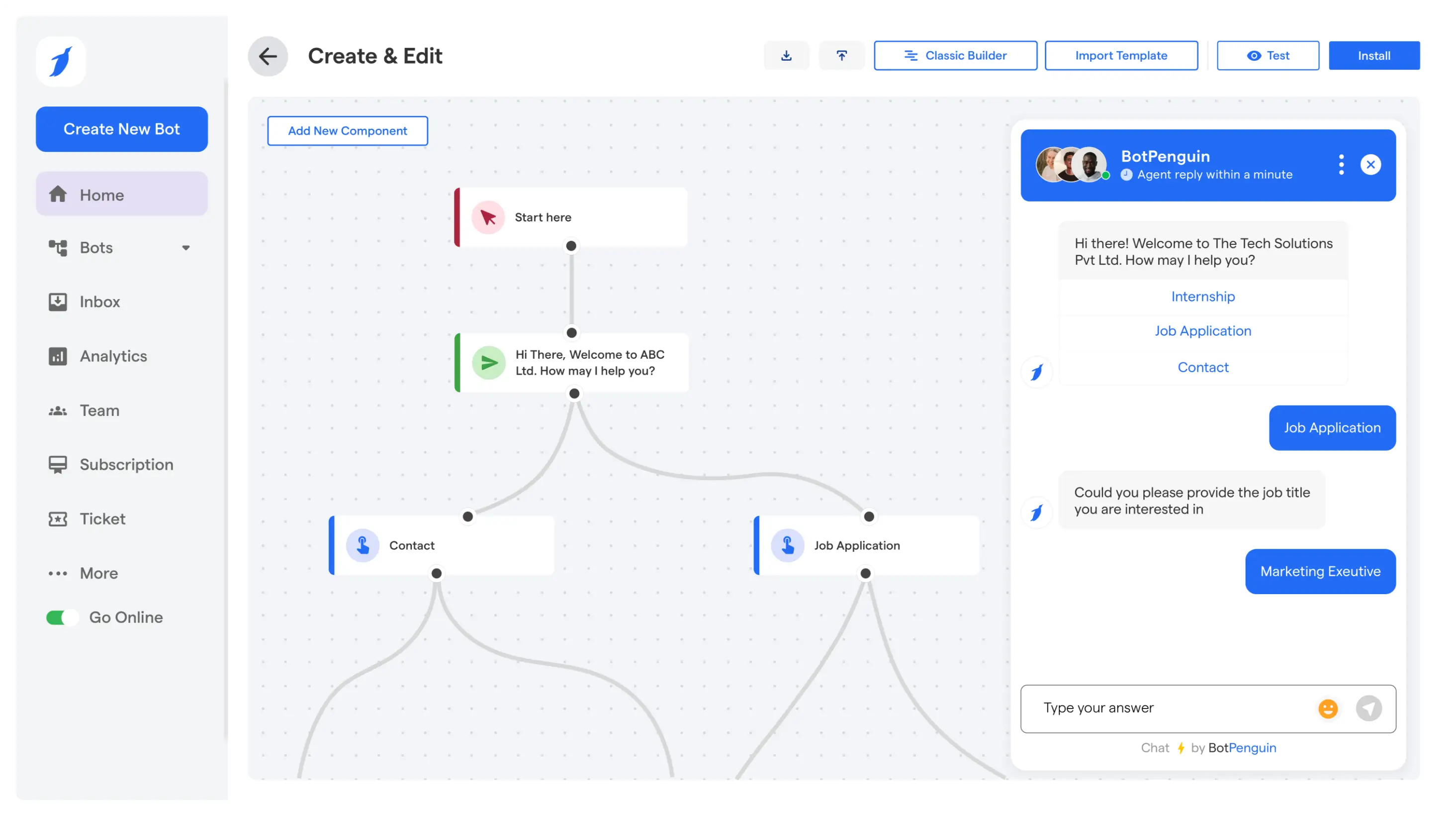
Botpenguin is emerging as a critical player in the evolution of HIPAA compliant AI agents for hospitals.
Its platform offers a suite of features that directly address both current and future compliance requirements while empowering healthcare organizations to unlock new efficiencies.
Key Capabilities of Botpenguin in HIPAA Compliant AI
How Botpenguin is Shaping the Future
- Personalized Patient Experiences: By leveraging advanced natural language processing and machine learning, Botpenguin enables AI agents to deliver tailored responses, facilitate real-time triage, and follow up with patients—all while maintaining HIPAA compliance.
- Interoperability at Scale: The platform is built for easy integration with multiple hospital systems, supporting the cross-system data exchange that is becoming essential in coordinated patient care.
- Adaptive Compliance Framework: As regulations evolve, Botpenguin’s compliance modules are updated, ensuring hospitals remain aligned with HIPAA requirements without major system overhauls.
- Scalable Deployment: Whether for a single clinic or a large hospital network, Botpenguin’s modular architecture allows rapid, secure rollout of AI agents.
BotPenguin’s End-to-End Compliance Approach
- Secure Patient Onboarding
- Encrypted Communication
- EHR/API Integration
- Real-time Monitoring
- Automated Audit Logs
Why Choose Botpenguin for HIPAA Compliant AI Agents?
- Trusted by Healthcare Leaders: Botpenguin’s compliance-first design is validated by successful deployments in top hospitals.
- Rapid Implementation: Pre-built compliance modules and workflow templates accelerate go-live times.
- Expert Support: Dedicated compliance specialists guide hospitals through every stage, from integration to ongoing monitoring.
By focusing on these areas, Botpenguin not only meets the demands of today’s regulatory landscape but also equips hospitals to stay ahead of future compliance and technology trends.
Hospitals looking to implement HIPAA compliant AI agents will find Botpenguin a robust, future-ready partner that blends innovation with uncompromising security and compliance.
Conclusion
Implementing HIPAA compliant AI agents in hospital environments is no longer a futuristic concept but a present-day necessity.
As we've explored, these specialized AI solutions streamline administrative workflows, enhance patient interactions, and provide crucial safeguards for protected health information.
By prioritizing compliance from design through deployment, hospitals can confidently leverage AI to meet stringent regulatory demands and improve operational efficiency.
The journey to build a HIPAA compliant AI agent requires a thoughtful approach.
From choosing secure, healthcare-focused AI models to ensuring robust data encryption and integrating seamlessly with EHR systems, every step is vital.
Hospitals that invest in proper training, ongoing compliance audits, and modern AI platforms position themselves to tackle increasing administrative burdens and changing patient expectations.
Embracing these technologies not only mitigates compliance risks but also lays the groundwork for advanced, patient-centric care models.
As you consider the next steps for your organization, keep in mind that the landscape of AI in healthcare is rapidly evolving.
In the following section, we will address some frequently asked questions to clarify key considerations and help you make informed decisions on implementing these transformative solutions.
Frequently Asked Questions (FAQs)
How Does a HIPAA Compliant AI Voice Agent Protect Patient Data?
A HIPAA compliant ai voice agent uses encrypted call handling, secure authentication, audit logs, and restricted access controls to ensure protected health information (PHI) remains confidential and secure.
What Features Should a HIPAA Compliant AI Agent Include?
A HIPAA compliant ai agent should include end-to-end encryption, role-based access control, audit trails, secure hosting, EHR integration, and continuous compliance monitoring to meet regulatory standards.
Why are HIPAA Compliant AI Agents for Hospitals Important?
HIPAA compliant ai agents for hospitals reduce administrative workload, prevent data breaches, improve patient communication, and ensure regulatory compliance while securely managing sensitive health information.
How Do HIPAA Compliant AI Agents Reduce Compliance Risks?
HIPAA compliant ai agents minimize risks through strict data encryption, automated logging, limited PHI access, secure infrastructure, and regular security assessments to prevent violations and breaches.
How Can an AI Calling Agent HIPAA Compliant Solution Improve Hospital Operations?
An ai calling agent HIPAA compliant system automates appointment reminders, patient follow-ups, and notifications while securely handling PHI, reducing manual workload and improving efficiency.
