Offer White Label AI Agents to Your Clients - No Development, No Infrastructure Required
Offer AI agents under your brand that handle lead capture, client onboarding, appointment booking, and support, without building a single line of infrastructure.You keep 100% of client subscription revenue.

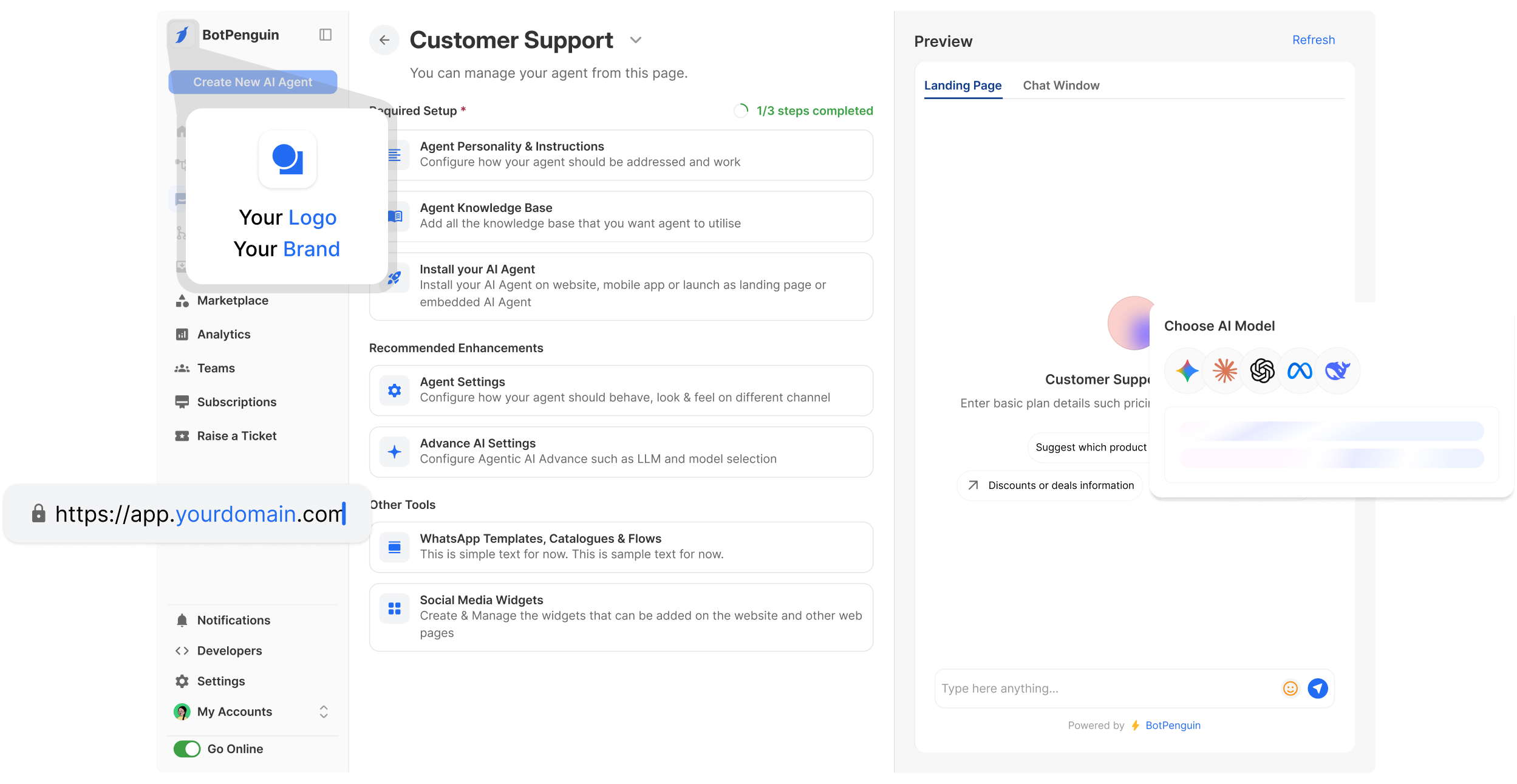
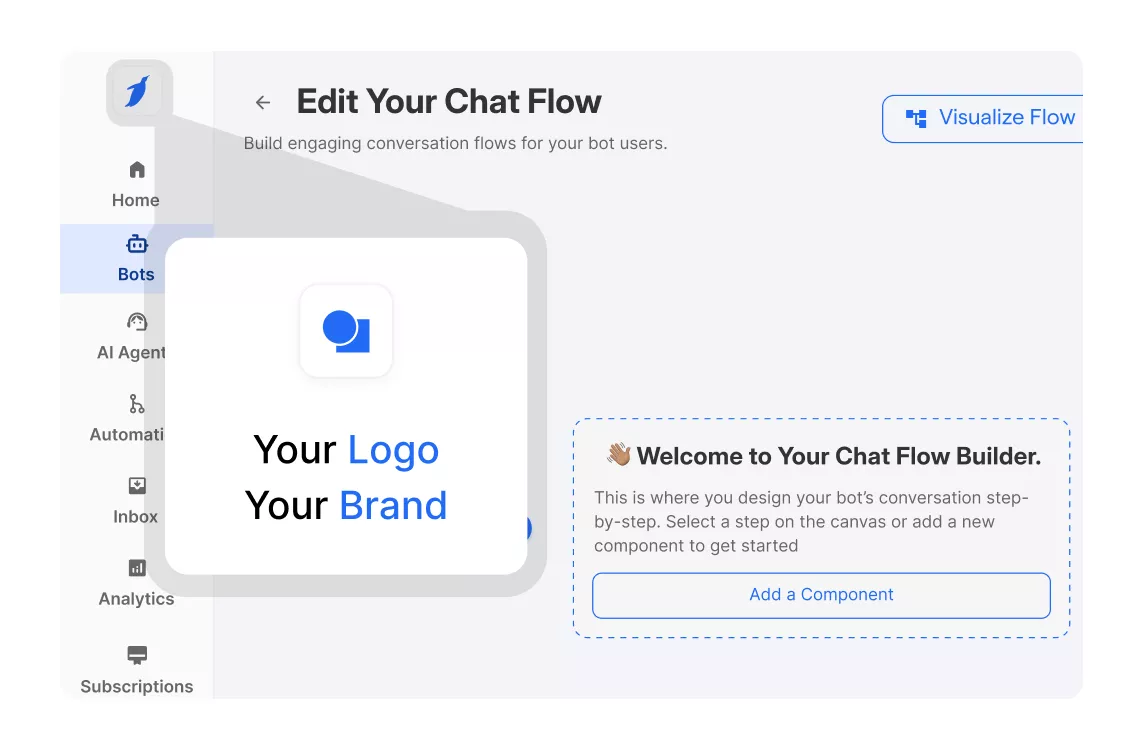
Your Brand
Your Logo
Your Domain
Your Pricing

The AI Agent Market Is Growing. Here Is Your Entry Point.
Every business wants AI agents but few can build them. BotPenguin gives you that edge - Offer enterprise-grade AI agents under your own brand, on infrastructure that's already live, compliant, and trusted worldwide. Your clients never know we exist.
- $10.9BAI Agent market size in 2026
- 250+Agencies already reselling BotPenguin's AI agents
- 12 hrsAverage time to finish onboarding and setup
Get Complete Branding Control With Our White Label AI Agent Platform
From the login screen and client dashboard to invoices and communications, every touchpoint reflects your brand. Deliver a fully branded AI platform experience while building authority as the company behind it.

Your Logo, Everywhere

Every user-facing screen, email notification, and login page shows your logo. Your clients experience your product, not ours.

Custom Domain Ownership
Your clients log in at your domain (e.g., ai.youragency.com). No BotPenguin subdomains, no redirects. It's your platform from start to finish.

Branded Sign-Up & Onboarding
Design a custom sign-up flow with your fields, your tone, and your visuals. New clients onboard into your brand, not a third-party platform.

Your Dashboard, Your Design
Change layout, colors, and messaging to deliver a dashboard that looks and feels like your native product. Your clients assume it's all built in-house.

Embed Into Your Existing Platform
Drop our AI agent builder directly into your own SaaS tool or client portal via iframe or API. It integrates invisibly.

White-Label Marketing Kit
We give you editable sales decks, help documentation, onboarding guides, and email templates — all pre-built with placeholder branding, ready for your name and logo in minutes.

White-Label Mobile App
Give your clients a branded iOS and Android app under your app store listing. Fully white-labeled, store-submission ready.


Watch Real AI Agent Capabilities that Drive Business Growth
See autonomous white-label AI agents reason, complete tasks, retrieve knowledge, and assist customers from a single platform.
Harness a Full AI Agent Business Infrastructure, Not Just a Branded Link
Most white-label AI agent platforms give you a product and leave you to figure out the business. We give you the entire infrastructure to run and scale a professional AI agency: billing, client management, subscriptions, data ownership, and payment processing.
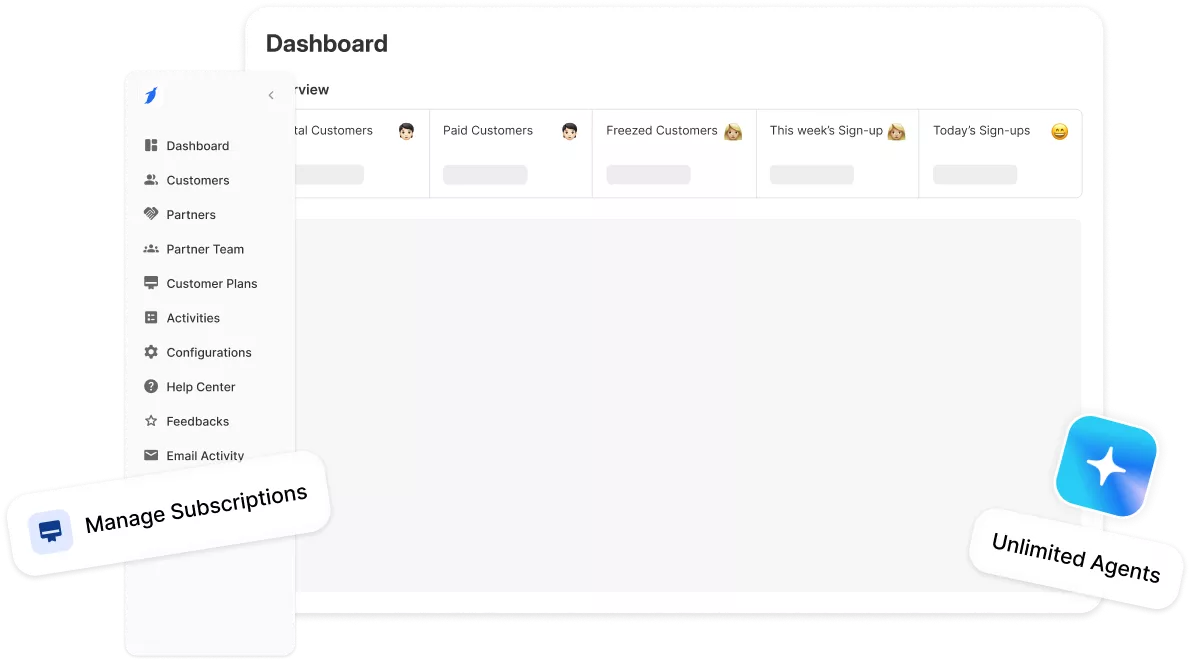
Manage Everything in One Dashboard
One place to see all your clients, their subscription status, usage, and support tickets. No Notion, no Stripe tab-switching, no spreadsheets.
Scale Your Client Base
Onboard businesses at scale up to your plan limit. Need more? Expand further with available add-ons.
Unlimited AI Agents, No Per-Agent Fees
Your clients can create as many AI agents as they need. No per-agent charges. You decide how to bill them.
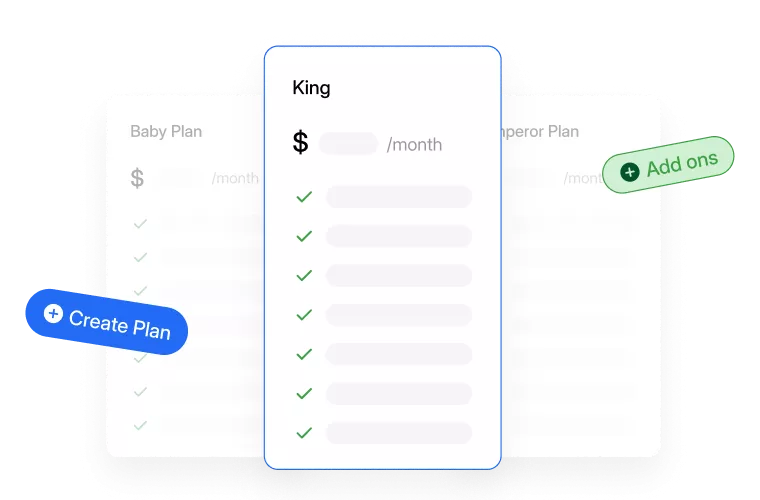
Build and Sell Your Own Subscription Plans
You can customize plans by adding integration add-ons, usage upsells, or managed service packages. You design the product. You set the price.
You Set Pricing - You Keep Client Revenue
You bill your clients directly. Whatever subscription rate you set, 100% of that revenue is yours. BotPenguin charges you the platform fee; your margin is entirely up to you.
Earn More With Value-Added Services
Package AI agent setup, training, custom integration work, or ongoing optimization into your monthly subscription package. Your expertise becomes billable, recurring revenue.
Sell in Any Currency
Bill clients in USD, GBP, EUR, INR, or any other currency without conversion friction.
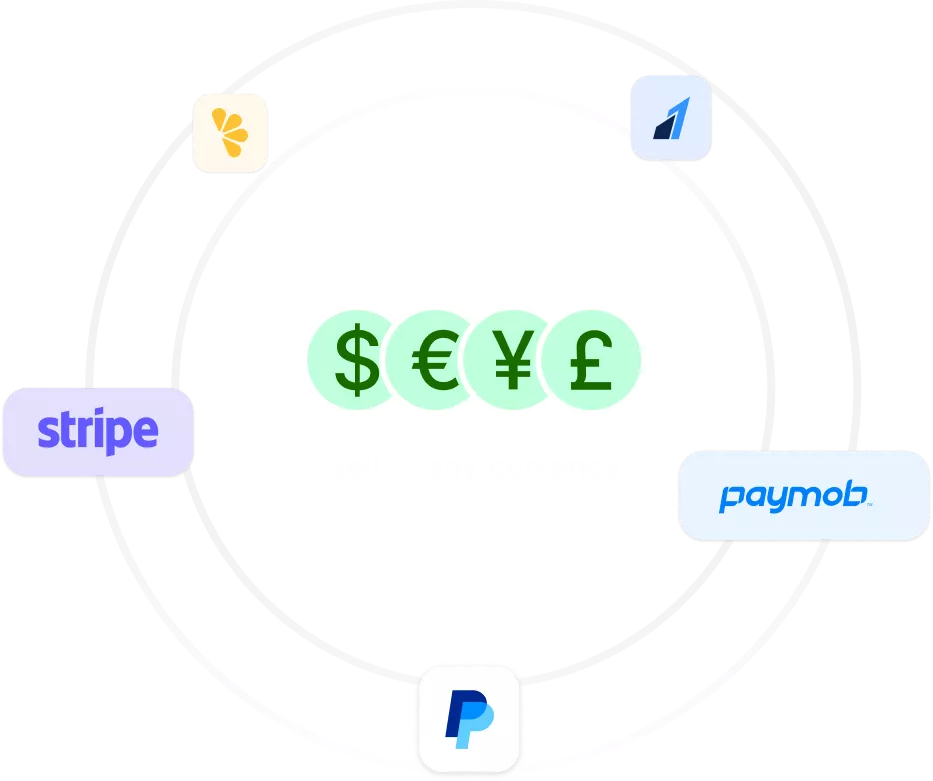
Client-Trusted Payment Gateways - Stripe, Razorpay, PayPal & More
Accept payments via Stripe, Razorpay, Paymob, Lemon Squeezy, or PayPal. King and Emperor partners get one payment gateway integration free.
100% Client Data Ownership
Access, export, and manage all client data on your terms — your platform, your users, your rules.
Host Your Database on Your Servers
Need more control? Host data on your infrastructure and meet custom security or compliance needs with ease.
White Label AI Agents With the Capabilities to Think, Decide, and Act
From researching and answering queries to executing workflows and escalating complex cases, offer AI agents that reason, decide, and act under your brand name.
Omni-channel Agent Deployment - WhatsApp, Instagram, Website & More
Sell agents that run on WhatsApp Business, Instagram DMs, your client's website widget, Facebook Messenger, and other channels, where customers already are.
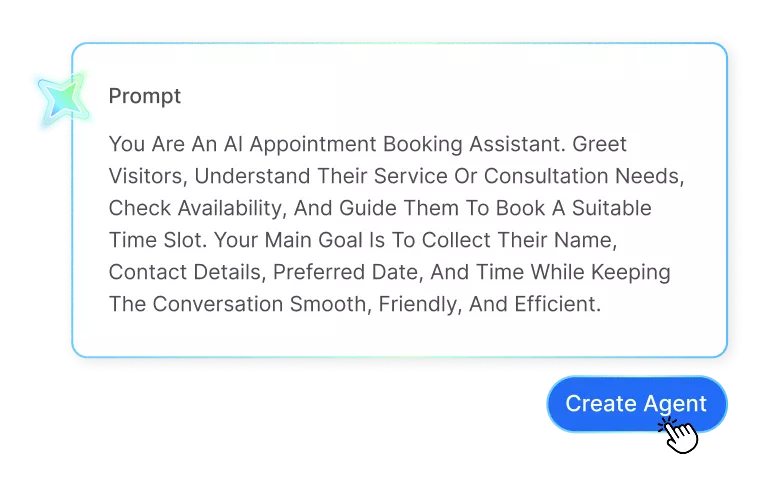
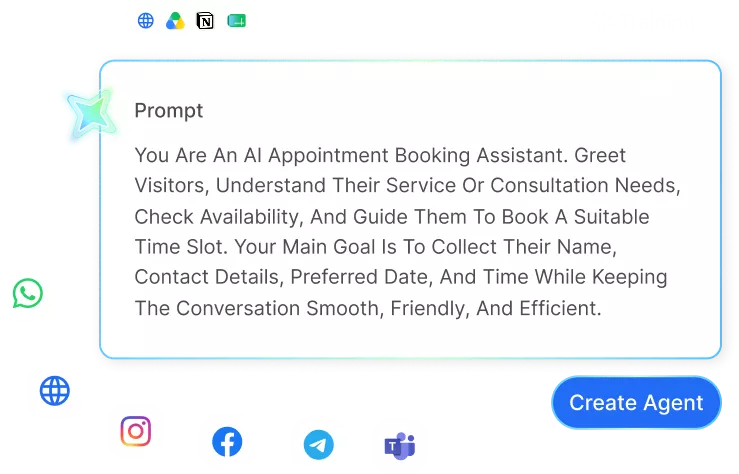
Create Any Agent with a Single Prompt
Type what you want the agent to do: "Handle product returns, check order status, and book replacement appointments". The agent builds itself. No flow-builder or node-clicking.
Train on Your Client's Own Knowledge
Connect URLs, PDFs, Sheets, or Notion database to instantly personalize each agent with business-specific knowledge.
Prebuilt Agent AI Templates for Fast Delivery
Speed up delivery using ready-made AI agent templates for customer support, lead qualification, sales, bookings, and more.
Run on Leading LLMs: GPT-4, Claude, Gemini, DeepSeek, or OpenRouter
Each client can choose the AI model that fits their cost, accuracy, and compliance requirements. You're not locked into one provider.
Set the Agent's Tone and Personality
Let clients choose from Professional, Friendly, Witty, or Bold—or define a fully custom tone. The agent's communication style matches their brand.
Multilingual by Default
Agents detect the language of each incoming message and respond fluently. No language configuration required.
Smart Escalation to Human Support
Let agents transfer chats to human support smoothly, keeping the context and the conversation intact.
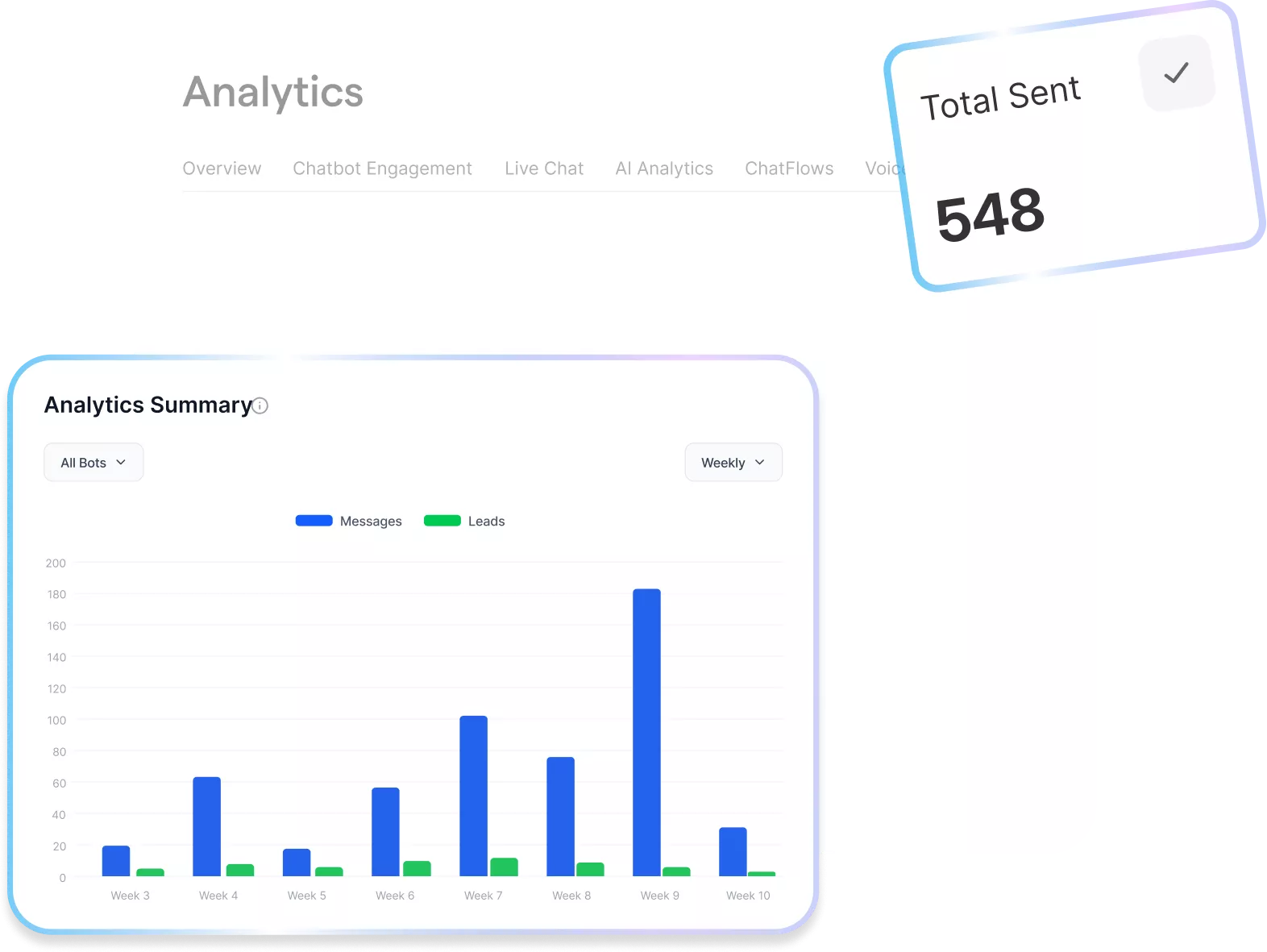
Built-in AI Agent Performance Analytics
Every client gets a live analytics dashboard showing resolved queries, drop-off points, conversion rates, and agent accuracy.
Self-Improving Agents
Agents auto-learn from past chats to handle future queries more accurately—no retraining needed.
Unified Inbox Across All Channels
All client conversations, from every platform and every agent, appear in one inbox. You get a unified view for your client's support team.
White Label AI Voice Agents & Omnichannel AI — Expand Beyond Chat
BotPenguin's white-label platform includes voice AI agents — intelligent phone agents that handle inbound & outbound calls, answer questions, qualify leads, and book appointments.

VOICE AGENTS
White-Label AI Voice Agents
Deploy intelligent inbound & outbound phone agents under your brand. Your clients give their customers a number that answers instantly 24/7.

AI UNDERSTANDING
Natural Language Voice Understanding
Advanced speech recognition understands accents, conversational phrasing, and interruptions so calls feel human, not robotic.

UNIFIED HISTORY
Voice + Chat Unified History
Every call and every chat conversation exists in the same client inbox and analytics dashboard.

BRANDING
Fully Branded Voice Experience
Custom hold messages, agent name, greeting script, and call-end confirmations — all carrying your brand, not ours.
Create Custom Workflows Across 80+ Tools With our White Label AI Agent Platform
Offer your clients agents that work across 80+ popular tools for marketing, support, and more — handling tasks, making decisions, and executing workflows with minimal human intervention.
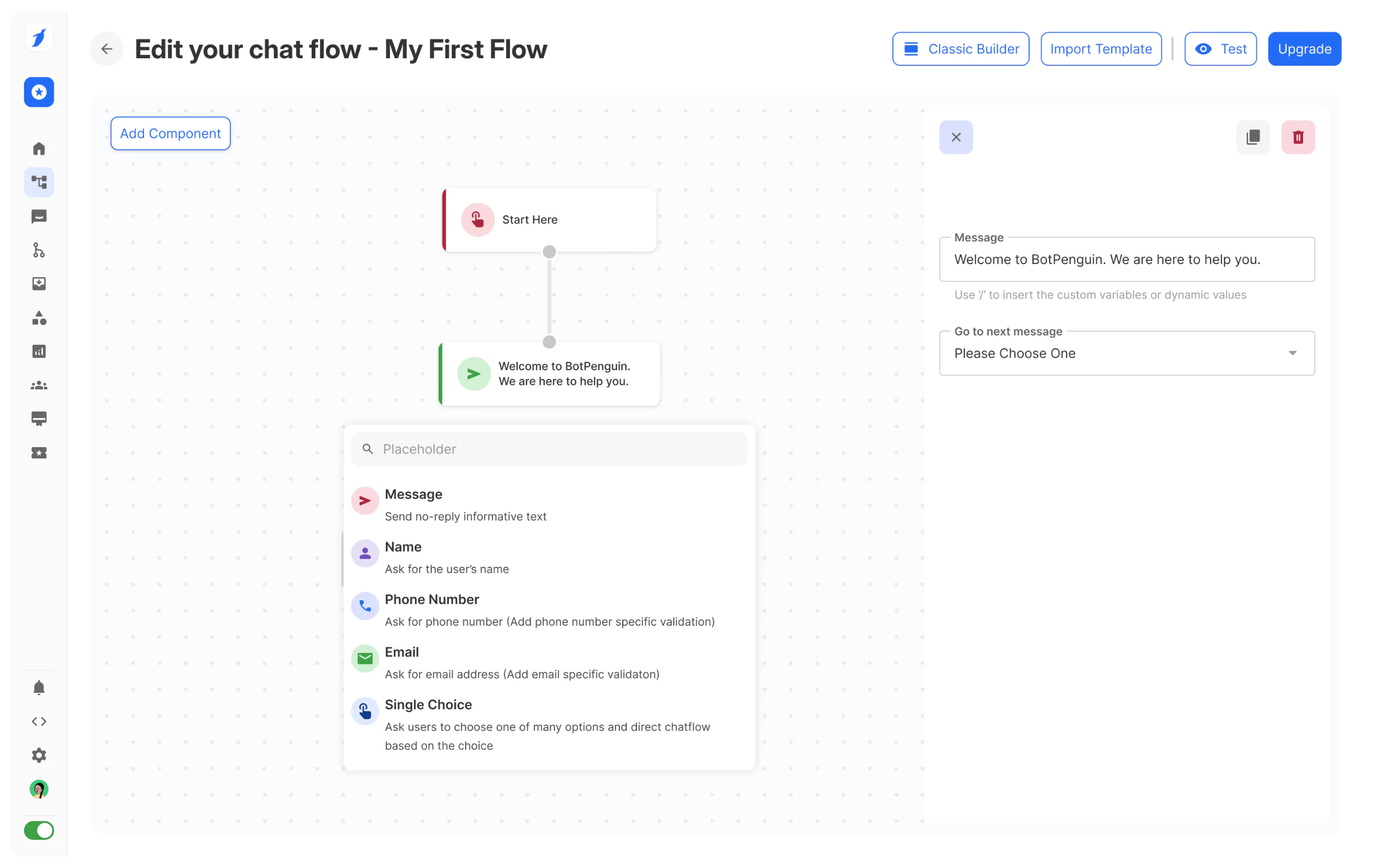
Need an integration that’s not on the list? We’ll build it for you. King and Emperor plan partners also get one free payment gateway integration for their country.
White Label AI Agents & Chatbots Built for Every Agency Vertical
Whether you run a digital marketing agency, an automation consultancy, or a SaaS company serving a specific industry, BotPenguin’s white-label AI agent platform adapts to your client’s vertical from get go.

Digital Marketing Agencies
Add white-label AI agents to your service stack. Deploy branded lead gen, support, and campaign automation agents for every client without building from scratch.

IT Consultancies and Tech Partners
Embed white-label AI agents into your consulting offering as a native product. Sell it under your brand, charge a recurring fee, and let BotPenguin handle the infrastructure.

White-Label SaaS Entrepreneurs
Launch your own AI agent SaaS, fully branded. Embed via SSO and embedded sign-on, bundle into existing plans, or sell — your product, your margins.

CRM and ERP Vendors
Embed conversational AI agents directly into your CRM or ERP product. Give your users AI-powered automation without adding a third-party dependency.

E-Commerce Agencies
Offer branded AI agents that handle cart recovery, order status, return requests, and product recommendations on Shopify, WooCommerce, and more for every client you serve.

Hosting and Web Service Providers
Add white-label AI agents as a no-code upsell to your existing hosting or web service offering — a high-margin product your clients actually want.
Why Agencies Trust BotPenguin for White Label AI Agents
From setup to scale, BotPenguin gives you more than a platform — the tools, training, and support to run a professional AI agency under your own brand.
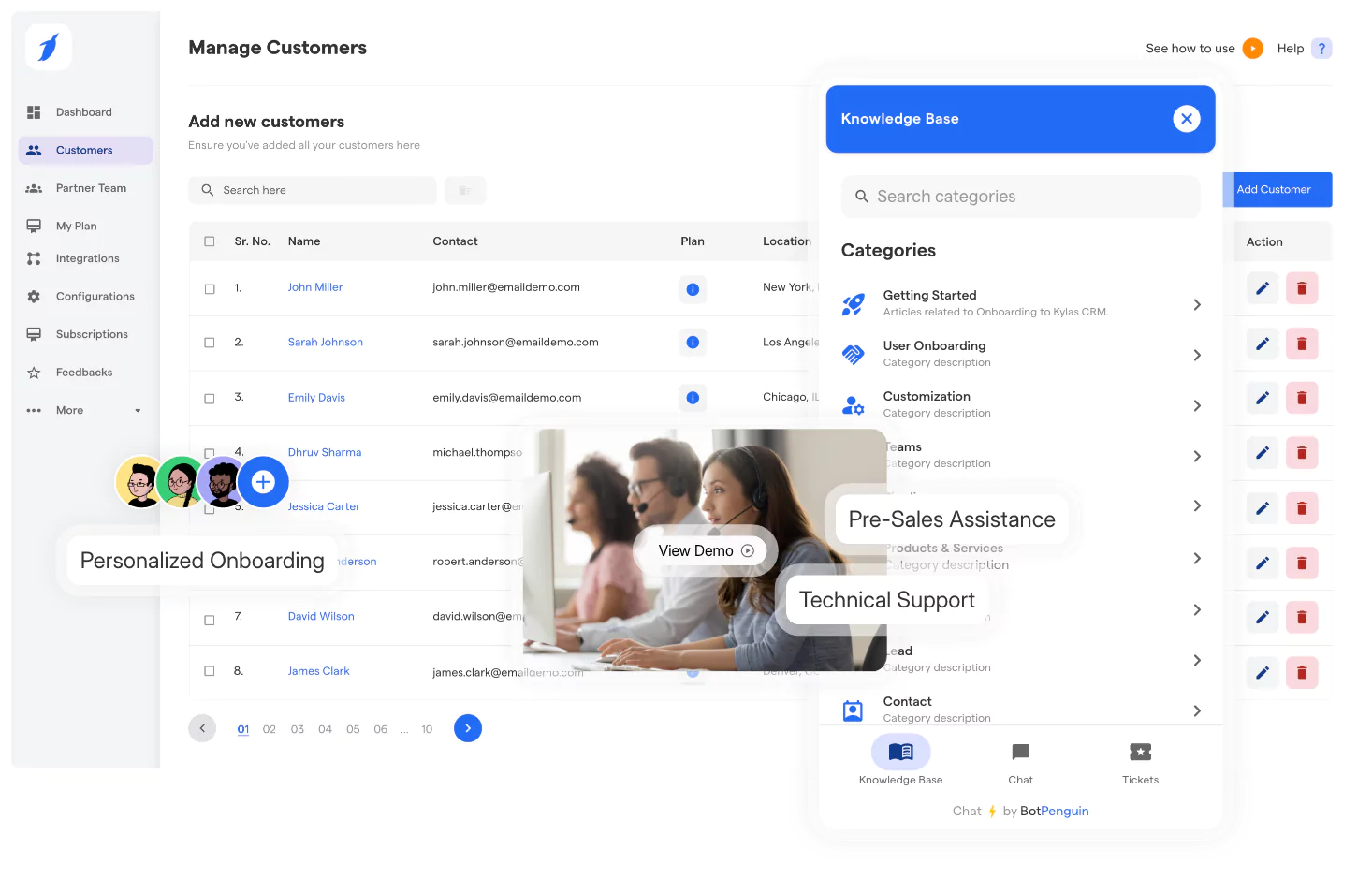

Assisted Panel Setup
Our team configures your partner dashboard end to end, so you're ready to onboard clients from day one.
Product Training and Live Walkthroughs
Our white-label partnership plans include structured training sessions covering platform features, client pitching, and support workflows.
Omnichannel Partner Support
Reach our team via Email, Support Bot or Whatsapp for fast and reliable assistance, whenever a platform question or client issue comes up.
Self-Serve Help Center and Documentation
Step-by-step guides, setup tutorials, and platform resources — everything you need to onboard clients and resolve queries independently.
Dedicated Partner Support Executive (Add-on)
A named support contact who troubleshoots issues, answers queries, and guides your growth.
Priority Access to New Feature Releases
Get early notifications on every new feature, so your offering stays competitive as AI capabilities expand.
Rebranded Help and Support Documentation
We provide fully rebranded help docs and support materials, so your clients experience end-to-end support under your brand.
Our White Label AI Agent Platform is Built for Security & Scale
With BotPenguin, you get enterprise-grade infrastructure with data isolation, access control, and compliance baked in. As a partner, your brand stays compliant with SOC 2, HIPAA, GDPR, ISO 27001, CCPA, and VAPT standards from day one.
Deploy on US, EU, or custom server regions, so every client meets their local data residency and compliance requirements.

Choose Your Server Location
Deploy on US, EU, or custom server regions, so every client meets their local data residency and compliance requirements.

Built-in Enterprise-grade Compliance
Built to support SOC 2, HIPAA, GDPR, ISO 27001, CCPA, and VAPT requirements, so you sail through security reviews, audits, and compliance checks across every regulated environment.

Secure API & Webhooks
All APIs and webhooks are tokenized and encrypted end to end, no additional configuration needed.

Audit Logs & Activity Tracking
Full access logs and audit trails for every client action, so you always know what happened, when, and who triggered it.

SSO & Identity Integrations
Offer enterprise clients SSO via OAuth, Google Workspace, or custom IDP, so enterprise clients onboard without compromising on access control.







White Label AI Agent Platform Pricing. Transparent. Scalable. No Surprises.
One platform fee. Unlimited clients. Unlimited AI agents. You set your own subscription prices — we never appear on their invoice.
Little Plan
Scale your white-label offering with more features and clients.
Request PricingKing Plan
Full-featured reseller platform for growing AI agencies.
Request PricingEmperor Plan
Enterprise-grade setup with dedicated support and custom integrations.
Request Pricing* Note: All plans include white-label setup. No hidden fees, no revenue sharing.
Partner Wins Worth Reading About, Powered by White Label AI Agents
From first deployment to full-scale AI agent businesses, explore how BotPenguin partners turned white label AI into a serious revenue stream.
 South Africa IT Services
$94Krevenue from 58 clients
White-Label AI Chatbot | $94K Revenue | South Africa | BotPenguin
A South African IT provider scaled from Baby to Emperor and built one of the highest-revenue white-label businesses in BotPenguin's partner cohort.
 White-Label🇿🇦 Read story IT Agency · SaaS
80+reseller clients
How an IT agency scaled a white-label chatbot SaaS to 80+ reseller clients
The white-label SaaS blueprint: partner hub overview and full playbook.
White-Label Read story IT Solutions · Dubai$90,000partner revenue
How a Dubai IT firm white-labeled BotPenguin and closed 15 enterprise clients
$90,000 partner revenue, 3-day median deployment across the cohort.
White-LabelAE Read story 