Top 7 AI Chatbot Platforms For Enterprises
Updated at Sep 26, 2026
10 min to read
Key Takeaways
|
Most businesses assume adding Arabic support means translating their existing chatbot. It does not.
Customers across the Middle East expect brands to communicate in their natural dialect, not in formal textbook Arabic.
When chatbots sound rigid or overly official, engagement drops and trust weakens.
A business-ready Arabic chatbot must understand dialect variation, mixed-language inputs, and right-to-left design while integrating seamlessly with existing systems.
This guide explains how Arabic AI chatbots work, why dialect support matters, where they deliver measurable impact, and how to implement one effectively.
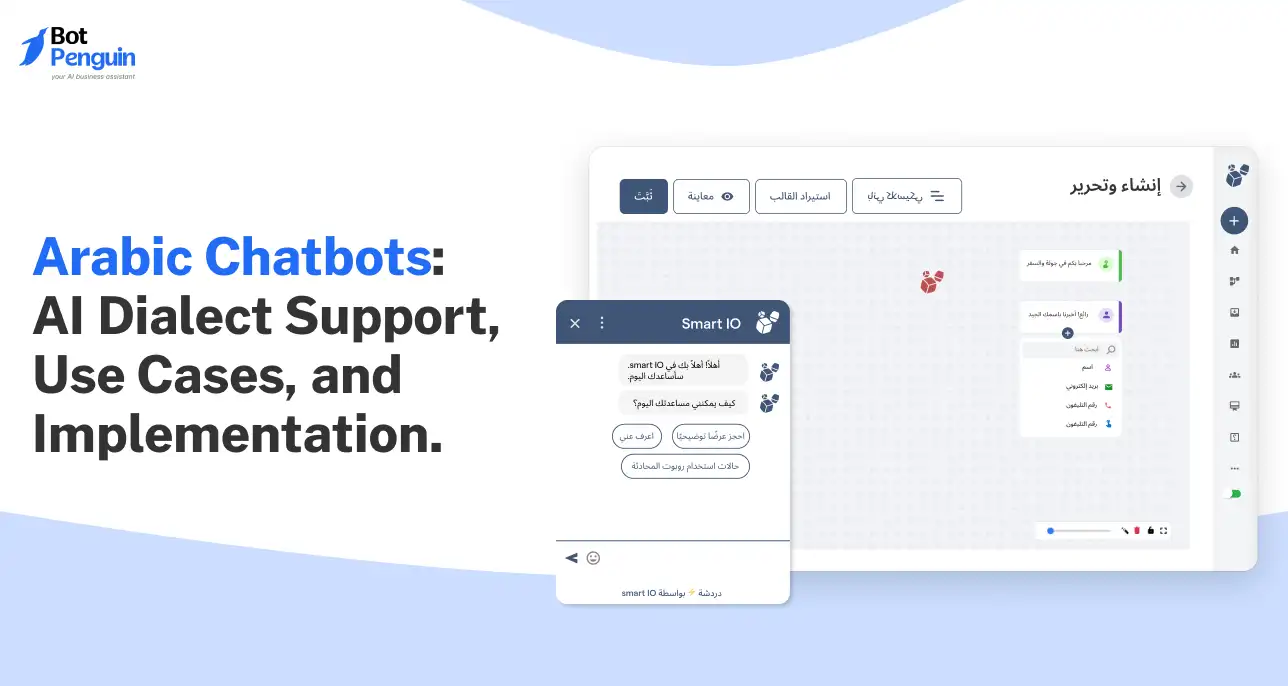
An Arabic chatbot is an AI-powered conversational system designed to understand and respond in Arabic, including regional dialects.
Unlike translated bots that convert Arabic into another language before processing, native Arabic AI interprets intent directly.
These chatbots are widely used in e-commerce, banking, healthcare, education, and government services across the Middle East.
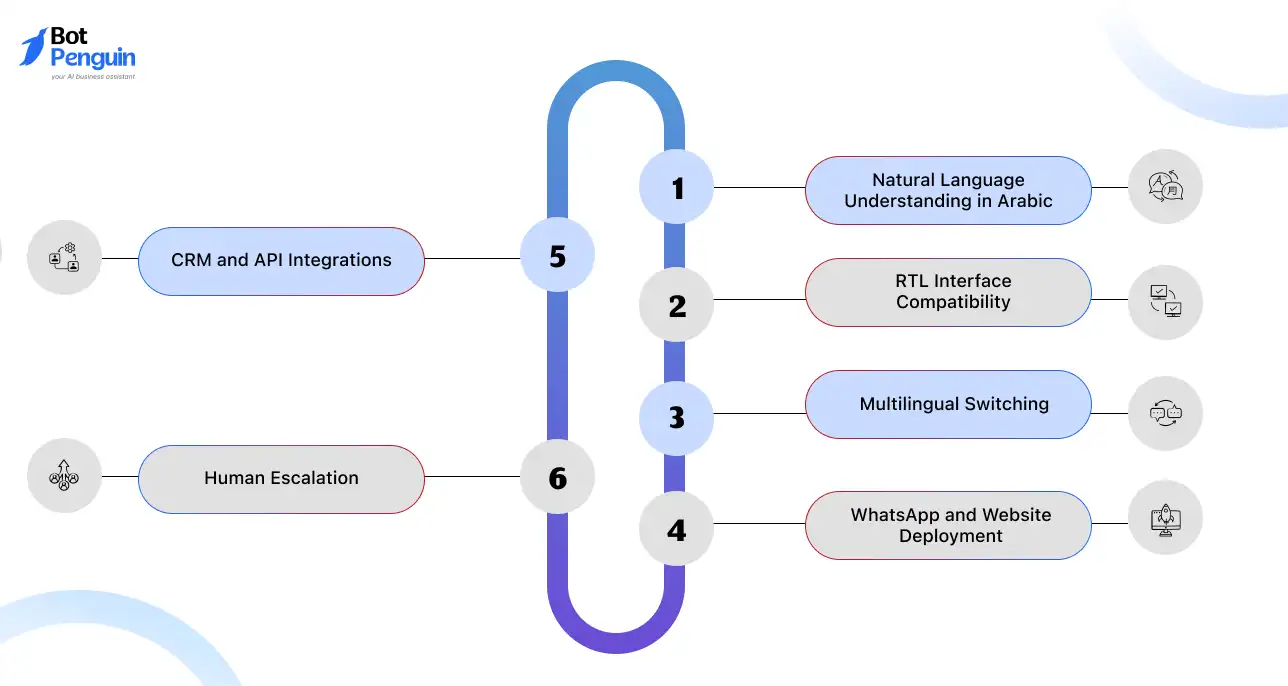
A business-grade Arabic chatbot must go beyond basic language support.
It should combine linguistic intelligence, UX optimization, and system integration to deliver measurable results.
Understands Modern Standard Arabic and regional dialects, including mixed Arabic-English inputs.
Fully mirrored right-to-left interface, including layout, input fields, and navigation elements.
Seamlessly shifts between Arabic and English within the same conversation.
Supports WhatsApp Business API and web chat for omnichannel customer engagement.
Connects with platforms like HubSpot, Salesforce, Zoho, and internal systems for data synchronization.
Automatically transfers complex queries to live agents without losing conversation context.
A business-ready Arabic chatbot is not just multilingual. It is linguistically intelligent, culturally aligned, and technically integrated.
Businesses using native Arabic AI instead of translated bots report up to 40 percent higher customer satisfaction.
The reason is simple. Customers in Riyadh or Cairo do not speak in formal Modern Standard Arabic during daily interactions.
They speak in dialect.
When a chatbot sounds like a news anchor, it creates distance.
The experience feels robotic and impersonal, leading to drop-offs and lost conversions.
This is the Cost of Formality. In Arabic markets, sounding local builds trust. And trust drives revenue.
Arabic operates in a dual system. Businesses often assume supporting Arabic means supporting one language.
In reality, it means handling multiple linguistic layers that influence intent detection, tone, and user trust.
A business-ready Arabic chatbot must understand both formal structure and conversational variation.
Ignoring this difference is where most implementations fail.
Diglossia refers to the coexistence of two forms of the same language within a community. In Arabic, this means:
MSA is grammatically consistent and easier to train on. Dialects are fluid, expressive, and region-specific.
Most real customer interactions happen in dialect, not textbook Arabic.
An AI model trained only on MSA may understand structure but misinterpret tone and intent.
Arabic dialects differ significantly across regions:
Vocabulary, pronunciation, and sentence construction vary across these dialects.
A word used casually in Cairo may not be common in Riyadh.
For businesses operating across multiple GCC countries, dialect sensitivity directly affects engagement.
Modern Arabic users frequently mix languages within a single message. This includes:
Example:
“3ayez check order status pls”.
This behavior, known as Arabish or 3arabizi, is common in WhatsApp and mobile conversations.
A 2026-ready Arabic chatbot must detect intent across mixed scripts and languages seamlessly.
Without this capability, conversational accuracy drops and user frustration increases.
Arabic is structurally different from English.
For an AI chatbot to perform accurately, it must handle deeper linguistic complexity, not just vocabulary matching.
This is where many generic AI systems struggle.
Tokenization is how AI breaks text into smaller units for processing.
In Arabic, words often attach prefixes and suffixes directly to the root word.
For example, a single Arabic word can contain conjunctions, pronouns, and verbs combined.
If the AI model does not tokenize properly, it may misread intent entirely.
Effective Arabic NLP requires models trained to segment words accurately, not rely on English-based parsing logic.
Arabic is morphologically dense. Words change form based on gender, number, tense, and context.
A single root can generate dozens of variations.
For business chatbots, this affects:
If the model cannot understand these variations, responses feel generic or incorrect.
Most global AI models are trained primarily on Modern Standard Arabic. Real-world conversations, however, use dialect.
Dialect fine-tuning means:
Without dialect exposure, AI may interpret literal meaning but miss conversational intent.
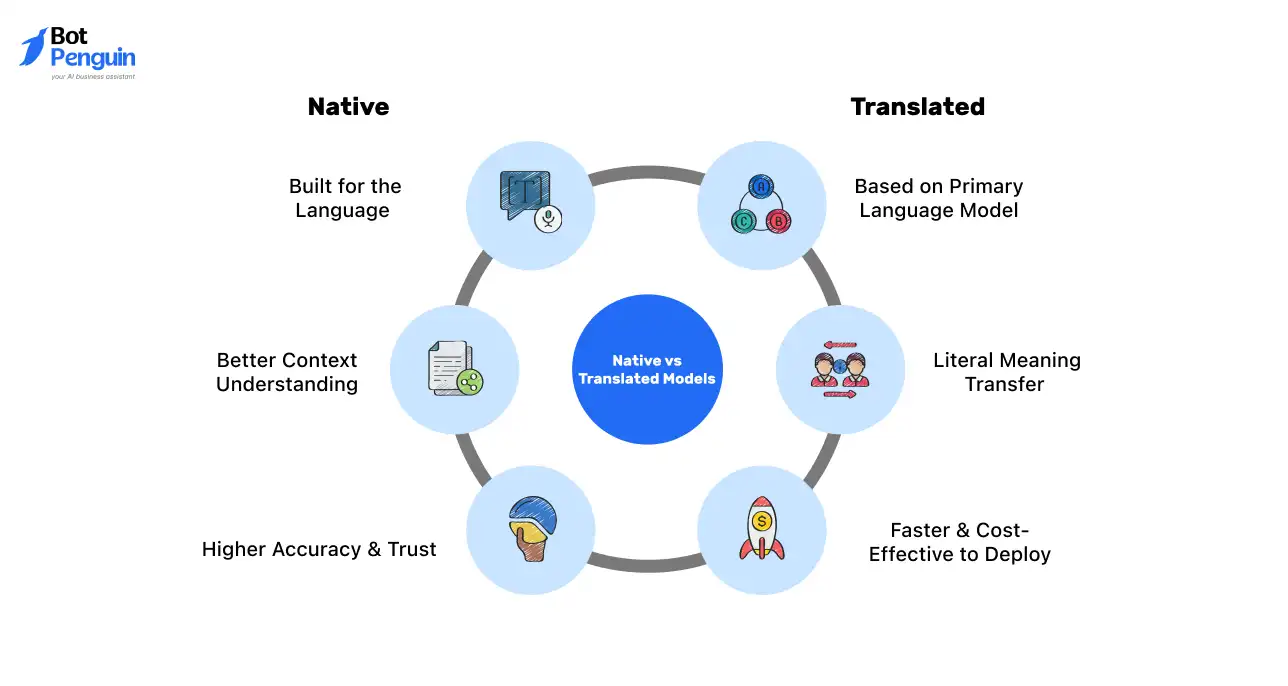
There is a major difference between:
Translation-based systems introduce delay, tone distortion, and semantic drift.
Native Arabic models preserve context, nuance, and response accuracy.
For businesses, this distinction determines whether the chatbot feels local or foreign.
Supporting Arabic is not only a language decision. It is a design architecture decision.
Arabic is written right to left, and if the interface is not fully mirrored, users experience subtle friction that reduces engagement.
True Arabic chatbot deployment requires structural RTL optimization, not cosmetic adjustments.
A proper RTL interface mirrors the entire layout, not just text alignment.
If the structure remains left-oriented, the experience feels imported rather than native.
The message input box must align to the right. Cursor movement, placeholder text, and typing behavior must follow RTL logic.
If the input field behaves inconsistently, users pause. Even minor hesitation impacts conversational flow and perceived intelligence.
Buttons such as “Back,” “Next,” or “Continue” must follow RTL orientation.
Directional inconsistency creates cognitive load, especially on mobile devices.
Most Arabic chatbot interactions happen on mobile, particularly through WhatsApp.
Mobile optimization must include:
When language accuracy and RTL design align, the chatbot feels truly local.
This combination builds credibility, reduces friction, and increases completion rates.
Arabic AI chatbots deliver the highest ROI when aligned with sector-specific workflows.
Below are practical implementations across high-impact industries in the Middle East.
Arabic chatbots in e-commerce improve conversions, reduce support workload, and streamline post-purchase communication.
Arabic chatbots in real estate accelerate lead qualification and improve response time for property inquiries.
Arabic chatbots in healthcare enhance patient accessibility while reducing administrative pressure.
Arabic chatbots in education simplify admissions and improve parent-student communication.
Arabic chatbots in travel enhance the booking experience and reduce manual inquiry handling.
Arabic chatbots in travel enhance the booking experience and reduce manual inquiry handling.
When Arabic chatbots are tailored to industry workflows and local dialects, they move beyond support tools.
They become revenue and efficiency engines embedded directly into customer journeys.
Seeing the difference between a translated bot and a dialect-aware bot makes the “translation gap” instantly clear.
Below are side-by-side examples showing how tone, phrasing, and cultural nuance impact engagement.
Stiff Translated Response (MSA Heavy)
مرحبًا بك. يرجى إدخال رقم الطلب الخاص بك للتحقق من حالة الشحنة.
Native Dialect Response (Gulf Example)
هلا! ممكن تعطيني رقم الطلب عشان أشيك لك على الشحنة؟ 📦
The first sounds formal and distant. The second feels like a real support agent.
Stiff Translated Response
لقد لاحظنا أنك لم تكمل عملية الشراء. هل ترغب في إتمام الطلب الآن؟
Native Dialect Response (Saudi Example)
شكلك نسيت منتجاتك في السلة 😄 تحب أكمل لك الطلب؟
The dialect version feels conversational and friendly, increasing the chance of a reply.
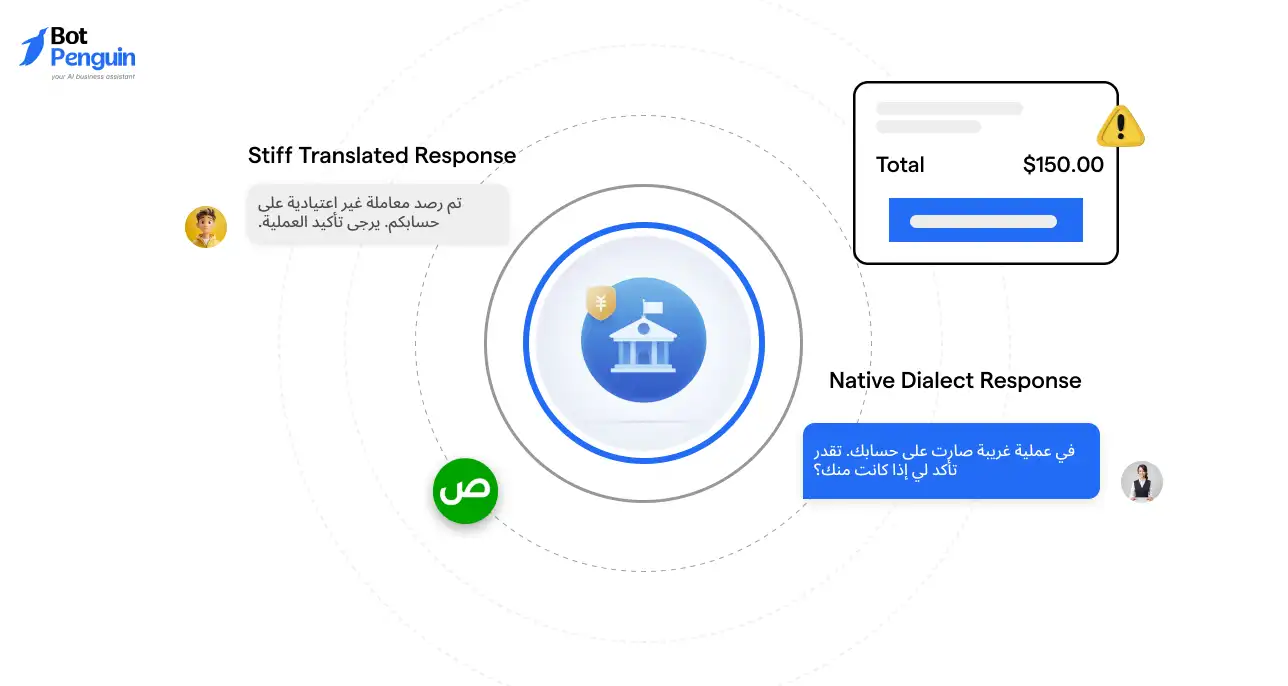
Stiff Translated Response
تم رصد معاملة غير اعتيادية على حسابكم. يرجى تأكيد العملية.
Native Dialect Response (UAE Example)
في عملية غريبة صارت على حسابك. تقدر تأكد لي إذا كانت منك؟
The second version reduces intimidation while keeping clarity.
Stiff Translated Response
ما هو نطاق الميزانية الذي ترغب في تخصيصه للعقار؟
Native Dialect Response (Egyptian Example)
ميزانيتك تقريبًا كام عشان أقدر أطلع لك أنسب الخيارات؟
The dialect version mirrors how buyers naturally speak.
Arabic:
أهلًا وسهلًا 👋 كيف أقدر أساعدك اليوم؟
English:
Welcome 👋 How can I help you today?
A high-performing Arabic chatbot does not just translate. It communicates the way your customers actually speak.
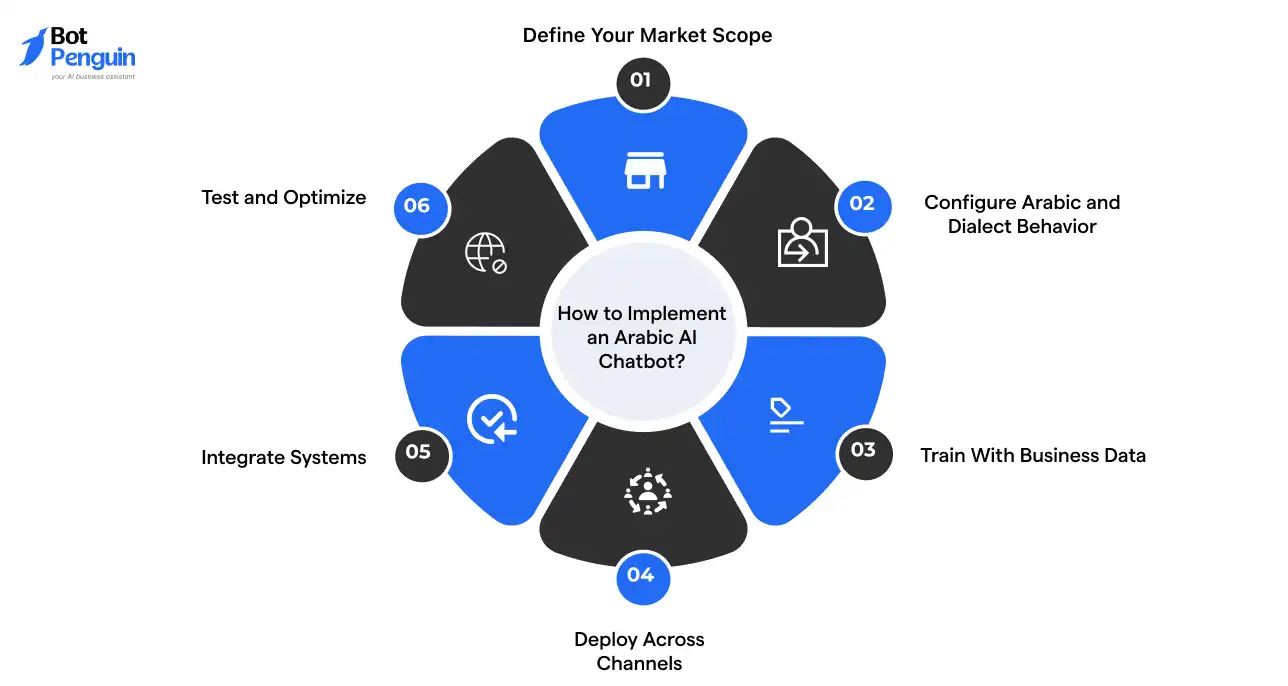
Deploying an Arabic AI chatbot does not require custom development.
With BotPenguin, businesses can launch a dialect-aware chatbot through a structured process.
Identify target countries, required dialect coverage, and primary business goal, such as lead generation or support automation.
Build conversations in Arabic script and adjust tone for regional dialects. Enable AI intent detection for mixed Arabic-English inputs.
Upload FAQs, product information, and knowledge base content so responses are accurate and context-aware.
Launch on web chat and messaging platforms with full RTL compatibility and automated workflows.
Connect CRM tools such as HubSpot or Salesforce and enable seamless human handoff when needed.
Validate dialect tone, grammar accuracy, layout consistency, and response speed before full rollout.
Monitor engagement, conversion rate, and resolution metrics to refine performance.
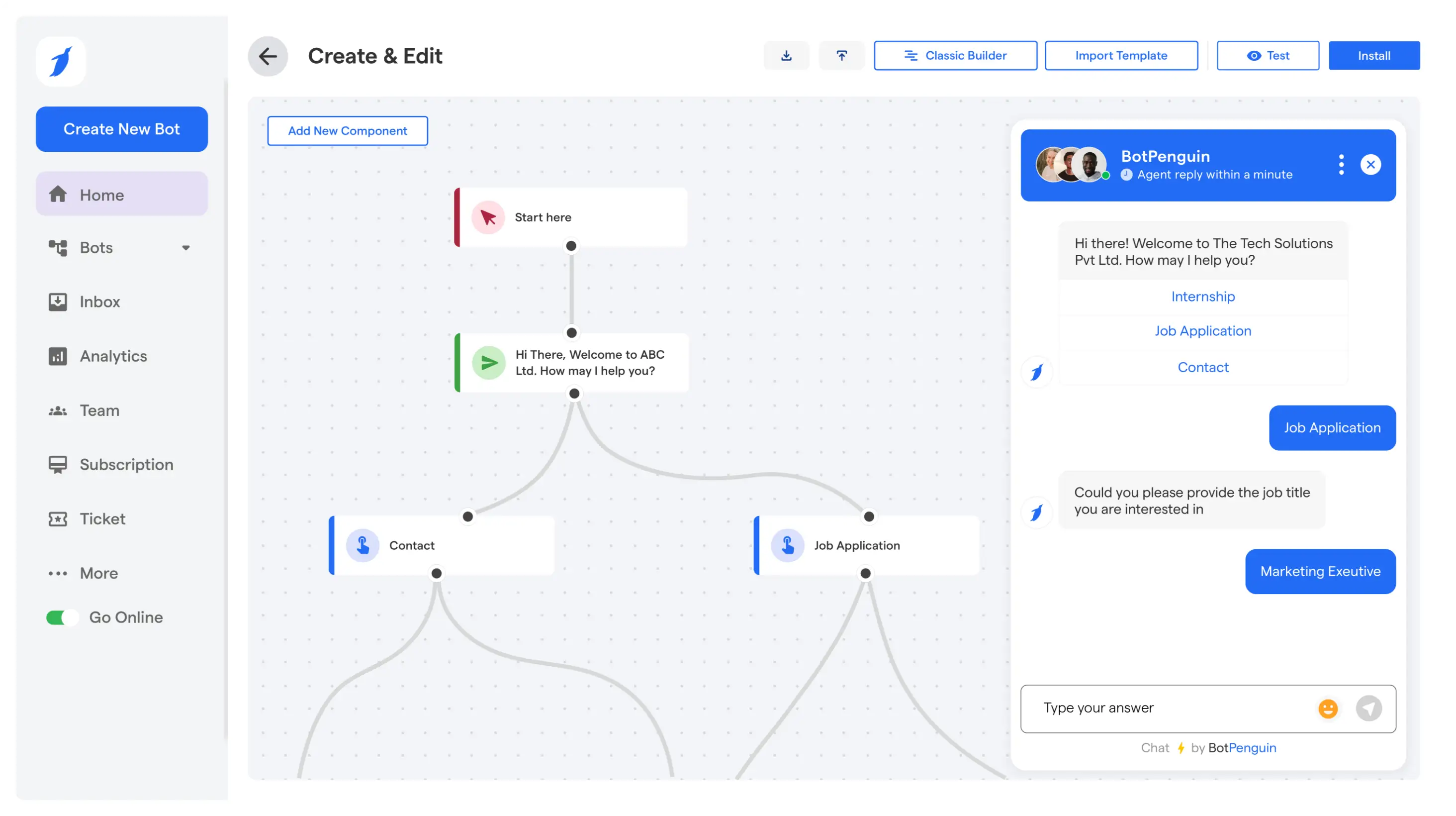
When evaluating Arabic chatbot platforms, deployment readiness matters more than feature lists.
BotPenguin provides:
It enables businesses to move from planning to live Arabic AI automation without infrastructure complexity.
Arabic AI has become a competitive requirement in Middle Eastern markets. Dialect alignment improves trust, and trust drives engagement.
However, technology alone is not enough. Proper training, integration, and optimization determine ROI.
With a structured deployment approach, businesses can turn an Arabic chatbot from a support tool into a scalable growth channel.
Ready to deploy?
Book a demo and start building today.
The best Arabic chatbot supports dialects, WhatsApp integration, RTL design, CRM connectivity, and AI-driven intent detection. Platforms like BotPenguin combine deployment ease with enterprise-ready Arabic AI capabilities.
You can test live demos or request tailored Arabic chatbot response examples from vendors. Look for dialect-aware replies, not just formal Modern Standard Arabic scripts.
Accuracy depends on dialect training data and native processing. A well-trained AI chatbot Arabic model can detect intent across mixed dialect and English inputs with high reliability.
An Arabic AI chatbot processes intent directly in Arabic, while translated bots convert text before responding, often causing tone distortion and slower replies.
Yes. Natural Arabic language chatbot response examples increase engagement, build familiarity, and improve response rates compared to rigid translated scripts.
Modern platforms like BotPenguin provide Arabic language support for AI chatbots with WhatsApp Business API integration, RTL optimization, and multilingual switching.
Checkout our related blogs you will love.
Updated at Sep 26, 2026
10 min to read
Updated at May 28, 2026
16 min to read
Updated at May 23, 2026
8 min to read
Updated at May 19, 2026
4 min to read
Updated at May 8, 2026
8 min to read
Updated at Apr 25, 2026
11 min to read
Table of Contents