


20 Chatbot Business Ideas to Earn $10,000 a Month
Updated at Oct 12, 2026
15 min to read
AI adoption is widespread, but implementation remains immature across many organizations and industries.
McKinsey’s 2025 survey found that 88% of organizations regularly use AI within at least one business function. However, only about one-third reported that their companies had begun scaling AI programs.
This gap creates opportunities for agencies that convert AI tools into practical business outcomes.
These agencies can improve customer interactions, automate workflows, analyze information, and support business decisions. They help clients move beyond experimentation toward structured and measurable AI implementation.
They work closely with clients to create solutions tailored to specific business needs. Common service areas include marketing, customer service, operations, sales, analytics, and product development.
An AI agency business model defines how these services are packaged, delivered, and priced. Clients may pay through projects, retainers, subscriptions, usage fees, or combined pricing structures.
Starting an AI agency offers several advantages when services address clear business problems.
These benefits depend on focused positioning, reliable delivery, and measurable client outcomes.
AI agencies provide technical, operational, consulting, and customer-facing services across multiple industries. The right service mix depends on your expertise, target clients, and delivery capabilities.
Together, these services explain why businesses increasingly rely on AI agencies for practical implementation support.
Businesses are increasing AI investment, but implementation often requires specialized expertise, integration support, and ongoing management. AI agencies help organizations turn technology spending into practical workflows, services, and measurable business outcomes.
These factors increase demand for agencies offering implementation, integration, training, governance, and ongoing optimization.
Meeting this demand begins with choosing a business model your agency can deliver reliably.
The best AI agency business model depends on your skills, budget, launch speed, and control needs. Custom development offers flexibility, while white-label and reseller models reduce technical effort and time.
Each model differs in ownership, technical responsibility, launch speed, and long-term revenue potential.
Building from scratch means developing and maintaining your agency’s AI solutions internally.
This model offers maximum customization, technical control, and intellectual property ownership. However, it requires experienced engineers, reliable infrastructure, strong testing, and continuous maintenance.
Choose this model when technical differentiation supports your core service offering.
White-label software lets your agency sell proven AI products under its own brand. It suits consulting, sales, implementation, and managed-service agencies seeking a faster launch.
Your agency controls branding, packages, pricing, onboarding, and client relationships. Revenue can come from setup fees, subscriptions, retainers, integrations, and ongoing support.
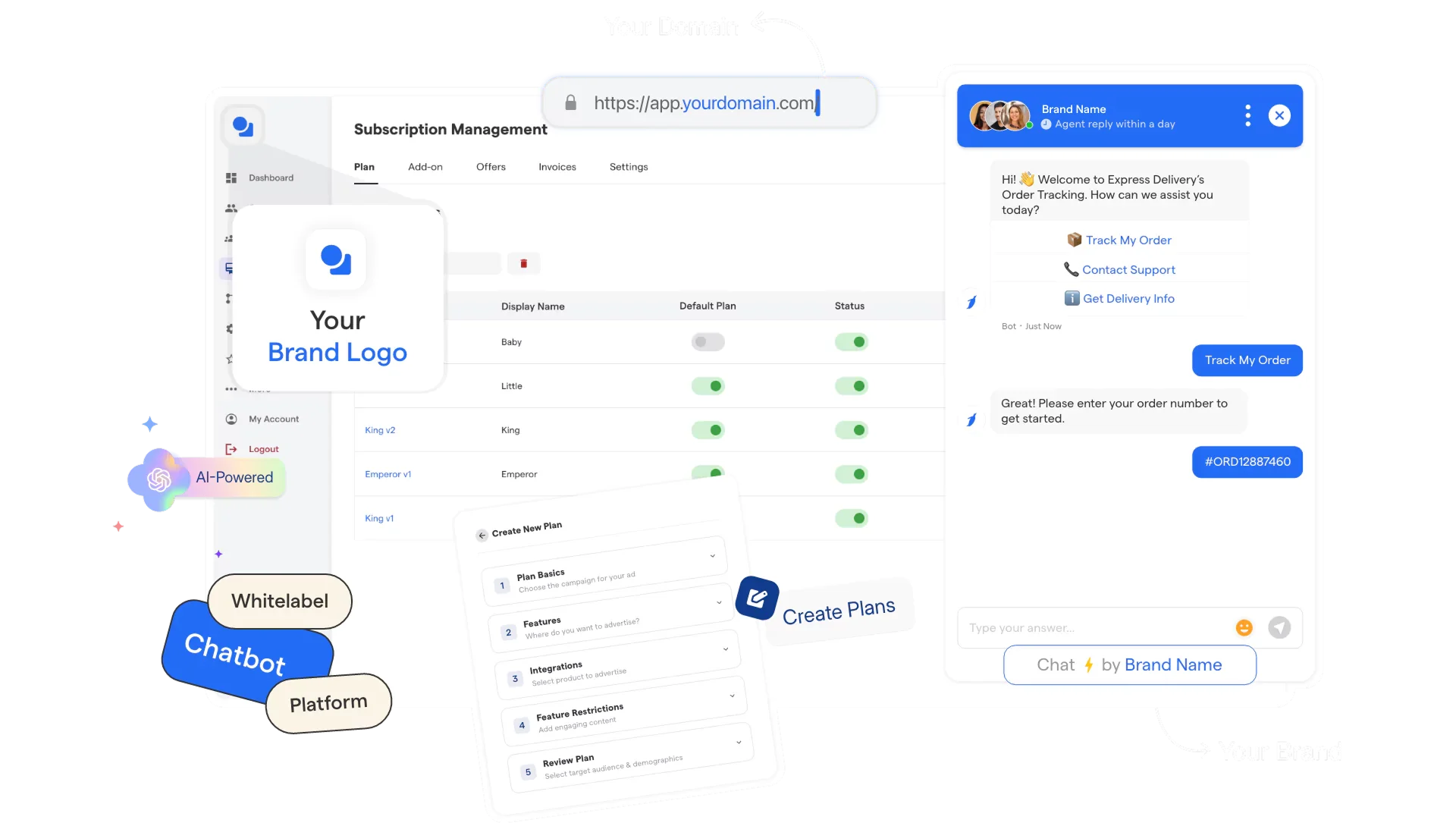
BotPenguin’s white label chatbot platform supports branded chatbots and autonomous AI agents for conversational AI services. Partners can set client pricing and keep 100% of resale revenue.
Understanding how a white label partnership works helps clarify branding, ownership, and delivery responsibilities. Agencies planning broader services can also explore the white-label AI automation agency model.
Those starting with a narrower offer can follow the chatbot agency model first.
The reseller model lets your agency sell technology developed and maintained by another provider.
It offers a faster, lower-risk way to test demand within selected markets. However, resellers usually receive less customization, pricing flexibility, control, and service differentiation.
This model works when market validation matters more than long-term product differentiation.
Choosing the right model determines your startup costs, revenue structure, and delivery requirements.
The cost of starting an AI agency depends mainly on its business model, team structure, technology requirements, and service scope. A consulting or white-label agency generally costs less to launch than a custom development agency.
A lean agency can begin with existing tools, contractors, and a focused service offer. Custom development requires a larger budget for engineering, infrastructure, testing, security, and maintenance.
White-label software can reduce initial development expenses because the core platform already exists. However, agencies should still budget for branding, client acquisition, onboarding, integrations, and ongoing service delivery.
Calculate your budget around the services you can deliver reliably, rather than spending heavily before validating client demand.
AI agencies make money by combining one-time implementation fees with recurring revenue from software, support, maintenance, and optimization. The right pricing structure depends on the service, client value, usage, and delivery responsibilities.
Many agencies combine several models. For example, a client may pay an initial setup fee, a monthly software subscription, and a separate managed-service retainer.
Recurring revenue improves financial predictability, while project fees help recover implementation costs. Agencies should clearly separate software, setup, integrations, support, and additional work within proposals.
A sustainable pricing model connects each charge to a clear deliverable, responsibility, or measurable business outcome.
Starting an AI agency requires focused positioning, repeatable services, credible proof, and reliable delivery processes. Follow these steps to build an agency around clear client needs and measurable outcomes.
Start with one target market and a recurring problem that businesses actively need solved.
Focused positioning makes your agency easier to explain, market, and operate.
Choose a delivery model that matches your resources, expertise, and growth objectives.
Your chosen model determines costs, delivery responsibilities, margins, and ongoing maintenance requirements.
Turn broad AI capabilities into clearly packaged services with specific deliverables and boundaries.
Clear service packages reduce scope confusion and improve proposal consistency.
Your delivery structure may include founders, employees, freelancers, vendors, or technology partners.
You do not need a large team, but every responsibility needs clear ownership.
Choose tools that support secure implementation, collaboration, monitoring, and client reporting.
Reliable infrastructure protects delivery quality and strengthens client confidence.
Use pilot projects to demonstrate how your services solve narrow business problems.
Specific evidence builds stronger credibility than general claims about AI capabilities.
Create a repeatable system for finding, qualifying, and converting suitable clients.
Focus sales conversations on business problems rather than impressive technology features.
Create repeatable processes before increasing your client volume or service range.
Standardization protects service quality while making your agency easier to scale.
Even with strong processes, new agencies must prepare for several operational and market challenges.
Starting an AI agency presents significant opportunities, but poor planning can quickly erode client trust. New agencies must carefully manage competition, evolving technology, changing expectations, resource constraints, and data risks.
Many agencies offer similar automation, chatbot, consulting, and implementation services.
Clear specialization helps prospects understand why your agency is better suited to their specific needs.
AI models, platforms, features, and pricing structures continue changing rapidly.
A flexible technology strategy helps your agency adapt without disrupting existing client services.
Some clients expect AI systems to work perfectly without testing or human oversight.
Setting realistic expectations early reduces disputes and improves long-term client satisfaction.
New agencies may struggle to balance client delivery, sales, support, and technical work.
Careful resource planning prevents overcommitment and protects the quality of client delivery.
AI projects may involve sensitive data, automated decisions, or regulated business processes.
Strong governance helps protect client data, reduce liability, and build greater trust.
Preparing for these challenges helps your agency deliver more reliable and responsible AI services.
AI agencies can structure their services differently based on expertise, resources, and client needs. These examples show how common agency models deliver value and generate revenue.
This agency offers branded chatbots and AI agents through an established technology platform.
This model suits agencies that prioritize branding, implementation, client relationships, and recurring service revenue.
This agency automates repetitive processes across sales, support, operations, reporting, and administration.
This model works best when the agency understands business processes alongside AI and automation tools.
This agency helps businesses evaluate opportunities, select tools, and implement practical AI solutions.
This model suits teams with strong capabilities in business analysis, communication, strategy, and stakeholder management.
It's also the easiest model to start solo, before there's a team to pay. What independent AI consultants actually charge breaks down the hourly, project and retainer ranges at that end of the market.
This agency builds tailored AI applications, integrations, models, and internal business tools.
This model requires experienced technical teams, reliable infrastructure, and disciplined project management processes.
The most suitable model depends on your capabilities, target market, desired control, and revenue goals.
Starting an AI agency does not require offering every possible artificial intelligence service.
Begin with one target audience, one recurring problem, and one reliable delivery model.
The BotPenguin partner program balances launch speed, technical control, client value, and recurring revenue. Custom development offers flexibility, while white-label software supports faster market entry.
Build proof through small projects, document measurable results, and standardize your delivery process. Expand into additional services only after creating consistent and repeatable client outcomes.
Success depends less on offering more technology and more on solving specific problems reliably.
An AI agency helps businesses plan, implement, customize, and manage artificial intelligence solutions. Services may include chatbots, workflow automation, predictive analytics, consulting, integrations, custom software development, training, and ongoing optimization across different business functions, teams, processes, client requirements, and industries.
Start by choosing a specific niche, client problem, and delivery model. Define your services, pricing, technology stack, and responsibilities. Build a small portfolio, create a repeatable sales process, and document how projects will be implemented, tested, supported, improved, and scaled.
Startup costs depend on your business model, team size, software, infrastructure, marketing, and legal requirements. Consulting, reseller, or white-label models usually require less capital than custom development agencies, which incur expenses for engineers, hosting, testing, security, and ongoing product maintenance.
AI agencies earn through consulting fees, implementation projects, setup charges, software subscriptions, retainers, integrations, training, maintenance, and managed services. Many combine one-time project revenue with recurring income from support, optimization, licensing, or platform-based service packages offered directly to business clients.
Coding skills are not always required, especially for consulting, reseller, implementation, or white-label models. However, technical knowledge remains important for evaluating tools, handling integrations, testing workflows, protecting data, troubleshooting issues, and explaining limitations accurately to clients throughout each project delivery.
Yes. White-label software lets an agency sell established AI products under its own brand. This reduces development time while allowing control over positioning, packages, pricing, onboarding, client relationships, and support services, making faster market entry and recurring revenue more practical.
Launch Your AI Agency
Use BotPenguin’s white-label platform to sell branded conversational AI services without building, maintaining, or supporting core technology from scratch.
See Partner ProgramsCheckout our related blogs you will love.
Updated at Oct 12, 2026
15 min to read
Updated at Oct 10, 2026
9 min to read
Updated at Jul 10, 2026
18 min to read
Updated at Jun 5, 2026
25 min to read
Updated at Oct 23, 2026
14 min to read
Updated at Oct 23, 2026
10 min to read
Table of Contents

