How to Add a WhatsApp Link to Your Instagram Profile
Updated at Oct 8, 2026
14 min to read
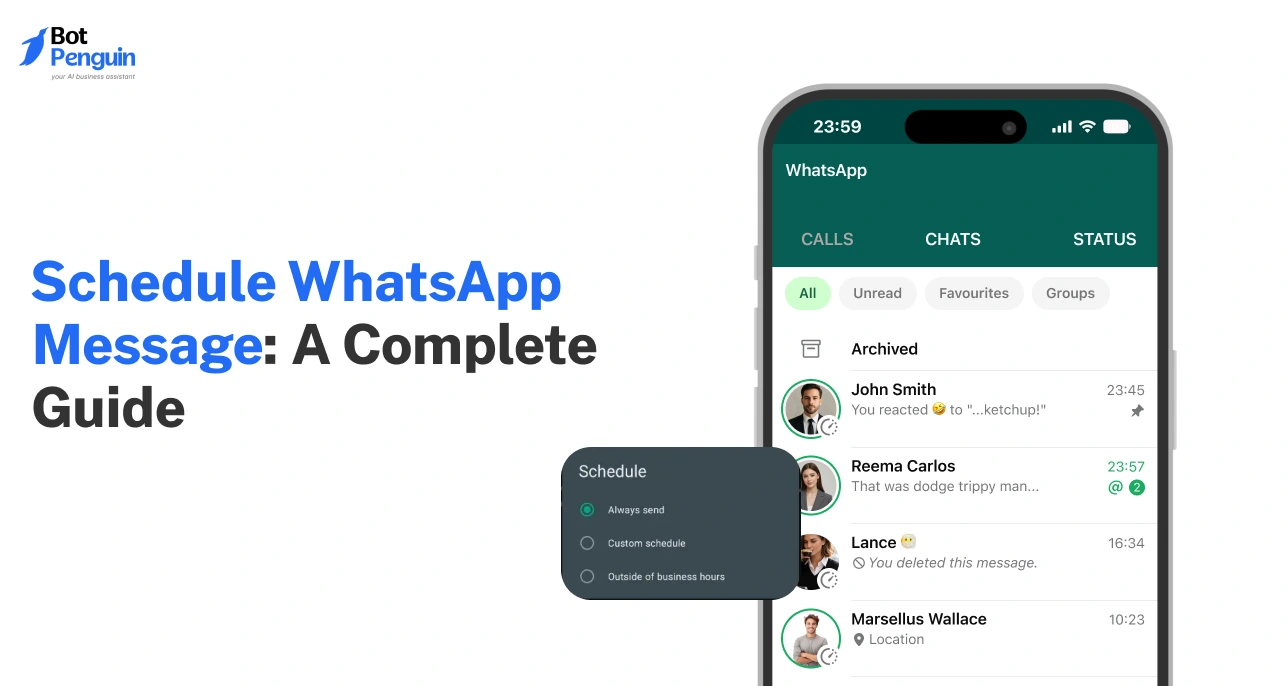
You've just wrapped up a campaign brief at 11 PM. The client message is ready, the follow-up is drafted, but sending now looks unprofessional.
So the question becomes: can you actually schedule a message on WhatsApp? Is there a way to send a delayed text and have it land at the right moment?
WhatsApp has no built-in schedule send. No hidden setting, no send later option, nothing native. But businesses use it to send appointment reminders, sales follow-ups, and campaign blasts every day.
This guide covers every working method, from quick phone hacks to proper API solutions, so your messages land when they should.
WhatsApp has quietly added scheduling in some parts of the app. WhatsApp Channels, the broadcast feature rolled out in 2023, lets admins schedule posts.
But personal chats and group conversations still have no schedule send option as of 2026.
For the 2 billion people using WhatsApp daily for actual conversations and business communication, that gap remains wide open.
The WhatsApp Business App gets you partway there. Away messages and greeting messages look like scheduling on the surface, but they are reactive.
They only fire when someone messages you first. You cannot open a chat, write a message, and tell WhatsApp to deliver it at 9 AM tomorrow. That capability simply does not exist natively.
This is exactly the gap that third-party apps, browser extensions, and the WhatsApp Business API fill. Here is every method that actually works.
There is no one-size-fits-all answer here. The right method depends on your device, your volume, and whether you are scheduling for personal use or business. Here is a quick look at what is available before diving into each one.
| Method | Platform | Cost | Phone Required | Scalable | Best For |
| SKEDit | Android | Free / Paid | Yes | No | Personal messages |
| Apple Shortcuts | iPhone | Free | Yes | No | Individual automation |
| Zapia | Android + iOS | Free | Yes | No | Casual, natural language |
| Blueticks | WhatsApp Web | Free / Paid | Browser open | Limited | Desktop users |
| WA Business App | Android + iOS | Free | Yes | Small scale | Away messages only |
| BotPenguin API | All platforms | Free trial | No | Fully | Businesses of any size |
Android gives you more flexibility than iPhone when it comes to scheduling, mostly because it allows deeper access to third-party apps. There are a few options worth knowing, but one stands out as the most widely used.
SKEDit is the most widely used wa scheduler for Android and for good reason. It is straightforward, has a free tier, and does not require any API setup.
What it does require is your phone. SKEDit works by automating your phone's UI, not by connecting to WhatsApp's backend, so it physically opens WhatsApp and triggers the send on your behalf. That is the trade-off you are accepting before anything else.
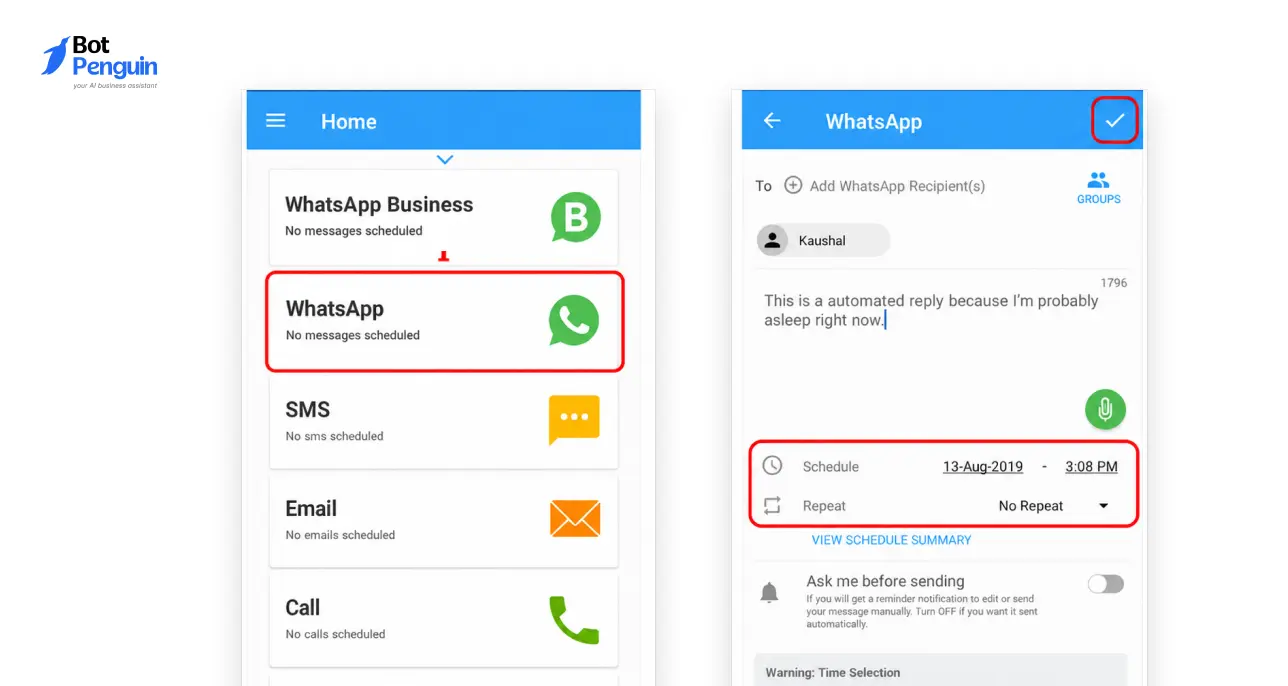
Optional: toggle on "Ask Me Before Sending" if you want SKEDit to prompt you for approval before it fires. Useful when you are still testing.
Warning: Your phone must be switched on, screen unlocked, and connected to the internet at the exact scheduled time. SKEDit cannot send if the screen is locked or the phone is off. Many users disable their lock screen entirely to make this work, which is a genuine security trade-off. For client-facing or time-sensitive messages, consider whether that is acceptable before committing to this method.
Need something more reliable? Tasker is a paid Android automation app that experienced users prefer for scheduled WhatsApp sends. The setup is more involved, but once configured, it handles scheduling without requiring an unlocked screen, making it significantly more dependable for repeat or business use.
| Cost | Free tier available, paid plans for advanced features |
| Phone required | Yes, on and unlocked |
| Supports groups | Yes |
| Media attachments | Yes |
| Reliability | Moderate, dependent on device settings |
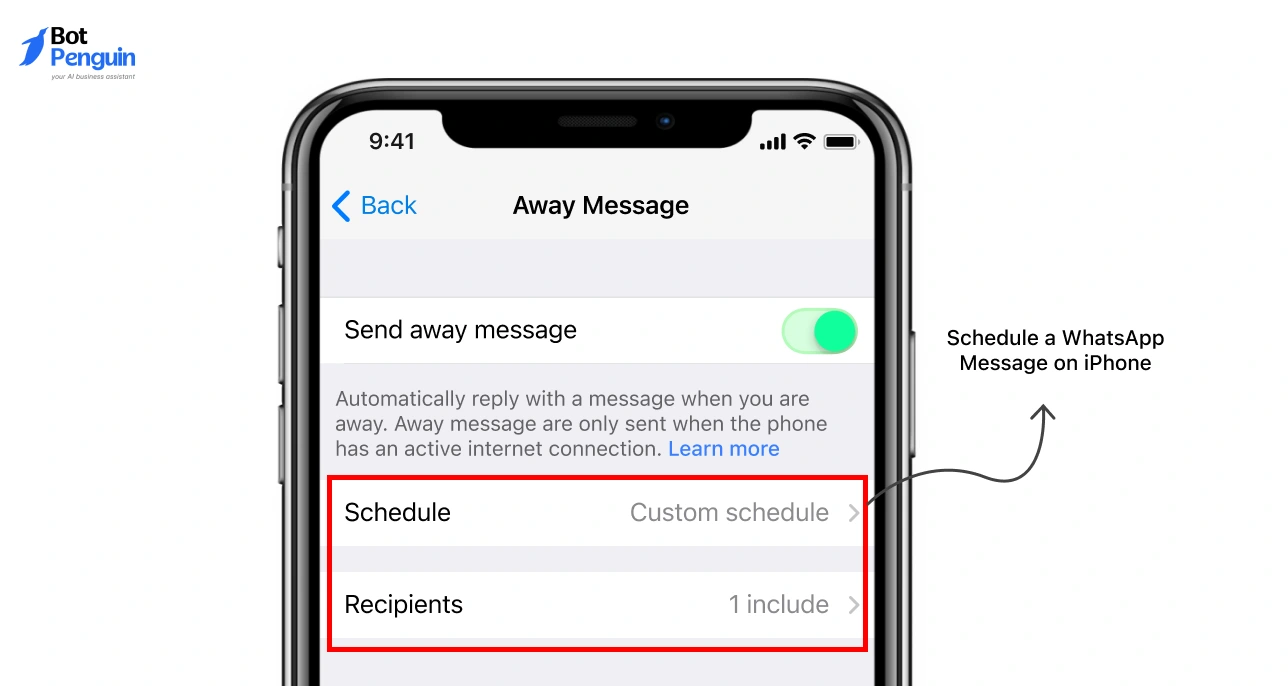
iPhone handles third-party automation differently from Android, which means your options are narrower but still workable. Here is the most reliable free method available.
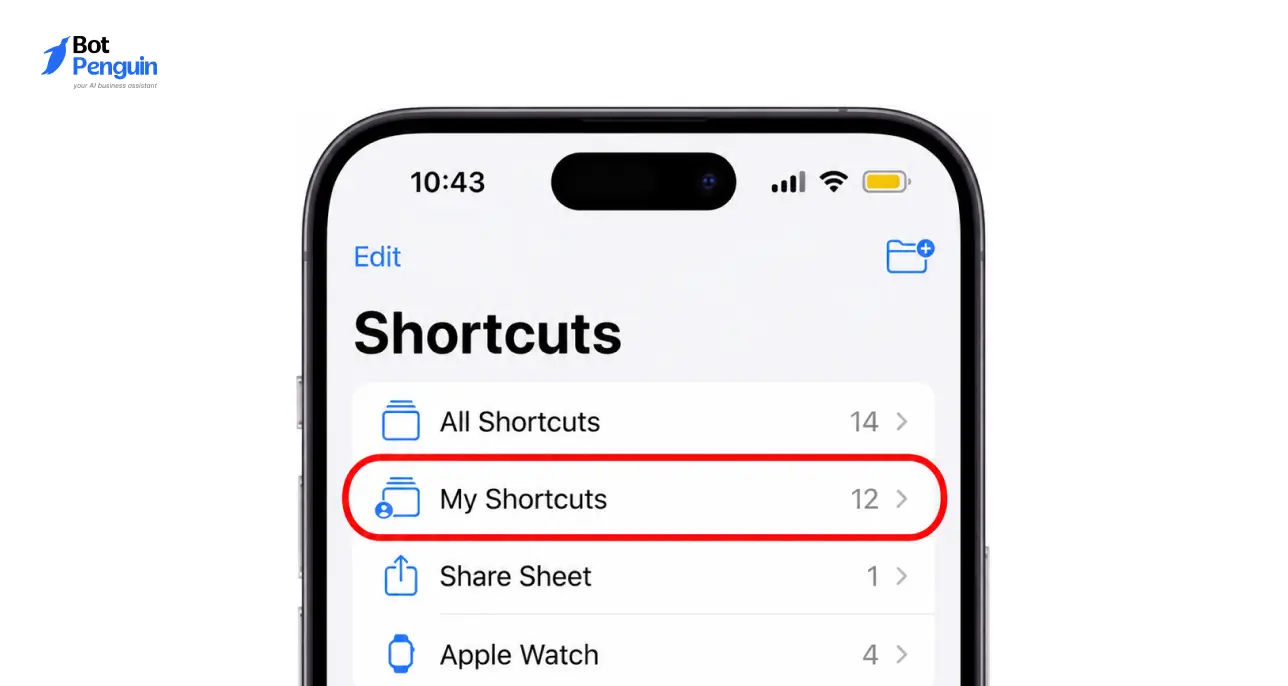
iOS is more locked down than Android when it comes to third-party automation, so most dedicated scheduler apps simply do not work the same way on iPhone.
The good news is you do not need to download anything. Apple's Shortcuts app, which comes pre-installed on every iPhone running iOS 13 or later, handles this cleanly and for free.
Here is how to schedule a WhatsApp message on iPhone using Shortcuts:
Your message will now send automatically at the time you set, with no action needed from you.
Before you rely on this for anything important: Set a test automation for two minutes from now and send yourself a message first.
Shortcuts and WhatsApp compatibility can vary slightly after iOS updates. Once you have confirmed it works on your device, you can schedule the real thing with confidence.
If the Shortcuts setup feels like too many steps, Zapia is worth a look. It is a scheduling app for both iPhone and Android that works through natural language.
You type something like "remind Arjun about the proposal tomorrow at 9 AM," and it handles the rest. The message lands looking like a normal send on the recipient's end, no automation footprint visible.
| Cost | Free, pre-installed |
| Phone required | Yes, on and online |
| Supports groups | Yes, with some setup |
| Media attachments | Limited |
| Reliability | Good, can vary after iOS updates |
If you spend most of your working day on a desktop with WhatsApp Web open, you do not need a separate app or phone-based workaround.
A Chrome extension handles it directly inside the browser you are already using.
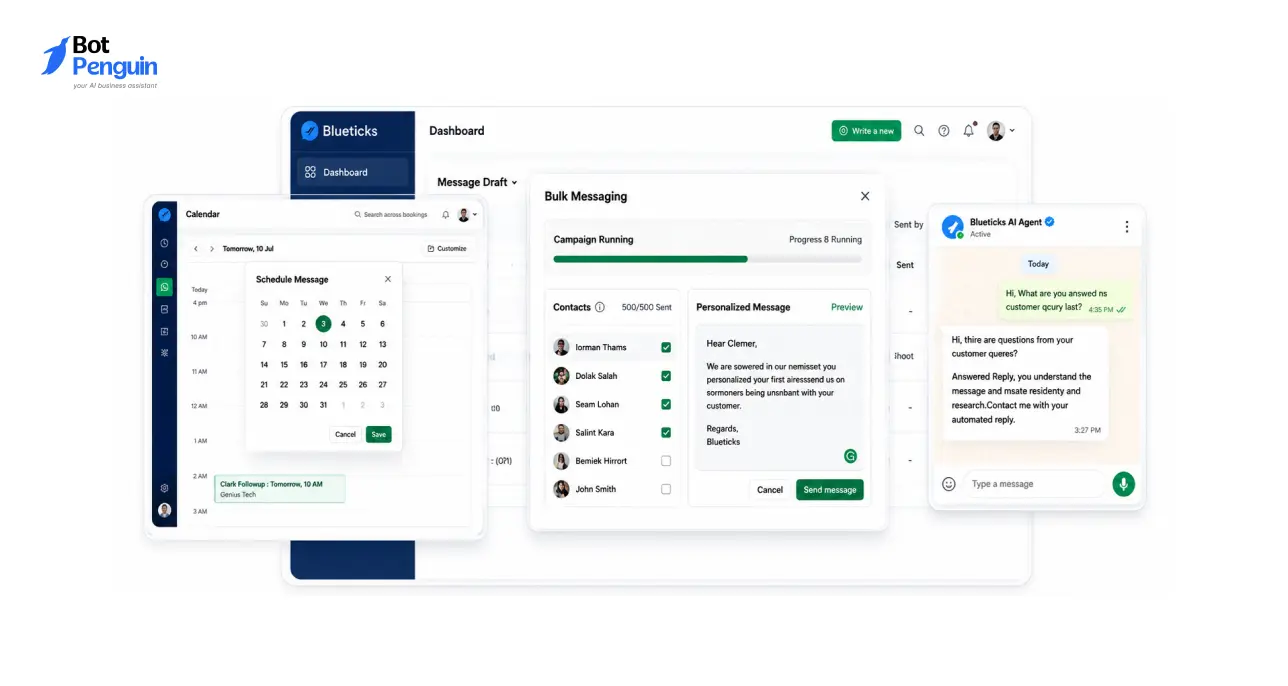
If you run your business communication from a browser and WhatsApp Web is open on your screen most of the day, Blueticks is the most frictionless option available.
It adds a schedule send button directly inside the WhatsApp Web chat window so the workflow feels completely native. No switching between apps, no separate dashboard to manage.
Here is how to schedule a message in WhatsApp Web using Blueticks:
Important: Blueticks runs inside Chrome, not from the cloud. If Chrome is closed, your laptop is shut off, or your computer goes to sleep before the scheduled time, the message will not send until you reopen the browser. For anything time-sensitive, this is a meaningful limitation.
| Cost | Free tier available, paid plans for higher volume |
| Phone required | No, works independently via browser |
| Chrome must be open | Yes |
| Supports media | Yes |
| Best for | Desktop-first teams and solo operators |
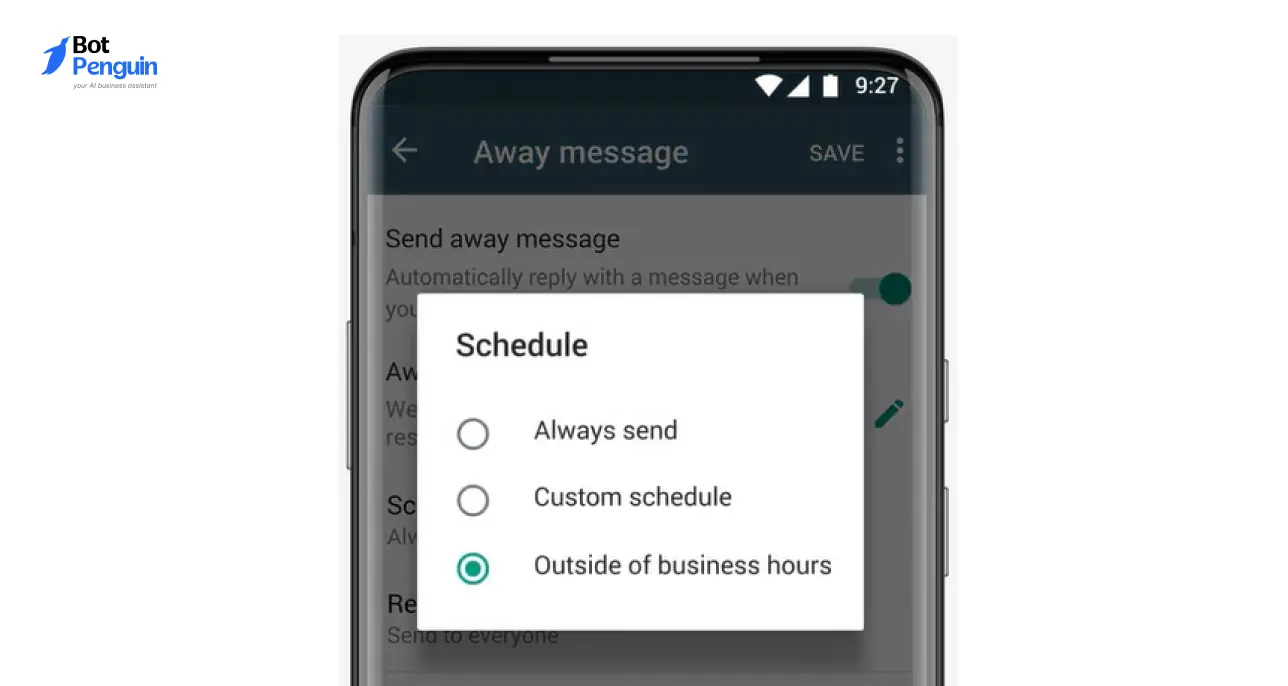
The WhatsApp Business App is often the first place people check when they want to schedule a message. It has automation features built in, but they work differently from what most people expect.
A lot of people land on the WhatsApp Business App expecting a built-in way to schedule a message on WhatsApp and leave disappointed.
The app does have automation features, but they do not work the way most people assume. Before you spend time setting them up, here is exactly what you are getting.
Away messages and greeting messages are reactive. They respond to incoming messages during the hours you define.
They do not let you open a chat, write something, and tell WhatsApp to deliver it at a specific future time. That distinction matters.
Here is how to set up an away message:
Be clear on what this is not: Away messages only fire when someone messages you first outside your set hours. You cannot use this to proactively send a scheduled message to a specific person at a future time. If that is what you need, the WhatsApp Business API is the only option that actually delivers it.
Away messages work well for: after-hours acknowledgements, setting response time expectations, an directing customers to a support link while your team is offline.
Away messages do not work for: campaign sends, follow-ups, appointment reminders, or anything where you are initiating the conversation on a schedule.
Phone-based methods work for personal use. When business reliability, scale, and delivery consistency become the requirement, the approach needs to change entirely.
Every method covered so far shares the same weak point: your phone or browser has to be on, unlocked, and connected at the exact moment your message is due.
For a birthday wish, that is fine. For a business running appointment reminders, sales follow-ups, and promotional campaigns across hundreds or thousands of contacts, that dependency is a liability.
The WhatsApp Business API removes it entirely. Messages are sent from the cloud. Your phone's battery level, internet connection, or whether it is even switched on becomes completely irrelevant. Your scheduled messages go out exactly when you set them, every time.
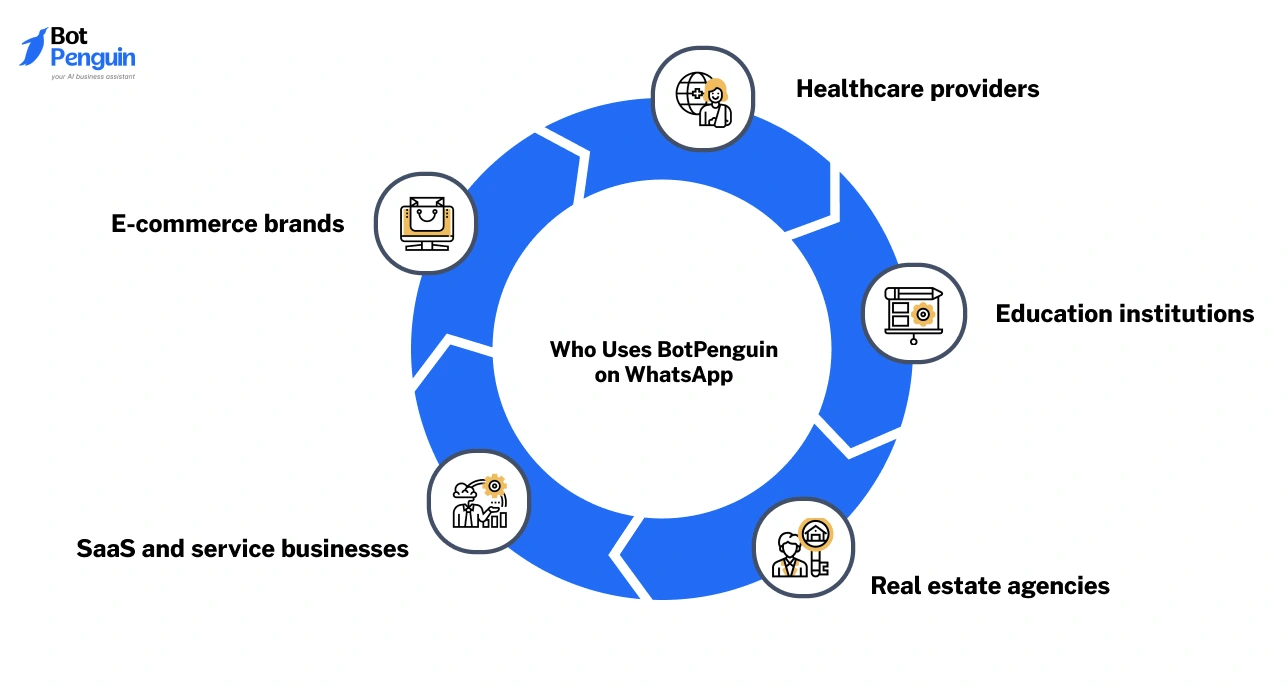
BotPenguin is a Meta Business Partner, which means it operates within WhatsApp's official business platform, not around it. This is not a workaround. It is the sanctioned infrastructure that serious businesses use to run WhatsApp communication at scale.
Trusted by 80,000+ global brands, including Cipla, Logitech, Apollo, Balenciaga, and Woodland, BotPenguin gives any business a no-code dashboard to schedule messages, automate campaigns, handle support, and capture leads on WhatsApp without writing a single line of code.
| Capability | Phone-Based Methods | BotPenguin |
| Schedule individual messages | ✓ With limitations | ✓ Fully |
| Bulk campaign scheduling | ✗ | ✓ |
| Phone must be on to send | ✓ Required | ✗ Not needed |
| Delivery analytics | ✗ | ✓ |
| AI chatbot for inbound replies | ✗ | ✓ |
| CRM and tool integrations | ✗ | ✓ 80+ integrations |
| Abandoned cart recovery | ✗ | ✓ |
| Works across 180+ countries | ✗ | ✓ |
| GDPR / HIPAA / SOC2 compliant | ✗ | ✓ |
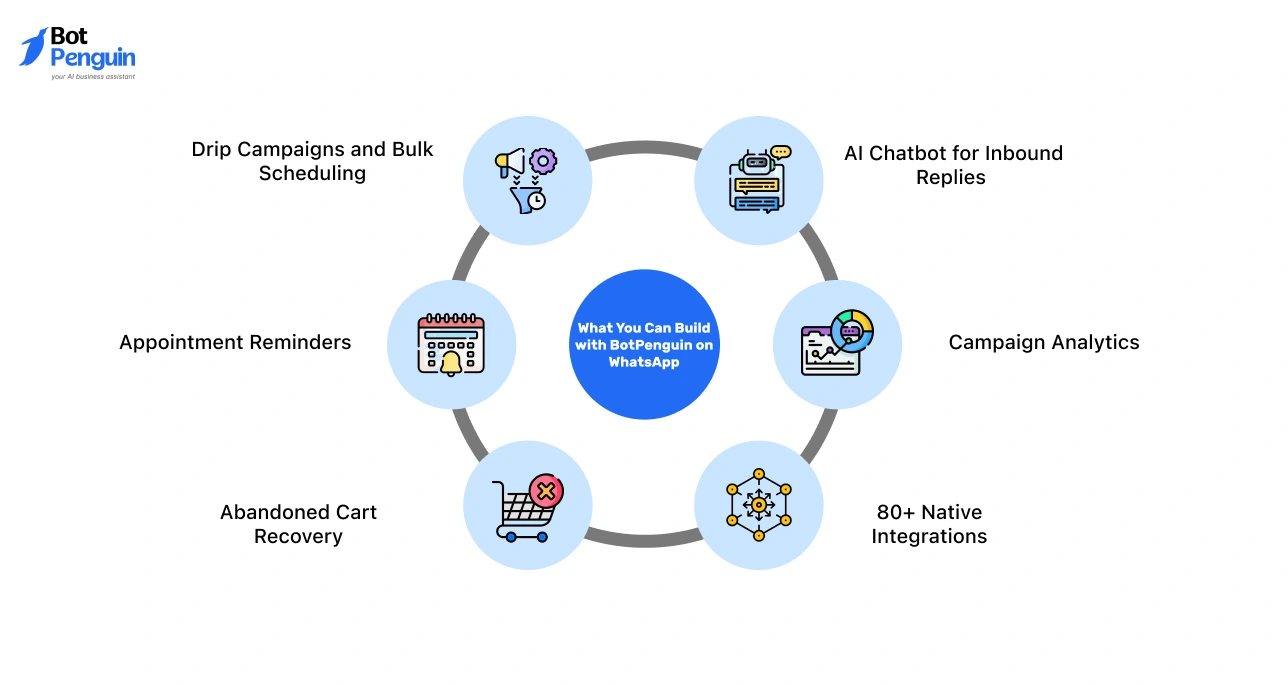
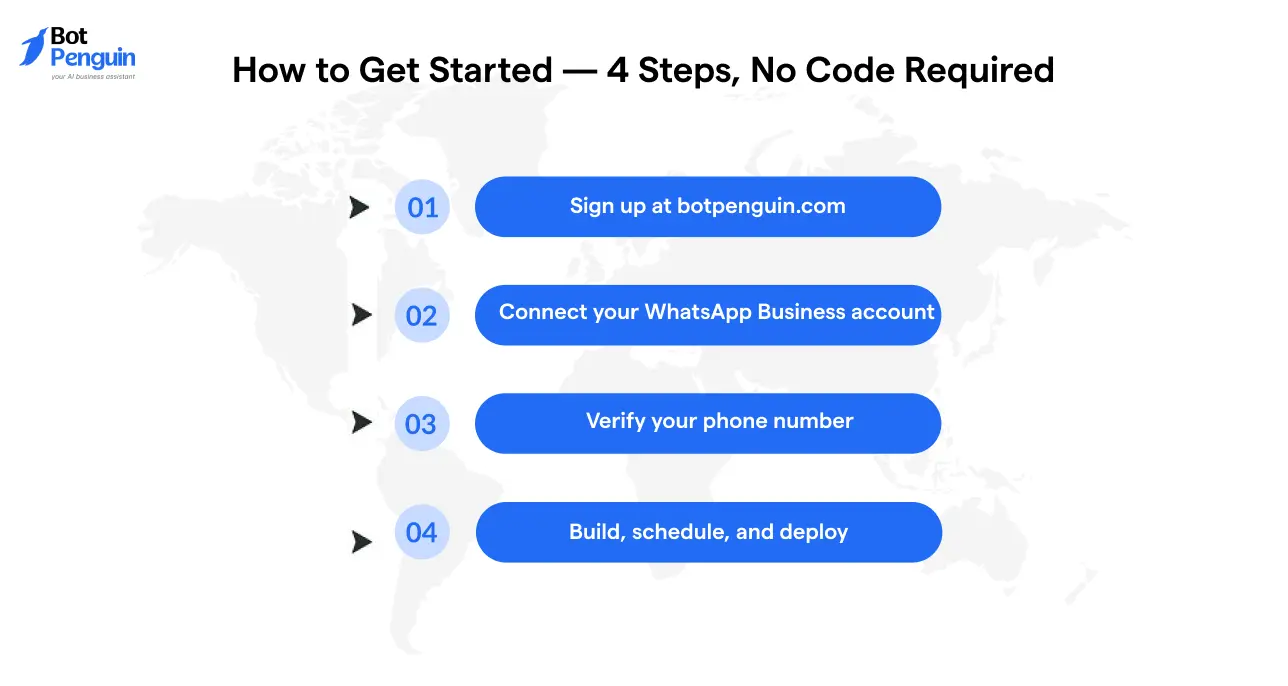
If you are currently using SKEDit, Shortcuts, or Blueticks and finding it unreliable, BotPenguin is where businesses move when the workarounds stop being good enough. The free plan is enough to run your first scheduled campaign and see the difference firsthand.
Six methods, one table. If you want to schedule messages on WhatsApp and just need to know which option fits your situation, this is the fastest way to decide.
| Method | Platform | Cost | Phone Required | Scalable | Reliability | Best For |
| SKEDit | Android | Free / Paid | Yes | No | Moderate | Personal sends |
| Apple Shortcuts | iPhone | Free | Yes | No | Good | Individual automation |
| Zapia | Android + iOS | Free | Yes | No | Good | Casual scheduling |
| Blueticks | WhatsApp Web | Free / Paid | Browser open | Limited | Good | Desktop users |
| WA Business App | Android + iOS | Free | Yes | Limited | Moderate | Away messages only |
| BotPenguin ⭐ | All platforms | Free trial | Not needed | Fully | Excellent | Businesses of any size |
A few things worth noting before you choose:
If you are scheduling one or two personal messages a week, any of the free phone-based methods will do the job. Pick the one that matches your device and move on.
If you need scheduled send on WhatsApp for business use, meaning consistent delivery, contact lists, analytics, and no dependency on a device being online, the phone-based methods will eventually let you down.
BotPenguin is the only option in this table where reliability is not conditional on your battery level or browser being open.
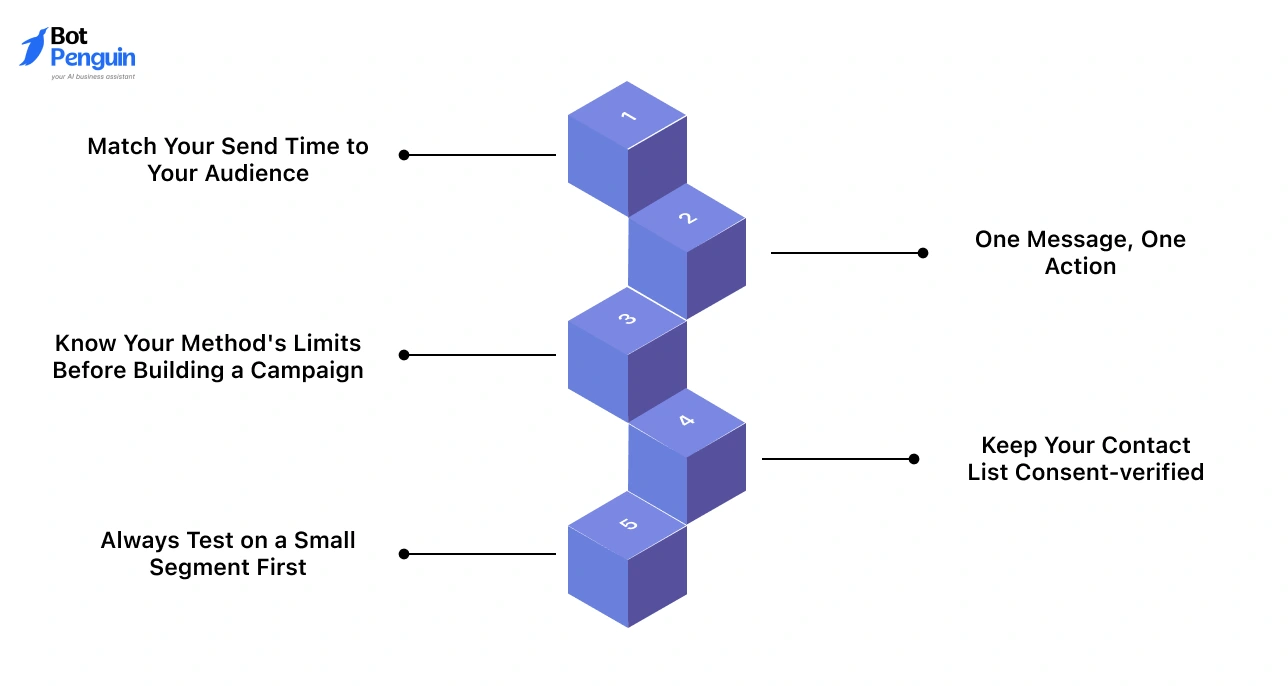
Most people get the technical setup right and then undermine it with poor execution. Knowing how to schedule messages on WhatsApp is only half the work. When you send, what you say, and who you send it, to, determines whether the message actually performs.
Here are five practices that make a real difference.
Messages sent between 9 to 11 AM and 4 to 6 PM in the recipient's timezone consistently get the highest open and reply rates.
Wednesday afternoons outperform most other slots for business communication. Avoid anything before 8 AM or after 9 PM. If your list spans multiple regions, segment by timezone before scheduling, or contacts in one region will receive your message at the completely wrong hour.
WhatsApp has a 65,536-character limit, but the sweet spot for scheduled business messages sits between 50 and 130 characters for the opening line.
If your first sentence does not land, the rest does not get read. More importantly, each message should ask for exactly one thing. Book a call, claim an offer, confirm an appointment. Two asks in one message typically result in neither happening.
The WhatsApp Business App broadcast list caps at 256 contacts and only reaches people who have saved your number. SKEDit and Shortcuts have no broadcast capability at all.
Blueticks works one conversation at a time. If your campaign needs to reach 500 or 5,000 contacts, three of the five methods in this guide cannot physically deliver it. Match your volume requirement to your method before investing time in the setup.
WhatsApp monitors block and unread rates. A block rate above 2% is enough to trigger an account restriction with no prior warning.
Only send to contacts who have explicitly opted in, remove unresponsive contacts regularly, and never import a cold or purchased list into any WhatsApp scheduler.
Before sending a scheduled campaign to your full list, test it on 10 to 20 contacts first. Verify that links work, personalisation tokens pull the correct names, and the message renders cleanly on both Android and iOS. A formatting error sent to 2,000 people cannot be recalled. Catching it on 15 costs nothing.
The right method depends entirely on what you are trying to do.
If you are on Android and need to schedule a WhatsApp message for personal use, SKEDit gets the job done. iPhone users have everything they need in the Shortcuts app already.
Desktop workers who live in WhatsApp Web should install Blueticks and move on. Small businesses managing a modest contact list can start with the WhatsApp Business App and its built-in automation.
If you are scaling, running campaigns, or need WhatsApp schedule send to work without a device dependency, BotPenguin is the only option in this guide built for that.
The method matters. But so does the timing. A perfectly written message sent at the wrong moment still gets ignored. Now you have both figured out.
Not natively. WhatsApp has no built-in schedule send. You need a third-party tool depending on your device and use case.
Use a scheduling tool on your device. Options vary by platform: Android, iPhone, and desktop each have different methods covered in the guide above.
For most phone-based methods, yes. Cloud-based solutions send messages from the server regardless of your device status.
Yes. Most phone-based methods are free with some limitations. BotPenguin also offers a FREE Forever plan with no credit card required for businesses that need more.
A message composed now and delivered automatically at a future time. Different from disappearing messages, which control when a message is deleted, not when it is sent.
Yes. Most scheduling methods support group chats with some setup. Broadcast capability varies significantly depending on the method you use.
No, if you use official methods. Unofficial bulk automation tools and unsolicited cold messaging do violate terms and risk account restriction.
3X Your Business
Growth on WhatsApp
See how our chatbot automates replies, qualifies leads & books appointments on autopilot.
Watch Demo NowCheckout our related blogs you will love.
Updated at Oct 8, 2026
14 min to read
Updated at Oct 6, 2026
13 min to read
Updated at Sep 26, 2026
10 min to read
Updated at Sep 25, 2026
16 min to read

Updated at Sep 25, 2026
15 min to read

Updated at Sep 25, 2026
6 min to read
Table of Contents