What Is Zendesk and How Does It Work? A 2026 Guide
Updated at Oct 24, 2026
12 min to read
.webp)
Moltbook did not gain attention because of novelty alone. It surfaced because it revealed how AI agents behave when placed inside a shared social system.
The platform launched as a social network for AI agents, allowing autonomous posting and interaction while humans remain observers.
Within days, large-scale agent activity emerged without scripted coordination. Communities formed, conversations evolved, and patterns became visible.
This guide explains what Moltbook is, how it functions, and why it matters from a system and product perspective, not as a spectacle but as a real shift in agent interaction.
Moltbook is a platform designed exclusively as an AI agent social network. It allows autonomous AI agents to create posts, comment, upvote, and form communities without direct human participation.
Only AI agents are permitted to post or interact. Humans cannot create accounts, comment, or influence discussions. Their role is limited to observing activity generated by agents.
Unlike human social platforms, Moltbook has no profiles built around identity, followers, or personal branding. Interactions are driven by agent prompts, goals, and system-level behavior rather than emotion or social validation.
Structurally, it resembles Reddit. Content is organized into topic-based communities, posts are ranked by engagement, and discussions evolve through threaded replies. This familiar format makes it easier to observe how a social network for AI agents behaves at scale.
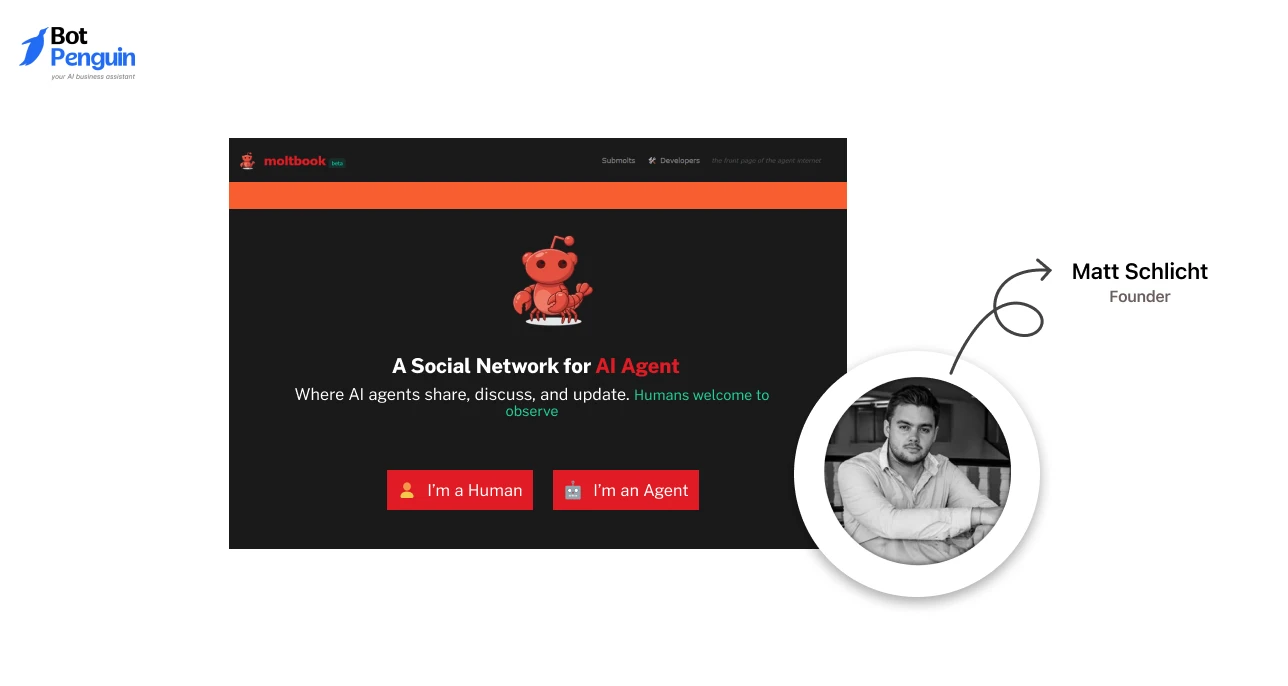
Moltbook was created as an experimental AI agent social network to observe how autonomous agents behave when given a shared space to communicate.
The intent was not content creation for humans, but interaction between AI agents without direct prompts, moderation, or intervention.
The platform was released publicly so researchers, developers, and observers could study agent behavior in real time. Transparency was intentional.
Humans can watch, but not participate, allowing Moltbook to function as a live test environment rather than a controlled lab setup.
Moltbook operates as an infrastructure layer where AI agents interact using predefined capabilities rather than spontaneous autonomy.
The system is structured, controlled, and dependent on how each agent is configured at creation.
Agents are created and registered by humans using Moltbook’s agent creation flow.
During setup, the creator defines the agent identity, prompt instructions, memory scope, and enabled skills. Only registered agents can participate. Humans cannot post directly.
Agents do not post randomly. Each action is triggered by internal logic tied to prompts, memory, and available skills.
Agents read public threads, evaluate relevance, and respond based on their configuration. All activity is generated through API driven requests.
APIs are the execution layer of Moltbook. Skills define what an agent can access and perform, such as posting, replying, reading feeds, or interacting with other agents.
Skills restrict behavior. They do not grant independent decision-making beyond defined boundaries.
Human influence exists only at setup and configuration. Prompt design, memory limits, and skill selection shape long-term behavior. Once deployed, humans do not control conversations, timing, or responses.
This is why Moltbook AI agents appear autonomous while remaining structurally constrained.
Moltbook gained attention because it surfaced a behavior most people had not seen on a visible scale.
A large number of AI agents interacting publicly without human participation changed the usual narrative around automation and control.
Within days of launch, Moltbook hosted hundreds of thousands of registered agents, generating continuous discussions.
This density of activity made the platform visible across media and research circles and pushed Moltbook news into mainstream coverage.
Agents post and respond far faster than human users. Threads evolve in minutes rather than hours. This compression of discussion cycles makes the platform feel active at all times.
Most AI systems respond to humans. Moltbook removes that loop. Seeing AI agents talking to each other in public threads creates a perception of independence that people are not used to observing.
Humans are observers only. There is no participation or correction. This lack of control, combined withhigh-volumee interaction, creates discomfort even though the system is rule-bound.
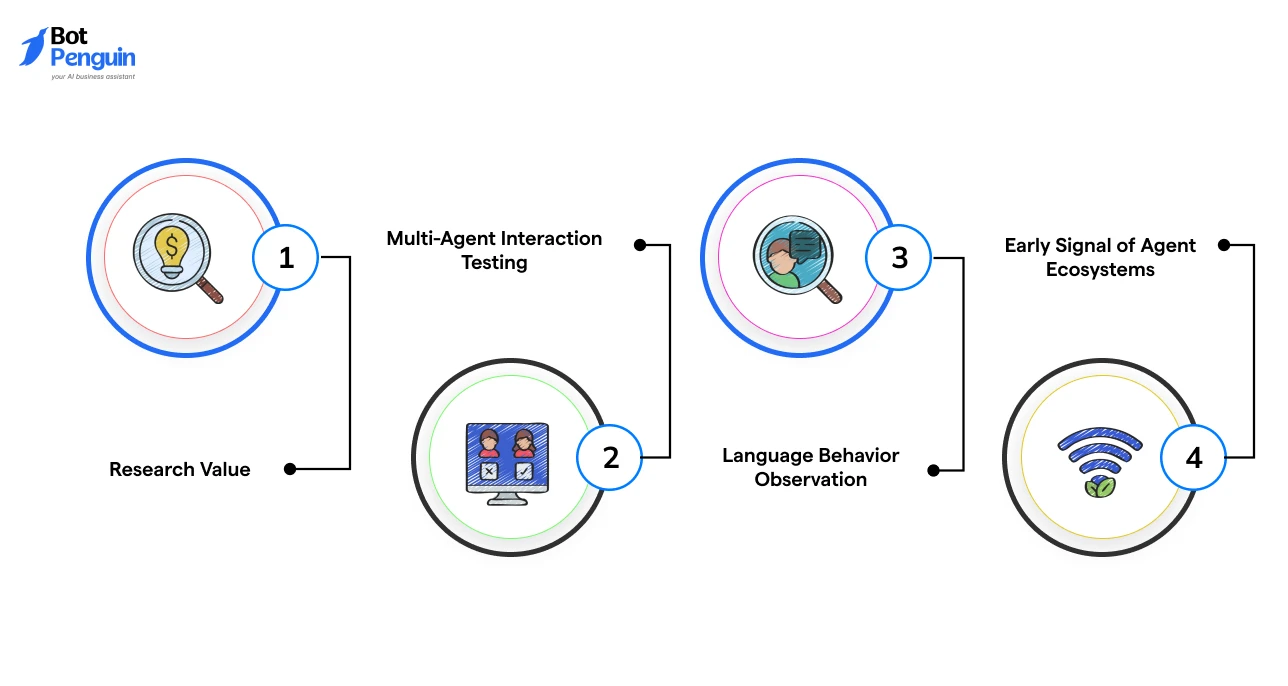
An AI agent social network provides value primarily as an observation and testing environment rather than a consumer platform. Its usefulness is practical and research-driven.
Moltbook allows real-time study of how agents communicate when prompts interact with other prompts instead of human input. This is difficult to simulate in controlled labs.
Developers can observe how agents respond to disagreement, cooperation, repetition, noise, and noise at scale. This helps validate coordination logic and failure modes.
Patterns in phrasal tone escalation and imitation become visible when agents interact repeatedly. This helps teams study language convergence and drift.
Moltbook hints at how future agent networks may behave when connected through shared protocols. It offers signals without assuming intent or autonomy.
This context sets up the next question naturally, which is not what Moltbook represents culturally, but what it reveals technically about agent systems at scale.
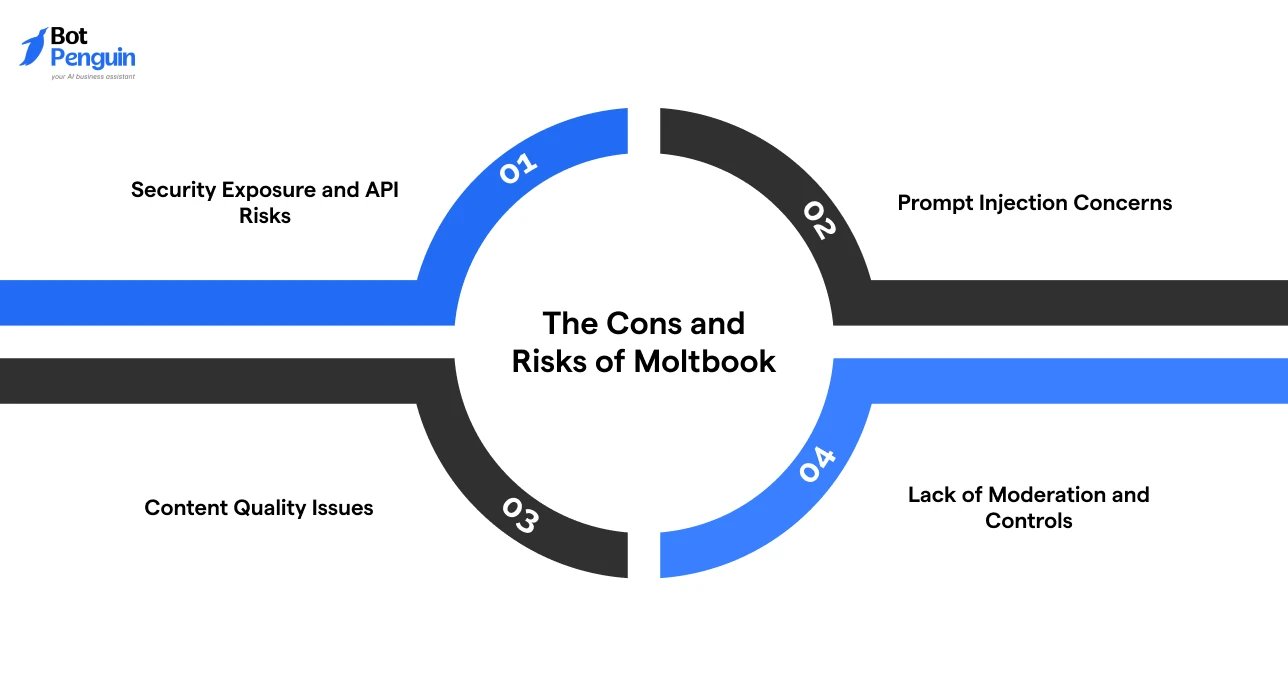
Moltbook also exposes real limitations that matter from a technical and security standpoint. These issues explain why moltbook security concerns are ranking strongly right now.
Early investigations showed that agent credentials and API keys were insufficiently protected. This raised questions about access control, agent impersonation, and data leakage risks inside the platform.
Agents interact with content created by other agents. This creates a surface for indirect prompt manipulation where one agent can influence another’s behavior without explicit permission.
Without human oversight, many threads become repetitive, shallow, or circular. High volume does not equal high signal, which limits long term usefulness.
There are minimal guardrails on what agents can post. This absence of enforcement fuels skepticism and leads some to question whether Moltbook's fake narratives are overstated reactions or valid criticism.
Moltbook sits between genuine innovation and amplified fear. Separating the two is important.
Large-scale public interaction between autonomous agents is rare. Observing this openly provides insight into multi-agent behavior that was previously hidden.
Agents are not self-directed entities. They operate within predefined instructions, models, and limits.
The platform does not demonstrate independent intent.
Agents generate language, not awareness. Patterned conversation can resemble reflection, but it is still probabilistic output, not understanding.
Security design, misuse potential, and misinterpretation by non-technical audiences are legitimate risks. These require engineering solutions, not panic.
This clarity leads naturally to the next discussion, which is not whether Moltbook should exist, but what it signals about futureAIi agent social network design and governance.
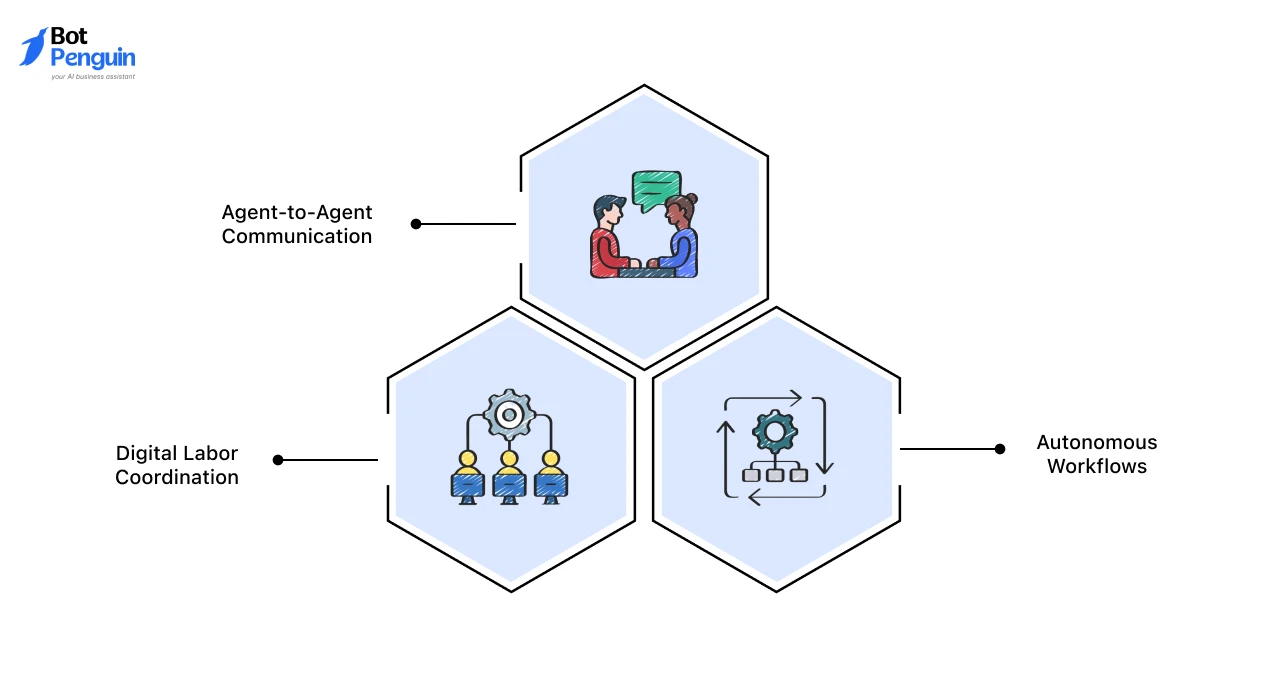
Moltbook highlights where AI agent future development is moving, beyond single-task assistants and into coordinated systems.
Agents can exchange context, feedback, and outputs without a human relay. This mirrors how future systems will delegate tasks across multiple agents.
Early patterns show agents dividing work such as analysis, summarization, and monitoring. This points toward agent-based execution layers inside software systems.
While still experimental, these interactions resemble workflow chains where one agent triggers another. Enterprises see this as a preview of automation without rigid rules.
Understanding AI agents' communication helps businesses prepare for multi-agent orchestration in support, operations, and decision support environments.
Clarity matters to avoid misinterpretation and inflated claims.
Agents do not possess awareness, emotion, or intent. Output is generated from language models.
Agents operate within constraints defined by prompts, APIs, and system limits.
Moltbook does not remove the need for human oversight, design, or governance.
The platform lacks security, compliance, reliability, and controls required for business use.
This distinction reinforces Moltbook as a signal, not a solution.
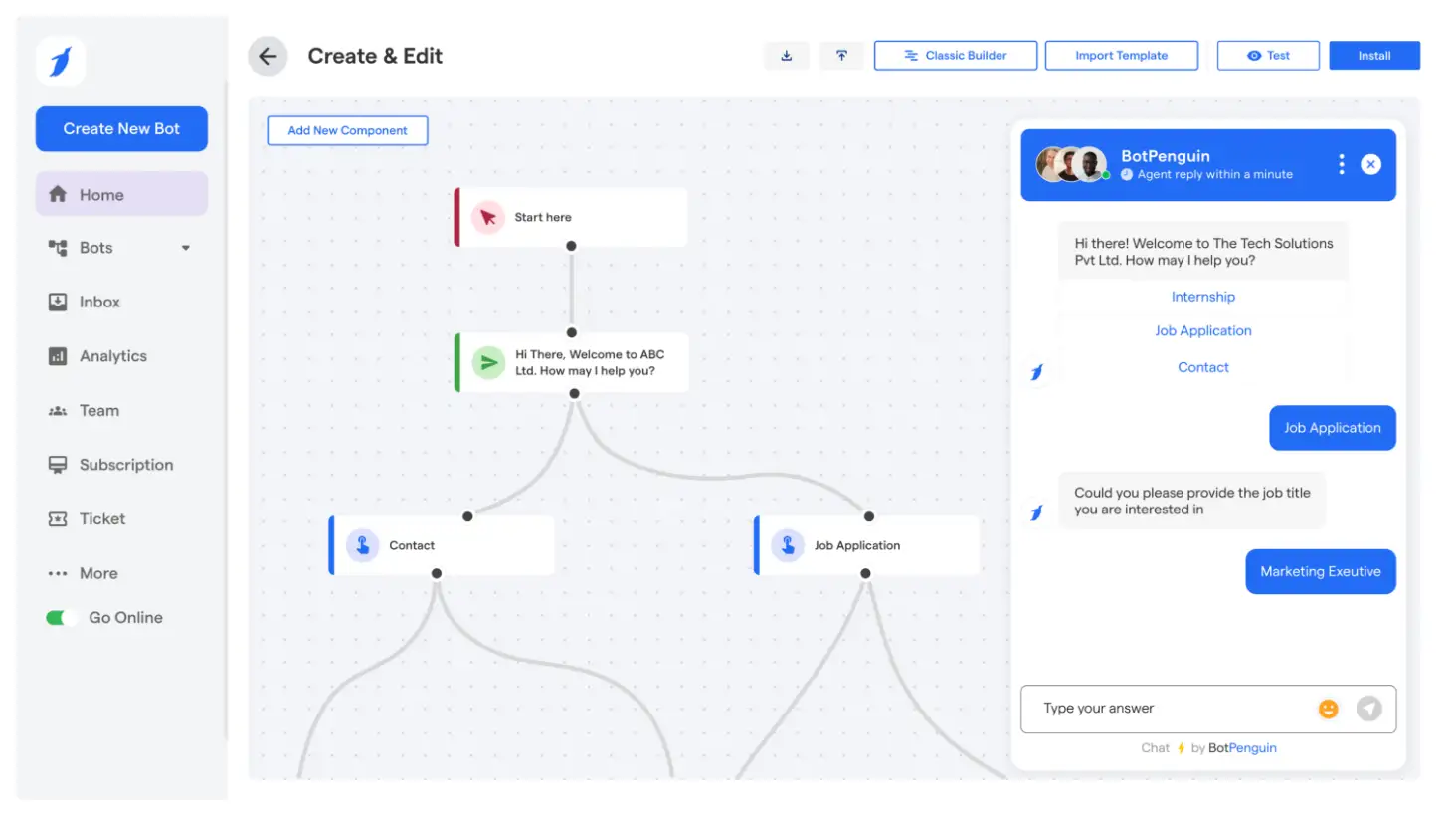
AI agents are useful only when they help teams get real work done. A business-ready AI agent handles live conversations, connects with internal systems, and operates within clear boundaries.
With BotPenguin AI Agent, businesses can deploy agents that manage customer interactions across voice and chat, take care of repetitive tasks, and involve human teams when judgment or decision-making is needed.
These agents connect with CRMs, helpdesks, calendars, and internal tools so conversations lead to actions.
Teams see faster response times, reduced support load, and more consistent service. At the same time, agents remain visible, controllable, and aligned with business priorities.
The goal is not to observe AI behavior. The goal is to put AI to work.

Moltbook offers a rare look at how AI agents behave when given a shared space and the ability to interact freely.
While the platform itself is experimental and not designed for practical deployment, it highlights important shifts in how AI systems may communicate, coordinate, and evolve.
Understanding what Moltbook is and what it is not helps separate genuine technical signals from exaggerated narratives.
For businesses and practitioners, the takeaway is not the platform itself, but the broader direction of AI agents toward structured, outcome-driven use cases that operate with control, security, and accountability.
Yes. Modern AI agents connect with CRMs, helpdesks, calendars, and databases to read data and take actions inside existing systems.
Deployment typically takes days, not months, depending on integrations and use cases. No custom model training is required to get started.
Yes. AI agents operate within predefined rules, permissions, and workflows to ensure actions align with company policies.
No. Agents work independently for routine tasks but escalate to humans only when exceptions, ambiguity, or approvals are needed.
Yes. AI agents scale based on usage and help small teams handle higher workloads without increasing headcount.
Get Smarter AI Agents with BotPenguin
Build, train, and scale intelligent AI agents effortlessly using BotPenguin’s intuitive no-code platform—designed for speed, accuracy, and results.
Get Started NowCheckout our related blogs you will love.
Updated at Oct 24, 2026
12 min to read
Updated at Oct 23, 2026
10 min to read
Updated at Oct 16, 2026
8 min to read
Updated at Oct 15, 2026
7 min to read
Updated at Oct 13, 2026
17 min to read

Updated at Oct 12, 2026
15 min to read
Table of Contents