Best Free AI Agent Builder (No-Code Tools to Build AI Agents)
Updated at Sep 30, 2026
18 min to read
Research output is rising fast, but so are the tools reshaping it.
More than 50% of market researchers now use AI in core workflows, and 33% of surveyed researchers report using AI tools such as ChatGPT to help write manuscripts in their day-to-day work. (source)
Across industries, AI helps scan the literature, analyze data, and summarize findings faster than any human team.
That makes the question of how AI agents will change research a practical concern for today’s labs and enterprises.
This guide focuses on real workflow changes, efficiency gains, risks, and how teams are preparing for agent-driven research without hype.
Most researchers already use AI tools. They summarize articles. They draft outlines. They help clean datasets.
In fact, a 2023 Nature survey found that over 30 percent of researchers reported using large language models to assist with writing or coding tasks.
But those tools respond once and stop. They wait for the next instruction.
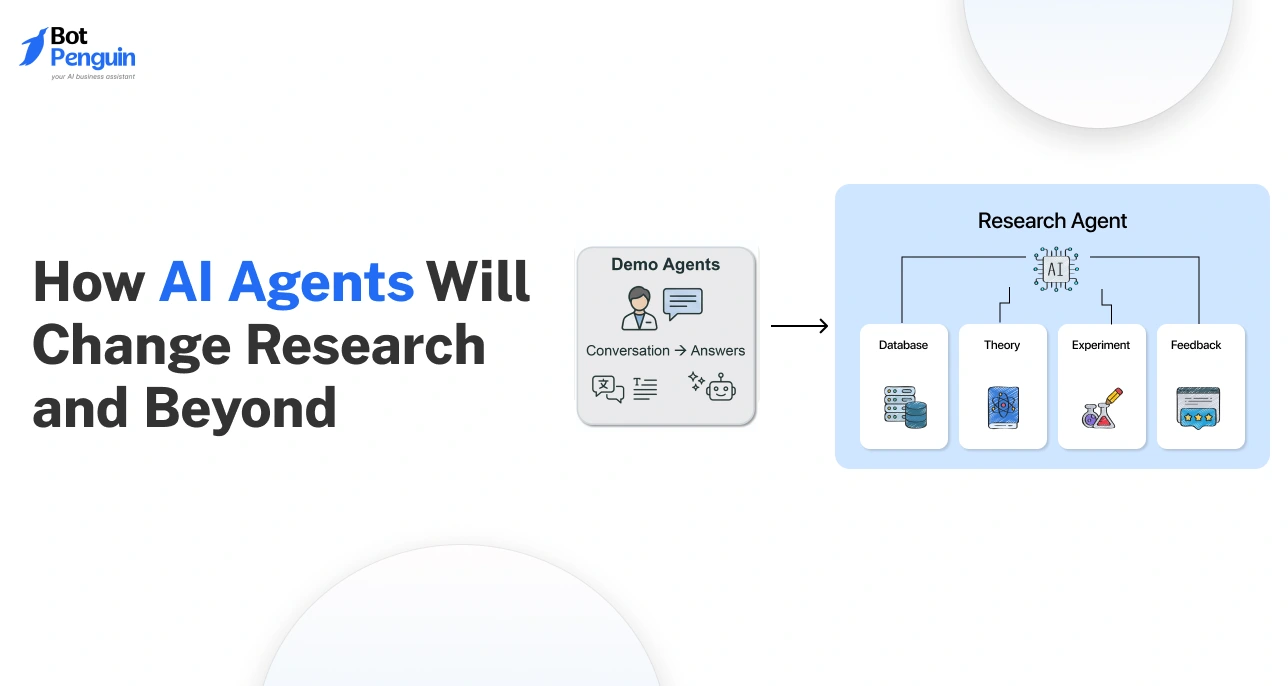
AI agents in research operate differently. They are built to pursue goals, not just answer prompts.
Instead of generating a single output, they plan steps, gather information, analyze results, and decide on next steps.
They can move across tools and datasets with limited supervision while staying aligned to a defined objective.
Imagine a climate researcher tracking extreme weather trends. A traditional AI tool summarizes one dataset on request.
An autonomous system monitors multiple databases, compares historical patterns, flags anomalies, and updates findings as new data appears.
That difference is structural, not cosmetic.
To understand why it matters, we need to look at what makes these systems effective.
The power of AI agents' capabilities comes from structured autonomy.
First, they plan. Given a goal such as identifying potential drug targets, the agent breaks the objective into steps.
It retrieves genomic data, reviews prior studies, and ranks compounds based on predictive models.
Second, they retain context. They maintain memory across steps.
This allows them to connect new findings with earlier conclusions.
This enables intelligent research automation. It shifts the researcher’s role from manual operator to reviewer and decision-maker.
Instead of moving data between tools, the researcher defines the objective and validates the outcome.
Research is repetitive by nature. It involves scanning large volumes of information, identifying patterns, testing assumptions, and refining conclusions.
That structure aligns naturally with AI-driven research systems.
No individual team can review that volume manually.
In enterprise settings, competitive intelligence teams track product updates, pricing shifts, and regulatory changes.
Instead of checking sources weekly, agents can monitor continuously and issue alerts instantly.
The measurable improvement is speed and consistency. Fatigue-related errors decrease. Coverage expands. Insights surface earlier.
Research has always required structured thinking. Now that structure can be embedded into systems themselves.
And once planning, monitoring, and analysis become continuous, the research workflow accelerates. It begins to transform.
Research is not one task. It is a chain of steps. Data collection. Literature review. Hypothesis framing. Testing. Refinement. Reporting.
When these stages become continuous rather than periodic, the entire structure changes.
This is where research workflow automation becomes visible. Not as a single feature, but as a redesign of how work flows from question to conclusion.
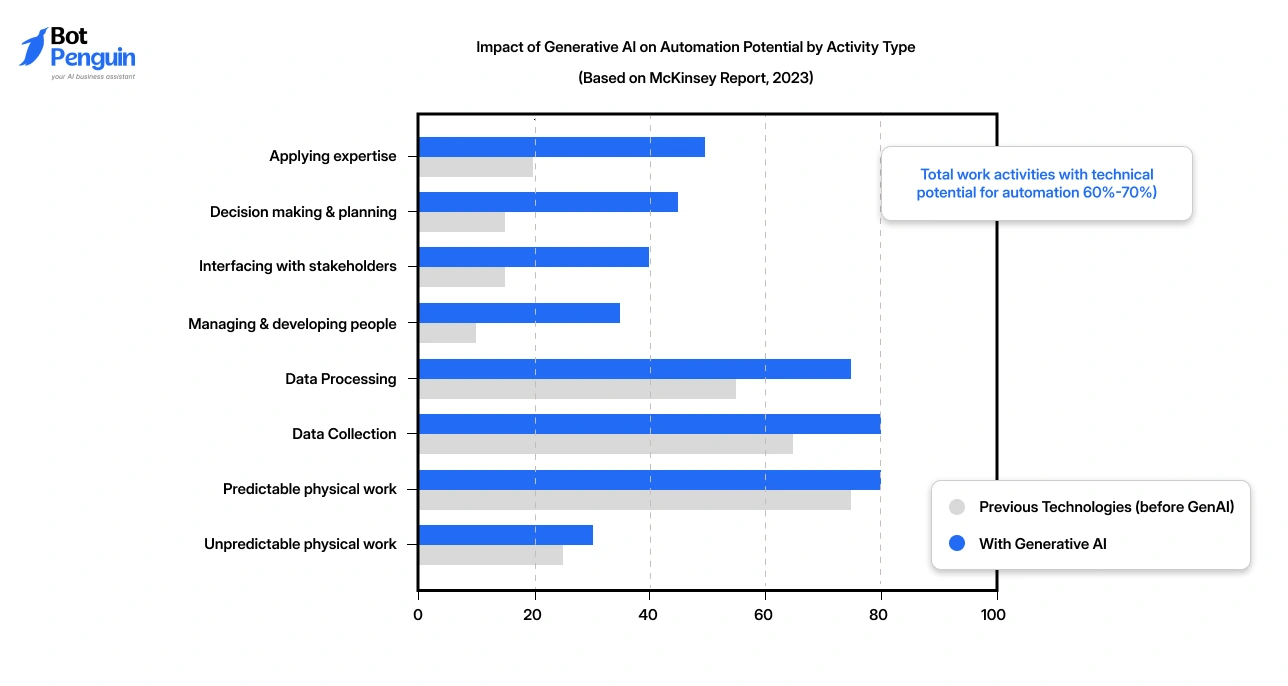
A 2023 McKinsey report estimates that generative AI could automate activities that account for 60-70 percent of employees’ time in knowledge work. (source)
Let us break down how this transformation unfolds across the core research stages.
At the base of every research project lies data collection. Traditionally, this means manual searches across journals, databases, industry reports, and public repositories.
Using automated data collection, AI agents continuously monitor these sources. Instead of running searches once a week, the system tracks updates in real time.
For example, a biotech research team tracking gene therapy studies does not need to revisit databases daily.
The agent scans new publications, extracts relevant findings, and alerts the team when meaningful changes appear.
This shifts AI data analysis from periodic review to ongoing surveillance.
However, according to Elsevier, more than 2.5 million scientific papers are published each year. No team can manually track that volume.
Continuous monitoring expands coverage and reduces blind spots. It also improves consistency.
The system does not skip sources or forget keywords. Data collection becomes persistent rather than event-driven.
Literature reviews are time-intensive. Researchers read dozens or hundreds of papers to understand trends, gaps, and contradictions.
By automating literature review, AI agents summarize studies, cluster themes, and detect inconsistencies across findings.
Imagine a public health researcher studying vaccine hesitancy. The agent aggregates recent studies, identifies patterns in survey results, and highlights regions with conflicting data.
This is AI research synthesis in practice. It does not replace expert reading. It organizes and prioritizes it.
A 2024 survey published in Nature found that many researchers already use AI tools to summarize academic content.
Agents extend this capability by maintaining live knowledge maps.
As new studies appear, the map updates automatically. Instead of rebuilding reviews from scratch, researchers refine them continuously.
Research moves from observation to hypothesis. This stage often depends on pattern recognition.
Using AI to generate hypotheses, agents analyze large datasets and surface correlations that humans might overlook.
For example, in oncology research, an AI system can compare genetic markers across thousands of cases and identify potential associations with treatment response.
Predictive modeling strengthens this process. The system can simulate scenarios based on historical data and estimate likely outcomes.
A study in Science reported that AI models have matched or exceeded human experts in certain pattern recognition tasks, especially in medical imaging. (source) However, human validation remains critical.
Researchers test these hypotheses through experiments and peer review. The agent's role is to expand the idea pool, not to declare truth.
The final shift appears in testing. AI agents can adjust variables, run simulations, and analyze outcomes without waiting for manual instruction at each step.
In materials science, researchers already use AI-driven simulation systems to test compound properties virtually before physical trials.
This reduces cost and accelerates iteration. Closed-loop systems take this further.
If a simulation produces weak results, the agent refines parameters and runs another test automatically.
According to a report by the National Academies, AI-driven simulation is accelerating discovery cycles in areas such as energy storage and pharmaceuticals.
The efficiency gain is measurable. Fewer physical trials. Faster iteration. More informed decision-making.
When these stages connect, research becomes continuous. And once workflows become continuous, the implications extend beyond labs.
They reach competitive intelligence, consumer analysis, and strategic decision-making environments where timing shapes outcomes.
Enterprises do not just study data. They monitor competitors. They track consumer behavior. They scan regulatory updates. Timing matters.
This is where AI agents become practical, not experimental. They monitor websites, pricing pages, earnings calls, customer reviews, and social conversations in real time.
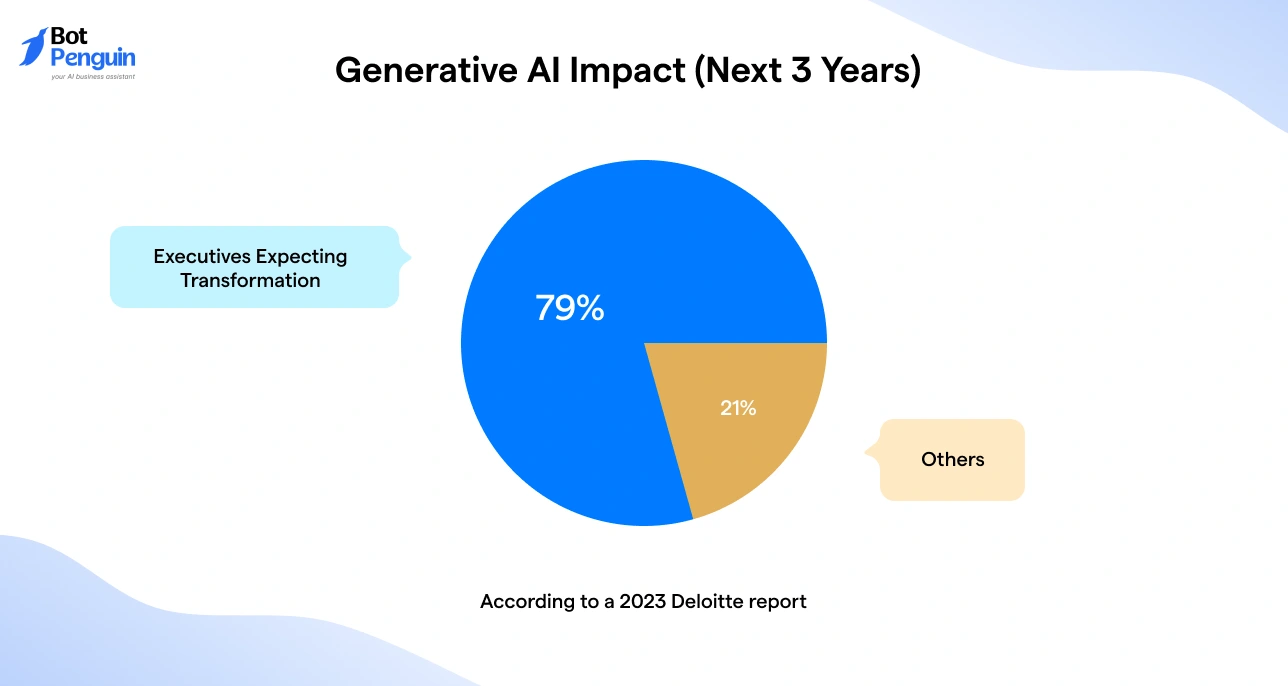
According to a 2023 Deloitte report, 79 percent of executives expect generative AI to transform their organizations within three years. (source)
That expectation is not about content generation. It is about intelligence at scale.
The change is simple. Research moves from reactive analysis to continuous awareness.
Traditional competitive research is periodic. Teams gather updates, build presentations, and circulate insights weeks later.
With automated analysis, AI agents monitor product launches, pricing shifts, and customer sentiment as they happen.
For example, an e-commerce company can track competitor discounts across regions in real time. If pricing changes overnight, alerts are triggered instantly.
The same applies to consumer behavior. AI consumer insights are generated from live reviews, clickstream data, and feedback forms.
Patterns in complaints or preferences surface early.
Gartner predicts that organizations using AI for customer analytics will outperform competitors in revenue growth and retention. (source)
Real-time insight reduces lag. Decisions are informed by current signals, not last quarter’s data.
Beyond monitoring, AI agents forecast. Systems analyze historical sales, search trends, and social data to estimate future demand.
Consider a consumer electronics brand launching a new device. AI trend analysis can detect rising interest in specific features before sales data confirms it.
This early signal supports smarter inventory planning and marketing strategy.
McKinsey estimates that advanced analytics and AI can increase marketing ROI by 10 to 20 percent in many sectors. The benefit is not only speed. It is foresight.
Once this model proves effective in enterprise settings, its impact naturally extends to other industries where research drives critical decisions.
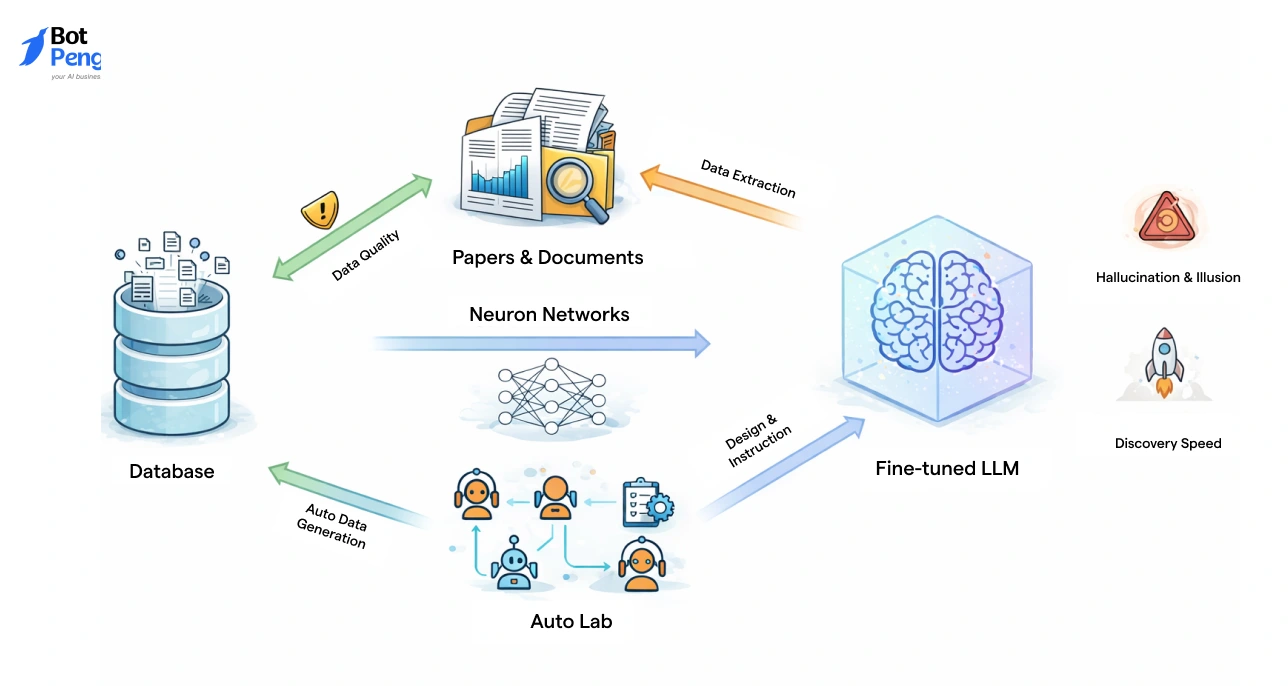
The impact of continuous research workflows extends beyond enterprises. Every industry that depends on data, experimentation, and structured inquiry will feel this shift.
The scale may differ. The speed may vary. But the direction is clear: real changes in productivity, coverage, and discovery timelines.
A 2023 Stanford report noted that AI systems are increasingly used in high-impact research tasks across medicine, climate science, and materials discovery. (source) Let us look at how this plays out across sectors.
In universities and public research labs, time is the most limited resource.
With AI agents, scholars can scan thousands of papers, identify cross-disciplinary links, and generate structured summaries within minutes.
For example, a neuroscience team studying memory formation can automatically connect findings from psychology, genetics, and computational modeling.
This expands context without expanding workload.
According to the National Science Foundation, global research output continues to grow each year, making manual review increasingly difficult.
AI improves research productivity by reducing review time and accelerating idea generation.
Discovery cycles shorten. Collaboration becomes easier across disciplines.
Healthcare research demands speed and precision.
Researchers can analyze chemical compounds, protein structures, and clinical data at scale with AI agents.
AI agents can screen thousands of molecules virtually before physical trials begin.
In 2020, an AI identified potential antibiotic compounds in a fraction of the time required by traditional screening methods, according to MIT researchers. (source)
Medical research automation also supports clinical trial analysis. AI systems detect anomalies in patient data and predict adverse reactions earlier.
The measurable gains are reduced costs and faster iteration.
Human experts still validate results. But the search space narrows faster.
With modern AI research platforms, smaller teams and startups can perform complex analysis that once required large budgets.
For example, a climate tech startup can simulate energy storage performance using AI-driven models instead of building multiple physical prototypes.
Democratized research tools reduce barriers. Access to computation and pattern detection becomes scalable.
Cloud-based infrastructure and open datasets further lower entry costs.
For research teams scaling AI workloads beyond simple experimentation, distributed inference explained can help clarify how large models are served efficiently across multiple GPUs, nodes, or servers.
The result is broader participation in advanced research.
When speed and scale improve across academia, healthcare, and startups, the transformation becomes systemic.
Yet even as these gains become visible, some research foundations remain steady. That balance is critical to understand next.
As speed and scale increase, it is easy to assume that everything will be automated. That is not the case.
Even in a world of continuous monitoring and predictive modeling, core research principles remain stable.
Curiosity, skepticism, peer review, and ethical responsibility do not disappear. This is where research ethics in AI becomes central.
Autonomous systems can assist, but they do not carry accountability. Humans do.
A 2023 Pew Research Center study found that many experts remain concerned about AI transparency and misuse in high-impact domains.
The message is clear. Capability does not replace responsibility.
As AI agents become embedded in workflows, trust depends on oversight, transparency, and reproducibility. These elements anchor research credibility.
AI systems can surface patterns and generate insights. They cannot judge context the way domain experts can.
Strong AI oversight ensures outputs are reviewed before decisions are made.
Researchers must independently validate findings, question anomalies, and test assumptions.
This is where explainable AI research matters. If a model suggests a drug target or market trend, the reasoning must be traceable.
Without transparency, confidence erodes.
Human review remains the final checkpoint.
Automation introduces new questions. Who owns discoveries generated with AI assistance?
How is AI intellectual property defined when systems contribute to insights?
Bias is another concern. If training data is skewed, conclusions may reflect hidden assumptions.
Studies have shown that AI systems can amplify dataset bias if not carefully managed. (source)
Reproducibility remains essential. Other researchers must be able to replicate findings, even when AI tools are involved.
Speed matters. Scale matters. But trust still defines research.
And as that trust framework holds steady, the people guiding these systems begin to play a different role in shaping the future of discovery.
The future of research jobs will not revolve around manual data collection or repetitive analysis. Those tasks are increasingly being automated.
The human role becomes strategic.
Researchers will define objectives, set constraints, review outputs, and decide which insights matter.
Instead of running every test manually, they supervise systems that run tests at scale.
According to the World Economic Forum, analytical thinking and AI-related skills are among the fastest-growing job requirements globally. (source)
This does not mean fewer researchers. It means different responsibilities. The core shift is from execution to orchestration.
Becoming a research orchestrator means managing systems rather than performing every step yourself.
Through research orchestration, a scientist might coordinate multiple AI agents. One monitors literature. Another runs simulations. A third analyzes anomalies.
The researcher sets goals, defines boundaries, and evaluates outputs. They decide which insights deserve further testing.
Structured AI collaboration replaces isolated effort. The value lies in judgment, prioritization, and context.
Technical depth remains important. But so does adaptability.
Strong AI literacy will become foundational. Researchers must understand how models are trained, where bias may exist, and how outputs are generated.
Validation skills matter more than ever. Knowing how to question results and design reproducible experiments becomes central.
Governance awareness also grows in importance. Understanding ethical boundaries and compliance requirements protects credibility.
As roles evolve, the complexity of these systems increases. As complexity rises, so do the structural challenges organizations must address carefully.
AI agents can scale analysis, but they can also scale errors. If a flawed assumption enters the workflow, it may influence thousands of outputs before anyone notices.
Transparency is another concern. When complex models generate conclusions, researchers must understand how those conclusions were reached. Without clarity, trust weakens.
A 2023 report by the National Institute of Standards and Technology emphasized the need for structured AI risk management frameworks in high-impact domains. (source)
Governance is still catching up. Many institutions are building policies as they adopt systems. However, the key is balance.
Use automation for speed and scale, but design safeguards that protect integrity.
One of the most serious issues is AI bias in research.
If training data overrepresents certain populations or excludes key variables, outputs may reflect distorted patterns.
In healthcare, this could lead to misinterpretation of treatment effectiveness across demographic groups.
Studies have shown that biased datasets can lead to unequal performance in AI-driven medical tools. (source) Thus, safeguards such as diverse datasets, independent review, and reproducibility checks should be implemented to reduce risk.
Bias cannot be eliminated. It must be actively managed.
Clear AI research governance standards are still developing across industries and countries.
Questions about accountability, documentation, and compliance remain open in many institutions.
Explainable AI research practices help address part of this gap. When decisions are traceable and assumptions documented, oversight improves.
Governments and global bodies are drafting AI policies, but implementation varies widely.
Organizations cannot wait for perfect regulation. They must build internal frameworks that define responsibility and review processes.
The structural challenge is not whether to use AI. It is about using it responsibly.
When safeguards, oversight, and governance mature alongside capability, research can scale without sacrificing trust.
Research is not being replaced. It is being redesigned.
Throughout this guide, we explored how workflows are becoming continuous, how industries are adopting autonomous systems, where risks require oversight, and how roles are shifting toward supervision and orchestration. The transformation is structural, not cosmetic.
Understanding how AI agents will change research is not about short-term hype.
It is about automation maturity, responsible governance, and stronger human AI collaboration beyond 2026.
The pace of change is accelerating. Organizations that prepare early will adapt more smoothly.
Now is the time to evaluate your research processes and identify where intelligent systems can support smarter, faster decisions.
No. AI agents are designed to assist, not replace. They automate repetitive and data-heavy tasks, but critical thinking, ethical judgment, and validation remain human responsibilities. The future of research jobs will focus more on supervision, interpretation, and decision-making rather than manual execution.
Accuracy depends on data quality, model design, and validation frameworks. AI-driven research systems can process large datasets efficiently, but unreliable outputs may occur if safeguards are weak. Human review and structured testing are essential to maintain credibility and reduce AI research risks.
Yes. Many AI research platforms are cloud-based and scalable. Smaller teams can access advanced data analysis, simulation, and literature review automation without heavy infrastructure investment. Democratized research tools are reducing barriers to entry for startups and academic labs.
AI agents must operate within secure environments. Organizations should ensure compliance with data protection laws and apply strong governance standards. Secure AI research governance frameworks help protect intellectual property, personal data, and institutional integrity.
Healthcare, biotech, climate science, finance, and market research are strongly impacted by data volume and complexity. AI research transformation delivers faster analysis, continuous monitoring, and improved decision support in these sectors.
Automated data gathering uses AI agents to monitor sources continuously rather than relying on manual searches. This improves coverage and reduces missed insights. Research workflow automation shifts data collection from periodic checks to real-time intelligence.
Organizations can track faster decision cycles, improved forecasting accuracy, reduced manual hours, and increased marketing performance. Predictive market research and automated competitive analysis often lead to measurable gains in strategic planning efficiency.
Key AI research risks include biased datasets, overreliance on automation, weak validation processes, and unclear ownership of AI intellectual property. Addressing these early through governance, oversight, and structured review frameworks reduces long-term operational risk.
Subscribe to Our Newsletter
Get the latest business insights straight into your inbox.
Checkout our related blogs you will love.
Updated at Sep 30, 2026
18 min to read
Updated at Jul 16, 2026
11 min to read
.webp)
Updated at Jul 1, 2026
9 min to read
Updated at Jul 1, 2026
13 min to read
Updated at Jun 19, 2026
13 min to read
Updated at Sep 26, 2026
13 min to read
Table of Contents