eCommerce Automation for Your WooCommerce Store
Updated at Oct 9, 2026
11 min to read
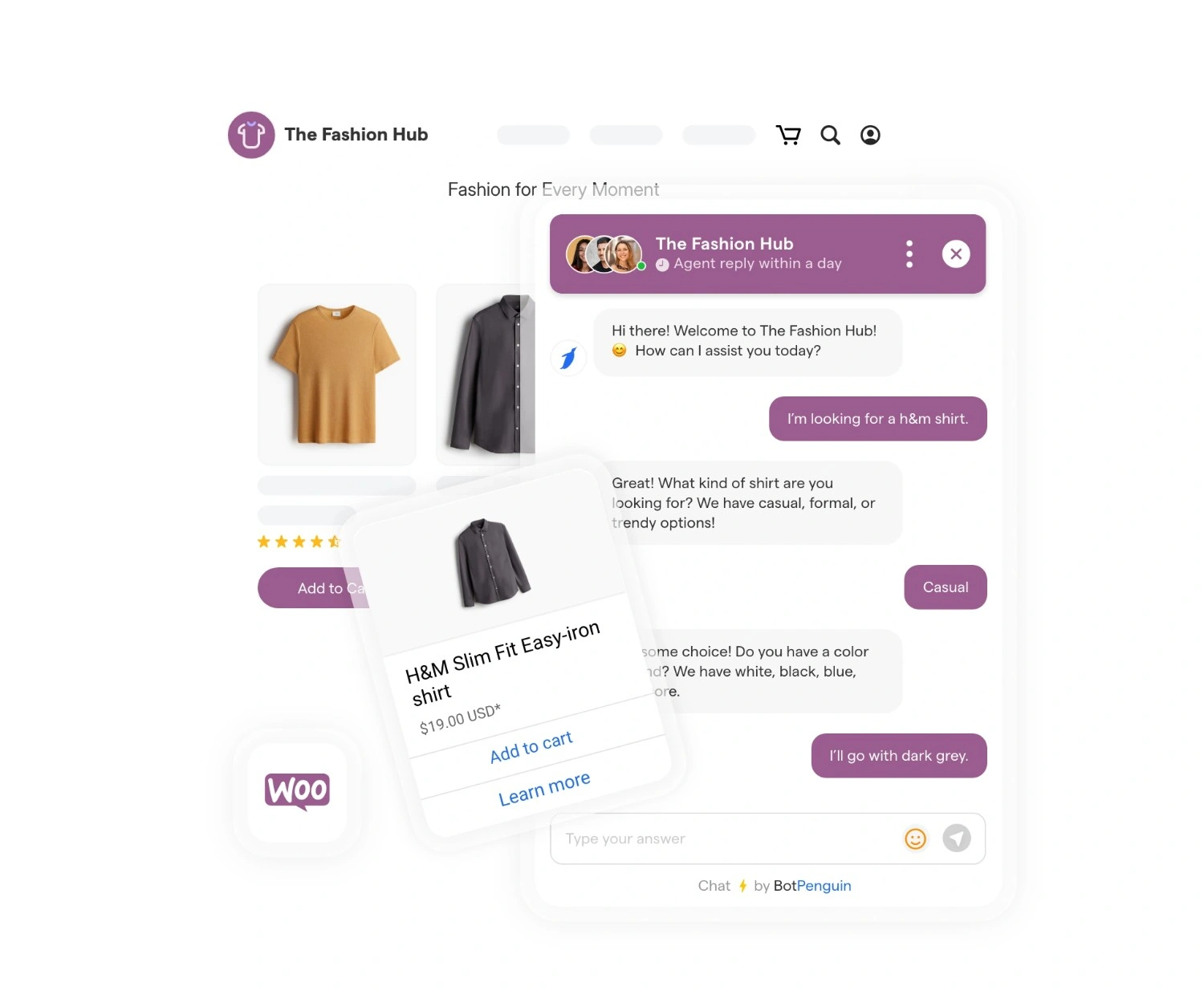
A WooCommerce WhatsApp integration connects your WooCommerce store to WhatsApp so customers can chat, order and get updates there. There are three ways to do it: a click-to-chat button plugin, an order-notification plugin on the WhatsApp Cloud API, or a WhatsApp chatbot platform that automates order updates, cart recovery and customer replies.
WooCommerce stores increasingly use WhatsApp to answer questions, share updates, and stay connected with shoppers.
The problem is that not every WooCommerce WhatsApp integration works the same way. Some only open chats, while others automate notifications.
Choosing the wrong setup can create extra manual work, missed updates, and disconnected customer conversations.
The right approach depends on what your store actually needs. You may need simple chats, order notifications, or automated support.
This guide compares three ways to connect WooCommerce with WhatsApp. It also explains how BotPenguin handles store messages and customer support.
It connects store activity with customer conversations on WhatsApp.
The exact capability depends on how WhatsApp connects with WooCommerce. A simple button behaves differently from an automated messaging setup.
Order confirmation is often the first message customers expect after checkout.
WhatsApp can send that confirmation after WooCommerce records the purchase.
The message can include:
This gives buyers immediate confirmation without requiring them to check email.
Customers usually want to know what happens after their order is confirmed.
A WooCommerce WhatsApp order notification can share:
Each update should reflect the actual order status inside WooCommerce.
Some customers add products to their cart but leave before completing payment.
WhatsApp can remind them about the unfinished purchase.
A cart recovery message can include:
Businesses initiating these messages usually need an approved template through the WhatsApp Business API.
Cart reminders should stay relevant and limited. Repeated messages can quickly become intrusive.
Not every store needs automated messaging.
Smaller stores may simply want customers to move from a product page into WhatsApp.
A click-to-chat button can:
Replies are still handled manually in simpler setups.
Many WhatsApp conversations involve predictable questions about orders, products, returns, or exchanges.
Customers may ask:
A chatbot platform can answer supported questions automatically when the required store data is available.
More complex requests can move to a human agent.
There is no single method for connecting WhatsApp with WooCommerce.
Some stores need customer initiated chats. Others need notifications, cart recovery, and automated responses.
The main difference is who starts the conversation and what happens automatically.
A simple button waits for the customer to message first.
An order notification tool can send approved messages after specific store events.
A chatbot platform supports notifications and customer replies through the same connected setup.
Start with the customer action you need WhatsApp to support.
Choose the simplest method that covers your current requirements.
The WhatsApp Business API becomes important when your store needs to initiate messages.
Businesses can use approved templates to send eligible messages through the API.
A standard click to chat button waits for the customer to begin the conversation.

If you choose the plugin route, start with the exact function you need.
Different plugins support different levels of WhatsApp messaging.
Start by deciding what customers should do through WhatsApp.
This choice affects every step that follows.
Install your selected plugin from WordPress and open its WooCommerce settings.
Before continuing, confirm that it supports the function selected in Step 1.
Check for:
This prevents you from configuring a plugin that cannot support the required workflow.
The connection details depend on the plugin type.
Use only the fields requested by the plugin documentation.
Next, decide where WhatsApp appears or when messages are sent.
Common button placements include:
Common notification triggers include:
Keep each message connected to the WooCommerce event that caused it.
Test every path before making the setup available to customers.
Check that:
Place a test order and review the complete experience from the customer side.
BotPenguin connects your WooCommerce store with a WhatsApp chatbot for store messages and customer conversations.
The integration supports WhatsApp chatbots only.
You need:
Eligible plans include Little, King, WA Little, and WA King.
The WooCommerce integration is not included on the free plan.
Log in to BotPenguin and open your WhatsApp chatbot. Go to Integrations, select WooCommerce, and download the BotPenguin WooCommerce plugin.
Open your WordPress dashboard and navigate to Plugins, then Add New and Upload Plugin.
Upload the downloaded plugin, click Install Now, and activate it.
Copy the API key from your BotPenguin WhatsApp chatbot.
Open the installed WooCommerce plugin settings in WordPress. Enter the BotPenguin API key and any other required connection details. Save the configuration.
Return to BotPenguin and choose the order notifications or cart reminders you want to automate.
Select approved WhatsApp templates, map customer and order variables, and configure the supported chatbot flows.
Place a test order in WooCommerce. Check that the WhatsApp notification reaches your test number and displays accurate order information.
BotPenguin can trigger different WhatsApp messages when supported customer or order events occur.
These messages keep routine order information inside WhatsApp.
Customers can receive important updates without repeatedly checking email.
WhatsApp messages initiated by a business require approved templates.
Each template should communicate one clear update.
Hi {{1}}, thanks for your order #{{2}}. We received it and will message you when it ships.
Good news, {{1}}. Order #{{2}} is on its way. Track it here: {{3}}
Hi {{1}}, you left {{2}} in your cart. Continue here: {{3}}
Keep each template short and specific to the customer action.
Avoid repeated recovery messages when one reminder is enough.
Marketing and utility messages can follow different Meta pricing rules.
Check Meta WhatsApp pricing before planning message volume.
WhatsApp can become a support channel after customers start using it for orders and store questions.
The workflow should clearly separate routine requests from issues that require a person.
Order questions often follow the same pattern.
Customers may ask:
Connected order information can help answer supported status questions without requiring customers to search their inbox.
Support conversations are not limited to delivery updates.
Customers may also ask about:
Keep automated answers limited to information your connected setup can reliably provide.
Some questions need human review.
Payment disputes, unusual return cases, or missing order information should move to your support team.
Make the handoff clear so customers do not repeat the entire issue.
For broader store chatbot use cases, see the WooCommerce chatbot guide.
You can also review BotPenguin's WooCommerce chatbot for store-focused conversational workflows.
A plugin should match the exact workflow your store needs.
Use this checklist before committing to a tool.
Choose based on the customer action you want to support.
✓ Click to chat: Use when customers mainly need direct access to your team.
✓ Notifications: Use when you need order confirmations or shipping updates.
✓ Automated replies: Use when customers repeatedly ask supported order or product questions.
Check API support when your business needs to initiate automated messages.
Confirm:
✓ How the API connection works
✓ Which credentials are required
✓ Whether WhatsApp Cloud API is supported
✓ Which messaging restrictions still apply
Do not assume every WhatsApp plugin supports API based messaging.
Template support matters for messages initiated by the business.
Check support for:
✓ Order confirmations
✓ Shipping alerts
✓ Cart recovery
✓ Transactional updates
Also confirm that template variables can use the required WooCommerce information.
The available triggers should match your communication plan.
Check for:
✓ New order
✓ Order processing
✓ Fulfillment
✓ Shipping
✓ Refund
✓ Cart abandonment
Do not pay for a workflow that cannot detect the events you actually need.
Notifications can generate customer responses.
Check:
✓ Where replies appear
✓ Whether team members can respond
✓ Whether conversation history remains available
✓ How automated conversations reach a person
This becomes more important as message volume grows.
Compare the complete cost.
✓ Plugin or platform fee: Software subscription or purchase cost
✓ Meta messaging charges: Charges determined by Meta rules
✓ BotPenguin plan cost: Paid plan required for this integration
Check current pricing before choosing a setup based only on initial software cost.
WhatsApp can support customer conversations, order updates, product questions, and support requests.
The exact benefits depend on the plugin or messaging setup you choose.
Yes. Compatible setups can send confirmations, shipping updates, and delivery information through WhatsApp.
Messages initiated by businesses may require approved WhatsApp templates.
Yes. Supported WooCommerce events can trigger WhatsApp notifications through compatible tools.
Common triggers include orders, fulfillment changes, shipping updates, returns, and cart abandonment.
It gives shoppers a direct place to ask questions and receive purchase information.
Customers can request support, follow orders, or return to an unfinished purchase through WhatsApp.
Compatibility depends on the plugin or integration.
Check which WooCommerce data the tool can access before using inventory information inside WhatsApp conversations.
Product availability should always reflect current WooCommerce data.
Not completely.
Meta messaging charges can vary by message category and customer country.
Rules around the 24 hour customer service window can also affect how messages are handled.
BotPenguin subscription costs are separate from Meta messaging charges.
Check the current Meta WhatsApp pricing before publication.
Yes.
An Order on WhatsApp button can send product or cart details into a conversation.
Your team can then confirm the order manually.
BotPenguin supports more automated WhatsApp store flows where configured.
Payment and the order record remain inside WooCommerce.
Not currently.
BotPenguin currently supports one WooCommerce store per account.
If you manage several stores, contact BotPenguin support to discuss available setup options.
You can connect WooCommerce to WhatsApp through a button plugin, notification plugin, or chatbot integration. With BotPenguin, download the BotPenguin WooCommerce plugin, activate it in WordPress, then set up message templates and chatbot flows in BotPenguin.
A button plugin works well when customers mainly need to start WhatsApp conversations.
Choose an order notification plugin when confirmations and shipping updates are your main requirement.
A chatbot platform fits stores needing notifications, cart recovery, and supported automated replies together.
A WhatsApp WooCommerce integration should match the exact customer journey your store needs.
If you want order updates, cart recovery, and customer support on one WhatsApp number, connect your WooCommerce store with BotPenguin's WhatsApp chatbot and start your 7-day free trial.
Connect WooCommerce to WhatsApp
Send order updates, recover carts, and handle customer conversations through your WhatsApp chatbot.
Get Started FreeCheckout our related blogs you will love.
Updated at Oct 9, 2026
11 min to read
Updated at Oct 7, 2026
8 min to read
Updated at Oct 6, 2026
6 min to read
Updated at Sep 10, 2026
11 min to read
Updated at Aug 13, 2026
12 min to read
Updated at Aug 13, 2026
12 min to read
Table of Contents