

Introduction
Most people choose DeepAsk AI without truly understanding what its features actually do in real use. That gap between expectation and reality is where poor decisions usually begin.
This guide takes a practical look at DeepAsk chatbot features, without hype or theory.
You will see what DeepAsk actually offers, how its capabilities work in real scenarios, and where it fits best. We break down core features, the outcomes they enable, the benefits for teams, and real-world use cases.
The goal is simple. Help you evaluate DeepAsk clearly and decide if it is the right fit before committing.
What is DeepAsk Chatbot and Who is It Built for
DeepAsk AI is a knowledge-driven chatbot that answers questions using existing content.
It helps users get clear answers from documents, help centers, or internal knowledge without searching through multiple sources. This matters because most teams already have the information they need. The problem is access.
Instead of scanning files or asking the same questions again, users can ask DeepAsk directly and get a focused response.
Core Purpose of DeepAsk
The core purpose of DeepAsk is to remove friction from knowledge access.
Information often lives across tools and formats. DeepAsk brings it together through a single question-and-answer interface.
Rather than browsing pages or searching folders, users ask what they need and get a direct reply. This keeps interactions short and efficient.
The chatbot does not guide long flows. It focuses on accuracy, relevance, and speed.
Ideal Users and Business Fit
DeepAsk is best suited for teams that depend on structured knowledge.
Support teams, internal operations, product teams, and training groups benefit the most. A support agent can quickly check a policy. An employee can confirm a process step. A customer can find a specific detail without waiting.
If your goal is to surface answers faster and reduce repeat questions, DeepAsk chatbot features make sense. It works well when content already exists and just needs to be easier to find.
With that context set, the next step is to look at how DeepAsk delivers this through its feature set.
DeepAsk Chatbot Features Breakdown
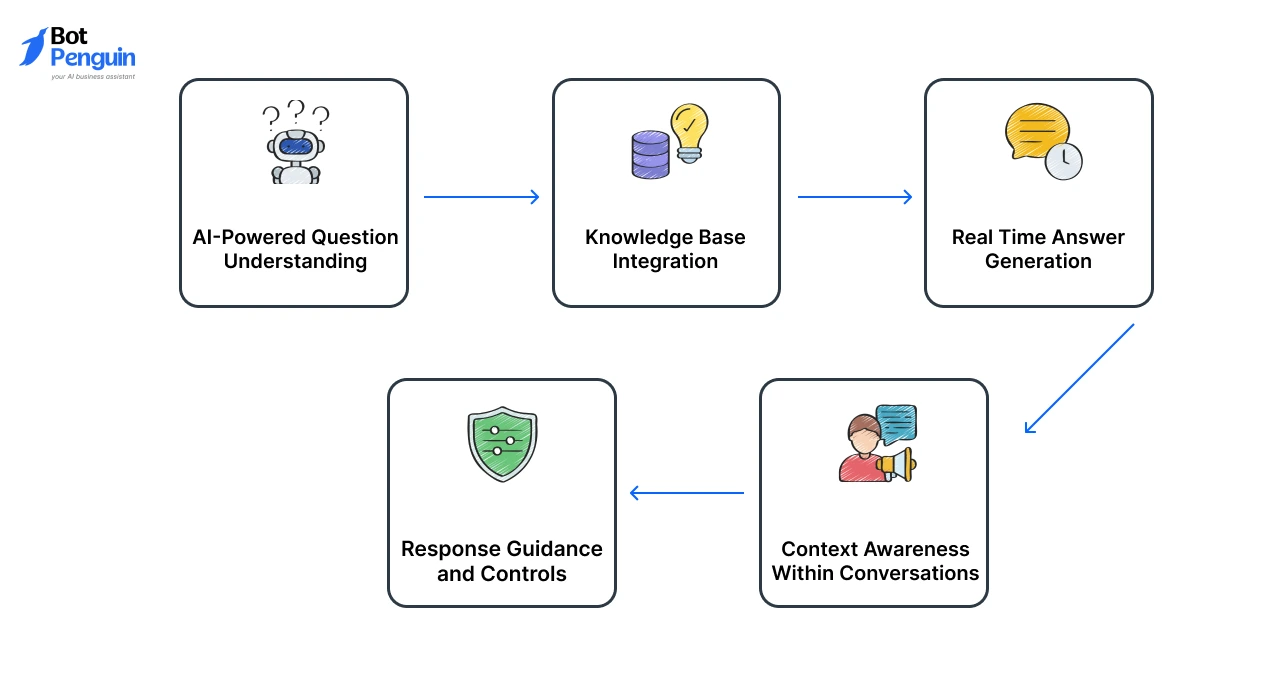
The DeepAsk chatbot features are built around one core idea. Make existing knowledge easy to access through simple questions.
Each feature supports that goal in a focused way. There is no attempt to automate or force long conversations. Instead, the emphasis stays on clarity, speed, and relevance.
Below is a breakdown of the key features, illustrated through real use cases.
AI-Powered Question Understanding
At the heart of DeepAsk is its ability to understand questions the way people naturally ask them.
Users do not need to phrase queries in a specific format. They can ask in plain language, just like they would ask a colleague.
For example, a support agent might type a full sentence instead of a keyword search. An employee might ask a follow-up question without restating the full context.
The DeepAsk AI chatbot focuses on understanding intent rather than matching exact words. This leads to clearer answers and fewer back-and-forth exchanges.
What matters here is not the complexity behind the scenes, but the outcome. Users feel understood, and answers feel relevant instead of generic.
Knowledge Base Integration
DeepAsk connects directly to existing knowledge sources. This includes internal documents, help articles, guides, and structured content teams already maintain.
Setup is designed to be simple. Once content is connected, DeepAsk uses it as the single source of truth for responses. This helps avoid situations where different users get different answers to the same question.
For instance, when multiple team members ask about a policy, the response stays consistent. That reliability is a key part of DeepAsk chatbot features, especially for teams that care about accuracy.
The chatbot does not invent information. It pulls from what already exists and makes it accessible.
Real Time Answer Generation
Speed plays a big role in how useful a chatbot feels.
DeepAsk generates answers as soon as a question is asked, without visible delays or waiting steps.
This matters in real scenarios. A customer does not want to wait while searching through pages. An employee does not want to dig through folders while working on a task.
With DeepAsk chatbot features and capabilities, responses are delivered smoothly in real time.
The focus stays on relevance. Answers are short, direct, and tied to the question. This makes the experience feel efficient instead of overwhelming.
Context Awareness Within Conversations
DeepAsk keeps track of context within a conversation. This means users can ask follow-up questions without repeating themselves.
For example, after asking about a policy, a user can request clarification or additional details. The chatbot understands what the follow-up refers to. This improves flow without turning the interaction into a long conversation.
The DeepAsk AI chatbot does not attempt complex memory across sessions. It focuses on making single conversations feel natural and connected. That balance keeps interactions helpful and predictable.
Response Guidance and Controls
Teams can guide how DeepAsk responds. This includes setting expectations around tone and clarity. For instance, responses can be kept concise for internal teams or more explanatory for external users.
The goal is not deep customization, but practical control. These DeepAsk chatbot features help teams shape responses without adding complexity or maintenance overhead.
This makes the chatbot easier to trust, since answers follow a consistent style aligned with how the team communicates.
Deployment Across Touchpoints
DeepAsk can be deployed wherever users need access to knowledge. This might include a website, an internal portal, or a support interface.
The experience stays consistent across these touchpoints. Users ask questions the same way and get answers in the same format.
The DeepAsk chatbot does not try to manage full journeys across channels. It focuses on being reliable wherever it is placed. That consistency helps users adopt it faster, since there is no learning curve between platforms.
Together, these features show how DeepAsk AI stays focused on one job: making knowledge easy to access through simple questions.
With the features clear, it becomes easier to see what these tools enable teams to do in practice, which naturally leads to how DeepAsk supports everyday workflows and outcomes.
DeepAsk Chatbot Capabilities Explained
The features of DeepAsk show how the product works. Capabilities show what that work actually leads to in real situations. This distinction matters because teams do not adopt chatbots solely for features. They adopt them for outcomes.
The DeepAsk chatbot features and capabilities come together to remove friction from everyday tasks where people just need the right answer at the right time.
Below is how those capabilities show up in daily workflows.
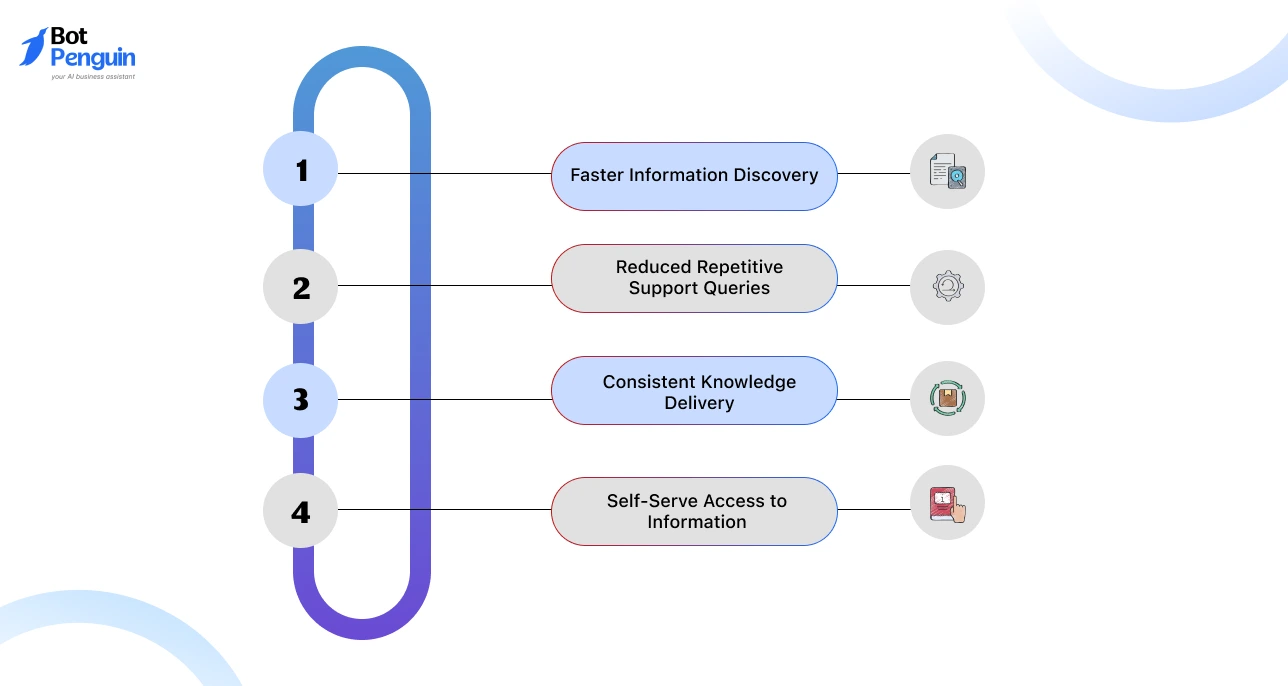
Faster Information Discovery
Most time is wasted not on work, but on searching. DeepAsk reduces this friction by turning questions into direct answers.
Instead of opening multiple documents or searching past tickets, users simply ask. For example, a support agent can check a policy detail mid conversation.
An employee can confirm a process step without breaking focus. The DeepAsk AI chatbot shortens this gap between question and answer.
This speed compounds over time. Fewer interruptions. Less context switching. Information becomes part of the workflow instead of a separate task.
Reduced Repetitive Support Queries
Many support teams answer the same questions every day. Password rules. Refund policies. Feature limits. DeepAsk helps absorb these repeat queries before they reach humans.
Customers or internal users get answers directly from existing content. When questions go beyond that scope, human teams step in. This balance is important.
The DeepAsk chatbot features support teams rather than replacing them. Over time, this reduces load without lowering quality. Human effort is spent on edge cases, not repetition.
Consistent Knowledge Delivery
Inconsistent answers create confusion and risk. DeepAsk helps avoid this by using a single source of truth.
When multiple users ask the same question, they get the same response. This applies across teams and touchpoints. Whether it is a new employee or a long-time customer, the information stays aligned.
This consistency is a direct outcome of DeepAsk chatbot features and capabilities working together. Trust builds because answers do not change based on who asks or when.
Self-Serve Access to Information
DeepAsk enables users to help themselves. They do not need to wait for responses or depend on availability.
A customer can check details outside business hours. An employee can get answers during independent work. The DeepAsk AI chatbot makes knowledge available on demand without requiring additional effort from teams.
This independence improves the user experience and reduces pressure on internal resources.
Taken together, these capabilities explain why DeepAsk fits so well into knowledge-driven environments.
They show the practical impact of the features discussed earlier and set the stage for understanding the broader value teams gain when these outcomes compound over time.
Benefits of Using DeepAsk Chatbot
Capabilities show what DeepAsk can do. Benefits show why that matters to a business. This is where features translate into real impact across teams and daily operations.
The value of DeepAsk chatbot features becomes clear when you look at how work actually happens. People search for answers. Teams repeat explanations. Knowledge gets stuck with a few individuals.
DeepAsk helps remove these small but constant inefficiencies. Not through heavy automation, but by making information easier to access and more trustworthy.
Below are the key benefits teams experience once DeepAsk becomes part of their workflow.
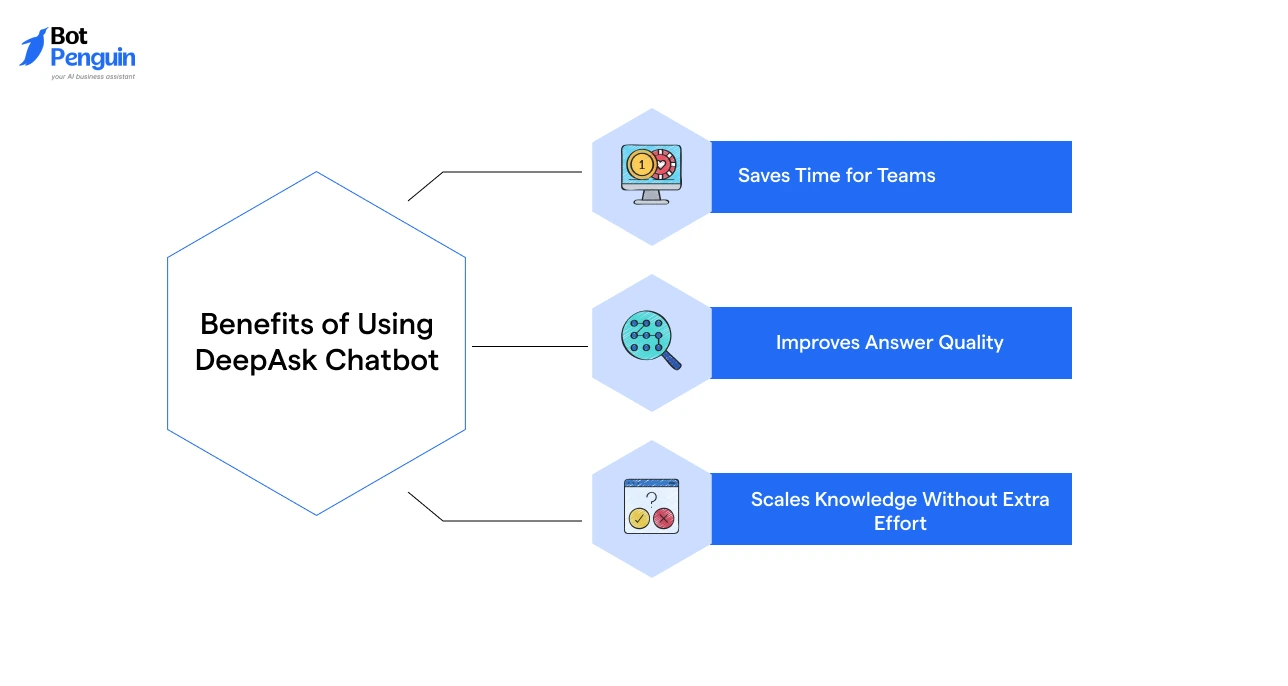
Saves Time for Teams
Time is often lost searching for answers that already exist. DeepAsk reduces that loss by turning questions into direct responses.
A support agent no longer needs to scan old tickets. An employee does not have to read long documents to find one detail. With DeepAsk chatbot features, answers surface quickly, right when they are needed.
This also reduces repeated questions across teams. Once knowledge is easy to access, fewer people ask the same thing again. The time saved may seem small per interaction, but it adds up across days and teams.
Improves Answer Quality
Speed alone is not enough. Answers also need to be correct and consistent.
DeepAsk improves quality by relying on a single source of truth. When information changes, responses change with it. Users are not guessing which version is right.
For customers and internal teams alike, this builds trust. Clear answers reduce confusion and the need for follow-up questions.
The DeepAsk AI chatbot helps ensure that what people hear is accurate, up to date, and aligned with how the business wants to communicate.
Scales Knowledge Without Extra Effort
DeepAsk allows knowledge to scale without adding headcount. Existing content is reused across more users and more interactions.
The DeepAsk chatbot features and capabilities support growth by spreading access to information, not workload. New employees onboard faster. Customers find answers on their own. Teams stay focused on higher-value work.
These benefits explain why DeepAsk fits well into knowledge-heavy environments. They also make it easier to see how different teams apply the chatbot in practice.
Real World Use Cases of DeepAsk Chatbot
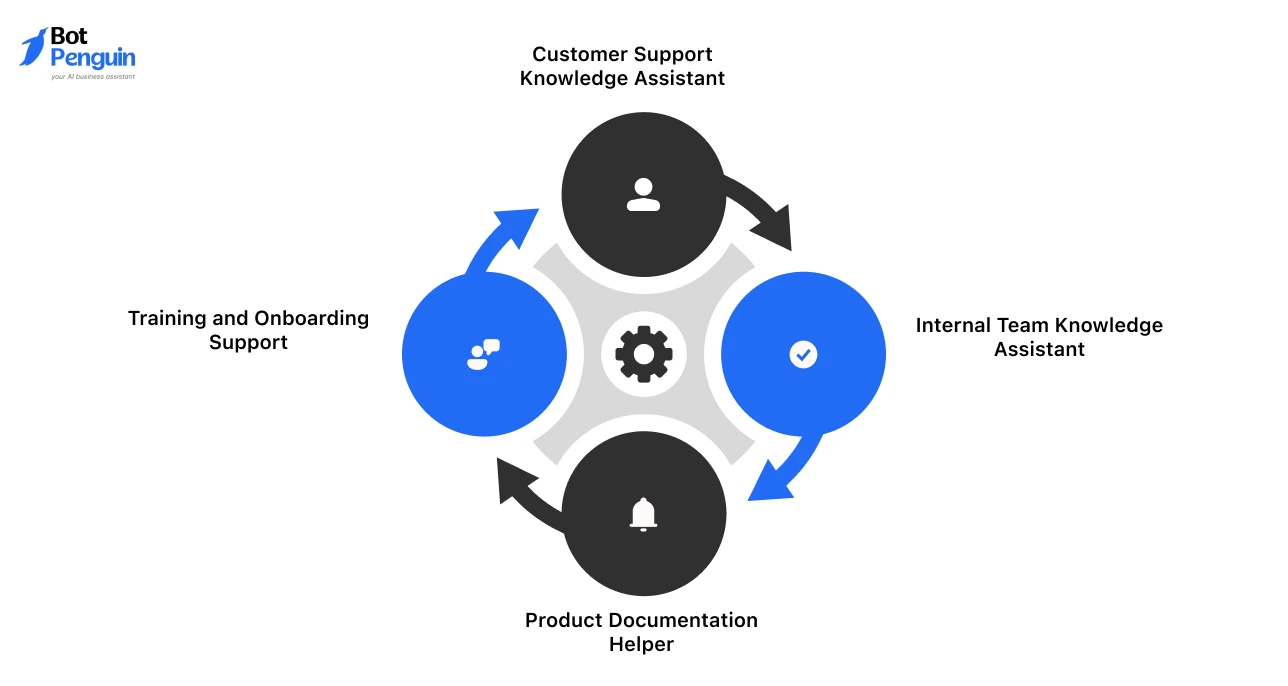
The DeepAsk chatbot features fit naturally into environments where knowledge already exists but is hard to access. Instead of changing workflows, DeepAsk supports them.
It sits quietly in the background and steps in when someone asks a question.
Below are some of the most common ways teams put it to work.
Customer Support Knowledge Assistant
Customer support teams deal with repeat questions every day. DeepAsk helps answer these using existing help content.
A customer asks a question on the website. The DeepAsk AI chatbot pulls the answer from the help center and responds instantly. If the question goes beyond that scope, the conversation moves to a human agent.
This keeps response times low while preserving quality. Support teams stay focused on complex issues instead of repeating the same information.
Internal Team Knowledge Assistant
Inside organizations, information often lives across tools and documents. Teams use DeepAsk to bring this knowledge together.
An employee can ask about a policy or workflow step and get a direct answer. With DeepAsk chatbot features, internal questions no longer interrupt teammates or slow work.
The information is available when needed, without searching or waiting.
Product Documentation Helper
Product documentation is essential, but it's rarely read end-to-end.
Users usually look for one specific detail. DeepAsk helps by turning documentation into answers.
A user can ask how a feature works or where to find a setting. The chatbot responds using existing content.
These DeepAsk chatbot features and capabilities reduce frustration and help users move forward without having to dig through manuals or guides.
Training and Onboarding Support
New hires and users often have similar questions during onboarding. This creates pressure on managers and trainers. The DeepAsk AI chatbot supports this phase by answering common questions on demand.
New team members learn at their own pace. Trainers focus on guidance, not repetition.
These use cases show how DeepAsk fits into real work without adding complexity.
They also highlight the boundaries of what the chatbot is designed to handle, making it easier to think through what to evaluate before adoption.
What to Consider Before Using DeepAsk
Not every chatbot is meant for every problem. DeepAsk chatbot is designed for clear knowledge access, and it works best when expectations match that purpose.
- First, content readiness matters. DeepAsk relies on existing documents and guides. If knowledge is outdated or scattered, answers will reflect that. Teams should plan time to organize content before rollout.
- Second, scope is important. DeepAsk responds to questions. It does not manage workflows or trigger actions. If a team expects the chatbot to guide users through complex journeys, that gap will quickly become apparent.
- Lastly, adoption depends on how teams plan to use it. DeepAsk works quietly in the background. It supports people when they ask for help, not before. For many teams, that focus is exactly what they need.
However, as teams grow, their expectations of AI often change. Answering questions is only one part of the journey. Some teams start looking for AI that can engage users proactively, guide conversations, and support actions beyond information delivery.
That is where a different category of platforms becomes relevant.
Exploring the Better AI Chatbot Platform: BotPenguin
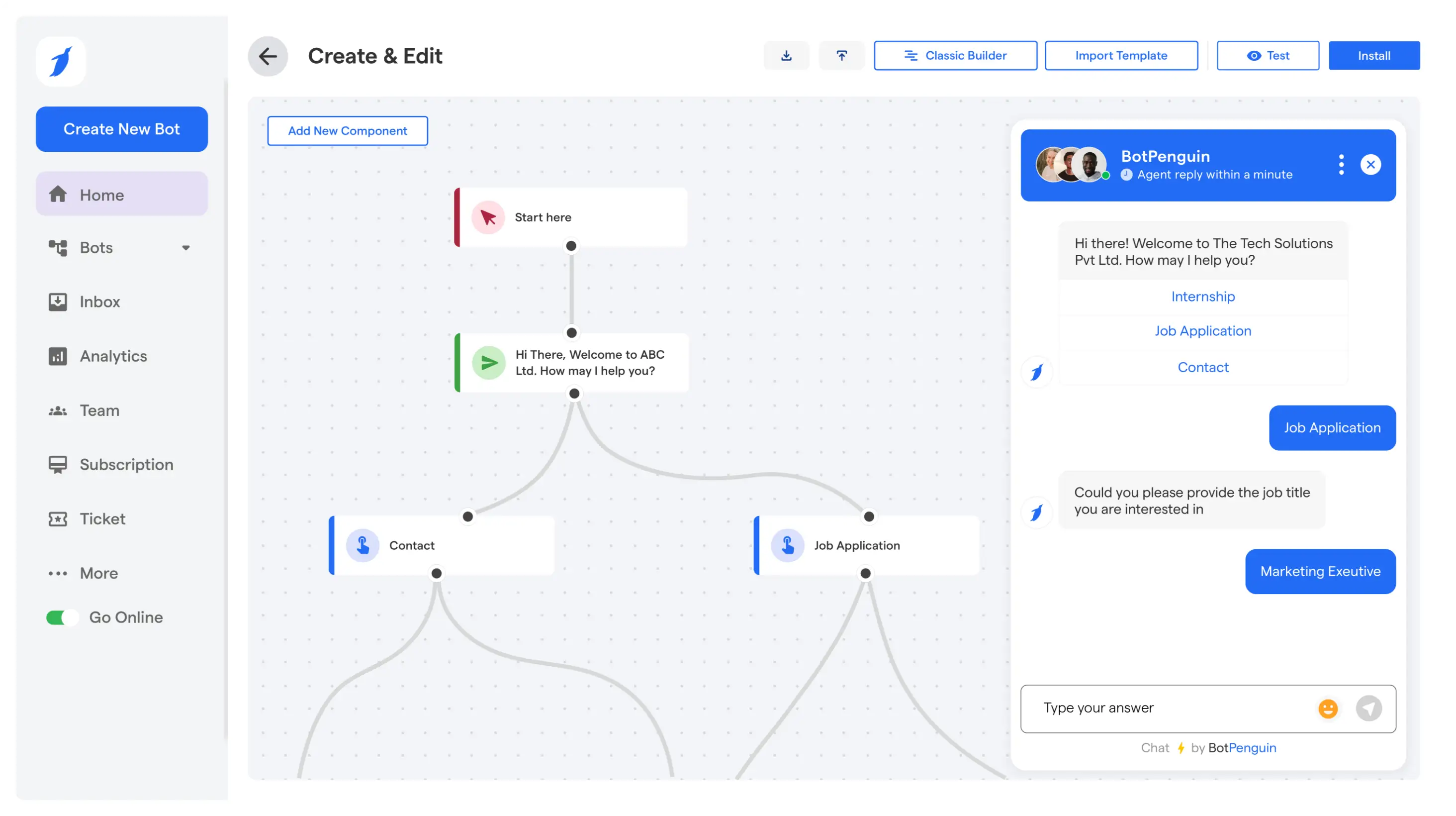
Some teams eventually reach a point where answering questions is not enough. They want conversations that move users forward. This is where platforms like BotPenguin becomes relevant.
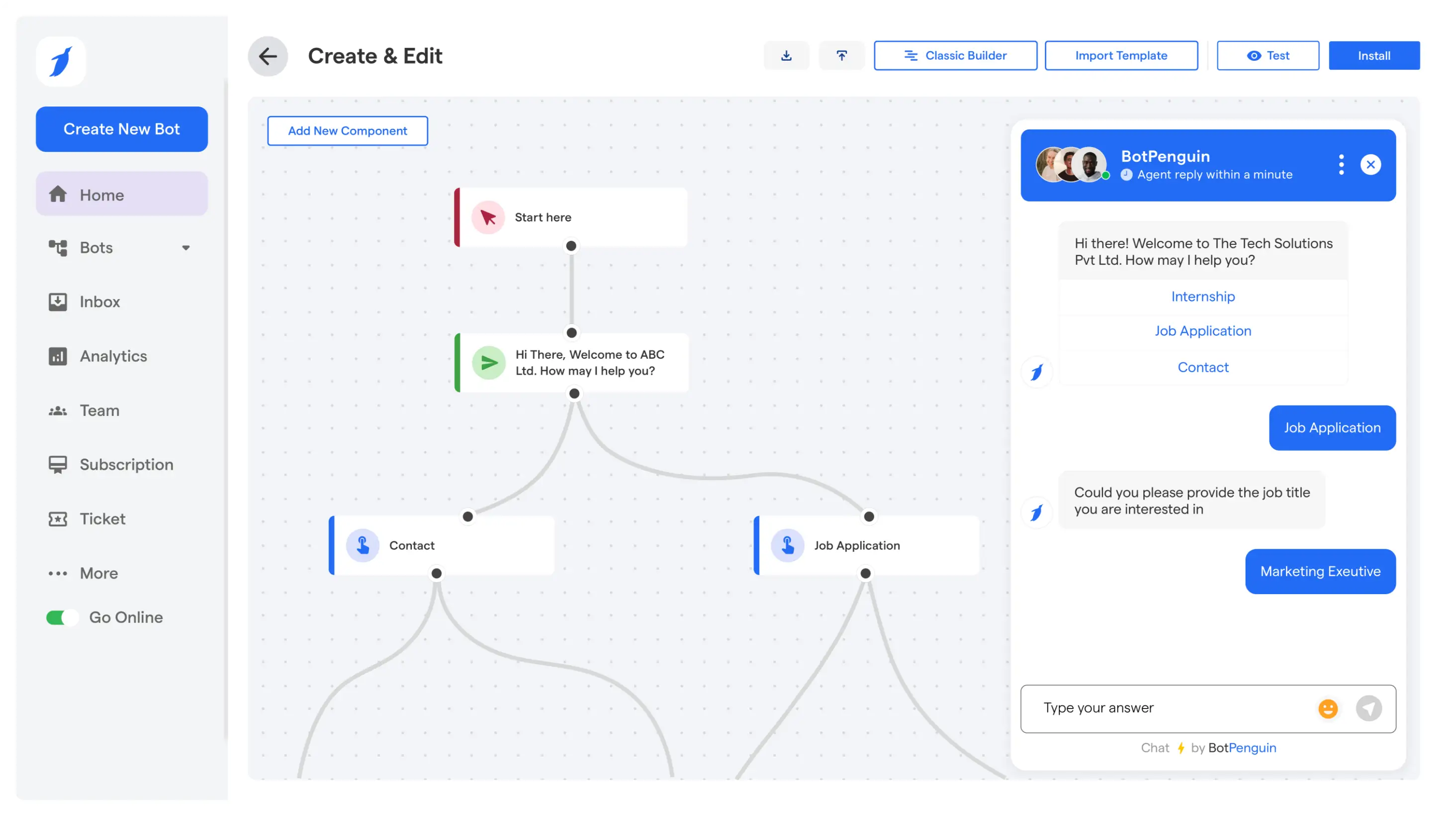
BotPenguin is a platform for building AI chatbots and agents without engineering effort. Chatbots can be created using a no-code builder and powered by the latest AI models for more natural responses.
The chatbots support multilingual conversations with live translation, making it easier to engage users across regions. Teams can train them using documents, FAQs, and connected business data, while controlling response behavior, boundaries, and fallback logic from a single dashboard.
It also offers built-in analytics to monitor conversations, live chat handoff for human takeover without losing context, and quick deployment across multiple channels within hours.
This makes BotPenguin a strong option for teams ready to move from answering questions to managing complete conversational journeys.
Conclusion
Choosing the right chatbot starts with understanding what you actually need.
Throughout this guide, we explored how DeepAsk works, where it fits best, and how its strengths show up in real use.
The DeepAsk chatbot features make it a strong option for teams focused on fast, reliable access to existing knowledge, especially when accuracy and consistency matter more than automation depth.
As business needs grow, conversations often move beyond answering questions to guiding users and driving actions across channels. This is where platforms like BotPenguin naturally come into consideration, offering a broader approach without losing control or context.
If you need or are ready to move from knowledge-first chatbots to building end-to-end conversational experiences, start using BotPenguin to create AI chatbots that scale with your goals!
Frequently Asked Questions (FAQs)
Is DeepAsk suitable for handling sensitive or private business data?
DeepAsk can be used with internal documents and knowledge bases, but teams should review how data is stored, accessed, and governed.
When evaluating DeepAsk chatbot features, ensure they align with your data security and compliance requirements.
How long does it take to set up DeepAsk for a new team?
Setup time depends on content readiness. If documents and FAQs are already organized, teams can get started quickly.
Most delays come from cleaning and structuring knowledge, not from the DeepAsk AI chatbot itself.
Can DeepAsk be customized for different departments or audiences?
DeepAsk works best with a shared knowledge base. While responses can stay consistent, deep personalization across departments is limited.
Teams that need role-based flows or dynamic behavior may eventually require more advanced chatbot platforms.
Does DeepAsk support integrations with CRM or business tools?
DeepAsk focuses primarily on knowledge access rather than workflow integration.
If your use case requires CRM actions, lead handling, or task automation, those needs may go beyond standard DeepAsk chatbot features.
How does DeepAsk handle updates to documentation or policies?
DeepAsk reflects changes made to connected content sources. However, teams must regularly maintain and update documents.
The chatbot does not validate its accuracy independently and depends on the quality of the source data.
When should a business consider moving beyond DeepAsk?
If your chatbot needs to guide users, trigger actions, or work across multiple channels proactively, a broader AI chatbot platform may be a better fit than a purely knowledge-driven DeepAsk AI chatbot.