


.webp)
The Ultimate Guide to Using AI Cold Calling for Real Estate
Updated at Sep 24, 2026
10 min to read

You don’t need a massive sales team anymore to make 1000 calls a day. AI can do it for you and do it smarter, faster, and cheaper.
That is not a prediction. It is already happening. Right now, across industries, businesses are using AI outbound calling to connect with more prospects and actually get results.
These are not robotic voiceovers reading a script. This is conversational AI that sounds human, listens, learns, and handles objections like a seasoned pro.
If you are still dialing by hand or relying on static scripts, you are not just behind. You are missing out. With AI outbound calls, companies are running scalable outreach without scaling their teams. They are qualifying leads while they sleep and closing deals at a pace no human-only team can match.
This blog shows you exactly how it works. What outbound call AI is, how to use it, and how to make it your competitive edge.
Let’s get into it.
Cold calling today is not struggling because of lack of effort. It is failing because the rules have changed and the game has moved on.
Unknown numbers get ignored without a second thought. Sales teams spend hours dialing only to hear voicemail, silence, or a blunt hang-up. And when someone finally answers, the interaction often feels forced and ends before it begins.
Here is what is going wrong with traditional outbound outreach and why more companies are now shifting toward AI outbound calling to fix it.
Call answer rates have dropped sharply. Most people no longer answer calls from unknown numbers, especially during work hours or late afternoons.
Even when a rep reaches out hundreds of times, only a handful of calls get through and even fewer turn into meaningful conversations.
This turns outreach into a numbers game that burns time, payroll, and patience. Sales reps are spending their day chasing leads who are not interested or not reachable.
By using AI to make outbound marketing calls, businesses can take control of this problem. AI handles large volumes of outreach automatically and only pushes real conversations to human reps when needed, saving time and maximizing impact.
📉 According to Salesforce, the average sales rep only spends 28 percent of their time speaking with prospects. The rest is lost in waiting, prep work, and unproductive dials.
Not every rep delivers the same message, tone, or pitch. One person might sound confident and clear while another sounds distracted or robotic. This inconsistency leads to mixed results, lost opportunities, and poor customer impressions.
The emotional weight of rejection also adds up fast. Salespeople who hear no all day long begin to lose energy. Motivation fades. Turnover increases. New hires need time to ramp up and results slow down.
With conversational AI outbound calls, companies gain reliability. The message stays sharp. The delivery stays consistent. And the experience on the other end feels professional every single time.
Today’s buyers are not waiting around for slow or generic calls. They expect speed, relevance, and a clear reason to stay on the line. If the opening sounds off-topic or confusing, the call ends before it begins.
Traditional cold calling lacks the context modern prospects demand. Calls come at the wrong time. Messages feel disconnected. Pitches sound like a repeat of yesterday.
Outbound call AI changes this dynamic. It reaches out at the right time based on data. It adjusts to the intent of the conversation. And it keeps things focused on what matters to the person answering.
In a world where attention is limited, AI outbound calls help you reach more people in less time without lowering the quality of the conversation.
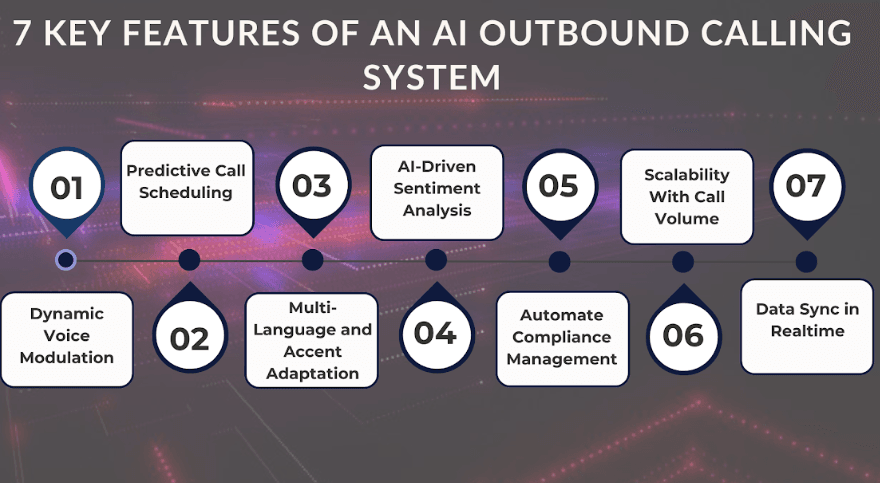
AI outbound calling is not another sales gimmick. It is a smarter, faster, and more reliable way to connect with leads using real-time voice conversations powered by artificial intelligence.
An AI outbound call uses voice AI to engage leads naturally and intelligently. It listens, pauses, asks questions, responds, and handles objections like a trained rep—without sounding robotic.
Where traditional calls depend on people and robocalls feel mechanical, AI outbound calls sit in the sweet spot. They combine the logic of automation with the flow of real conversation.
AI outbound calling uses machine learning, voice recognition, and natural language processing to run two-way conversations with potential buyers.
The AI speaks like a real person. It does not follow a fixed script. Instead, it listens and adapts based on what the prospect says.
If someone says they are busy, the AI reschedules politely. If they ask a question, the AI responds with the right message. If the lead qualifies, the AI can pass them to a human rep immediately.
This is not voicemail blasting or one-line voice drops. It is real interaction, happening at scale, powered by outbound call AI.
🤖 A fast-growing startup used conversational AI outbound calls to reach over 8000 leads in a week. Their demo bookings tripled without hiring one more rep.
This is where most confusion starts. Robocalls are prerecorded messages. Predictive dialers are tools that help reps make faster calls.
Neither holds a conversation. Neither understands what the person says. Neither improves on its own.
An AI outbound call is different. It does not dump a message. It listens. It learns. It speaks when it should and stops when it needs to.
While robocalls frustrate users and predictive dialers still need humans, AI for outbound calls does the talking and decision-making in one clean flow.
You get smarter outreach with no awkward silences, no dropped cues, and no reliance on human energy.
📊 Gartner predicts that by 2026, 25 percent of outbound sales conversations will be handled entirely by AI. The shift has already begun.
Most IVRs are like getting stuck in traffic. You press buttons. You wait. You start over. Meanwhile, the person on the other end is already gone.
That model is outdated. Buyers expect more from a phone call today. They want fast, clear responses and zero frustration. That is where conversational AI outbound calls completely change the game.
Unlike outdated IVRs, outbound AI calling responds to customers like a human would. It does not wait for button presses. It understands voice. It flows with the conversation. It knows how to guide, qualify, and respond in real time.
Here is how the two compare side by side:
More businesses are moving to AI for outbound calls because it improves connection and conversion in one go. When the caller feels like someone is listening, they stay. They respond. And they move forward.
📈 In sectors like finance and SaaS, replacing IVRs with conversational AI outbound calls has helped teams book more demos, qualify leads faster, and lower operational costs.
Outbound call AI fits where volume, timing, and consistency matter. It automates outreach that used to drain teams, giving you more conversions, faster follow-ups, and cleaner data. This is where it drives the most value across real business functions.
Outbound sales relies on speed and scale. AI brings automation into cold calls, follow-ups, and dormant accounts—without losing the human touch.
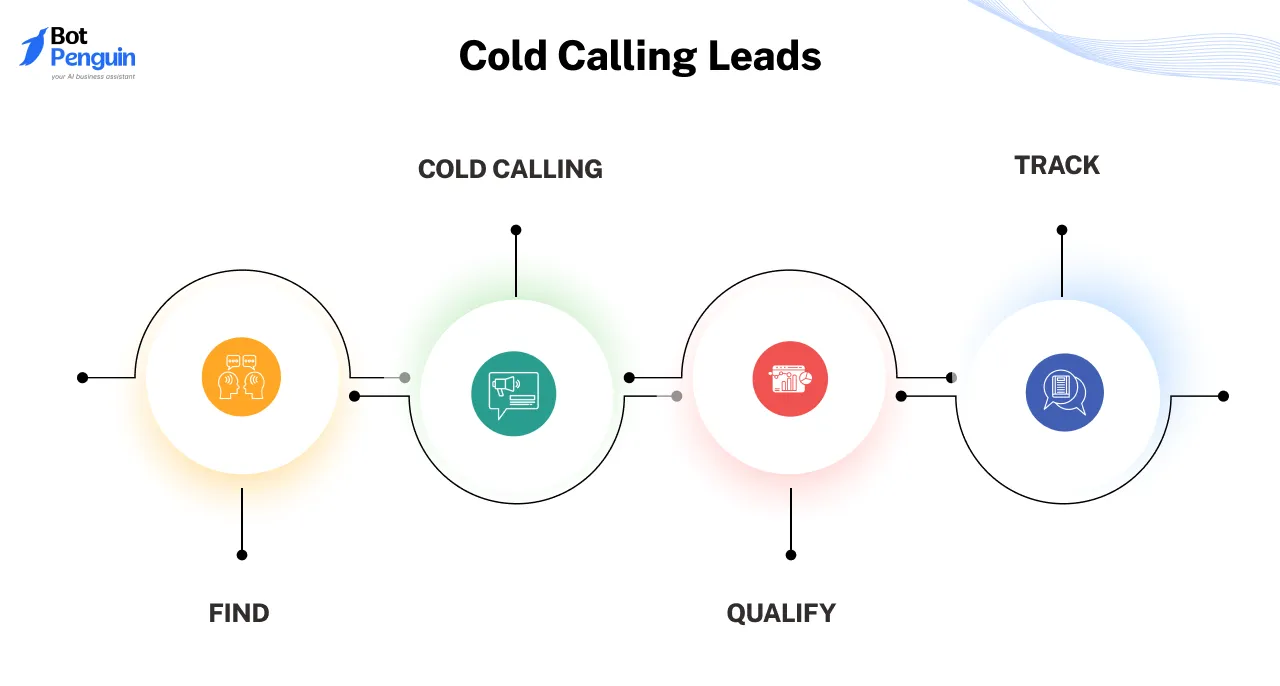
Cold calling manually caps out at 60 to 80 calls per day per rep, and even fewer productive conversations. AI removes that ceiling.
It dials thousands of leads per campaign, holds basic qualification conversations, and flags only the responses worth passing to sales. It detects buyer intent, navigates common objections, and handles rejection without missing a beat.
Sales teams receive warm leads already pre-qualified—saving time, reducing friction, and improving pipeline velocity.
Picture this: A B2B cloud platform launches an AI outbound campaign to 6,000 prospects in just one week. Calls go out like clockwork—timely, on-message, and persistent.
Result? 42% more people pick up, and the time it takes to turn leads into qualified sales drops by over a third.
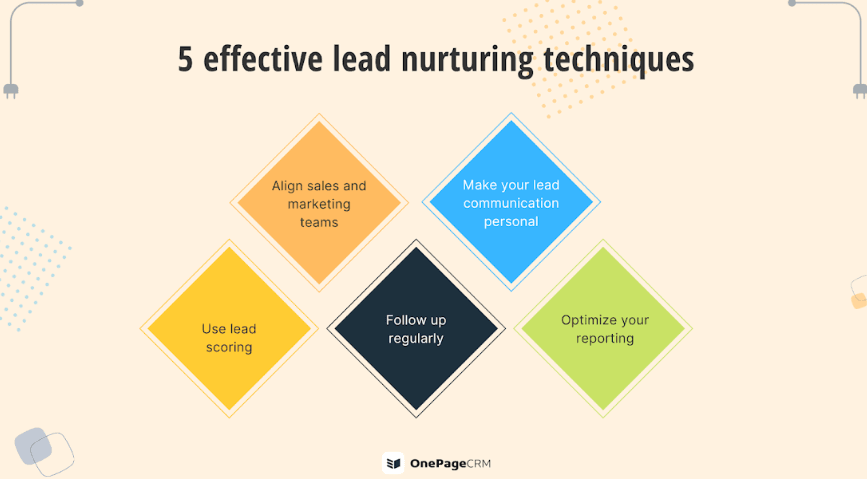
Not every lead is ready to buy right away. Many need time, context, and continued engagement.
AI tracks those leads, checks in automatically at the right intervals, and reopens dialogue when interest spikes. It does not lose leads to silence or forget to follow up. And it personalizes the approach based on past touchpoints and CRM data.
This matters in longer B2B sales cycles, where staying top-of-mind is the difference between winning and missing the deal.
Your existing customer base often holds untapped revenue. But reaching out at the right time, with the right message, rarely happens at scale.
AI scans CRM activity, usage patterns, or renewal timelines, then launches contextual outreach—asking for a quick chat, offering an upgrade, or checking fit for a new feature.
Because it feels personal and timely, engagement rises without sales teams spending extra time digging through records.

Outside sales, AI handles tasks that are repetitive but critical to customer experience and process success. These are usually low-effort but high-frequency activities—perfect for automation.
Call-based appointment confirmation works better than email for time-sensitive industries. But doing it manually adds to staffing load.
AI automates it with clarity. It confirms the time, handles rescheduling if needed, and syncs back to the system—all in real time.
Use cases span across healthcare, home services, and auto repair. AI reduces missed appointments and improves daily capacity without extra work.
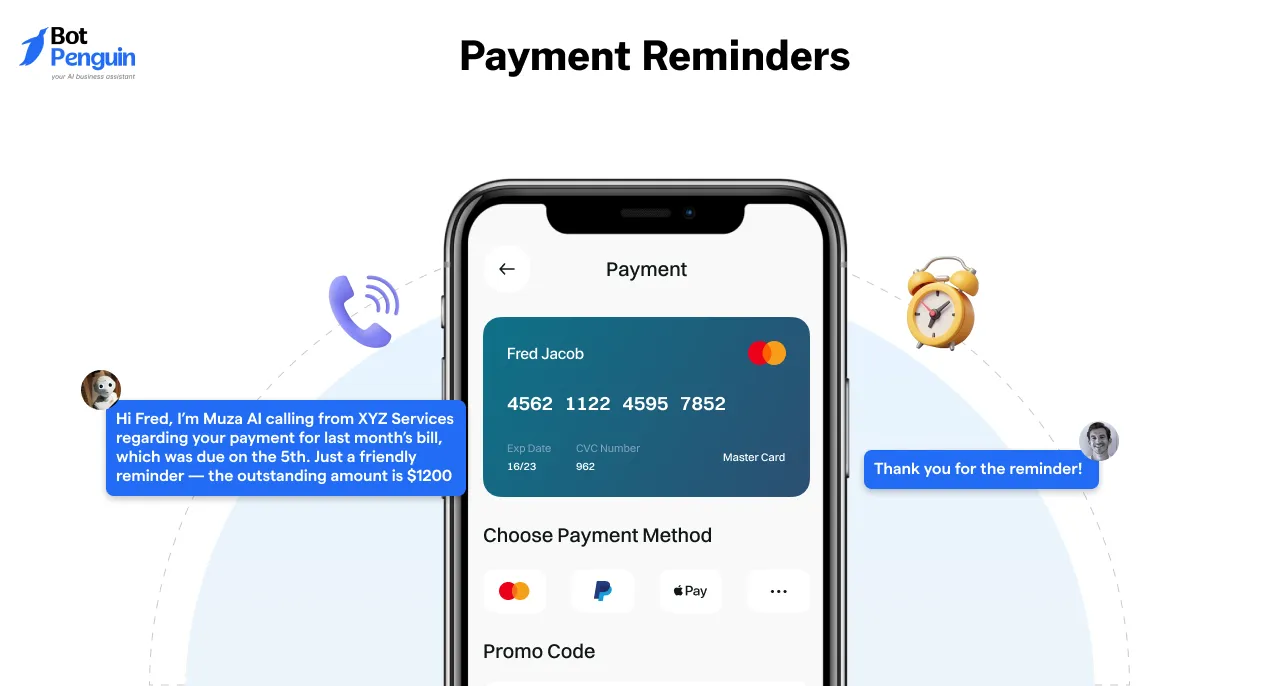
Chasing unpaid invoices can be awkward and slow. AI handles it with neutral tone and built-in empathy.
It places reminder calls that share due dates, support contact options, and even let customers reply with intent—like confirming payment or asking for more info.
All responses feed back into your finance system, giving better visibility and reducing manual follow-ups.
Impact: An edtech company recovered over $120,000 in outstanding dues across 2 billing cycles after deploying AI for daily follow-up calls.
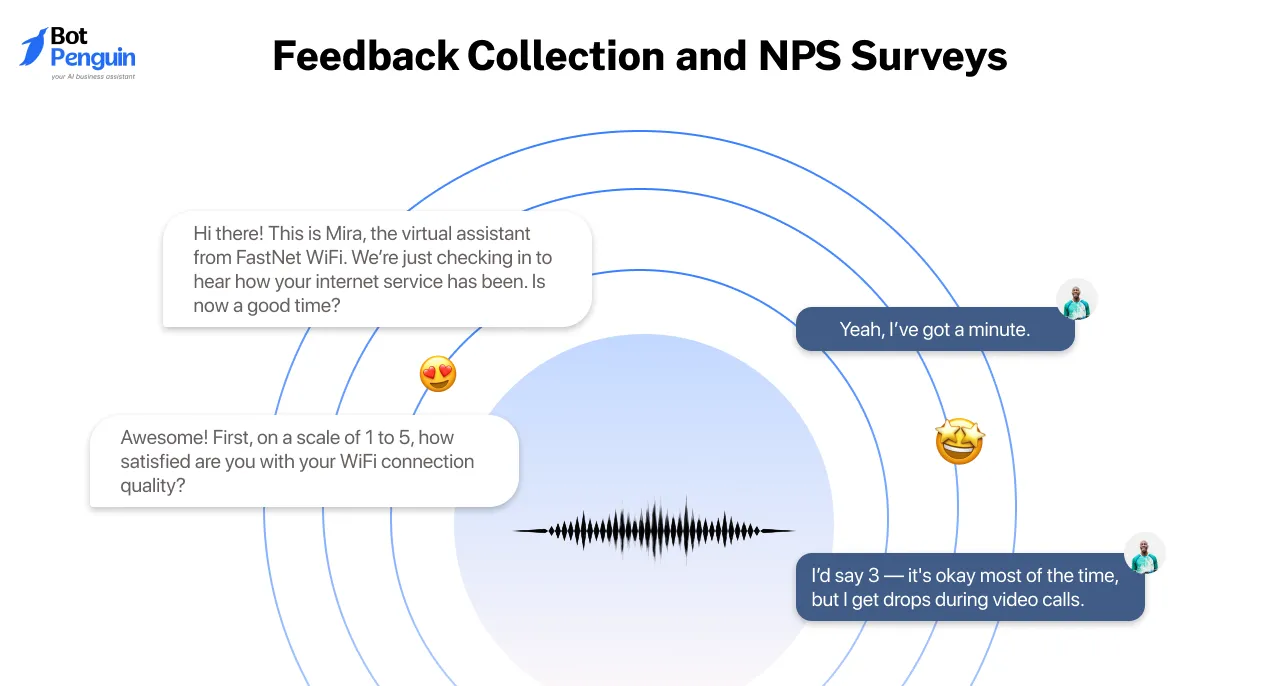
Post-sale or post-service feedback is essential but often neglected. Email surveys get ignored. Manual follow-ups take too long.
AI solves this with quick calls that feel personal. It asks 1 to 3 questions, captures open-ended responses, and updates your dashboard automatically.
This creates a real feedback loop—timely, voice-based, and rich in insight.
AI outbound call solutions are not just automation tools. They are operational accelerators that improve quality, scale conversations, and close the loop between effort and outcomes.
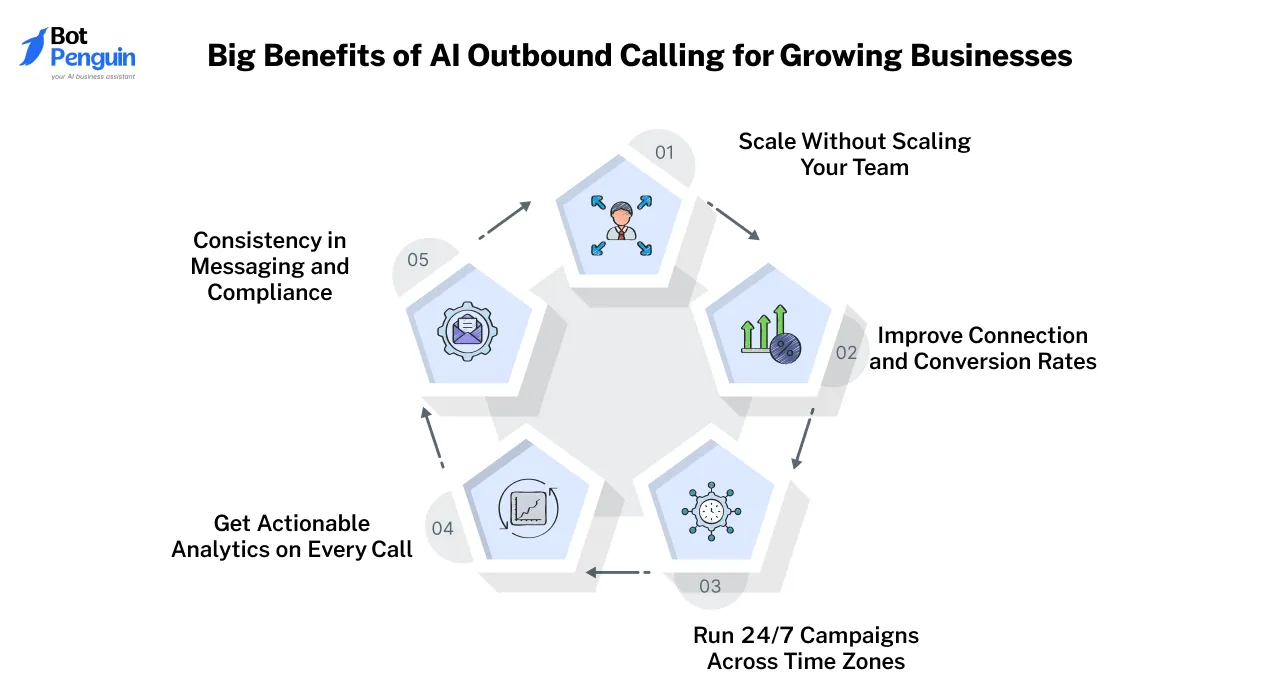
AI outbound calling is a business tool that saves time, cuts cost, and accelerates results.
Whether you are chasing growth or trying to streamline what already works, outbound call AI makes it easier to reach the right people with the right message—on autopilot.
Most sales teams hit a ceiling. More outreach usually means hiring more people. AI changes that.
With AI outbound calling, you can reach 10,000 contacts with the same team size. It automates outreach, qualifies leads, and routes real opportunities to humans. No burnout. No delays.
AI connects faster, speaks more clearly, and follows up instantly. It is not slowed down by fatigue or distractions.
It uses voice intelligence to adjust tone, pacing, and responses, so conversations feel real and respectful. That means more leads stay on the call, listen, and respond.
Leads do not sleep at the same time. With AI, you do not have to wait for your team to come online.
AI outbound calls can run continuously across global time zones. Whether your audience is in Chicago or Sydney, your message reaches them at the right hour—without the human cost of late shifts.
This is especially valuable for support, renewals, or international product launches.
AI logs every word, tone shift, objection, and outcome. This is not generic call data. It is insight you can act on.
Campaign managers can see what phrases work, what kills interest, and which time slots convert best. That means you improve faster, pitch better, and avoid guesswork.
When using ai for outbound calls, teams get cleaner reporting, faster A/B results, and a tighter feedback loop between sales and marketing.
Human reps often drift from scripts, forget updates, or skip compliance rules under pressure.
AI sticks to messaging that works and adjusts only when programmed to. Whether it is legal disclaimers or regulated pitch content, you stay protected while still sounding human.
This keeps communication sharp, approved, and uniform—across thousands of calls.
Calls are still the most direct way to speak to customers. Booking confirmations, welcome calls, support callbacks—these moments happen daily.
AI can take over high-frequency voice touchpoints like onboarding calls, feedback requests, or post-purchase follow-ups. It does it immediately, with no waiting or missed steps.
That makes ai outbound call systems one of the most cost-efficient ways to boost customer engagement without adding manual load.
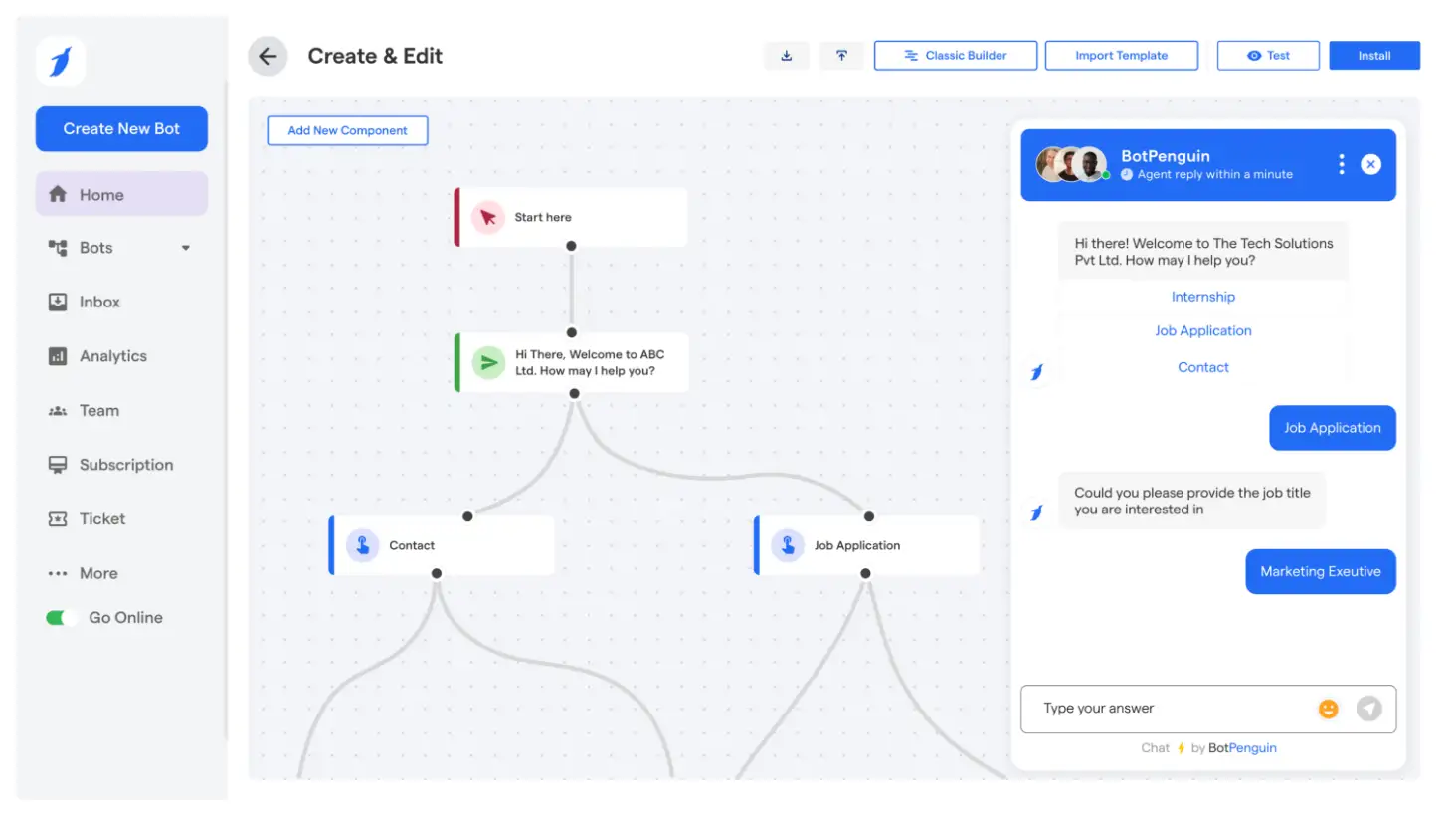
Setting up AI outbound calls is simpler than most expect. With the right tool, you can launch campaigns in hours, not weeks, without technical help or a big learning curve.
BotPenguin makes it easy to automate calls using natural voice, logic, and real business data. It simulates human-like conversations without relying on rigid scripts. These systems adapt in real-time, respond contextually, and deliver consistent outreach across large contact lists.
Implementing AI for outbound calls is straightforward. Below are the key steps to get started.
Start by creating your BotPenguin account. Choose the voice bot option to begin building your outbound calling assistant. No coding required.
Build your AI caller by giving it a prompt. Describe who it is, what it should say, and how it should sound—polite, direct, friendly, or formal.
This sets the tone for your brand and gives structure to your outbound AI calling logic.
For deeper personalization, train the bot on your FAQs, documents, or product sheets. This helps it handle questions, follow-ups, and objections naturally.
It becomes smarter with your context, which improves the quality of AI outbound calls.
Import your list of phone numbers manually or sync it directly from your CRM. BotPenguin lets you pull from your existing lead sources with one click.
You can segment lists by tags, deal stage, region, or campaign type.
Choose when the bot should call, how many attempts to make, and what to do if a call fails. You control pacing, retry logic, and how often a lead should hear from your voice assistant.
Everything works in real time—on your clock.
BotPenguin offers prebuilt templates for common outbound workflows:
You can use them as-is or tweak them to fit your use case.
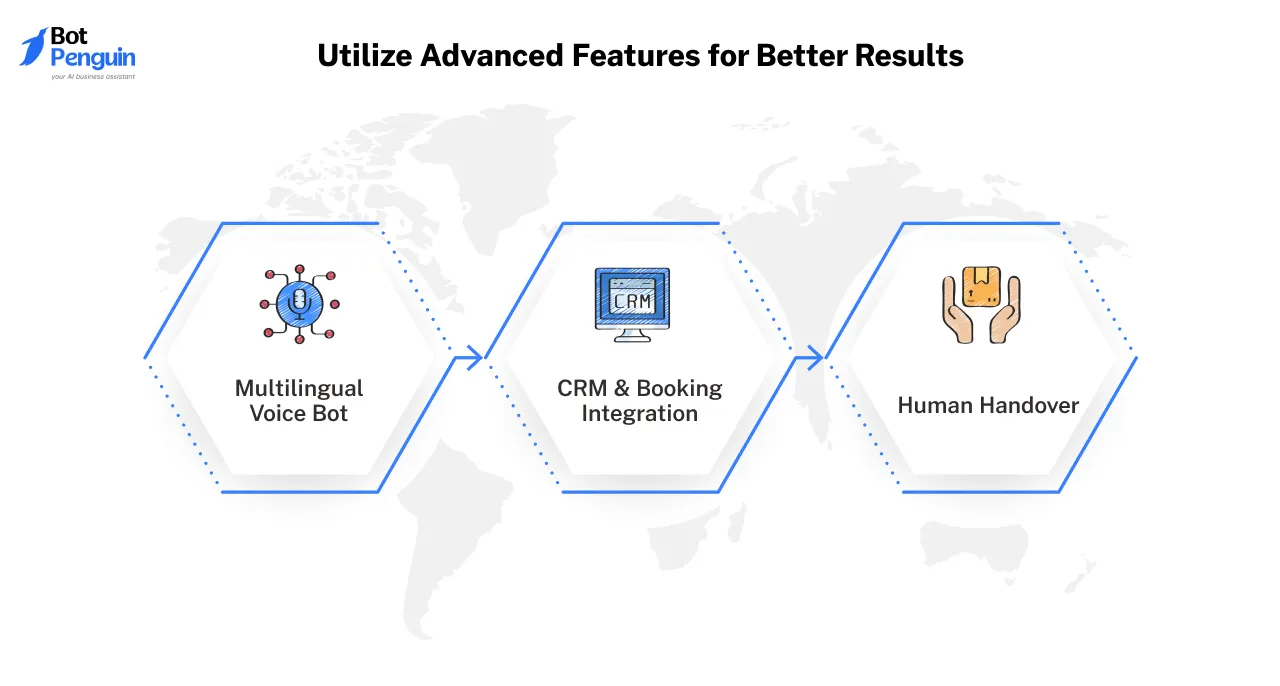
Maximize campaign performance with built-in tools:
Using AI to make outbound marketing calls reduces manual workload, increases call consistency, and improves campaign performance.
Platforms like BotPenguin make implementation accessible and efficient, offering an ideal solution for organizations aiming to scale without increasing operational overhead.
Outbound AI calling comes with strong results—but also a few common doubts. Here are the biggest objections businesses raise before trying it, and what actually happens when you put it to work.
A major worry is that prospects will hang up the moment they realize it is not a real person. That made sense a few years ago—but not anymore.
Today’s voice AI is powered by advanced NLP that adapts to how people speak. It can pause, react, and even shift tone based on the person on the other end.
Modern AI voice agents also use voice modulation to sound smooth, natural, and human—without crossing into the uncanny. The result? Fewer hang-ups and longer conversations.
What felt robotic before now sounds like a well-trained rep on a good day.
It will not. And it should not.
AI outbound calling is built to handle the repetitive tasks that slow teams down—cold dials, lead filtering, scheduling calls. Your reps stay focused on qualified leads, high-value conversations, and closing deals.
Think of AI as a scalable assistant, not a replacement. It makes sure no opportunity slips while your team works smarter, not harder.
This is the same model used in revenue teams where call volume is high but rep time is limited.
Most assume AI means tech headaches, integrations, and developer time. That is no longer the case.
Platforms like BotPenguin make it simple. You sign up, describe your bot’s role, upload contacts, and launch in minutes. There is no code, no learning curve, and no extra infrastructure required.
Campaigns can be live in a day—and edited on the fly as you go.
Businesses using AI outbound calling tools like BotPenguin often spend less time setting up than they would training a new rep.
Doubt is normal, but delay costs more. Outbound AI calling is no longer a future concept—it is a proven method to increase reach, save time, and boost performance without friction.
AI for outbound calls is not about replacing humans. It is about automating the parts of outreach that drain time, slow teams, and stall growth.
You have seen how it helps run campaigns across time zones, follow up at scale, handle repetitive questions, and track every conversation in real time. All while sounding natural and adapting to each response.
If you are looking to increase call volume, improve lead quality, or stop losing deals to delay, this is where you start.
Pick one campaign. Set clear goals. Let the system run. Then improve.
🚀 Want to launch your first AI outbound call campaign?
Get started with BotPenguin’s AI Voice Agent. It’s fast, flexible, and designed for results.
AI outbound calls work best for sales-heavy sectors like SaaS, healthcare, real estate, education, and financial services—where response speed, follow-ups, and lead qualification are critical to closing.
Yes. Advanced conversational AI outbound calls use tone analysis to detect frustration, interest, or hesitation, allowing the system to adjust responses or escalate to human reps when emotional cues suggest urgency or confusion.
Reputable outbound AI calling platforms use end-to-end encryption, secure API handling, and GDPR-compliant storage to protect call data, contact lists, and CRM integrations during every stage of the automated campaign.
Yes. BotPenguin’s voice agent supports multilingual conversational flows for outbound AI calling, making it ideal for businesses operating across regions or targeting diverse customer segments without building separate campaigns.
Absolutely. AI for outbound calls pulls customer details from CRMs to personalize each pitch, greeting, or follow-up—ensuring scalable campaigns still sound relevant and tailored to every contact’s needs or past interactions.
Subscribe to Our Newsletter
Get the latest business insights straight into your inbox.
Checkout our related blogs you will love.
Updated at Sep 24, 2026
10 min to read

Updated at Sep 21, 2026
17 min to read

Updated at Sep 12, 2026
9 min to read
.webp)
Updated at Aug 19, 2026
11 min to read
Updated at Jul 3, 2026
16 min to read
Updated at Jul 3, 2026
14 min to read
Table of Contents
