
HubSpot AI Agent: How It Works, Use Cases & Integrations
Updated at Oct 6, 2026
9 min to read
Clients rarely ask for software alone.
They ask for tools that improve leads, support, operations, or revenue.
That is why the best reseller programs matter for agencies, consultants, MSPs, freelancers, and service providers.
The right SaaS program lets you sell proven software without having to build it yourself. Some programs work as classic reseller models.
Others operate as SaaS partner programs with referral, implementation, co-selling, or margin-based revenue models.
This guide compares the best SaaS reseller programs and best SaaS partner programs by fit, commission model, setup effort, pricing control, and selling potential.
We evaluated each SaaS reseller and partner program based on fit, control, demand, support, and long-term revenue potential.
The comparison considers the same core criteria across programs, including flexibility, commissions, recurring revenue, onboarding, integrations, reseller control, and partner support.
Your business isn’t one-size-fits-all, so your reseller program shouldn’t be either. Flexibility is about how much freedom you have in selling, pricing, and packaging.
The more flexible the setup, the easier it is to make the software part of your core offer. Rigid programs limit growth and creativity.
Choose a program that adapts to your business — not the other way around.
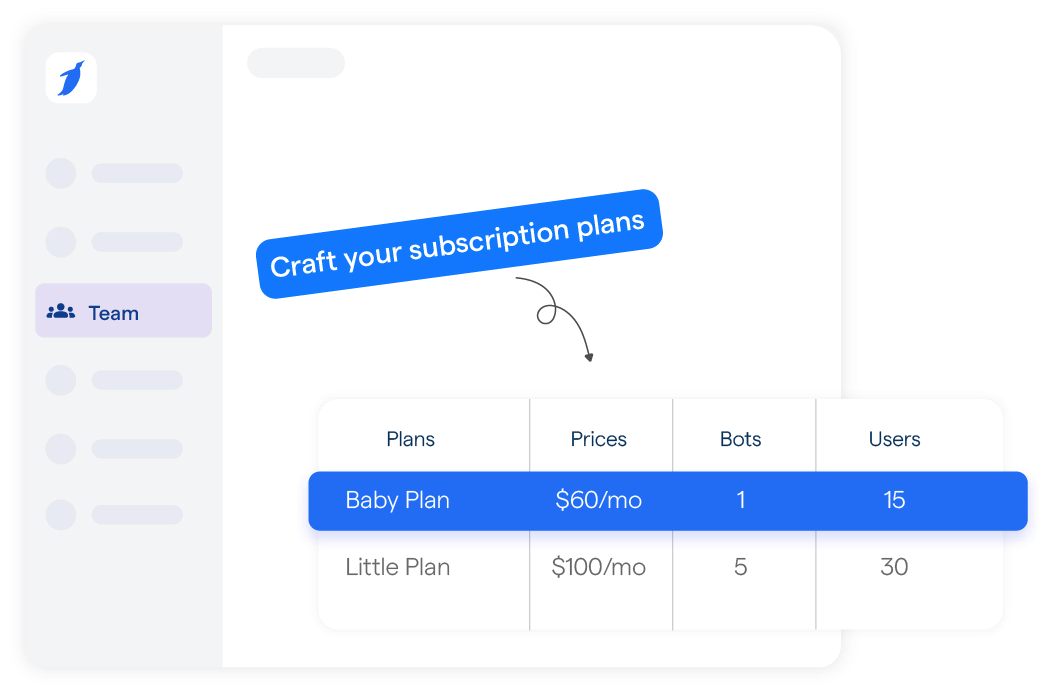
How much do you actually earn per sale? This is where your income starts, so don’t gloss over the numbers.
A good reseller program pays you well for every client you bring in — not just once, but for as long as they stay.
Higher profit margins give you more room to scale without needing hundreds of clients.
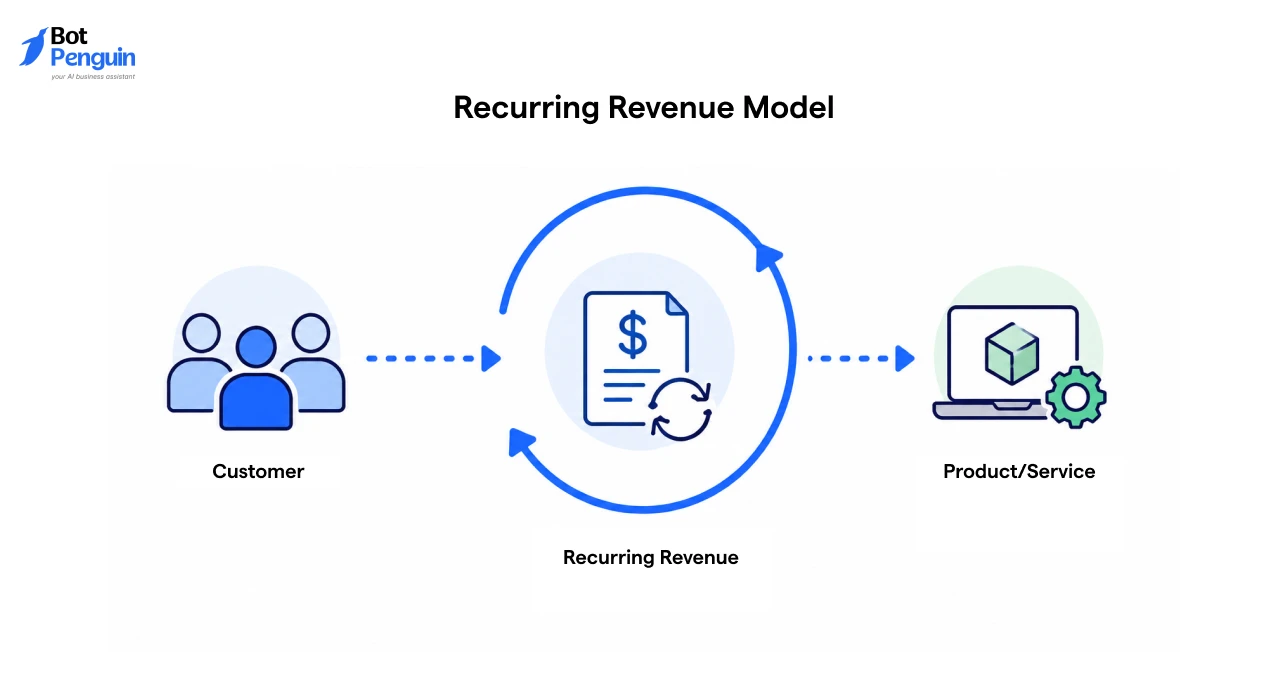
You want income that builds, not resets. That’s where recurring revenue comes in.
Recurring income gives you predictable cash flow, better planning, and less pressure to chase new clients every month.
If a program doesn’t offer recurring payouts, you’re building someone else’s business — not yours.
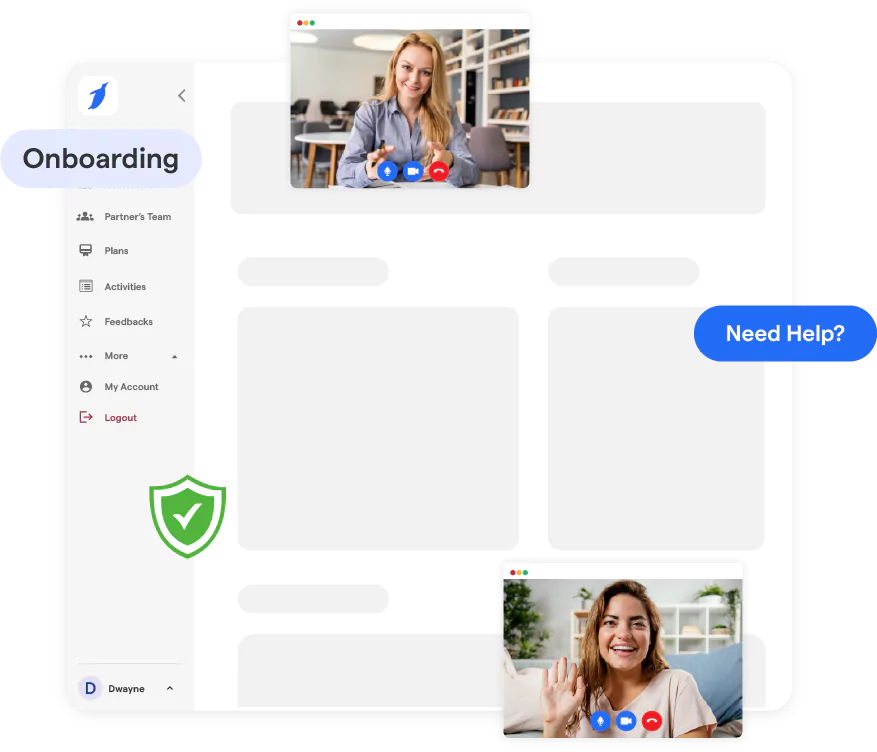
You should be able to start selling fast. Complicated onboarding slows you down and hurts your confidence.
The sooner you launch, the sooner you earn. Time spent figuring things out is time lost.
Look for programs that make your first sale easier — not harder.
The product you’re reselling must solve a real problem — for your specific audience.
A product with strong market demand is easier to sell and has lower churn. You won’t need to convince — just offer the better option.
If the product doesn’t match your audience, even the best program won’t help.
You shouldn’t need to create all your sales materials from scratch. A good program sets you up to sell with confidence.
This helps you close faster and look more professional — even if you’re just getting started.
If a program leaves you to “figure it out,” you’ll move slower than competitors with real tools.
Support isn’t just for you — it’s for your clients too. If things break, who handles it?
Poor support kills trust and leads to refunds. Great support makes you look good without needing to be the expert.
Sell programs backed by real people — not automated replies.
Your clients already use other tools. Will this software work with them — or create more work?
The easier it integrates, the fewer objections you’ll face during the sales process.
Smooth integrations = faster sales and happier clients.
You should decide what to charge, how to package it, and who gets what.
You know your market better than the vendor. Being locked into fixed pricing can cost you high-ticket deals.
Control equals profit. Don’t give it up.
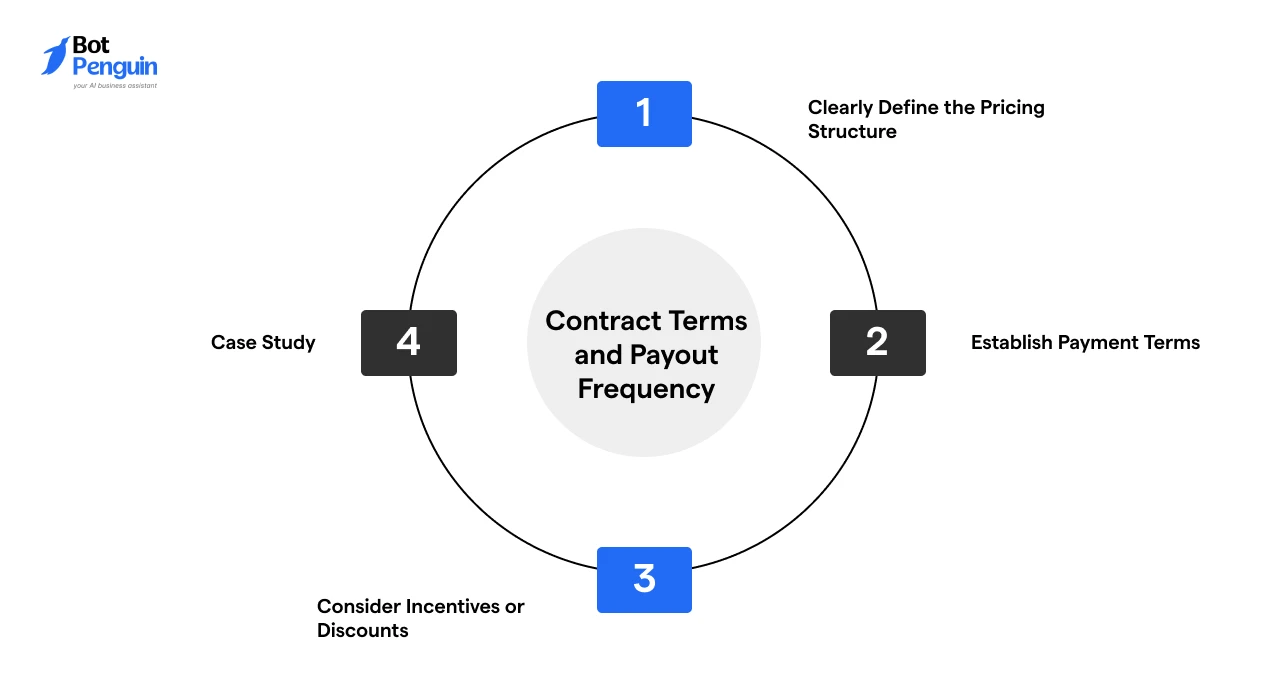
Always read the fine print. Some programs make it hard to leave or slow to pay.
If you’re waiting 60 days to get paid, it hurts your cash flow. And if you can’t leave easily, you’re stuck if things go wrong.
Look for transparency and freedom. It’s your business — you should be in control.
You now know exactly what to look for in a SaaS reseller program. Use this list to filter out weak offers and focus on the ones that align with your goals.
The market has many reseller and SaaS partner programs. But not every program offers the same level of control, margin, support, or client fit.
Some programs suit agencies. Some suit IT resellers. Others work better for consultants, affiliates, MSPs, or implementation partners.
Below are SaaS and software reseller programs to compare when looking for the best software for resellers across agency, IT, MSP, consulting, and service-provider models.
Now, let’s review each program in more detail. This will help you match each option to your business model.
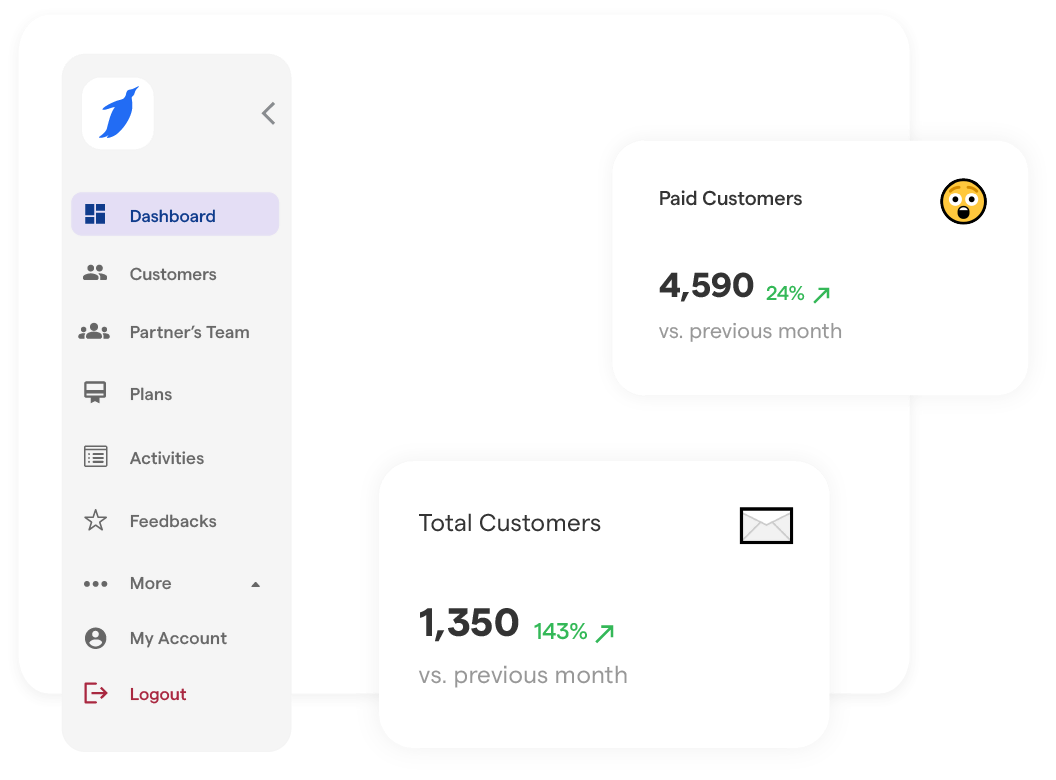
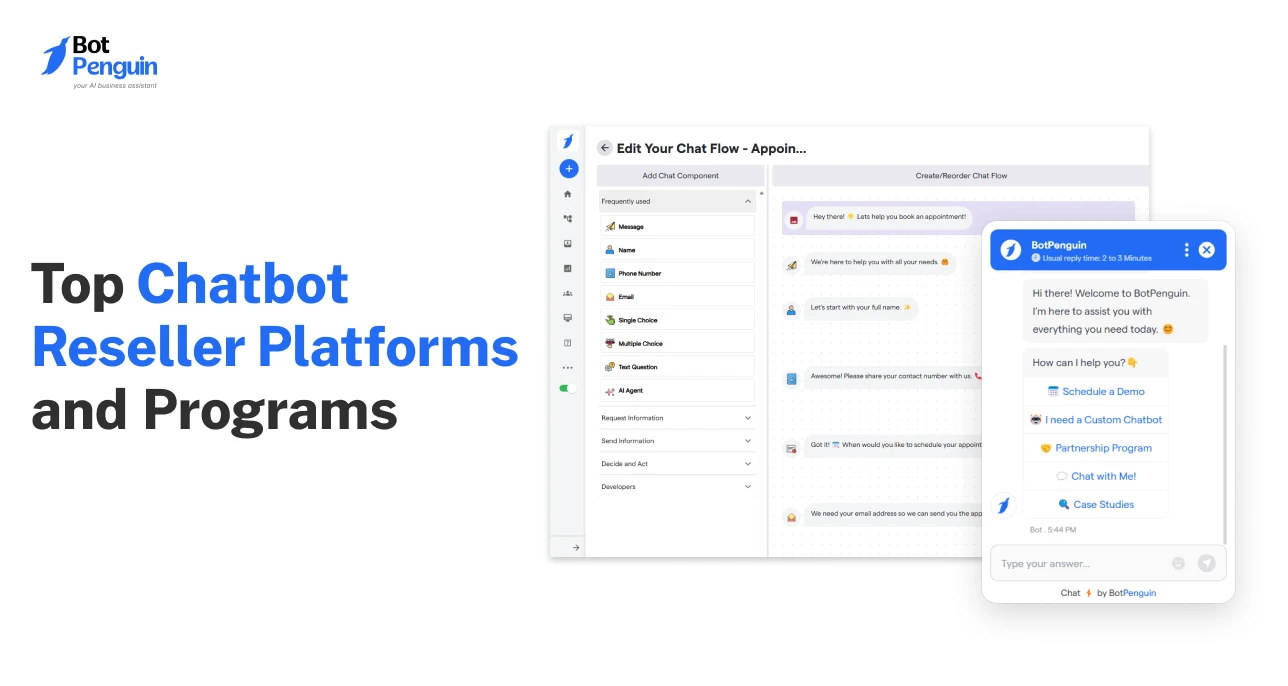
BotPenguin fits agencies, consultants, and freelancers selling AI chatbot automation. It helps you resell software without building your own platform. It supports website chat, WhatsApp, Instagram, Facebook, Telegram, and more.
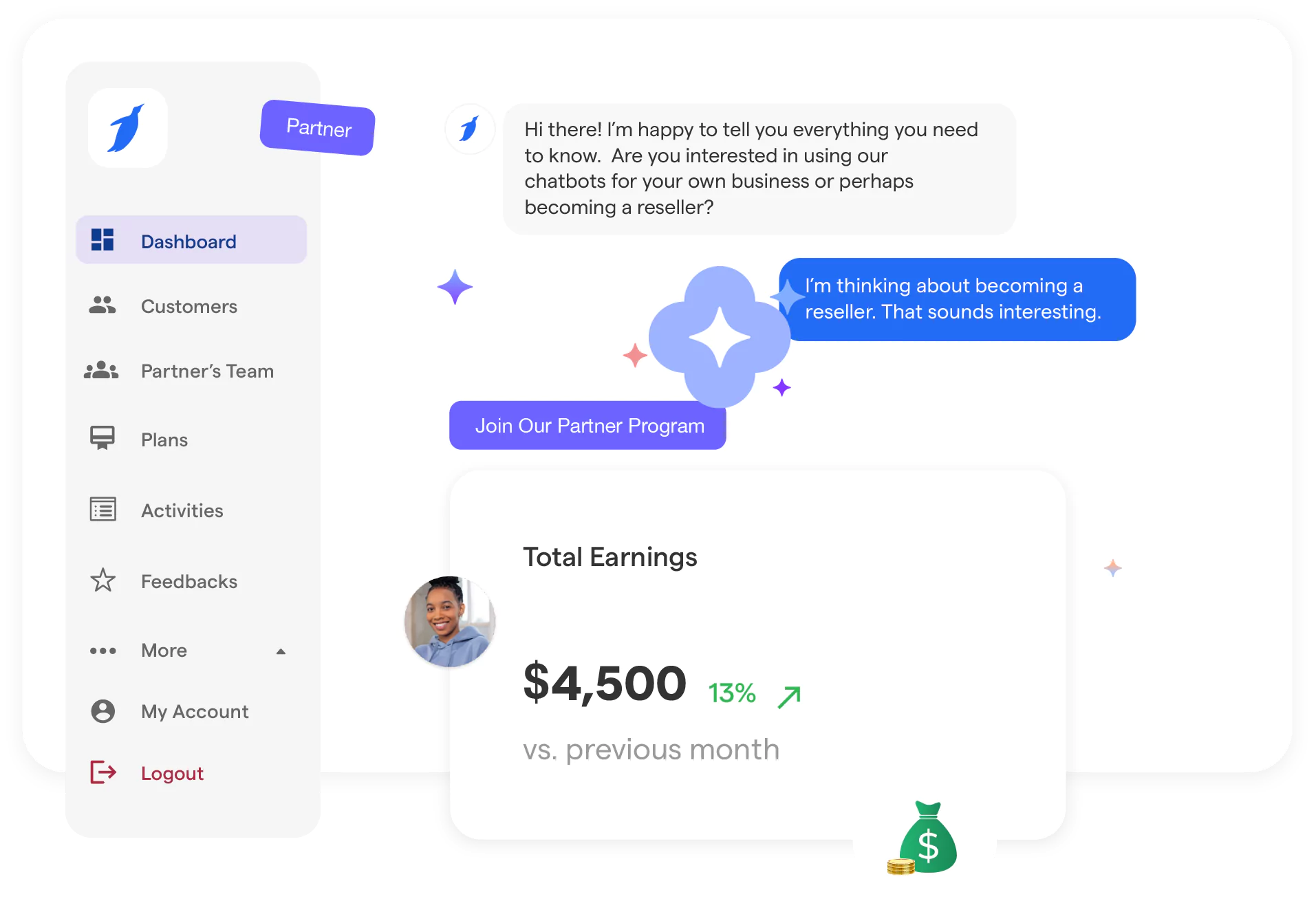
BotPenguin also offers a dedicated partner dashboard.
Resellers get sales support, chatbot templates, and 80+ integrations. It also supports ChatGPT, Claude, and Gemini.
Program Type: SaaS reseller/partner program
Ease of Selling Score: 9.5/10
Best For: Agencies, freelancers, SaaS consultants, web studios, and marketing teams selling chatbot automation to SMBs.
Revenue Model:
Setup Effort: Low
Why It Fits:
BotPenguin handles technical setup support for resellers. This helps partners focus on sales and growth.
It also reduces delivery pressure for non-technical teams.
Industry templates help resellers show faster demos. Real estate, healthcare, education, and eCommerce demos work well.
Watch Out For: It works best when you already serve businesses needing automation support.
Tip: Use industry-ready chatbot templates for faster demos. Show a live use case during the first sales call. This helps clients understand value faster.
For a detailed understanding of the chatbot-specific commercial path, check out our chatbot reseller program.

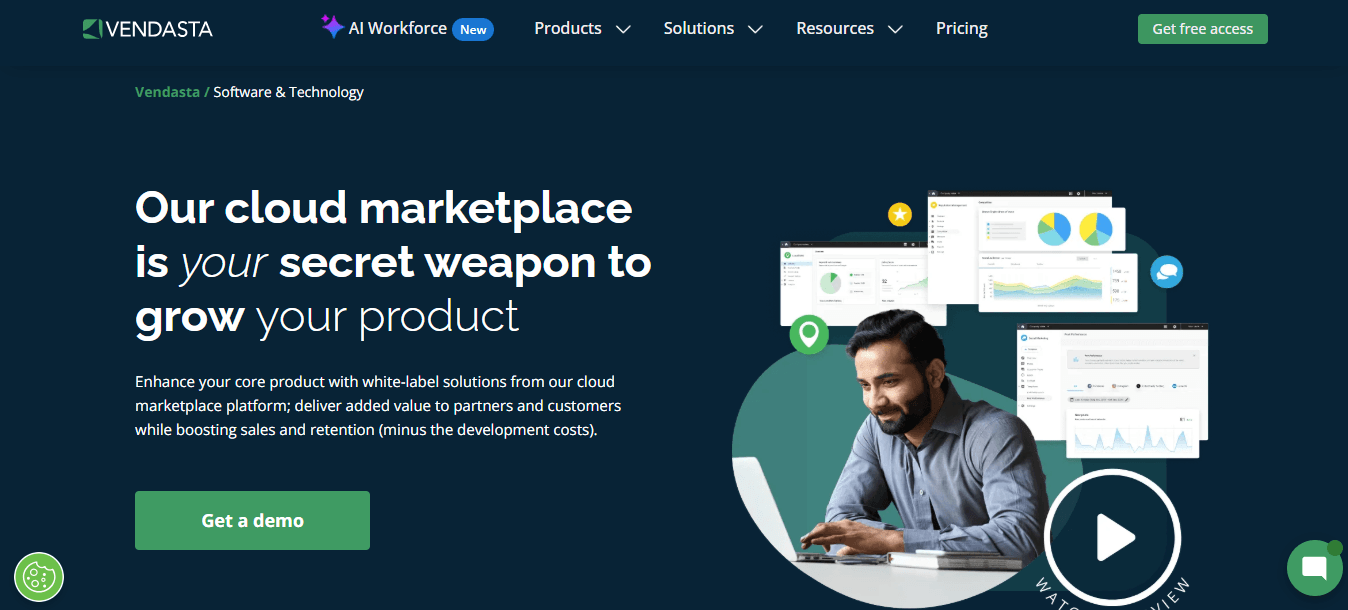
Vendasta suits agencies selling software to local businesses. It offers tools for SEO, listings, reputation, CRM, and advertising. Agencies can package these tools with existing marketing services.
The platform also includes a marketplace for managing products and clients. This helps resellers add software without having to build delivery systems.
Program Type: Marketplace reseller program
Ease of Selling Score: 8.2/10
Best For: Local marketing agencies, consultants, and sales-focused service providers.
Revenue Model:
Setup Effort: Medium
Why It Fits:
Vendasta helps agencies expand without changing their service model. It works well for local SEO and reputation management. It also fits listing services and digital advertising packages.
The dashboard supports account management, sales, products, and reports. This makes it useful for multi-client agency operations.
Watch Out For: New resellers may need time to learn the marketplace. Pricing and access may scale with advanced features.
Tip: Start with reputation management or local listings. These services are simple to explain. They also show visible results quickly.
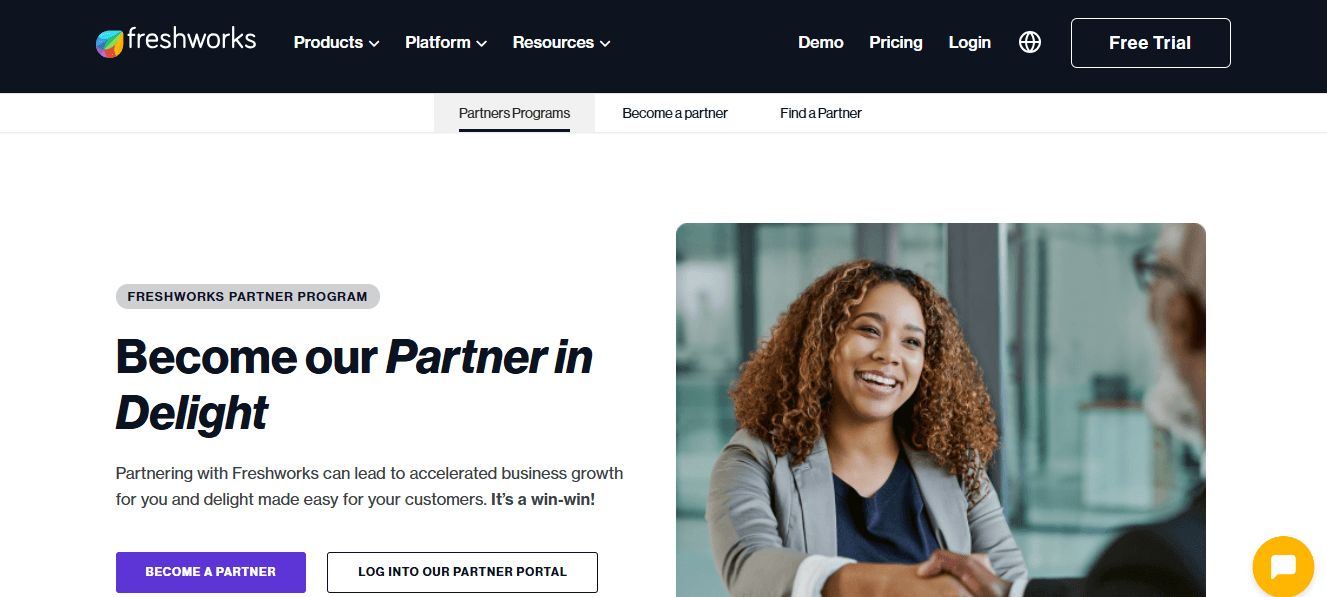
Freshworks fits consultants selling support, CRM, and sales tools. It includes Freshdesk, Freshchat, Freshsales, and related products.
You manage client acquisition and product recommendations.
Freshworks handles software delivery, onboarding, and technical support. This makes it easier for non-technical partners to sell.
Program Type: SaaS partner/reseller program
Ease of Selling Score: 8.0/10
Best For: SaaS consultants, CRM resellers, helpdesk consultants, and SMB advisors.
Revenue Model:
Setup Effort: Low to Medium
Why It Fits:
Freshworks products are easy to explain and demonstrate. They fit common sales, support, and service needs. The product suite also supports the growth of SMB operations.
Partner resources help resellers match tools to client use cases. This reduces confusion during early sales conversations.
Watch Out For: Choose the product line carefully. Start with one product line for clearer positioning.
Tip: Lead with Freshdesk or Freshsales first. Both solve common SMB problems. They are easier to demo and position.
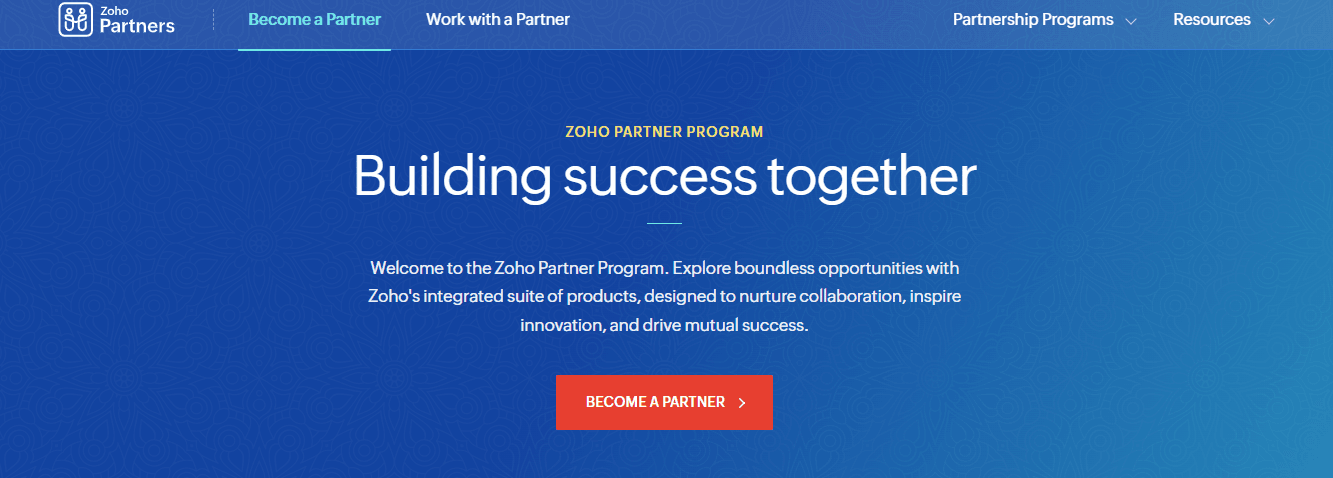
Zoho fits established agencies and IT firms serving larger clients. It offers 55+ apps across CRM, finance, HR, and support.
Partners can sell, implement, and scale Zoho solutions.
The program works best for consultative software providers. It is stronger for structured implementation projects than quick referrals.
Program Type: System integrator partner program
Ease of Selling Score: 7.5/10
Best For: Enterprise consultants, IT firms, and transformation agencies.
Revenue Model:
Setup Effort: High
Why It Fits:
Zoho works well for multi-app transformation projects.
Partners can package CRM, finance, support, and operations tools. It also supports industry-specific solution bundles. This helps consultants create higher-value client engagements.
Zoho is useful when clients need connected business systems.
Watch Out For: It is better suited for experienced providers. Entry may require business qualification and partner readiness.
Tip: Package Zoho apps by industry. CRM, Books, and Desk work well together. This makes the offer easier to sell.
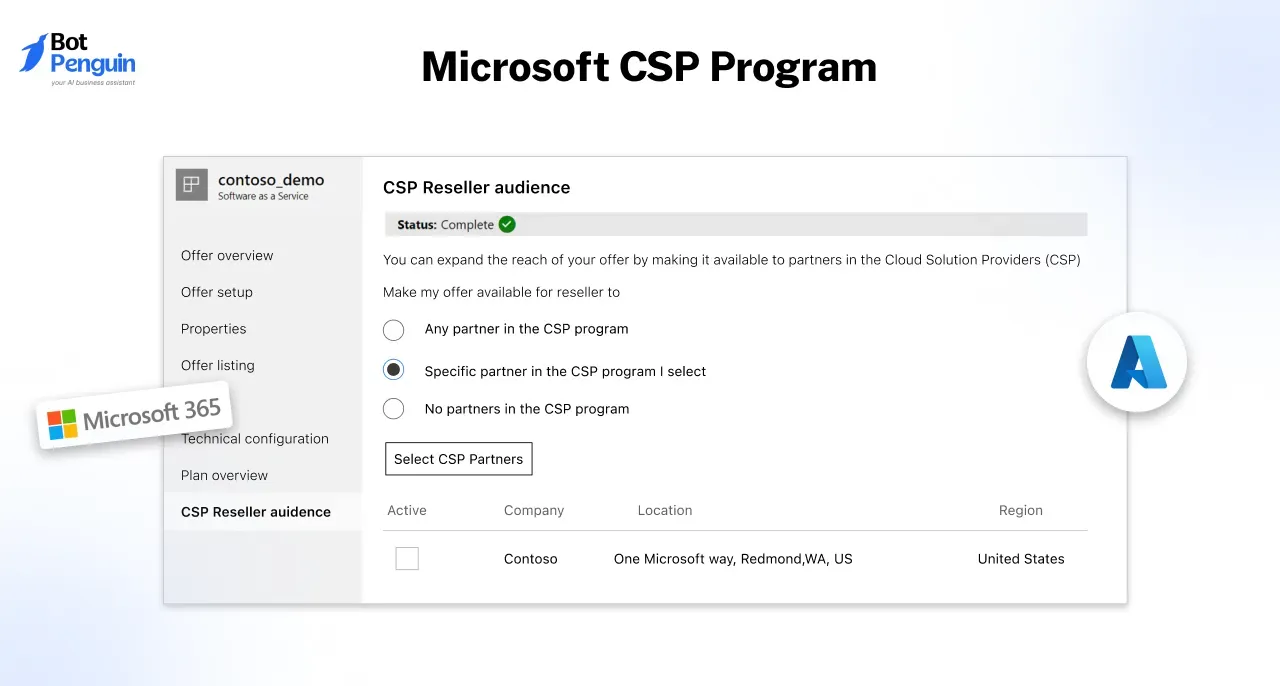
Microsoft CSP (Cloud Solution Provider) fits IT providers selling Microsoft cloud products. It covers Microsoft 365, Azure, Dynamics 365, and related services.
Resellers manage billing, pricing, support, and client relationships. Microsoft handles the core cloud infrastructure and product delivery.
This makes it useful for recurring IT service models.
Program Type: Cloud reseller program
Ease of Selling Score: 7.7/10
Best For: MSPs, IT providers, cloud consultants, and infrastructure agencies.
Revenue Model:
Setup Effort: Medium to High
Why It Fits:
Most business clients already know Microsoft products. That makes Microsoft 365 easier to position and explain.
Resellers can bundle licenses with support and migration services. This creates recurring revenue beyond the software margin.
It also fits clients already using Outlook, Teams, or Excel.
Watch Out For: Competition is high, so service packaging matters. Direct CSP requires stronger support and revenue capacity.
Tip: Use Microsoft 365 Business Basic first. It is affordable and easy to explain. You can upsell higher plans later.

Google Workspace suits teams selling email and collaboration tools. It includes Gmail, Drive, Calendar, Meet, and shared work apps.
Resellers manage billing, user accounts, and ongoing support. Google handles infrastructure, uptime, and product updates.
This makes it useful for lightweight IT and business setup services.
Program Type: Workspace reseller program
Ease of Selling Score: 8.2/10
Best For: IT consultants, web teams, startup advisors, and remote-work agencies.
Revenue Model:
Setup Effort: Low to Medium
Why It Fits:
Google Workspace is simple, familiar, and easy to adopt.
Many startups already want Gmail for business email. Resellers can bundle it with websites, SEO, or starter packages.
It also fits teams moving from personal email to business tools. This makes the first sale easier for new service providers.
Watch Out For: Margins may depend on reseller level and sales volume. Approval is required before becoming a reseller.
Tip: Target new businesses and startup teams. They usually need a branded email first. This makes Workspace an easy entry product.
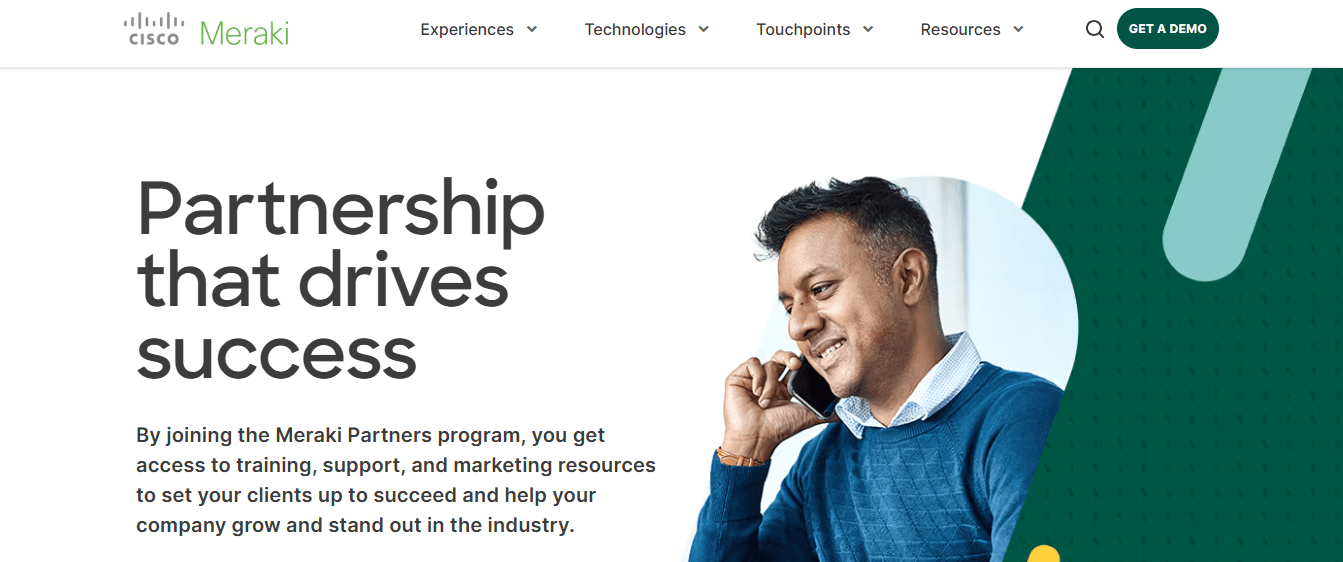
Cisco Meraki is well-suited for IT resellers selling cloud-managed infrastructure. It covers Wi-Fi, firewalls, switches, SD-WAN, and surveillance systems.
Partners manage client relationships, recommendations, and implementation. Cisco manages product development, updates, and technical infrastructure.
This makes it strong for clients needing secure business networks.
Program Type: Technology partner program
Ease of Selling Score: 7.5/10
Best For: MSPs, IT consultants, network engineers, and infrastructure resellers.
Revenue Model:
Setup Effort: High
Why It Fits:
Meraki simplifies networking through a centralized cloud dashboard. It works well for schools, offices, retail, and healthcare.
Recurring licenses create renewal and upsell opportunities. Resellers can also bundle setup, monitoring, and support services.
This makes Meraki useful for managed IT revenue models.
Watch Out For: It is a higher-ticket sale with longer decision cycles. Partner tiers may require training and certifications.
Tip: Start with Meraki Go for smaller clients. It is easier to explain and deploy. Then expand into larger network contracts.
Salesforce fits consultants selling CRM and customer experience solutions. It focuses on implementation, customization, training, and long-term support.
Partners usually earn more from services than direct commissions. Qualified partners may also access resale opportunities.
This makes Salesforce better suited to consultative selling than to quick resale.
Program Type: Consulting partner program
Ease of Selling Score: 7.2/10
Best For: CRM consultants, transformation agencies, and marketing automation experts.
Revenue Model:
Setup Effort: High
Why It Fits:
Salesforce creates strong service revenue opportunities. It fits complex sales, service, and marketing operations.
Partners can build workflows, dashboards, automations, and integrations. Industry-specific Salesforce solutions can support premium project fees.
It works best when clients need a structured CRM transformation.
Watch Out For: Sales cycles can be long and technically complex. This is not a simple plug-and-sell reseller model.
Tip: Lead with industry-specific Salesforce solutions. Specialized use cases are easier to price. They also support stronger consulting fees.
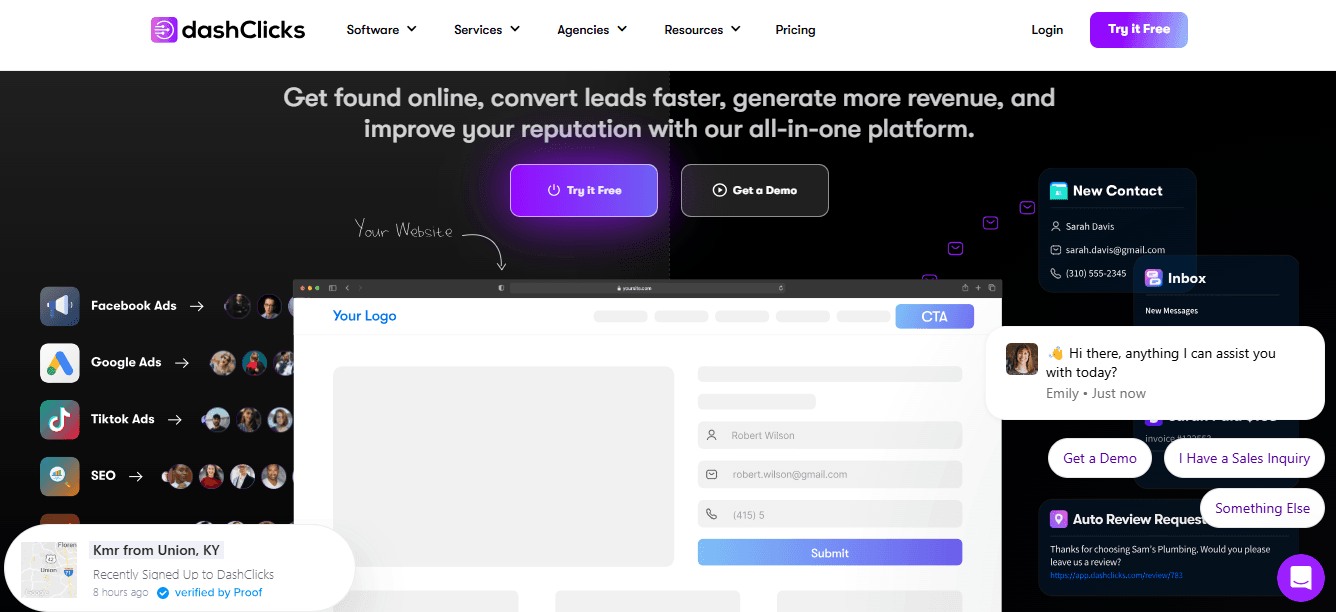
DashClicks fits beginners, solopreneurs, and small agencies. It offers CRM, analytics, reputation tools, funnels, and reporting features.
You can sell ready-made software bundles to clients.
The platform is designed for non-technical digital service providers. This makes it easier for new resellers to get started quickly.
Program Type: Agency reseller program
Ease of Selling Score: 9.0/10
Best For: Solo marketers, beginner agencies, freelancers, coaches, and consultants.
Revenue Model:
Setup Effort: Low
Why It Fits:
DashClicks is easy to demo and quick to launch. Its dashboard looks clean and simple for clients. It works well with SEO, PPC, and social media services.
Resellers can package tools with monthly marketing retainers. This makes it useful for beginner-friendly agency growth.
Watch Out For: It suits beginners better than complex enterprise projects. Serious reselling usually requires paid plans.
Tip: Use Instant Launch templates for faster onboarding. Show clients the working setup early. This helps close deals faster.
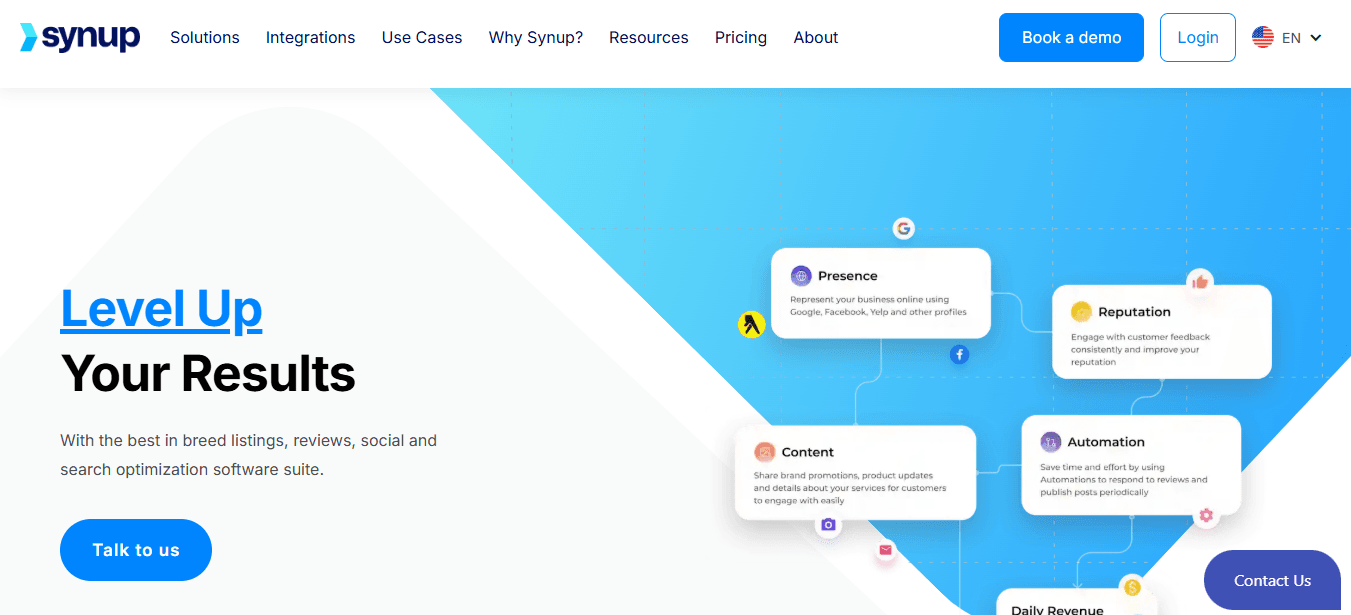
Synup suits agencies selling local SEO and reputation services. It helps manage listings, reviews, visibility, and local search performance.
Resellers manage client relationships and pricing. Synup powers the backend platform and reporting tools.
This makes it useful for agencies serving location-based businesses.
Program Type: Local SEO reseller program
Ease of Selling Score: 8.6/10
Best For: Local SEO agencies, reputation firms, and web design studios.
Revenue Model:
Setup Effort: Low to Medium
Why It Fits:
Most local businesses need visibility and review management. Synup makes results easier to show through reporting. It also works across Google, Yelp, Bing, and directories.
Agencies can package it with local SEO and citation services. This creates a clear recurring service offer for local clients.
Watch Out For: Pricing may depend on volume and partner terms. Best results come when paired with local SEO services.
Tip: Lead with reviews and listings first. Both solve clear local visibility problems. They also create easy SEO upsells.
SuiteDash suits resellers selling branded client portals and business tools. It combines communication, billing, file sharing, projects, and automation.
Resellers control user access, packaging, and pricing.
It works well for service businesses that need client collaboration and for agencies that want software-led retainers.
Program Type: White-label reseller and partner program
Ease of Selling Score: 8.9/10
Best For: Agencies, freelancers, coaches, consultants, and service providers.
Revenue Model:
Setup Effort: Medium
Why It Fits:
SuiteDash replaces many scattered client management tools.
You can white-label portals and reuse templates across clients. It supports recurring revenue through branded client workspaces.
Service providers can package it as a client success portal. This helps position the reseller as a software-enabled partner.
Watch Out For: Serious reselling may require paid plans and add-ons.
Tip: Position SuiteDash as a Client Success Portal. Brand it as your own client workspace. Then charge a monthly access fee.
For MSPs, the strongest reseller opportunities usually come from software that fits naturally into existing IT services.
Look for programs that let you bundle licenses with setup, migration, monitoring, security, or ongoing support. This makes the software easier to sell as part of a broader managed service package.
The best IT reseller programs for MSPs typically fall into three categories:
Microsoft CSP and Cisco Meraki are strong examples because they support both resale and ongoing service revenue.
MSPs should prioritize programs that strengthen existing client relationships rather than adding standalone products that require a completely new sales motion.
The best reseller programs are not always the ones with the highest advertised payout.
The right choice depends on your audience, service model, technical comfort, and revenue goals. The best software reseller programs should clearly fit those factors.
Choose BotPenguin if you want to resell AI chatbot automation. Choose Microsoft, Google, or Cisco if you serve IT clients. Choose Zoho, Salesforce, or Freshworks if your clients need CRM, support, or business software.
Use this list as a shortlist. Then compare pricing control, commission terms, support, renewals, and client ownership before joining.
Compare commission, payout frequency, client ownership, support, onboarding help, product demand, renewal terms, and pricing control. Do not choose only by payout percentage.
Yes. SaaS partner programs can help agencies add recurring revenue, implementation fees, and software-led retainers without having to build products from scratch.
Agencies usually benefit from programs with recurring revenue, pricing control, marketing support, easy onboarding, and products they can bundle with existing services.
Yes. Many SaaS reseller programs let you set custom pricing, bundle services, and control margins. Always check whether the vendor allows pricing flexibility before joining.
Some programs provide full technical support. Others expect you to handle client-facing support while the vendor manages backend issues. Check this before selling.
Some SaaS reseller programs include white-labeled portals or branded dashboards. Others only provide referral links, partner portals, or standard reseller accounts.
You can start quickly if you already serve clients. Programs with simple onboarding, clear demos, and ready sales assets are usually easier to sell first.
Yes. SaaS reseller programs fit well with web design, marketing, consulting, CRM, automation, and IT services. They help add recurring revenue to existing client relationships.
Boost Revenue With Chatbot Reselling
See our partner pricing plans and start earning faster by reselling BotPenguin chatbots—maximize margins, simplify onboarding, and grow client revenue.
View Reseller PricingCheckout our related blogs you will love.
Updated at Oct 6, 2026
9 min to read
Updated at Sep 28, 2026
12 min to read
Updated at Sep 21, 2026
11 min to read
Updated at Sep 12, 2026
8 min to read
Updated at Aug 21, 2026
9 min to read
Table of Contents