


Website Chatbot: What It Is, How It Works, and If You Need One
Updated at Oct 6, 2026
12 min to read
.webp)
Intercom isn’t as perfect as you think.
It has been the go-to platform for customer messaging and support for years. Its tools are powerful, and its brand is strong. However, many startups and small businesses are now second-guessing their choice and looking for the best intercom alternatives.
Why? Because Intercom often creates challenges like:
These issues push companies to seek a cheaper alternative to Intercom or even a free alternative to Intercom that still delivers robust features without the heavy costs.
This guide dives into the best intercom alternatives in 2026.
We’ll look at options that range from Intercom free alternatives to affordable premium solutions. Whether a small startup or a growing business, you’ll find tools matching your needs and budget.
If Intercom’s cost or complexity is holding you back, it’s time to explore the alternative to Intercom and make a switch.
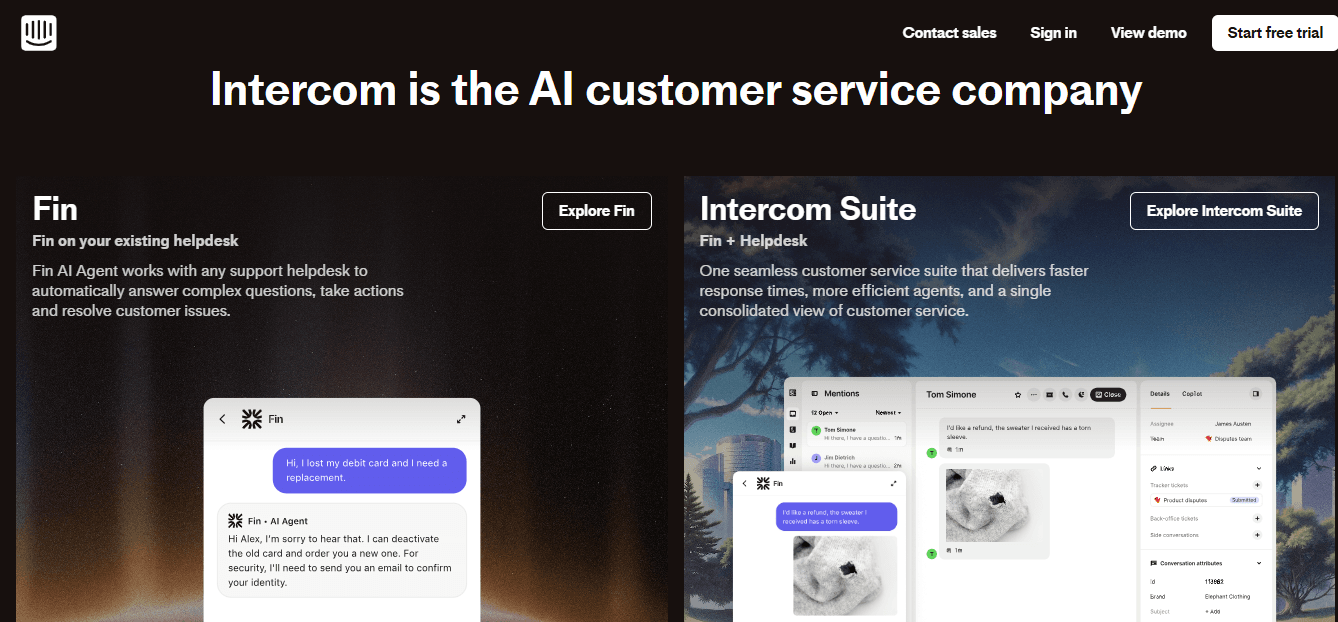
In May 2026, Intercom, Inc. officially renamed the company to Fin. The Intercom name still remains in use for its customer service help desk product.
The naming now works like this:
● Fin, the company: The corporate entity formerly known as Intercom, Inc.
● Fin, the product: The AI customer support agent used to resolve customer questions with AI.
● Intercom, the product: The customer service help desk software, which continues to operate under the Intercom name.
For buyers, this matters because searches for Fin alternatives and Intercom alternatives can now overlap. Someone comparing Fin alternatives may be focused on AI support agents, while someone comparing Intercom alternatives may be evaluating complete help desk platforms.
Intercom plans start at $29 per seat per month for Essential, followed by $85 for Advanced and $132 for Expert. Fin AI is billed separately from $0.99 per outcome, while add ons such as Copilot cost extra.
Switching from Intercom to a new customer messaging platform isn’t just about finding a new tool. It’s a strategic decision that impacts your entire customer experience.
The goal is to find the best Intercom alternative that not only meets your current needs but also grows with your business.
But before you jump into exploring other platforms, keep these important factors in mind. They will guide you in selecting an alternative to Intercom that fits your team, budget, and future plans.
It’s not just about the monthly subscription.
What looks affordable on the pricing page often comes with layered expenses—add-ons for bots, team member fees, or higher charges for exceeding usage limits.
A small business may start with a basic plan, expecting to keep costs low. But a few months in, they’re paying more to unlock reports, custom branding, or even email support. What started as a cost-effective tool slowly becomes difficult to justify.
When exploring a cheaper alternative to Intercom, consider:
This broader view helps you avoid tools that seem cheap upfront but grow expensive fast.
Automation should be standard, not a luxury.
Yet, many platforms limit access to bots and workflow automation unless you’re on a premium plan. That means smaller teams end up spending time on repetitive tasks like answering FAQs or routing support queries.
Imagine your team juggling live chats and emails all day, simply because automation isn’t unlocked on the plan you’re on. That time could be better spent resolving complex issues or building customer relationships.
A free Intercom alternative with built-in automation ensures you can streamline support from day one, even with limited resources.
Switching from Intercom doesn’t just impact workflows—it directly affects how fast your team can get up to speed.
A platform that looks good on paper can still fall short if it takes weeks for your team to figure it out. That lost time adds up quickly.
When evaluating alternatives, consider tools that require minimal training or tech expertise. Ask:
An easy-to-learn platform doesn’t just reduce friction—it shortens the transition period and avoids downtime. That can make the difference between a smooth handoff and a messy, frustrating switch.
What works for a 2-person team may not hold up when you hit 20.
Your support tool should scale with your growth, not block it.
Maybe you started out with one support channel and no automations. But now you need chat, email, self-serve help, and team management—all in one place.
If the tool can’t support additional teammates or handle a larger volume of messages without jumping tiers, it creates bottlenecks.
Look for Intercom cheaper alternatives that allow you to expand naturally without forcing sudden plan upgrades or complicated workarounds.
Responsive support is essential, especially during migration and onboarding.
You don’t want to get stuck with an issue and wait two days for a reply. Or worse, be redirected to a help doc when you need a real person to troubleshoot. For smaller teams, delays like these can throw off operations entirely.
Reliable alternatives to Intercom offer support channels that match your needs, whether it’s live chat, email, or direct phone support. When questions arise, you want answers fast, not frustration.
Support tools shouldn’t exist in a vacuum.
Let’s say your marketing team relies on a CRM and your product team uses in-app analytics. If your messaging platform doesn’t connect to either, you’re left copying data manually—opening the door to errors and lost time.
Before switching, check whether the tool integrates smoothly with:
Seamless integration reduces silos and keeps your teams aligned.
Migration is often the most stressful part of switching.
You don’t want to risk losing years of customer chat logs or dealing with extended downtime.
Some businesses put off switching tools for months simply because the data transfer process feels too risky or unclear.
Look for tools that offer step-by-step migration guides, import/export options, and even concierge onboarding if available.
A good Intercom alternative, free from migration headaches, helps you move fast without compromising customer history.
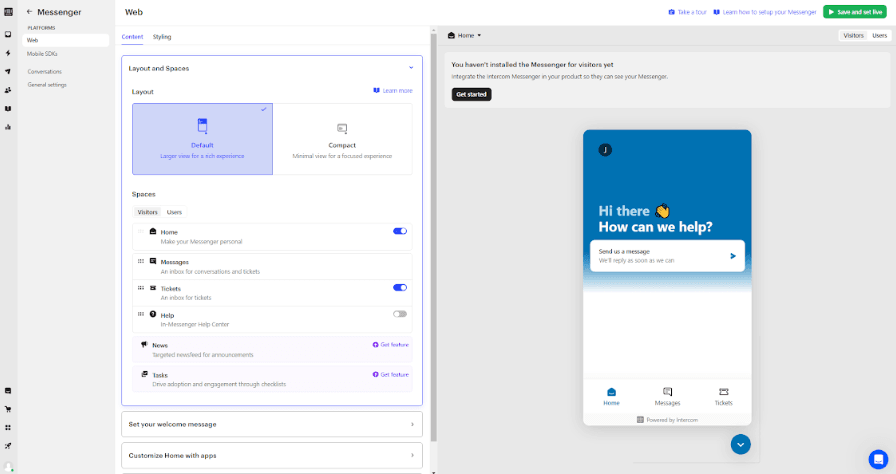
Your business has its own voice and workflow. The tool you choose should reflect that.
If every customer-facing element—chat widget, email layout, message tone—feels generic or off-brand, it affects how your company is perceived. Worse, if you can’t adjust how messages are routed or automate specific tasks, you’re boxed in.
Choose a platform that lets you:
These controls help you build a support experience that fits, not forces, your business.
Choosing the best Intercom alternative starts with knowing what to measure. From cost to automation, support to integrations, the right mix of features ensures your switch isn't just smooth—it’s strategic.
Let’s now explore the platforms that check these boxes.
Choosing the perfect alternative to Intercom means aligning with your business’s unique needs and budget.
Some platforms provide robust features that let you get started without upfront costs, perfect for lean teams. Others balance advanced automation and support while keeping pricing manageable.
And a few offer powerful tools designed to grow with your business, delivering scalability and customization.
This section helps you navigate these options to find the right fit for where your business stands and where it’s headed.
If you’re looking for a lower cost Intercom alternative, start by comparing free plans, trials, and entry level paid options.
These tools give smaller teams a lower cost way to access live chat, customer messaging, shared inboxes, or automation.
Below are four options that offer either a free plan, a free trial, or lower cost paid plans.
BotPenguin is a no-code platform for building AI agents, chatbots, and voice agents that automate lead generation, sales, marketing, and customer support on WhatsApp, Instagram, Facebook, Telegram, phone, and websites. Where Intercom charges per seat and per AI outcome, BotPenguin charges one flat monthly price per plan, with team members included.
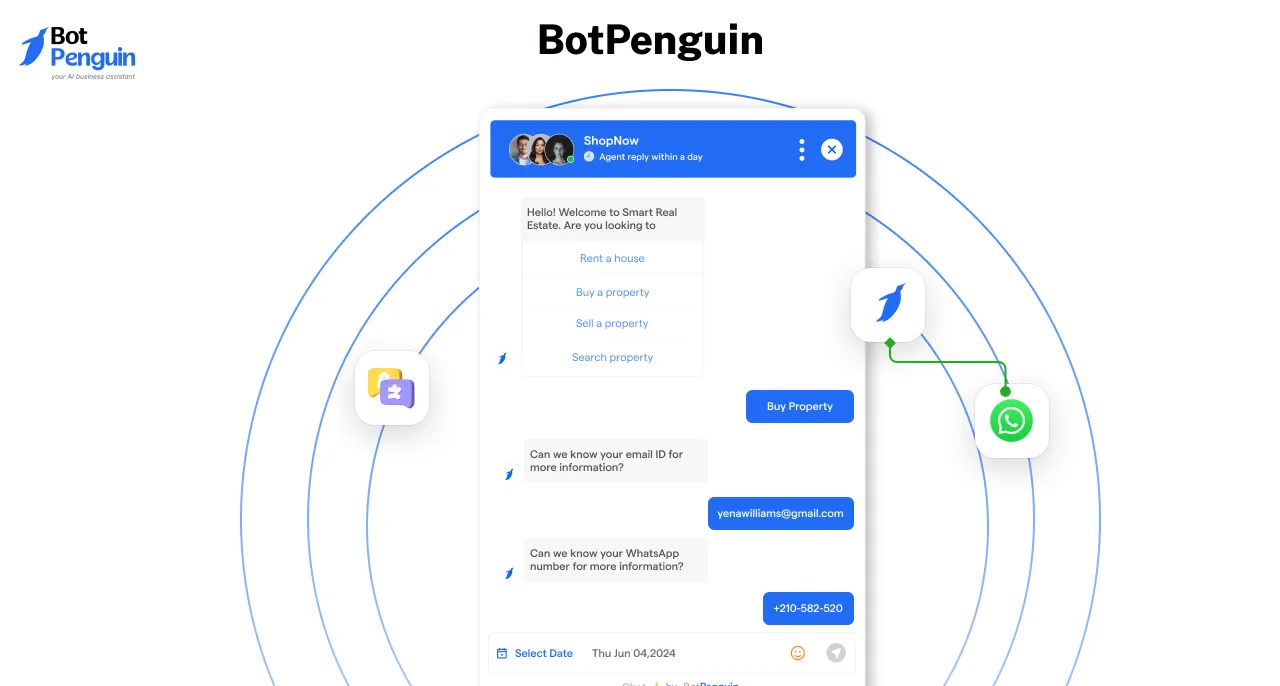
Key Features
● AI chatbot on every plan, including Free: use BotPenguin's AI credits or connect your own OpenAI API key. No per-resolution fees.
● AI chatbots on WhatsApp, Instagram, Facebook, Telegram, SMS, and your website, managed from one dashboard
● Live chat with agent takeover, departments, and business hours
● Train your chatbot on website pages, FAQs, and files
● Choose your AI model: ChatGPT, Claude, Gemini, or DeepSeek on eligible plans
● AI agents and voice agents on the King plan
● Instagram comment to DM automation and WhatsApp broadcasts
● 100+ integrations with CRMs, calendars, payment gateways, and other tools
Pricing checked: October 5, 2026
● Free forever: 1 chatbot on one channel, 1,000 messages a month, AI chatbot trained on your data
● Little: $29/month or $290/year, all channels, 5 bots, 3,000 messages, 5 team members
● King: $99/month or $990/year, AI agents, voice agents on your website, 12,000 messages, 10 team members
● WhatsApp only plans: Start at $15/month
Best for: Startups, SMBs, and agencies that need AI chat on WhatsApp and Instagram, not only on their website.
Compared to Intercom: Intercom is the deeper help desk for in app and email ticketing. BotPenguin is the cheaper fit when customers message you on WhatsApp, Instagram, or your website and you want flat pricing instead of per seat plus per outcome billing.
See the full BotPenguin vs Intercom (Fin) comparison.

Pros & Cons:
✅Free forever plan with essential features
✅No-code chatbot builder for quick setup
✅Clean, user-friendly interface for easy navigation
✅Responsive support team with quick query resolution
✅Competitive pricing with scalable premium plans
❌Some integrations, AI agents, and voice agents are available only on paid plans
❌Need to purchase an add-on for the removal of the BotPenguin logo, though sufficient for most SMB needs
Rating: ★★★★☆ (4.4/5)
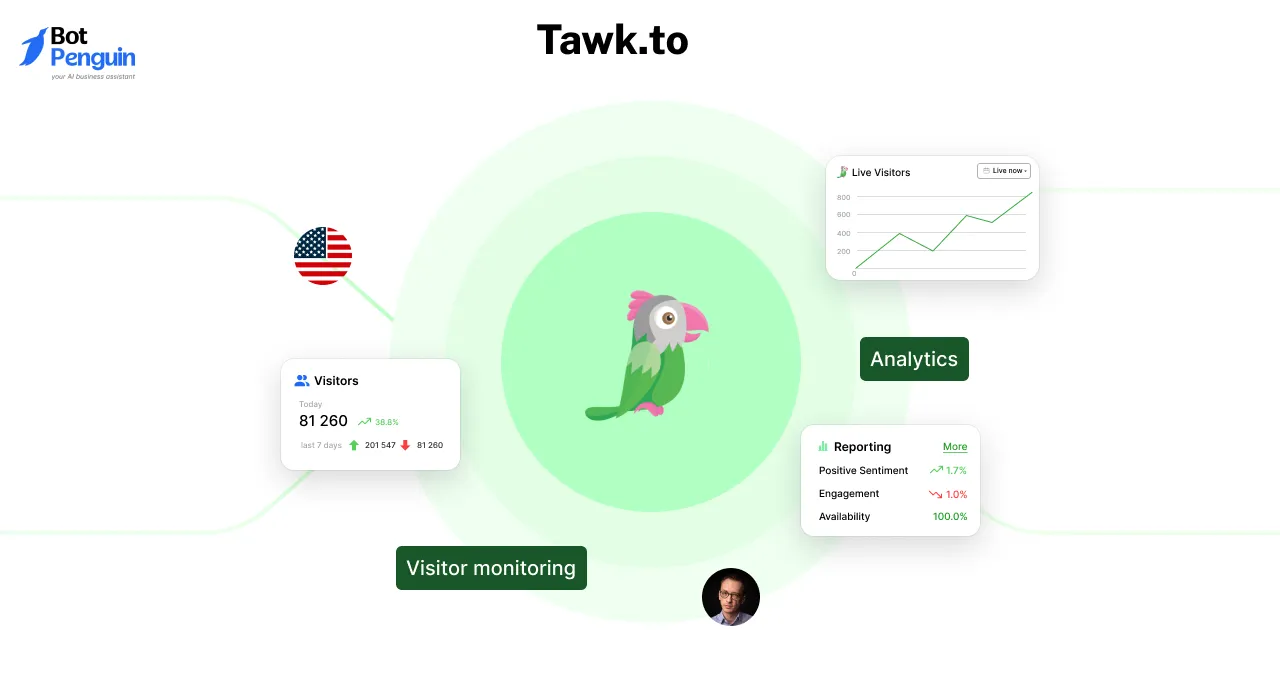
Tawk.to is a popular free Intercom alternative offering unlimited agents and chat volume.
It provides essential live chat features for businesses looking for a free alternative to Intercom that covers real-time customer support without costly subscriptions. This makes it a top pick for startups and SMBs seeking an affordable yet effective communication tool.
Key Features:
Pros & Cons:
✅Completely free with no limits on users or chat volume
✅Simple setup and user-friendly interface
✅Good customization options for branding and chat appearance
❌Limited advanced automation features compared to best Intercom alternative options
❌Less suited to teams that need a full CRM or advanced help desk workflows
❌Support mainly through community and email, not live chat
Pricing
Pricing checked: October, 2026
Best for: Small teams, startups, and businesses focused on free website live chat
Compared to Intercom: Tawk.to
Rating: ★★★★☆ (4.5/5)
Tawk.to is a 100% free alternative to Intercom, perfect for businesses needing basic live chat.
While Intercom offers advanced automation, lead scoring, and product tours, Tawk.to keeps it simple—chat-first, with optional add-ons.
A smart pick if your support strategy is human-first and you want to avoid recurring costs.
Crisp is a versatile messaging platform that integrates live chat, chatbots, email, and CRM features.
As an alternative to Intercom, it appeals to businesses needing omnichannel communication and team collaboration in a single tool.
Crisp offers a modern, scalable solution with advanced automation suited for growing teams.
Key Features:
Pros & Cons:
✅Supports multiple communication channels beyond chat
✅Strong collaboration tools for support teams
✅Flexible automation and chatbot options
❌Free plan limited to 2 agents and fewer features
❌Pricing rises quickly for larger teams
❌Requires some training for advanced functionality
Pricing:
Pricing checked: October, 2026
Best for: SMBs and growing companies needing omnichannel support, teams wanting robust automation, enterprises seeking scalable messaging beyond chat
Compared to Intercom: Crisp
Rating: ★★★★☆ (4.5/5)
Crisp is a cheaper Intercom alternative with a strong emphasis on multichannel inboxes and co-browsing.
Intercom still leads in ecosystem depth, automation scalability, and integrations, but Crisp delivers value through simplicity and transparent pricing.
A reliable, budget-conscious choice for teams prioritizing support visibility and ease of use.
Customerly offers a unified messaging platform that combines live chat, chatbot automation, email marketing, and customer surveys.
As a lower cost alternative to Intercom with a 14-day free trial, Customerly suits small businesses that want support, messaging, and automation in one product.
Key Features:
Pros & Cons:
✅ Combines chat, bots, and email in one tool
✅ Low-cost starter plan with generous limits
✅ Fast setup with intuitive UI
❌ Limited AI capabilities compared to Intercom
❌ Fewer advanced integrations
Pricing:
● Free Trial: 14 days
● Core: €16 per seat/month billed annually
● Growth: €59 per seat/month billed annually
● Ultimate: €84 per seat/month billed annually
Pricing checked: October 5, 2026
Best for: Startups, solopreneurs, growing businesses
Compared to Intercom: Customerly
Rating: ★★★★☆ (4.4/5)
Customerly is a lower cost Intercom alternative for startups that need live chat, support, and customer messaging in one product.
While Intercom offers deeper AI and team collaboration, Customerly combines live chat, customer messaging, and email tools at a lower starting cost than Intercom. This makes it a cheaper Intercom alternative for teams prioritizing usability and cost.
After comparing free and lower cost Intercom alternatives, growing teams may also want tools with stronger help desk features at manageable prices.
These affordable or cheaper alternatives to Intercom provide solid options for small teams and digital agencies who want value and performance.
Let’s explore three tools that deliver on both.
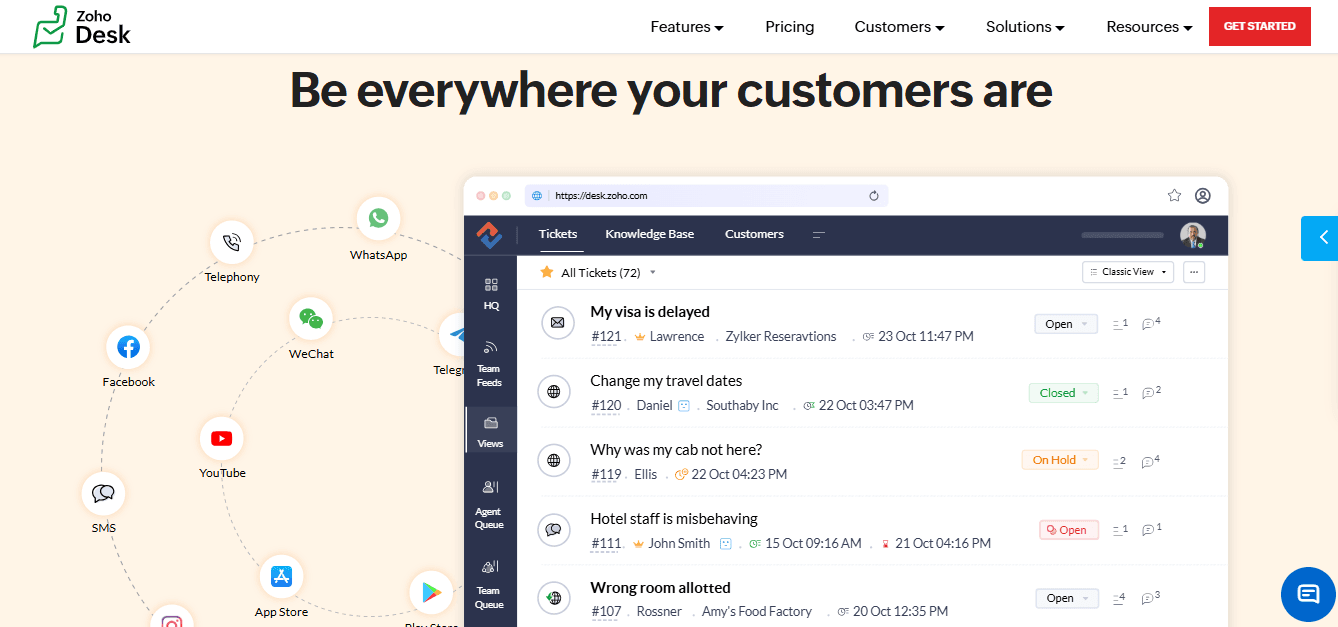
Zoho Desk is a powerful customer service platform that works as a strong alternative to Intercom by combining chat, ticketing, and AI automation.
It is perfect for businesses looking for a unified help desk solution that goes beyond messaging.
Zoho Desk fits well into the Zoho ecosystem, making it an attractive option for teams seeking an Intercom alternative with extensive features.
Key Features:
Pros:
✅Robust AI and automation capabilities ideal for scaling support
✅Deep integration with Zoho’s suite of business apps
✅Supports multi-channel support in one platform
❌Some advanced features reserved for higher-priced plans
❌Moderate learning curve compared to simpler alternatives to Intercom
❌Add-ons can increase total cost of ownership
Pricing:
Pricing checked: October, 2026
Best for: SMBs using Zoho tools, teams needing combined chat & ticket management, growing businesses wanting a scalable Intercom alternative
Compared to Intercom: Zoho Desk
Rating: ★★★★☆ (4.4/5)
Zoho Desk offers a free alternative to Intercom with strong helpdesk capabilities and deep CRM integrations, especially within the Zoho ecosystem.
While Intercom emphasizes messaging-first experiences, Zoho Desk leans into robust ticketing and cross-team workflows.
Better for teams needing omnichannel support and granular ticket control.
Freshdesk by Freshworks is a cloud-based customer support platform offering a balance between affordability and enterprise-level capability.
It’s a great alternative to Intercom for businesses looking for a scalable Intercom replacement that doesn't demand high coding resources.
Key Features:
Pros & Cons:
✅ Easy to set up, friendly for growing teams
✅ Affordable with a rich free tier
✅ AI and automation on higher plans
❌ Chat interface not as dynamic as Intercom
❌ Advanced features require Pro+ plans
❌ Workflow setup can get complex
Pricing:
Pricing checked: October, 2026
Best for: SMBs, startups, and support teams needing a scalable omnichannel platform with AI features
Compared to Intercom: Freshdesk
Rating: ★★★★☆ (4.4/5)
Freshdesk is one of the most well-rounded Intercom alternatives, offering a blend of affordability, support versatility, and automation.
While Intercom focuses more on chat-first engagement and user journey nurturing, Freshdesk leans into structured support across all channels.
Its Freddy AI capabilities support automated ticket resolution, while Freshdesk provides broader ticketing controls.
Intercom outpaces Freshdesk in marketing automation and user segmentation, but Freshdesk leads for teams prioritizing multi-touch support and ITSM functions.
Shared Inbox by Canary is an AI-powered team inbox and helpdesk platform built to simplify customer communication and boost response efficiency.
It helps teams manage all customer emails from one place while leveraging AI to draft replies, suggest responses, and surface top issues making it a strong, modern alternative to Intercom.
Unlike complex and expensive systems, Shared Inbox by Canary offers an intuitive, email-first approach designed for fast setup, smooth collaboration, and measurable support excellence.
Key Features:
Pros & Cons:
✅ Simple, email-first interface that requires no training
✅ Built-in AI assistance to speed up customer responses
✅ Affordable pricing compared to traditional helpdesk tools
✅ Offers analytics on performance, response time, and issue trends
❌ Currently focused on email (chat and social integrations coming soon)
❌ No SLAs or auto-tagging yet (planned for future updates)
Pricing:
Free Trial: 7-day free trial with access to all premium features
Paid Plans: Starting at $10/month per user, billed monthly, cancel anytime
Pricing checked: October, 2026
Best for: Startups, SMBs, and growing support teams that handle customer communication primarily over email and want AI-powered assistance without enterprise pricing.
Compared to Intercom: Shared Inbox by Canary
Rating: ★★★★★ (4.8/5)
Shared Inbox by Canary is a sleek, affordable Intercom alternative that blends AI with a shared email workspace. Its plan combines AI-powered support, a shared inbox, and help desk features, while Intercom separates seat pricing from Fin AI outcome charges.
While Intercom provides deep marketing automation and multi-channel workflows, Canary focuses on making team email collaboration smarter and faster.
A top pick for teams that live in their inbox and want AI-driven productivity without the overhead of traditional helpdesks.
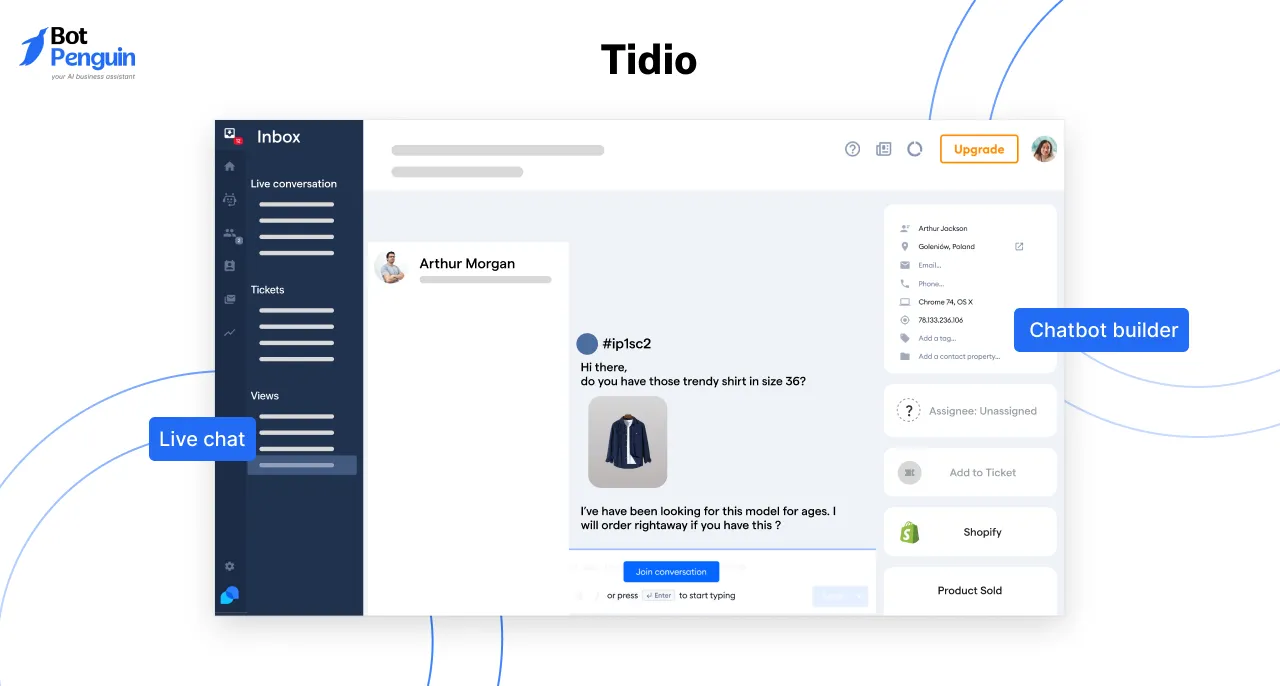
Tidio is an affordable and easy-to-use chat platform combining live chat and chatbots.
It serves as a popular Intercom alternative for small businesses and e-commerce sites aiming to automate customer conversations with minimal setup.
Tidio offers a strong free plan, making it an attractive free alternative to Intercom for budget-conscious teams.
Key Features:
Pros & Cons:
✅Simple chatbot setup without technical knowledge
✅Strong multi-channel support at affordable price points
✅Responsive mobile apps for on-the-go support
❌Advanced analytics and integrations require paid plans
❌Chatbot customization limited for highly complex flows
❌Some e-commerce integrations only available on higher tiers
Pricing:
● Free Forever Plan: Available with limited conversations and features
● Starter: $24.17/month
● Growth: Starts at $49.17/month
● Plus: Starts at $300/month plus usage
Pricing checked: October, 2026
Best for: small businesses and digital agencies, e-commerce teams automating chat, growing companies seeking an affordable Intercom alternative
Compared to Intercom: Tidio
Rating: ★★★★☆ (4.6/5)
Tidio is a free Intercom alternative built around live chat and chatbot automation, with a UI that’s beginner-friendly.
Unlike Intercom, which leans more into data-rich insights and in-app messaging, Tidio focuses on real-time interactions and automation at lower costs.
Excellent for those seeking a middle ground between cost-efficiency and AI support.
While tools like Helpwise and Customerly are great for teams starting or scaling with a budget in mind, some businesses need deeper automation, tighter integrations, and more enterprise-grade support.
That’s where premium alternatives to Intercom come in.
These tools go beyond affordability, offering advanced capabilities in ticketing, automation, and collaboration that make them strong contenders to Intercom’s higher-tier plans.
If you’re a fast-scaling startup, agency, or support-heavy business that needs more than just live chat, these next tools are worth considering.
DevRev is a customer support and product development platform in one, designed to align support tickets with engineering priorities.
It’s an ideal alternative to Intercom for tech-focused startups who want real-time feedback flowing straight into product updates.
Key Features:
Pros & Cons:
✅ Bridges the gap between product and customer teams
✅ Excellent for developer-centric environments
✅ Strong automation in routing and workflows
❌ Learning curve for non-technical users
❌ Higher cost if not using developer tools
Pricing:
Pricing checked: October, 2026
Best for: Small teams, digital agencies, startups in tech
Compared to Intercom: DevRev
Rating: ★★★★☆ (4.3/5)
DevRev is a niche but powerful alternative to Intercom for product-focused teams. While it lacks Intercom’s marketing tools, it excels in engineering alignment and AI ticket handling.
For dev-led startups, it’s the best Intercom alternative to keep support and build teams in sync.
Helpwise is a shared inbox platform that centralizes email, WhatsApp, live chat, and social messaging into one easy-to-use dashboard.
For teams seeking a cheap Intercom alternative, Helpwise offers simplicity and clarity, making collaboration easy across support, sales, and operations teams.
Key Features:
Pros & Cons:
✅ Clean interface that teams can adopt quickly
✅ Affordable pricing for smaller businesses
✅ Great email + chat integration in one place
❌ Doesn’t support advanced AI workflows like Intercom
❌ Limited customization in chatbot behavior
Pricing:
Pricing checked: October, 2026
Best for: Small businesses, solopreneurs, digital agencies
Compared to Intercom: Helpwise
Rating: ★★★★☆ (4.6/5)
Helpwise is a cheaper alternative to Intercom with a sharp focus on multi-channel shared inboxes. It doesn’t have Intercom’s sophisticated automation or integrations ecosystem, but it's easier to use and more budget-friendly.
A solid choice if you're after intercom alternatives free of complexity.
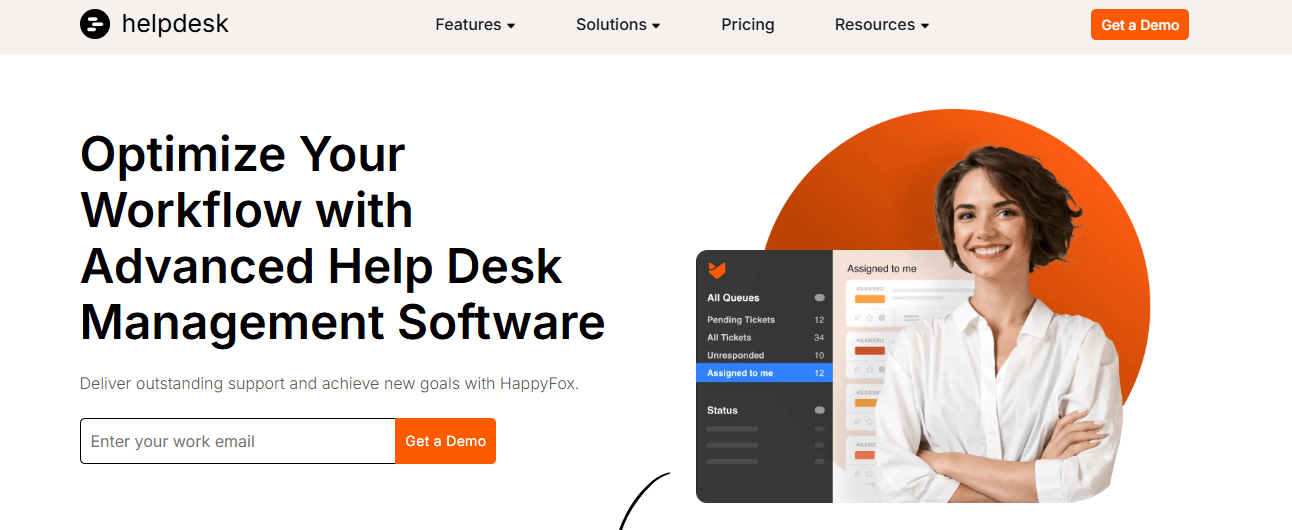
HappyFox is an all-in-one help desk and customer support software built for businesses that need structure, speed, and scale in their support operations.
Designed with mid-sized and enterprise teams in mind, it combines robust ticket management with powerful automation and knowledge base tools.
If you’re looking for a best Intercom alternative that’s tailored for complex workflows across departments, HappyFox is a strong contender.
Key Features:
Pros & Cons:
✅ High customizability for ticket flows
✅ Scalable support for large teams and multi-department use
✅ Fast UI and clean agent interface
❌ No forever-free plan
❌ Setup may feel heavy for startups or solo users
❌ Pricing is on the higher end
Pricing:
Pricing checked: October, 2026
Best for: Enterprises and mid-size teams needing structured ticketing, automated workflows, and cross-department collaboration
Compared to Intercom: HappyFox
Rating: ★★★★☆ (4.5/5)
HappyFox provides a more focused help desk experience than Intercom. Where Intercom shines in conversational engagement and lead nurturing, HappyFox excels in post-sale support, ticketing logic, and internal workflows.
It's a better choice for teams needing centralized ticket resolution over messaging-based sales funnels.
Intercom has the edge in multichannel messaging and app integrations, but HappyFox wins on backend organization, especially for IT and operations-heavy teams.
By now, we’ve seen a range of alternatives to Intercom that work across budgets and use cases.
But how do you know which one fits your team?
It’s not just about picking the cheapest or most powerful. You need a tool that fits your business, your growth stage, and your way of working.
This section breaks down what to look for, so you don’t just switch tools, you switch smart.
Your business may not need everything Intercom offers.
If you're a small team, you may only need live chat, chatbot handoffs, and a shared inbox. In that case, tools like Tidio, Crisp, or tawk.to can keep the setup focused.
BotPenguin works well here, too. Its free plan includes one chatbot, chatbot workflows, and AI chatbot access using BotPenguin AI credits or your own OpenAI API key.
If you’re more support-heavy and need ticketing, SLAs, or internal notes, Freshdesk or Zoho Desk bring structure without being overwhelming.
The key is to define what your day-to-day actually looks like. Then match tools to that reality, not feature checklists.
Price matters—especially as your usage grows.
Startups often look for a free Intercom alternative to test the waters. BotPenguin and Crisp offer permanent free plans, while Customerly provides a 14 day free trial before moving to paid plans.
But also look at growth costs.
Some tools scale linearly. Others surprise you with add-ons. Crisp uses fixed workspace pricing, while HappyFox charges by agent and plan level.
BotPenguin uses plan based pricing, so costs are tied to the plan rather than per agent or per AI outcome.
Pick based on what you’ll need in 6 months—not just today.
New tools = learning curves.
That’s why simple UX wins.
Tidio and tawk.to are relatively simple to set up compared with larger help desk products.
If you need advanced features but don’t want complexity, BotPenguin again hits a sweet spot—chat automation without heavy setup. A strong pick for teams that need an alternative to Intercom that still delivers.
Bigger tools like DevRev or HappyFox offer depth, but onboarding takes time. Only go there if you have the bandwidth.
Check demo videos. Try trial plans. If onboarding takes too long, adoption can slow and disrupt the transition.
Your support tool should talk to your tech stack.
Use Shopify? WordPress? HubSpot?
Pick tools that plug in without effort. Zoho Desk is great if you're already using Zoho. Customerly connects easily with WordPress. Helpwise fits right into Google Workspace and Slack.
BotPenguin supports 100+ integrations across CRMs, calendars, payment gateways, and other business tools.
If a tool hides integrations behind top-tier pricing, it’s a red flag.
When your tool breaks, support speed matters.
Freshdesk and Zoho Desk provide support resources and paid support options for business users. Their help centers are also extensive and regularly updated.
But don’t ignore smaller tools.
BotPenguin provides support resources to help teams with setup and ongoing use.
Also, look for tools with active communities—Crisp and Tidio users often share workarounds and tutorials online.
Good support is not just reactive. It should help you grow.
What works now should work later, too.
If you're a digital agency or SaaS team expecting scale, consider platforms like DevRev or HappyFox. They support multiple roles, workflows, and channels.
But some tools manage to scale without becoming bloated.
Crisp and BotPenguin both offer multiple plan levels, so teams can move to higher tiers as their feature and usage needs increase.
When evaluating scalability, check the highest-tier plan too. Will it still be affordable when your team triples?
No tool is perfect. But the best Intercom alternative for you is one that fits your team today—and won’t hold you back tomorrow.
Ready to shortlist your options?
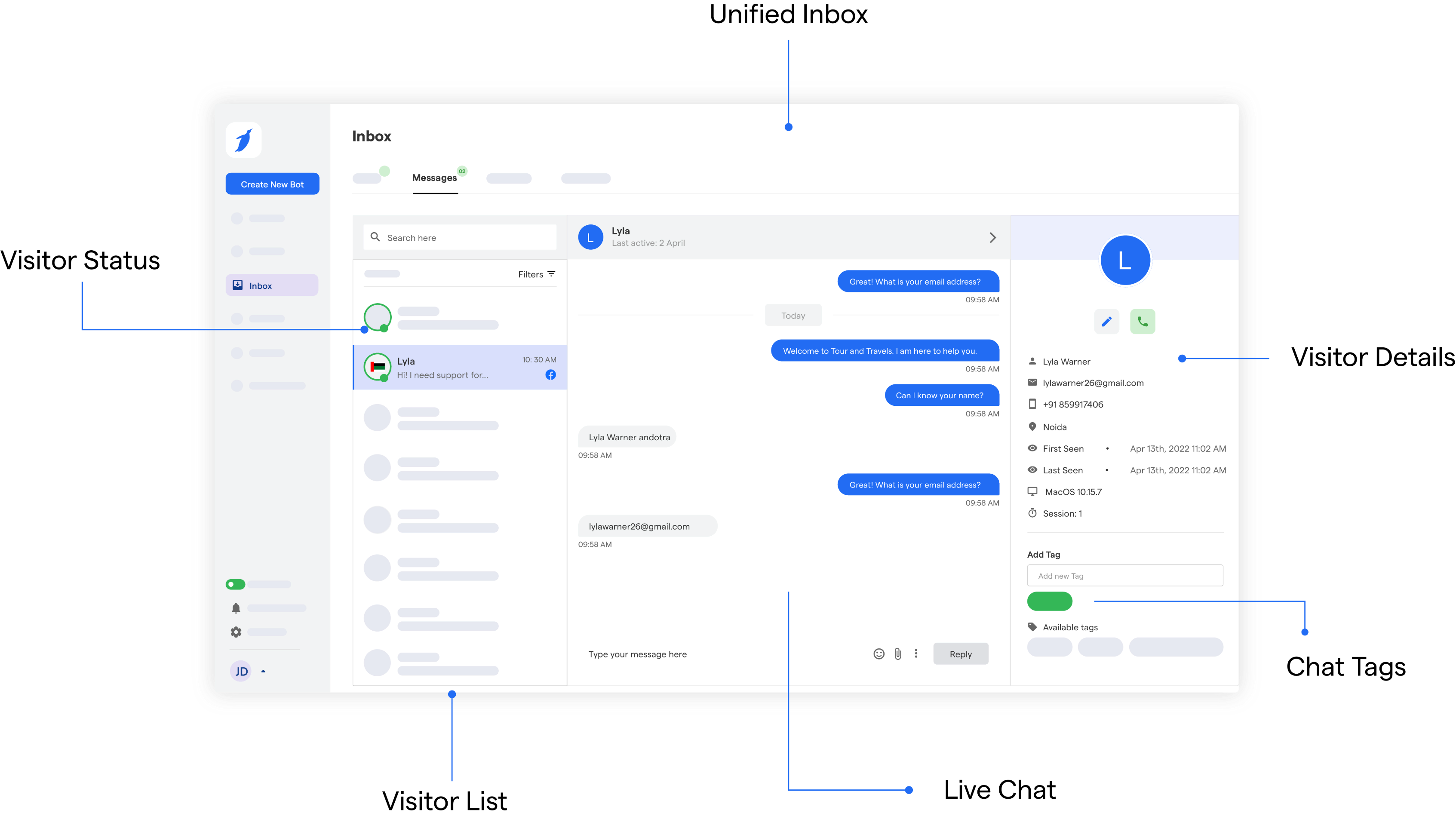
If Intercom's per-seat plus per-outcome billing is why you're looking, the question is which tool keeps costs flat as you grow. BotPenguin does that with one monthly price per plan:
● Start free with one AI chatbot, then move to paid plans when you need more channels, users, or automation.
● Run AI on BotPenguin's AI credits or your own OpenAI API key. There are no per-resolution fees.
● Reach customers where they already message you: WhatsApp, Instagram, Facebook, Telegram, SMS, and your website.
● Add AI agents and voice agents on King when you are ready to automate more sales and support.
● Connect 100+ tools, including CRMs, calendars, and payment gateways.
BotPenguin is built for startups, small businesses, and the agencies that serve them. Try BotPenguin free.
Intercom, Inc. officially renamed the company to Fin in May 2026. The Intercom name still applies to its customer service help desk product, while Fin is also the name of its AI customer support agent. So Fin is now the company name and AI product name, while Intercom remains the help desk software.
No. Intercom does not offer a permanent free plan. It provides a free trial, while paid plans start at $29 per seat per month. Businesses looking for a free Intercom alternative can consider BotPenguin, tawk.to, or Crisp, depending on whether they need chatbot automation, live chat, or a shared inbox.
Intercom Essential starts at $29 per seat per month, Advanced starts at $85, and Expert starts at $132. Fin AI is billed separately from $0.99 per outcome. Copilot costs an additional $29 per agent per month. Total cost therefore depends on team size, AI usage, and any additional features.
Major Intercom competitors include Zendesk, Freshdesk, Tidio, Crisp, and BotPenguin. Zendesk and Freshdesk focus more heavily on help desk operations. Tidio combines live chat and AI automation. Crisp suits shared inbox teams, while BotPenguin is better suited to businesses using website and messaging channels such as WhatsApp and Instagram.
The best Intercom alternative for startups depends on the support model. Crisp suits small teams that want a shared inbox with predictable workspace pricing. BotPenguin works well for startups using chatbots, WhatsApp, Instagram, and website conversations. tawk.to is also worth considering when free website live chat is the main requirement.
Yes. BotPenguin is a strong Intercom alternative for small businesses and agencies that need chatbot automation across website and messaging channels. It supports WhatsApp, Instagram, Facebook, Telegram, and website chat. Its AI chatbot can use BotPenguin AI credits or the customer's own OpenAI API key, with no per-resolution fees.
Intercom uses per-seat pricing, starting at $29 per seat per month, while Fin AI adds charges from $0.99 per outcome. Other alternatives use different models. Crisp uses workspace pricing, Helpwise charges per user, and BotPenguin uses plan-based pricing. BotPenguin's AI chatbot can use BotPenguin AI credits or your own OpenAI API key, with no per-resolution fees.
Subscribe to Our Newsletter
Get the latest business insights straight into your inbox.
Checkout our related blogs you will love.
Updated at Oct 6, 2026
12 min to read
Updated at Oct 6, 2026
15 min to read
Updated at Oct 5, 2026
8 min to read
Updated at Sep 30, 2026
9 min to read
Updated at Sep 29, 2026
13 min to read
Table of Contents