WhatsApp White Label Partnership: Complete Guide for Agencies and SaaS Platforms (2026)

Partner

Updated On Mar 13, 2026

14 min to read

BotPenguin AI Chatbot maker

WhatsApp Whitelabel Partnership Explained: Label and Resell

Key Takeaway

  • WhatsApp White Label Partnerships let agencies launch branded messaging platforms without building infrastructure.

  • Partners can generate recurring revenue through subscriptions, automation setup, and messaging services for multiple clients.

  • A strong white label WhatsApp platform includes pricing & branding control, automation tools, client management, integrations, and analytics.

  • BotPenguin’s white label WhatsApp program includes automation tools, AI agents, voice agents, and unlimited client accounts to help partners scale their WhatsApp solutions.

What is a WhatsApp White Label Partnership

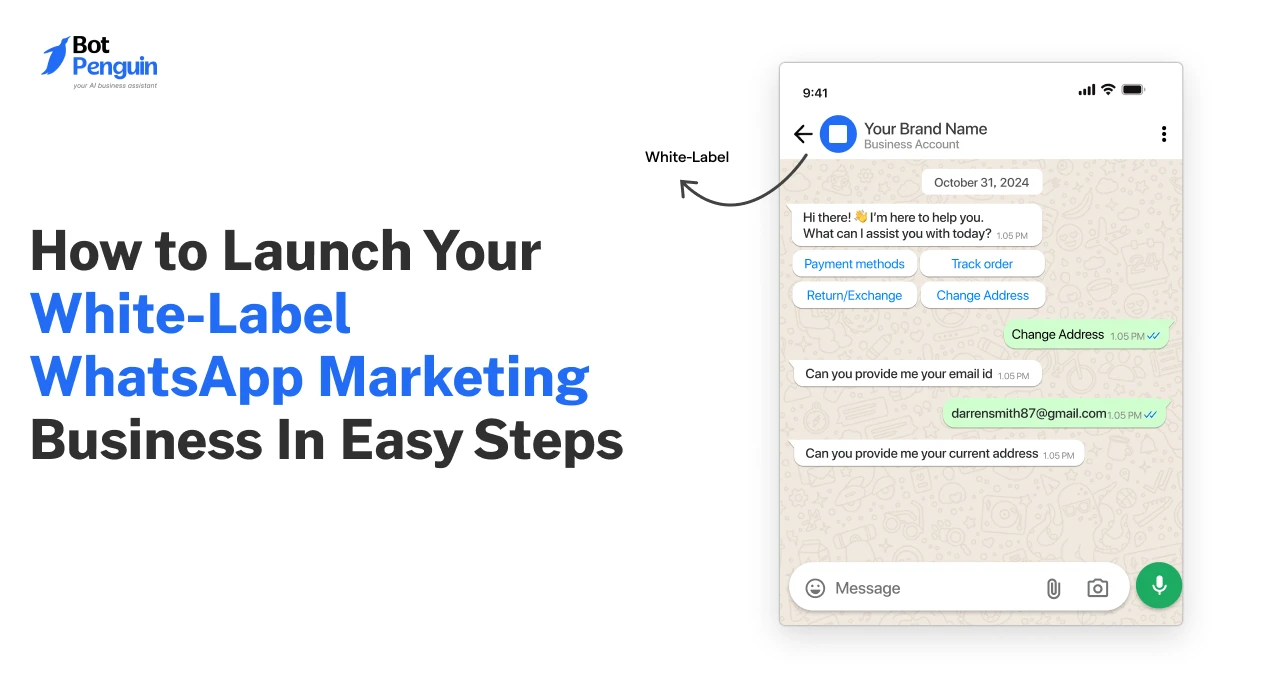
A WhatsApp white label partnership allows agencies, SaaS companies, and automation providers to launch their own branded WhatsApp messaging platform using infrastructure built on the WhatsApp Business API.

Instead of building the technology required to operate WhatsApp messaging systems, businesses partner with a platform provider that manages the backend infrastructure. This includes API connectivity, messaging delivery systems, automation capabilities, and compliance with WhatsApp policies.

Through this partnership model, the provider maintains the technical infrastructure while the partner focuses on branding the platform, acquiring clients, and delivering messaging solutions under their own business identity.

This approach has gained significant traction as businesses increasingly rely on messaging channels for customer engagement. According to Meta, more than 2 billion people worldwide use WhatsApp, making it one of the largest communication platforms for businesses and consumers.

In addition, research from HubSpot shows that 90% of customers consider instant responses important when contacting a business, which has accelerated the adoption of messaging automation solutions.

In practical terms, a WhatsApp white label partnership enables agencies and SaaS providers to offer services such as:

  • automated customer conversations
  • marketing and promotional messaging
  • business notifications and alerts
  • conversational sales workflows.

The partner typically operates the platform under their own brand name, custom domain, and pricing structure, allowing it to be positioned as their own product offering.

This model is commonly adopted by:

  • digital marketing agencies expanding their service offerings
  • SaaS platforms integrating messaging capabilities
  • CRM providers adding communication tools
  • automation consultants building scalable messaging solutions.

By leveraging a white label infrastructure, businesses can launch messaging services faster, manage multiple client accounts from a single dashboard, and generate recurring revenue through subscriptions and messaging services.

Key Components of a WhatsApp White Label Platform

A typical WhatsApp white label platform provides the capabilities partners need to manage messaging solutions for multiple clients.

Key components include:

  • WhatsApp Business API infrastructure: Provides official messaging connectivity required to send and receive WhatsApp messages at scale.
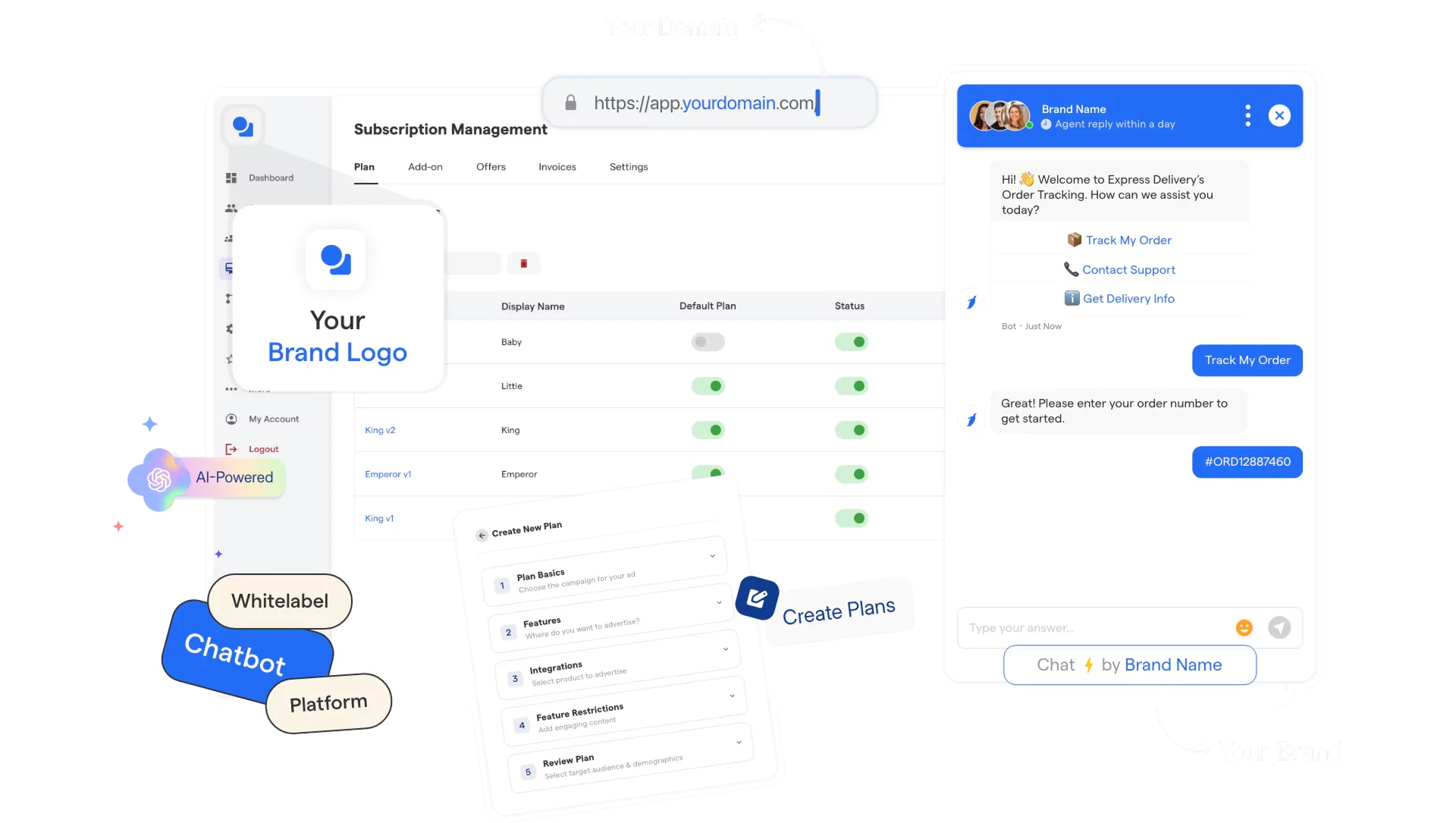
  • Platform branding and custom domain: Partners can customize the platform with their own logo, domain, and brand identity.
  • Multi client account management: A centralized dashboard allows partners to create and manage multiple client accounts efficiently.
  • Messaging automation tools: Workflow builders and automation capabilities help businesses manage conversations, campaigns, and notifications.
  • Revenue ownership and pricing control: Partners can create subscription plans, pricing packages, and messaging services for their clients.

WhatsApp White Label vs Direct WhatsApp Business API Access

Feature

WhatsApp Business API

WhatsApp White Label Platform

Infrastructure setup

Self managed

Provider managed

Branding

Limited customization

Fully customizable platform

Client management

Not built in

Multi client dashboard

Revenue model

Messaging usage fees

SaaS subscriptions and services

Section Summary

A WhatsApp white label partnership enables agencies and SaaS providers to launch a branded messaging platform using WhatsApp Business API infrastructure.

Partners manage branding, pricing, and client relationships, while the provider handles backend systems, automation capabilities, and messaging infrastructure needed to operate scalable WhatsApp communication solutions.

How Do WhatsApp White Label Partnerships Work?

A WhatsApp white label partnership follows a structured workflow where a platform provider manages the infrastructure while the partner launches and sells messaging solutions under their own brand.

Instead of building WhatsApp infrastructure from scratch, businesses use a ready-made platform to brand, manage clients, and deliver messaging services.

This model has become increasingly popular as messaging adoption grows. According to Meta, more than 2 billion users actively use WhatsApp globally, and over 175 million people message a business every day.

This growing demand has made WhatsApp one of the most valuable channels for customer engagement.

A typical WhatsApp white label partnership works through the following steps.

Step 1: Join a WhatsApp White Label Program

The first step is joining a WhatsApp white label program offered by a platform provider.

During onboarding, partners typically receive:

  • platform access
  • infrastructure setup
  • partner dashboard
  • onboarding support

With BotPenguin, partners can launch their branded platform quickly and start offering WhatsApp messaging solutions without building their own technology stack.

This step prepares the partner to begin branding, onboarding clients, and selling messaging services.

Step 2: Configure Your Branded Platform

Once onboarding is complete, the next step is customizing the platform so it operates under the partner’s brand. Common configuration elements include:

  • custom domain
  • logo and branding
  • pricing plans
  • partner dashboard

Partners can also configure additional commercial elements such as:

  • payment gateways
  • subscription plans
  • currency and tax settings.

This stage transforms the base platform into a fully branded messaging solution that partners can sell as their own product.

Step 3: Onboard Clients and Create Sub Accounts

After branding the platform, partners can start onboarding customers.

Most white label platforms use a multi tenant structure, allowing one partner account to manage multiple client accounts from a single dashboard.

Key capabilities include:

  • creating separate client environments
  • managing messaging numbers
  • controlling access and permissions.

Step 4: Deliver Messaging Solutions to Businesses

Once client accounts are active, partners can start delivering WhatsApp based solutions to businesses.

Common services include:

  • customer support automation
  • marketing campaigns
  • sales messaging
  • notifications and alerts

These services allow agencies to offer WhatsApp as a customer engagement and communication channel for their clients. Many partners also generate additional revenue through automation setup, campaign management, and messaging services.

Section Summary

A WhatsApp white label partnership works through four main steps: joining a partner program, branding the platform, onboarding client accounts, and delivering messaging solutions. This model allows agencies and SaaS providers to launch WhatsApp services quickly while the provider manages infrastructure and messaging technology.

How Do Businesses Make Money from WhatsApp White Label Partnerships

A WhatsApp white label partnership creates multiple revenue streams for agencies, SaaS platforms, and automation providers. Instead of relying on a single product sale, partners can monetize the platform through subscriptions, service fees, automation setup, and ongoing messaging services.

This model aligns well with the growing demand for conversational communication. According to Meta, more than 175 million people message a business on WhatsApp every day, creating strong demand for tools that help companies manage customer conversations at scale.

Because of this demand, agencies often turn WhatsApp white label partnerships into recurring revenue businesses rather than one-time projects.

Below are the most common ways partners generate revenue.

Subscription Based Platform Pricing

The most common monetization method is subscription based platform access.

In this model, agencies offer the messaging platform to businesses as a SaaS product. Clients pay a monthly or yearly fee to access the WhatsApp messaging system.

Typical subscription packages may include:

  • access to the messaging platform
  • automation workflows
  • campaign tools
  • client dashboards

This model creates predictable recurring revenue and allows partners to scale their income as more businesses join the platform.

Automation Setup and Implementation Services

Many businesses require help configuring automation workflows, conversation flows, and messaging systems.

Partners can charge one-time implementation fees for:

  • automation workflow setup
  • WhatsApp number onboarding
  • integration with CRM systems
  • chatbot and messaging configuration

This onboarding phase often becomes the initial revenue opportunity before recurring services begin.

Campaign Management and Marketing Services

WhatsApp is increasingly used for customer engagement and marketing campaigns.

Partners can offer ongoing services such as:

  • promotional messaging campaigns
  • lead nurturing workflows
  • product announcements
  • customer re-engagement campaigns

These services are often priced as monthly retainers, providing partners with another recurring revenue stream.

Managed Messaging Services

Some businesses prefer outsourcing the management of their messaging systems entirely.

Partners can offer managed messaging services, which may include:

  • conversation monitoring
  • campaign optimization
  • automation maintenance
  • analytics reporting

This creates an additional service-based revenue layer on top of the platform subscription.

Common Revenue Streams in WhatsApp White Label Partnerships

Revenue Stream

Description

Typical Pricing Model

Platform subscriptions

SaaS access

Monthly

Automation setup

Workflow building

One-time

Campaign management

Marketing automation

Retainer

Messaging support

Ongoing service

Monthly

Section Summary

Businesses generate revenue from WhatsApp white label partnerships through multiple streams including platform subscriptions, automation setup services, campaign management, and managed messaging support.

This combination of SaaS and service-based pricing allows agencies and SaaS providers to build recurring revenue while helping businesses manage customer communication on WhatsApp.

What Features Should a WhatsApp White Label Platform Provide

A WhatsApp white label platform must provide the tools and infrastructure needed to run messaging solutions for multiple businesses under one brand. Beyond simple API connectivity, the platform should include features that help partners manage clients, automate conversations, run campaigns, and analyze performance.

This is especially important as messaging continues to grow as a customer communication channel. According to Meta, more than 175 million people message a business on WhatsApp every day, making automation and scalable management essential for businesses handling large conversation volumes.

Below are the core capabilities every WhatsApp white label platform should offer.

Multi Client Account Management

A strong white label platform should support multi-client account management, allowing partners to operate multiple customer environments from one dashboard. Key capabilities include:

  • sub-accounts for each client
  • centralized partner dashboard
  • client-level access control
  • separate messaging environments for businesses
  • scalable infrastructure for growing client bases

This multi-tenant architecture allows agencies to manage dozens or even hundreds of businesses from one platform.

Messaging Automation and Workflow Builder

Automation tools help businesses manage conversations efficiently and reduce manual workload. Important features include:

  • visual workflow builders
  • automated conversation routing
  • FAQ automation
  • lead qualification flows
  • appointment reminders and notifications

Automation workflows enable businesses to provide instant responses and continuous support, even outside working hours.

Broadcast and Campaign Messaging

Marketing and engagement campaigns are a major use case for WhatsApp messaging platforms. Key campaign capabilities include:

  • broadcast messaging tools
  • segmented customer lists
  • drip campaign automation
  • promotional messaging workflows
  • campaign scheduling and delivery controls

These tools allow businesses to reach customers at scale while maintaining personalized communication.

CRM and Business Tool Integrations

A WhatsApp white label platform should integrate with other business systems so messaging workflows connect with existing tools. Common integrations include:

  • CRM platforms
  • payment systems
  • helpdesk platforms
  • marketing automation tools
  • internal business software

These integrations help businesses connect customer conversations with sales, support, and operational systems.

Analytics and Conversation Insights

Tracking performance is essential for improving messaging strategies. A platform should provide analytics capabilities such as:

  • conversation performance reports
  • campaign engagement metrics
  • response time tracking
  • lead conversion insights
  • customer interaction history

These insights help partners and businesses measure the effectiveness of messaging automation and optimize communication strategies.

Section Summary

A reliable WhatsApp white label platform should include multi-client management, automation workflows, broadcast messaging, CRM integrations, and analytics tools. These capabilities allow partners to manage multiple businesses, automate conversations, run marketing campaigns, and track messaging performance through a single scalable platform.

What Are the Most Common Use Cases of WhatsApp White Label Platforms

WhatsApp white label platforms are most commonly used for customer support automation, lead generation, ecommerce messaging, and appointment based business communication.

These platforms allow agencies and SaaS providers to deliver scalable messaging solutions that help businesses engage customers, automate conversations, and manage communication efficiently.

The demand for these solutions continues to grow as messaging becomes a preferred communication channel. Below are the most common ways businesses use WhatsApp white label platforms.

Customer Support Automation

Customer support is one of the most widely adopted use cases for WhatsApp messaging platforms. Automation helps businesses respond faster while reducing the workload on support teams.

Customer support automation can include:

  • automated FAQs
  • order status updates
  • shipping notifications
  • account information requests
  • escalation to live agents

Automation ensures customers receive instant responses, even outside working hours. This improves response times and customer satisfaction while allowing businesses to handle large volumes of inquiries efficiently.

Lead Generation and Sales Conversations

WhatsApp messaging can also be used to capture leads and support sales conversations.

Lead generation workflows often include:

  • lead qualification conversations
  • product inquiries and recommendations
  • sales follow up messages
  • pricing or product information sharing
  • conversion reminders

These automated conversations help businesses guide prospects through the buying process, making it easier for sales teams to focus on qualified opportunities.

Ecommerce Messaging and Campaigns

Ecommerce businesses use WhatsApp messaging to improve customer engagement and drive repeat purchases. Common ecommerce messaging use cases include:

  • cart abandonment reminders
  • order confirmation messages
  • delivery notifications
  • product promotions
  • loyalty program updates

These messages keep customers informed throughout the buying journey while also providing opportunities to promote new products and offers.

Appointment Booking and Service Notifications

Service-based businesses use WhatsApp messaging to manage appointments and communicate important updates.

Typical messaging workflows include:

  • appointment booking confirmations
  • appointment reminders
  • rescheduling notifications
  • service completion updates
  • customer feedback requests

These automated notifications help reduce missed appointments while keeping customers informed about upcoming services.

Section Summary

WhatsApp white label platforms are commonly used for customer support automation, lead generation, ecommerce messaging, and appointment based communication.

These use cases help businesses automate conversations, improve customer engagement, and manage high volumes of messaging through scalable automation workflows.

What Challenges Do Businesses Face with WhatsApp White Label Partnerships

While WhatsApp white label partnerships offer strong business opportunities, partners must also navigate operational challenges. Understanding these challenges helps agencies and SaaS providers design sustainable messaging solutions and avoid common implementation issues.

As WhatsApp adoption grows, operational complexity increases. According to Meta, more than 175 million people message businesses on WhatsApp every day, which means messaging systems must scale reliably while maintaining compliance and cost efficiency.

Below are the most common challenges businesses face and how they are typically addressed.

WhatsApp Business Policy Compliance

WhatsApp maintains strict messaging policies to protect users from spam and ensure responsible business communication.

Problem

Impact

Solution

Unsolicited or excessive promotional messages

Risk of account warnings or restrictions

Use opt-in based messaging workflows

Template approval delays

Slower campaign execution

Use pre-approved message templates

Poor messaging practices

Possible number suspension

Monitor campaigns and maintain consent records

Infrastructure and Platform Dependence

White label partners depend on the underlying messaging infrastructure of the platform provider.

Problem

Impact

Solution

Platform downtime

Interrupted message delivery

Choose providers with high uptime and stable infrastructure

Limited platform capabilities

Restricted automation or integrations

Select platforms with automation tools and integrations

Managing Messaging Costs

WhatsApp uses a conversation-based pricing model, which requires partners to plan messaging usage carefully.

Problem

Impact

Solution

High messaging volumes

Increased operational costs

Implement tiered subscription plans

Large campaign messaging

Budget overruns

Track usage and manage campaign messaging limits

Scaling Customer Support

As messaging adoption grows, businesses must handle increasing conversation volumes efficiently.

Problem

Impact

Solution

High support request volumes

Overloaded support teams

Implement automation workflows

Manual responses

Slower customer service

Use automated FAQs and routing systems

Section Summary

While WhatsApp white label partnerships offer strong growth potential, businesses must manage challenges related to policy compliance, infrastructure reliability, messaging costs, and customer support scalability.

Choosing the right platform and implementing automation helps partners overcome these challenges and operate messaging services efficiently.

How to Choose the Right WhatsApp White Label Partner Platform

Selecting the right WhatsApp white label partner platform is critical for agencies and SaaS providers planning to launch messaging solutions. The platform you choose will determine how easily you can brand the product, onboard clients, automate conversations, and scale messaging services.

With millions of businesses adopting WhatsApp for communication, reliability and platform capabilities become essential. Below are the key criteria businesses should evaluate when selecting a WhatsApp white label platform.

Infrastructure Reliability

Messaging infrastructure is the foundation of any WhatsApp solution. If the platform experiences downtime or unstable messaging delivery, businesses using the system will be affected.

When evaluating infrastructure reliability, look for:

  • stable WhatsApp Business API connectivity
  • high platform uptime
  • scalable messaging architecture
  • reliable message delivery systems

A stable infrastructure ensures consistent communication between businesses and customers.

Branding and Customization Capabilities

White label partnerships rely heavily on branding control. The platform should allow partners to present the product as their own service.

Important customization features include:

  • custom domain configuration
  • logo and brand identity customization
  • configurable platform interface
  • branded dashboards for client accounts

These features allow agencies to sell messaging solutions under their own brand identity.

Automation and Integration Features

Automation capabilities determine how effectively businesses can manage conversations and campaigns.

Look for platforms that support:

  • automation workflow builders
  • campaign messaging tools
  • CRM integrations
  • payment system integrations
  • helpdesk platform integrations

These features allow partners to deliver scalable messaging solutions across multiple industries.

Partner Onboarding and Support

A strong partner ecosystem makes it easier for agencies to launch and grow their messaging services.

Key support features include:

  • partner onboarding assistance
  • training and documentation
  • technical support
  • client onboarding guidance

This support helps partners deploy messaging solutions faster and reduce implementation challenges.

Pricing and Revenue Flexibility

Pricing flexibility plays an important role in building a profitable white label business. Important considerations include:

  • control over subscription pricing
  • flexible service packages
  • support for recurring revenue models
  • transparent platform costs

Partners should be able to design pricing plans that align with their business strategy.

Platform Evaluation Checklist

Evaluation Criteria

Why It Matters

Platform reliability

Ensures uninterrupted messaging

Custom branding

Enables agencies to sell under their brand

Automation features

Supports scalable messaging solutions

Partner support

Helps agencies onboard clients faster

Section Summary

Choosing the right WhatsApp white label partner platform requires evaluating infrastructure reliability, branding flexibility, automation capabilities, partner support, and pricing control.

These factors determine how effectively agencies and SaaS providers can launch messaging services, onboard clients, and scale their WhatsApp communication solutions.

Start Your WhatsApp White Label Journey with BotPenguin

BotPenguin WhatsApp White Label Program

The BotPenguin WhatsApp White Label Program enables agencies, SaaS providers, and automation businesses to launch a fully branded messaging platform powered by WhatsApp.

Instead of building messaging infrastructure from scratch, partners can use BotPenguin’s platform to deliver automation, customer engagement, and communication solutions under their own brand.

Through this program, partners gain access to a complete messaging automation platform while maintaining control over branding, pricing, and customer relationships. BotPenguin manages the backend infrastructure, integrations, and system maintenance, allowing partners to focus on client acquisition, service delivery, and revenue growth.

According to IBM, automated conversational systems can handle up to 80% of routine customer queries, significantly reducing operational workload for businesses. Platforms like BotPenguin allow agencies to deliver these automation capabilities at scale.

Fully Branded WhatsApp Platform for Agencies

BotPenguin allows partners to operate a fully branded WhatsApp platform that appears as their own messaging product. Partners can configure and customize several elements of the platform:

  • custom domain configuration
  • logo and brand identity
  • branded partner dashboard
  • client-facing interface
  • customizable pricing and subscription plans
  • partner-controlled billing and packaging

This allows agencies and SaaS providers to present WhatsApp messaging automation as their own product offering rather than relying on third-party tools.

With this setup, partners can onboard multiple clients and manage their messaging services through a centralized platform environment.

AI Chatbots, AI Agents, and Voice Agents

BotPenguin’s platform enables partners to offer AI-powered automation through a combination of AI chatbots, AI agents, and voice agents. These capabilities allow businesses to automate customer conversations, handle support requests, and guide users through different stages of the customer journey.

Partners can use these tools to automate tasks such as:

  • handling customer inquiries automatically
  • qualifying leads through conversational flows
  • providing product recommendations
  • sending automated responses and updates
  • making voice-based follow-up or notification calls

This combination of messaging and voice automation allows agencies to deliver more intelligent and scalable communication systems to their clients. Businesses benefit from faster responses, reduced support workloads, and improved customer engagement across multiple interaction channels.

Marketing Automation and Campaign Management

BotPenguin also enables agencies to manage messaging campaigns and customer engagement strategies for their clients. Campaign features include:

  • broadcast messaging
  • drip campaign automation
  • customer segmentation
  • promotional messaging workflows
  • scheduled messaging campaigns

These tools help businesses communicate with customers through targeted campaigns and automated marketing flows.

According to Juniper Research, conversational commerce is expected to exceed $290 billion globally, highlighting the increasing importance of messaging channels in marketing and sales strategies.

Ecommerce Messaging and Notifications

Ecommerce businesses can use BotPenguin to automate customer communication across the buying journey. Common ecommerce messaging workflows include:

  • cart abandonment reminders
  • order confirmation messages
  • delivery and shipping notifications
  • product promotion campaigns
  • customer feedback requests

These automated notifications help businesses keep customers informed while improving engagement and repeat purchases.

Why Agencies Choose BotPenguin WhatsApp White Label?

BotPenguin combines automation, branding control, and client management capabilities to support agencies building messaging services.

Capability

BotPenguin

Platform branding

Full white label

Client management

Unlimited sub accounts

Automation builder

No code

Campaign tools

Broadcast and drip messaging

Integrations

CRM and business tools

These capabilities allow partners to launch, manage, and scale WhatsApp automation services under their own brand while leveraging a robust messaging infrastructure.

Section Summary

The BotPenguin WhatsApp White Label Program enables agencies and SaaS providers to launch a fully branded messaging platform with chatbot automation, AI agents, voice agents, and campaign management tools.

Partners can deliver scalable WhatsApp communication solutions while maintaining full control over branding, pricing, and client relationships.

Who Should Start a WhatsApp White Label Partnership

A WhatsApp white label partnership is ideal for businesses that want to offer messaging automation and customer communication solutions without building the technology themselves. The model works best for organizations that already serve multiple clients and want to expand their services with scalable messaging tools.

Below are the types of businesses that benefit the most from launching a WhatsApp white label platform.

Digital Marketing Agencies

Digital marketing agencies can expand their service portfolio by offering WhatsApp automation and messaging solutions to clients.

Agencies can use a white label platform to:

  • provide automated customer support solutions
  • run WhatsApp marketing campaigns
  • manage customer engagement workflows
  • offer messaging automation services to multiple clients

This helps agencies create recurring revenue streams while strengthening their client relationships.

SaaS Companies

SaaS platforms can integrate WhatsApp communication capabilities into their existing products. Potential use cases include:

  • adding customer messaging features to software products
  • enabling automated notifications and alerts
  • providing in-app customer communication tools
  • improving customer engagement within SaaS platforms

This allows SaaS companies to enhance their product offerings with messaging automation.

CRM Platform Providers

CRM providers can extend their systems with WhatsApp messaging capabilities. Common applications include:

  • customer communication tracking
  • automated sales follow-ups
  • lead nurturing workflows
  • integrated customer support messaging

This allows CRM platforms to offer end-to-end customer engagement solutions.

Automation Consultants

Automation consultants can use WhatsApp white label platforms to deliver messaging automation solutions to businesses. Typical services include:

  • building automation workflows
  • setting up customer communication systems
  • implementing lead qualification processes
  • managing automated messaging strategies

These capabilities help consultants deliver scalable automation projects.

Customer Engagement Platforms

Businesses that provide customer engagement solutions can expand their services with WhatsApp messaging automation. Key opportunities include:

  • multi-channel communication solutions
  • automated customer support systems
  • marketing engagement workflows
  • customer lifecycle messaging

This allows engagement platforms to strengthen their communication capabilities.

Section Summary

A WhatsApp white label partnership is best suited for digital marketing agencies, SaaS companies, CRM platforms, automation consultants, and customer engagement providers. These organizations can use the model to deliver scalable messaging solutions, automate customer communication, and create recurring revenue streams.

Start Your WhatsApp White Label with BotPenguin

Final Thoughts

A WhatsApp white label partnership helps agencies and SaaS businesses launch messaging solutions quickly. There is no need to build complex infrastructure. Partners can focus on branding, onboarding clients, and delivering automation services.

As messaging adoption grows, businesses are looking for scalable communication tools. This creates a strong opportunity for agencies to offer WhatsApp automation solutions.

If you want to expand your services with messaging automation, explore the BotPenguin WhatsApp White Label Program and start building WhatsApp solutions for your clients today!

Frequently Asked Questions (FAQs)

What is a WhatsApp white label partnership?

A WhatsApp white label partnership lets agencies or SaaS providers offer WhatsApp messaging solutions under their own brand using infrastructure managed by a platform provider.

How do agencies earn revenue from WhatsApp white label platforms?

Agencies earn revenue through platform subscriptions, automation setup fees, campaign management services, and messaging support, creating recurring income while managing WhatsApp communication for clients.

What features should a WhatsApp white label platform include?

A platform should provide multi-client account management, automation workflows, broadcast messaging tools, CRM integrations, and analytics dashboards to manage conversations and campaigns efficiently.

Do businesses need WhatsApp Business API approval?

Yes. Businesses must access the WhatsApp Business API and follow WhatsApp policies. Many white label platforms guide partners and their clients through the approval process.

Can agencies manage multiple clients on one platform?

Yes. Most WhatsApp white label platforms support multi-tenant dashboards, allowing agencies to create and manage separate client accounts from a single system.

Is WhatsApp suitable for marketing campaigns?

Yes. Businesses use WhatsApp for promotions, announcements, and personalized campaigns, provided customers have opted in to receive messages.

Which businesses benefit most from WhatsApp white label solutions?

Digital marketing agencies, SaaS companies, CRM providers, automation consultants, and customer engagement platforms benefit the most from offering WhatsApp messaging services.

Keep Reading, Keep Growing

Checkout our related blogs you will love.

Table of Contents

BotPenguin AI Chatbot maker
    BotPenguin AI Chatbot maker
  • What is a WhatsApp White Label Partnership
  • BotPenguin AI Chatbot maker
  • How Do WhatsApp White Label Partnerships Work?
  • BotPenguin AI Chatbot maker
  • How Do Businesses Make Money from WhatsApp White Label Partnerships
  • BotPenguin AI Chatbot maker
  • What Features Should a WhatsApp White Label Platform Provide
  • BotPenguin AI Chatbot maker
  • What Are the Most Common Use Cases of WhatsApp White Label Platforms
  • BotPenguin AI Chatbot maker
  • What Challenges Do Businesses Face with WhatsApp White Label Partnerships
  • BotPenguin AI Chatbot maker
  • How to Choose the Right WhatsApp White Label Partner Platform
  • BotPenguin AI Chatbot maker
  • BotPenguin WhatsApp White Label Program
  • BotPenguin AI Chatbot maker
  • Who Should Start a WhatsApp White Label Partnership
  • Final Thoughts
  • BotPenguin AI Chatbot maker
  • Frequently Asked Questions (FAQs)