

WhatsApp Chatbot for Insurance: Use Cases, Benefits, and Automation Workflows
Updated at Sep 21, 2026
11 min to read
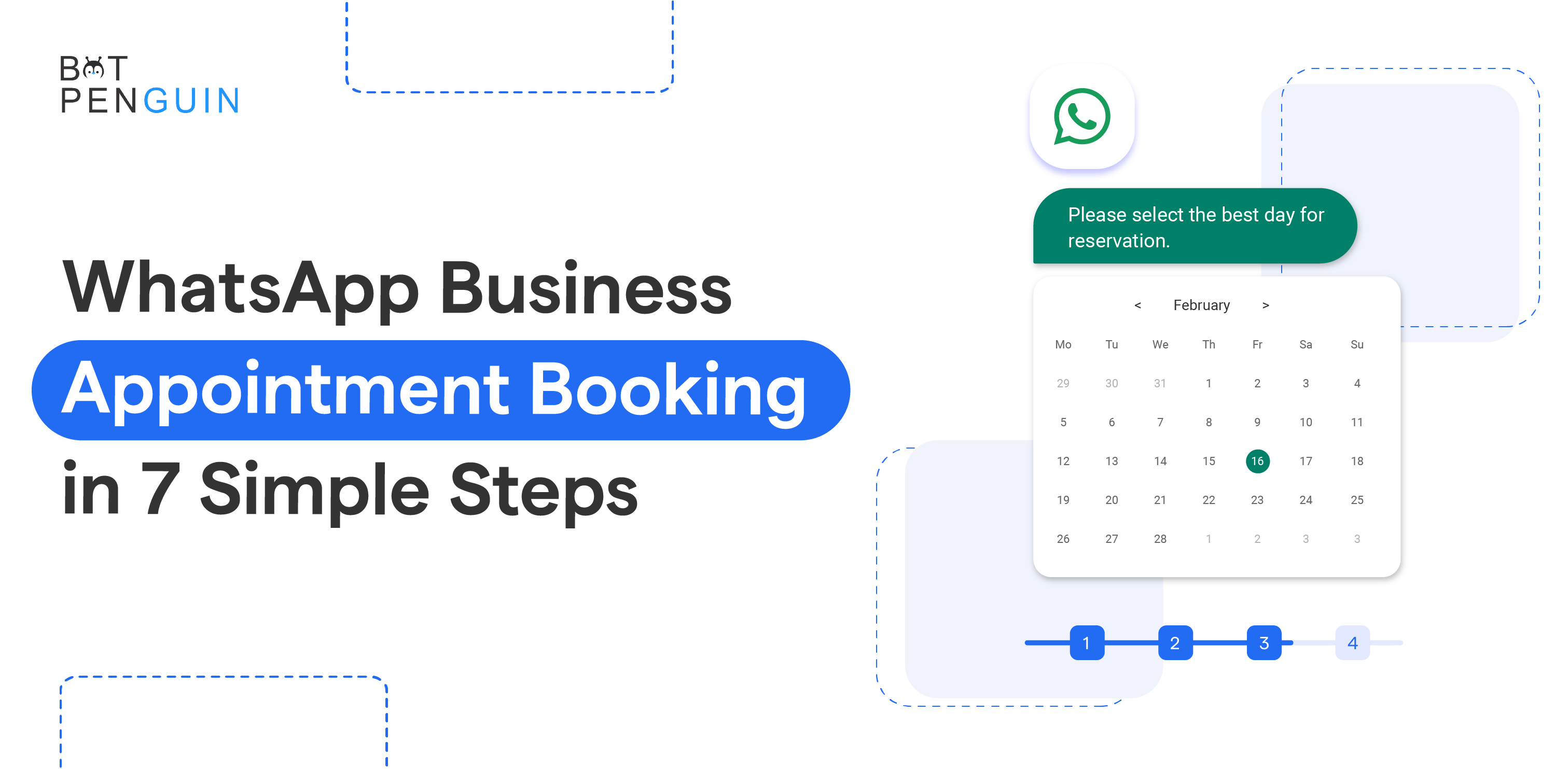
When customers can book an appointment on an app they already use, they are less likely to drop off halfway.
That is why WhatsApp is becoming more than a messaging app for businesses. It can also help customers check availability, choose a time, and confirm appointments without switching channels.
For businesses, the appeal is just as clear. A WhatsApp booking flow keeps the process familiar, direct, and easy to follow. Think: booking a haircut in two quick texts, right between checking messages from friends!
In this guide, you’ll learn how to set up WhatsApp Business appointment booking step-by-step. You’ll also cover confirmations, reminders, and rescheduling.
Booking friction often appears at the exact moment a customer is ready to act. A separate form, delayed reply, or missed reminder can cost the appointment.
WhatsApp Business appointment booking keeps that journey inside a familiar conversation. Customers can move from interest to confirmation without breaking the flow.
Square found that 29% of consumers are more likely to visit a local business when online booking or reservations are available to them.
Here’s why this matters for both businesses and customers:
Too Many Booking Steps in Traditional Ways: Opening another page, filling out forms, and switching apps can interrupt momentum. WhatsApp keeps the booking closer to the conversation that started it.
Missed Appointment Reminders: Confirmations and reminders can appear inside the same chat customers already check. That keeps upcoming appointments visible and easier to remember.
Interest Fades Quickly: Someone asking about a service may be ready to book right away. Offering a slot during that conversation helps capture the moment.
Too Much Manual Work: Checking calendars, sharing available slots, and recording details can take up staff time. Not everyone can afford this, especially with a busy schedule. A WhatsApp appointment booking chatbot can handle much of this process.
Rescheduling Feels Difficult: Customers may still want the appointment, just at another time. Letting them change the slot in chat can help keep the booking.
The real value is simple: WhatsApp keeps the booking close to the conversation, while giving businesses a smoother way to manage demand.
If you’re looking to make WhatsApp your appointment booking channel, BotPenguin can help you build a WhatsApp appointment booking chatbot that guides customers from slot selection to confirmation.
Before you build the booking flow, make sure the basic WhatsApp, calendar, messaging, and handoff setup is already in place.
Here are the prerequisites you need to account for:
You can't run automated appointment booking on the regular WhatsApp Business app.
You need access to the WhatsApp Business Platform through a Meta-approved Tech Provider, such as BotPenguin.
This enables two-way automated messaging, template messages, and the webhook infrastructure that lets a chatbot handle booking conversations at scale.
Meta includes business verification as part of WhatsApp Business Platform onboarding.
Complete verification during account setup before moving into testing and scaling your messaging.
The WhatsApp API alone is just messaging infrastructure; it doesn't understand appointments.
You need a WhatsApp chatbot builder layered on top to handle conversation flow, slot selection, confirmations, and reminders.
Your chatbot needs access to a connected calendar or scheduling tool.
This allows it to work with current availability and record confirmed appointments accurately.
You need a business phone number connected to your WhatsApp Business Account. A completely new number is not always necessary.
Eligible businesses can use WhatsApp Business App Coexistence to connect an existing Business App number with the API.
Availability depends on the account and provider setup.
Approved message templates may be needed for confirmations, reminders, and rescheduling messages sent outside the customer service window.
Having these ready before setup prevents messaging gaps later.
You can't message customers on WhatsApp unless they've explicitly opted in, through a website form, ad click-to-chat, or QR code.
This isn't optional paperwork; it's a Meta policy requirement, and skipping it risks your number getting flagged or banned.
Add a simple opt-in checkbox wherever customers first discover your booking option.
Not every conversation fits neatly into a booking flow; someone might ask a pricing question or want to reschedule something unusual.
Set up a simple handoff rule so the chatbot recognizes when to loop in a real team member, keeping frustrated customers from getting stuck in a bot loop mid-booking.
Once these prerequisites are in place, you can start connecting them into a working WhatsApp appointment booking flow.
Before diving into the setup details, here is a clear snapshot of how to map out responsibilities and avoid common traps at each stage:
Each of these steps has been detailed below.
Connect to the WhatsApp Business Platform through a Tech Provider.
Complete the required Meta onboarding and connect an eligible business phone number.
This gives your chatbot access to WhatsApp messaging for the appointment booking flow.
Pick a WhatsApp chatbot platform that supports appointment-specific flows, not just generic Q&A.
Look for drag-and-drop flow builders, calendar integrations, and reminder automation built in.
This is the tool that actually turns raw WhatsApp API access into a working booking assistant for customers.
Link Google Calendar, Calendly, or Acuity to your chatbot so it can check live availability before confirming any slot.
This sync prevents double-bookings and dead-slot offers, and it automatically updates your calendar the moment a customer confirms an appointment.
Map out the chatbot's flow: greeting, service selection, date and time picker, and confirmation. Keep each step to one clear question at a time.
A focused flow keeps unnecessary steps out and helps customers reach an available slot without losing momentum.
Draft and submit templates for confirmations, reminders, and reschedule prompts through your provider dashboard.
Meta reviews these before they go live, so submit early. These templates are what let your chatbot message customers outside the 24-hour reply window.
Configure appointment reminders based on how far in advance customers usually book and how much notice they need.
Add a follow-up flow for rescheduling or cancellations too, so customers can adjust bookings without calling or waiting for a team member to reply.
Run through the full booking journey yourself, from opt-in to confirmation to reminder, checking for broken links, calendar sync errors, or confusing chatbot replies.
Testing catches gaps before real customers hit them, especially around edge cases like double-booked slots.
Go live, then share your WhatsApp number through your website, social bios, and QR codes at physical locations.
Add a clear call-to-action like “Book on WhatsApp,” so customers know this option exists and can start booking immediately.
Track booking completion rates, drop-off points, and no-show rates after launch. Use this data to tweak your chatbot's flow, wording, or reminder timing.
Small adjustments here compound into meaningfully higher booking completion over time.
Setting up this system requires an initial time investment, but once live, the flow gives customers a direct route from a WhatsApp conversation to a confirmed appointment.
Once bookings go live, the real value shows up in how the chatbot manages the appointment lifecycle, not just the initial slot grab.
The chatbot can handle much of the pre-appointment cycle, including confirmations, timed reminders, and standard rescheduling requests.
This can help lower no-shows and cut down routine rescheduling calls.
An outpatient clinic study found 24-hour text reminders cut appointment no-shows by 14.81%, a statistically significant improvement in attendance.
When a customer cancels via WhatsApp, the chatbot can automatically notify the next person on a waitlist if the booking system supports it.
This can help fill gaps that would otherwise sit empty, without requiring manual outreach from staff.
After the appointment, the chatbot can send a quick thank-you message with a rebooking link or feedback prompt.
This keeps the customer relationship active on the same channel they already booked through, nudging repeat bookings without a separate email or SMS campaign.
For businesses with multiple providers, like salons or clinics, the chatbot can ask which staff member or service the customer prefers, then only show that person's real availability.
Healthcare teams can also use a healthcare chatbot for patient appointment scheduling and calendar-based booking. Likewise, real estate teams can use a real estate chatbot to schedule property viewings and agent consultations.
This avoids double-booking a specific doctor, realtor, or stylist while keeping every provider's calendar independently accurate.
For high no-show-risk services, the chatbot can request a small deposit or full payment via WhatsApp payment links if supported by the setup.
This can help discourage low-intent bookings and protect revenue from appointments that may otherwise be missed.
Thus, WhatsApp can support the full appointment journey, helping businesses manage bookings, protect revenue, and encourage repeat visits.
Even a well-built booking flow can lose customers if a few details are handled poorly. Most issues come from extra steps, weak calendar setup, or limited self-service options.
Here are the most common mistakes to watch for and how to fix them.
Steering clear of these technical and user-experience missteps ensures your WhatsApp booking system delivers what it promises: a simpler booking experience for customers and a more manageable appointment process for your team.
If you want this setup without stitching every piece together yourself, BotPenguin can help manage booking flows, calendar connections, reminders, and handoffs within WhatsApp.
WhatsApp Business appointment booking works best when the process stays simple for both customers and teams.
Start with the right setup, connect your calendar, build a clear booking flow, and test every step before launch. Then add confirmations, reminders, rescheduling, and follow-ups where they genuinely help.
The goal is not to automate every conversation. It is to make booking easier, keep schedules accurate, and give customers a clear path from interest to appointment.
If you want to book appointments on WhatsApp, focus on fewer steps, useful messages, and a flow that feels natural for every customer.
Connect your WhatsApp Business account to a chatbot or booking tool, link your calendar, build the booking flow, add confirmation messages, and test the full journey before making it available to customers.
Yes. A WhatsApp appointment booking chatbot can show available slots, collect basic details, confirm the selected time, and send booking updates without forcing customers to complete the process on another channel.
Yes. You can add reschedule and cancellation options to the booking flow or reminder messages. Customers can choose a new slot or cancel without calling your team for routine changes.
Not always. Many WhatsApp chatbot builders offer visual flow builders and calendar integrations for standard booking journeys. Custom logic or advanced integrations may still require technical support, depending on your setup.
Yes. Automated reminders can be scheduled before an appointment using approved message templates when required. Reminder timing should match your booking type, customer expectations, and how far ahead appointments are usually scheduled.
Yes, if your chatbot or booking tool supports the integration. Connecting Google Calendar lets the booking flow check current availability, record confirmed appointments, and help prevent the same slot being booked twice.
Yes. The same basic booking flow can support businesses that schedule appointments, consultations, demos, or services. The exact questions, calendar rules, and confirmation steps should match the type of appointment offered.
Book More Appointments With WhatsApp
Let customers check availability, choose time slots, and confirm appointments on WhatsApp. Simplify booking, reminders, and rescheduling with a smoother appointment journey.
Try NowCheckout our related blogs you will love.
Updated at Sep 21, 2026
11 min to read

Updated at Sep 15, 2026
20 min to read
Updated at Sep 11, 2026
15 min to read
Updated at Sep 9, 2026
8 min to read
Updated at Sep 5, 2026
14 min to read
Updated at Oct 21, 2026
12 min to read
Table of Contents