


Best Free AI Agent Builder (No-Code Tools to Build AI Agents)
Updated at Sep 30, 2026
18 min to read

We spend hours clicking, scrolling, and filling out forms like robots.
Every online task—booking a ticket, ordering groceries, managing subscriptions—demands our time. But what if AI could do it for us?
That’s where OpenAI Operator comes in.
It’s the First AI Agent launched by OpenAI That Can Use the Web Like a Human.
Unlike traditional AI models that only generate text, Operator can browse the internet, click buttons, fill forms, and complete real-world tasks—all on its own.
It doesn’t need special integrations or APIs. It simply uses websites the way humans do.
This marks a major shift in AI. Instead of just assisting, AI can now act.
This guide explains what OpenAI Operator is, how it works, and what it means for everyday users and businesses.
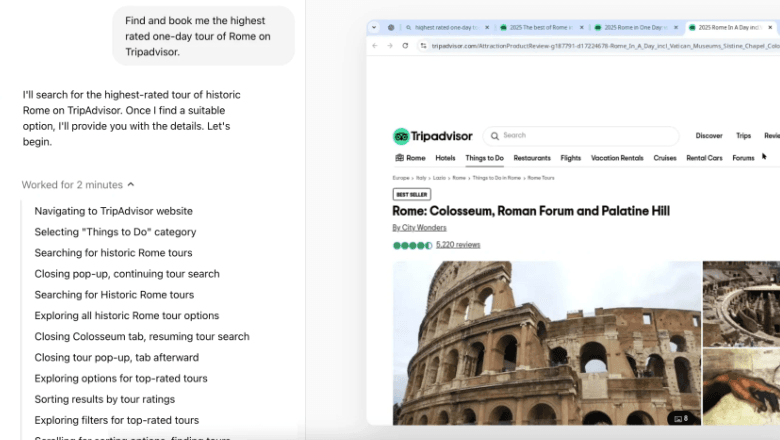
OpenAI Operator is a first-of-its-kind AI agent that can use the web just like a human. It doesn’t rely on APIs or predefined integrations. Instead, it opens a real browser in the cloud, clicks, types, and completes tasks just as you would.
Imagine needing to order groceries, book a trip, and pay a bill. Instead of switching between tabs and manually filling forms, Operator does it all. It browses the web, interacts with websites, and completes tasks automatically.
This is more than just AI. It’s just like cloning physical human capabilities into AI.
The key features of openai operator are:
Most AI assistants can only provide information. OpenAI Operator goes further—it actually performs tasks on a remote browser in the cloud.
Think of it as having a virtual assistant that opens a browser, logs into websites, fills out forms, and places orders—all without you lifting a finger.
For example, you need to reorder your usual groceries. Instead of manually selecting items and checking out, Operator can navigate to the grocery website, add items to the cart, apply discounts, and place the order—just like you would.
It’s automation without effort.
Traditional automation tools require complex integrations and APIs. OpenAI Operator doesn’t.
It interacts with websites just like a human user, meaning it can work with any online platform without special coding.
For businesses, this is a game-changer. No need to build custom automation tools. Just let Operator AI handle repetitive web tasks effortlessly.
Most AI tools rely on structured inputs like text or code. OpenAI AI Operator can actually see the screen.
It uses screenshots to understand what’s on a webpage. It can read menus, recognize buttons, and even interpret on-screen elements just like a human.
For example, if a website updates its layout, Operator doesn’t break. It adapts by looking at the new design and figuring out where to click.
This makes OpenAI Operator AI Agent highly flexible, allowing it to work across various websites without extra configurations.
Most people juggle multiple online tasks daily—switching tabs, filling forms, checking out. Operator does the same.
It opens multiple tabs in a browser, handling different tasks at the same time. You can have it order food, book a ride, and schedule a meeting—simultaneously.
During OpenAI’s live demo, Sam Altman and the team showed Operator completing grocery orders, booking a tennis match, and ordering pizza—all in under 15 minutes.
Think about the time this saves in daily life. Instead of spending hours on routine online tasks, you can let Operator AI handle it while you focus on more important things.
Everyone has different preferences when using websites. OpenAI AI Agent Operator lets users customize their workflows.
For example, if you always book aisle seats on flights, you can set that preference, and Operator will remember it.
Need your groceries delivered by 6 PM? Operator can be trained to always select that option.
This personal touch makes automation feel seamless and effortless.
Some online tasks need human confirmation—like logging in, entering payment details, or verifying an order.
When Operator reaches these points, it pauses and hands control back to the user.
At this moment, your session shifts to your local browser—just like a private session. Operator doesn’t see or store your login details.
Once you confirm or add details, you can either continue manually or let Operator AI take over again.
For example, say you’re checking out on an e-commerce site. Operator adds your items to the cart and pauses for your approval before placing the order. You can even update your cart, and Operator will recognize the change from the new screenshots.
This ensures security while still saving time.
OpenAI has built strong privacy measures into Operator AI Agent.
These controls make OpenAI Operator a secure and privacy-focused AI for everyday use.
Major companies are already working with OpenAI Operator AI Agent.
Platforms like Instacart, OpenTable, Priceline, Uber, and DoorDash are integrating with Operator to make AI-powered automation more seamless.
For example, a restaurant could use Operator AI to process reservations automatically, reducing manual work for staff.
City governments are also exploring its potential. The City of Stockton is using OpenAI Agent Operator to streamline applications for public services, making them more accessible.
This AI isn’t just helping individuals. It’s transforming businesses and public services.
Unlike regular chatbots, OpenAI Operator Agent doesn’t just generate text—it takes action. This is possible due to a new AI model called the Computer-Using Agent (CUA).
It allows Operator AI to interact with web pages like a human—without needing pre-built integrations or APIs.
Let’s break down how the technology works.
At the core of OpenAI Operator Agent is the Computer-Using Agent (CUA) model. This model combines GPT-4o’s vision capabilities with reinforcement learning to interact with web interfaces.
Instead of relying on APIs or predefined scripts, Operator sees the webpage through screenshots and interacts with it using a virtual keyboard and mouse. It can read buttons, menus, and input fields—just like you do when using a website.
For example, if you need to book a hotel but the booking page layout changes, Operator AI won’t break. It will recognize the new layout and figure out how to complete the booking.
This makes it flexible, adaptable, and capable of handling dynamic websites.
Using OpenAI AI Agent Operator is straightforward. Here’s how it works:
This makes it feel like having a personal assistant who can handle online tasks independently.
No AI is perfect, and Operator AI is still evolving. However, it has built-in self-correction mechanisms to improve accuracy.
If it makes a mistake—like clicking the wrong button or selecting the wrong product—it can recognize the error, adjust its action, and try again.
For example, if it orders a large pizza when you wanted a medium, it might recognize the mismatch and correct it before checkout.
When it gets stuck, it simply hands control back to you, ensuring a smooth, error-free experience.
Getting started with OpenAI Operator is simple. You don’t need any technical skills—just visit the website and start giving instructions.
To access OpenAI Operator AI Agent, visit operator.chatgpt.com.
The interface is similar to ChatGPT. You’ll see pre-built prompts that showcase what Operator AI can do, acting as a starting point for users.
You can also choose from integrated apps like Instacart, OpenTable, Etsy, StubHub, Thumbtack, and Uber. Once you pick a service, simply enter your instruction, and Operator AI Agent will navigate the selected website and complete the task for you.
It’s as simple as typing a request and letting the AI handle the rest.
You can assign tasks to OpenAI Agent Operator just like you would with a human assistant.
For example, if you say, “Order my usual groceries and schedule delivery for tomorrow morning,” Operator will handle everything—from navigating the store to setting up delivery.
It’s just like instructing an assistant. The clearer you are, the more efficient Operator AI Agent becomes.
Currently, OpenAI Operator is available only to Pro users in the U.S.
There are plans to expand access to Plus, Team, and Enterprise users, but no exact timeline has been given.
If you’re outside the U.S. or not a Pro user, you’ll need to wait for further updates.
During the live demo, OpenAI’s team confirmed that an Application Programming Interfaces (API) for OpenAI Operator AI Agent will be released in the coming weeks.
This means businesses and developers will be able to build their own AI-powered web automation tools using the CUA model as a foundation.
For example, a business could train Operator AI to automatically manage customer orders or process refunds.
This API will open up new possibilities for AI-driven automation.
AI is moving beyond chat and search. OpenAI Operator is proof that AI can perform real-world tasks on the internet. As this technology evolves, its applications will expand across personal, business, and public service domains.
Here’s how OpenAI AI Operator could reshape the future.
Daily online tasks take up hours each week. Operator AI could handle them in minutes.
This AI could cut down time spent on routine online tasks, letting people focus on what matters.
Companies spend significant time and resources on web-based operations. OpenAI Operator Agent could automate these processes.
With OpenAI AI Agent Operator, businesses could reduce costs and increase efficiency without complex automation setups.
Many government services still require manual online submissions and paperwork. OpenAI Operator AI Agent could streamline these processes.
By making public services more accessible, this technology could improve efficiency and convenience for millions.
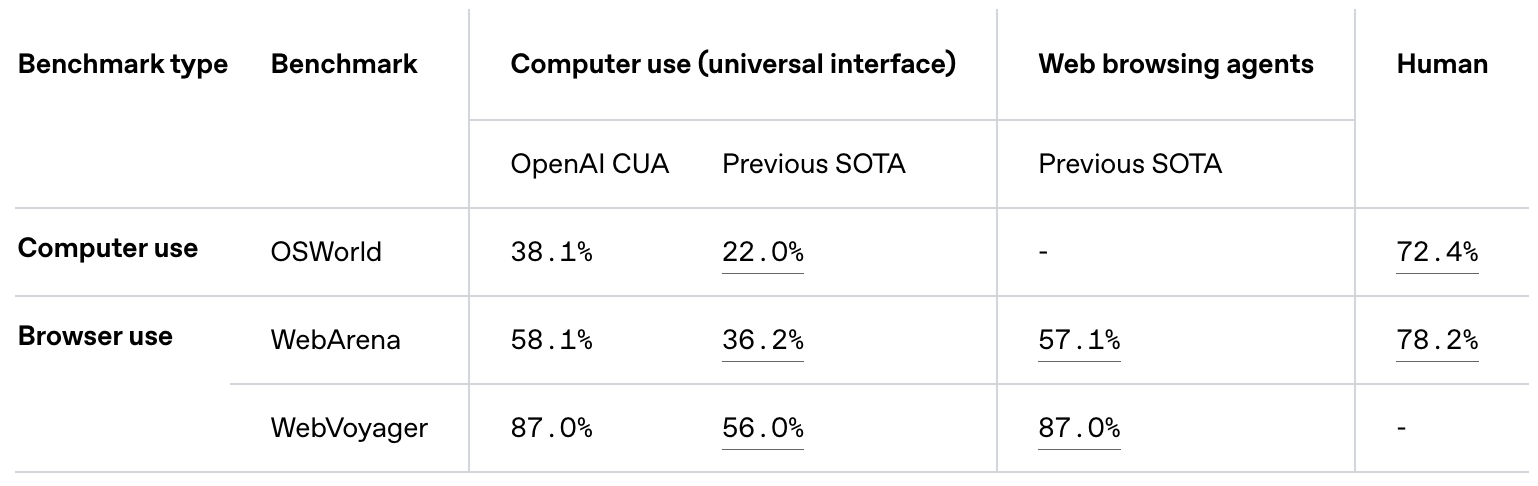
AI models need to be tested before they can be trusted with real-world tasks. OpenAI Operator AI Agent was evaluated using benchmarks designed to test how well it performs tasks that humans do on computers and the web.
The results show that Operator AI significantly outperforms previous AI models, making it one of the most capable web-browsing and computer-using AI agents ever created.
The evaluation tested OpenAI Operator Agent on different benchmarks to see how well it can use a computer and browse the web.
This measures how well an AI can perform basic computer tasks like opening files, navigating settings, and managing applications.
OpenAI Operator scored 38.1%, almost twice as good as the previous best AI model (22.0%).
Humans still do better at 72.4%, but Operator AI is catching up.
This tests how well an AI can browse the internet, click on links, fill forms, and interact with web pages.
Operator AI Agent scored 58.1%, much higher than the previous best AI model (36.2%).
It also performed slightly better than previous web-browsing AI agents (57.1%).
Imagine needing to book a hotel and compare prices on multiple sites. Older AI struggled with these tasks, but OpenAI AI Agent Operator can now complete them more accurately.
This evaluates how well AI can handle complex web interactions like managing online accounts, navigating deep website structures, and adjusting settings.
OpenAI Operator AI Agent scored 87.0%, a massive leap from previous AI models (56.0%).
This means it’s almost as good as humans at advanced browsing tasks.
For example, if you wanted Operator AI to book flights while managing multiple browser tabs for different airlines, it would do so efficiently without getting lost.
These results prove that OpenAI Agent Operator can already handle real-world tasks better than most AI models before it.
While it’s not as perfect as a human yet, its accuracy in web browsing and computer use makes it one of the most reliable AI agents available today.
For detailed evaluation results, check this document.
AI automation comes with risks. OpenAI Operator AI Agent performs real-world tasks, so it must be secure and reliable. OpenAI has built multiple safeguards to prevent misuse, errors, and external threats.
Here’s how Operator AI handles three key risks: harmful user requests, AI mistakes, and website-based attacks.
AI should not be used for illegal or unethical activities. OpenAI Operator Agent is designed to refuse harmful requests.
A user asks Operator AI to purchase illegal substances or manipulate online systems.
These safeguards ensure that OpenAI AI Operator remains a responsible tool.
Even with advanced AI, errors can happen. Operator AI Agent might misinterpret a task or select the wrong option.
You ask OpenAI Operator AI Agent to order a specific brand of headphones, but it mistakenly selects a different product.
These steps prevent costly mistakes and allow users to stay in control.
Some websites try to trick AI into taking unintended actions. OpenAI Agent Operator has built-in defenses against these threats.
A fraudulent website tricks Operator AI into sending money by embedding hidden instructions.
These protections keep OpenAI Operator Agent secure while browsing the web.
Throughout this blog, we explored how Operator AI works, its key features, real-world use cases, and how it seamlessly interacts with websites like a human.
And one of the biggest takeaways is that OpenAI Operator Agent doesn’t rely on APIs.
Instead, it understands and navigates web pages visually, just as humans do. This eliminates integration barriers, making it adaptable to any online platform.
This no-API approach unlocks endless possibilities. Businesses could automate entire workflows, users could delegate complex online tasks, and AI agents could operate across the digital world without limitations.
Even though Operator AI is already proving its capabilities, this is just the beginning. As the model improves, we’re looking at a future where AI doesn’t just assist—it operates, optimizes, and automates seamlessly.
No, OpenAI Operator AI Agent is currently available only to Pro users in the U.S. It is not free for general users. OpenAI plans to expand access to Plus, Team, and Enterprise users in the future.
Not yet. OpenAI has announced that an API for OpenAI Operator will be released in the coming weeks. This will allow businesses and developers to create custom automation solutions using the Operator AI model.
Visit operator.chatgpt.com, where you can access pre-built prompts and integrated apps like Instacart, OpenTable, Etsy, and Uber. Simply enter an instruction, and Operator AI will browse the web and complete the task for you.
Unlike chat-based AI, OpenAI Operator AI Agent doesn’t just provide answers—it takes action. It navigates websites, clicks buttons, fills forms, and completes tasks without requiring API integrations. It mimics human browsing behavior, making it more versatile than traditional automation tools.
Yes. Operator AI can open multiple tabs just like a human and perform various tasks simultaneously. For example, it can order groceries, book a flight, and schedule a meeting—all at the same time.
It can book rides, order food, schedule appointments, manage subscriptions, and even upload images for better task execution. You can instruct it to add multiple pizza orders with different toppings or schedule grocery deliveries based on store availability.
Operator AI Agent does not store sensitive data. It hands control back to the user for actions like entering passwords or confirming payments. Users can also delete browsing history and log out of all sites with a single click.
Subscribe to Our Newsletter
Get the latest business insights straight into your inbox.
Checkout our related blogs you will love.
Updated at Sep 30, 2026
18 min to read
Updated at Sep 26, 2026
13 min to read
Updated at Sep 25, 2026
15 min to read
Updated at Sep 25, 2026
13 min to read

Updated at Sep 12, 2026
17 min to read
Table of Contents