


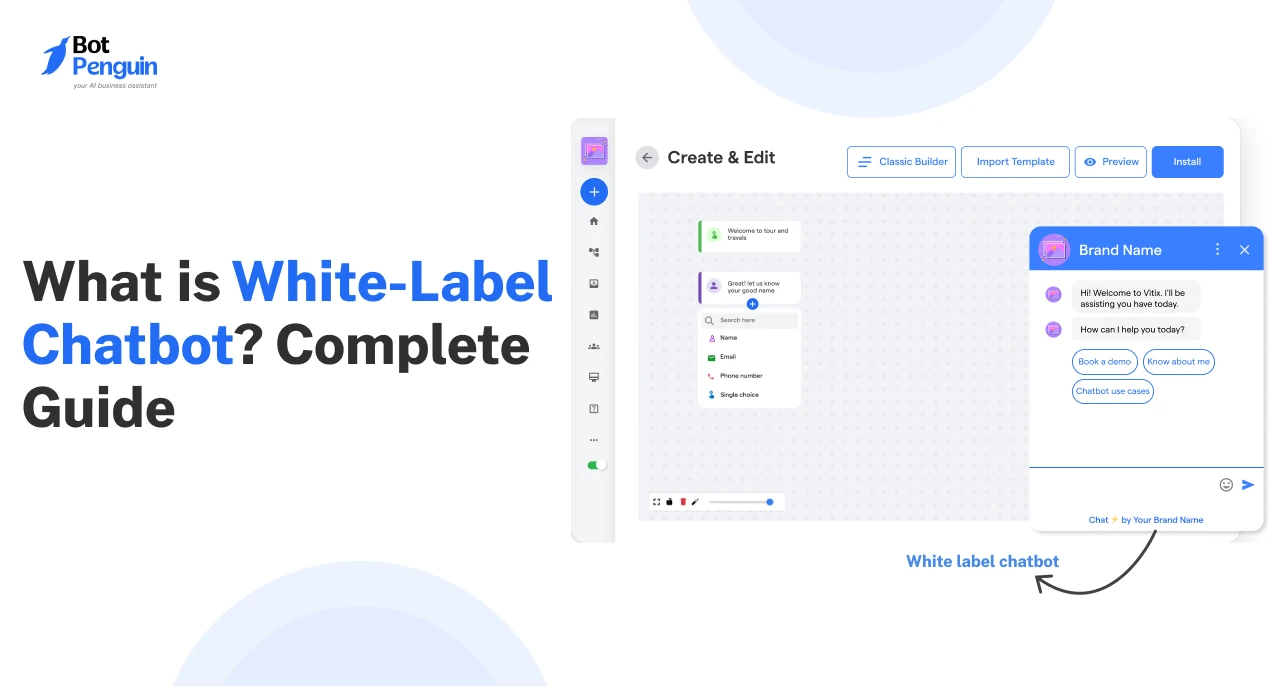
What is a White-Label Chatbot? Complete Guide For 2026
Updated at Oct 19, 2026
10 min to read
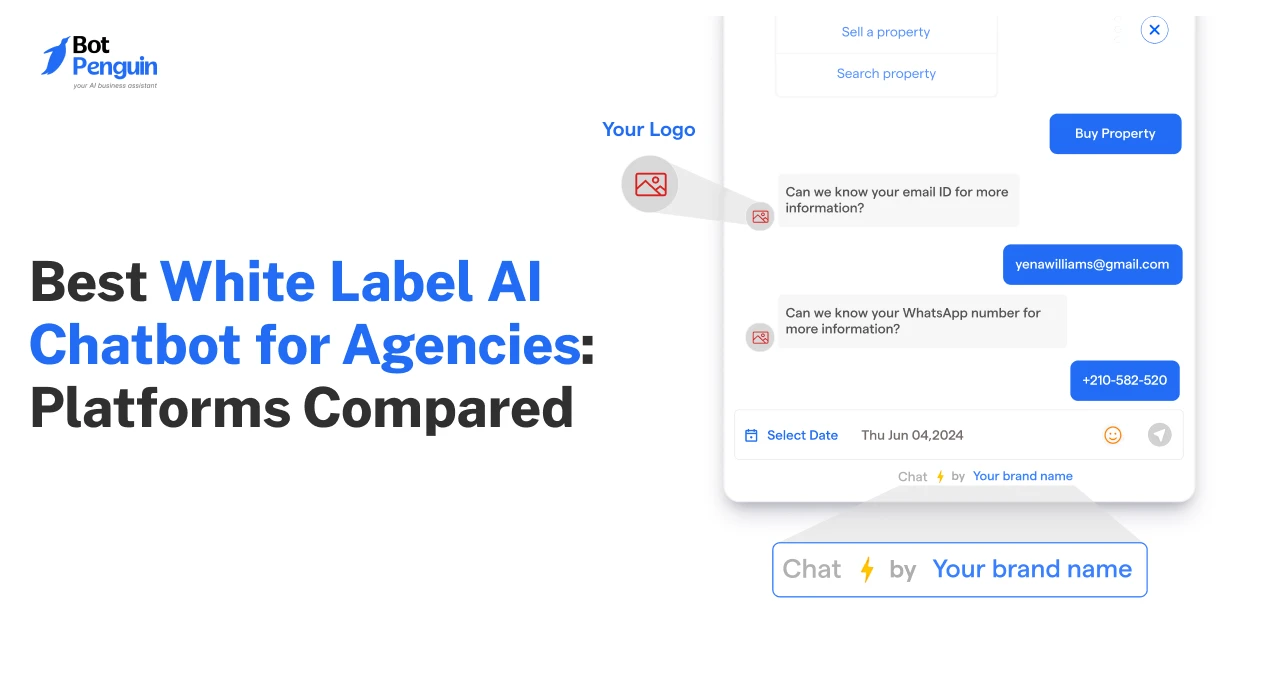
Tidio white label gives agencies some branding control, but it does not offer the same level of ownership as a full white-label platform.
This guide breaks down what Tidio includes, where it falls short for agencies, and how its white-label capabilities compare with other reseller-ready options.
We will look at branding, WhatsApp access, pricing, channel coverage, reseller margins, and client ownership so agencies can judge whether Tidio fits their business model.
If you are new to the concept, first understand what a white label chatbot is.

Yes, Tidio offers limited white-label branding options, mainly for the customer-facing chat experience.
Paid users can remove Tidio branding from eligible chat widgets and emails and customize the widget’s appearance. However, Tidio white label does not provide the same level of ownership as a fully rebrandable platform.
For agencies, full white labeling typically includes:
Tidio is therefore better suited to agencies that need branded website chat rather than complete platform ownership.
The Tidio partner program supports agency partnerships and recurring revenue opportunities. However, it remains a partner model rather than a fully rebrandable white-label SaaS offering.
A true white-label platform gives agencies control over branding, client access, billing, and platform ownership. Here is how Tidio performs across ten white-label criteria, based on its pricing, product, and support documentation as of October 2026.
Tidio therefore passes 2 of 10 checks. Agencies that need deeper branding, billing control, and client ownership can compare these criteria with BotPenguin’s white label depth checklist.
A Tidio white label chatbot gives agencies control over the customer-facing chat experience, but not full ownership of the underlying platform.
Agencies can customize the chat widget, remove Tidio branding on eligible plans, and manage conversations through Tidio’s workspace. This can work well for clients that mainly need website chat and AI-assisted support.
The limitations become clearer when agencies need deeper branding, broader channel coverage, and more predictable reseller margins.
For pricing context, Tidio’s Plus plan starts at $300/month plus usage and includes custom branding. Lower eligible plans offer “No Tidio branding” as an add-on, which supports branded website chat but does not provide full white label chatbot platform ownership.
Tidio is therefore a stronger fit when clients primarily need branded website chat.
Agencies that need deeper ownership, broader channel delivery, and scalable reseller margins may need a more complete white-label platform.
Agencies often need more than branded website chat when they begin reselling conversational solutions to multiple clients.
Tidio works well for website chat and support. The gap appears when agencies need broader channel delivery, stronger brand ownership, and pricing that protects reseller margins as they scale.
These are the main areas where full white-label platforms offer agencies more control.

Agencies serving clients across MENA, India, LATAM, and Southeast Asia often need WhatsApp alongside website chat.
Clients may also expect Instagram, Facebook, shared inbox access, reporting, and human handover from the same service. Managing these requirements becomes harder when the platform remains primarily website-chat focused.
Agencies typically need:
This is where a white-label WhatsApp chatbot program gives agencies more room to deliver WhatsApp automation under their own brand.
Branding controls are most useful when agencies can apply them across the entire client experience, not only the chat widget.
When deeper branding depends on higher-priced plans, agencies may face larger platform costs before client revenue grows. That can make it harder to package the service competitively.
A reseller-focused model gives agencies more control over how they present, package, and sell the platform under their own name.
For more context, see our guide to building a white-label chatbot reseller program.
Tiered and usage-based pricing can make reseller margins harder to predict as client usage grows.
A flat-fee model gives agencies a clearer platform cost while they add clients, channels, and service packages. That makes it easier to forecast margins and set their own client pricing.
Agencies comparing white label chatbot pricing should therefore look beyond the entry price. The more important question is how platform costs change as the agency scales from a few clients to dozens.
These differences matter most when an agency wants to build a repeatable white-label service rather than simply manage chat for individual clients.
BotPenguin is built for agencies that want to sell conversational solutions under their own brand, pricing, and client experience.
Through the BotPenguin white label chatbot partner program, agencies can launch and manage a branded chatbot business without building the underlying platform themselves.
The program starts at $1,500/year with agency-controlled pricing, unlimited client accounts, and unlimited chatbots. It includes a white-labeled domain, brand name and logo, API/webhooks, and tools for managing multiple clients from one platform.
Here is how Tidio and BotPenguin compare for agencies.
(Note: Tidio details in this table reflect official Tidio information available as of October, 2026. Plan names, inclusions, partner terms, and pricing may change over time, so buyers should review current Tidio terms before purchase.)
BotPenguin also gives agencies a single reseller dashboard for managing clients, channels, campaigns, and conversations.
The bigger advantage is business ownership. Agencies can set pricing, define packages, manage client access, and keep the customer relationship under their own brand.
Agencies can also resell AI, not just chat.
BotPenguin's white-label plans include AI (ChatGPT) replies from the Little tier, and AI agents and voice agents on the King tier, all under your brand. That lets you sell clients an AI agent that answers on WhatsApp and the website, or a voice agent that takes phone calls, without building either yourself.
Tidio fits agencies that mainly need branded website chat and customer support. BotPenguin is designed for agencies building a broader white-label business around chatbots, AI agents, voice agents, multi-channel delivery, and recurring client revenue.
The next section compares the white-label depth of Tidio, BotPenguin, ManyChat, Intercom, and Zendesk.
The right white-label option depends on what an agency plans to sell. Tidio focuses primarily on website chat and support, while BotPenguin, ManyChat, Intercom, and Zendesk serve different automation and service needs.
Here is how their white-label depth and agency fit compare.
Tidio and BotPenguin serve different agency requirements. Tidio is primarily a website chat and support platform, while BotPenguin is designed around branded resale.
For a feature-by-feature view, see our full BotPenguin vs Tidio comparison.
ManyChat is more focused on social-first automation, while Tidio is stronger for website-based support.
Pricing note: ManyChat’s Essential plan starts at $14/month billed annually, and paid tiers include “No ManyChat branding.” This provides cleaner brand presentation without transferring full platform ownership to the agency.
For more detail on its branding model, see our ManyChat white label comparison.
Agencies evaluating developer-focused tools can also review our Botpress white label guide.
Intercom targets more mature customer service operations, while Tidio offers a lighter setup for smaller support teams.
Pricing note: Intercom starts at $29/seat/month, with higher plans at $85 and $132/seat/month.
Zendesk offers a broader customer service stack than Tidio and is designed for more complex support environments.
Pricing note: Zendesk customer service plans start at $19/agent/month, with Suite plans priced higher per agent.
For a broader view of agency-focused options, see our guide to white label chatbot platforms compared. The next section maps each buyer type to the platform that best fits its requirements.
The best fit depends on what an agency needs to sell, support, and scale. Use this quick guide to match each requirement with the most suitable platform.
For agencies, the choice comes down to the business model.
Tidio is a stronger fit when website chat and customer support are the main requirements. BotPenguin is better suited to agencies building a branded conversational AI business with custom branding, WhatsApp delivery, multi-client management, and recurring revenue control.
Not reselling and simply need a different chat tool? See our ranked list of Tidio alternatives.
For a broader look at agency partnership models, see our guide to the best white label partner program.
Yes. Tidio offers limited white-label controls on eligible paid plans, including chat widget customization and branding removal. However, it does not provide full agency ownership features such as custom domains, branded mobile apps, branded documentation, or client access without visible Tidio infrastructure for resellers directly.
BotPenguin is the strongest Tidio alternative for agencies needing full white labeling, WhatsApp automation, multi-client management, and pricing control. Unlike Tidio’s website-focused model, BotPenguin supports branded client delivery, agency-owned pricing, unlimited client accounts, and compliant WhatsApp access as an official Meta Tech Provider for agencies.
BotPenguin can be cheaper for agencies building a white-label resale business. Plans start at $1,500/year, while Tidio Plus starts at $300/month plus usage. Tidio may cost less for simple website chat, but BotPenguin offers broader reseller ownership and margin control overall.
Yes. Tidio supports WhatsApp through its multichannel and WhatsApp integrations, alongside email, Messenger, Instagram, and live chat. For agencies selling branded WhatsApp automation, BotPenguin adds white-label resale, client-branded delivery, and compliant WhatsApp Business API access at scale as an official Meta Tech Provider.
Tidio offers an agency partner program focused on referrals, co-selling, and recurring revenue, but it is not a fully rebrandable resale platform. Agencies can partner around Tidio, while BotPenguin lets them sell under their own brand, domain, pricing, and client-facing identity, with more overall ownership.
Tidio is a strong fit for agencies serving SMB clients that mainly need website chat, AI-assisted support, and basic branding control.
The limitations become more noticeable when agencies need deeper ownership, WhatsApp delivery, broader channel coverage, and more predictable reseller margins. In those cases, BotPenguin is better suited to a full white-label agency model.
BotPenguin supports branded client delivery across WhatsApp, Instagram, Facebook, Telegram, phone, websites, SMS, and Microsoft Teams. It also provides WhatsApp access as an official Meta Tech Provider, while agencies retain 100% of their revenue through the flat-fee white-label model.
For agencies building a long-term conversational AI business, the decision ultimately comes down to ownership, margin control, and the ability to scale services under their own brand.
Build Your White-Label Chatbot Business
Launch chatbot services under your brand with BotPenguin’s custom domain, branded apps, WhatsApp access, and flat-fee reseller margins.
Start ResellingCheckout our related blogs you will love.
Updated at Oct 19, 2026
10 min to read
Updated at Oct 9, 2026
8 min to read

Updated at Oct 9, 2026
12 min to read
Updated at Oct 7, 2026
15 min to read
Updated at Oct 1, 2026
11 min to read
Updated at Sep 28, 2026
19 min to read
Table of Contents
