


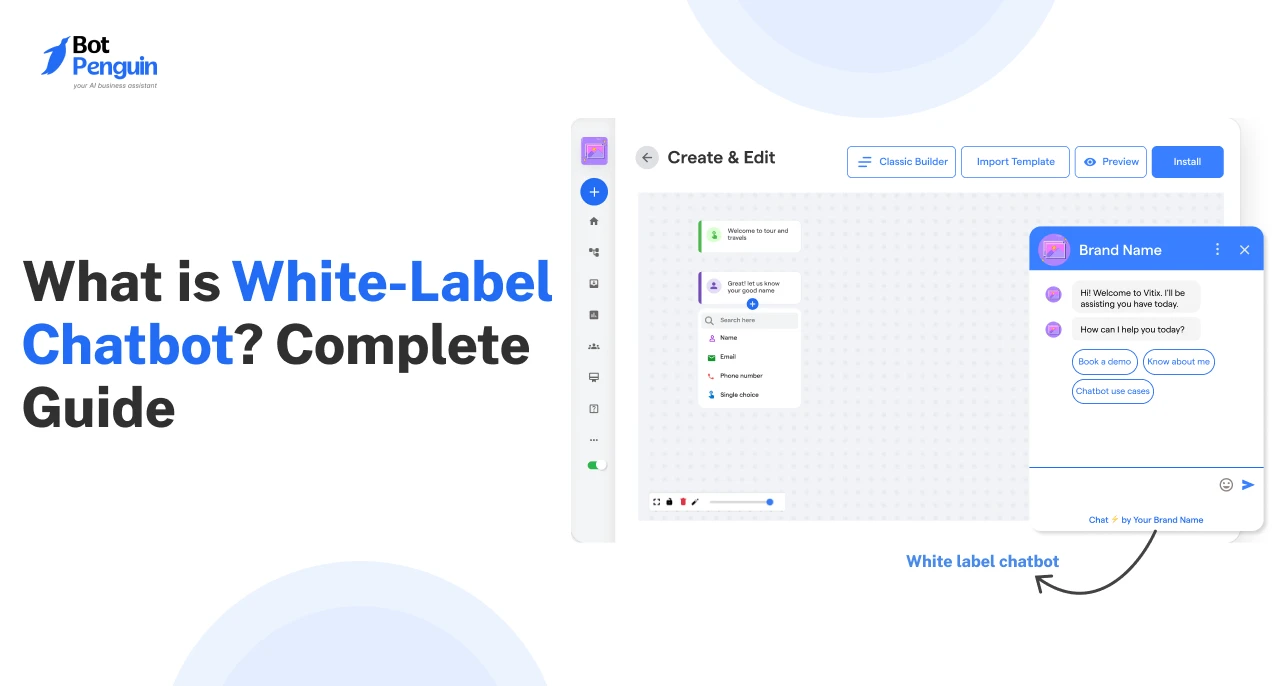
What is a White-Label Chatbot? Complete Guide For 2026
Updated at Oct 23, 2026
10 min to read
![ManyChat White Label_ Is It Built for Resale_ [2026]](https://cdn-cms.botpenguin.com/cms/1781265579798_ManyChatWhiteLabelIsItBuiltforResale2026.webp)
Agencies using ManyChat often reach a point where branding becomes as important as automation.
That is why searches for ManyChat white label come from agency owners, consultants, and service providers who want custom domains, client portals, reseller control, and billing ownership.
Completely new white labeling? First, go through our guide to white-label chatbots to understand how the model works.
This guide answers the core question: Does ManyChat offer white-label support?
It explains what ManyChat provides, where its branding and customization options stop, and how its agency setup compares with what a dedicated white-label chatbot platform should offer.
By the end, you will know whether ManyChat fits your needs or if a purpose-built white-label alternative is the better choice.
ManyChat does not offer full white-label features for businesses that want to rebrand and resell chatbot software under their own company name.
It is useful for automation. But white-labeling is about ownership of the client-facing product experience.
The sections below explain what ManyChat offers, its agency model, and its white-label limitations.
ManyChat is built for businesses that want to automate conversations across messaging and social channels like Instagram, WhatsApp, TikTok, and Messenger. Its role is to help users create chat-based workflows within ManyChat’s platform.
ManyChat mainly supports users who want to:
This makes ManyChat useful for creators, ecommerce brands, marketers, agencies, consultants, and service teams that need automation.
But it does not change the product model. Users are still working inside ManyChat’s platform. They are not getting a rebranded software environment that can be sold as their own chatbot product.
That distinction matters for anyone comparing ManyChat with a white-label chatbot platform.
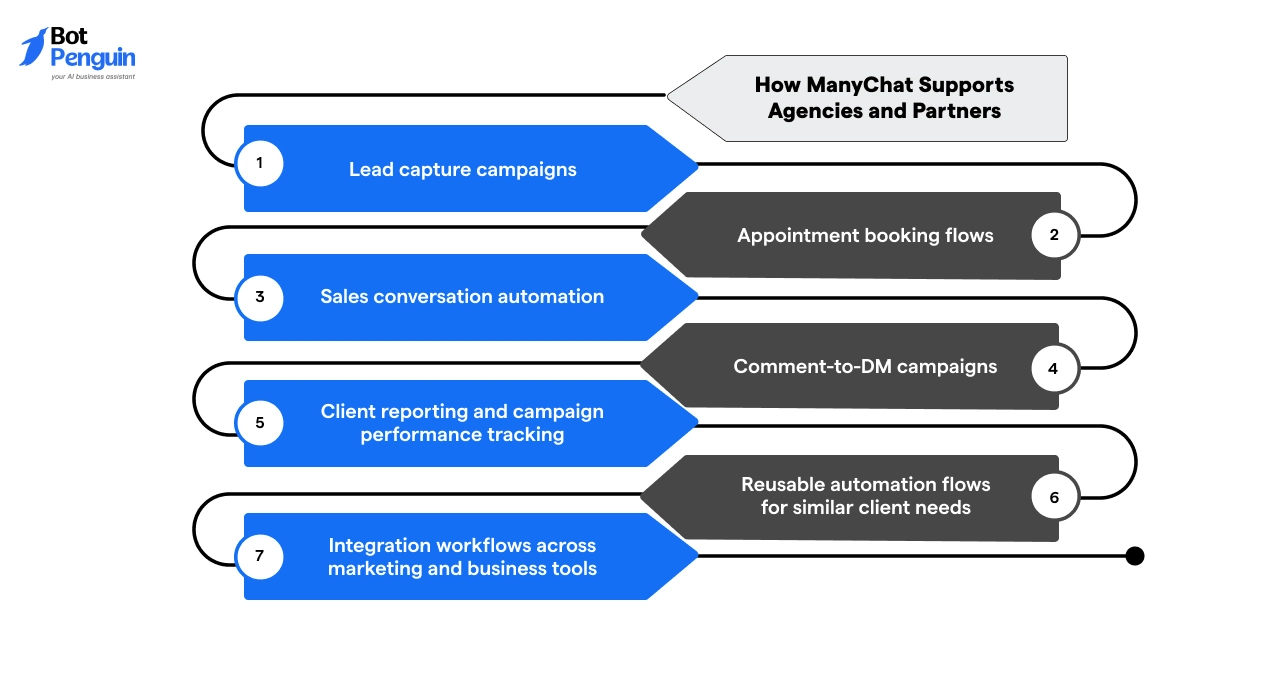
ManyChat also supports agencies and partners that use the platform to deliver services for clients. This is where the agency use case fits better.
Agencies can use ManyChat to build client automations, manage campaign workflows, track results, and create repeatable service packages around messaging automation.
For client service delivery, ManyChat can help agencies with:
ManyChat also has a partner or affiliate model where creators, educators, influencers, agencies, and marketers can promote ManyChat and earn referral commissions.
This supports referrals and service delivery, but it does not give partners a rebranded version of ManyChat to sell as their own platform.
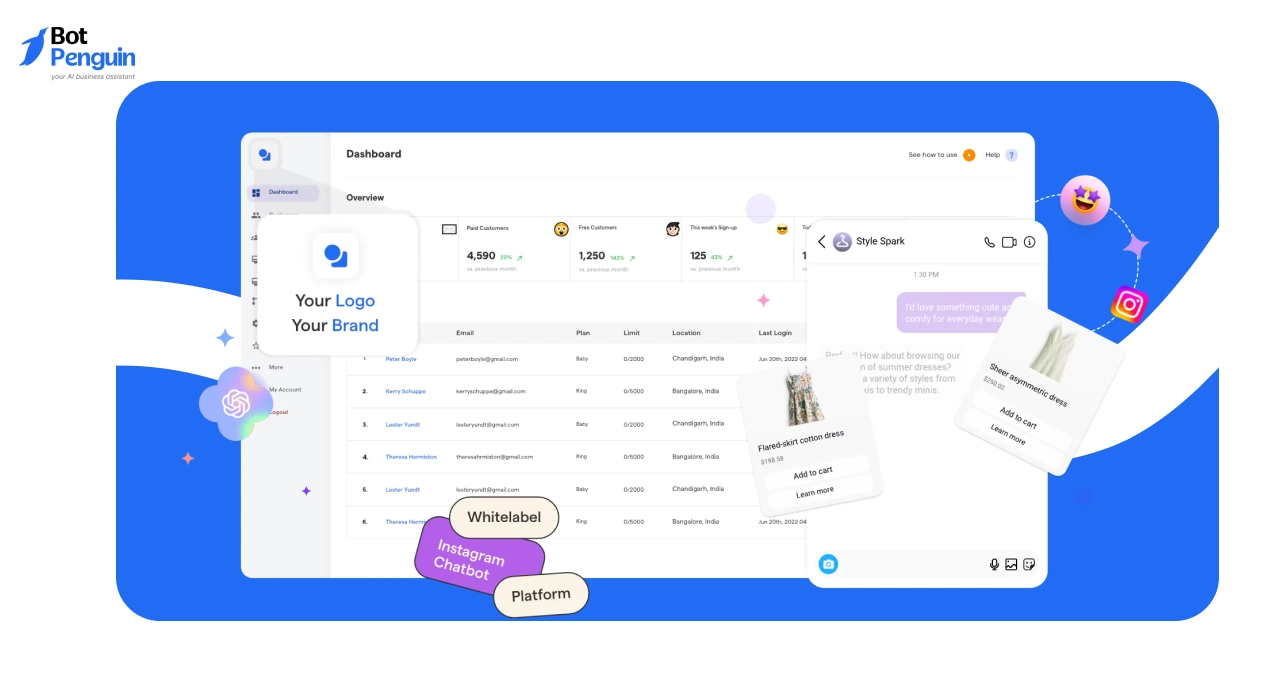
ManyChat’s automation features should not be confused with full platform rebranding.
A paid ManyChat plan may remove some visible platform branding from messages. But removing a “Powered by” message is not the same as owning a white-label software experience.
A complete white-label setup usually includes:
These are the controls that agencies, SaaS builders, IT resellers, and consultants usually need when creating a branded chatbot offering.
Now, if white-label ownership is important to your business model, it helps to compare ManyChat with a platform built specifically for branding, resale, and client management. Let’s dive into that comparison next.
Here is ManyChat scored against the ten checks agencies use to test whether a platform is truly white label. Each item is verified against ManyChat’s product and support documentation as of September 2026.
ManyChat therefore passes 1 of 10 checks. Agencies that need the remaining ownership controls can compare them with BotPenguin’s white-label depth checklist.
The difference between ManyChat and a true white label Instagram chatbot platform like BotPenguin helps you understand which solution is better suited for automation alone and which offers the flexibility to build, brand, and scale chatbot services under your own business name.
The table below compares the key areas that matter most in a white-label chatbot vs ManyChat evaluation.
The following sections detail the key differences between ManyChat and BotPenguin across the features that matter most to businesses evaluating a white-label chatbot platform.
ManyChat keeps the experience tied to its own platform environment. Users can build messaging flows, but the platform itself is not meant to appear as your own software product.
BotPenguin is built for stronger brand ownership. Partners can present the chatbot platform with their own brand, domain, and client-facing identity.
The difference is clear:
ManyChat works well when agencies manage client automation behind the scenes. The agency builds and manages flows, while clients mainly receive the service outcome.
BotPenguin is structured for partner-led customer management. It supports businesses that need to manage multiple clients inside a branded reseller environment.
The difference is operational:
ManyChat’s partner model is closer to affiliate, referral, or service-led revenue. Agencies charge for setup, management, and consulting, but ownership of pricing stays with ManyChat, not the reseller.
BotPenguin supports a resale-led model in which partners can create packages, control pricing, and build margin around their own chatbot offerings.
The difference is commercial:
The comparison shows a clear split. ManyChat is useful when the priority is messaging automation, campaign execution, and client service delivery. BotPenguin becomes more relevant when the business model depends on branded access, reseller control, and long-term ownership of the chatbot offering.
This difference matters because not every business needs full white-labeling. The next section looks at when ManyChat’s agency-style setup is enough and when it starts to limit growth.
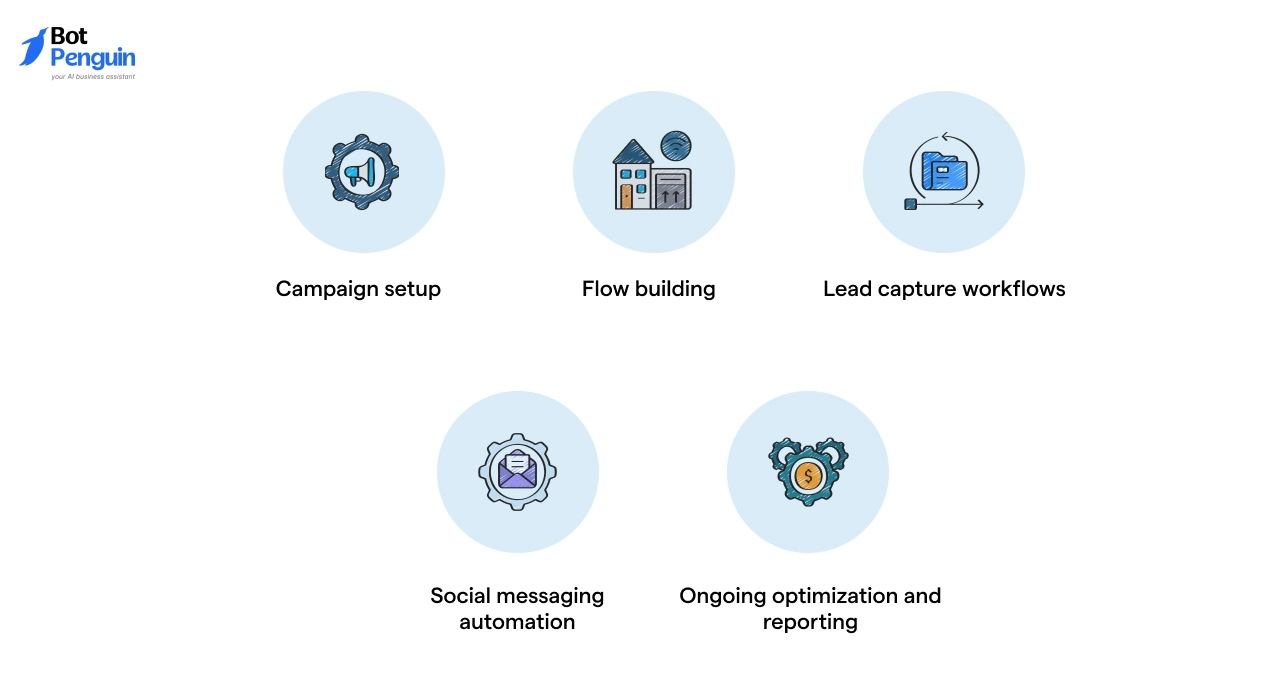
ManyChat is enough when your revenue comes from managing automation for clients. It fits teams that sell:
In this model, ManyChat stays behind the service. The client buys your execution, not your software.
But if your revenue model depends on product ownership, ManyChat becomes the wrong fit. That includes agencies, consultants, SaaS builders, or resellers that want to sell chatbot access as a branded subscription.
So the decision is simple: choose ManyChat for managed automation services.
Choose a dedicated white-label platform like BotPenguin when the goal is branded software resale, client account ownership, and recurring platform revenue.
You can also explore other ManyChat alternatives to compare broader platform options before shortlisting.
A good ManyChat white-label alternative should help businesses control branding, client access, pricing, and platform presentation. The right option depends on whether you want full reseller control, developer flexibility, or AI-agent-focused services.
The table below gives a quick view of three alternatives and how they differ from ManyChat.
The sections below explain where each platform fits best from a white-label agency perspective.
For businesses that want to turn chatbot services into a branded product line, BotPenguin is the strongest match. The platform is built around white-label resale.
That means agencies, SaaS builders, IT resellers, and consultants can use their own branding, manage clients, define packages, and offer chatbot automation across channels such as websites, WhatsApp, and Instagram through a fully branded Instagram automation platform.
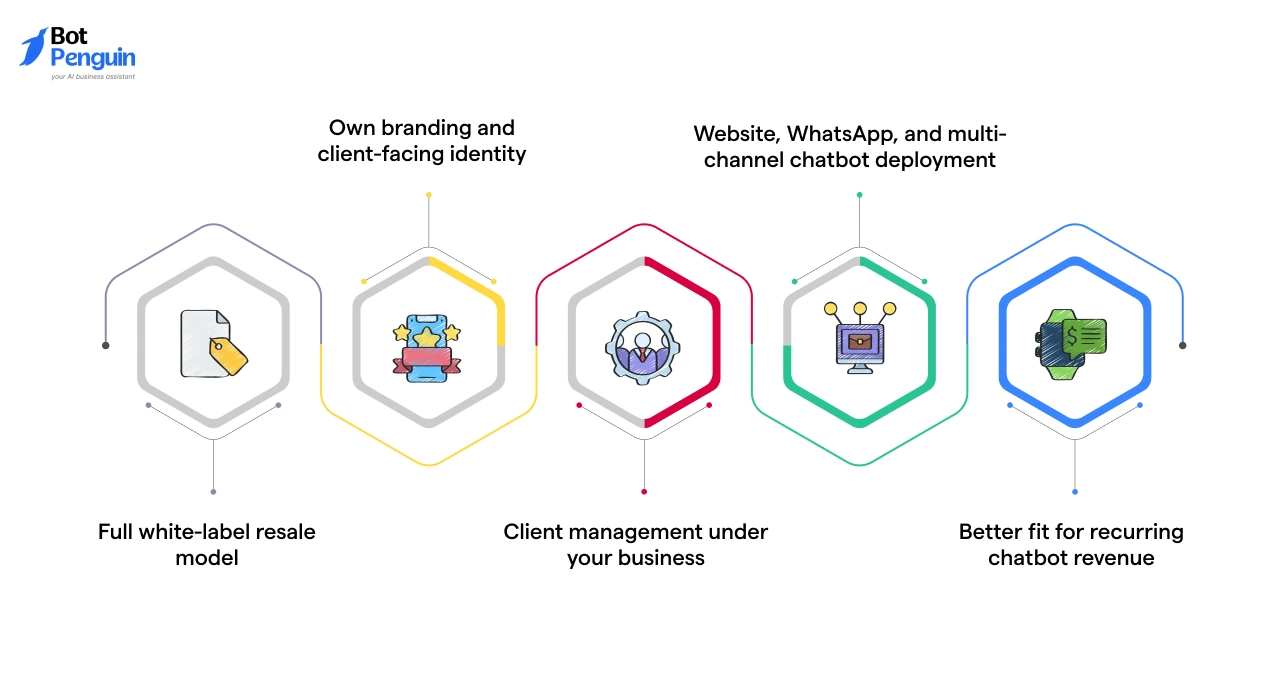
Agencies already using GoHighLevel can continue managing client records, pipelines, and sales follow-ups within their existing CRM setup. BotPenguin can be added as the white-label Instagram chatbot layer to handle DMs, qualify leads, book appointments, and capture customer details.
This allows agencies to expand their services with branded Instagram automation without replacing GoHighLevel or disrupting their existing client workflows.
Choose BotPenguin's white-label Instagram chatbot platform when your goal is to build a chatbot business under your own brand. For setup steps, branding options, and resale guidance, read our Instagram white-label playbook.
Botpress suits teams with technical depth.
It is not the simplest pick for a plug-and-play reseller model, but it gives developers and enterprise teams more room to shape how bots behave, connect, and deploy.
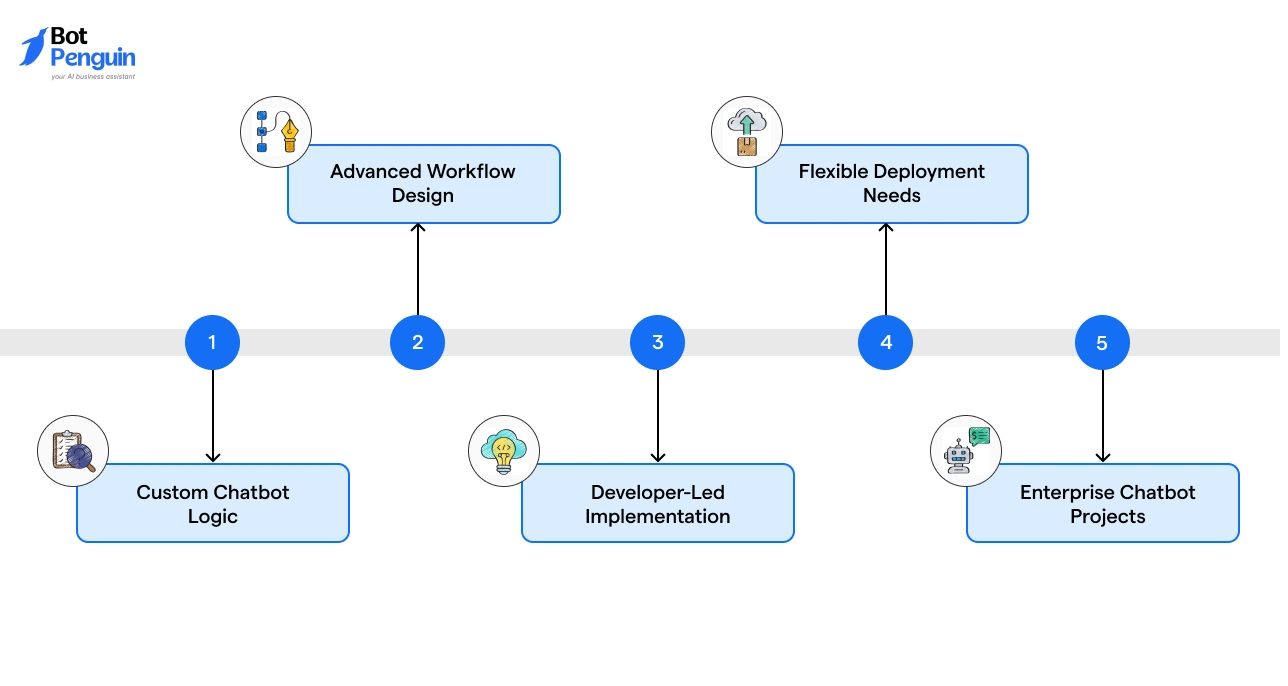
Where ManyChat is easier for messaging automation, Botpress gives more control over the build itself.
This makes Botpress a better option for technical agencies that prefer flexibility over packaged white-label resale.
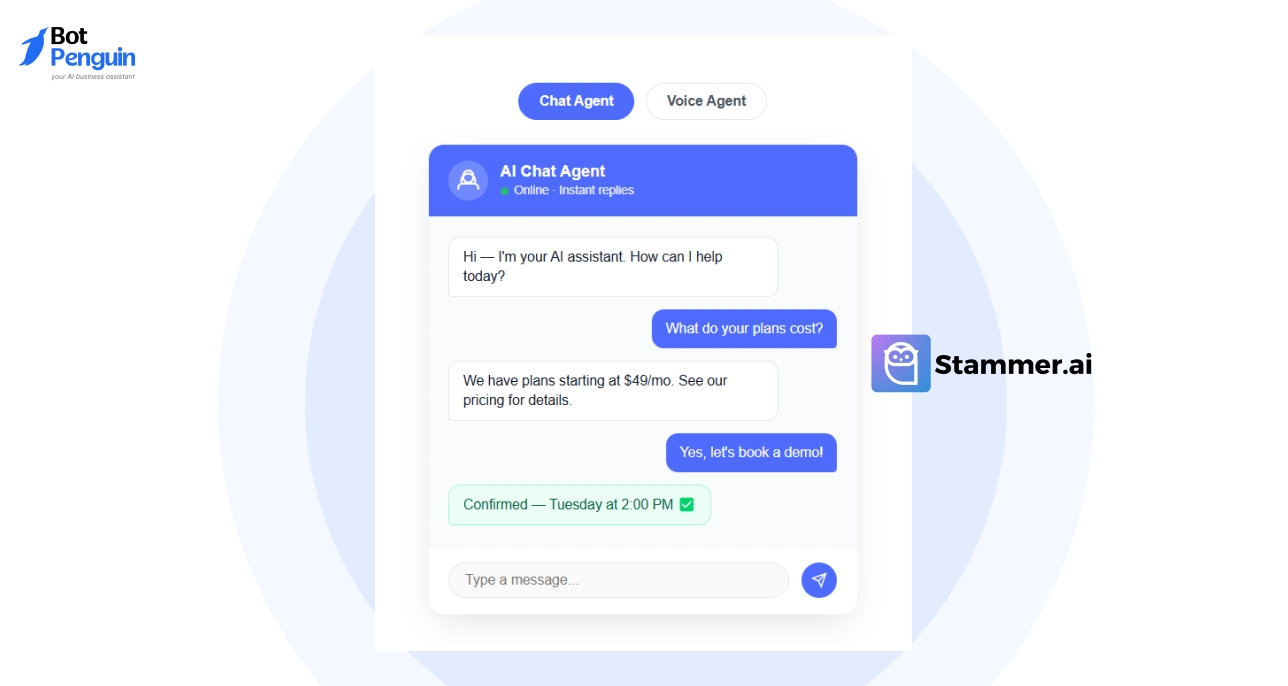
Stammer AI is for agencies selling AI-first services.
Instead of focusing only on traditional chatbot workflows, it leans into white-label AI agents, including chat and voice use cases.
Its positioning is less about managing social messaging campaigns and more about selling branded AI agent solutions.
Stammer AI is a good fit when the agency’s offering needs to sound modern, AI-native, and service-led.
To compare another messaging automation platform, review Chatfuel’s white-label position before choosing an option for your agency.
For a broader platform-by-platform breakdown, see our guide to compare white label chatbot platforms.
ManyChat works well for managing messaging automation, building client flows, and supporting social engagement across channels.
But a ManyChat white label search usually points to a larger need: brand ownership, client access, reseller pricing, and platform control.
For a managed-service model, ManyChat can still be useful. For a ManyChat agency white-label model, it becomes limited once clients need a branded software experience.
That is why agencies, consultants, SaaS builders, and resellers should evaluate a dedicated ManyChat white-label alternative before committing to a long-term resale strategy.
ManyChat offers agency-friendly tools for managing client automations, campaigns, conversations, and team workflows. However, it does not provide full white-label ownership. Agencies cannot fully rebrand the platform with their own domain, dashboard, client portal, pricing structure, and vendor-free software experience for resale to clients directly under their company name.
No, ManyChat cannot be fully rebranded under your company name. You may use ManyChat to build and manage automation for clients, but the platform does not provide complete control over the product interface, login portal, custom domain, client dashboard, or reseller experience required for full white-label software ownership.
BotPenguin is a strong white-label alternative to ManyChat for agencies, consultants, SaaS builders, and resellers. It is designed for branded chatbot resale with custom branding, domain control, reseller pricing flexibility, client management, and multi-channel deployment across websites, WhatsApp, and other business messaging channels under your own brand.
ManyChat is not built around custom-domain ownership for agency client accounts, unlike full white-label platforms. Agencies can manage automation for clients inside ManyChat, but they cannot offer a fully branded client portal on their own domain with a complete dashboard and software rebranding control for clients.
ManyChat is good for chat marketing automation, social messaging workflows, and managed client campaigns. BotPenguin extends that by offering white-labeling. It supports branded chatbot resale, custom branding, domain control, reseller pricing, and client management. The difference is simple: ManyChat supports automation delivery; BotPenguin supports branded platform ownership.
No. ManyChat supports Inbox and WhatsApp automation, but these features run within ManyChat’s platform. Agencies can manage conversations and automate WhatsApp workflows for clients, but they cannot fully white-label live chat or WhatsApp as their own branded software product for direct resale or client access under their brand.
No. ManyChat’s analytics and dashboard areas are part of the ManyChat product experience. Agencies can use these views to track performance, review automations, and manage client results, but they cannot fully rebrand the Insights panel or dashboard as their own client-facing software interface under a separate company identity.
White Label Beyond ManyChat Limits
Compare ManyChat white-label needs with BotPenguin and choose a resale-ready platform for client growth.
Contact Us TodayCheckout our related blogs you will love.
Updated at Oct 23, 2026
10 min to read
Updated at Oct 9, 2026
8 min to read

Updated at Oct 9, 2026
12 min to read
Updated at Oct 7, 2026
15 min to read
Updated at Oct 6, 2026
9 min to read
Updated at Oct 1, 2026
11 min to read
Table of Contents
