


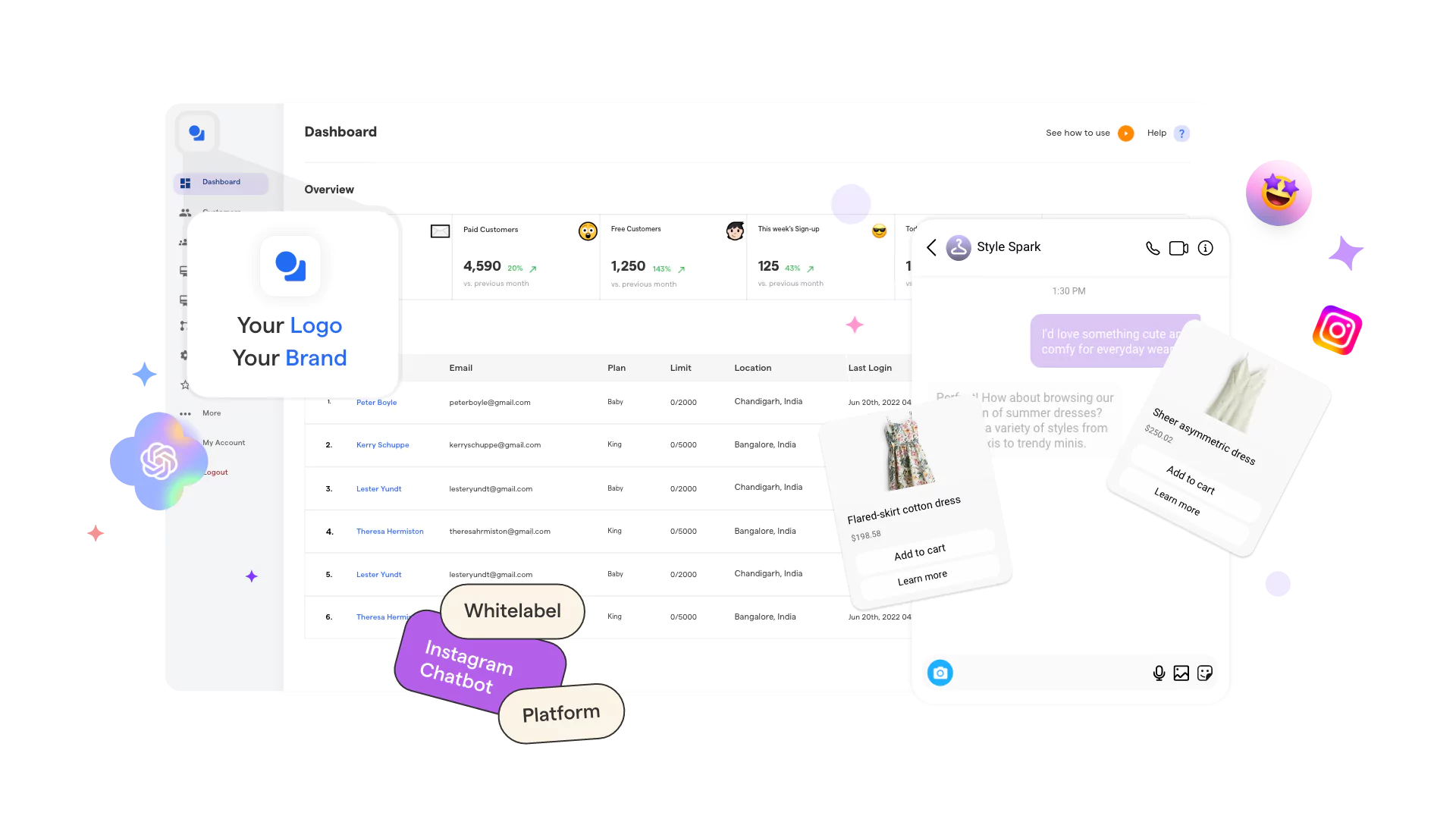

How to Sell White Label Instagram Chatbot Services
Updated at Oct 21, 2026
12 min to read
Updated On Sep 29, 2026
9 min to read
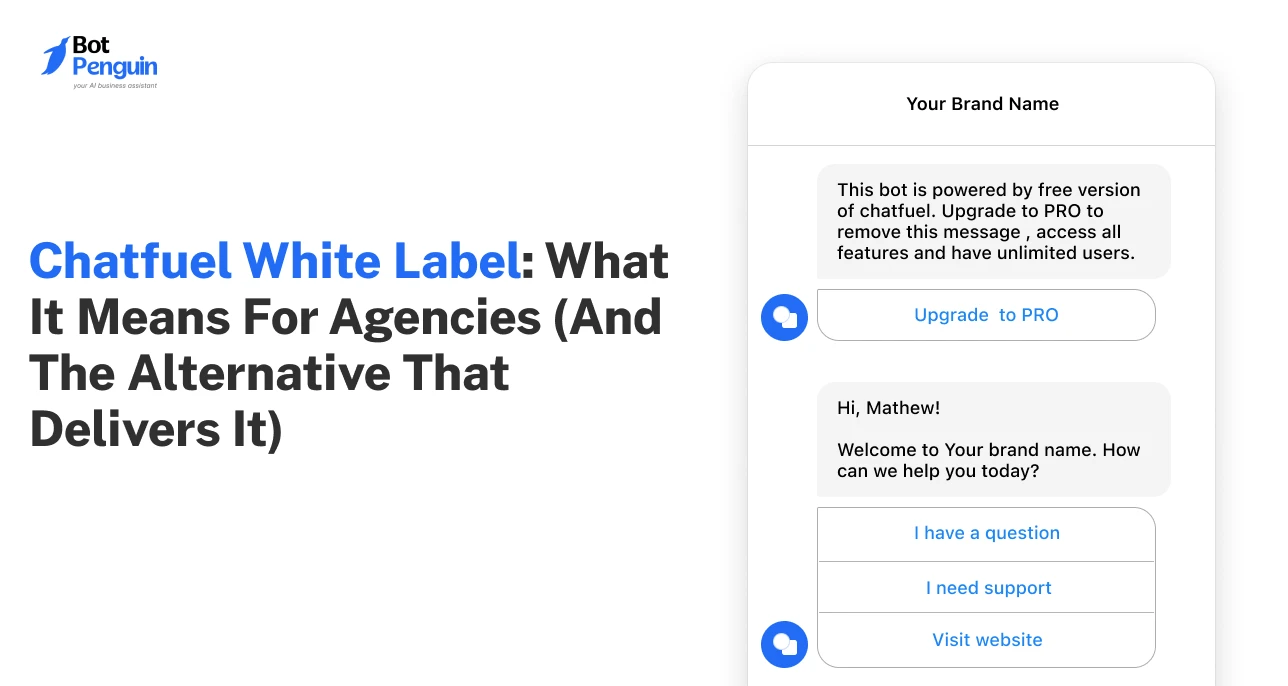
You searched “Chatfuel white-label” because you’re likely trying to offer Instagram chatbot automation under your own agency brand. But does Chatfuel actually offer a white-label solution?
Here’s the straight answer: Chatfuel does offer white-label capabilities, but through its developer SDK rather than a ready-to-use agency platform. The standard platform still lets you build chatbots for Instagram, along with channels like Messenger and WhatsApp, while the SDK adds the infrastructure needed to create a branded SaaS experience.
That makes Chatfuel useful for teams with development resources, but less straightforward for agencies looking for a no-code setup. In this blog, we break down what Chatfuel actually offers and compare it with a Chatfuel white label alternative built for agencies looking to scale.
Yes, Chatfuel now offers white-label capabilities through its developer SDK. Its Accounts module allows businesses to build a white-label SaaS experience on top of Chatfuel.
For agencies, this is the key distinction: the standard Chatfuel platform is still a ready-to-use chatbot tool, while creating a fully branded platform requires building through the Chatfuel SDK.
Chatfuel is a no-code chatbot platform for automating customer conversations across Instagram, WhatsApp, Messenger, TikTok, and web chat.
Its Chatfuel white label SDK lets businesses build a branded SaaS experience on top of Chatfuel’s infrastructure. Through the Accounts module, businesses can:
The underlying agents, channels, and data still run on Chatfuel’s infrastructure, while the client-facing experience can be presented under your own brand.
The key difference is that this is a developer-led setup rather than a ready-to-use white-label dashboard. It offers more flexibility for technical teams, but also requires more development involvement than a no-code white-label chatbot platform.
The issue isn’t what Chatfuel can do; it’s how its white-label option is structured.
The standard Chatfuel app does not give agencies a ready-to-use white-label platform they can simply rebrand and resell. To create a fully branded experience, agencies need to build through the SDK, which adds a development layer to the setup.
Agencies that maintain consistent branding across client touchpoints can see revenue grow by up to 20%, according to a Lucidpress survey of 400+ brand management experts.
For agencies, that means:
This is why agencies looking for a simpler setup may compare Chatfuel’s SDK with a no-code white-label platform that separates the backend tool from the client-facing brand.
If you want a simpler way to offer clients a fully branded chatbot experience without building through an SDK, explore BotPenguin’s no-code white label Instagram chatbot platform for custom branding, multi-client management, and service delivery under your own name.
Chatfuel’s white label setup is different from a ready-to-use no-code platform. The main difference is how much technical involvement your agency wants to take on.
Here’s how to visualize the difference in practice:
The difference comes down to control versus convenience. Chatfuel's SDK gives technical teams more flexibility, while a no-code white label chatbot platform reduces the development work required to deliver the service.
Building a white-label service through an SDK involves more than applying your logo and domain. Agencies also need to account for the technical work required to set up, customize, and maintain the client-facing application.
That can include:
For agencies with an in-house development team, that additional control may be worthwhile. For teams that want to start selling branded chatbot services without maintaining their own software layer, a no-code setup can be the simpler route.
If you're searching for a Chatfuel white label alternative, you're not necessarily looking for something Chatfuel cannot provide. You may simply want a white-label setup that does not require building and maintaining your own application through an SDK.
That's where a no-code white-label chatbot platform like BotPenguin comes in. It lets agencies sell branded Instagram chatbots and other automation services under their own name, with no client-facing platform to build from source code.
Here's how the two approaches compare on branding, setup, client management, and technical involvement:
For a broader feature comparison, explore BotPenguin vs Chatfuel.
Here's what BotPenguin gives agencies that prefer the no-code route:
You're not just configuring software for clients. You're packaging a service that carries your agency's identity, which builds stronger retention and recurring revenue around chatbot automation.
As your client base grows, separate accounts and subscriptions get harder to track. BotPenguin centralizes operations, so you can oversee multiple businesses without multiplying admin work.
Many businesses start with Instagram automation, then want WhatsApp, website chat, Messenger, or other channels.
Brands that personalize the customer experience can see revenue grow by 5 to 15 percent, according to McKinsey.
A white-label platform lets you add those channels without new vendors or disconnected workflows.
Curious how agencies expand from Instagram to WhatsApp? Check out our white-label WhatsApp solution and learn how to offer both channels under one brand.
When clients associate automation with your agency rather than the software behind it, your positioning strengthens and you become harder to swap for another agency using the same tools.
The bottom line: Both platforms can support a branded chatbot offering. The difference is the route. Chatfuel gives technical teams an SDK to build and customize, while BotPenguin gives agencies a no-code way to sell the service without maintaining their own software layer.
Both options can support a branded chatbot service, but the right fit depends on how much technical control your team wants and how involved you want to be in maintaining the platform.
Chatfuel's SDK is better suited to teams that have development resources and want greater control over how the platform is built and customized.
It may be a better fit if you:
BotPenguin is better suited to agencies that want to brand and manage chatbot services without building their own application.
It may be a better fit if you:
The main difference comes down to developer-led customization versus no-code convenience. Chatfuel gives technical teams more control, while BotPenguin lets agencies offer white-label chatbot services without building and maintaining their own application.
Once you’ve chosen a Chatfuel white-label alternative, the next step is turning it into a service clients can actually buy. The process is simpler than most agencies expect and can be broken down into six stages.
For a more detailed guide on how to package and sell it as a service, explore our white-label Instagram chatbot playbook to understand available features, agency use cases, pricing options, and delivery opportunities.
Select a platform that supports custom branding, Instagram automation, and account management from a single workspace. A no-code platform like BotPenguin gives you an easy way to launch.
Add your logo, domain, colors, and other brand assets so the platform reflects your business rather than the underlying technology provider.
Link client Instagram profiles and complete the required Meta permissions to enable messaging automation.
Set up automated replies for DMs, comments, story interactions, FAQs, lead capture, appointment booking, and human handoff scenarios.
Create service tiers based on automation scope, support levels, channels covered, or monthly conversation volume.
Many agencies charge a one-time setup fee along with a recurring monthly management fee, creating predictable revenue while delivering ongoing value.
Start with a few customer accounts, refine your delivery process, and gradually expand your offering across additional businesses and communication channels.
From setup to scale, launching a white-label Instagram chatbot service is a straightforward process when you have the right platform behind you.
If you're looking for a white-label alternative to Chatfuel, BotPenguin gives you the infrastructure to build, brand, and scale a chatbot service that's entirely your own.
“Chatfuel white-label” no longer means Chatfuel has no white-label option. The platform now offers white-label capabilities through its developer SDK.
As agencies grow, they often need more than chatbot automation. They need a solution they can package, brand, and sell as their own.
The real choice is how you want to build that experience. Chatfuel’s SDK offers greater development control, while a no-code white-label platform gives agencies a simpler way to manage branding, clients, and service delivery.
If your goal is to offer a branded Instagram chatbot service without building and maintaining your own application, a Chatfuel white label alternative can be the more practical route.
And when you do that, your agency becomes the product, not just the implementation partner.
Yes. Chatfuel offers white-label capabilities through its developer SDK. Agencies can use the SDK to build a branded SaaS experience, but the setup requires development resources rather than a ready-to-use no-code white-label dashboard.
Yes, through Chatfuel’s SDK. It lets businesses create a branded client-facing experience on top of Chatfuel’s infrastructure. However, agencies need development resources to configure, customize, deploy, and maintain the application.
BotPenguin is a no-code Chatfuel white label alternative for agencies that want custom branding, multi-client management, and chatbot automation without building and maintaining their own application through an SDK.
Agencies may look for alternatives when they want white-label capabilities without SDK development. Chatfuel’s white-label option is developer-led, while no-code platforms provide a simpler way to brand, manage, and sell chatbot services.
Yes. A white-label Instagram chatbot platform allows agencies to provide DM automation, comment automation, story reply automation, and lead capture under their own logo, domain, and business identity.
Yes. Chatfuel’s SDK can support client accounts and separate workspaces. However, agencies need technical resources to set up and maintain the application, while no-code platforms provide ready-to-use multi-client management.
Look for custom branding, a branded dashboard, custom domain support, multi-client management, flexible pricing controls, Instagram automation, and support for channels like WhatsApp, Messenger, and website chat.
Most agencies charge a setup fee, a recurring monthly management fee, or both. This allows them to generate ongoing revenue while providing chatbot automation, lead generation, and customer engagement services to clients.
Yes. Many white-label chatbot platforms support multiple channels, including WhatsApp, Messenger, website chat, Telegram, and other messaging platforms, allowing agencies to offer broader automation services from a single platform.
Upgrade From Chatfuel To A White-Label Platform
Offer Instagram chatbot automation under your own brand. Centralize client management, control pricing, and build a scalable chatbot service that customers recognize as yours.
Explore Now!Checkout our related blogs you will love.
Updated at Oct 21, 2026
12 min to read
Updated at Oct 9, 2026
10 min to read
Updated at Oct 8, 2026
11 min to read
Updated at Sep 30, 2026
17 min to read
Updated at Sep 18, 2026
11 min to read
Updated at Sep 18, 2026
10 min to read
Table of Contents
