


7 Best White Label AI Voice Agent Platforms for Agencies in 2026
Updated at Sep 30, 2026
17 min to read
Updated On Oct 9, 2026
10 min to read
Most businesses have never heard of white label voice AI.
That's exactly why it's worth your attention. Every missed call, every manual follow-up, every voicemail left after hours is a problem your clients haven't solved yet.
They're not looking for software. They're looking for someone to fix it for them.
That's where you come in.
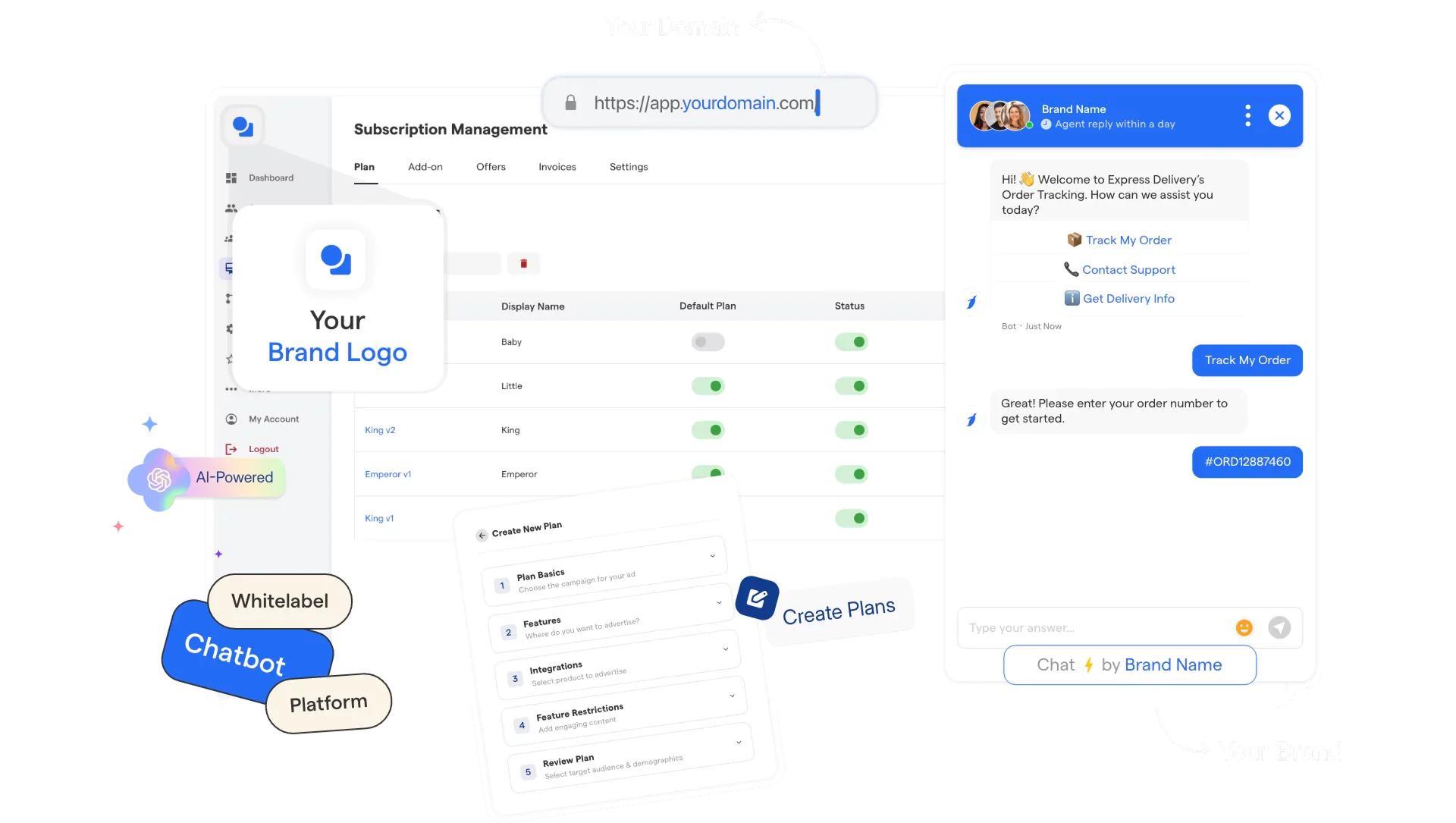
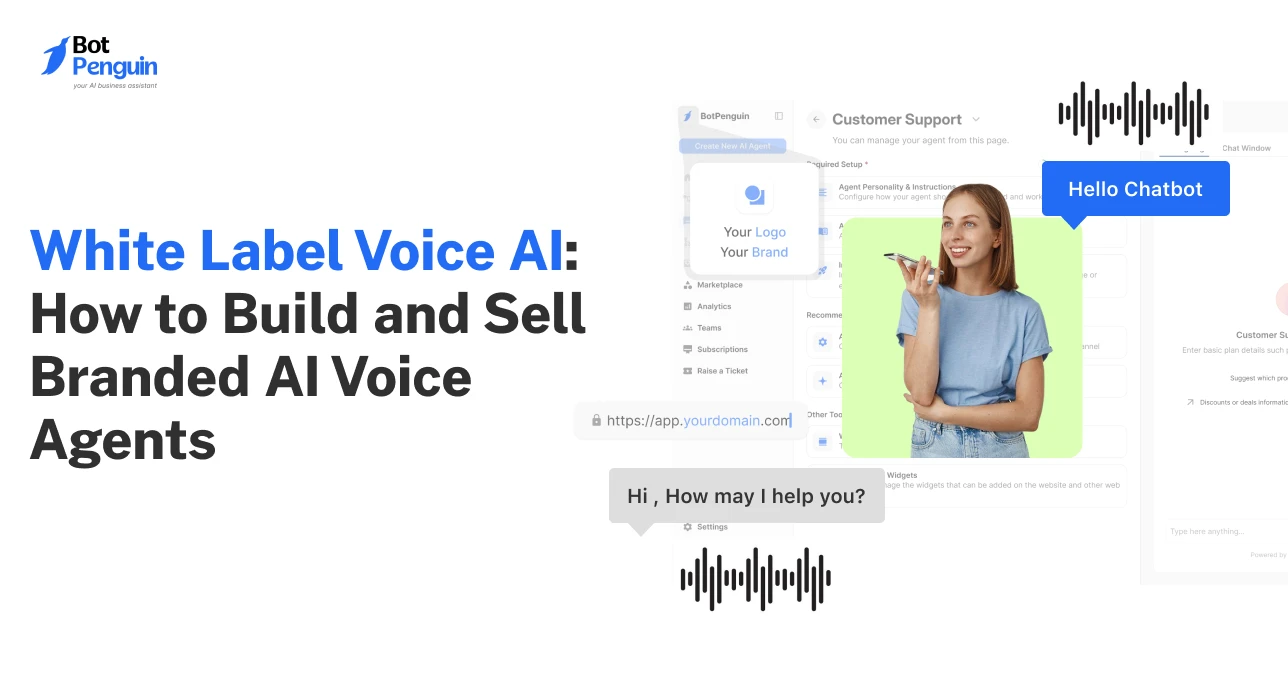
Starting a white label voice AI business lets you offer branded AI phone agents under your own name without building the technology yourself. You choose a white label platform, brand it, package your voice services, set your pricing, and sell them directly to clients.
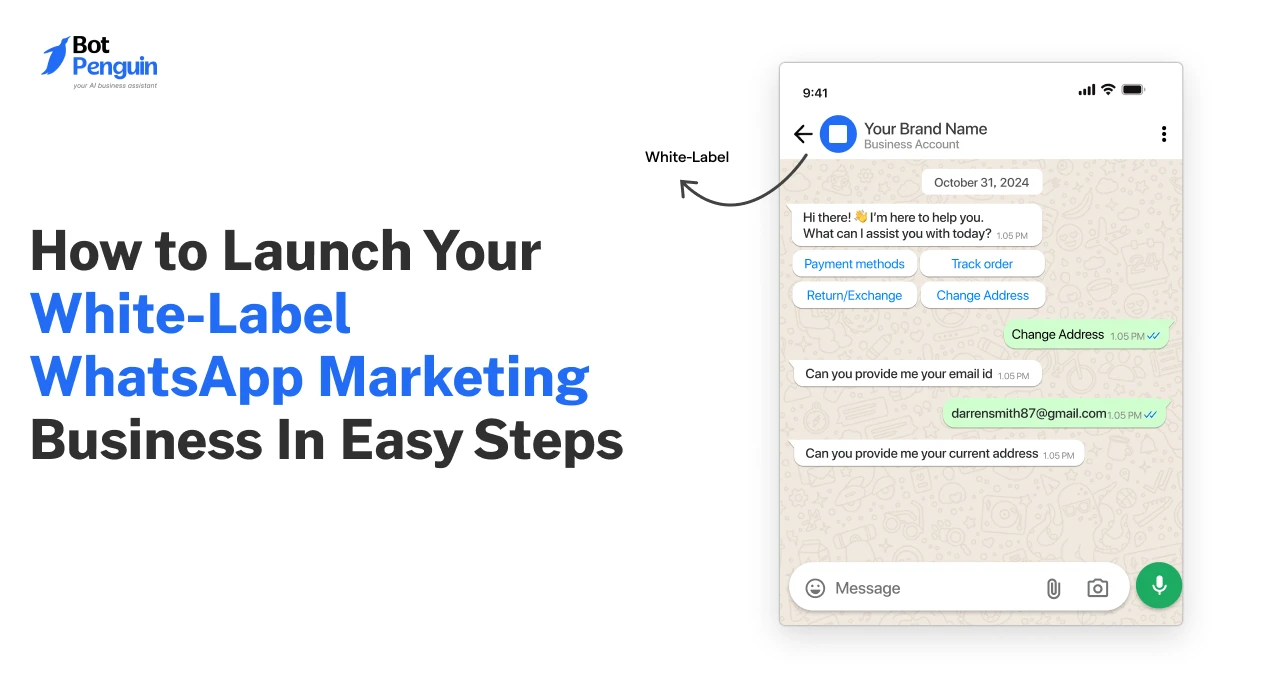
A white label voice AI agent is an AI-powered phone agent built and maintained by a vendor, which you rebrand and sell as your own product. Your clients see your logo on the dashboard, your domain on the login page, and your pricing on every invoice. The vendor running the AI models, the telephony infrastructure, and the platform stays completely invisible.
The product your client buys belongs to your business.
The technology behind it belongs to the platform.
Two capabilities define this category:
A complete white label platform gives you both, along with a single dashboard to manage every client account from one place.
The three models look similar on the surface. The difference shows up in your bank account.
A white label AI voice agent reseller earns a fixed commission. A white label partner keeps the full margin and owns the client relationship. Read how white-label partnerships work to compare both options.
If owning the brand, the margin, and the client relationship is the goal, white label is the only model this guide covers.
Ready to add AI phone agents to your service stack under your own brand?
The model is proven, the platforms are accessible, and most of your clients still have not acted. That combination does not last long. Here is why the timing matters right now.
The voice AI market is growing quickly, yet the majority of small and mid-sized businesses have not deployed a single voice agent. That gap between market growth and ground-level adoption is where agencies earn recurring revenue before direct-to-business vendors close the distance.
Three things changed at once in the past 12 months:
Agencies that build a white label AI voice agent business now will own their local category before the market crowds.
Your clients are not searching for voice AI platforms. They are searching for solutions to specific operational problems they deal with every day.
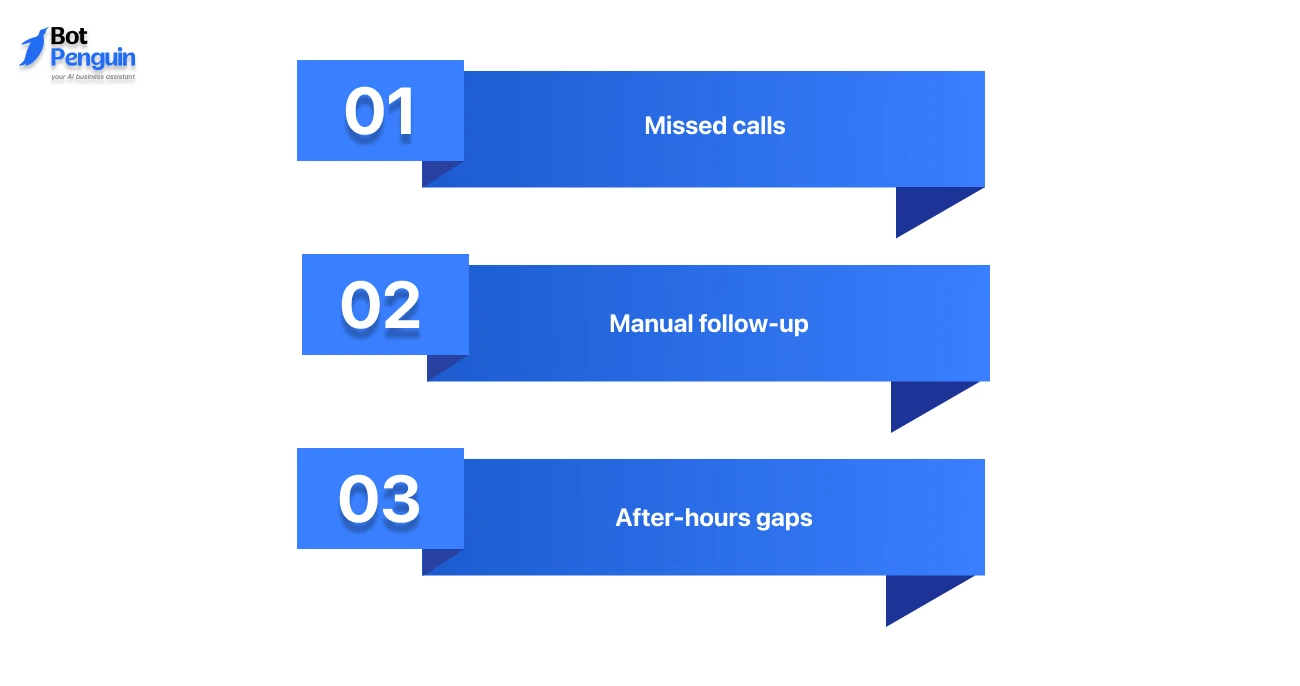
The three pains that drive purchase decisions are consistent across industries:
These buyers ask their agency to fix the problem. They do not ask for a platform recommendation. That is the distribution advantage white label AI voice agents for agencies provide. You already have the trust. The platform delivers the solution. You put your name on it.
The clients most willing to pay quickly are in industries where a missed call has a direct, calculable cost: home services, healthcare, legal, real estate, and hospitality.
Indian partners such as Digiwah already run white-label businesses on BotPenguin. Explore the white label AI voice agent platform for more details.
Want to understand what your clients would actually use voice agents for?
The next section covers inbound and outbound use cases in detail so you can price and pitch with confidence.
Knowing the opportunity exists is one thing. Knowing what it pays is what makes you commit to building it. Here is the margin structure that makes white label voice AI different from every other service you sell.
Most agency services run at 40 to 60% gross margins because delivery costs scale with labor. Every new client means more hours. White label voice AI software operates on a fundamentally different cost structure. Your main cost is a fixed platform license. It does not grow when you add clients.
That single difference is what drives gross margins significantly higher than typical agency margins.
Understanding AI voice agent margins starts with one distinction: your platform cost is fixed, your revenue is not.
Your cost structure:
Three pricing models that work:
What to price on:
A dental clinic does not buy "AI voice minutes." It buys zero missed calls and a full appointment calendar. A roofing company buys answered leads and booked estimates. The price of the outcome and your perceived value is far higher than the technology cost underneath it.
The cost structure is what makes a white-label AI voice agent business fundamentally different from a service business.
For a full breakdown of partner tiers, visit white label partner pricing before you finalize your own pricing model.
Curious what your clients would actually use these agents for?
The next section covers inbound and outbound use cases so you can build packages your clients will pay for immediately.
Once your pricing is set, the next question clients ask is simple: what will it actually do? Voice agents operate in two directions and both have direct revenue impact for your clients.
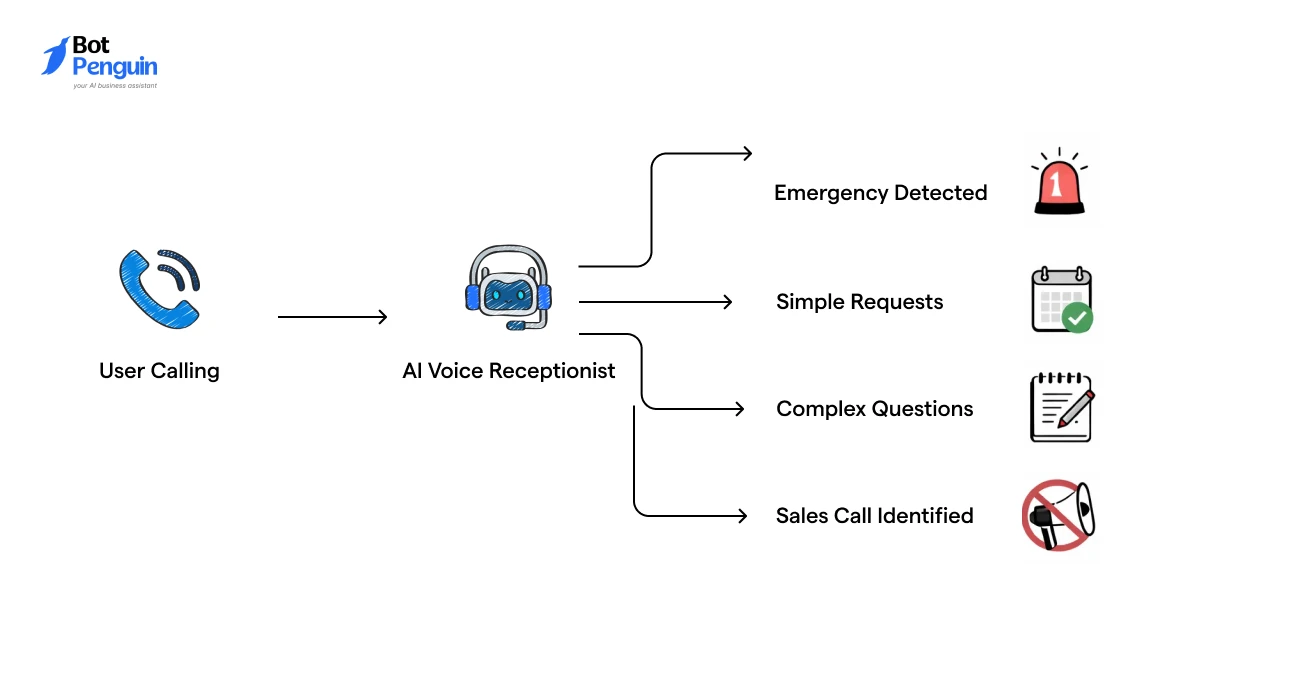
This is the entry point for most agencies selling voice AI. Inbound is easy to explain, easy to demo, and solves a pain every client feels immediately.
An AI voice receptionist answers every call in your client's business name, around the clock. It handles common questions, books appointments directly into the calendar, and transfers complex cases to a human when needed.
What this covers in practice:
This is the single most requested voice use case across every industry. Clients understand it immediately because the problem it solves is visible and costly.
For the full build on how to package and sell this, read AI voice receptionist for your clients.
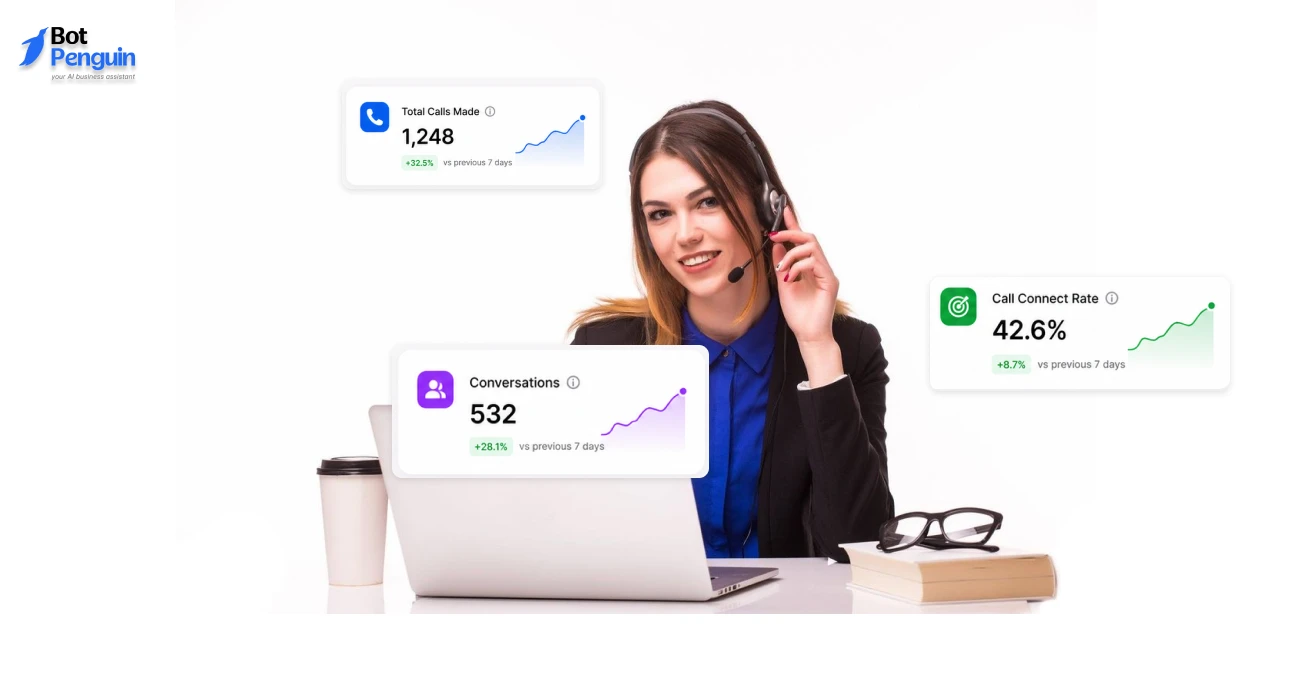
Outbound is where high-ticket clients spend the most. It requires slightly more setup to explain but delivers measurable outcomes that justify premium pricing.
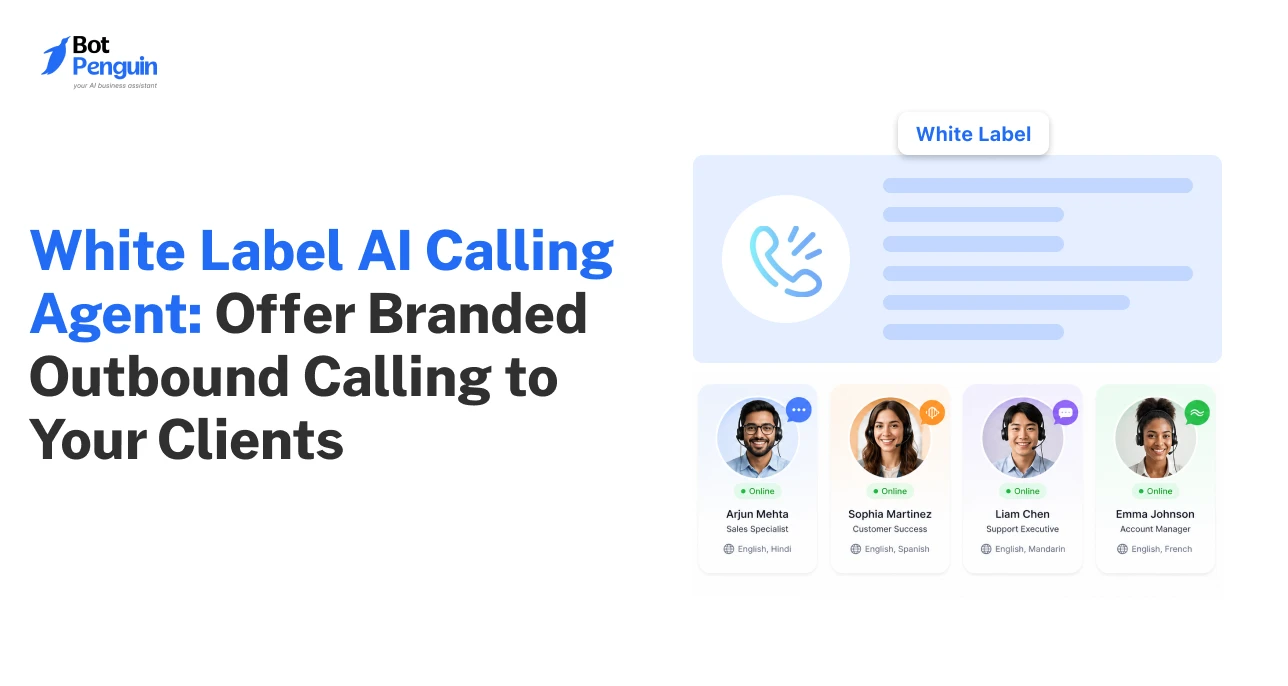
An AI calling agent for outbound re-engages cold leads, confirms upcoming appointments, follows up on unpaid invoices, and runs campaigns at a volume no human team can match consistently.
Industries where outbound generates the strongest ROI:
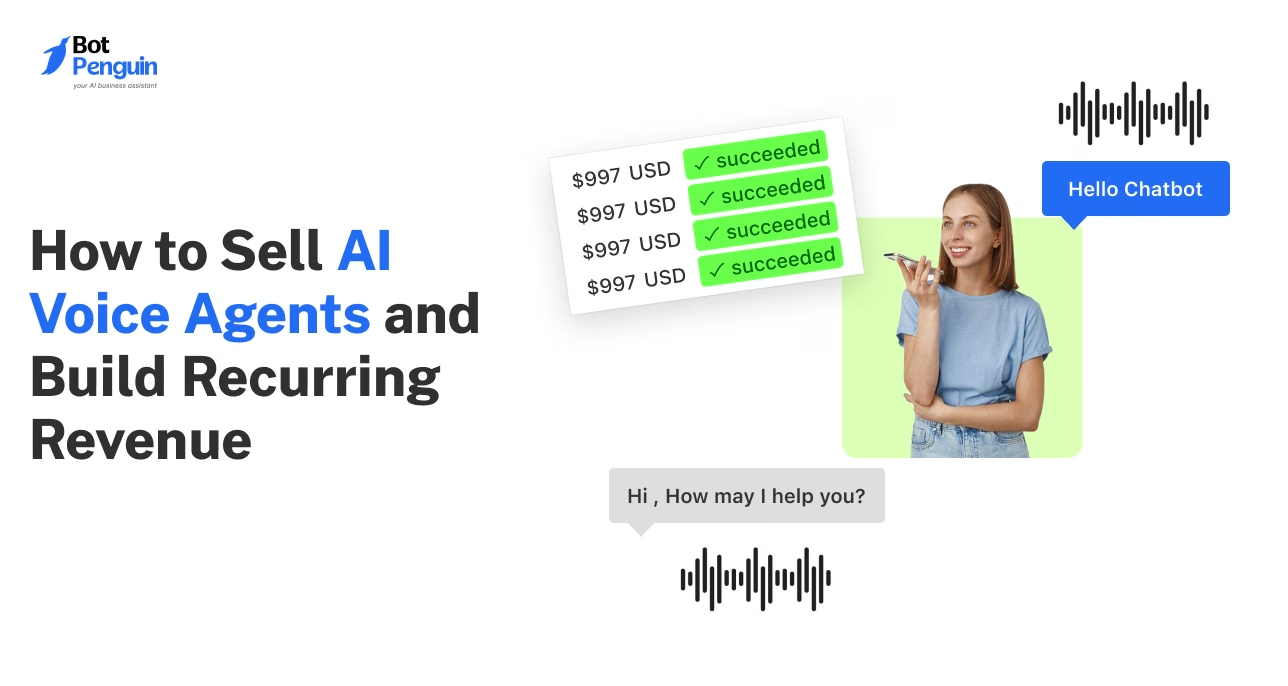
Agencies that package inbound and outbound together under one monthly retainer report stronger client retention and higher average contract values than those selling either in isolation. See our guide on How to sell AI Voice Agents.
Selling both under your brand gives clients full phone coverage and gives you a larger, harder-to-replace service.
You know what to sell and who to sell it to. The platform you build on decides whether your margins hold, your clients stay, and your brand stays protected. Here is what to evaluate before you commit.
Most white label voice AI software falls into two categories. The category your platform sits in determines your reliability, your support experience, and your cost structure at scale.
Not every platform owns what it sells. This distinction is critical when you are putting your brand on the product.
Wrappers appear cheaper upfront. The real cost shows up in provider fee increases, unpredictable outages, and support tickets that take days to resolve because no single team owns the stack.
Whether you call it private label voice or white label AI, the model only works when you control what sits underneath it.
For a product you are selling under your own name, that means owning the infrastructure, not renting access to someone else's engine.
The second question is scope. A voice-only platform limits what you can charge and how sticky your service is. Clients in 2026 expect one provider to handle phone calls, WhatsApp, and website chat from a single dashboard. A platform that includes voice as part of a full omnichannel suite with 100-plus integrations gives you a larger service to sell and a far harder product to replace.
Agencies that sell white label AI agents (text & chat) alongside voice report higher contract values and significantly lower churn than those selling voice in isolation.
Before signing with any platform, score it against these eight criteria. A platform that cannot meet all eight will cost you clients, margin, or both.
BotPenguin meets all eight in one platform. Before you make a final decision, read the full compare white label voice platforms breakdown for a side-by-side scoring of the main options in 2026.
Ready to see how BotPenguin scores on each point? Visit the white label AI voice agent platform page for the full feature breakdown.
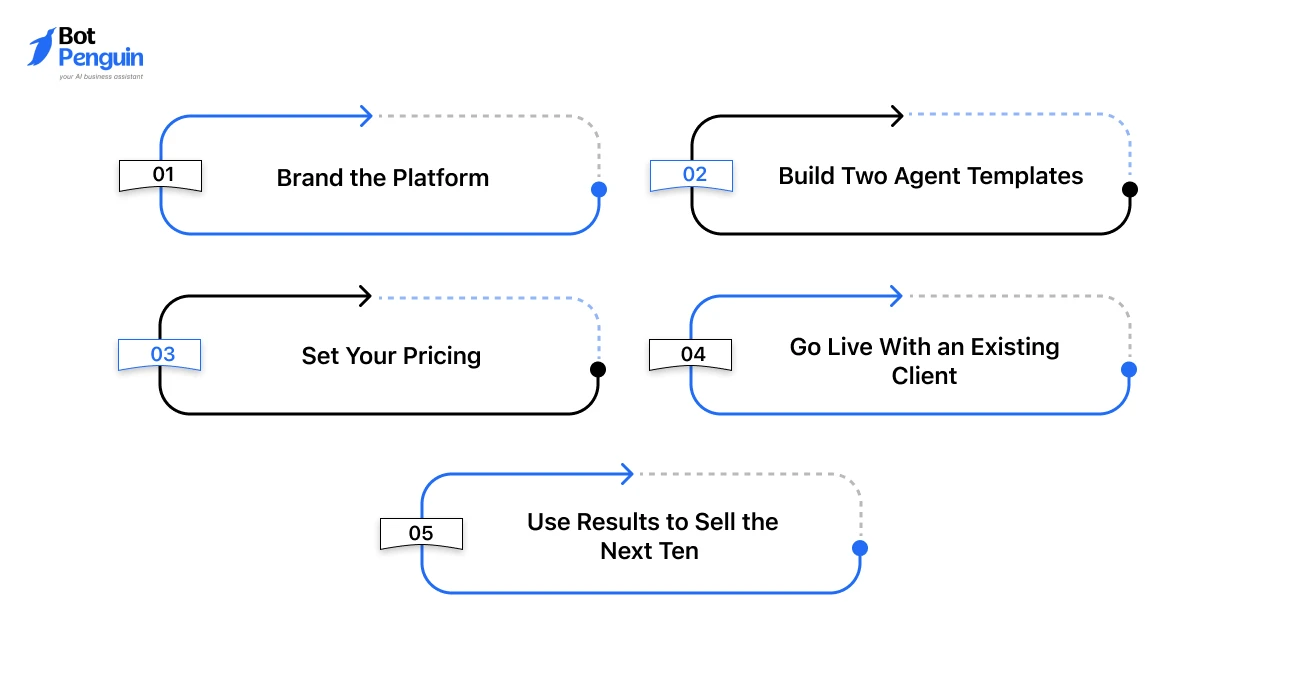
You picked the platform. Now you need clients live on it. With BotPenguin, the entire setup takes hours, not months.
Here is exactly how it works.
To start an AI voice agent business without a technical team, log in, connect your domain, upload your logo, and set your colors. Your clients open the dashboard and see your agency.
You do not need to build the underlying voice infrastructure yourself. BotPenguin handles the platform while you brand the service and manage your clients.
You do not need a custom agent for every client. Build two templates once and reuse them.
Most of your first ten clients will fit one of these two.
Decide your monthly retainer tiers before your first pitch. BotPenguin gives you full control over what you charge. Visit white label partner pricing to build tiers that protect your margins from day one.
Skip cold outreach for now. Go to a client who already trusts you. Train the agent on their FAQs and calendar, connect their number, run one test call, and go live.
Your first client gives you a working case study. Real numbers. Real results.
Two or three live deployments close more deals than any product demo. A roofing company that answered 40 extra calls in month one is your best sales tool.
Every agency that has built a white label AI voice agent business on BotPenguin started exactly this way.
BotPenguin supports you at every step with onboarding help, partner support, and documentation your team can use without a developer.
Ready to add your name to that list? See everything included in the partner plan at the white label AI voice agent platform.
250 plus active partners worldwide as of July 2026 (Source: BotPenguin). Voice, chat, and WhatsApp under one platform.
"BotPenguin's team customized the product to exactly what my clients needed. Training the agents was easier than every other tool I tried, and my clients only ever see my brand." — BotPenguin White Label Partner
You have read the opportunity, the margins, the use cases, and the platform criteria. Everything points in the same direction. The only thing left is the decision to start.
The voice AI category is still early. Most of your clients have not been pitched a branded AI phone agent yet. The agencies that build their first deployments now will own this space locally before the market saturates.
A white label voice AI business does something most service lines cannot. It converts one-time project work into monthly recurring revenue, at significantly higher margins, under your own brand
BotPenguin gives you everything in one place:
No engineering team. No telephony build. No per-seat fees eating into your margin as you grow.
The agencies seeing the strongest results started with one client, proved the outcome, and expanded from there. BotPenguin's partner team supports you through every stage, from branding and onboarding to scaling your client book. To learn more, refer to our Partner Hub
An AI phone agent built and maintained by a vendor that you rebrand and sell as your own — your clients see only your logo, domain, and pricing. See the full white label AI voice agent platform breakdown for how it works end to end.
Yes for most agencies. Platform cost is a fixed annual fee, not per-seat, so margins widen as you add clients. Typical agency gross margins run well above standard agency rates once you pass the break-even client count, since the main cost stays flat while revenue compounds.
White label means clients see only your brand and you set pricing and keep the full margin. A reseller program sells the vendor's branded product for a commission. White label needs more setup but gives higher margins and stronger client retention.
No. White label voice platforms are no-code. You configure agents with visual builders and connect a number. Technical skills help for advanced CRM or webhook work, but you can onboard your first clients without writing code.
You pay for white label platform access and set your own client pricing on top. BotPenguin's voice AI agents are available on eligible white label plans. Request a quote for current pricing based on your requirements, then set your own client rates and keep the revenue you generate.
Offer both. Clients in 2026 expect one provider to cover phone calls, WhatsApp, and website chat. Selling an omnichannel suite under your brand commands higher prices and is harder for a client to replace than a voice-only tool.
Launch AI Voice Agents Under Your Own Brand
Offer inbound and outbound AI calling, own the client relationship, and build recurring revenue without coding.
Become a White-Label PartnerCheckout our related blogs you will love.
Updated at Sep 30, 2026
17 min to read
Updated at Sep 18, 2026
11 min to read
Updated at Sep 18, 2026
10 min to read
Updated at Sep 17, 2026
12 min to read
Updated at Oct 21, 2026
12 min to read
Updated at Oct 8, 2026
11 min to read
Table of Contents
