


How to Build and Sell Branded AI Voice Agents Under Your Own Name (2026 Guide)
Updated at Oct 9, 2026
10 min to read
Updated On Sep 18, 2026
10 min to read
87% of people do not answer calls from unknown numbers. Yet a white label AI calling agent still books appointments because it keeps calling until someone picks up. REsimpli
Leads go cold. Follow-ups get skipped. Appointments fall through.
Not because agencies are lazy, but because humans run out of time. AI does not.
It dials, qualifies, and books under your brand, around the clock. Your clients get measurable results. You get recurring revenue without adding headcount.
This guide covers what to sell, how to price it, and how to launch it.
Before selling it, you need to understand exactly what it does and how it works.
A white label AI calling agent places outbound phone calls under your brand name. It dials a contact list, holds a natural voice conversation, qualifies the lead or books an appointment, and logs the outcome to a CRM.
Here is what each party sees:
You do not build any of the infrastructure. The platform handles:
Your job is to configure the agent, write the script, define the goal, and put your brand on it.
Building a calling platform from scratch costs six figures and takes months. A white label AI calling software gives you the same output in days, with none of the technical overhead.
The two directions of AI voice are often confused. Knowing the difference helps you position and sell them correctly.
A white label outbound calling agent initiates the call. It works through lead lists, sends reminders, follows up on unpaid invoices, and re-engages contacts who went cold.
The goal is always action:
An AI voice receptionist answers calls that come in. It responds to questions, routes callers, and books appointments. The goal is capture: making sure no incoming call goes unanswered.
Most clients eventually want both. Outbound fills the pipeline. Inbound catches what the pipeline brings in.
Sell them as a pair and you cover the client's entire phone operation under one branded service, at a higher monthly price.
This guide focuses on the outbound side. For the inbound piece, read how to offer a white label AI voice receptionist, then bundle the two into one offer.
Knowing the difference between outbound and inbound is one thing. Knowing exactly which outbound plays generate the most revenue for your clients is what helps you sell the service confidently.
AI outbound calling for agencies works best when it maps directly to a number your client already tracks. No-show rate. Appointments booked. Payments recovered. The clearer the outcome, the easier the sale.
Most businesses are sitting on a lead list they stopped working. That is where the highest-revenue outbound play begins.
The AI calling agent for agencies works through aged or unworked leads, qualifies interest in a natural conversation, and books the warm ones onto a sales calendar. No human rep needed for the first pass.
Agencies package this as an "AI closer" program and sell it to high-ticket service businesses. The verticals that pay most for this:
Pricing for this model typically runs $500 to $2,000 per month per client. The reason it holds is simple. You are not selling AI. You are selling appointments booked from a list that was previously generating zero revenue.
You charge for the outcome, not the technology.
Lead re-engagement gets the attention, but the steady recurring revenue comes from the routine calls that client staff consistently skip.
These are the calls that feel low priority until the no-show rate climbs or a payment batch goes uncollected. A white label outbound calling agent handles all of them automatically, without adding anyone to payroll.
Here is what this looks like in practice:
The agent calls confirmed bookings 24 to 48 hours before the appointment. No-show rates drop. Revenue per day goes up. Dental clinics, beauty salons, and medical practices see the clearest impact here.
The agent calls overdue accounts or expiring subscribers before they churn or go to collections. Gyms, SaaS businesses, and subscription services use this to recover revenue passively.
The agent calls after a completed job or delivery to check satisfaction and introduce the next service. Home services and e-commerce brands use this to open upsells without a sales rep making the call.
The agent calls a sample of customers after service completion and collects structured feedback. This replaces manual outreach and gives clients data they can act on.
Each of these is a small addition to a client's monthly plan. None of them require extra staff. Together they build a recurring service stack that is hard to cancel because every item ties to a measurable business outcome.
The use cases above are not just service additions. They represent a revenue model that works differently from most agency offerings, and understanding why helps you price and position it correctly.
Most agency services are hard to measure. A client cannot easily count the value of "better branding" or "improved customer experience." They can count appointments booked from a list of 500 cold leads. They can count payments recovered in a week.
That measurability is what makes outbound the strongest recurring revenue play in the voice AI stack.
When a client can see the outcome in their calendar or their bank account, the renewal conversation is straightforward. There is no debate about ROI.
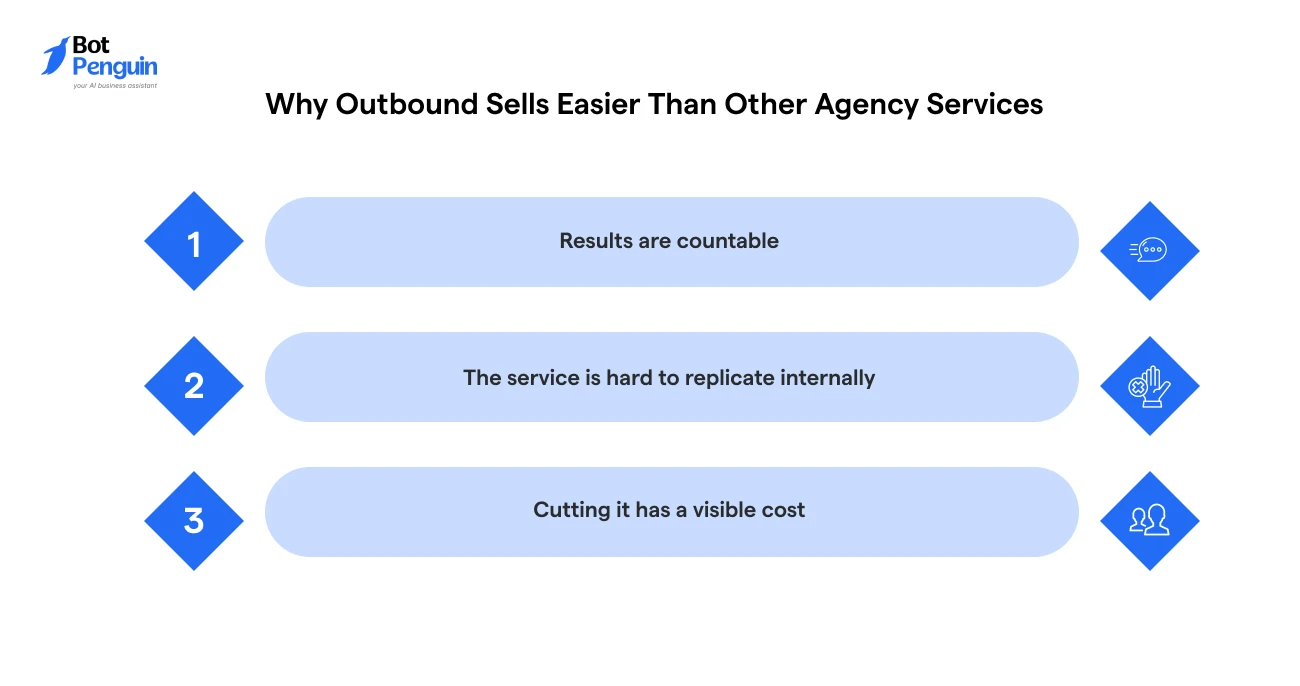
Three reasons outbound programs hold their price:
Appointments booked. Payments collected. No-shows reduced. Each outcome has a number attached to it. That number justifies the monthly fee without a lengthy explanation.
Hiring a team to make 500 follow-up calls a week costs far more than a managed AI calling program. The client has no cheaper alternative that delivers the same volume.
When a client cancels a branding retainer, the impact is slow and vague. When they cancel outbound, their appointment pipeline drops immediately. That visibility protects your contract.
This is where the model becomes compelling for agencies at scale. The economics are straightforward.
You pay a fixed white label platform fee. That fee covers unlimited subaccounts, telephony, the language model, and the call infrastructure. It does not increase when you add a new client.
Here is what the margin structure looks like in practice:
Your first client covers a portion of the platform fee. Your fifth client is almost entirely margin. Your tenth client costs the same in platform fees as your first.
This is the core reason agencies choose to resell AI calling agents rather than build proprietary tools or rely on per-seat software that scales costs with headcount. Explore our white label partner solutions to see how the full partner program is structured.
Assume you charge a roofing client $800 per month for a managed AI outbound calling program. You pass through the per-minute call cost at a marked-up rate and keep the gap.
With five clients at that price:
The model scales because your cost base stays flat while your revenue grows per client added.
Agencies planning on starting a white label voice AI business can use this guide to understand the broader platform, pricing, and service model before launching.
For the full economics across the white label voice AI cluster, read the white label voice AI business guide.
The margin model works. The use cases are proven. But before you sell outbound calling programs to clients, you need to understand the compliance layer, because your brand name is on every call the agent makes.
Outbound carries legal obligations that inbound does not. When an AI agent initiates a call, regulations apply from the moment the line connects. Agencies that skip this conversation with clients expose themselves and their clients to real risk.
Yes, but only under specific conditions. The legality of AI outbound calling depends on consent, geography, and the type of number being dialed.
In the United States, two frameworks govern this:
The TCPA restricts automated calls and texts to mobile numbers without prior express written consent. Violations carry fines of $500 to $1,500 per call. A campaign to 1,000 unconsented mobile numbers is not a compliance risk. It is a six-figure liability.
The FTC maintains a national Do Not Call registry. Calling a registered number without an established business relationship is a violation. Several states, including California, Florida, and Texas, layer additional consent requirements on top of the federal rules.
Other regions have their own frameworks. The GDPR in Europe restricts automated outreach without a lawful basis. Canada's CASL applies to electronic communications including calls. If your clients operate internationally, the compliance picture changes by country.
You are not the legal counsel for your clients. But you are the one putting your brand on the calls. That creates a practical responsibility.
The safe operating position for any agency running ai outbound calling programs:
Tell every client to confirm their specific obligations with their own legal counsel before running a campaign. This is general guidance, not legal advice, and the rules change by state and by country.
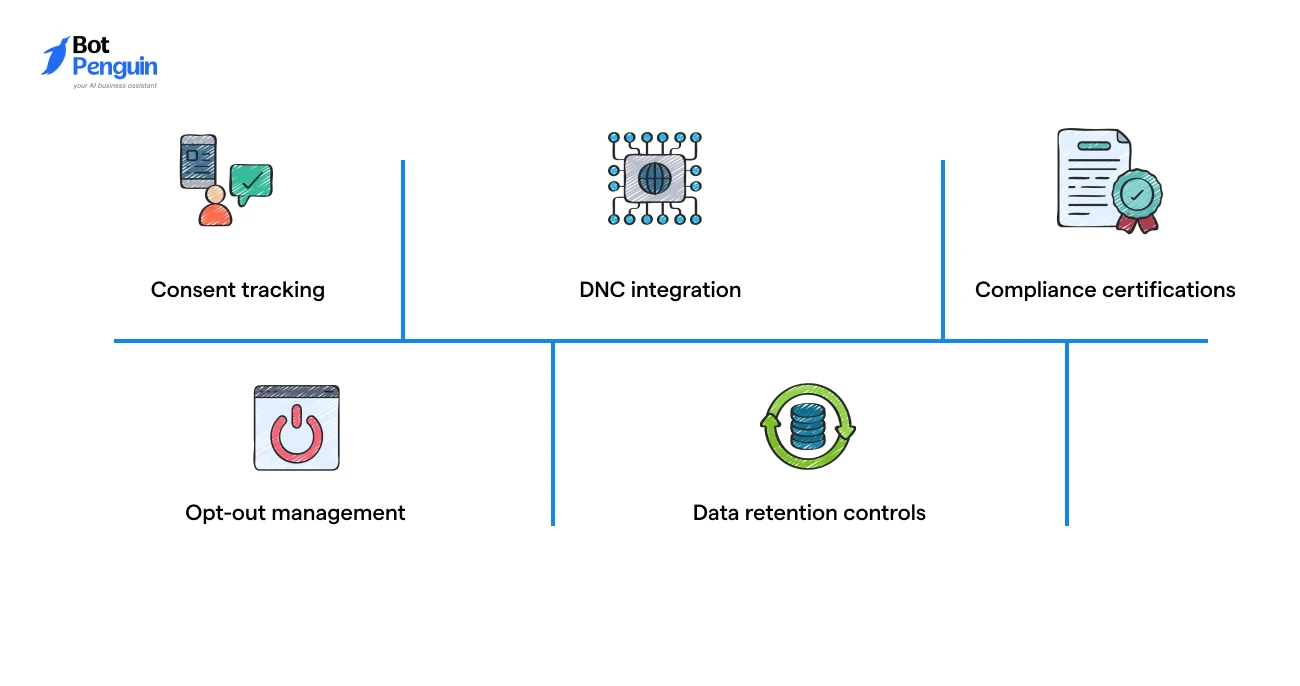
Choosing the right white label AI calling software protects both you and your clients. The platform should handle the technical compliance controls so you are not building them manually.
Look for these specifically:
A platform with these controls built in makes the client conversation straightforward. You are not asking them to trust your compliance setup. You are showing them the certifications.
That protects the brand you are building on every call. Explore our guide to the best white-label AI voice platforms and compare the leading options.
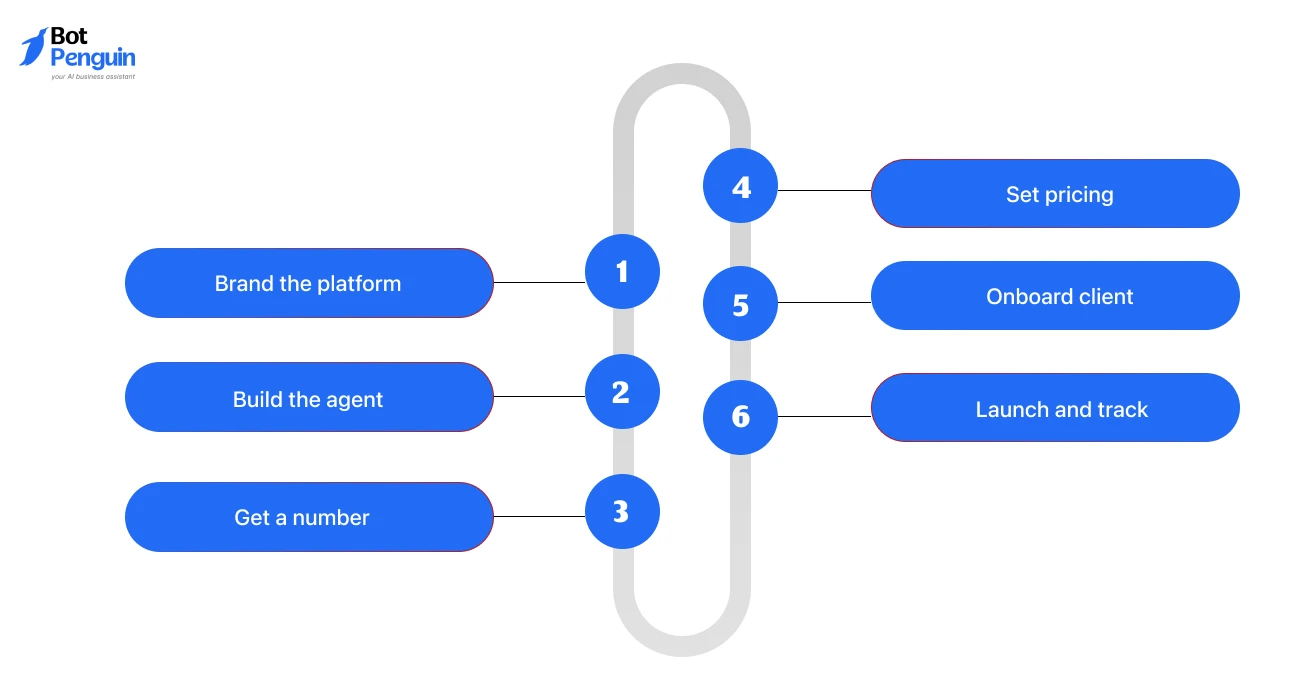
With BotPenguin, most agencies go live within 24 hours. No engineering. No infrastructure. No carrier setup.
BotPenguin's cost to you: Custom, quote-based pricing across the King and Emperor tiers. Everything above that is your margin.
First client tip: Start with someone who has an idle lead list. A roofing company or medical clinic with 500 plus unworked leads is ideal. Run the campaign, show the booked appointments report, and use that to close the next client.
For platform details, partner tiers, and everything included in the white label plan, visit the white label AI voice agent platform.
You now have the full picture. The use cases, the margin model, the compliance layer, and the launch steps. The only thing left is choosing the right platform to build it on.
BotPenguin gives you everything in one place:
A white label AI calling agent turns a client's idle lead list into booked appointments, recovered payments, and monthly recurring revenue billed under your name.
The platform runs the calls. You own the client and the margin.
A white label AI calling agent is an AI agent that places outbound phone calls under your brand, which you resell to clients as your own service. It re-engages leads, confirms appointments, chases payments, and runs follow-up campaigns. Your clients see your brand. The platform provider stays invisible and you keep the margin.
A calling agent makes outbound calls: follow-ups, reminders, and lead re-engagement. A voice receptionist answers inbound calls and books appointments. Most agencies sell both. Outbound drives measurable revenue for high-ticket clients. Inbound captures revenue lost through missed calls.
It can be, with consent and compliance. In the US, the TCPA and do-not-call rules govern automated outbound calls, and several states add stricter consent requirements. Sell outbound programs only to clients who can show prior consent for every contact on their list, and use a platform with built-in compliance safeguards.
Lead re-engagement, appointment reminders, payment and renewal reminders, post-purchase follow-up, and satisfaction surveys. High-ticket verticals including roofing, medical aesthetics, legal, and financial services pay the most for outbound programs because the outcome, booked appointments from a cold list, is directly measurable.
Agencies running managed outbound programs for high-ticket clients commonly charge $500 to $2,000 per month per client, priced on outcomes like booked appointments rather than features. With a flat-fee white label platform, the majority of that monthly fee becomes margin once you move past the first few clients.
No. A white label platform handles telephony and number provisioning for you across 140 plus countries. You configure the agent, connect a number through the platform, and launch under your brand. You do not need carrier relationships or SIP infrastructure. The platform owns that layer entirely.
Subscribe to Our Newsletter
Get the latest business insights straight into your inbox.
Checkout our related blogs you will love.
Updated at Oct 9, 2026
10 min to read
Updated at Sep 30, 2026
17 min to read
Updated at Sep 18, 2026
11 min to read
Updated at Sep 17, 2026
12 min to read
Updated at Oct 21, 2026
12 min to read
Updated at Oct 8, 2026
11 min to read
Table of Contents
