Launch Your Own White Label AI Chatbot Platform: Fully Branded, No Code, Live in 12 Hours
Sell white label AI chatbots under your own brand. Keep 100% of every sale with zero revenue sharing and launch in just 12 hours.
Your Brand
Your Logo
Your Domain
Your Pricing


What is a White Label AI Chatbot?
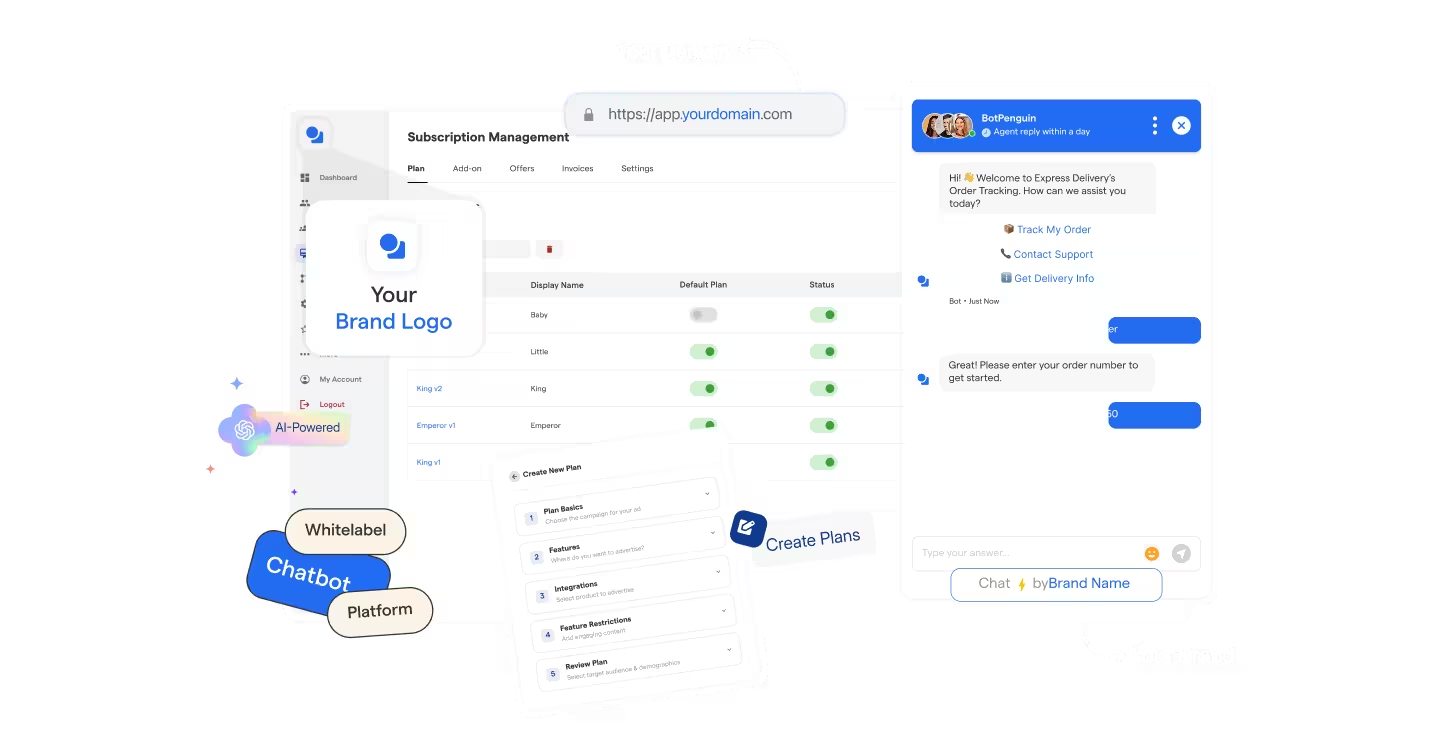
A white label AI chatbot platform lets agencies sell AI chatbots under their own brand, domain, and pricing. With BotPenguin's white label chatbot reseller program, you control the client relationship and keep 100% of the revenue. BotPenguin never appears to your clients.
Rebrand with your logo, domain, and identity.
Set your own pricing and own the customer relationship.
Launch faster on a proven AI chatbot platform.
Comparing chatbot white label options? Prioritize control over branding, pricing, billing, and clients. Learn how whitelabel chatbots work
Put Your Brand on Our Whitelabel Chatbot Platform. Keep 100% of Your Revenue.
Set your own pricing, own the customer relationship, and keep 100% of your revenue. Grow your AI chatbot builder business with white label services powered by BotPenguin's technology, infrastructure, and ongoing platform development.

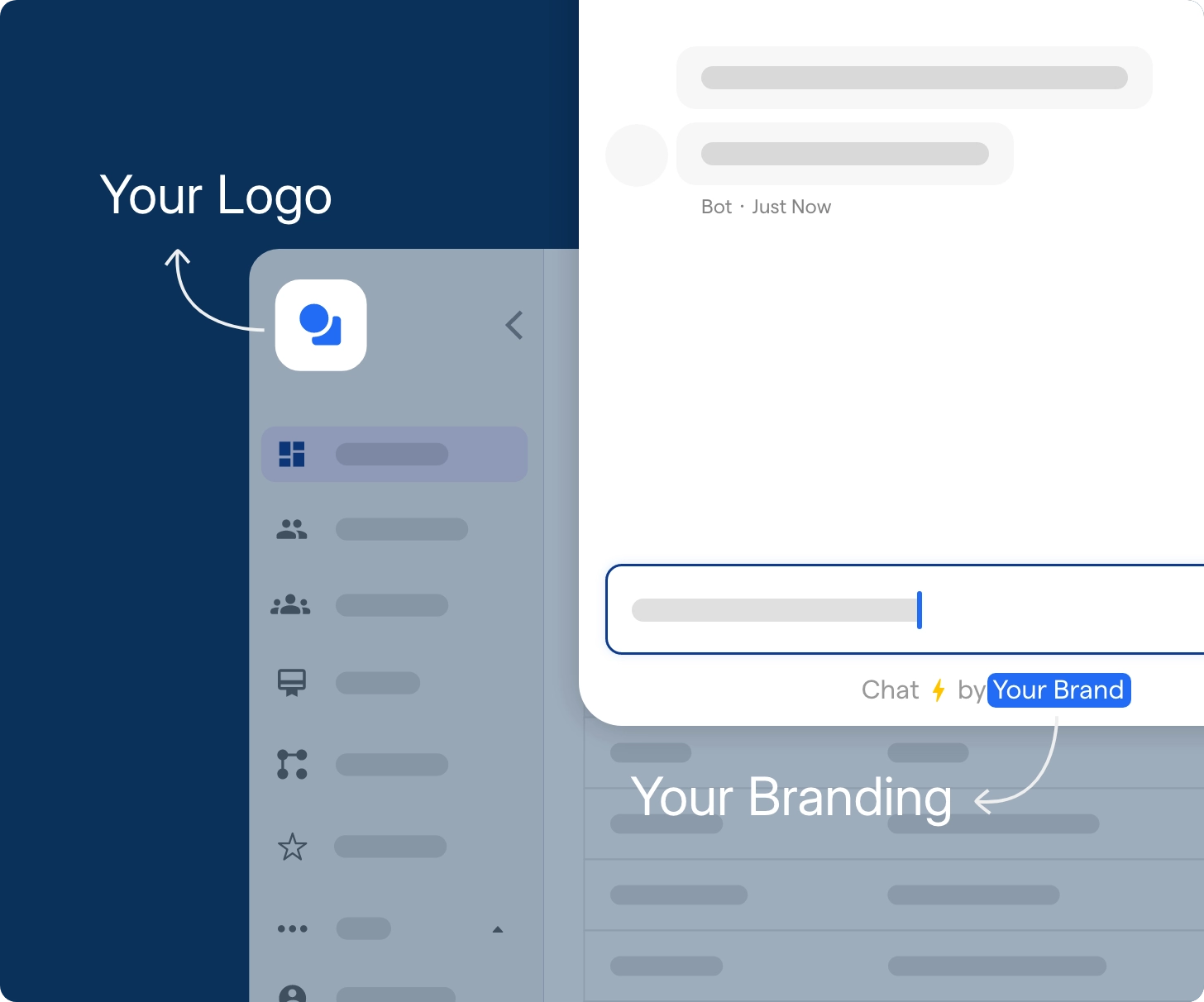
Your Branding (BotPenguin Stays Invisible)
Personalize your chatbot platform, chatbots, and help docs with your own logo, color theme, and brand identity. Your clients never see BotPenguin.

Your Domain
Host your whitelabel chatbot maker platform on any preferred domain or sub-domain.

Your Pricing
Set the prices you charge your clients. No restrictions, no interference, complete pricing freedom.

Your Terms
Define your own client engagement terms. Tailor contracts and policies to suit your business model.
Every Way to Monetize Your White Label Chatbot Partnership With BotPenguin
From subscriptions and add-ons to implementation fees and upsells, BotPenguin offers a proven monetization process and built-in revenue tools to maximize what you earn from every client.
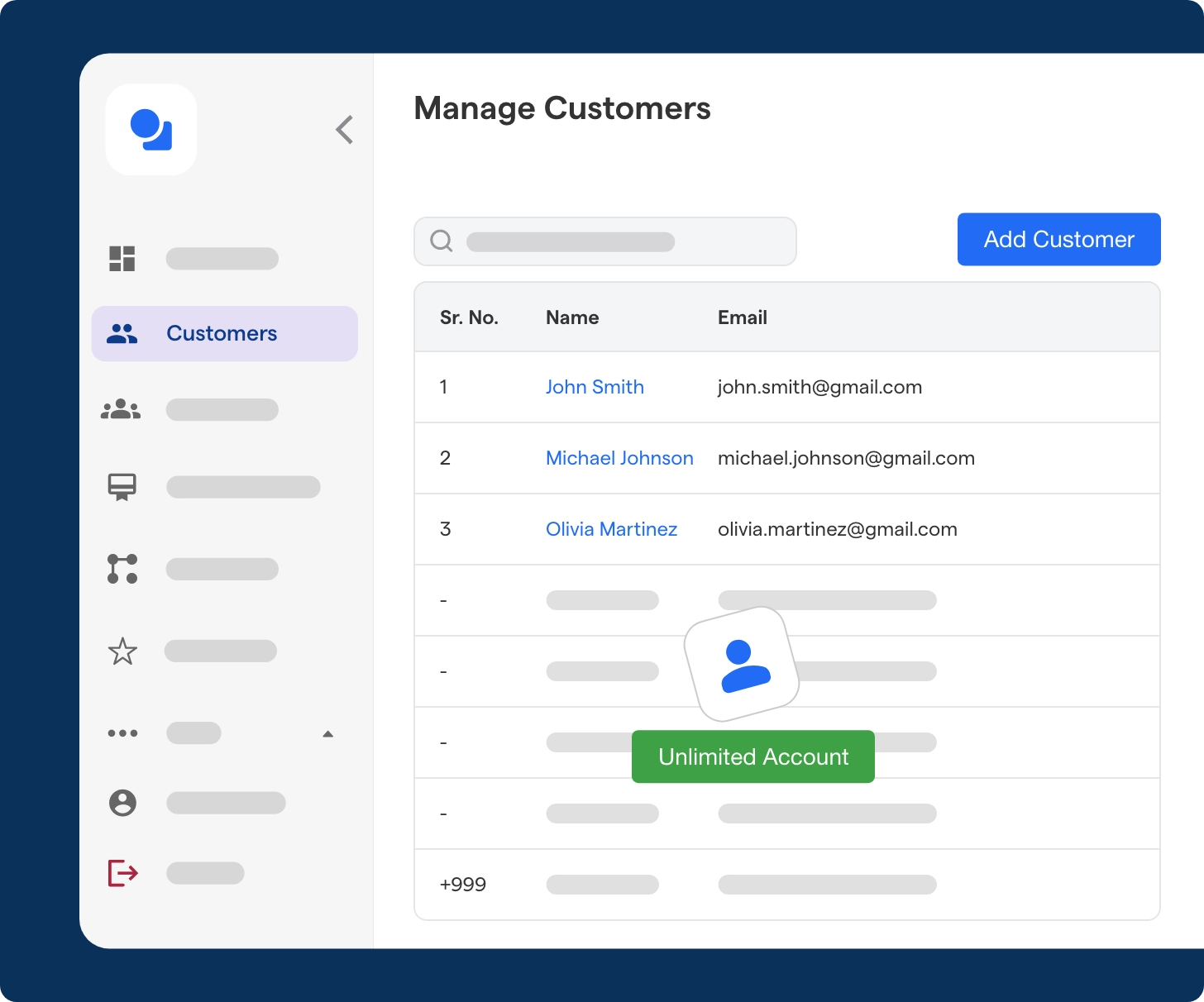
Scalable Client Accounts

Onboard clients under your own brand, with account capacity scaling based on your plan. Create sub-user accounts for each client's team, scalable as per your plan.
100% Sale Earnings
Keep 100% of every client sale. No revenue share, no hidden cuts.
Custom Subscription Plans
Design pricing tiers around what your clients actually need, and charge accordingly to maximize revenue per client.
Elevate Your Business Offerings
Bundle chatbot services with your existing offering for packaged client deals.
Build Your Own Reseller Network
Offer chatbot whitelabel solutions under your brand while building your own reseller network and expanding through additional sellers.
Upsell Multiple Integrations
Upsell integrations with Zoho, ChatGPT, and Google Workspace as value-add enhancements that increase deal value.
Monetize With Add-Ons
Bundle premium features, extra channels, or integrations as paid add-ons and create additional income streams from every client.
Multi-Currency Support
King and Emperor partners can sell globally with multi-currency billing and support.
Free Trial Offering
Attract more clients by offering free trials on your white label platform and convert them on your own terms.
Expand your service stack with our white-label SMS platform for branded campaigns, reminders, follow-ups, and two-way messaging.
See the White Label AI Chatbot in Action
Watch how branded AI chatbots engage visitors, answer questions, capture leads, and automate conversations across every channel.
Watch the walkthrough to see what BotPenguin's whitelabel chatbot platform includes and what businesses can do with it.
Offer Advanced AI Chatbot Capabilities Under Your Own Brand
Build a branded AI chatbot offering using leading models like ChatGPT, Claude, DeepSeek, Gemini, and OpenRouter, delivering contextual conversations, multilingual support, and insightful analytics for every client.
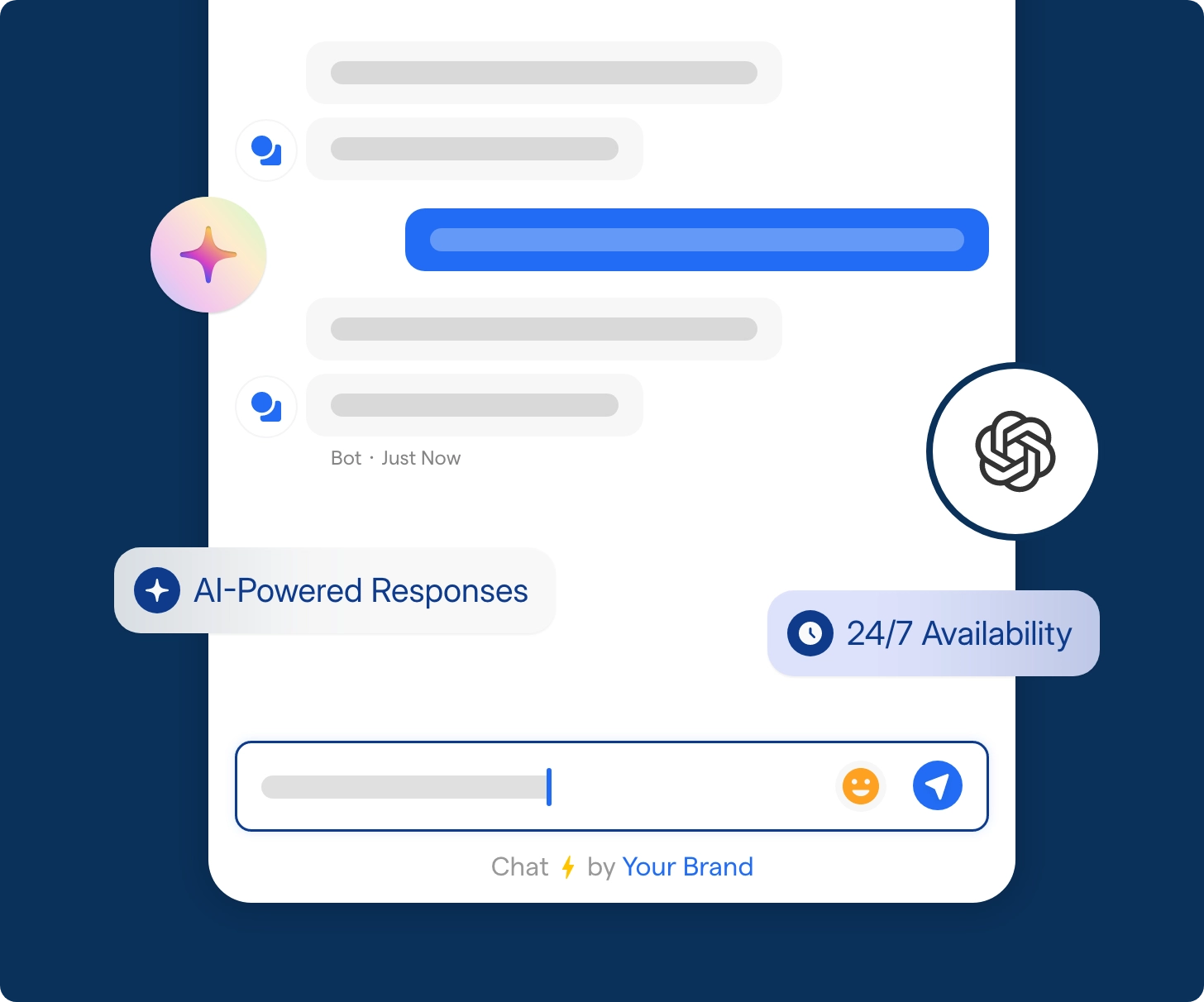

Train AI on Your Data
Add Custom LLM
24/7 Support for Clients
Chat with Contextual Data
Create Chatbots With Custom AI Prompts
Give Chatbot a Desired Persona
Multilingual Support
Analytics & Insights
What You Get With Our Whitelabel Chatbot Partnership: Features to Sell and Succeed
Everything you'd expect from white label chatbot software, backed by a partnership built to help you sell and succeed. Get a no-code AI chatbot builder packed with every feature your clients demand for lead generation, marketing automation, customer support, omnichannel presence, and more.
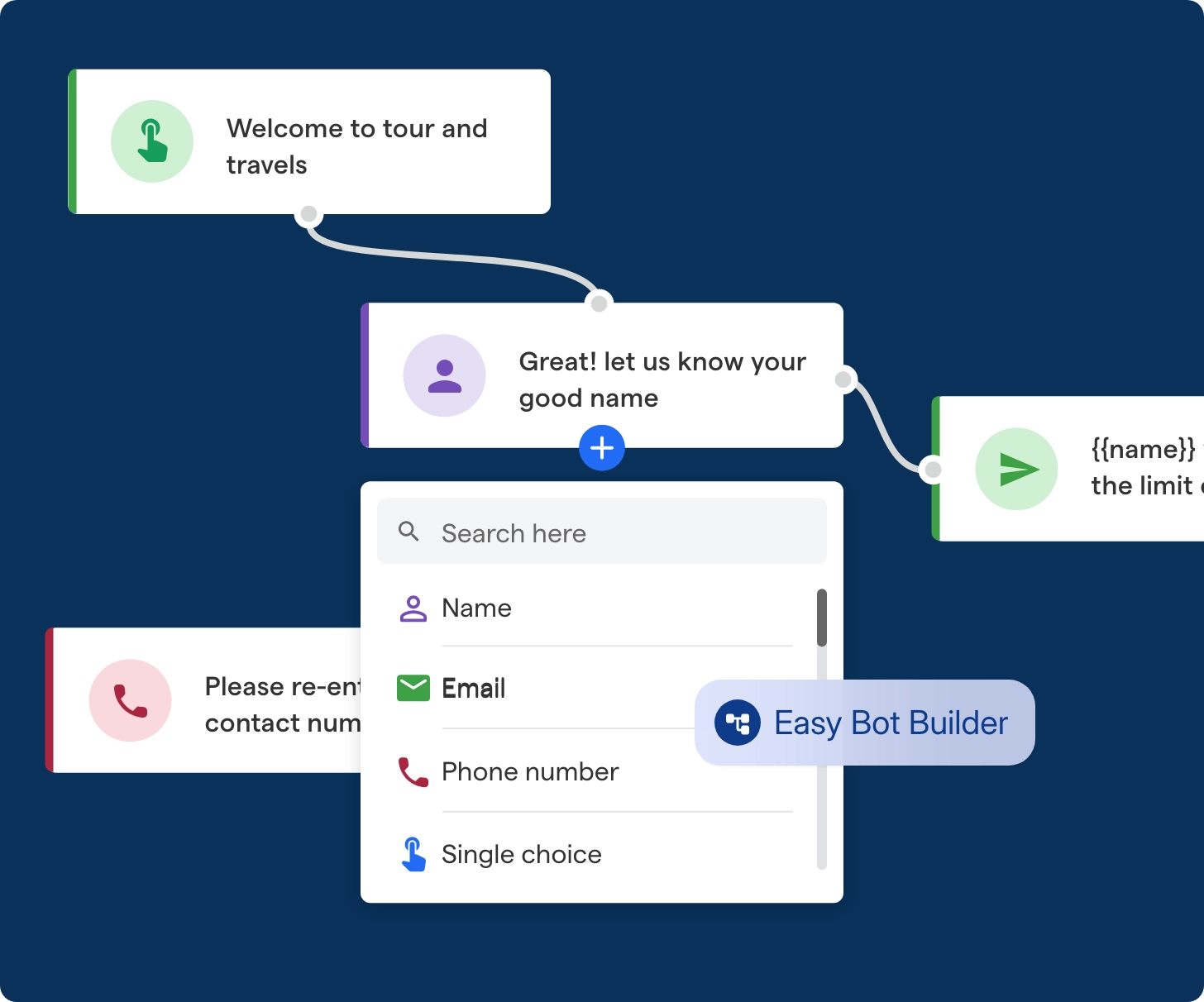
No-Code AI Chatbot Builder
Build and deploy AI chatbots your clients can run themselves with a no-code chatbot builder, no dev team needed.
Live Chat
Interact with clients in real time using integrated live chat software alongside your AI chatbot.
100+ Native Integrations
Access 100+ native app integrations, including GoHighLevel, Zoho, Bitrix24, ChatGPT, and more.
Omnichannel Presence
Deploy chatbots across all popular channels, including Instagram, website, WhatsApp, Telegram, and more.
Built-In Chatbot Templates
Kickstart your chatbot creation journey with multi-use, built-in chatbot templates for every industry.
Auto Language Translation
Communicate with clients globally using built-in multilingual chatbot support.
Access to Partner Portal
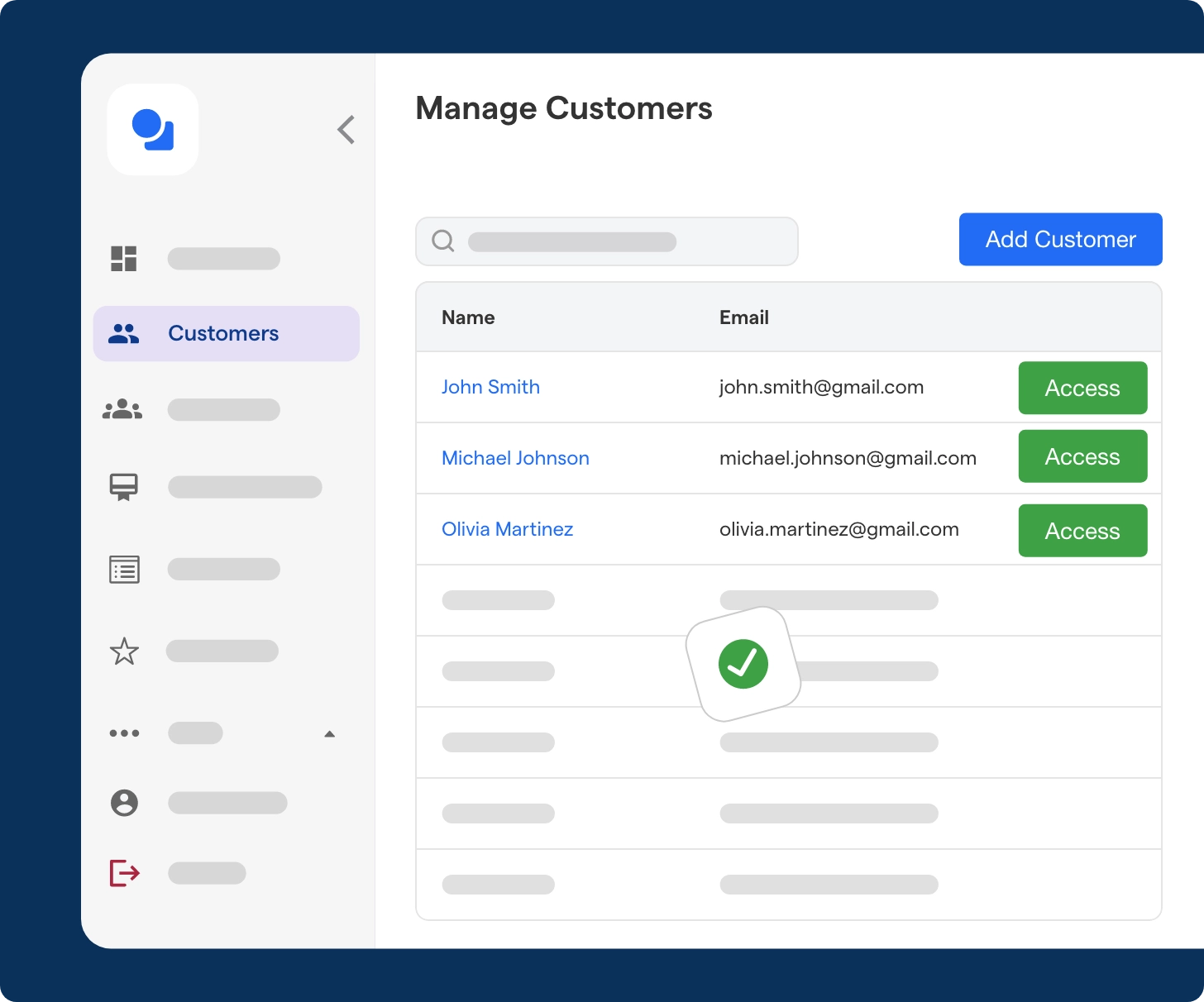
Manage all clients from one central panel and give them access to your branded dashboard. Track usage and team performance through the multilingual White Label Chatbot Partner Panel.
Help Documentation for Clients (Add-on)
Get white-labeled help docs that your clients can access anytime, branded as your own product.
Branded Emails
Send client-facing notifications and transactional emails using your own branding and sender identity.
Rebranded Marketing Kit
Leverage sales decks, promotional assets, and client acquisition material, fully customized & branded under your name.
Multi-channel Technical Support
Get multi-channel support via email, Support Bot or WhatsApp, across time zones, whenever you need it.
Enterprise-Grade Security, Data Protection & Compliance
Meet enterprise requirements with GDPR, HIPAA, and CCPA compliance, ISO certification, SOC 2 attestation, and VAPT assessment by a CERT-In empanelled auditor.
Multiple Payment Gateways
Available from the King plan. Connect payment gateways like Stripe, Razorpay, Paddle, and Paymob for flexible client checkout.
Multi-Currency Options
Sell globally with multi-currency billing available on King and Emperor plans.
Custom Plan Creation
Configure plans with feature sets, integrations, and sub-user accounts, and set usage limits, all fully customizable per tier.
Subscription Management
Available from the King plan. Manage client upgrades, renewals, billing cycles, and invoices under your own business name.
Secure APIs & Webhooks
Enable secure integrations through tokenized, end-to-end encrypted APIs and webhooks, ready to use out of the box.
How Far BotPenguin's White Label Goes: The Full Control Checklist
Use this summary to quickly review the core whitelabel capabilities available with BotPenguin.
White Label Capability
BotPenguin
Custom Domain
Included
Branded Emails
Included
Invoices & Billing Ownership
Included
Client Login & Branded Dashboard
Included
Branded Mobile Apps
Add-on on Little & King; Included on Emperor
WhatsApp Account Ownership
Included
BotPenguin Hidden From Clients
Yes
Per-Client Custom Plans
Included
Dashboard Languages
Multiple languages
Multi-Currency Billing
Available on King & Emperor
How White Label Partners Find Their First Clients
Most partners start with one of three approaches:

Use Existing Relationships
Offer chatbot services to current clients or partner with web agencies, CRM consultants, and IT providers.

Focus on One Industry
Choose a niche, such as real estate, healthcare, ecommerce, or recruitment, and build repeatable solutions.

Turn Results into Proof
Use your first successful deployment as a case study, then package setup, support, reporting, and optimization as recurring client services.
See How Much You Can Earn With White Label Chatbots
Your profitability drives our success. See exactly how much you can earn. Set your pricing, add your clients, and watch the numbers work in your favor.
Your Estimated Revenue
$ 10,000
Approx. revenue over 12 months
What Makes BotPenguin the Best White Label Chatbot Platform for Partners
BotPenguin’s annual platform fee gives partners full revenue ownership, unlimited growth potential, advanced branding, partner support, and enterprise deployment options.
Enterprise Infrastructure and Control
On-Premise Deployment
Deploy within a client-controlled environment when security, compliance, or infrastructure requirements demand it.
Self-Hosted Database
Give eligible clients greater control over where chatbot, customer, and conversation data is stored.
Meta Business Partner Status
Build and resell WhatsApp automation through a platform recognized as a Meta Business Partner.
Enterprise Compliance Support
BotPenguin is GDPR, HIPAA, and CCPA compliant, ISO certified, SOC 2 attested, and VAPT-assessed by a CERT-In empanelled auditor.
BotPenguin vs Typical White Label Platforms
When comparing a whitelabel chatbot platform, the biggest differences usually come down to revenue ownership, launch speed, client scalability, and branding control.
| Comparison Area | BotPenguin | Typical White-Label Platforms |
|---|---|---|
| Revenue Share | 100% yours, no sharing | Revenue share or reseller margins |
| Setup Time | Live in as little as 12 hours | Longer onboarding and setup |
| Client Scalability | Scales with your partner plan | Fixed client or account limits |
| Branding Control | Full: logo, colors, domain, pricing | Limited to basic or partial rebranding |
More Partner Advantages
Fast and Streamlined Partner Onboarding
Branded Mobile App for Your Chatbot Platform
Preferred Payment Gateway Integration
Scalable Clients & Chatbots
WordPress Plugin
Custom Help Docs and Guides
Custom Chat Flows Built by BotPenguin for You
On-Demand Executive Support Access
Dedicated Partner Training and Guidance Sessions (Add-on)
Full Marketing Kit and Pre-Sales Support
Cost-Effective Pricing with High ROI Potential
Country-Specific Integrations for Every Market
Who Should Use BotPenguin's White Label Chatbot Platform ?
Built for agencies, service providers, resellers, and businesses that want to offer branded AI chatbots without building the technology from scratch.

Digital Marketing Agencies
Whitelabel AI chatbots and agents for clients, fully branded, your pricing.

IT Consultancies
Embed a whitelabel enterprise chatbot platform into your consulting offering.

White-Label SaaS Entrepreneurs
Launch your own AI chatbot SaaS business, no coding, no infrastructure.

Strategic Tech Partners
Integrate whitelabel AI chatbots into your existing software as a native feature.

E-commerce Agencies
Offer whitelabel Shopify and WooCommerce chatbots for cart recovery and support.

CRM and ERP Vendors
Embed whitelabel conversational AI directly into your CRM or ERP product.

Hosting and Web Service Providers
Add whitelabel AI chatbots as a no-code upsell to your hosting offering.

Franchise and Multi-Brand Partners
Manage brand-consistent AI chatbots across multiple locations and franchises.
Still comparing vendors? Explore our guide to the Top White Label Chatbot Platforms before making your decision.
White Label Chatbot Platform Pricing For Every Stage of Growth
One platform fee. No commissions, revenue sharing, or per-chatbot charges. Set your own pricing, keep 100% of every sale, and choose a plan that supports your growth.
Pebble Plan
Get started with whitelabel AI chatbots for your first clients.
Little Plan
Scale your whitelabel offering with more features and clients.
King Plan
Full-featured reseller platform for growing AI chatbot agencies.
Emperor Plan
Enterprise-grade setup with dedicated support and custom integrations.
*All plans include whitelabel setup. No hidden fees, no revenue sharing.

Proven White Label AI Chatbot Case Studies: Real Agencies, Real Results
See how BotPenguin partners launched, scaled, and monetized white-label chatbot businesses.
 South Africa IT Services
$94Krevenue from 58 clients
$94K White-Label AI Business in South Africa | BotPenguin Partner
A South African IT firm built a $94K white-label AI business on BotPenguin — 58 clients, 9x ROI, live in 10 days. Started Baby, scaled to Emperor. Verified partner WL-178.
 Whitelabel WhatsApp
 Whitelabel Chatbots🇿🇦 Read story IT Agency · SaaS
3×faster go-to-market
White Label Chatbot Platform: IT Agency Launches SaaS Business
See how a US IT agency ditched one-off project fees and launched a full SaaS chatbot business — 3x faster GTM, 90% less infra work, 100% their brand.
Whitelabel Chatbots🇺🇸 Read story Dubai IT Solutions3-Daymedian client deployment
White-Label AI Chatbot Business | Dubai, UAE | BotPenguin
A Dubai IT company achieved 9x ROI and $90K in partner revenue, with a 3-day median client deployment, the fastest in BotPenguin's entire partner cohort. Read the full story.
Whitelabel WhatsAppWhitelabel Chatbots🇦🇪 Read story 
Frequently Asked Questions
Do I need technical skills to start as a white label partner?
How much does BotPenguin's whitelabel chatbot platform cost?
Can I set different plans and prices for each client on my white label chatbot platform?
Can I bill clients in different currencies with the whitelabel chatbot platform?
Do my clients know they are using BotPenguin?
Can clients use their own WhatsApp number with the white label AI chatbot?
How is a white label chatbot reseller program different from BotPenguin's commission reseller program?
Is there a demo available before I commit to BotPenguin’s whitelabel chatbot program?
What support and training will I get as BotPenguin's white label partner?
Can I sell AI agents and voicebots in addition to chatbots?