


What Is a White Label Partnership? Models, Programs & How It Works
Updated at Oct 9, 2026
8 min to read
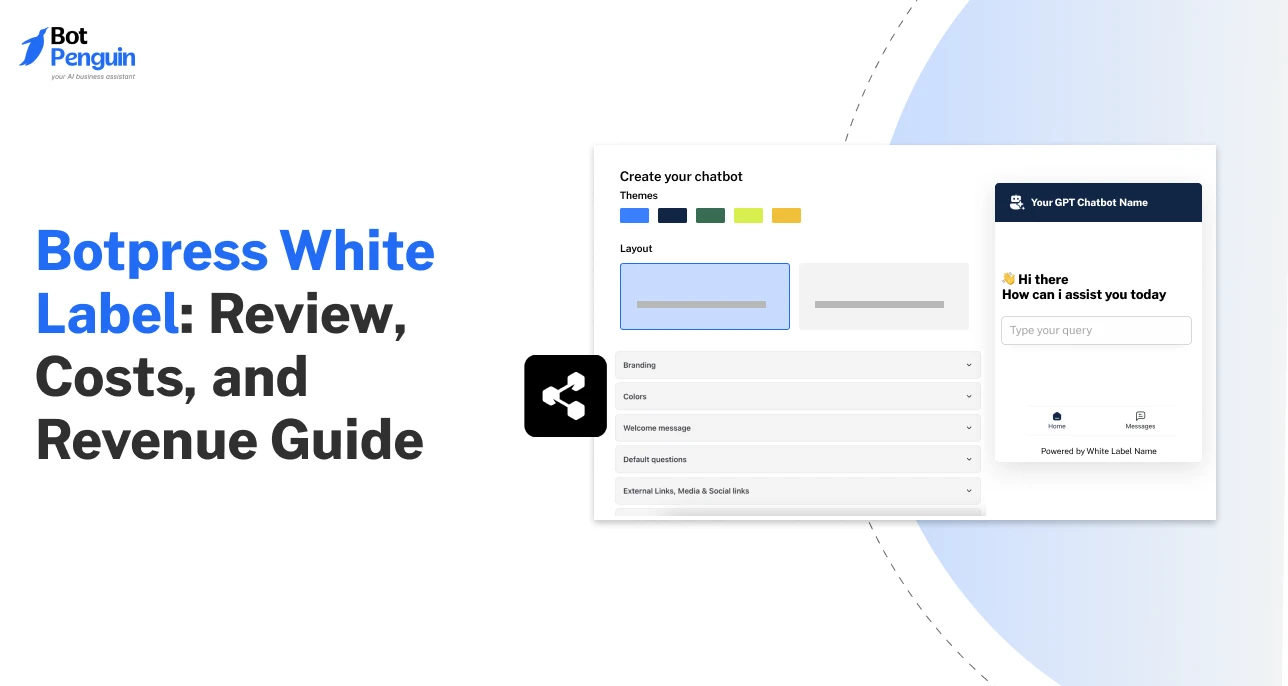
If you are evaluating Botpress white label, the main concern is practical.
Can you remove Botpress branding? Which plan allows it? What does it cost? And how much setup will your team need?
These questions matter before you commit. Botpress can support white-labeling, but plan access, branding removal, pricing, and technical effort all affect the final decision.
This guide explains what Botpress offers, what the setup may involve, and where hidden costs can appear. It also shows when Botpress suits developer-led teams, and when agencies may need a simpler white-label resale option.
For broader context, you can review our related guide explaining what a white label chatbot is.
Yes, Botpress white label support is available, but it depends on the plan.
The free plan is not built for full white-label resale. It supports basic usage, but not branded agency delivery.
For agency use, three things matter most:
As of the current Botpress pricing, the Plus plan includes whitelabel webchat and a custom-domain Help Center. Team and Enterprise add more scale, collaboration, support, and security controls.
So the answer is clear. Botpress can support white-label use, but agencies must select the appropriate paid plan before building a resale offering.
Botpress lists whitelabel webchat under its Plus plan.
This means the commonly searched query Botpress plus plan remove branding is directly tied to the Plus tier. The same plan also includes custom-domain support for the Help Center.
For larger agency operations, Team or Enterprise may still be more relevant. They add higher usage, more seats, collaboration, routing, analytics, and stronger support options.
As of July 2026, Botpress lists Plus at $150/month when billed annually. Team is listed at $750/month when billed annually. Enterprise uses custom pricing.
For agencies, the key takeaway is simple. Budget beyond the free plan before planning branded client delivery. Once the plan question is clear, the next step is understanding the real cost behind Botpress white label setup.
Here is Botpress scored against the 10 checks agencies use to test whether a platform is truly white-label. Each item is verified against Botpress’s public product and integration documentation as of September 2026.
Botpress therefore passes 1 of 10 checks. Agencies that need the remaining ownership controls can compare them with BotPenguin’s white label depth checklist.
Botpress white label cost is not limited to the paid plan fee.
The paid plan gives access to whitelabel webchat, but agencies must also plan for usage, setup, integrations, and ongoing maintenance. These costs matter more when you manage several client bots.
For agencies, the main cost areas include:
Removing branding is only one part of the setup. Agencies still need to configure the bot experience, client-facing assets, handoff paths, and connected tools.
That is why Botpress white label pricing should be judged against broader white label chatbot pricing, not just the plan fee. The subscription may unlock the feature, but delivery time affects margins.
For a single custom bot, this setup may be acceptable. For agencies selling repeatable chatbot packages, the effort can reduce scalability.
Next, let’s check out what that white label setup of Botpress actually involves.
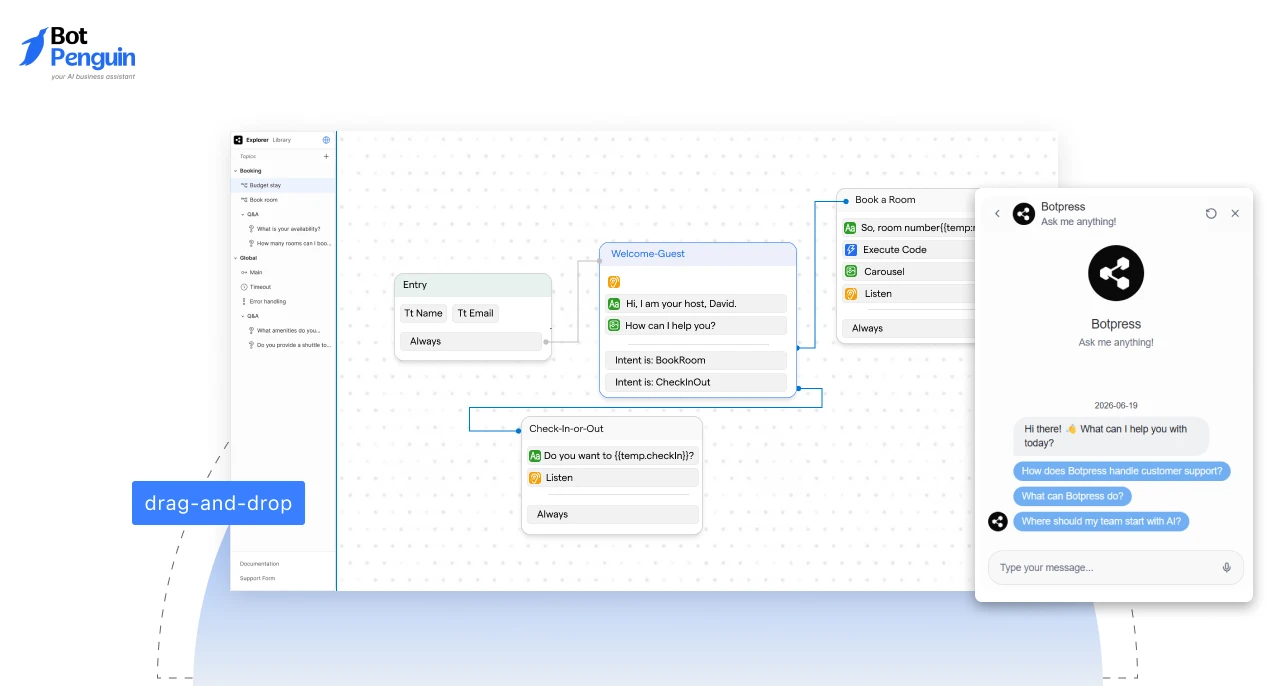
Setting up Botpress white label is not a simple no-code task.
Botpress is better suited to technical teams that can manage configuration, customization, and integrations. Agencies without developers may find the setup slower than expected.
A branded setup can involve several moving parts like:
This does not make Botpress weak. It means the platform is better suited to teams that want control rather than instant resale.
For agencies, the real issue is repeatability. One client setup may be manageable. Ten client setups can become harder without a technical process.
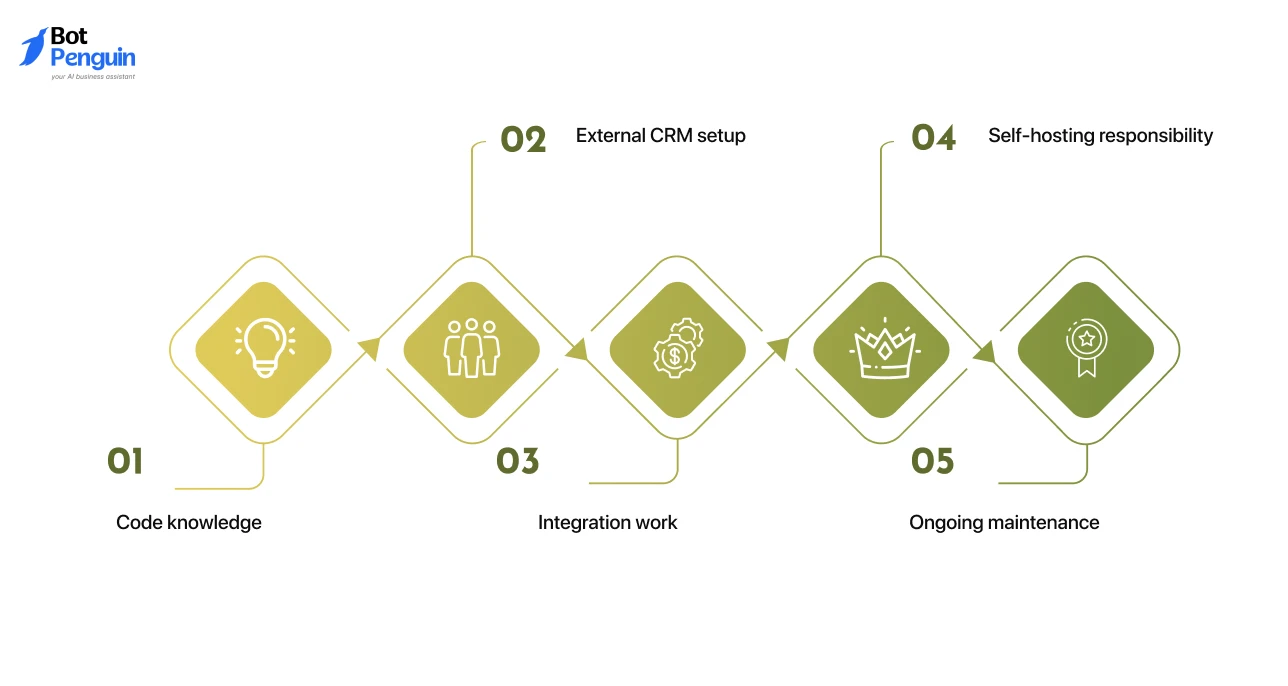
Botpress often needs technical knowledge for deeper setup.
The main operational requirements include:
So the setup question is not only technical. It also affects delivery speed, client onboarding, and agency margins.
The next section shows where these setup demands can limit agency resale.
Botpress is strong when agencies need bespoke AI builds.
It gives technical teams more control over bot behavior, workflows, and deployment. That makes it useful for complex client projects.
The gap appears when agencies need fast resale.
A resale-focused agency usually needs repeatable setup, simple onboarding, branded client access, and low technical dependency. Botpress can support branded delivery, but the process is not always built for quick duplication across many clients.
Common agency friction points include:
This matters because agency margins depend on speed. If every client needs custom technical work, delivery becomes harder to scale.
So Botpress is not a poor option. It is simply better suited to technical service delivery than fast no-code resale.
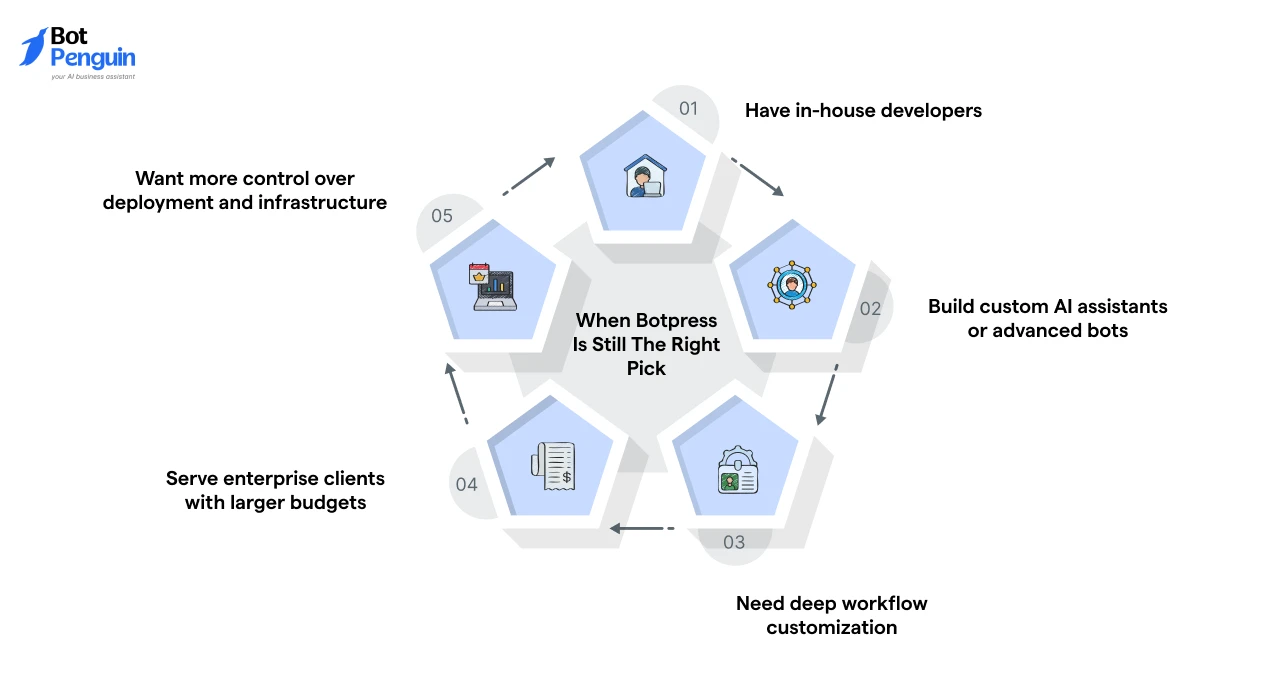
Botpress is still the right choice when technical depth matters most.
It fits agencies that:
In these cases, the extra setup can be justified.
For developer-led agencies, Botpress offers flexibility that simpler tools may not match. For agencies selling repeatable branded chatbot packages, that same flexibility can become operational overhead.
That is where a simpler agency-focused option becomes relevant.
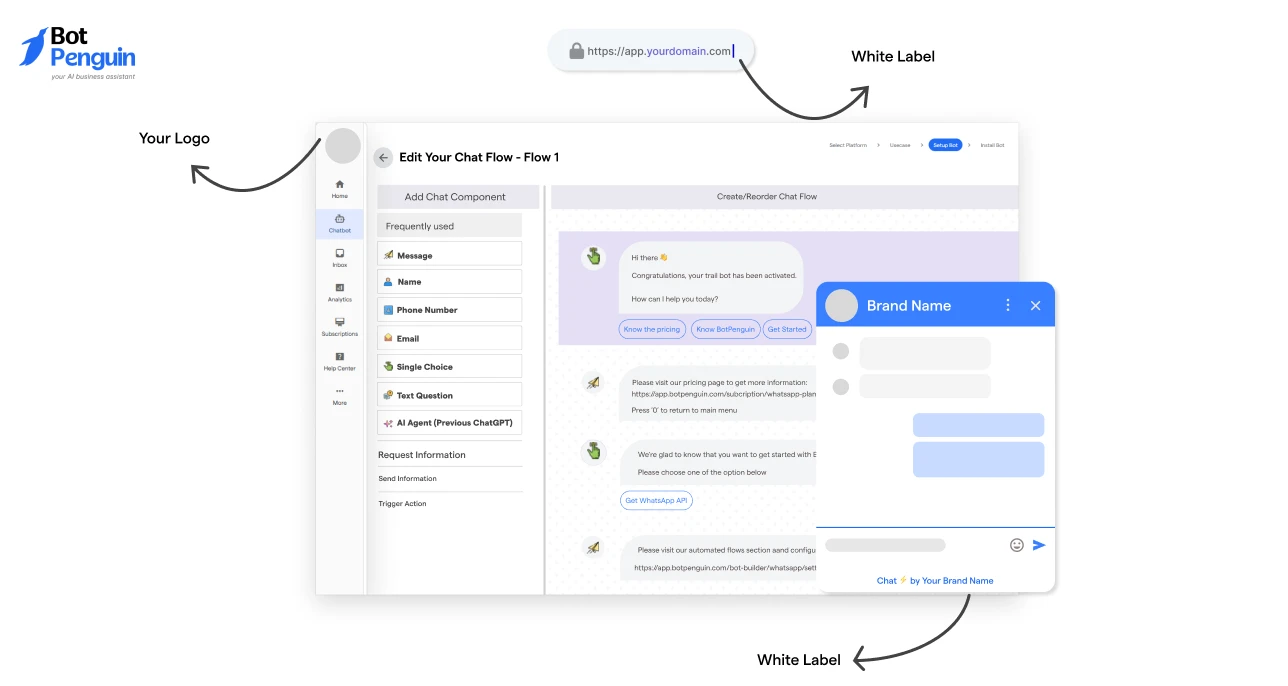
If Botpress feels too technical for resale, BotPenguin fits a different agency model.
BotPenguin is a no-code, white-label chatbot platform for agencies that want faster, branded delivery. It focuses on resale readiness, not custom engineering depth.
Agencies can use BotPenguin to offer chatbot services under their own brand. That includes branded client access, agency-controlled setup, and multichannel chatbot deployment.
The practical difference is speed.
BotPenguin helps agencies avoid rebuilding every client setup from scratch. It supports channels such as WhatsApp, website chat, Instagram, Facebook, and Telegram from a single platform.
For agencies, this makes BotPenguin useful when they need:
BotPenguin is not positioned as a deep developer environment like Botpress. It is better suited for agencies that want a simpler Botpress alternative for branded resale.
For a broader comparison, check the best Botpress alternatives.
The next section compares both platforms side by side.
The comparison comes down to the agency model. Botpress suits developer-led builds. BotPenguin suits agencies that want faster branded resale from a managed platform.
The table below compares Botpress and BotPenguin across the factors agencies usually evaluate before choosing a white-label resale platform.
Botpress gives technical teams more control. BotPenguin gives agencies a simpler resale path. One is stronger for custom engineering. The other is stronger for repeatable agency delivery.
After reviewing both tools, agencies can use our broader guide to white-label chatbot platforms compared based on pricing, branding depth, setup effort, and resale support.
The final decision depends on whether your team values deeper control or faster resale.
Yes, Botpress offers white-label support through its paid plans. Its Plus plan includes whitelabel webchat, while lower free usage is not built for full branded resale. Agencies should still consider setup, usage, and client management needs before choosing Botpress for white-label delivery.
Botpress lists whitelabel webchat under its Plus plan. The Plus plan also includes Help Center custom-domain support. Team and Enterprise add more scale, collaboration, routing, analytics, and support options for larger operations.
Botpress Plus is listed at $150/month when billed annually. Team is listed at $750/month when billed annually, while Enterprise uses custom pricing. Agencies should also consider conversation packs, setup time, integrations, and developer effort beyond the base plan cost.
Botpress can work for agencies with developers. It is better suited to custom bot builds than fast, repeatable resale. Agencies that need quick onboarding, branded client access, and less technical setup may prefer a no-code white-label platform built for resale.
BotPenguin is a strong option for agencies that want no-code white-label resale. It supports branded client access, multichannel deployment, and simpler setup. It is better suited to agencies selling repeatable chatbot services without relying heavily on developers.
Botpress can support self-hosted or custom deployment needs for technical teams. This gives more control, but it also adds responsibility for uptime, infrastructure, security, scaling, and maintenance. Agencies without engineering support may prefer a managed white-label platform.
Simplify White-Label Resale
Launch branded chatbot services faster, without heavy technical setup or repeated client rebuilds with BotPenguin white label chatbot programs.
Start White LabelingCheckout our related blogs you will love.
Updated at Oct 9, 2026
8 min to read

Updated at Oct 9, 2026
12 min to read
Updated at Oct 8, 2026
10 min to read
Updated at Oct 7, 2026
15 min to read
Updated at Oct 6, 2026
9 min to read
Updated at Oct 1, 2026
11 min to read
Table of Contents
