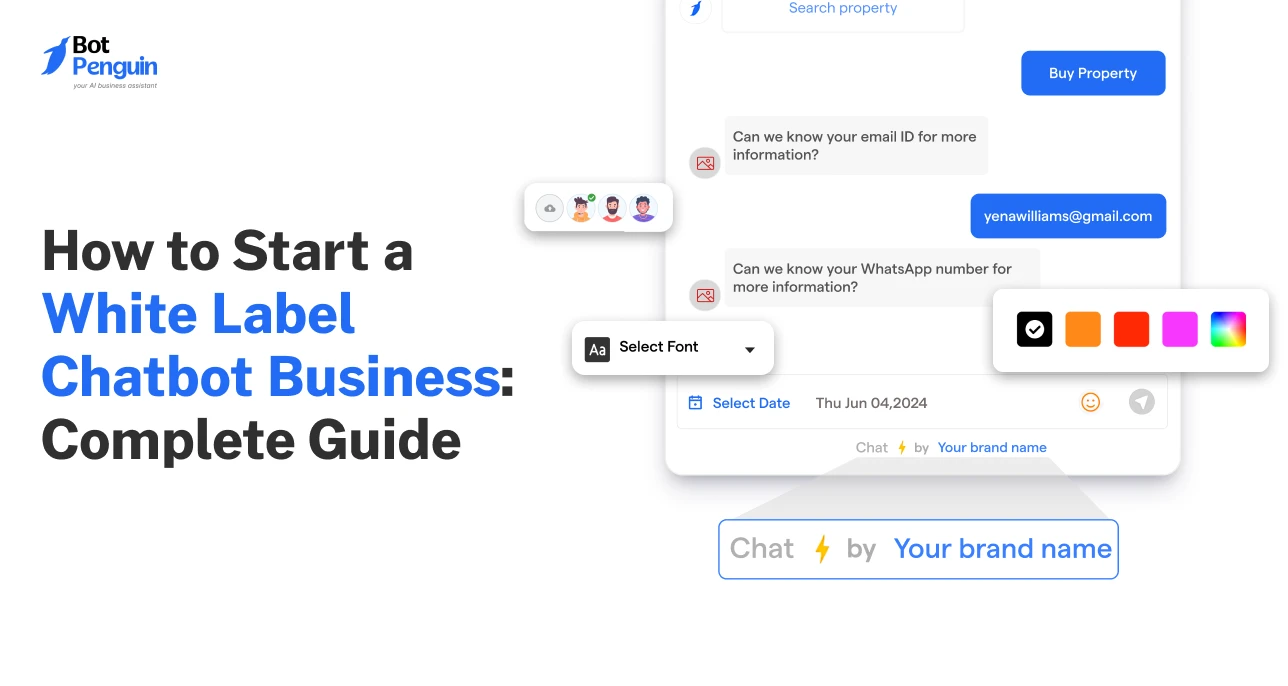
How to Start a White Label Chatbot Business: Complete Guide

Partner

Updated On Apr 25, 2026

11 min to read

BotPenguin AI Chatbot maker

BotPenguin AI Chatbot maker

Starting an AI chatbot business no longer means building the technology from scratch.

Today, many agencies and founders are launching chatbot services by rebranding existing platforms instead of developing their own.

That’s where a white label chatbot business comes in. It lets you sell chatbot solutions under your own brand, without managing the backend tech.

In this guide, you’ll learn how to start a white label chatbot business, how the model works, and how to turn it into a scalable, recurring revenue stream.

How to Start a White Label Chatbot Business: A Step-by-Step Guide

Starting a white label chatbot business is not about building technology. It is about packaging a solution businesses already need and selling it in a way that is easy to buy.

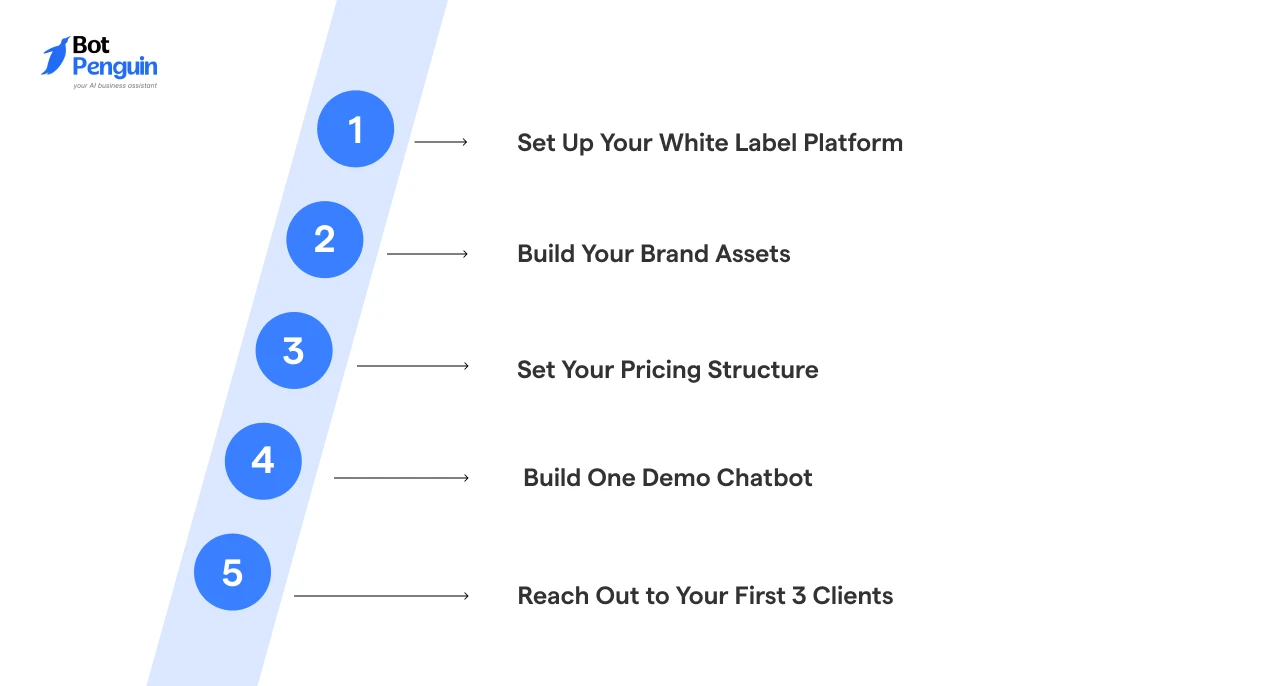
Following these steps will help you go from idea to your first paying client:

Step 

Step

What It Covers

1

Choose a Niche

Pick one industry and use case where chatbots solve a clear business problem.

2

Select a Platform

Choose a white label chatbot platform that supports branding, client management, and scale.

3

Decide Your Offer

Package your service as a chatbot setup, monthly management, or ongoing optimization.

4

Set Up Business Assets

Create your landing page, demo chatbot, templates, and basic sales materials.

5

Launch Your First Offer

Start outreach, show demos, close clients, and build recurring revenue.

Each of these has been explained below in detail:

Step 1: Choose a Niche for Your Chatbot Business

Most beginners fail here. They try to sell chatbots to everyone and end up selling to no one. A focused niche makes your offer clearer and easier to sell.

Best Niches for White Label Chatbots

Some industries already rely heavily on automation and customer interaction. These include:

  • Healthcare clinics for appointment booking and FAQs
  • Real estate for lead qualification and property inquiries
  • Ecommerce for order tracking and support
  • Education and coaching for lead capture and onboarding

These niches have high message volume, which makes chatbots valuable.

 How to Pick a Profitable Niche

Start with a niche where:

  • Businesses receive repetitive queries.
  • Response time affects revenue.
  • You already understand the workflow.

A real estate agent missing leads or a clinic missing bookings creates urgency. That urgency is what helps you close deals faster.

If you want to go deeper on the fundamentals, check out our comprehensive guide on White Label Chatbot: How to Sell AI Under Your Own Brand.

Step 2: Select the White Label Chatbot Platform

You are not building the chatbot from scratch. Your platform becomes your product. Choosing the right one directly impacts your delivery, pricing, and scalability.

What to Evaluate Before Choosing

Do not choose a platform only because it looks affordable or easy to use. Evaluate whether it can support your business as you add more clients.

Check if the platform allows you to:

  • Sell under your own brand
  • Manage multiple clients easily
  • Launch chatbots without coding
  • Connect with client tools and workflows
  • Support the channels your niche needs

This helps you build a white label chatbot business that is easier to manage and scale.

Build and Sell White Label Chatbots Faster with a No-code Platform

Common Mistakes While Choosing

Many people choose based on price alone and regret it later.

Common mistakes include:

  • Picking tools with limited branding control
  • Ignoring client management options
  • Choosing platforms with weak integrations
  • Selecting tools that cannot scale with clients

A weak platform limits your ability to deliver results, even if you sell well.

Step 3: Decide Your Chatbot Service Offering

Selling “chatbots” is vague. Clients don’t buy tools. They buy outcomes. Your offer needs to clearly explain what problem you solve.

Done-for-You Chatbot Service

You handle everything:

  • Setup
  • Training
  • Deployment

This works well for businesses that want quick results without managing the system.

Monthly Chatbot Management Plans

This creates recurring revenue.

You manage:

  • Updates
  • Performance improvements
  • Ongoing support

A clinic paying monthly for automated bookings is more valuable than a one-time setup client.

Step 4: Set Up Your Branding and Business Assets

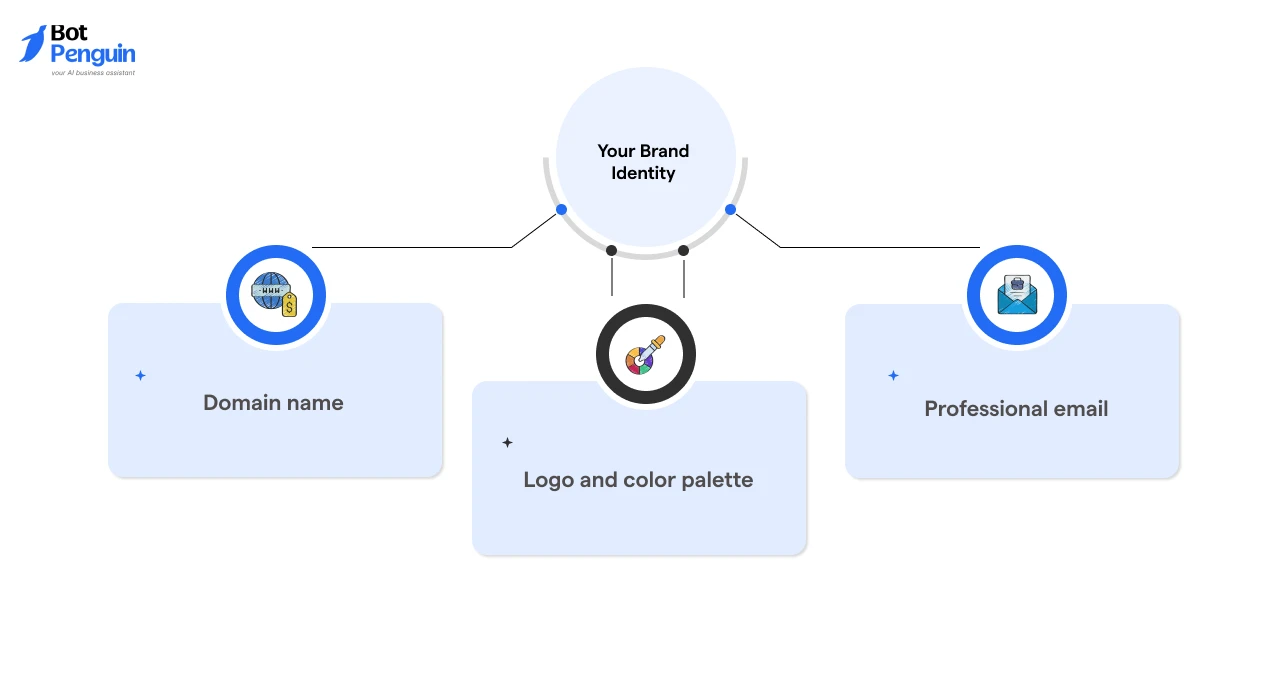
Before selling, your business needs to look real and trustworthy. This builds confidence and helps convert leads faster.

Website and Landing Page

Your site should clearly show:

  • What your chatbot does
  • Who it is for
  • What results does it deliver

Keep it simple. A niche-specific landing page performs better than a generic one.

Demo Chatbot and Templates

A working demo closes deals faster than explanations.

Create:

  • One demo chatbot per niche
  • Pre-built templates you can reuse

When a client sees their exact use case working, the decision becomes easier.

Step 5: Launch Your First Chatbot Offer

You don’t need a perfect setup. You need a simple offer that solves one problem and is easy to buy.

Starter Pricing Strategy

Start simple:

  • One-time setup fee
  • Monthly management fee

Avoid complex pricing in the beginning. Clarity converts better than customization.

First Client Acquisition Approach

Your first clients usually come from:

  • Your existing network
  • Cold outreach in a specific niche
  • Direct demos to business owners

For example, a real estate agency can capture and qualify leads automatically using a chatbot branded as its own.

This is the exact process most successful white label chatbot businesses follow. Once you close your first few clients, the focus shifts from setup to scaling.

What Does Building a White Label Chatbot Involve?

Now that you have understood the process of launching your own white label chatbot business, it’s time to look at how you can actually create and deploy your own chatbot without coding.

Fun Fact: Most successful white label chatbot businesses today run entirely on no-code tools that are fast to deploy and easy to manage.

Do You Need Coding Skills to Build a Chatbot?

Many people assume chatbot building requires programming. That is no longer true. Modern platforms are designed for business users, not developers.

You can build a white label chatbot using drag-and-drop builders, pre-built templates, and AI models. The focus shifts from coding to understanding customer conversations.

Example: A consultant setting up a chatbot for a clinic only needs to map patient queries and responses. The platform handles the logic behind it.

How No-Code Chatbot Builders Work

No code chatbot builders simplify the entire process into visual steps. You create flows, responses, and actions without writing code.

Most platforms follow a simple structure:

Step

What It Includes

Create conversation flows

Map user questions and decide how the chatbot should respond at each stage.

Add responses

Use text, buttons, quick replies, or guided options to make conversations easy.

Connect actions

Link the chatbot to booking, lead capture, data collection, or follow-up workflows.

Likewise, a real estate chatbot can capture name, budget, and location in seconds and store them automatically. This is how white label chatbots deliver immediate business value.

How to Train a Chatbot for Clients

A chatbot is only as good as the data it is trained on. Training is not technical. It is about understanding what customers usually ask.

Start with:

  • Frequently asked questions
  • Common support queries
  • Sales conversations

Upload this information into the chatbot or structure it into flows.

For example, a clinic chatbot trained on appointment timings, services, and pricing can handle most patient queries without human input. This reduces response delays and improves conversion.

How to Connect Chatbots With CRM and Tools

Chatbots become powerful when connected to business systems. This is where automation actually happens.

You can connect chatbots to:

  • CRM systems to store leads
  • Google Sheets for simple tracking
  • Booking tools for appointments
  • Email or WhatsApp for notifications

This means that a chatbot capturing leads for your business can directly send data to the sales team. This removes manual work and speeds up follow-ups.

How to Deploy Chatbots on Website and WhatsApp

Once built, deployment is quick. Most platforms provide simple options to go live across channels.

You can:

  • Add a chatbot widget to a website
  • Connect it to WhatsApp for direct messaging
  • Integrate with Instagram or Facebook

A business can start receiving automated responses within minutes of deployment. This is what makes building a white label chatbot practical, even for beginners.

What to Look for in a White Label Chatbot Platform Before Launching Your Business

The platform you choose decides how far your white label chatbot business can scale. A weak platform limits delivery. A strong one makes selling and managing clients easier from day one.

Branding and Customization Features

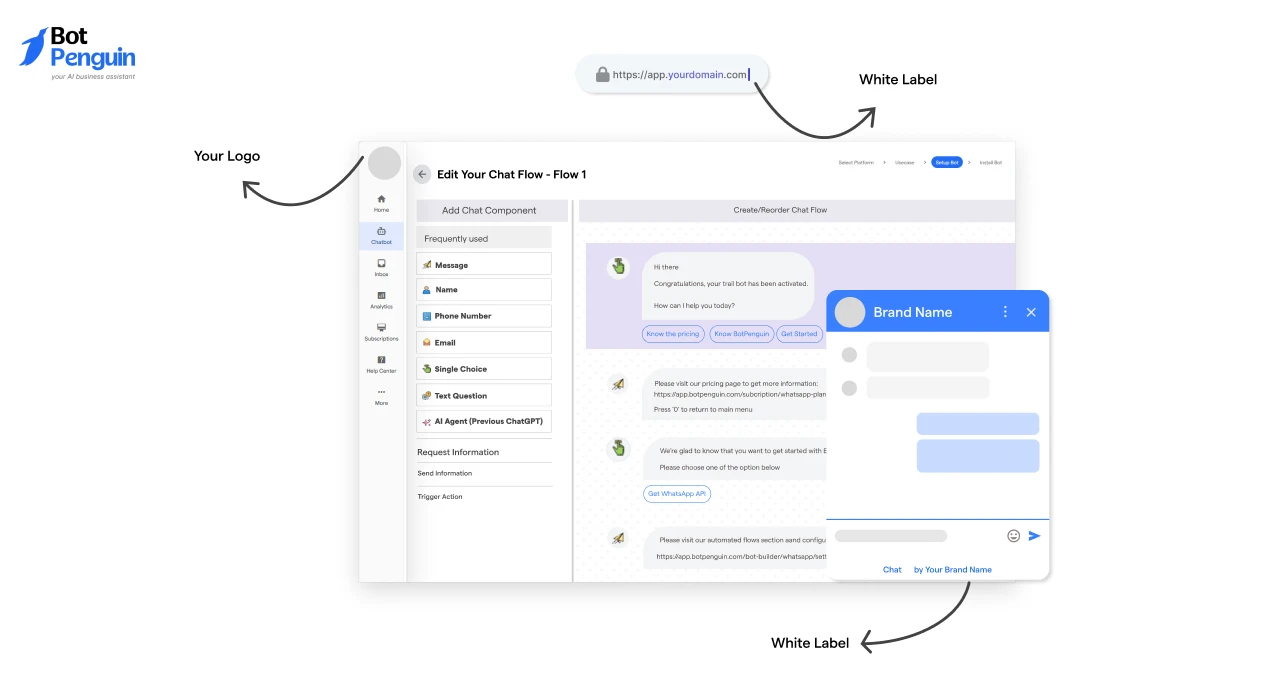
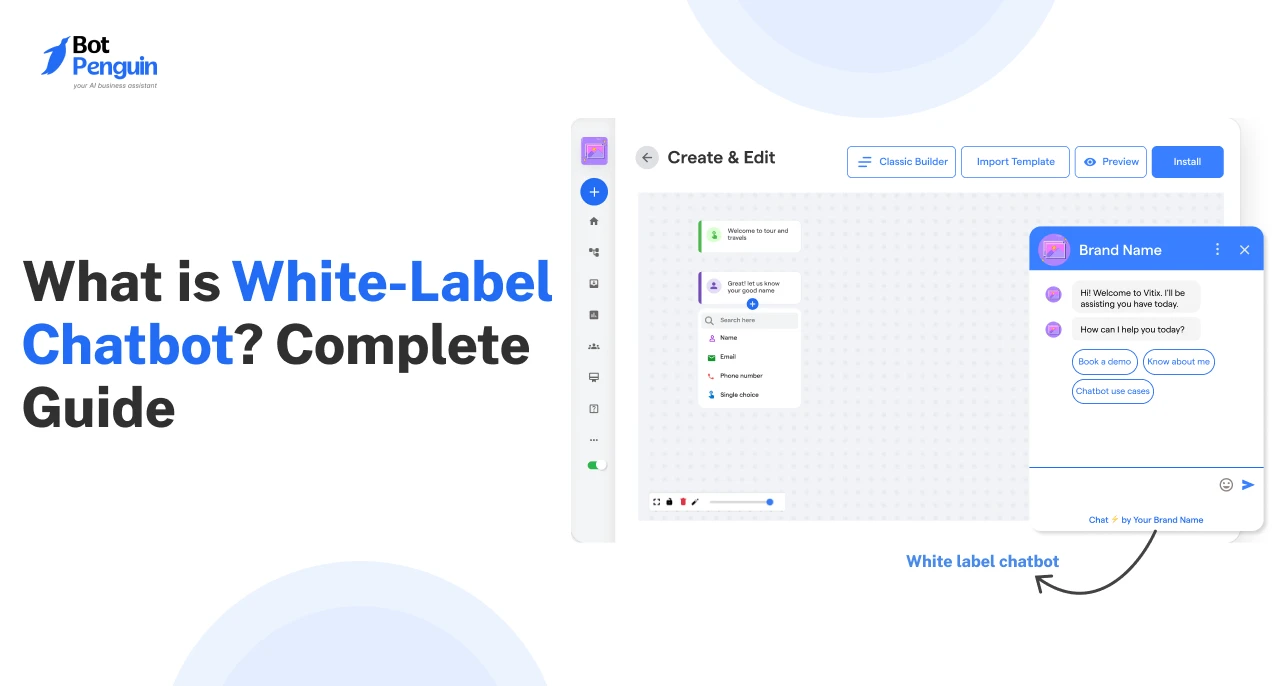
If you cannot brand it, you cannot sell it as your own. Branding is what turns a tool into your product.

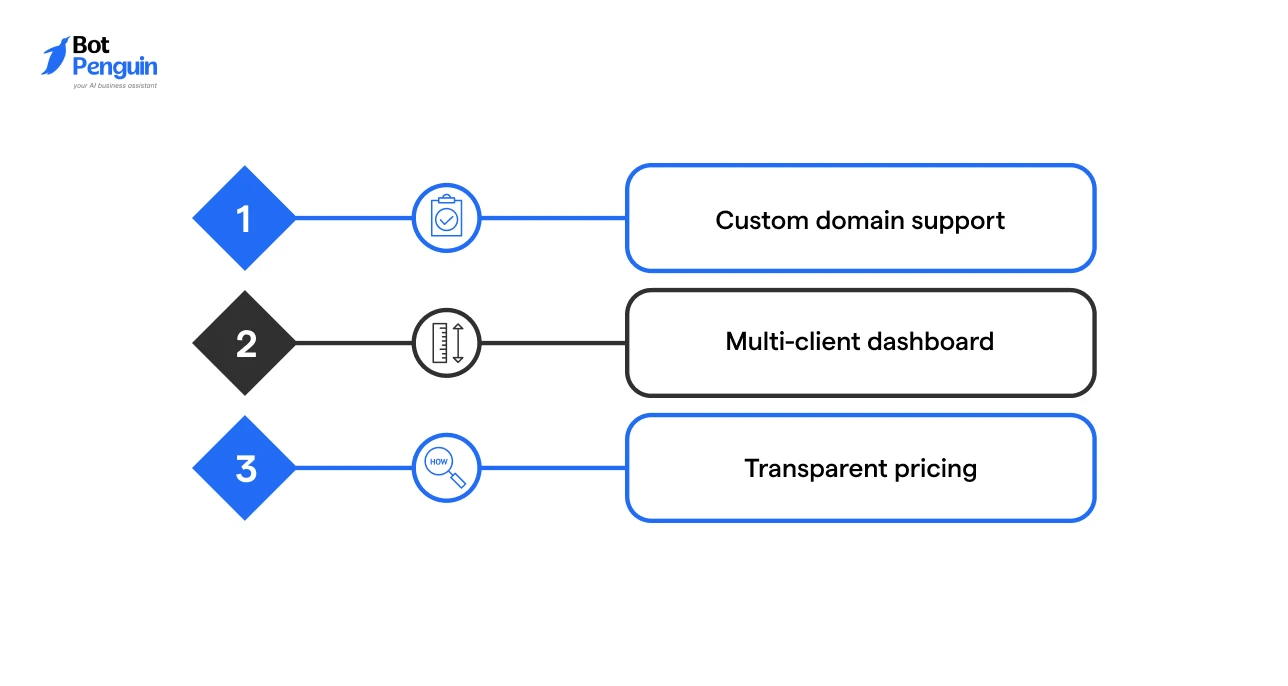
A good platform should let you:

  • Add your logo and domain.
  • Customize chatbot appearance and interface.
  • Control client-facing dashboards.

When a client logs in and sees your brand, trust increases. This is critical when you are learning how to build a white label chatbot that looks like your own solution.

Multi-Channel Chatbot Deployment

Customers do not stay on one platform. Your chatbot should not either. Businesses expect automation across all major communication channels.

A strong platform should support:

  • Website chatbot widgets
  • WhatsApp automation
  • Instagram and Facebook messaging

A retail business using one chatbot across the website and WhatsApp sees faster response times and better engagement. 

Build, Brand, and Sell Chatbots Without Coding

CRM and Third-Party Integrations

Without integrations, a chatbot is just answering questions. With integrations, it becomes a business tool.

Look for platforms that connect with:

  • CRM systems for lead storage
  • Booking tools for appointments
  • Email or messaging tools for follow-ups

A chatbot capturing leads for a service business should instantly push data to the sales pipeline. This removes manual work and improves conversion speed.

Client Management and Dashboard Access

As you grow, you will handle multiple clients. Managing everything manually is not sustainable.

Your platform should allow you to:

  • Manage multiple chatbot accounts
  • Switch between clients easily
  • Give controlled access to clients

An agency running 10 chatbot accounts needs one dashboard, not 10 separate logins. This is essential for scaling a white label chatbot business.

Analytics and Performance Tracking

Clients do not pay for chatbots. They pay for results. Analytics helps you prove those results.

Your platform should track:

  • Conversations handled
  • Leads generated
  • Response time improvements

A business seeing how many leads came through the chatbot is more likely to continue paying monthly. This is what turns a one-time setup into recurring revenue.

Choosing the right platform is not just a technical decision. It is a business decision that directly affects how you start and grow a white label chatbot business.

How to Price White Label Chatbots for Clients

Pricing decides whether your white label chatbot business becomes scalable or stays stuck. Charge too low, and you lose time. Charge right and you build predictable revenue.

How Much Should You Charge for Chatbots?

Most beginners price based on effort. Clients pay for outcomes. Leads, bookings, and faster responses are what matter.

A practical starting range:

  • Setup fee: $120 to $600, depending on complexity
  • Monthly fee: $40 to $250 based on usage and support

A clinic paying $100 per month for automated bookings sees value when it reduces missed calls and improves scheduling.

One-Time vs. Monthly Pricing Models

Your pricing model affects long-term growth. One-time payments give quick cash. Monthly plans create stability.

One-time model:

  • Higher upfront fee
  • No ongoing income

Monthly model:

  • Lower entry cost
  • Recurring revenue

Most successful white label chatbots combine both. Set up covers initial work. Monthly covers ongoing value.

How to Create Recurring Revenue

Recurring revenue is what makes this business sustainable. Without it, you keep chasing new clients.

You can build recurring income by:

  • Charging for chatbot maintenance
  • Offering ongoing improvements
  • Managing integrations and updates

Over time, this creates a stable monthly income without constantly chasing new clients.

Pricing Based on Use Case and Industry

Different industries bring different values. Your pricing should reflect that.

High-value use cases:

  • Lead generation for real estate
  • Appointment booking for clinics
  • Sales automation for ecommerce

Lower value use cases:

  • Basic FAQ bots
  • Simple support flows

A chatbot helping close property deals can be priced higher than one handling general queries.

How to Increase Profit Margins

Profit comes from efficiency, not just pricing. The more you streamline delivery, the higher your margins.

You can improve margins by:

  • Reusing chatbot templates
  • Standardizing your setup process
  • Choosing platforms with scalable pricing

A structured system lets you manage multiple clients without increasing workload. This is what builds a scalable white label chatbot business.

How to Get Clients for Your White Label Chatbot Business

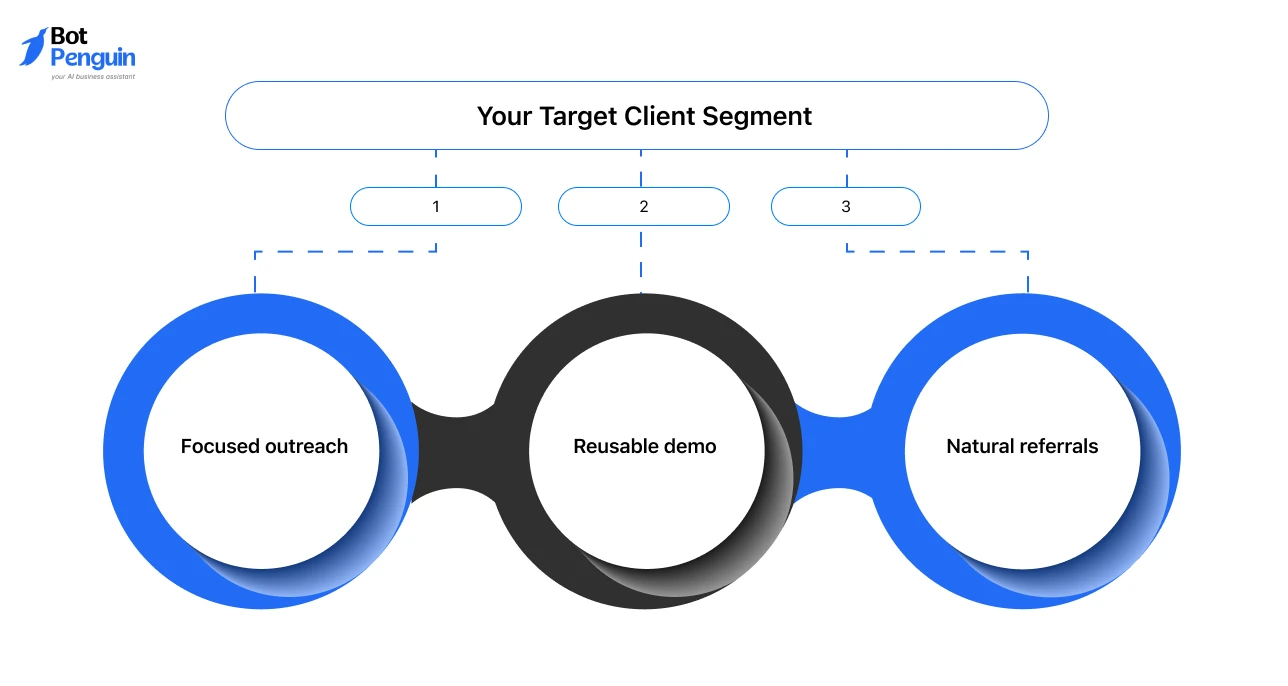
Getting clients is easier when you sell a clear outcome, not just a chatbot. Focus on one niche, one problem, and one simple offer.

  • Start With a Niche-Specific Offer: Offer chatbots for one use case, like clinic bookings, real estate lead capture, or ecommerce support.
     
  • Use Demo-Based Selling: Show a working demo instead of explaining features. Prospects understand faster when they see the chatbot in action.
     
  • Reach Out Directly to Business Owners: Contact businesses that depend on quick replies, such as clinics, agencies, stores, coaches, and service providers.
     
  • Leverage Your Existing Network: Start with LinkedIn contacts, past clients, local businesses, and referrals.
     
  • Offer a Simple Entry Point: Keep one basic setup package with an optional monthly management plan.
     
  • Focus on High-Urgency Use Cases: Target missed leads, delayed replies, booking gaps, abandoned carts, and repetitive support queries.
     
  • Use Results to Drive Referrals: Share wins like leads captured, bookings handled, or faster response times.
     
  • List Your Services on Directories and Marketplaces: Add your services to relevant marketplaces. (Curious how you can do it better? Learn how to optimize your chatbot partner profiles for marketplaces.)
     
  • Create Simple Content for Trust: Post short demos, use cases, and before-and-after examples.
     
  • Keep Your Offer Outcome-Focused: Sell results like more leads, faster replies, and less manual work.

When your offer solves a visible business problem, getting clients becomes less about convincing and more about showing clear value.

White Label Chatbot Business Checklist Before You Launch

Most people overcomplicate starting a chatbot business. In reality, you only need a few things in place. Use this checklist to make sure you are ready to launch.

Client acquisition is not about volume. It is about clarity. When your offer solves a visible problem, clients come more easily and stay longer.

White Label Chatbot Business Checklist

What You Need Before You Start

  • Defined niche (clinic, real estate, ecommerce)
  • One clear use case (lead generation, booking, support)
  • Understanding of customer queries
  • Simple service idea

Tools and Platforms Required

  • White label chatbot platform
  • CRM or lead tracking system
  • Website chatbot or WhatsApp integration
  • Basic analytics tracking

Sales and Marketing Setup

  • Niche specific landing page
  • Clear service positioning
  • Demo chatbot for your niche
  • Simple and transparent pricing

Delivery and Onboarding Process

  • Client onboarding form (FAQs, workflows, goals)
  • Pre built chatbot templates
  • Defined chatbot setup steps
  • Communication process for updates

First 30 Day Action Plan

  • Week 1: Choose niche and build demo chatbot
  • Week 2: Set up landing page and start outreach
  • Week 3: Pitch, demo, and close first client
  • Week 4: Deliver chatbot and optimize

If you can check most of these boxes, you are ready to move forward. 

At this stage, the focus shifts from setup to choosing the right platform and scaling your white label chatbot business.

How BotPenguin Supports a White Label Chatbot Business

Most platforms help you build chatbots. But if you want to grow a white label chatbot business, the platform should also support branding, delivery, client management, and recurring revenue.

BotPenguin helps agencies, freelancers, and consultants launch chatbot services without building the technology from scratch. Here’s what it offers:

Rebrand Chatbots Under Your Own Name

BotPenguin lets you sell chatbots under your own brand, giving you more control over how the service is packaged and priced.

  • Add your own branding.
  • Sell under your business name.
  • Set your own pricing.
  • Build direct client relationships.

This helps you position chatbot services as your own solution instead of simply promoting another platform.

Launch Across Multiple Channels

BotPenguin supports chatbot deployment across key customer communication channels.

  • Website
  • WhatsApp
  • Instagram
  • Facebook

This helps your clients manage conversations where their customers already interact.

Connect Chatbots With Business Tools

BotPenguin connects chatbot conversations with tools businesses already use for sales, support, and follow-ups. These include:

  • CRM systems
  • Booking tools
  • Lead tracking workflows
  • Follow-up automation tools

For example, a clinic chatbot can send appointment details directly to a booking system or CRM, reducing missed requests and manual entry.

Build and Launch Without Coding

BotPenguin allows you to create chatbots using no-code tools and ready templates.

  • Use pre-built templates.
  • Customize chatbot flows.
  • Set up without developers.
  • Launch faster for clients.

This helps freelancers and agencies create niche-specific demos quickly and reduce setup time.

Manage Multiple Clients From One Dashboard

BotPenguin helps you manage client accounts from one place, which is useful as your chatbot business grows.

  • Manage multiple clients.
  • Reuse chatbot templates.
  • Update bots easily.
  • Offer monthly services.

This reduces manual work and makes client delivery easier to scale.

Turn Chatbot Delivery Into Monthly Revenue

BotPenguin helps you package chatbot services into a repeatable business model.

  • Charge setup fees.
  • Offer monthly support.
  • Provide ongoing updates.
  • Manage chatbot performance.

Thus, the platform not only helps you build chatbots, it further enables you to sell, manage, and scale them profitably.

Start Your White Label Chatbot Business and Earn Recurring Revenue

Final Thoughts

Starting a white label chatbot business is no longer limited to developers or large SaaS teams. With the right niche, platform, pricing, and client acquisition approach, you can package chatbot automation as a practical service businesses already need.

The key is to focus on outcomes, not just chatbot setup. Businesses want faster replies, better lead capture, smoother support, and less manual work.

BotPenguin helps you launch under your own brand, manage clients, and offer chatbot services without coding. If you are ready to move from planning to execution, start with a platform built for delivery and recurring revenue.

Frequently Asked Questions (FAQs)

How to start a white label chatbot business with zero clients?

You can start by building one niche-specific demo chatbot and using it for outreach. Showing a working solution helps you get your first client faster than pitching ideas without proof.

How to build a white label chatbot that clients actually use?

Focus on real workflows like lead capture or booking, not generic responses. A chatbot aligned with business goals gets used daily and delivers measurable value, making it easier to retain clients.

Are white label chatbots better than custom-built chatbots for businesses? 

White-label chatbots are faster to deploy and cost-effective. Custom chatbots offer flexibility but require more time and resources. For most businesses, speed and simplicity make white-label solutions more practical.

How much can you earn from a white label chatbot business?

Earnings depend on pricing and the number of clients. Many agencies charge monthly fees, which creates recurring income. Even a few clients can generate consistent revenue if services are packaged correctly.

What industries benefit the most from white label chatbots?

Industries with high customer interaction see the most impact. Real estate, healthcare, ecommerce, and education benefit because chatbots handle repetitive queries and improve response time.

Can freelancers start a white label chatbot business without experience?

Yes, beginners can start by using no-code platforms and focusing on one niche. Learning basic workflows and customer needs is enough to build and sell initial chatbot solutions.

What is the difference between a white-label chatbot business and chatbot reselling?

White-label chatbot businesses focus on branding, service delivery, and long-term client relationships. Reselling usually involves promoting a tool without ownership over branding, pricing, or customer experience.

How long does it take to start a white label chatbot business?

You can start within days if you focus on one niche and use ready templates. The timeline depends more on execution speed than technical setup.

Keep Reading, Keep Growing

Checkout our related blogs you will love.

Table of Contents

BotPenguin AI Chatbot maker
    BotPenguin AI Chatbot maker
  • How to Start a White Label Chatbot Business: A Step-by-Step Guide
  • BotPenguin AI Chatbot maker
  • What Does Building a White Label Chatbot Involve?
  • BotPenguin AI Chatbot maker
  • What to Look for in a White Label Chatbot Platform Before Launching Your Business
  • BotPenguin AI Chatbot maker
  • How to Price White Label Chatbots for Clients
  • How to Get Clients for Your White Label Chatbot Business
  • BotPenguin AI Chatbot maker
  • White Label Chatbot Business Checklist Before You Launch
  • How BotPenguin Supports a White Label Chatbot Business
  • Final Thoughts
  • BotPenguin AI Chatbot maker
  • Frequently Asked Questions (FAQs)