




What Is a White Label Partnership? Models, Programs & How It Works
Updated at Oct 9, 2026
8 min to read
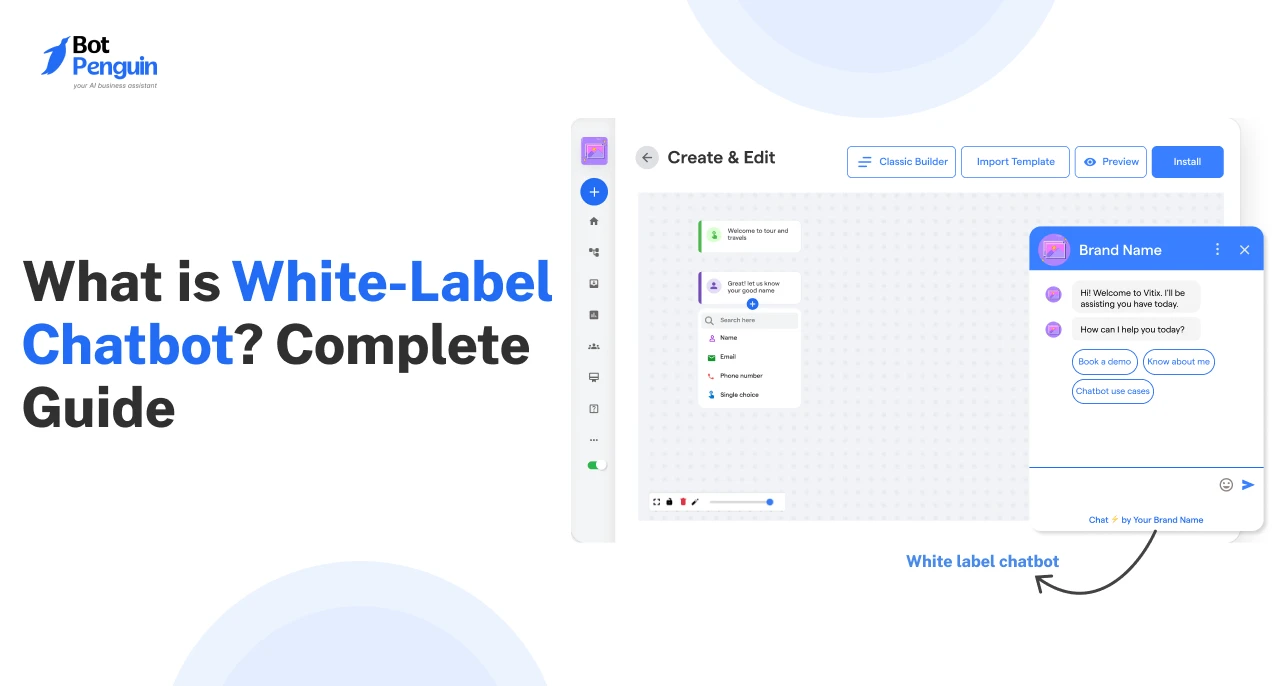
With a whitelabel chatbot platform, you can sell AI chat services under your own brand, without building any of the underlying technology yourself.
This guide explains what a white label chatbot is, how it works, who uses it, its benefits and limits, and how it compares to a custom build.
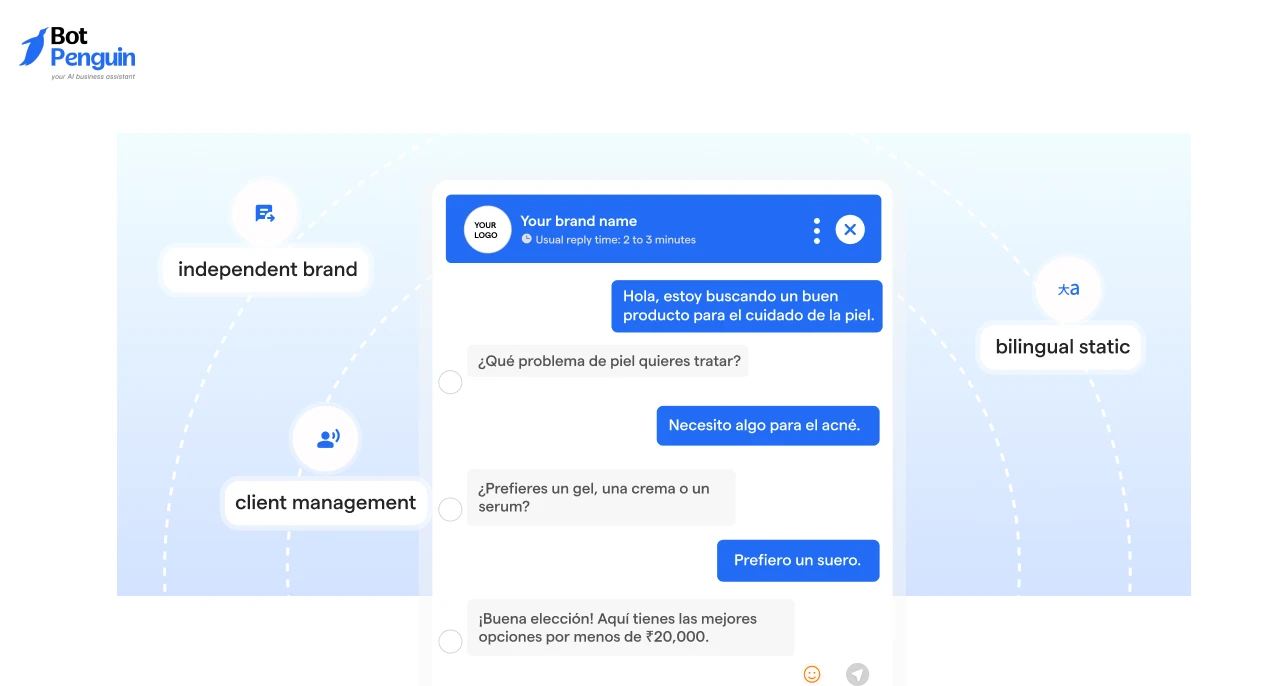
A white label chatbot is an AI chatbot built by a SaaS provider that a business licenses, rebrands, and resells under its own name.
You apply your own domain, logo, and color scheme, and the underlying vendor stays invisible to your clients. Agencies, IT consultants, and SaaS companies use it to offer chatbot services without building the technology themselves.
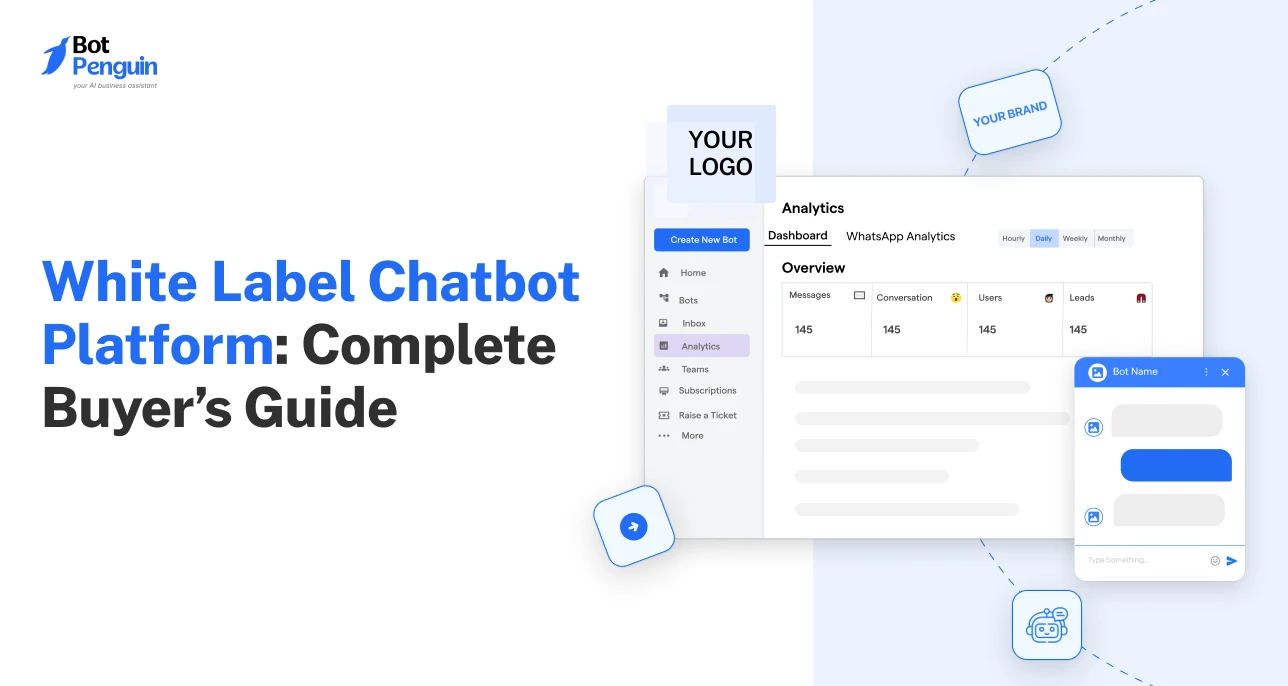
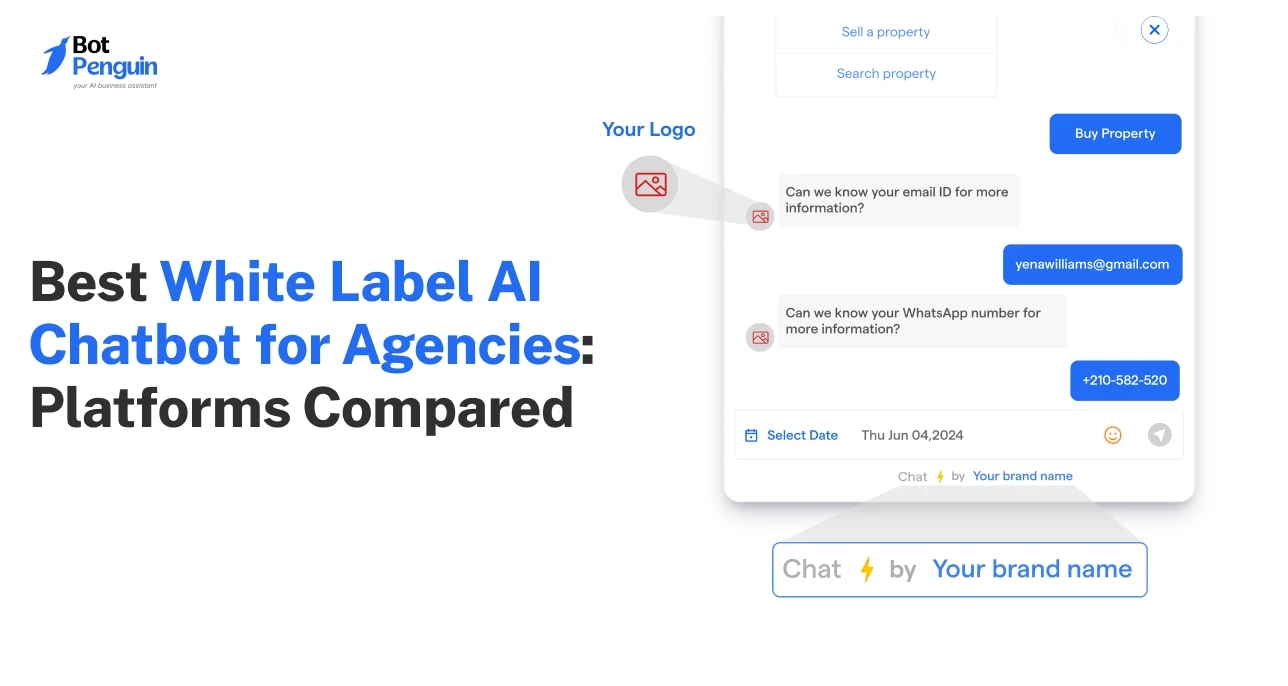
A true white label chatbot gives you full control over the client-facing experience, including,
This is what separates a white-label chatbot from simple reselling or basic rebranding, since the platform is fully yours from the client's point of view, even though someone else built it.
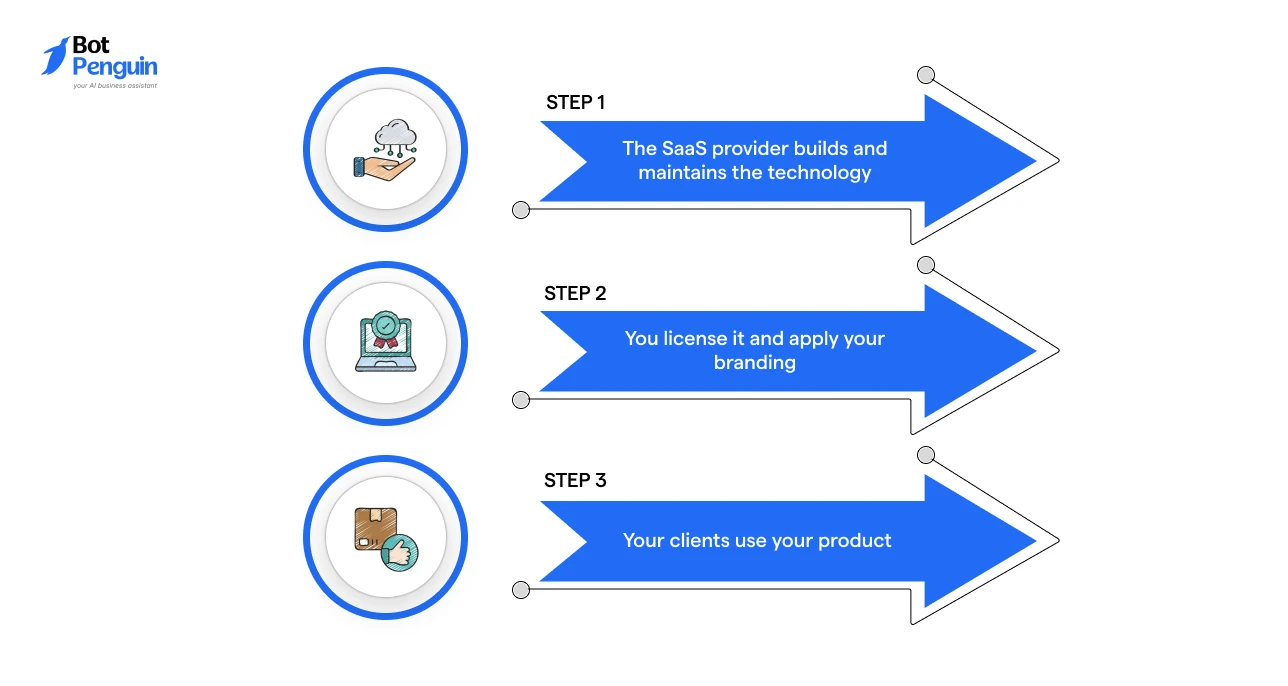
Three steps cover the entire model:
AI models, hosting, updates, bug fixes, and uptime, all handled on the vendor's end. You never touch the infrastructure.
Your custom domain. Your logo. Your color scheme. Your client portal. Every touchpoint your client sees carries your identity and your branding control, not the vendor's.
They log in, manage their chatbot, and interact entirely within your branded environment. The SaaS platform running underneath stays invisible.
The result is a fully functional AI chatbot product under your name, without a single line of code written by your team.
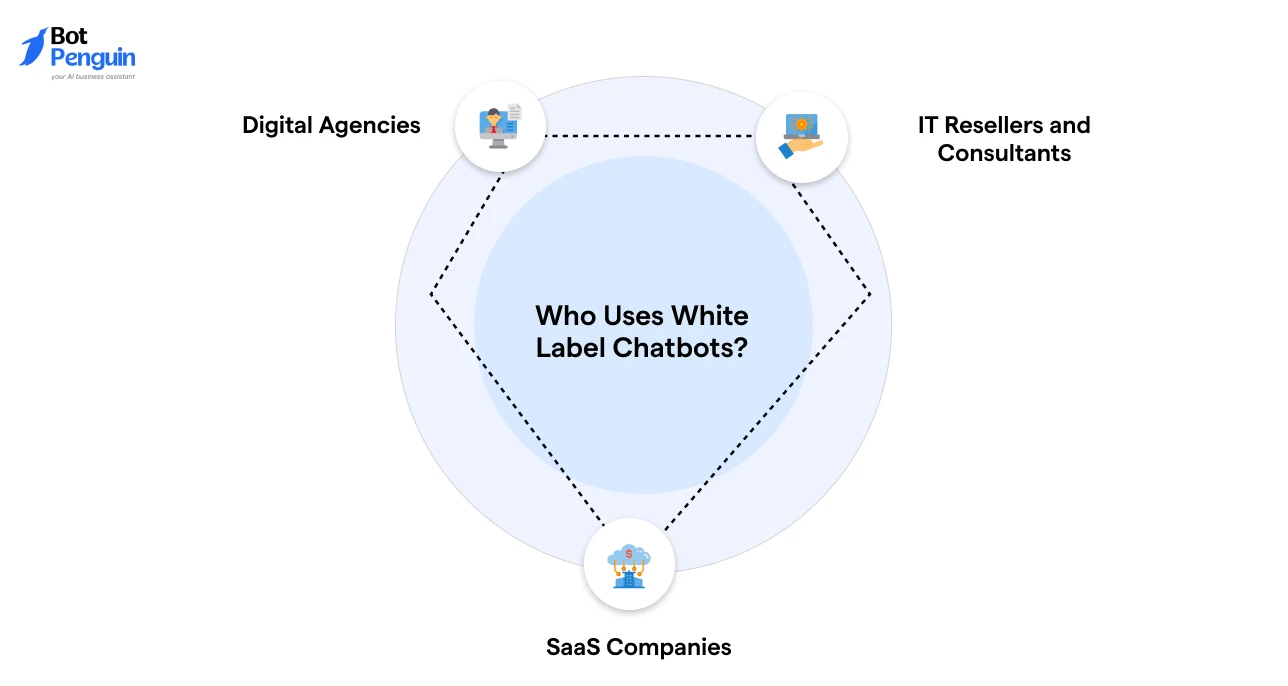
The model works across multiple business types, most commonly digital agencies, SaaS companies, and IT resellers or consultants. Here's how each one typically uses it.
A 10-person marketing agency wants to add chatbot services to its client packages. Instead of hiring developers or building from scratch, it licenses a white label platform, applies its own branding, and offers chatbots at $300 per month per client.
The agency manages all client accounts from a single reseller dashboard. Each client sees the agency's logo, domain, and portal. The underlying SaaS vendor is never visible.
With 10 clients, that is $3,000 in monthly recurring revenue from a product the agency did not build.
A CRM company wants to add an AI assistant as a premium feature inside its existing product. Building one in-house would take 12 months and significant budget. Instead, it integrates a white label AI chatbot, applies its own UI and branding control, and launches it as a native product feature within weeks.
Its customers see a fully branded AI assistant. The CRM company owns the client relationship. The vendor stays invisible. The result is a new revenue tier without a new engineering team.
A freelance IT consultant works with local businesses, restaurants, clinics, and retail shops. Each client needs automated customer communication, but has no technical resources to manage it.
The consultant licenses a whitelabel chatbot platform, sets up each client on a separate account through the reseller dashboard, and charges a monthly management fee. This is a common approach for resellers, allowing them to manage multiple clients efficiently while generating recurring revenue.
Every client interacts with a chatbot branded to their own business. The consultant runs the entire operation from one login.
If any of these scenarios match your situation, the next section will tell you exactly what to look for in a platform.
Use Cases of a White Label Chatbot
Beyond who resells it, here's what the chatbot itself typically does for the end client.
White label chatbots help agencies, SaaS companies, IT consultants, and resellers enter the chatbot market without building their own platform from scratch.
They make it easier to launch branded chatbot services, serve multiple clients, and create recurring revenue. But they also come with practical limits around backend control, platform dependency, customization, and client support.
The main benefits of white label chatbots are faster launch, lower development cost, branded client ownership, recurring revenue, and easier expansion across different industries.
A white label chatbot lets you start offering chatbot services without building the software from zero.
You can add your own logo, brand name, domain, colors, and client-facing experience while the provider manages the core platform in the background.
Building a chatbot platform requires developers, AI setup, integrations, hosting, security, testing, and ongoing maintenance.
A white label setup reduces this cost because the main technology is already built. You spend more time selling, configuring, and managing client solutions instead of developing the platform yourself.
White label chatbots work well for agencies, consultants, and SaaS resellers because they can be sold as monthly service plans.
Instead of charging only for one-time chatbot setup, you can package chatbot automation with support, optimization, integrations, and reporting.
With a white label chatbot, clients see your brand instead of the backend provider’s brand.
This helps you own the customer relationship, build trust, and position chatbot automation as part of your wider service portfolio.
A white label chatbot can be configured for different use cases across industries.
You can create chatbot solutions for lead generation, customer support, appointment booking, ecommerce queries, WhatsApp automation, FAQs, and sales qualification without rebuilding the system each time.
In short, the biggest benefit of a white label chatbot is speed. It helps you launch faster, brand the experience as your own, and sell chatbot services without carrying the full cost of software development.
The main limitations of white label chatbots are platform dependency, limited backend control, customization boundaries, onboarding effort, and ongoing client support responsibility.
A white label chatbot gives you control over branding and the client-facing experience, but the core infrastructure still belongs to the provider.
If your business needs complete backend ownership, custom architecture, or deep platform-level changes, a fully custom chatbot platform may be a better fit.
Your service quality depends on the white label provider’s uptime, roadmap, support, integrations, and technical reliability.
Before choosing a platform, check how stable it is, how often it updates, what integrations it supports, and how responsive its support team is.
Most white label chatbot platforms allow branding, domain setup, chatbot flows, client accounts, integrations, and dashboard access.
However, highly advanced features, custom backend logic, unusual integrations, or deep UI changes may still need provider support or custom development.
A white label chatbot does not remove the need for planning.
You still need to understand the client’s business, define use cases, design conversation flows, configure automations, test responses, and train the client’s team.
If you sell chatbot services under your own brand, clients will usually expect support from your team.
Even if the provider handles the backend, you need a clear process for onboarding, troubleshooting, reporting, billing, and account management.
In short, the biggest limitation of a white label chatbot is dependency. You can own the brand and client relationship, but the platform’s reliability, flexibility, and roadmap still matter.
Overall, a white label chatbot is useful when you want to launch and resell chatbot services quickly. But it works best when you also have a clear plan for client onboarding, support, pricing, customization, and long-term service delivery.
These are the white label chatbot benefits that separate a true white label solution from a platform that just lets you change a logo.
Five criteria separate a true white label solution from a platform that just lets you swap a logo.
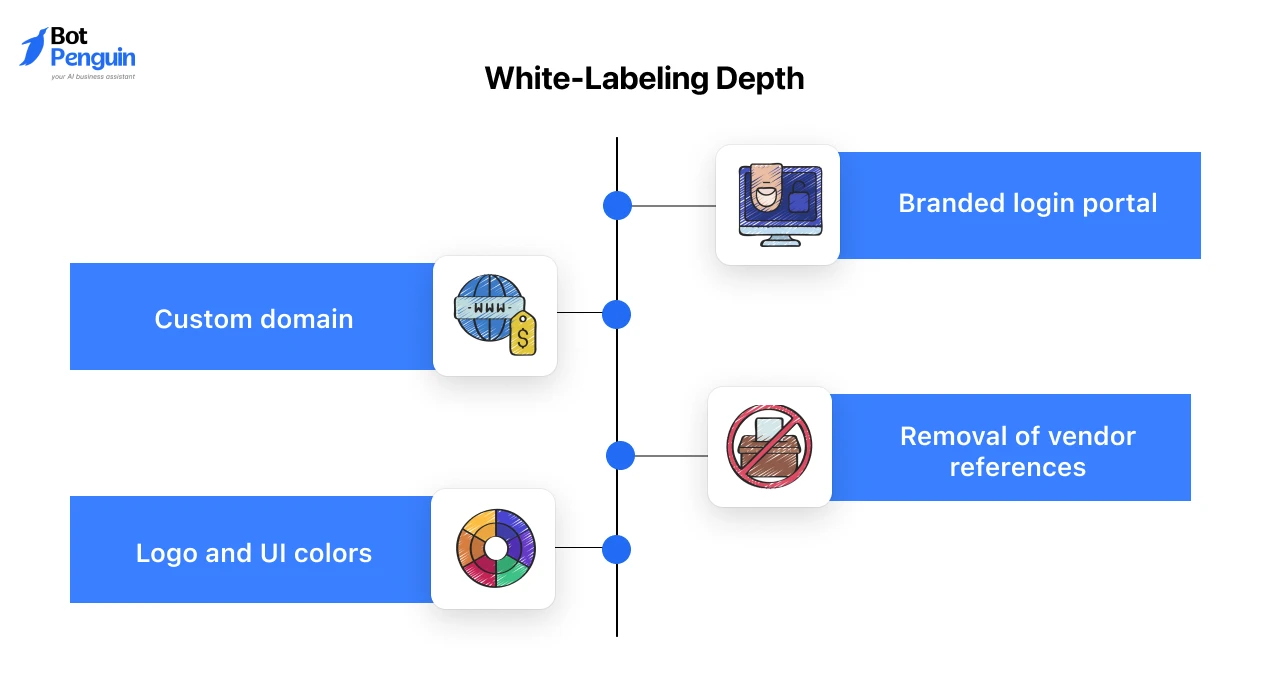
White-Labeling Depth
Verify the platform offers all four. If it can't, it isn't truly white label.
Web chat alone limits what you can sell. Look for support across the channels your clients use.
Agencies serving social-first brands can offer a white label Instagram chatbot to automate DMs, comment-triggered conversations, lead capture, and customer support under their own branding.
Agencies can also expand their offerings with white-label SMS marketing, allowing them to provide branded SMS campaigns alongside chatbot services.
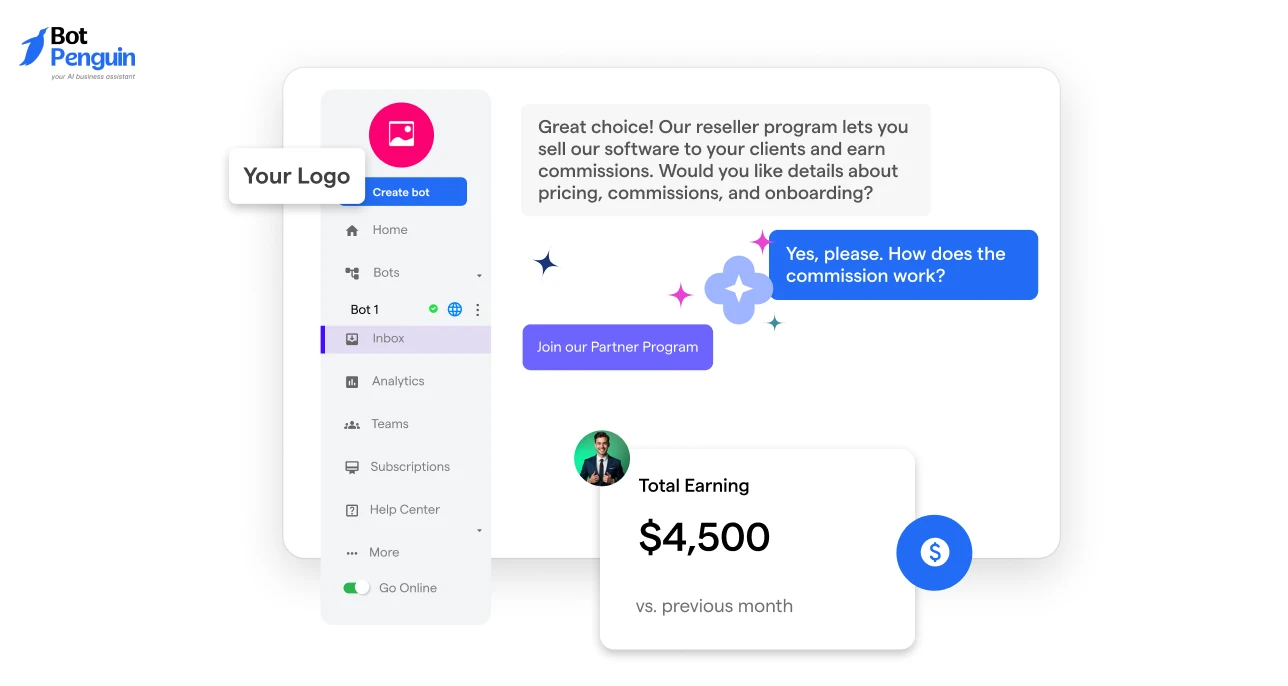
This is the operational core of the model. Without one, managing more than three or four clients gets difficult.
Integrations
Your clients likely already use a CRM, CMS, or e-commerce platform. Strong branding with weak integrations creates support headaches later.
Support and Pricing
A platform that's strong on branding but weak here will cost you time later.
For a full comparison, see our white label chatbot platform guide →
You know what a white label chatbot is, who uses it, and what to look for in a platform. Putting it into practice comes down to three steps.
1. Plan before you customize. Define your target clients, the use cases you'll offer (support, lead gen, booking), and what success looks like before you touch the branding settings.
2. Design the client-facing experience. Set up your domain, logo, colors, and portal, and map out the conversation flows your clients will actually see.
3. Train and test before launch. Run the chatbot against real scenarios, fix gaps, and confirm it handles your first client's use case cleanly before you sell a second one.
Ready to put this into practice? Explore BotPenguin's whitelabel chatbot program and pricing
A white label chatbot is an AI chatbot built on a third-party SaaS platform that you rebrand and deliver to clients as your own product. Its definition comes down to three things: licensed technology, your branding, and your client relationship. Used by agencies, SaaS companies, and IT resellers who want to offer chatbot services without building the technology themselves.
The process runs in three steps. The SaaS provider builds and hosts the technology. You license it, apply your branding, and set up a client portal under your domain. Your clients log in, manage their chatbot, and interact entirely within your branded environment. The underlying platform stays invisible throughout. Learn how to start a white label chatbot business here
A white label chatbot uses existing, proven technology rebranded under your name — faster to deploy and significantly cheaper. A custom-built chatbot is developed from scratch for maximum flexibility but requires 3 to 6 months and a significant development budget. For most agencies and resellers, white label is the faster and more practical choice.
White label chatbots are used by digital agencies adding chatbot services to their client offering, SaaS companies embedding chatbot capability into their product, and IT consultants building a chatbot business under their own brand. Any business that wants to deliver chatbot technology without building it from scratch is a strong candidate for this model.
A strong whitelabel chatbot platform should include custom domain support, full UI rebranding with your logo and colors, a reseller dashboard for managing multiple clients, support for key channels including web, WhatsApp, and Instagram, and transparent pricing that lets you build a profitable margin when reselling to clients.
Not exactly. Rebranding typically means changing a logo or color scheme on an existing product. A white-label chatbot goes further; it gives you full branding control, including a custom domain, a branded login portal, the removal of all vendor references, and a reseller dashboard to manage multiple clients. Rebranding is cosmetic. White labeling is structural.
The primary white label chatbot benefits for agencies are recurring revenue, zero development cost, and full branding control. An agency can onboard a client, set up a branded chatbot on a custom domain, and charge a monthly fee, all without writing a single line of code. The vendor handles infrastructure and updates. The agency owns the client relationship and the margin.
A regular chatbot platform keeps its own branding visible throughout the product. A white label chatbot platform removes all vendor references and lets you deploy the technology entirely under your own brand. Your clients see your domain, your logo, and your portal. For agencies and resellers building a product business, that distinction is the difference between selling a service and owning a product.
Yes. Most white label chatbot platforms support integrations with popular CRMs like HubSpot, Salesforce, and Zoho, as well as e-commerce platforms and messaging channels including WhatsApp, Instagram, and website live chat.
With BotPenguin Whitelabel Get
✔Your brand ✔Your pricing ✔Your Logo ✔Your Profits
Apply for White Label ProgramCheckout our related blogs you will love.
Updated at Oct 9, 2026
8 min to read

Updated at Oct 9, 2026
12 min to read
Updated at Oct 7, 2026
15 min to read
Updated at Oct 6, 2026
9 min to read
Updated at Oct 1, 2026
11 min to read
Updated at Sep 28, 2026
19 min to read
Table of Contents
