



How to Connect a Chatbot to Zapier (Step-by-Step Guide)
Updated at Oct 6, 2026
10 min to read
Zapier is a no-code automation tool that connects 9,000+ apps to automate repetitive work. A trigger in one app starts a workflow, called a Zap, which performs an action in another app. Businesses use Zapier to move data between tools automatically, reducing manual tasks, repetitive data entry, and everyday administrative work.
Most businesses use several tools that rarely work together smoothly. Teams often move leads, orders, spreadsheet data, and support information by hand.
That creates repetitive work and increases the risk of errors.
Zapier helps automate those handoffs by moving information between connected apps.
This guide explains how Zapier works, what businesses use it for, and what it costs. It also covers key benefits, common limitations, and practical automation tips.
Finally, you will see how Zapier can connect with a chatbot and support faster business workflows.
Zapier is a web-based automation platform founded in 2011. It connects business apps and automatically moves data between them. No coding or developer support is required for basic workflows. Users choose a trigger, define an action, and turn on the automation.
Zapier connects with more than 9,000 apps, including common business tools. According to Zapier, over 2 million businesses use the platform, including 69% of the Fortune 1000.
Zapier has also added newer AI products, including Zapier Agents and Zapier Chatbots. These tools build on the same automation foundation.
At its core, Zapier helps businesses connect tools and automate routine handoffs. That process starts with a trigger and the action that follows.
Zapier works by connecting apps and moving data between them automatically. Each automated workflow is called a Zap.
At a basic level, every Zap starts with a trigger. More advanced Zaps can add multiple actions, filters, paths, and webhooks.
A trigger is the event that starts the workflow. This could be a new chatbot lead or form submission.
An action is what Zapier does next. It might add that lead to Google Sheets or a CRM.
A simple Zapier trigger and action could look like this: New chatbot lead → Add row in Google Sheets
Each successful action counts as a task in Zapier.
Advanced Zaps can perform several actions from one trigger. One lead could update a CRM and send an alert to Slack.
Filters stop a Zap unless specific conditions are met. Paths send different data through different workflow branches.
If an app lacks a direct connection, a webhook can transfer data between systems.
This structure makes Zapier flexible across simple and complex workflows. The next question is what businesses actually use those workflows for.
Businesses use Zapier to automate repeated handoffs between everyday tools. The goal is simple: move information without copying it manually.
Common examples include:
Lead management: Send new form or chatbot leads into a CRM. Sales teams receive lead details without manual entry.
Sales follow-up: Create deals, assign tasks, or trigger follow-up emails. This keeps prospects moving through the sales process.
Customer support: Turn messages into tickets and alert the right team. Support requests reach the correct people faster.
Reporting: Log orders, signups, or conversations in Google Sheets. Teams can collect reporting data without constant updates.
Marketing: Add subscribers to lists and start nurture sequences automatically. New contacts can enter the right campaign immediately.
Operations: Create calendar events, save files, or sync project tools. Routine administrative updates happen without repeated manual work.
These workflows show Zapier's main uses in practical terms. For more examples, see our guide to the most popular Zapier integrations. Next, consider what those automations actually cost.
Zapier pricing depends on the plan and monthly task usage. Each successful action can consume tasks from your account allocation.
Note: These are Zapier's starting prices as of September 2026. Higher task tiers increase the monthly cost.
The Free plan works well for testing basic automations. New accounts also receive a 14-day Professional trial. You don't need a credit card for that trial.
So, how much Zapier costs ultimately depends on workflow volume. That makes its benefits easier to judge alongside the price.
The main Zapier benefits come from reducing manual work between tools. This helps teams move faster without relying on developers.
1. Saves time: Zapier handles repetitive tasks automatically. Teams spend less time copying data between apps.
2. Connects disconnected tools: Zapier can link apps without native integrations. This keeps information moving across the tech stack.
3. Reduces manual errors: Automated data transfers avoid repeated typing. That helps keep records more consistent.
4. Speeds up business handoffs: Leads, tickets, and updates move instantly between teams. This reduces delays between systems and people.
5. Supports non-developers: Marketers, operations teams, and founders can build workflows. Most automations do not require coding.
SMBs and SaaS-heavy teams often benefit from Zapier's flexibility. Agencies can connect different client tools, while larger organizations can manage shared automations across teams.
These advantages matter most when repetitive handoffs happen every day. They also make Zapier's limitations worth understanding.
Zapier is easy to use, but it does have clear limits.
Costs rise with task volume: Each successful action can use a task. High-volume workflows can become expensive over time.
The Free plan is restrictive: It supports basic two-step Zaps and limited monthly tasks. That works for testing, not larger processes.
Complex logic gets harder to manage: Workflows with many branches or conditions can become difficult to maintain.
Polling can cause delays: Some triggers check for new data on a schedule. That means certain Zaps may not run instantly.
These limitations may lead some businesses to consider other automation platforms. Options like Make, n8n, and Pabbly Connect take different approaches to workflow building and pricing.
Understanding these limits helps teams build more reliable automations. A few practical habits can also prevent common Zap issues.
Reliable Zaps are easier to maintain when they stay simple. A few practical habits can prevent common failures.
1. Start with a two-step Zap: Get one trigger and one action working first. Add more steps only after testing.
2. Test with real data: Use a genuine example during setup. This helps confirm field mapping and expected outputs.
3. Use filters carefully: Filters stop unnecessary runs when conditions are not met. This can also reduce wasted tasks.
4. Name Zaps clearly: Use names that describe the workflow. Clear labels make troubleshooting much easier.
5. Check Zap history: Review recent runs and errors regularly. This helps catch broken connections early.
6. Share Zaps, not passwords: Use team sharing features where available. Avoid passing account credentials between users.
These habits improve reliability before workflows grow more complex. They also help when connecting Zapier with customer-facing tools like chatbots.
Chatbot events make useful Zapier triggers because they happen at key customer moments. A new lead or incoming message can start an automation immediately.
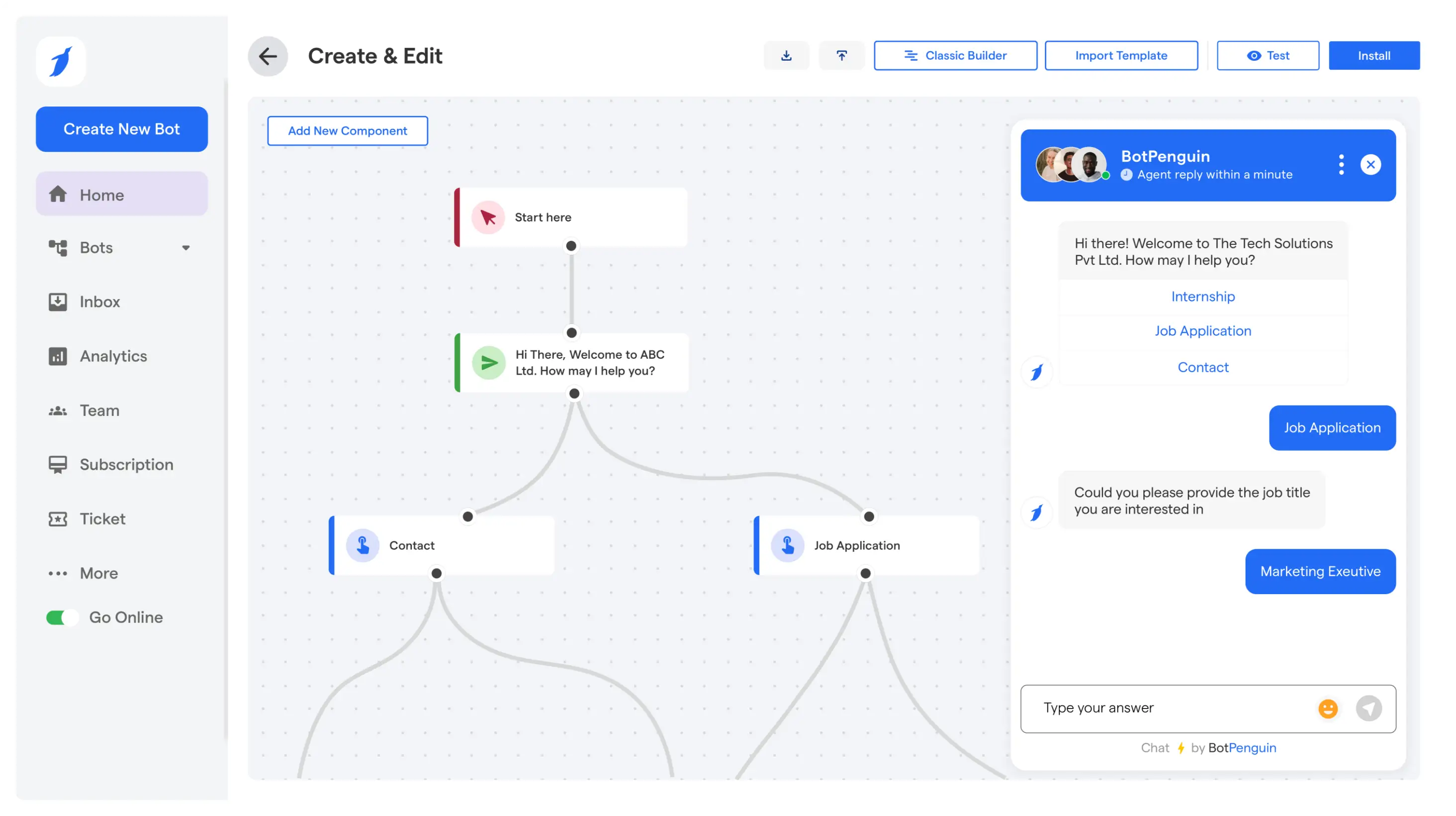
With BotPenguin, the connection uses your API key and Bot ID. You can then choose triggers such as New Contact Created or New Incoming Message. From there, Zapier can send captured data to other business tools.
For example, you can add a new lead to Google Sheets or HubSpot. The same event can also alert your team in Slack.
Zapier is available on BotPenguin's King plan.
For the full setup process, follow the step-by-step guide to connecting a chatbot to Zapier. You can also explore BotPenguin's Zapier integration to see supported triggers and workflow possibilities.
Once connected, chatbot activity can become part of broader business automation.
Yes. Zapier offers a free plan with 100 tasks per month and two-step Zaps. You need a paid plan for multi-step Zaps, premium apps, webhooks, and higher task limits.
Zapier is a privately held company founded by Wade Foster, Bryan Helmig, and Mike Knoop. Wade Foster serves as CEO, while the company remains privately owned.
No. Zapier is built for no-code automation. Most users create workflows by selecting apps, triggers, and actions from menus. Coding is only needed for advanced custom steps.
Yes. Zapier offers Team and Enterprise plans with shared workspaces, admin controls, SAML single sign-on, and broader collaboration features. Very complex workflows may still require custom development.
You can automate lead capture, CRM updates, Slack alerts, spreadsheet logging, and calendar events. Zapier is commonly used to move data between business tools without repeated manual work.
It depends on the trigger. Instant triggers run when new data is sent. Polling triggers check for updates on a schedule, and the interval depends on your Zapier plan.
For many small and mid-size businesses, Zapier is useful when teams repeatedly move data between tools. It is especially valuable when developer resources are limited.
The best approach is to start with one repetitive workflow. Automate a simple handoff first, then expand only when the process is reliable.
Zapier works well for leads, support updates, reporting, and routine operations. The value depends on how much manual work the automation removes.
Now you know what is Zapier and where it fits.
If customer conversations start in a chatbot, connecting BotPenguin with Zapier can extend those interactions into the rest of your business tools.
Connect Chatbots With Zapier
Use BotPenguin with Zapier to move chatbot leads, messages, and customer data into the business tools your team uses.
Explore Zapier IntegrationCheckout our related blogs you will love.
Updated at Oct 6, 2026
10 min to read

Updated at Oct 1, 2026
5 min to read
Updated at Sep 29, 2026
12 min to read
Updated at Jun 2, 2026
10 min to read

Updated at May 8, 2026
4 min to read
Updated at Apr 29, 2026
10 min to read
Table of Contents
