What Is WhatsApp for Healthcare and How Is It Used?
Why Would Someone Use WhatsApp for Healthcare? The Patient Perspective
How WhatsApp Works in Healthcare Operations
Top WhatsApp Use Cases Transforming Healthcare Communication
Real Benefits of Using WhatsApp in Healthcare: The Operational Perspective
Is WhatsApp HIPAA Compliant? Understanding Safety and Risks
Best Practices for Using WhatsApp Safely in Healthcare
When to Use WhatsApp vs Other Healthcare Communication Channels
Key Risks and Challenges of WhatsApp in Healthcare
The Bottom Line
Frequently Asked Questions (FAQs)
Share
WhatsApp for healthcare helps providers communicate with patients through a familiar messaging channel. They can use it for appointments, reminders, follow-ups, reports, and routine queries. Using WhatsApp Business and the WhatsApp Business API, healthcare teams can structure these interactions while applying consent, privacy, security, and escalation safeguards.
An average person spends more time on WhatsApp than on emails or phone calls.
Even when they need to talk about their health, messages, reports, and quick questions are being shared on an app never designed for clinical care. Yet again, when they need to reach their doctor, they’re stuck on hold or waiting days for a response.
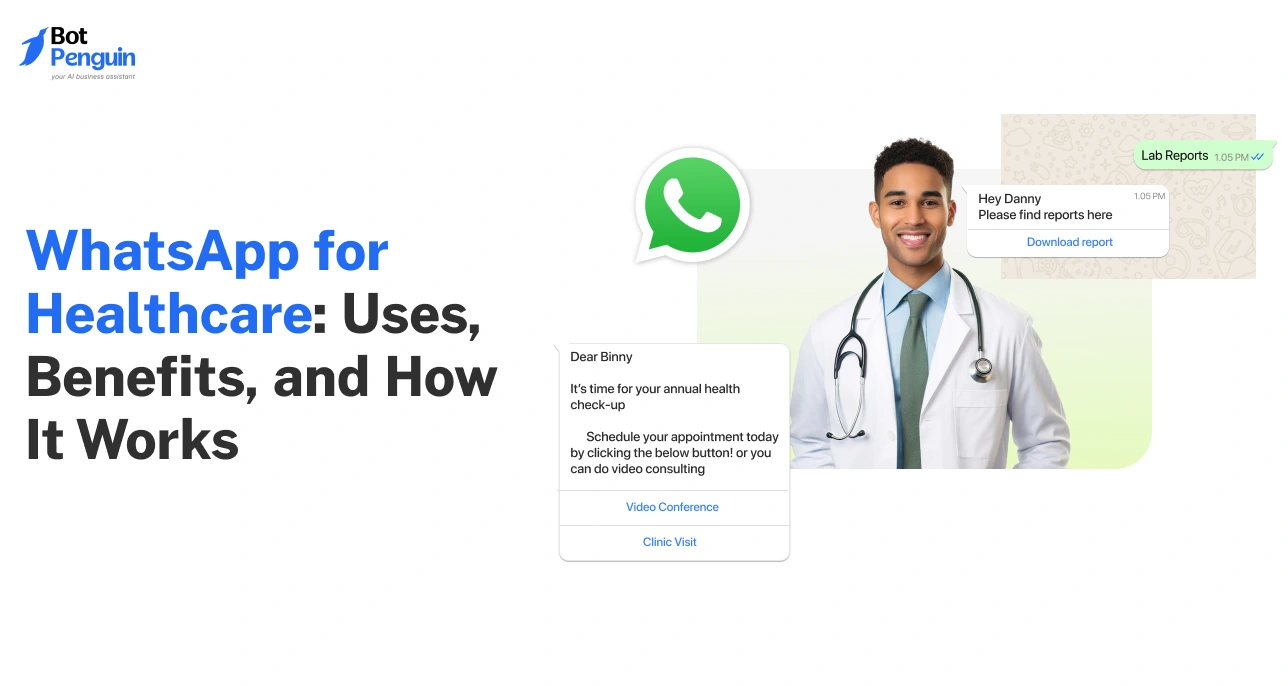
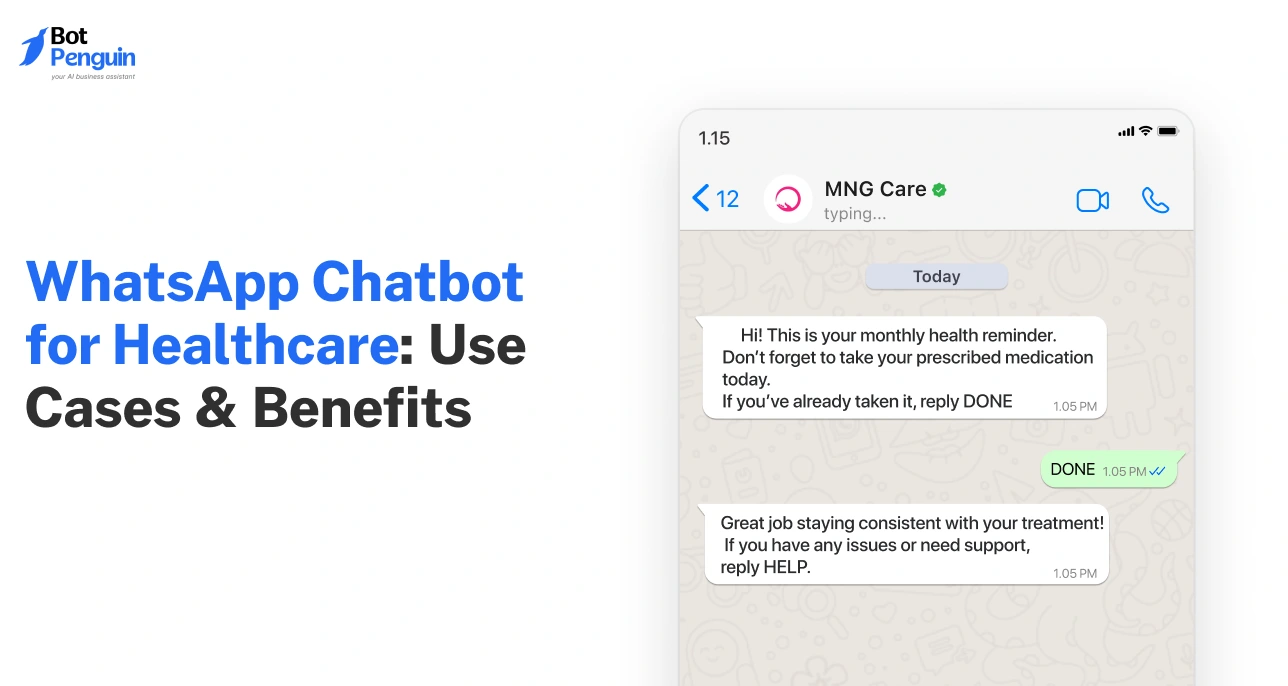
This is where WhatsApp for healthcare starts to change things. More healthcare providers are now using it to send reminders, share reports, answer questions, and book appointments.
This guide breaks down exactly how WhatsApp works in healthcare, what it can and can't do, and how to use it the right way.
What Is WhatsApp for Healthcare and How Is It Used?
WhatsApp in healthcare refers to using the messaging platform to communicate with patients quickly and conveniently. It includes sending appointment confirmations, reminders, reports, and answering basic queries.
At a basic level, it starts as simple messaging. But when combined with tools like WhatsApp Business API and automation, it becomes a structured communication channel.
Example: Instead of calling the clinic and waiting on hold to ask “Is my report ready?”, a patient simply messages on WhatsApp and gets an instant, automated reply with their result.
Where WhatsApp Fits in Modern Patient Communication
WhatsApp sits between formal clinical systems and everyday communication tools. It supports:
Instant, real-time patient communication
Pre-visit interactions like booking and reminders
Post-visit follow-ups and care instructions
Ongoing engagement, like preventive care messages
Quick query resolution without long wait times
Important: WhatsApp doesn’t replace hospital systems. It complements them by making communication faster and more accessible.
Healthcare providers exploring broader automation can also see how AI solutions for healthcare support patient communication and operational workflows.
WhatsApp vs Traditional Healthcare Channels: A Quick Comparison
When it comes to improving patient communication, it’s important to understand that the channel you choose shapes the entire experience, for both your team and your patients.
Here is how WhatsApp stacks up against the tools most healthcare providers already use:
Channel
Typical Use Case
Response Speed
Patient Convenience
Engagement Level
Automation Support
Scalability
Phone Calls
Urgent queries, direct consults
Medium (wait time)
Low
Medium
Low
Low
Email
Detailed communication, reports
Slow
Medium
Low
Medium
Medium
SMS
Alerts, reminders
Fast
High
Medium
Limited
High
Patient Portals
Medical records, secure access
Medium
Low
Low
Medium
Medium
WhatsApp
Messaging, reminders, support
Very Fast
Very High
High
High
High
Across every metric that matters to patients: speed, convenience, and engagement, WhatsApp consistently leads to faster responses, easier access, and higher engagement rates.
Why Would Someone Use WhatsApp for Healthcare? The Patient Perspective
Before anything else, you might wonder how healthcare and WhatsApp even add up. If you're a provider looking to improve patient communication, here's why it makes sense:
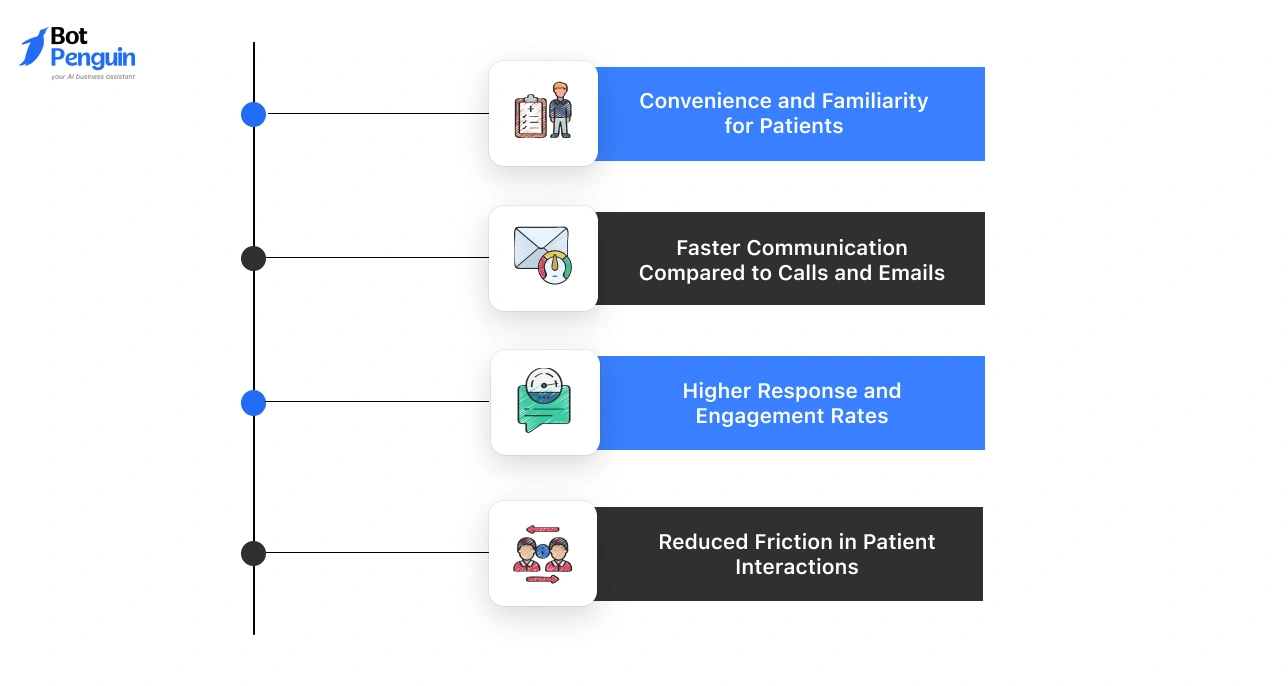
Convenience and Familiarity for Patients: Most patients already use WhatsApp daily. There's practically no learning curve, no new login, and no extra app to install, as opposed to patient portals or dedicated healthcare apps that many patients never fully adopt.
Faster Communication Compared to Calls and Emails: Messages are delivered instantly. Patients don’t have to wait on hold or check inboxes repeatedly. Providers can respond quickly, and even basic automation can handle common queries without delay.
Higher Response and Engagement Rates: Messages are opened and read within minutes. This leads to better follow-through on appointments, reminders, and care instructions.
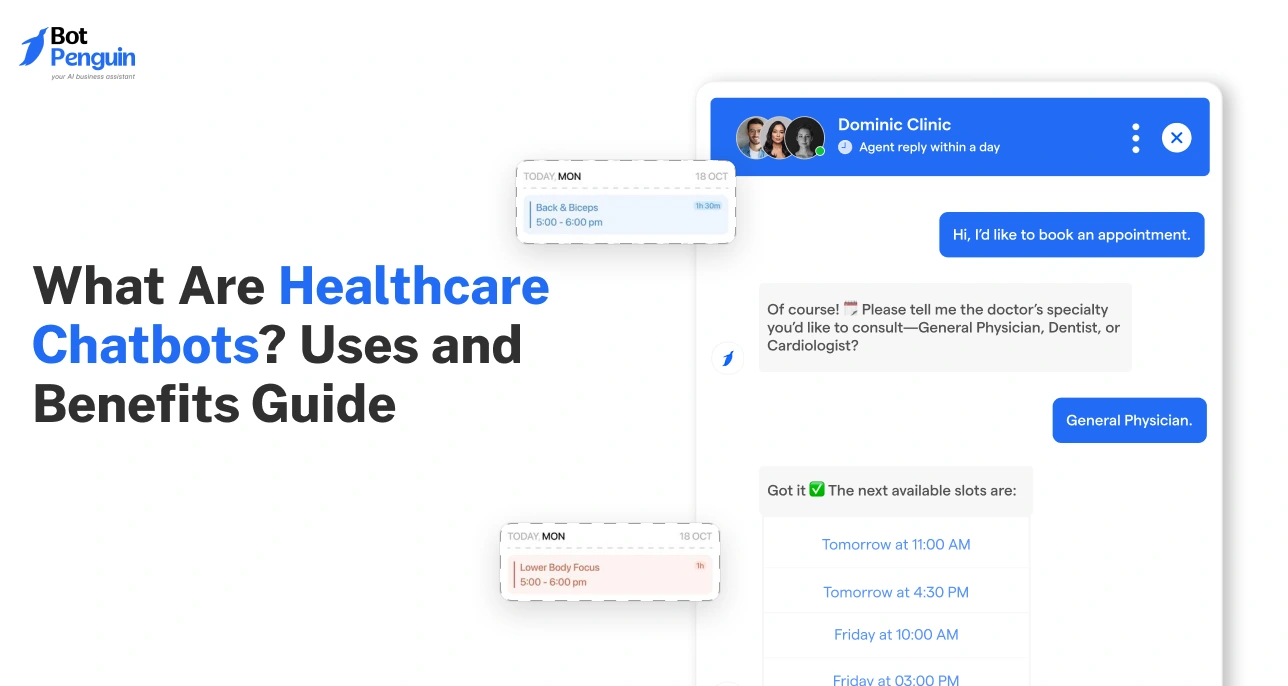
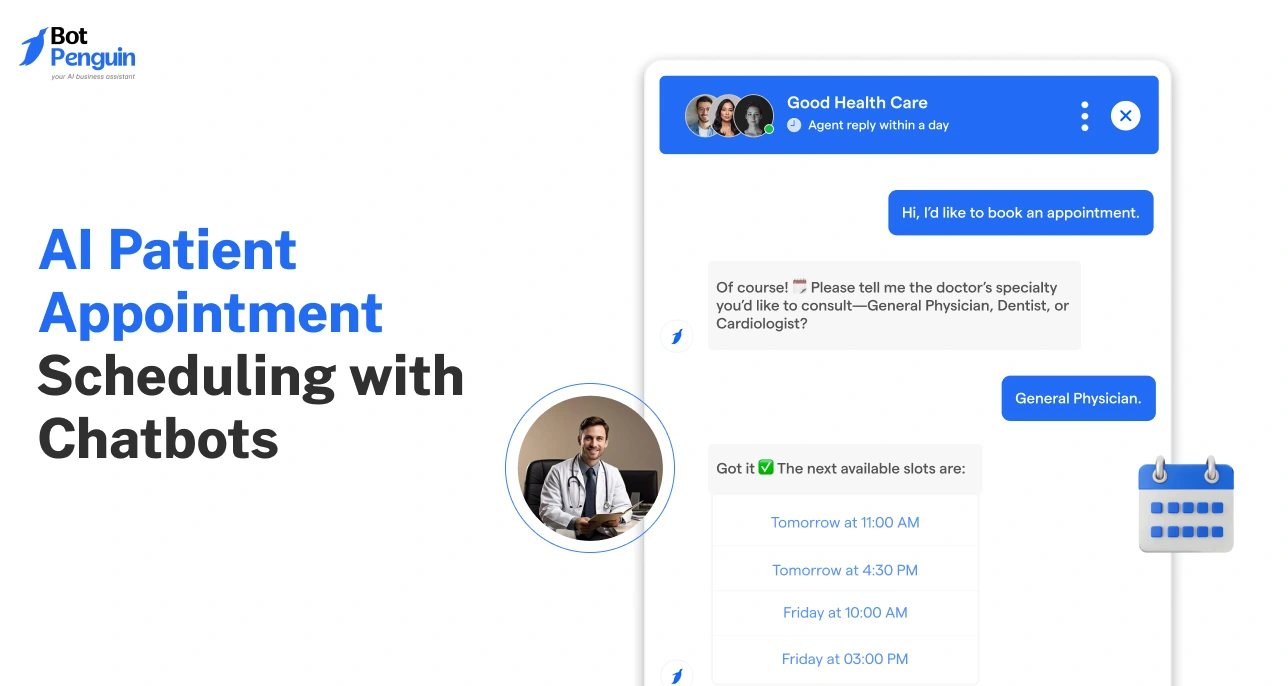
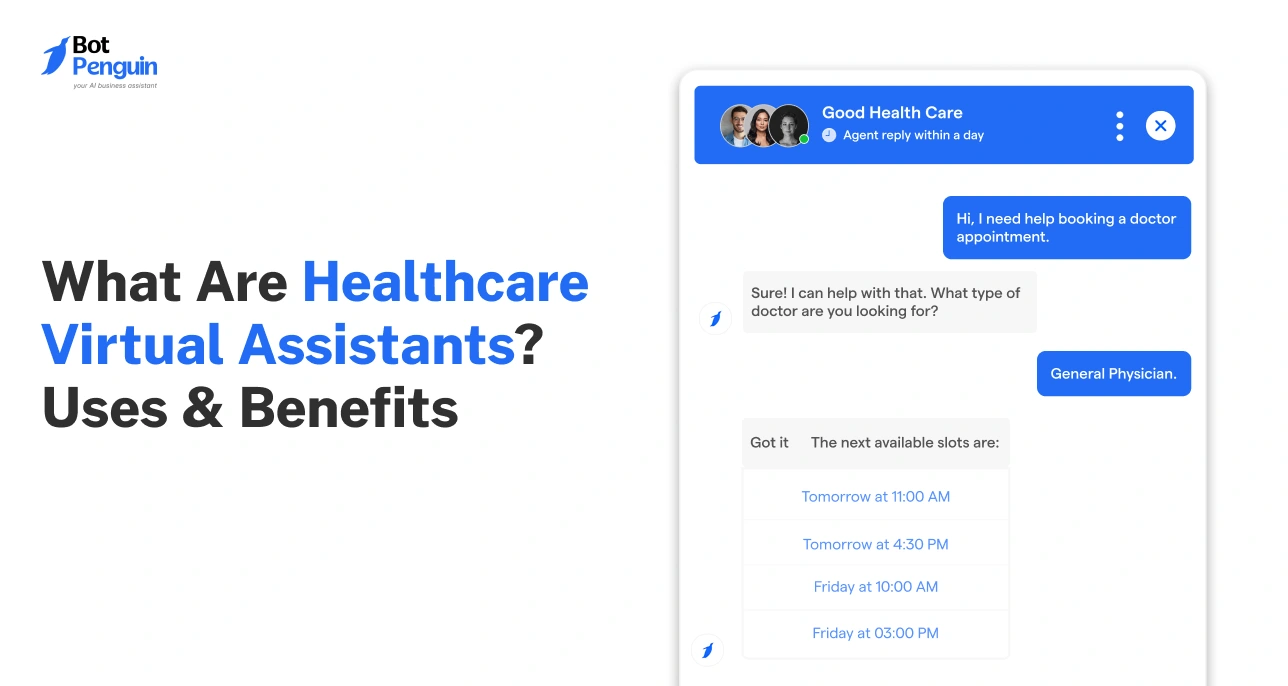
Reduced Friction in Patient Interactions: Booking appointments, asking questions, or sharing updates becomes easier on WhatsApp. For providers ready to automate these interactions, a WhatsApp chatbot for healthcare can handle routine bookings, reminders, and queries while reducing delays for patients and staff.
At its core, WhatsApp removes the friction that makes healthcare communication frustrating, and that alone is reason enough to take it seriously.
How WhatsApp Works in Healthcare Operations
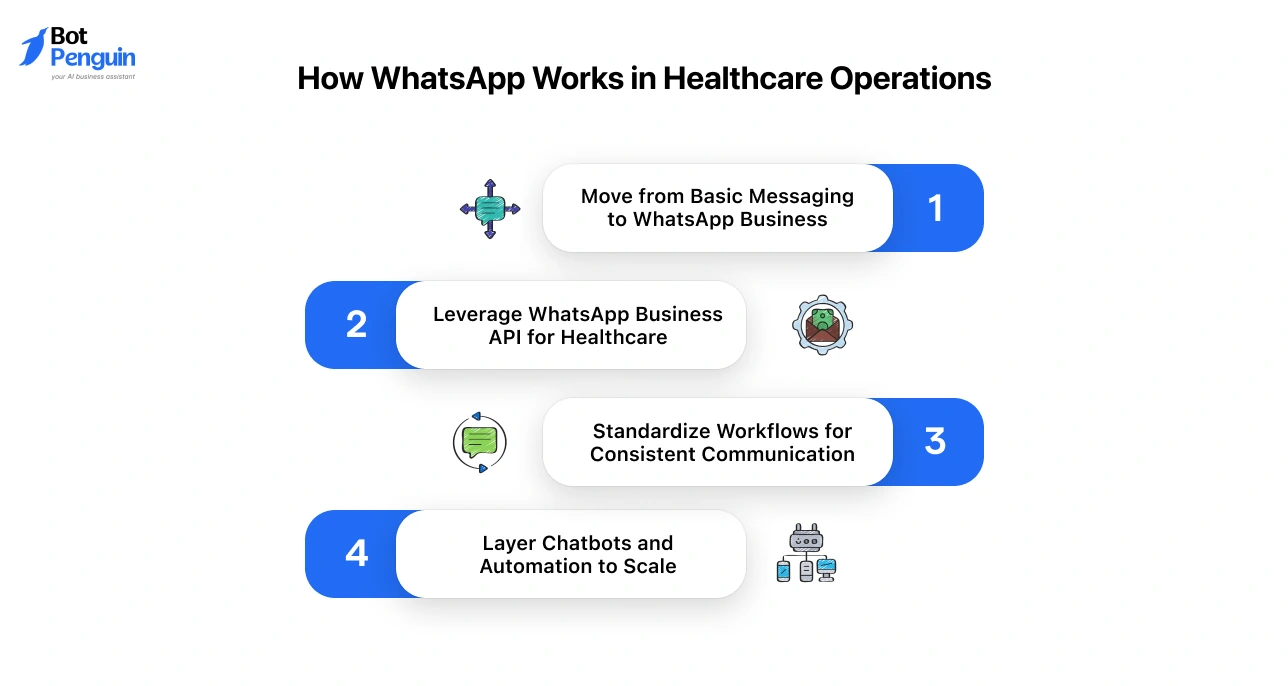
To use WhatsApp effectively in healthcare, communication needs to move from simple chats to structured workflows. Here’s how that typically happens:
Move from Basic Messaging to WhatsApp Business
Start with basic messaging for direct patient conversations.
Move to WhatsApp Business to organize chats using quick replies, labels, and a professional profile.
Leverage WhatsApp Business API for Healthcare
Adopt the API when patient volume increases.
Integrate it with your systems to manage multiple conversations, enable team access, and support secure, scalable messaging.
Standardize Workflows for Consistent Communication
Shift from replying manually to defining clear workflows.
Standardize key interactions like appointment booking, reminders, follow-ups, and query handling to reduce delays and missed messages.
Add Automation as Communication Volume Grows
Instantly answer common patient questions without manual effort.
Automate bookings, reminders, and follow-ups for consistent care.
Route patients efficiently and scale communication without adding staff.
This shift turns WhatsApp from a reactive tool into a reliable, scalable communication system.
Many providers these days leverage chatbot building platforms like BotPenguin with built-in WhatsApp integration. This allows them to automate bookings, reminders, and common queries directly on WhatsApp, making interactions faster, more consistent, and easier to manage at scale.
Streamline Healthcare Communication on WhatsApp
Top WhatsApp Use Cases Transforming Healthcare Communication
Healthcare communication is changing fast, and WhatsApp is at the center of it.
Beyond simple messaging, it streamlines workflows, engages patients, and improves care. Light automation and chatbots make these processes even more efficient.
Use Case
Description
Real-World Example
Appointment Booking and Confirmations
Schedule or confirm appointments instantly with chatbot support.
Clinic chatbot books slots and sends instant confirmation.
Automated Reminders and No-Show Reduction
Send automatic visit/test reminders to reduce missed appointments.
The hospital sends WhatsApp reminders 24 hours before visits.
Test Results and Report Notifications
Share lab or imaging results securely.
The diagnostic center sends test results as PDFs or links on the WhatsApp messaging platform.
Post Consultation Follow-Ups
Check recovery and provide instructions after visits.
Doctors send follow-up care messages after consultations.
Teleconsultation Support Workflows
Coordinate virtual visits and pre/post-consultation info.
Telehealth platform schedules appointments and shares forms.
Preventive Care Campaigns and Broadcasts
Share health tips, alerts, or wellness campaigns.
The clinic broadcasts flu vaccination reminders to patients.
Patient Query Handling and Support
Answer common questions instantly using chatbots.
Hospital FAQ chatbot guides patients on timings or symptoms.
How These Use Cases Work in Real Healthcare Settings
These use cases illustrate how WhatsApp moves beyond basic messaging to support structured communication across the patient journey.
Instead of handling interactions in isolation, healthcare providers can manage booking, consultation, follow-ups, and ongoing engagement within a single, continuous flow.
With the help of structured workflows and light automation, providers can:
Respond to patient queries faster without increasing staff workload.
Reduce missed appointments through timely reminders and confirmations.
Ensure patients follow care instructions with consistent follow-ups.
Maintain organized and reliable communication across all touchpoints.
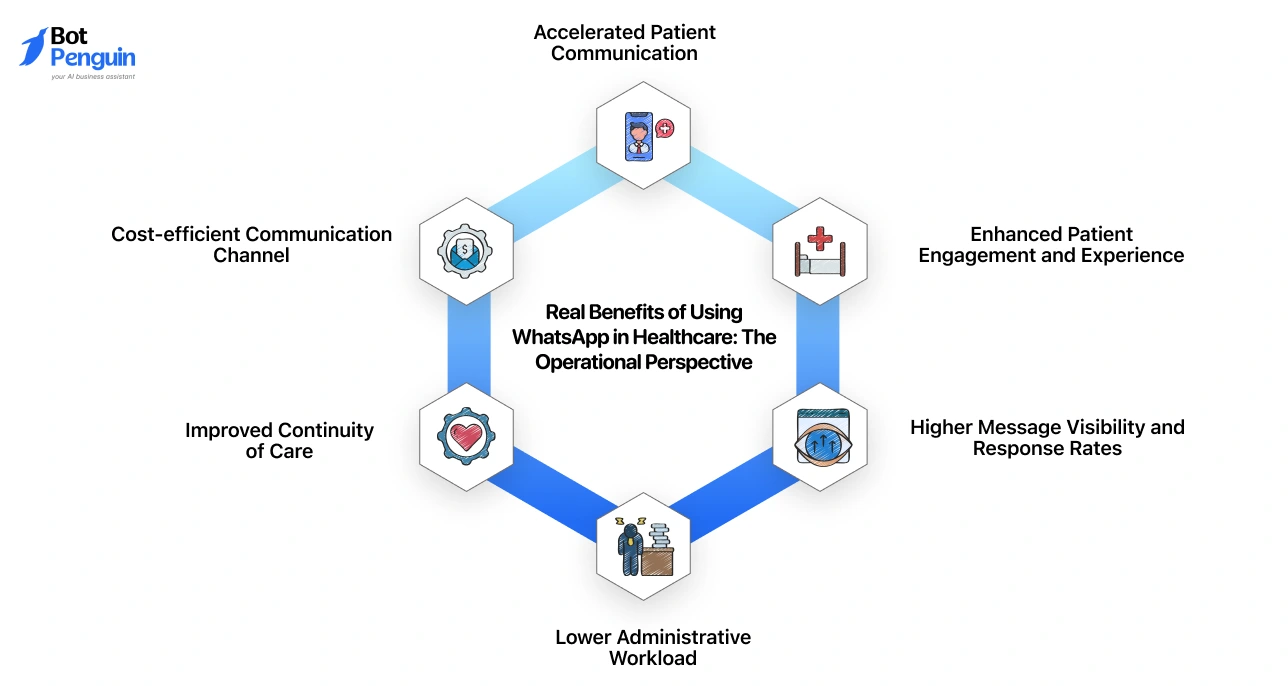
Real Benefits of Using WhatsApp in Healthcare: The Operational Perspective
WhatsApp isn’t just a messaging app; it’s a powerful tool for healthcare providers.
Healthcare providers can streamline communication, lower operational costs, and keep patients more engaged, all through a platform their patients already use every day.
Accelerated Patient Communication: Messages are delivered instantly, allowing patients to get answers, updates, and reminders without delays. This speed improves satisfaction and reduces waiting time for essential information.
Enhanced Patient Engagement and Experience: Patients feel more connected when they can reach their provider easily. Quick responses and personalized messages make interactions more meaningful and build trust.
Higher Message Visibility and Response Rates: WhatsApp messages are opened almost immediately, unlike emails that get buried. This leads to faster replies, better follow-through, and improved adherence to care instructions.
Lower Administrative Workload: Automation and structured messaging reduce repetitive tasks for staff. Routine reminders, confirmations, and FAQs can be handled without manual intervention, freeing teams to focus on more critical care activities.
Improved Continuity of Care: Providers can track conversations, follow-ups, and patient progress seamlessly. Patients receive consistent guidance across appointments, tests, and post-care interactions.
Cost-efficient Communication Channel: Using WhatsApp reduces reliance on phone calls, printed reminders, and other costly communication methods. It’s an affordable, scalable way to maintain ongoing patient contact without adding overhead.
These advantages reflect how the platform can transform patient communication into a more efficient and cost-effective system.
Likewise, research shows that 94% of patient interactions didn’t require agent support. A lab using WhatsApp saved $2.5M in support costs, reduced staffing needs by 20x, and saw 90% higher satisfaction. (Source: WebEngage).
Is WhatsApp HIPAA Compliant? Understanding Safety and Risks
Healthcare providers often wonder if WhatsApp is safe for handling patient information.
The short answer: standard WhatsApp is not HIPAA compliant. It lacks proper access controls, audit logs, and formal business agreements required for protected health information (PHI).
What About WhatsApp Business? The Reality Check
Even WhatsApp Business doesn’t automatically meet HIPAA requirements. While it offers features like labels, quick replies, and limited messaging management, it cannot guarantee full compliance on its own.
How to Close the HIPAA Gap with WhatsApp
While not compliant by default, WhatsApp can be used in a HIPAA-compliant way when combined with secure workflows and automation tools that address gaps in privacy and security.
Key requirements for WhatsApp HIPAA compliance include:
Access Controls: Limit who can view and send PHI.
Audit Logs: Maintain records of all communications.
Encryption vs Compliance Gap: End-to-end encryption helps, but administrative safeguards are still needed.
Patient Consent: Obtain explicit permission before sending health information.
Following these measures allows providers to use WhatsApp safely without violating regulations.
Best Practices for Using WhatsApp Safely in Healthcare
Using WhatsApp safely for a high-risk industry like Healthcare requires clear guidelines.
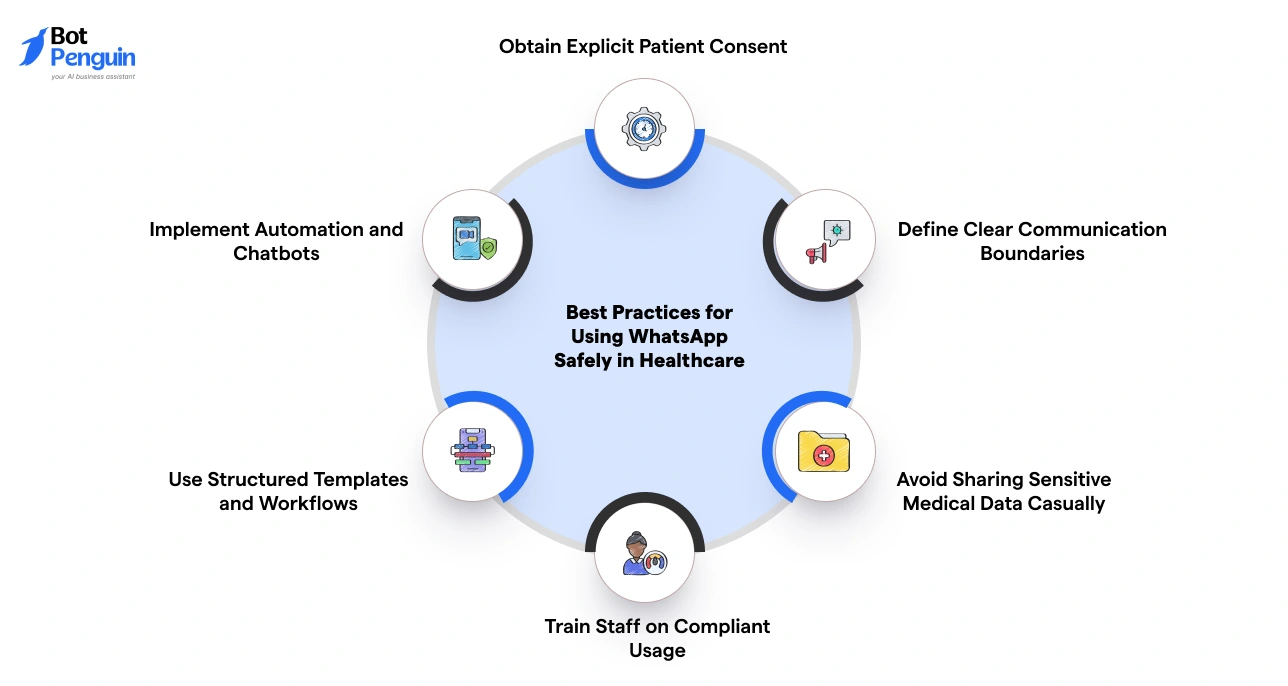
Following best practices helps protect patient data, maintain compliance, and ensure consistent workflows:
Obtain Explicit Patient Consent: Always confirm patients agree to receive messages, reminders, or updates via WhatsApp.
Define Clear Communication Boundaries: Set expectations on what can be discussed and when. For instance, limit responses to office hours and non-critical queries.
Avoid Sharing Sensitive Medical Data Casually: Use WhatsApp only for general instructions or appointment reminders. Critical health information should go through secure channels.
Train Staff on Compliant Usage: Regularly educate your team on privacy protocols and proper messaging practices to avoid mistakes.
Use Structured Templates and Workflows: Standardize messages for bookings, reminders, and follow-ups to reduce errors and ensure clarity.
Implement Automation and Chatbots: Automate FAQs, appointment scheduling, and reminders to maintain efficiency and scale communication without adding staff.
WhatsApp Safety Checklist
Use this checklist to ensure WhatsApp is safe, compliant, and efficient for patient communication:
Best Practice
Example
Obtain explicit patient consent
The patient replies “Yes” before receiving updates.
Define clear communication boundaries
WhatsApp for scheduling; urgent issues via call.
Avoid sharing sensitive medical data casually
Share reminders or instructions only.
Train staff on compliant usage
Hands-on workshops on proper messaging.
Use structured templates and workflows
Pre-approved templates for confirmations/follow-ups.
Implement automation and chatbots
Chatbots handle bookings, FAQs, and reminders.
These examples make it clearer how each best practice works in a real healthcare setting while staying concise and actionable.
By using custom chatbot building platforms like BotPenguin, providers can implement these best practices more consistently on WhatsApp. With built-in automation, templates, and workflow controls, it becomes easier to manage patient communication at scale while maintaining structure and reducing manual errors.
Scale WhatsApp Communication with Compliance-First Chatbots
When to Use WhatsApp vs Other Healthcare Communication Channels
While WhatsApp is highly effective for everyday interactions, it works best when used alongside other channels, each serving a specific purpose.
Here's a quick channel selection guide for you to reference when deciding how to reach your patients:
Channel
Best For
Avoid When
WhatsApp
Quick queries, reminders, follow-ups
Sharing sensitive medical records
Phone Calls
Urgent or complex discussions
Routine updates or high volume
Email
Detailed communication, documents
Time-sensitive interactions
SMS
Alerts, short reminders
Conversations or detailed info
Patient Portals
Secure records, clinical data
Quick, everyday communication
What This Means in Practice
No single channel can handle every interaction effectively. WhatsApp stands out for speed and accessibility, making it ideal for day-to-day communication.
However, sensitive, complex, or highly regulated interactions still require more secure or formal channels.
The most effective approach is to use WhatsApp as a front-line communication layer, supported by calls, email, and patient portals where needed.
Key Risks and Challenges of WhatsApp in Healthcare
While WhatsApp is convenient, it comes with challenges that providers need to address. Here’s a look at the key risks and ways to overcome them:
Data Privacy and Compliance Risks
Challenge: Standard WhatsApp doesn’t meet HIPAA or GDPR requirements, exposing sensitive patient information.
Fix: Use secure workflows, obtain patient consent, and integrate compliant automation tools to protect data.
Lack of Audit Trails and Documentation
Challenge: Messages are not automatically logged, making it hard to track conversations for legal or clinical purposes. For example, if a patient claims they never received post-surgery instructions that were sent over WhatsApp, there is no reliable record to refer back to.
Fix: Implement structured messaging platforms or automation that record all interactions and maintain proper documentation.
Scalability Challenges with Manual Communication
Challenge: Handling large volumes of messages manually slows response times and increases the chance of missed queries.
Fix: Introduce chatbots and automated workflows to manage routine interactions at scale.
Inconsistent Communication and Human Errors
Challenge: Manual messaging can lead to miscommunication, typos, or missed updates. Think of a staff member sending the wrong appointment time to ten patients, or forgetting to follow up with a patient after a test result was shared.
Fix: Standardize templates and protocols for common messages and queries.
Lack of Structured Workflows and Automation
Challenge: Without workflows, messages are reactive rather than proactive. For instance, a patient misses their follow-up appointment simply because no one remembered to send a reminder.
Fix: Use automated processes for appointment bookings, reminders, follow-ups, and query handling to ensure consistency.
This approach minimizes risk while keeping communication efficient and patient-friendly.
The Bottom Line
WhatsApp is already changing how healthcare communication works. It makes patient interactions faster, simpler, and more accessible. But on its own, it has limits.
To use it well, providers need clear guidelines, structured workflows, and a strong focus on privacy. Not every interaction belongs on WhatsApp, and knowing where it fits matters.
Going forward, its role will continue to grow with better integrations, smarter workflows, and stronger compliance measures. The opportunity is simple. Use WhatsApp where it adds speed and convenience, while relying on the right systems for sensitive and complex care.
Frequently Asked Questions (FAQs)
Is WhatsApp HIPAA compliant for healthcare use?
No, standard WhatsApp is not fully HIPAA compliant. It lacks audit logs and access controls, but can be used safely with proper workflows, consent, and compliant tools.
Can doctors use WhatsApp to communicate with patients?
Yes, doctors can use WhatsApp for basic communication like reminders and queries. While some patients look for a free doctor on WhatsApp, sensitive medical data should still be shared through secure, compliant platforms.
Why would someone use WhatsApp for healthcare communication?
Patients prefer WhatsApp because it’s fast, familiar, and easy to use. It reduces waiting time and makes appointment booking, reminders, and follow-ups more convenient.
Is WhatsApp Business better for healthcare providers?
WhatsApp Business offers features like quick replies, labels, and automation. It improves organization but still requires additional tools and workflows to meet healthcare compliance requirements.
Can patients get free doctor advice on WhatsApp?
Some providers offer basic guidance on WhatsApp, but full consultations are limited. For accurate diagnosis and treatment, patients should use formal telehealth or in-person services.
What are the risks of using WhatsApp in healthcare?
Key risks include data privacy issues, lack of audit trails, manual errors, and compliance gaps. Without structure and safeguards, patient information can be exposed or mismanaged.
How can healthcare providers use WhatsApp safely?
Providers should obtain patient consent, avoid sharing sensitive data, define clear boundaries, train staff, and use structured workflows to ensure secure and consistent communication.
3X Your Business Growth on WhatsApp
See how our chatbot automates replies, qualifies leads & books appointments on autopilot.