The Future of Facebook Chatbots: 6 Trends for 2026

Facebook

Updated On Jul 27, 2026

7 min to read

BotPenguin AI Chatbot maker

bp generic

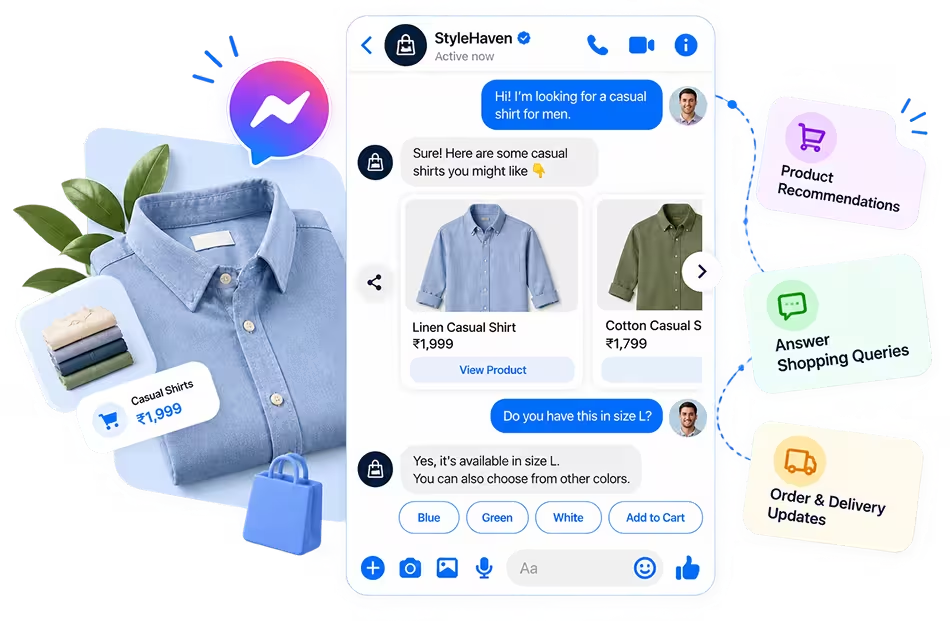
Facebook chatbots in 2026 are no longer limited to scripted Q&A flows.

The future of Facebook chatbots is moving toward smarter, more connected automation.

Bots can now understand context, take actions, and support customers across channels. They can also pass useful conversation data into sales and support systems.

This makes each interaction part of a wider customer journey. It also changes what businesses should expect from Messenger automation.

But first, understanding what a Facebook chatbot is right now helps show how sharply its role is changing.

Where Facebook Chatbots Are Heading in 2026

Better answers represent only one part of this shift. The future of Facebook chatbots now includes decisions, actions, and connected workflows.

Bots can initiate follow-ups and pass data into business systems. No-code tools also make advanced automation available to smaller teams.

The table below summarises the six shifts shaping Messenger automation.

Trend

Core Shift

Business Effect

AI agents

Fixed scripts become context-based decisions

Bots can complete more tasks

Cross-channel handoffs

Conversation context moves between channels

Customers avoid repeating information

Proactive triggers

Behavior starts relevant outreach

Businesses can respond earlier

No-code deployment

Business teams manage chatbot flows

Updates require less developer support

CRM and ads integration

Conversation data enters connected systems

Teams gain clearer customer information

Multilingual bots

One workflow supports several languages

Businesses can serve wider markets

The following trends explain how each shift changes customer engagement.

Trend 1: Facebook AI Chatbot Agents Replace Scripted Flows

Older Facebook bots relied on fixed decision trees. Every response followed a predefined keyword, button, or branch.

Unplanned questions often stopped the conversation. AI agents introduce a more flexible approach.

  • Context guides each decision: Agents assess intent, conversation history, and available customer data. They then choose the most suitable next action.
     
  • Tasks extend beyond answering:Facebook AI chatbot can qualify leads or book appointments. It can also create support cases and route complex requests.
     
  • Conversations become more complete: Customers can move through multiple steps in a single interaction. They no longer need separate flows for every possible question.
     
  • Human controls still matter: Set clear limits for sensitive or high-risk actions. Financial, legal, and account changes may need human approval.

Microsoft’s 2025 Annual Work Trend Index surveyed 31,000 workers across 31 countries. It found that 81% of leaders expect agents to enter their AI strategy within 12 to 18 months.


You should therefore assess outcomes, not answer quality alone. Start with one contained task and measure completion accuracy.

You can also refer to our guide, "Facebook AI chatbots explained," to compare agentic and scripted approaches.

Trend 2: Facebook Messenger Chatbot Handoffs Across Meta Channels

Customers often move between Facebook, WhatsApp, and Instagram. Their conversation history should not disappear during that move.

Cross-channel handoffs keep useful details available. This creates a more continuous customer journey.

Meta’s 2026 Business Agent update reflects this direction across Messenger, Instagram, and WhatsApp. Its platform also connects with systems such as Shopify and Zendesk.

  • Context follows the customer: Previous questions, preferences, and actions remain accessible. Teams avoid asking customers for the same details again.
     
  • Channel changes serve a purpose: Messenger may start the conversation. WhatsApp can then support reminders, updates, or longer follow-ups.
     
  • Shared systems connect conversations:Facebook Messenger chatbot can send details into a CRM. A unified inbox can also preserve useful interaction history.
     
  • Identity matching needs care: Confirm the customer before connecting records across channels. Incorrect matches can create confusing or unsafe conversations.

This approach matters when your business manages several Meta channels. Leads may arrive through Facebook ads but prefer WhatsApp later.

Define when each handoff should happen. Explain the next step before asking customers to switch. A strong handoff preserves progress without forcing customers to restart.

WhatsApp chatbot channel like BotPenguin’s can support service updates, reminders, and extended follow-ups.

Trend 3: Proactive Messenger Bot Triggers

Traditional chatbots wait for customers to initiate every conversation. Proactive triggers respond to behavior, inactivity, or business events.

This makes Messenger useful before another question arrives.

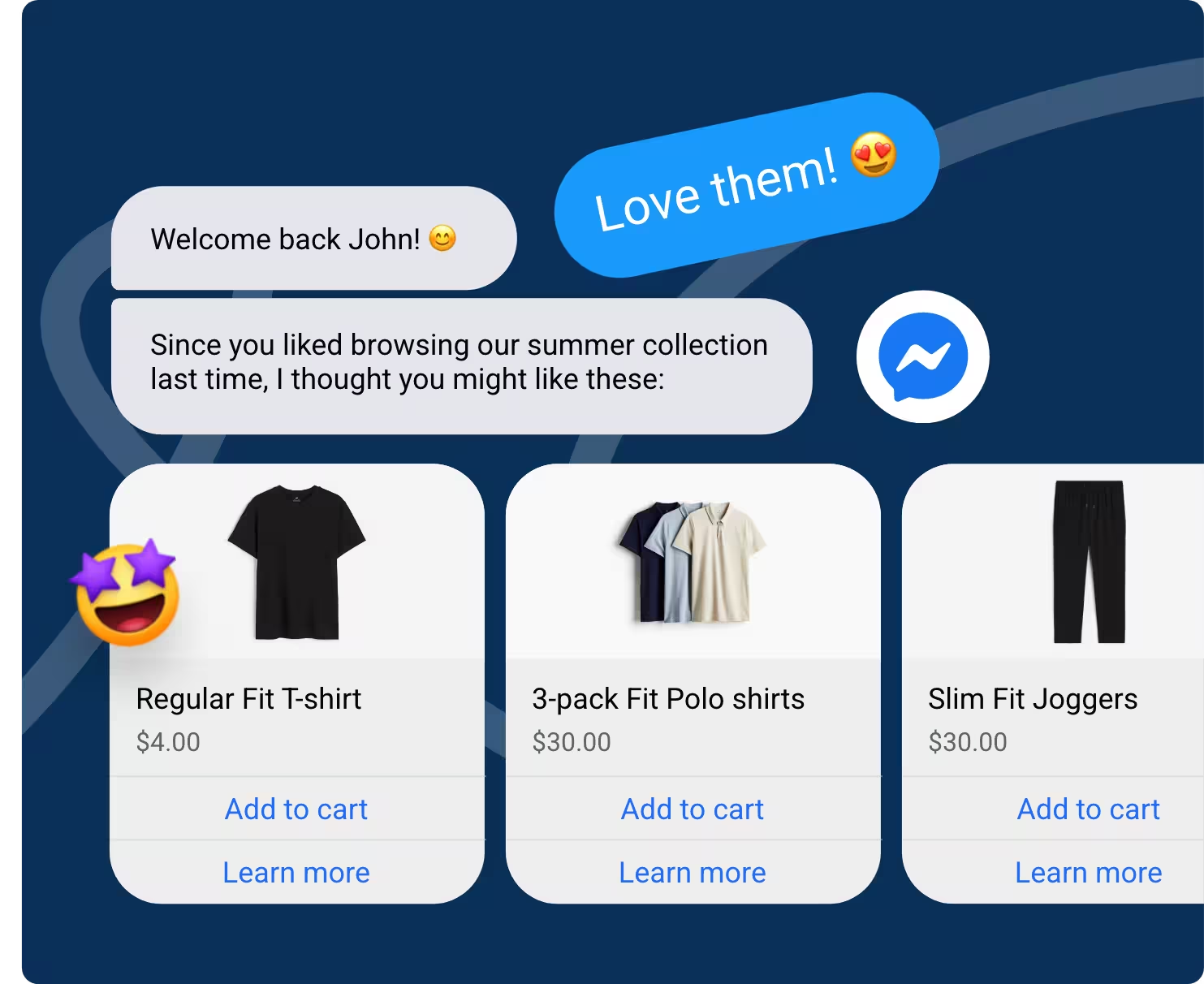
  • Cart activity can start reminders: A linked store may identify an incomplete purchase. The chatbot can then send an approved follow-up.
     
  • Inactivity can trigger re-engagement:Messenger bot may follow up after an unfinished form. It can also revisit an incomplete qualification flow.
     
  • Business events can start messages: Bookings may trigger confirmations or reminders. Orders may trigger status updates or support prompts.
     
  • Timing determines usefulness: One relevant message can restore customer interest. Repeated or poorly timed messages can weaken trust.

Proactive outreach still requires clear permission. Check current Meta rules, timing limits, and eligible message types before launch.

Customers should also have a simple opt-out method. This protects trust and reduces unwanted communication.

Begin with high-intent events rather than broad outreach. Track replies, completed actions, complaints, and opt-outs. These results show whether each trigger helps or interrupts customers.

The goal is timely support, not constant messaging.

Trend 4: No-Code Facebook Chatbot Builder Deployment Becomes Default

Facebook chatbot development once required technical support for every update. Visual builders now give business teams more direct control.

Marketing, sales, and support teams can manage many workflows themselves.

Reveal’s 2024 survey found that 71.8% of developers used low-code or no-code tools. Another 56.4% expected their usage to increase.

  • Visual tools replace manual coding: Teams can arrange messages, conditions, and handoffs visually. This makes basic flow changes easier to manage.
     
  • Updates reach customers faster:Facebook chatbot builder allows quick edits to questions and routing. Teams avoid waiting through development queues.
     
  • Time becomes the main barrier: Teams must still map journeys and write useful responses. Every flow also requires testing and ownership.
     
  • Developers remain important: Custom APIs, authentication, and complex data structures need technical input. Security-sensitive workflows also require careful review.

No-code tools remove much development work. They do not remove planning, testing, or accountability.

Choose a builder that matches your team’s actual skills. Test whether staff can update flows without external support.

Assign one owner for approvals and regular reviews. This keeps automation accurate when products or policies change.

Teams planning their first workflow can review our guide on how to create a no-code Facebook Messenger bot before building the flow.

Launch Proactive Facebook Messenger Chatbot With BotPenguin Today

Trend 5: Deeper CRM and Ads Integration

Chatbot conversations create valuable business data. That data becomes more useful when connected with sales and marketing systems.

The conversation should not remain isolated inside Messenger.

  • Lead details enter the CRM: Contact information can populate structured fields. Budget, location, interest, and timing can support qualification.
     
  • Sales teams receive useful context: Representatives can review conversation details before contacting leads. This reduces repetitive questions during follow-ups.
     
  • Pipeline actions happen earlier: Qualified conversations can update deal stages. Booked meetings can create tasks and assign owners.
     
  • Conversation signals support advertising: Customer interests may help create relevant audience segments. Consent and account eligibility must guide these uses.

Deeper connections reduce gaps between chatbot activity and business outcomes.

Meta for Business in 2026 reports that CRM-connected lead campaigns achieved 15% lower quality-lead costs. They also increased quality-lead conversion rates by 44%.

Marketing can identify which campaigns generate valuable conversations. Sales teams can also see which interactions produce qualified opportunities. Support teams receive clearer information before taking over.

Your implementation should define which data deserves storage. Collecting every message creates noise and increases privacy concerns.

Check field mapping, duplicate handling, ownership rules, and sync failures. These details determine whether connected data stays reliable.

The goal is useful data movement, not integration for its own sake.

Trend 6: Multilingual Messenger Bots Support Global Reach

Multilingual support once required separate flows for every language. Each update then created additional translation and maintenance work.

Modern systems can manage shared logic across several languages.

  • Language detection starts the experience: The bot can identify likely language preferences. Customers should still have a manual language selector.
     
  • Responses follow customer preferences: The system can remember a selected language. Later conversations can continue using that choice.
     
  • Shared workflows reduce duplication: Teams can manage one central conversation structure. Language versions can follow the same routing logic.
     
  • Local review protects accuracy: Direct translation may miss policies, payment terms, or cultural meaning. Important responses need market-specific review.

Multilingual bots can extend support across regions and time zones. They can also qualify international leads before routing them correctly.

Test slang, spelling differences, and mixed-language messages. Provide human escalation when language confidence remains low. Review transcripts regularly for weak translations and missing terminology.

Language count alone should not guide your choice. Accuracy, tone, workflow coverage, and escalation quality matter more. Start with languages supported by real customer demand.

These six trends now lead to a practical question: what should your business do next?

What the Future of Facebook Chatbots Means for Your Business Right Now

These shifts matter only when they improve real customer and team outcomes. Your next step depends on your current chatbot setup.

  • If you don't have a Facebook chatbot: Identify one repetitive customer journey first. Choose a task with clear value, such as lead qualification or support routing. Define success before selecting any tool.
     
  • If you still use a rule-based chatbot: Review where customers leave or request human help. Keep reliable scripted paths, but upgrade areas needing context or flexible responses. Test changes before expanding them.
     
  • If you are planning a new implementation: Map data sources, permissions, handoffs, and ownership early. Decide which actions the chatbot may complete independently. Set clear escalation rules for sensitive requests.
     
  • If you operate across several customer channels: Check whether customer details and conversation history remain connected. Standardize routing, consent handling, and agent access. Avoid making customers repeat information after switching channels.

The right setup should match your team, data, and customer journey. Start narrow, measure results, and expand only after the workflow proves useful.

You can add a Facebook chatbot today using BotPenguin's no-code builder and start with a single focused customer journey.

Frequently Asked Questions (FAQs)

What is the future of Facebook chatbots?

The future of Facebook chatbots involves AI agents that understand context, decide on next steps, and perform useful actions. These systems will connect more closely with Messenger, WhatsApp, Instagram, and CRM tools, and support workflows while maintaining human oversight when needed.

Will AI replace Facebook chatbots?

AI will not replace Facebook chatbots. It will become part of how they understand requests, select responses, and complete tasks. Scripted flows will still support predictable journeys, while AI agents handle conversations that require context, flexibility, or judgment based on available data.

Are Facebook chatbots getting smarter in 2026?

Yes. Facebook chatbots are becoming more capable in 2026. Instead of following only fixed branches, AI agents can assess context, remember earlier details, select appropriate actions, and complete more of the customer journey before involving a human support team member.

What is a proactive Messenger bot?

A proactive Messenger bot sends relevant messages after specific customer behaviors or business events. It may follow up after inactivity, remind shoppers about incomplete purchases, or send booking updates, provided that the outreach complies with Meta’s permissions and messaging policies before launch.

Can a Facebook chatbot work across multiple languages?

Yes. Modern chatbots can detect language preferences and respond in the customer’s chosen language. Businesses can manage shared workflows instead of duplicating every flow, but important responses still need local review for accuracy, tone, policy wording, and local cultural relevance.

Final Thoughts

A Facebook chatbot from 2020 and one from 2026 are not minor variations. They represent different categories of technology.

Older bots mainly followed scripts and answered predefined questions. Modern systems can interpret context, complete tasks, and connect customer conversations with wider workflows.

This shift changes how your business should evaluate chatbot software. Response speed still matters, but task completion and reliable handoffs matter more. Data controls, human oversight, and workflow ownership also require careful planning.

The future of Facebook chatbots will depend on practical outcomes, not novelty. Your business should start with one clear use case and expand based on measured results.

You can add a Facebook chatbot today with BotPenguin and build around one focused customer journey.

Build Smarter Facebook Chatbots for 2026 With BotPenguin

Keep Reading, Keep Growing

Checkout our related blogs you will love.

Table of Contents

BotPenguin AI Chatbot maker
    BotPenguin AI Chatbot maker
  • Where Facebook Chatbots Are Heading in 2026
  • What the Future of Facebook Chatbots Means for Your Business Right Now
  • BotPenguin AI Chatbot maker
  • Frequently Asked Questions (FAQs)
  • Final Thoughts