


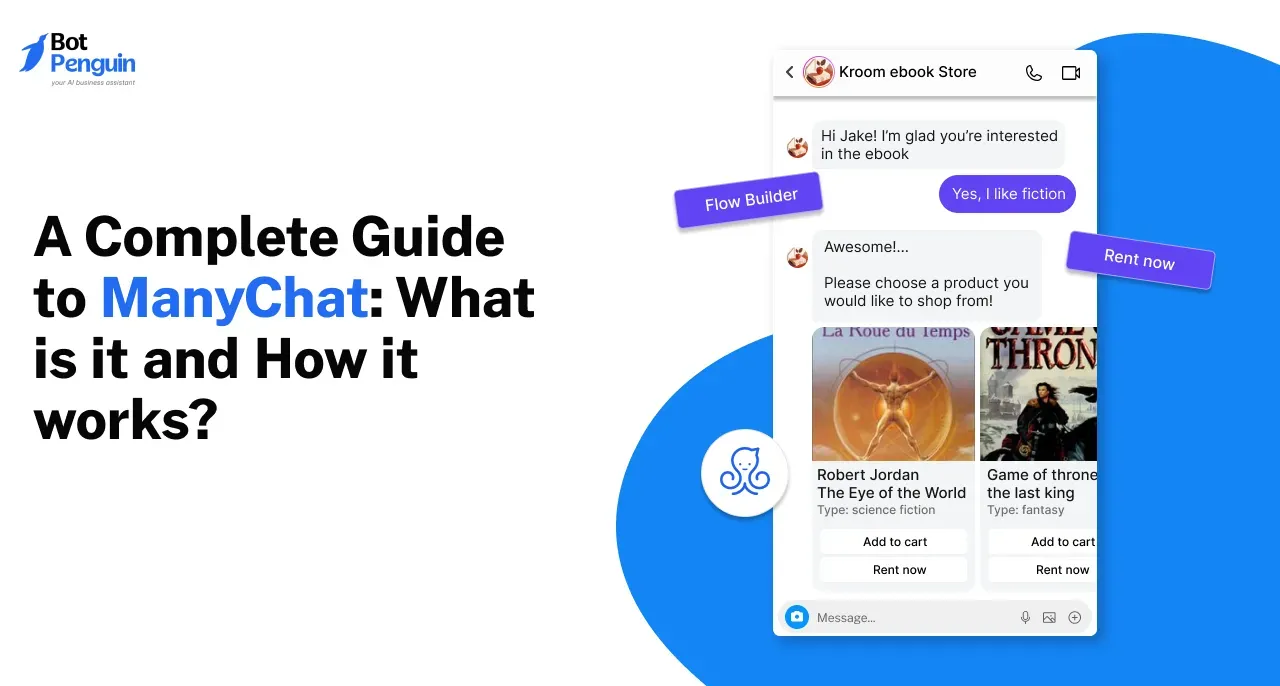
What Is ManyChat & How Does It Work? (2026 Guide)
Updated at Sep 28, 2026
8 min to read

This ManyChat review finds the platform worth considering for creators and businesses focused on Instagram and Messenger automation. Its fit depends on contact volume, AI needs, channel mix, and how much pricing predictability matters as workflows grow.
Rating: 4.5/5 (G2)
Best for: Social-first automation on Instagram and Messenger
Watch out for: Scaling costs, reporting depth, and broader workflow needs
ManyChat’s fame is no secret. Over the years, it has become a popular name in social media messaging. And for good reason.
ManyChat brings together messaging, marketing workflows, and AI features across channels like Instagram, WhatsApp, and Messenger.
But popularity is only part of the picture. What matters is how well the platform fits your goals, budget, and day-to-day needs.
So, is ManyChat worth it in 2026? Is it legit, safe, and genuinely AI-powered, or just riding on hype? And where do its pros and cons actually show up?
In this guide, you'll learn how ManyChat performs on features, pricing, AI capabilities, strengths, and limitations, so this ManyChat review can help you decide if it's worth it for your business.
For broader knowledge, explore our guide on what ManyChat is and how it works.
ManyChat is a cloud-based chatbot automation platform designed to turn social media conversations into leads and sales.
It enables businesses and creators to automate direct messaging across Instagram, Facebook Messenger, WhatsApp, and TikTok without coding.
ManyChat now serves over one million businesses worldwide, powering more than one billion conversations annually across 170+ countries, per its official website.
Here’s who ManyChat is best suited for:
Content creators use ManyChat to turn social engagement into subscribers and leads.
Automated triggers for post comments or Story mentions instantly deliver lead magnets, affiliate links, and freebies directly to DMs.
E-commerce brands leverage ManyChat to shorten sales cycles.
Triggering automated DMs when shoppers comment on posts delivers dynamic discount codes, recovers abandoned carts, and guides buyers directly to checkout links.
Social media marketers use ManyChat to maximize campaign ROI.
Interactive chat flows capture contact details, run preference quizzes, and nurture leads directly inside messaging apps.
Agencies deploy ManyChat as a scalable service to demonstrate client ROI.
Reusable campaign templates, CRM integrations, and performance tracking allow specialists to efficiently manage automated social flows for multiple clients.
Enterprise brands use ManyChat to standardize large-scale social campaigns.
Teams manage multi-influencer promotions, maintain messaging consistency, and convert social engagement into measurable customer intent across supported messaging channels.
If your goal is to transform passive social media engagement into trackable leads, direct sales, and loyal subscribers, ManyChat provides the scalable framework to do it on autopilot.\
Looking for broader AI automation beyond social DMs? Platforms like BotPenguin can be considered for multi-channel workflows, AI agents, and live support in one place.
Here’s a quick overview of where ManyChat’s core features fit best and what to watch for before using them:
*Disclaimer: Experiences vary by use case, so test ManyChat before deciding.
ManyChat's drag-and-drop Flow Builder lets teams map conversation paths without code.
Comment-to-DM turns Instagram and Facebook comments into direct message threads, moving prospects into private conversation instantly.
What We Found: Setup felt intuitive for simple flows, but branching logic got cluttered past five decision points.
Manychat AI drafts contextual replies and builds flows from plain-language prompts.
The platform supports Instagram, WhatsApp, Messenger, and TikTok, although TikTok automation remains limited in some areas.
What We Found: AI replies handled FAQs well but needed manual editing for anything brand-specific.
ManyChat's template library covers common use cases like giveaways, appointment reminders, and product drops.
Teams pick one close to their goal and adjust wording, buttons, and triggers.
What We Found: Templates saved setup time, though most still needed real customization to match our brand voice.
Broadcasts push one-time announcements to segmented audiences, while sequences send timed follow-ups over days or weeks, supporting both promotions and longer nurture journeys.
What We Found: Sequence scheduling was reliable, but the 24-hour messaging window limited broadcast flexibility.
ManyChat's contact management system stores contact details, tags, segments, and custom fields per subscriber.
Tags let teams segment audiences by behavior, purchase stage, or interest.
What We Found: Tagging was fast and flexible, but the CRM felt basic next to dedicated platforms.
ManyChat connects natively with Shopify, Google Sheets, HubSpot, and Klaviyo, plus hundreds more through Zapier and its API, syncing subscriber data across the marketing stack.
What We Found: Native integrations worked smoothly, but less common tools meant relying on Zapier, adding cost.
ManyChat's dashboard tracks flow performance, open rates, click-through rates, and subscriber growth, helping teams see which flows convert best over time.
What We Found: The dashboard covered basics well, but deeper funnel analysis required exporting data elsewhere.
Overall, ManyChat offers a strong social automation toolkit, but its value depends on how closely these features match your workflows and growth needs.
ManyChat balances fast setup and strong social automation with clear limits around scaling, reporting, and contact-based usage.
Here’s how to visualize its pros and cons in practice:
ManyChat is still worth considering for creators and small teams that value a no-code builder, comment-to-DM automation, templates, AI features, and multi-channel management.
Paid plans start at $17/month, while Pro adds AI and advanced automation at $39/month.
The trade-offs appear as workflows become more complex. Branching flows can get harder to manage, reporting has limits, and contact-based overages can raise costs as engagement grows.
Explore ManyChat pricing plans in this detailed guide.
Yes. ManyChat is a legitimate Meta Business Partner that connects through Meta’s official APIs.
It also supports major privacy and security standards, including GDPR, CCPA, SOC 2 Type II, and ISO/IEC 27001:2022.
Backed by an official Meta partnership and enterprise-grade security compliance, ManyChat is a legitimate and established automation tool with strong security and compliance credentials.
Still weighing options? Compare the best ManyChat alternatives to find the right fit for your business.
ManyChat works well for social-first automation, but its limits become more noticeable when teams need broader AI capabilities, broader business workflows, more flexible scaling, or workflows beyond social DMs.
That is where an alternative like BotPenguin can make more sense.
BotPenguin is built for businesses that want to manage chatbots, AI agents, live conversations, and automation across multiple channels from one place.
BotPenguin will not automatically be the better choice for every ManyChat user. But for teams that need more than social automation alone, its wider feature set and flexible channel options make it worth comparing before committing.
For a direct feature-by-feature view, see how BotPenguin compares with ManyChat.
This ManyChat review shows why the platform still earns its place for social-first automation in 2026. Its Flow Builder, comment-to-DM tools, templates, and integrations make everyday campaigns easier to manage.
The trade-offs show up as you scale. Costs can rise with contact growth, AI requires a higher paid plan, and broader workflows may need more flexibility.
For creators and teams focused on Instagram and Messenger, ManyChat remains a solid choice. For businesses that need wider channel coverage, including AI or more predictable scaling, it makes sense to compare a few alternatives first.
The best choice comes down to how you actually plan to use it.
ManyChat is worth it for creators and businesses focused on Instagram and Messenger automation. It becomes less attractive as contact costs rise, AI requires a higher paid tier, or broader channel coverage becomes important.
Yes. ManyChat is an established social automation platform and official Meta partner. It is generally considered safe and legitimate, although users should still review pricing, support quality, and channel-specific messaging rules.
ManyChat offers an easy Flow Builder, strong comment-to-DM automation, templates, and useful integrations. Its main drawbacks include contact-based pricing, AI access on higher paid plans, limited free-plan capacity, and relatively basic advanced reporting.
ManyChat offers a free plan, but its contact allowance is limited. It works best for testing basic automations. Growing businesses will usually need a paid plan as their contacts and automation requirements increase.
ManyChat combines rule-based automation with AI features. Its core workflows rely on triggers and flows, while AI can support contextual responses and automation creation. More advanced AI capabilities are available on higher paid plans.
ManyChat is both. It lets businesses build chatbot conversations while also automating comments, DMs, broadcasts, follow-ups, lead capture, and other messaging workflows across supported social and messaging channels.
The best alternative depends on your needs. BotPenguin suits businesses seeking broader channel coverage, AI features, unlimited leads, and flexible automation. Compare tools based on channels, pricing, integrations, and expected contact growth.
Looking for a ManyChat Alternative?
Build AI-powered chatbots across WhatsApp, Instagram, Facebook, websites, and more. Handle customer queries, qualify leads, book appointments, and manage conversations from one platform.
Explore Now!Checkout our related blogs you will love.
Updated at Sep 28, 2026
8 min to read

Updated at Aug 25, 2026
8 min to read
Updated at Aug 17, 2026
9 min to read
Updated at Aug 21, 2026
10 min to read
Updated at Jul 13, 2026
7 min to read
Updated at Jun 2, 2026
5 min to read
Table of Contents