

Facebook Ads Automation in 2026: Rules, Advantage+ and What Happens After the Click
Updated at Oct 10, 2026
23 min to read
A Facebook chatbot for SaaS is Messenger automation that screens prospects before sales engagement. It asks targeted questions about team size, needs, budget, and current tools, then sends each lead toward the right path, such as a demo, trial, or nurture flow.
A significant majority of SaaS buyers browse social media to discover new tools.
For SaaS brands, Facebook can be more than a place to run ads or share updates. It can be the first step in a sales journey, right inside a chat window. Prospects can discover your product, ask questions, and move toward a trial or demo without leaving Messenger.
A Facebook chatbot for SaaS turns this journey into a repeatable system. It qualifies leads, guides prospects through the right questions, and routes serious buyers straight to your sales team.
In this guide, you'll learn how to build a Messenger sales funnel for your SaaS business using Facebook lead automation, from setup to deployment.
New to Messenger automation? Start with what a Facebook chatbot is and how it works.
A Facebook chatbot for SaaS is an automated Messenger assistant that instantly chats with software prospects. It turns Facebook ad clicks and page messages into qualified leads, free trials, or booked sales demos on autopilot.
A WARC and Meta study found that 71% of adults are more likely to buy from a company they can message compared with one they can only call.
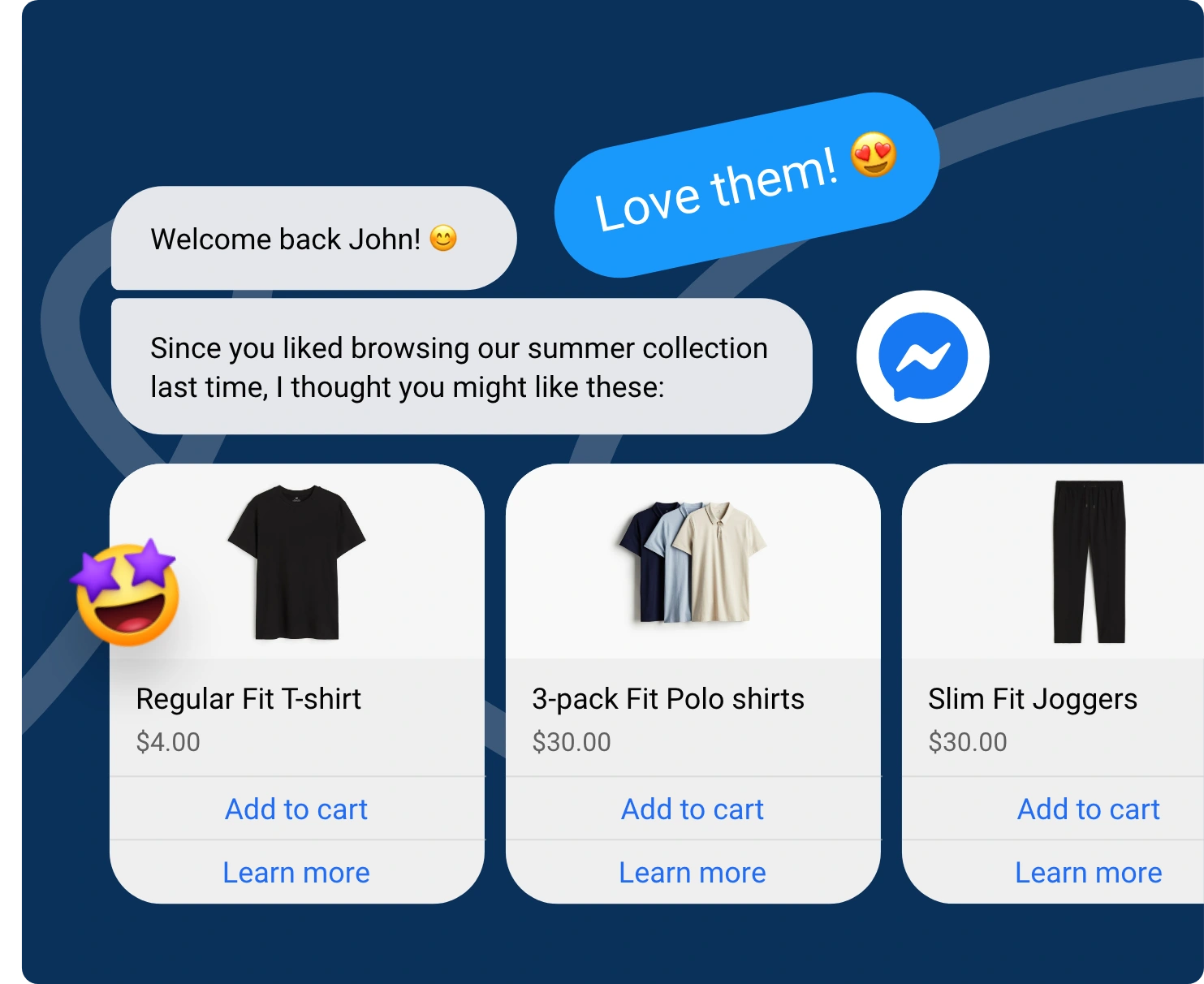
Here is how Facebook lead automation removes friction and speeds up your sales cycle from the very first interaction:
Simply put, it ensures no high-value lead sits waiting in an inbox, giving software buyers the instant gratification they demand while keeping your sales pipeline clean.
Explore how a Facebook chatbot for lead generation captures and qualifies prospects.
Looking for a simpler way to qualify SaaS leads on Facebook? With BotPenguin, SaaS teams can build Facebook chatbots without complex coding, connect calendars and CRMs, and guide high-intent leads toward trials or demos.
Most SaaS teams add a Facebook chatbot because something in their funnel is quietly broken.
Here are the problems that usually push a SaaS company to make the switch:
Someone clicks a Facebook ad, fills out a trial form, and disappears. No one on the sales team knows if they're a solo founder kicking tires or a VP evaluating three vendors.
Without a conversation before signup, every trial looks the same on paper, and follow-up becomes guesswork.
A rep opens their calendar to find a demo booked with a five-person startup that can't afford the plan, or a company that needed a feature the product doesn't have.
The call still eats thirty minutes, and the prospect walks away disappointed too.
Multiply that across a week, and reps spend more time on calls that were never going anywhere than on ones that mattered.
SaaS buyers rarely evaluate one tool at a time. They message two or three competitors in the same afternoon, and whoever replies first usually gets the demo.
If a Facebook inquiry sits in the Page inbox for a few hours, the prospect has likely already booked with someone else by the time a human sees it.
Someone comments “how much does this cost” under a product launch post, or sends a quick DM asking if the tool works with their existing stack.
Without a system watching for this, those signals sit in Facebook's notification feed and get missed entirely, even though the person was ready to talk.
Sprout Social found that nearly 45% of people turn to Facebook first when they need help from a brand, ahead of every other social platform.
A single marketer can keep up with ten inquiries a day. They can't keep up with two hundred once ad spend increases and campaigns start driving real volume.
Somewhere along the way, either hiring has to scale with ad spend, or something starts falling through.
By replacing response lags and guesswork with automated triage, Facebook chatbots ensure your ad spend actually reaches the reps equipped to close it.
Before your bot can qualify a prospect, you need frictionless entry points that draw software buyers directly into the conversation.
Leveraging Facebook lead automation across these key Meta touchpoints ensures you capture intent at the exact moment interest peaks, bypassing static forms altogether.
Deploy paid Meta campaigns with a direct “Send Message” CTA.
Clicking your ad instantly opens a Messenger conversation, bypassing slow landing pages and launching your automated SaaS qualification sequence in seconds.
Set keyword triggers on organic Facebook posts or product launch announcements.
When users comment “pricing” or “demo”, your bot automatically fires off a private DM to qualify and capture high-intent leads on autopilot.
Turn organic visitors into a pipeline by linking your Facebook Page’s main CTA button to Messenger.
Use Messenger links or Send Message buttons to route site visitors directly into your automated demo-booking workflow.
Bottom Line: Capturing buyers directly at the source (whether through paid ad clicks or organic post comments) eliminates landing page drop-off and feeds a steady stream of active leads straight into your qualification sequence.
A strong SaaS qualification flow should move each prospect toward the right path based on fit and intent. Here is how to structure that journey in Facebook Messenger:
Connect the chatbot to every place a prospect can enter: click-to-Messenger ads, Page inbox messages, and comments on product posts.
Each entry point should open the same qualification flow so no lead starts the journey differently depending on where they found you.
Set up branching Messenger prompts immediately after a prospect clicks your ad. Ask key SaaS metrics like team size, current tech stack, immediate pain points, and monthly budget.
Keeping these questions short and conversational prevents form fatigue while gathering critical intent signals.
Use logic rules to instantly categorize responses into product-qualified leads (PQLs) or sales-assisted prospects.
High-intent enterprise buyers get flagged for direct outreach, while smaller accounts or solo founders are automatically guided toward self-serve free trials, interactive case studies, or documentation.
Trigger instant handoffs based on lead tier. High-fit prospects receive an inline calendar link to schedule a demo without leaving Messenger.
Simultaneously, sync all conversation data directly to your CRM (HubSpot or Salesforce) so sales reps have full context before calling.
For prospects who don't qualify as PQLs or sales-ready, trigger a lightweight drip sequence inside Messenger, product tips, case studies, or a trial reminder.
This keeps smaller accounts warm without adding them to a sales rep's queue.
With qualification, routing, and nurture working together, SaaS teams can move every Facebook lead toward the right next step without overloading sales.
Setting up Messenger automation is straightforward, but subtle design or operational errors can burn ad spend and turn off prospects.
Here are the top mistakes SaaS teams make and how to fix them:
Avoiding these mistakes helps your Facebook chatbot for SaaS qualify leads cleanly, protect the buyer experience, and keep sales focused on the right prospects.
BotPenguin gives SaaS teams a Messenger chatbot built for qualifying trial and demo leads at scale, without hiring more reps.
BotPenguin gives SaaS teams the automation infrastructure needed to turn Facebook traffic into pipeline, qualifying leads, booking demos, and syncing CRMs in real time without increasing sales headcount. See what customers say about BotPenguin before choosing it for your SaaS workflow.
Explore BotPenguin's full feature set for additional automation capabilities.
A Facebook chatbot for SaaS can make lead handling feel far less messy. Instead of sending every prospect into the same queue, it can ask a few useful questions and guide each person based on fit.
A founder exploring a free trial needs a different path from a team ready to book a demo. That is where smart qualification matters.
When Messenger, your CRM, and calendar work together, sales gets better context from the start. The result is a cleaner journey for buyers and fewer wasted conversations for your team.
Done well, Facebook becomes more than a traffic source. It becomes a practical path to better SaaS leads.
Yes. A Facebook chatbot can ask about team size, use case, budget, and current tools, then route qualified prospects toward sales or self-serve signup.
It captures prospects from Facebook conversations, asks qualifying questions, identifies buying intent, and directs each lead toward a demo, trial, nurture flow, or sales conversation.
Yes. Qualification rules can separate high-fit prospects from lower-intent leads and send each group toward sales, self-serve trials, demos, or nurture journeys automatically.
Yes. Facebook chatbot workflows can connect with CRMs such as HubSpot or Salesforce, helping sales teams receive qualification details and conversation context before follow-up.
Useful questions include team size, primary use case, current software, budget, required integrations, and buying timeline. These signals help determine product and sales fit.
Facebook Messenger can work well when target buyers engage with Facebook ads, Pages, or content. Its value depends on audience fit, campaign intent, and qualification strategy.
SaaS qualification focuses on product fit, team size, use case, current tools, and buying intent instead of simply collecting contact details from interested prospects.
Turn Facebook Traffic Into SaaS Leads
Qualify prospects, answer product questions, and guide high-intent users toward free trials and demos with Facebook chatbots built for SaaS sales funnels.
Get Started NowCheckout our related blogs you will love.
Updated at Oct 10, 2026
23 min to read
Updated at Oct 10, 2026
12 min to read
Updated at Oct 10, 2026
19 min to read
Updated at Oct 9, 2026
8 min to read
Updated at Oct 7, 2026
12 min to read
Updated at Oct 1, 2026
7 min to read
Table of Contents