


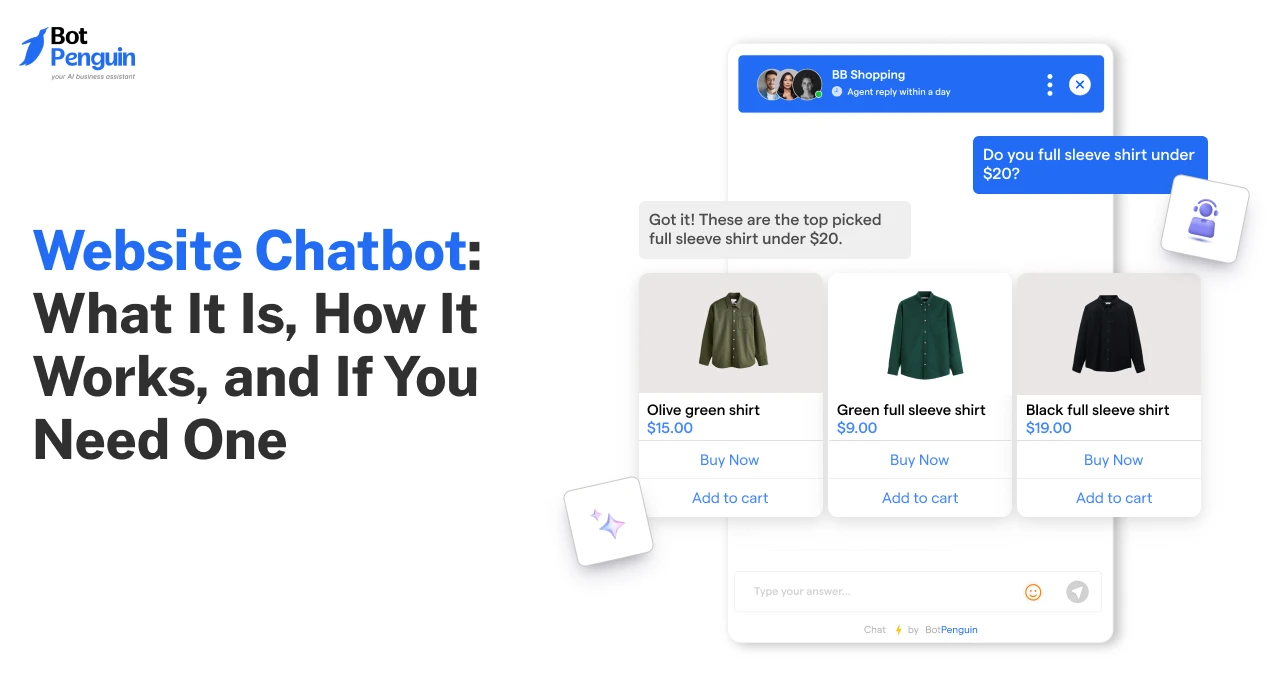
Website Chatbot: What It Is, How It Works, and If You Need One
Updated at Oct 6, 2026
12 min to read
Not every customer wants a bot. Not every customer wants to wait for a human. They want the fastest path to the right answer. That's where many businesses struggle.
Lean too heavily on live chat, and support costs climb. Automate everything, and some conversations lose the human touch.
The real question isn't chatbot vs live chat. It's knowing which conversations belong to each and how they can work together.
This guide compares both, shows where each performs best, and helps you build the right mix for your business.
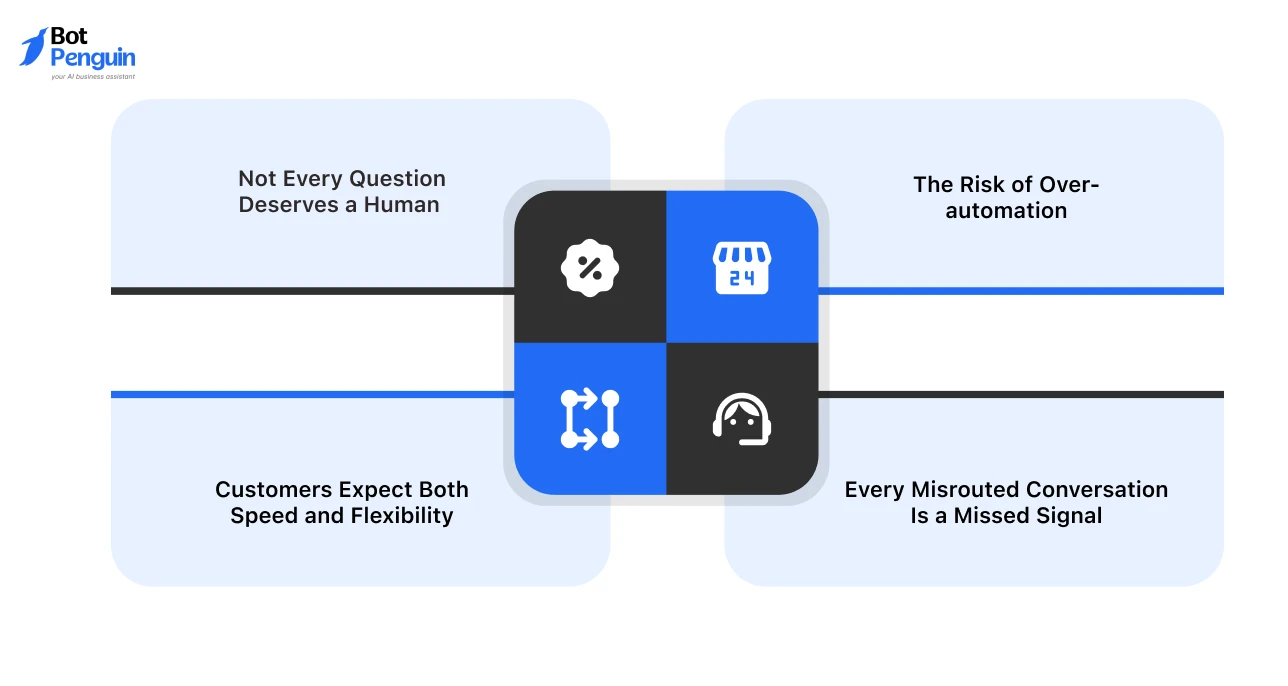
Customers don’t care whether they're talking to a chatbot or a live agent. They care about getting the right help without unnecessary delays.
Choosing the wrong approach doesn't just affect support; it shapes costs, customer experience, and your team's productivity. Here’s why choosing the right solution matters:
Common questions, appointment bookings, order updates, and lead qualification can often be resolved automatically, freeing agents for more valuable work.
According to G2, chatbot preference has surged, with 82% now choosing bots over waiting for a human.
Billing disputes, technical issues, complaints, and high-value sales discussions usually benefit from human expertise and empathy.
Studies suggest that just 8% of customers prefer AI over humans, with most valuing better understanding and thorough explanations from people.
They want on-the-spot answers for simple requests and an easy way to reach a person when automation isn't enough.
When a query lands in the wrong channel, it's not just a bad experience; it's a clue that your bot's training or your team's routing rules need work.
It’s deciding which conversations each should handle and creating a seamless transition between them.
Getting this balance right starts with understanding what each tool actually does best.
Many modern customer communication platforms, including BotPenguin, combine AI chatbots with live chat in a single workspace, making it easier to automate routine conversations while seamlessly handing complex ones to your team.
Need to engage customers on WhatsApp? Explore BotPenguin's WhatsApp chatbot platform.
Let's now break down chatbot vs live chat and where each one earns its place in your customer journey.
Choosing between chatbot vs live chat isn't about picking the newer technology. It's about deciding how different customer conversations should be handled.
A chatbot for website is useful when visitors ask similar questions, need quick direction, or want to take action without waiting.
New to website chatbots? Read our complete guide on what a website chatbot is to learn how they work.
Live chat, on the other hand, works better when customers need judgment, reassurance, or a real person to understand the situation.
Here is a clear comparison to help you choose the right fit:
Before choosing between live chat vs chatbot, look at what each option needs behind the scenes.
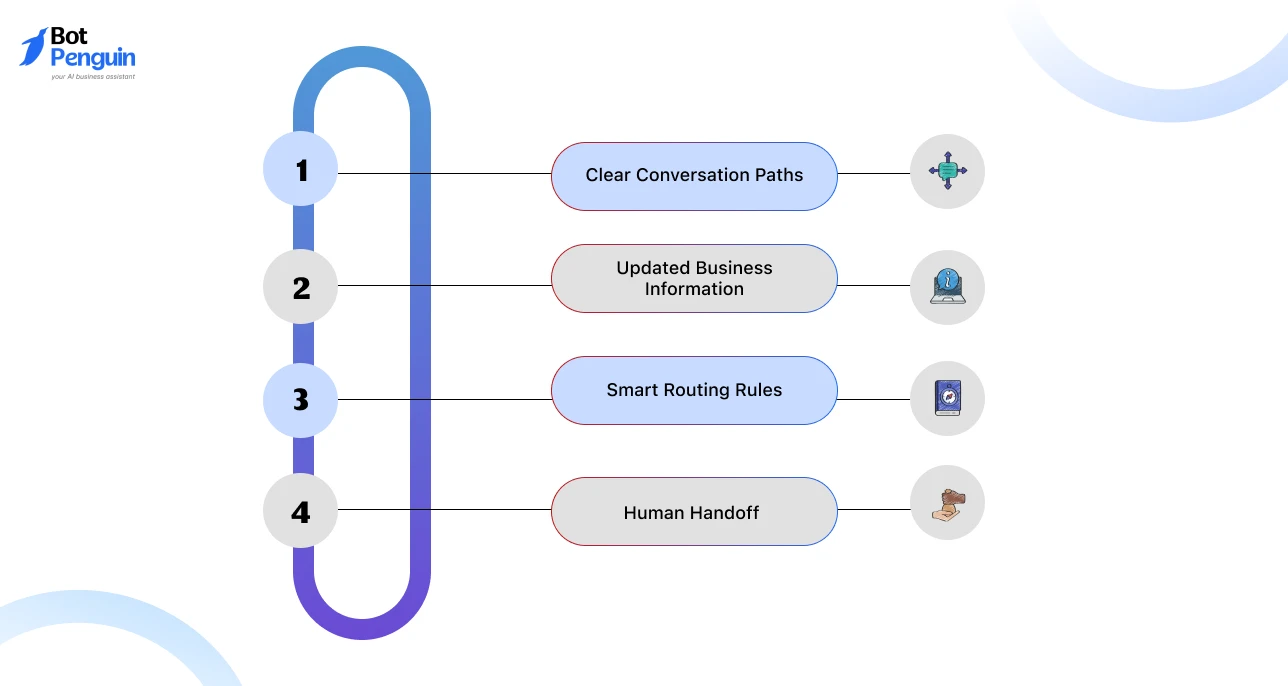
For a website chatbot, you need:
G2 reviews show 15% of chatbot users stay neutral, often reflecting unclear conversation paths or confusing responses.
For live chat, you need:
Live chat earns an 85% satisfaction rating, trailing only phone support, proof that trained, available agents drive real trust.
The comparison highlights what each tool does well. The next step is deciding where each one fits in your business.
Start by looking at the situations where a chatbot delivers the most value.
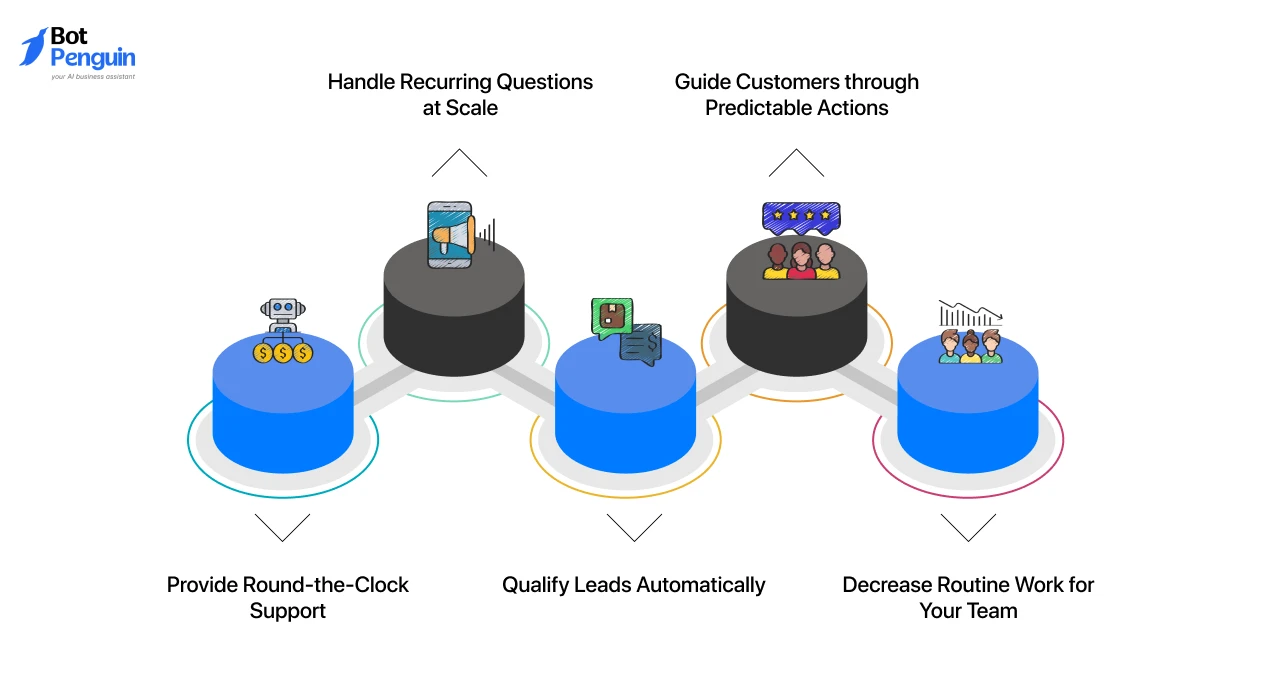
A chatbot works best when conversations are recurring, time-sensitive, or need an immediate response.
This way, instead of waiting for an available agent, customers get answers, complete tasks, and move to the next step instantly.
Industries This Is Suitable For: E-commerce, SaaS, healthcare, education, travel, and service businesses, where high conversation volumes make fast responses essential
Comparing platform options? Explore the best website chatbot solutions for your business.
Choose a chatbot when your business needs to:
Thus, rather than replacing your team, an AI chatbot removes day-to-day work, speeds up responses, and ensures customers receive help the moment they need it.
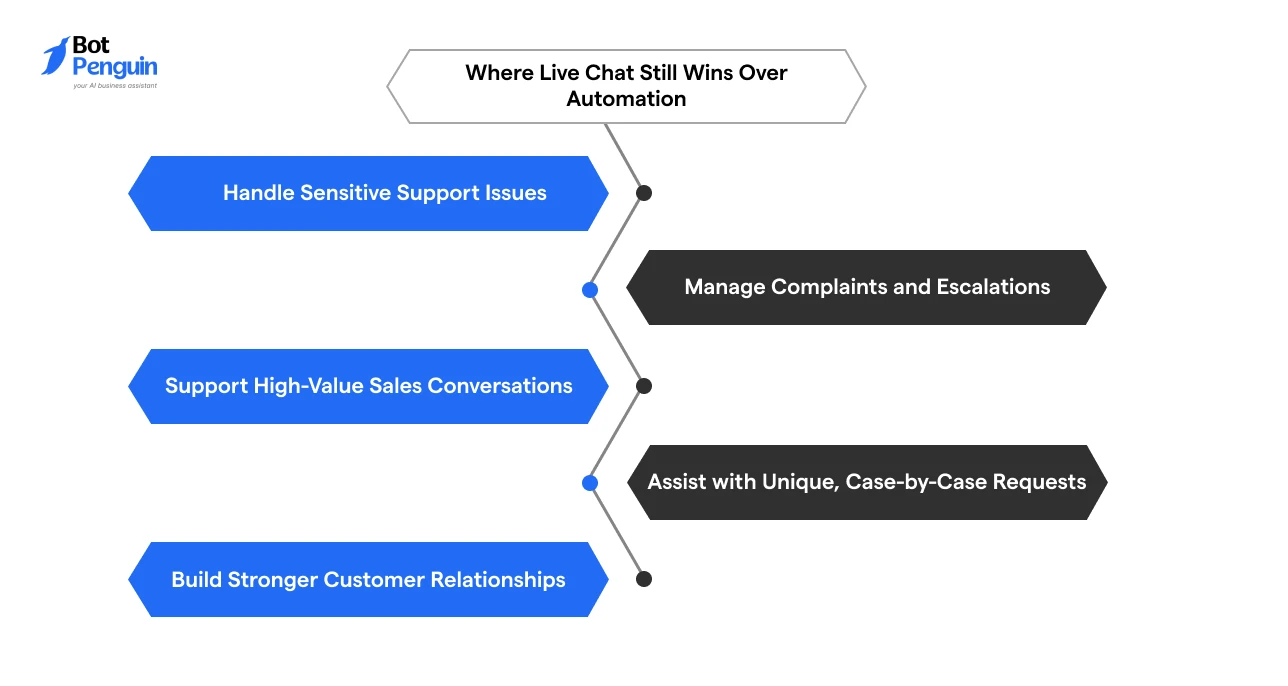
Teams should opt for live chat when the conversation involves judgment, reassurance, negotiation, or problem-solving; a real person can adapt in ways automation cannot.
Industries This Is Suitable For: Live chat works particularly well in high-trust industries like healthcare, banking, insurance, legal services, and B2B software, where customers often need personalized guidance before making a decision.
Choose live chat when your business needs to:
Live chat earns its place when conversations demand more than a quick answer. It's the difference between resolving a query and truly making a customer feel heard.
Learn what live chat software actually does for customer support.
Platforms like BotPenguin combine live chat with AI chatbots, making it easy for teams to step into conversations only when human expertise adds the most value.
By now, it's clear that chatbots and live chat solve different problems. However, businesses don't have to choose one over the other.
In fact, many achieve the best results by combining both.
The table below shows how chatbots and live chat divide responsibilities across common scenarios:
Only 15% of consumers say their AI-to-human handoff feels seamless, even though 78% consider that transition genuinely important.
Used together, chatbots and live chat stop competing for the same conversations and start complementing each other. The result isn't just faster responses; it's a customer experience that feels both efficient and genuinely human.
Return on investment is measured by how well your customer conversations contribute to revenue, productivity, and long-term growth.
While both chatbots and live chat improve customer engagement, they create value in different ways depending on your business goals.
Choosing between chatbot vs live chat isn't about finding a single winner. It's about matching the right tool to the right conversation.
Chatbots keep routine interactions moving, capture leads, and respond the moment customers reach out. Live chat adds the human judgment, empathy, and expertise needed for more sensitive situations.
For many businesses, the strongest approach is using both together. Start by understanding your customers' needs, then build a communication strategy that balances speed with personal support.
The result is better conversations, happier customers, and a support experience that grows with your business.
A chatbot automates conversations using AI or workflows. Live chat connects customers with a real person for personalized support and complex conversations.
Neither is better for every business. Chatbots work best for fast, structured conversations, while live chat is stronger for sensitive, detailed, or high-value customer interactions.
Not completely. Chatbots manage common questions and routine tasks, but live chat remains essential when customers need empathy, judgment, or detailed assistance.
Yes. Many businesses use chatbots for initial conversations and transfer customers to live agents when personalized support or expertise is required.
Often, yes. Chatbots can lower support workload for common enquiries, while live chat depends on dedicated agent time.
Yes. Businesses can provide live support through WhatsApp Business. Many also combine it with a WhatsApp chatbot to handle inquiries before agents step in.
Choose a website chatbot when you need instant responses, lead capture, appointment booking, FAQs, or customer support that continues beyond business hours.
Balance Automation and Human Support With BotPenguin
Use AI chatbots for routine conversations and live chat for complex ones. Deliver faster responses, improve customer experience, and capture more leads.
Get Started NowCheckout our related blogs you will love.
Updated at Oct 6, 2026
12 min to read
Updated at Oct 5, 2026
8 min to read

Updated at Jul 29, 2026
13 min to read
Updated at Jul 10, 2026
11 min to read
Updated at Oct 22, 2026
9 min to read
![Featured image for Essential Chatbot Statistics [2024]](https://cdn.botpenguin.com/assets/website/Essential_Chatbot_Statistics_for_2020_3d47c9f934.webp)
Updated at Oct 12, 2026
11 min to read
Table of Contents