


.webp)
The Ultimate Guide to Using AI Cold Calling for Real Estate
Updated at Sep 24, 2026
10 min to read
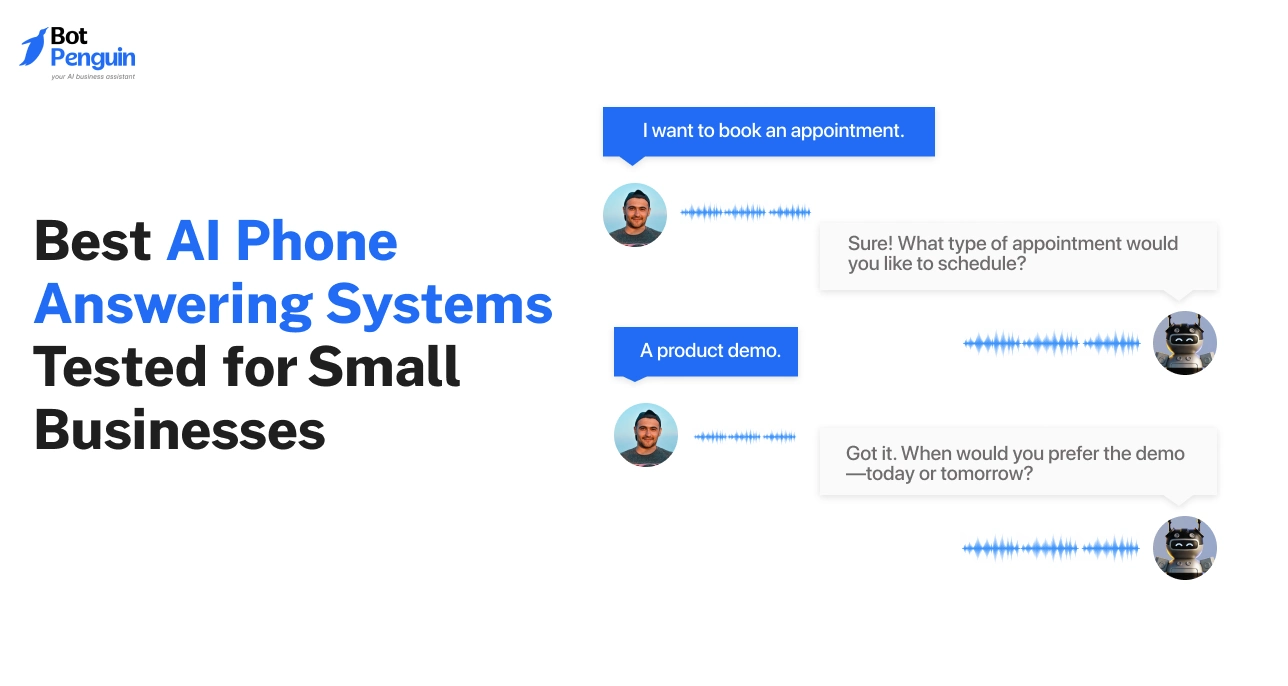
Small businesses lose a measurable share of revenue due to missed phone calls. Research by Harvard Business Review shows that most customers expect immediate responses and are significantly less likely to engage if calls go unanswered.
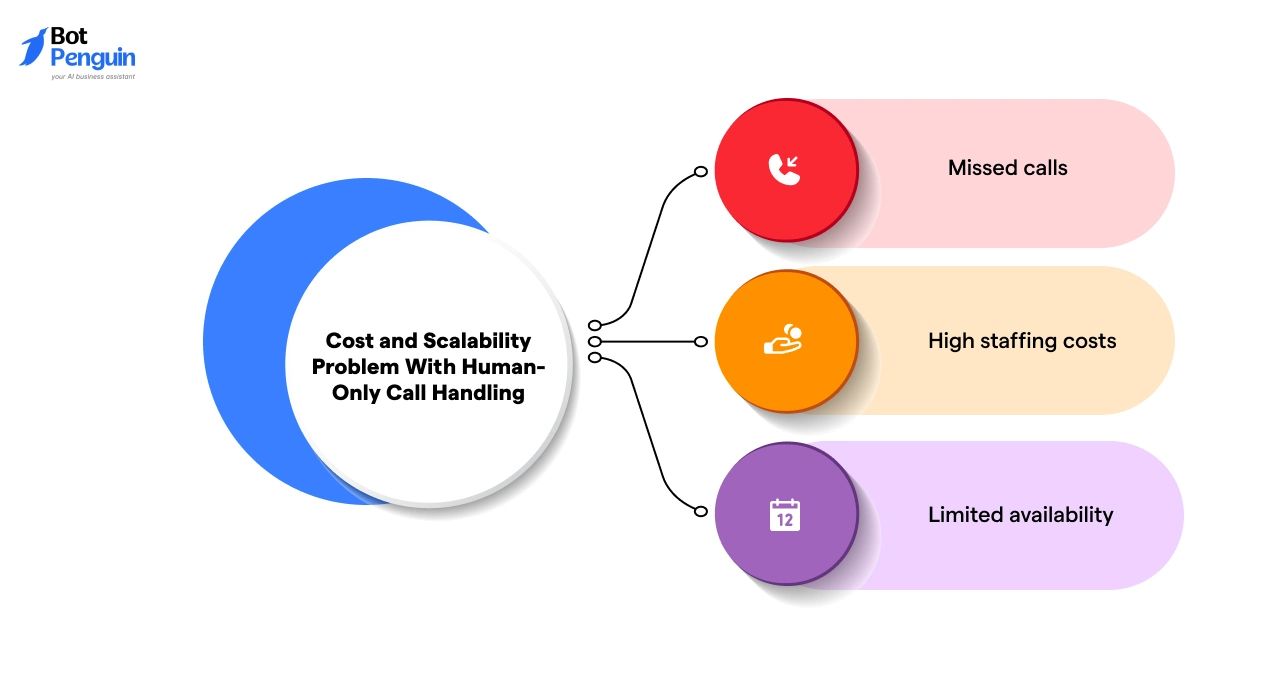
As call volumes grow, traditional phone-handling processes struggle to scale without higher staffing costs or service gaps.
AI phone answering systems address this by answering calls instantly, understanding intent, and routing conversations without manual effort.
This blog compares 10 AI phone-answering systems used by small businesses in 2026, focusing on practical performance, scalability, and decision-critical differences.
As customer interactions increase across channels, businesses are under pressure to respond faster without inflating operational costs.
This section explains why many organizations are moving away from human-only call-answering models and adopting AI-based alternatives.
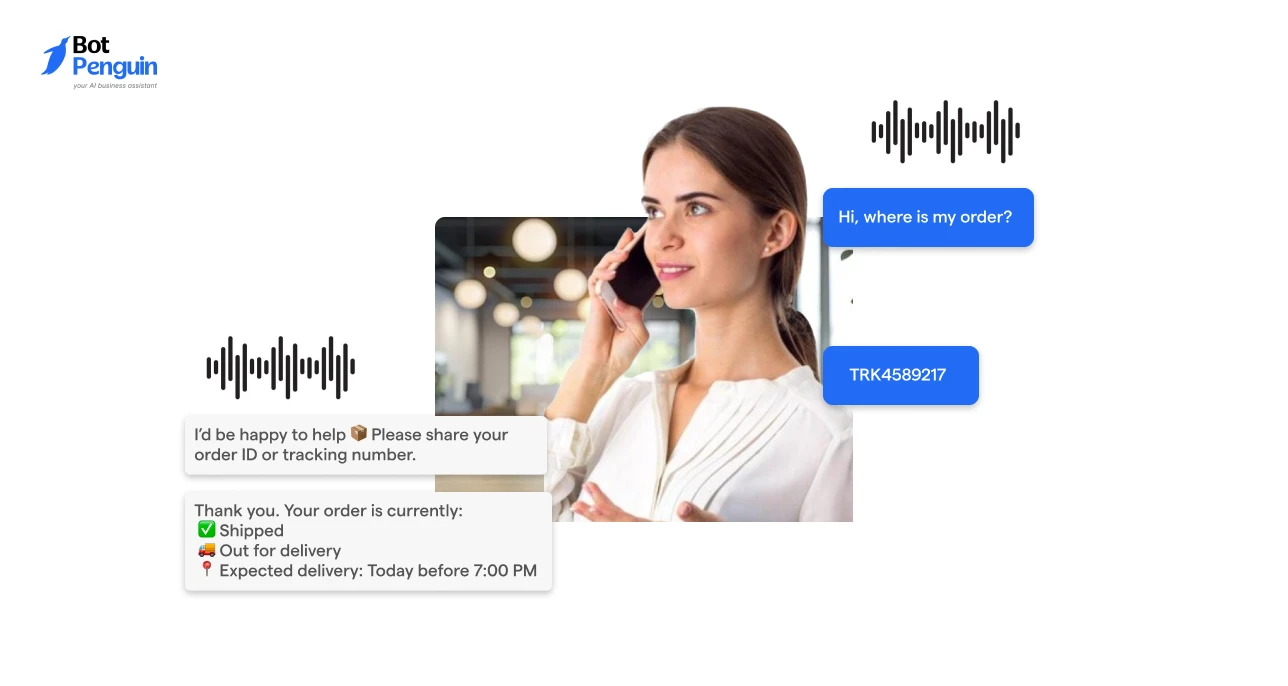
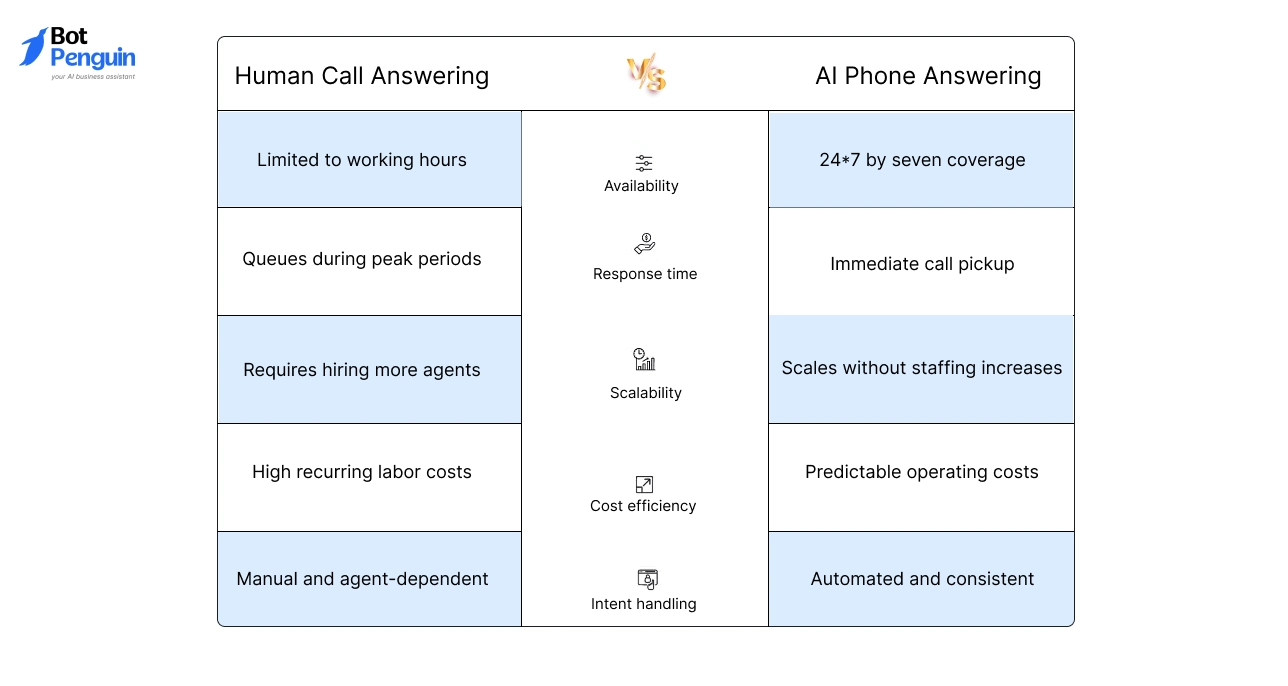
An AI phone answering system removes these limitations by design. Calls are answered continuously without reliance on agent schedules.
A customer calling late at night to confirm an appointment or check order status still receives immediate assistance.
Some businesses initially explore a free AI phone answering system to test automation at a basic level. As call volumes and service expectations increase, they transition to platforms that support integrations, reporting, and controlled escalation.
Together, these operational differences explain why AI-based call answering is replacing traditional models.
The next section explains what an AI phone answering system is and how its core components function within real business environments.
The previous section outlined why traditional call handling models are being replaced. As businesses move toward AI-based call management, it is essential to understand how these systems operate during live interactions.
This section explains how AI-powered phone answering works in real operational scenarios and why it functions reliably at scale.
An AI phone answering system uses conversational AI and voice automation to answer incoming calls, understand caller intent, respond with relevant information, and route conversations without requiring a human agent for every call.
Unlike recorded menus or voicemail systems, this technology processes live conversations and adapts its responses in real time.
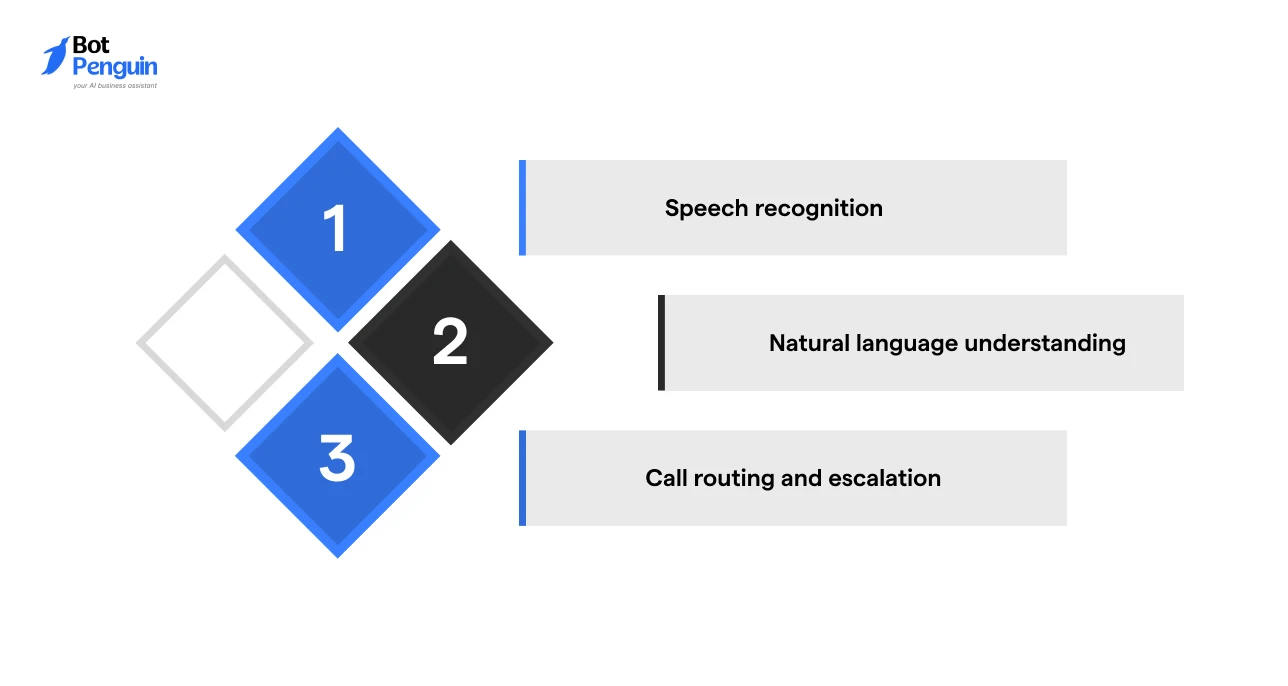
Some organizations initially test these workflows using a free AI phone answering system to assess call accuracy and flow.
As call volumes grow, they transition to more advanced platforms that support integrations, analytics, and controlled escalation. These core capabilities define how AI phone answering systems operate in practice
A free AI phone answering system is often used as an entry point. It helps teams validate whether automated call handling fits their workflow. Basic call answering and simple intent recognition can be tested without financial commitment.
However, free plans are designed for limited use. Call volume caps are reached quickly, customization options are minimal, and integrations with CRM or helpdesk tools are often unavailable. Reporting is usually basic, making it difficult to evaluate performance or optimize call handling.
As call traffic increases, these constraints begin to affect reliability and customer experience. Businesses handling sales inquiries, support requests, or operational calls require predictable performance and greater control, which free tools cannot sustain.
Free tools typically stop scaling when call volume increases, integrations are required, or service quality must remain consistent. Paid platforms address these requirements by offering stability, visibility, and control across the entire call lifecycle.
Understanding this difference prepares buyers for the next section, where leading AI phone answering platforms are compared using these evaluation criteria to identify which solutions deliver long-term operational value.
Choosing an AI phone answering system requires more than checking features. Businesses must evaluate how well each platform handles real calls, integrates with existing workflows, and scales with demand.
The following list compares 10 widely used AI phone-answering systems based on practical use and operational fit.
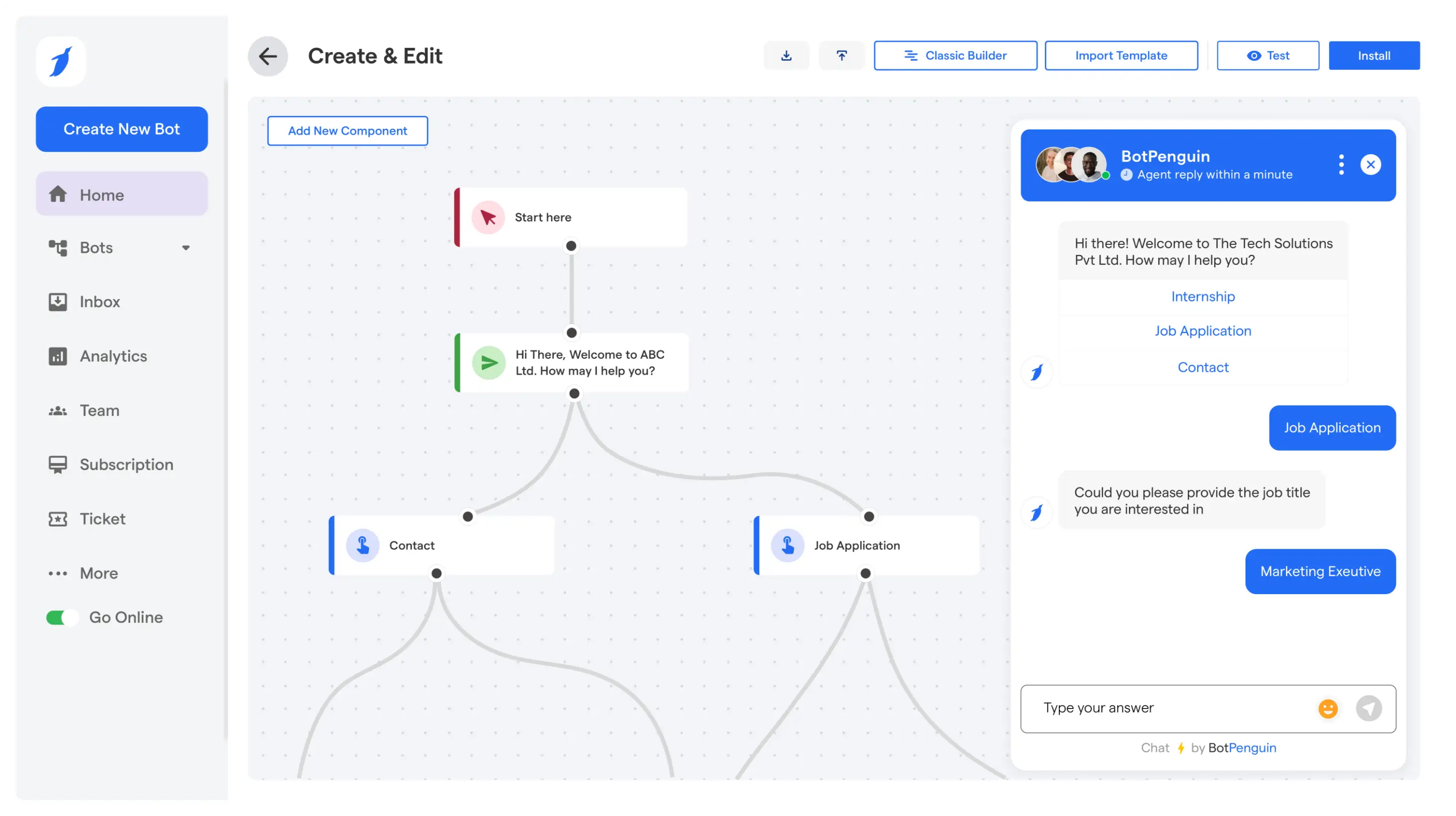
BotPenguin is a business-grade AI phone answering system built for companies that want reliable call automation and agencies that want to resell AI voice solutions.
It answers inbound calls, understands caller intent, and routes conversations across sales and support workflows.
Unlike point solutions, BotPenguin is designed to operate as part of a broader customer engagement stack while remaining simple to deploy and scale.
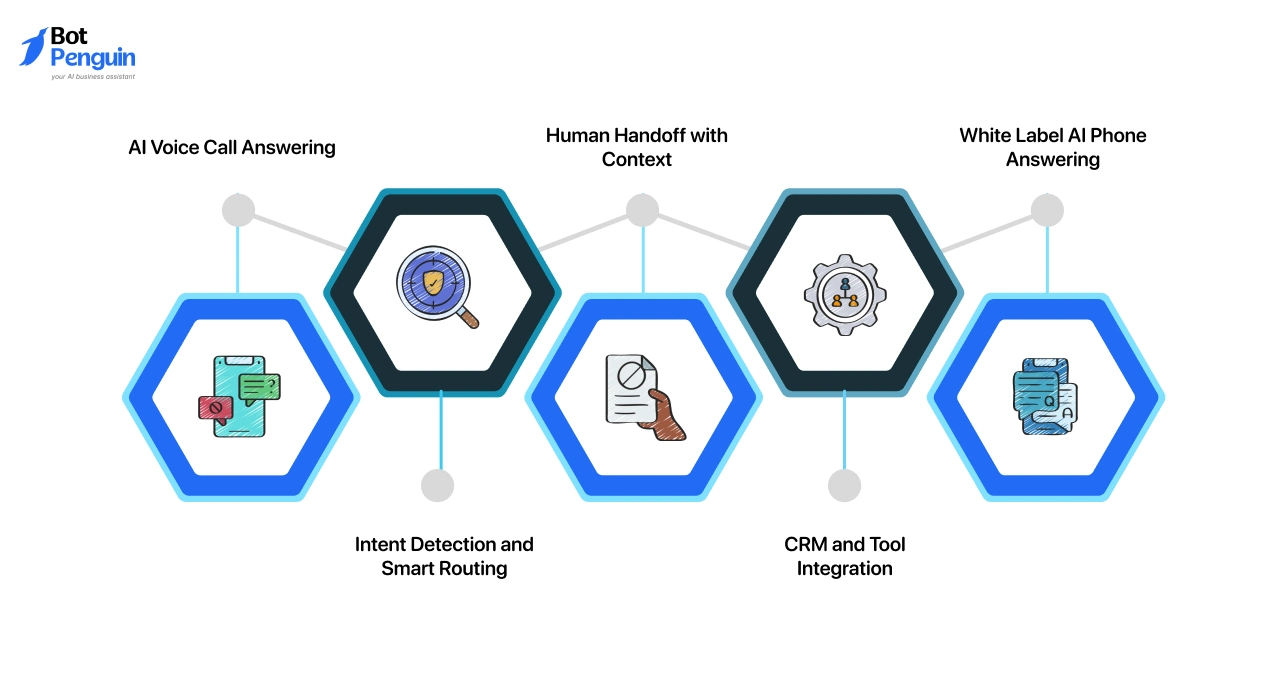
BotPenguin stands out for businesses that want dependable AI call handling and partners that want to resell voice automation.
Its balance of automation, control, and extensibility makes it suitable for long-term scaling.
BotPenguin is not positioned as a trial tool or experimental assistant. It is designed for businesses ready to operationalize AI phone answering and for agencies looking to productize it.
Buyers evaluating cost, control, and scalability will find BotPenguin aligned with real support requirements rather than surface-level automation.

Rosie AI is an AI-powered phone receptionist built for small businesses that want to eliminate missed calls without operational complexity.
It answers inbound calls automatically, engages callers using a natural voice, and handles basic inquiries such as business information, message capture, and call forwarding.
Rosie is designed for fast deployment and predictable usage, making it suitable for solo founders, local service providers, and early-stage businesses that want immediate call coverage without technical setup.
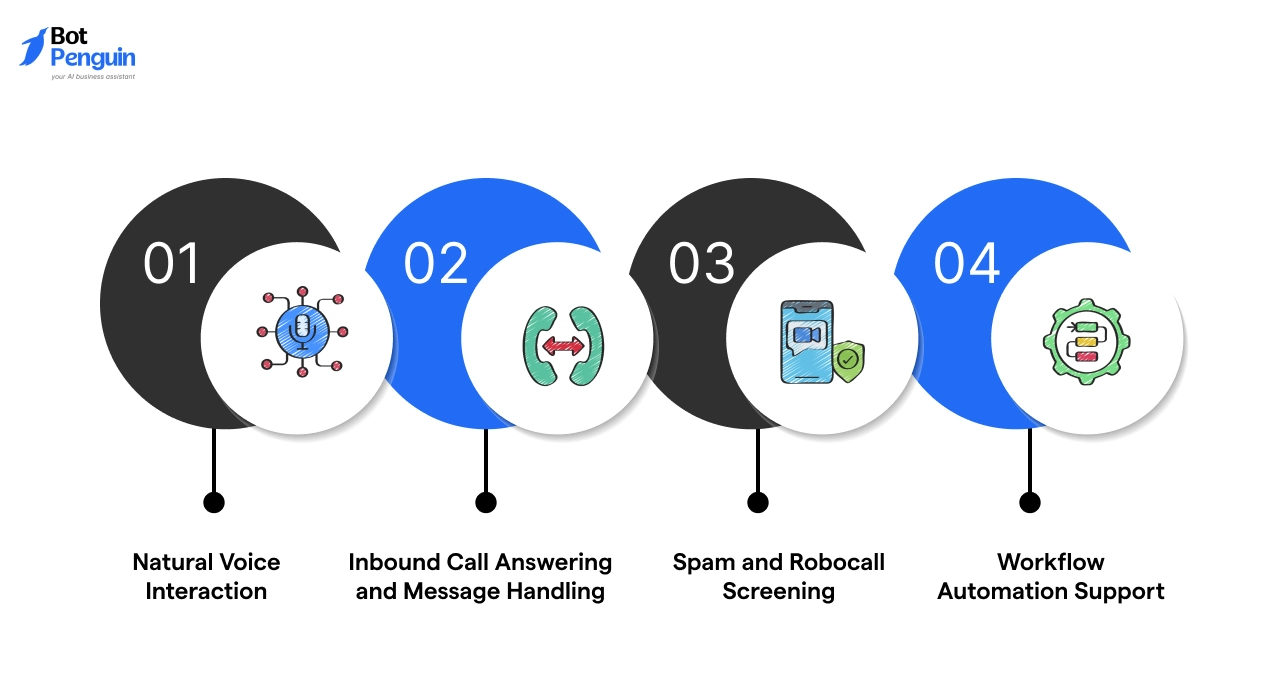
Rosie AI is effective for small teams that need dependable call answering without customization overhead.
It performs best as a lightweight receptionist rather than a full support automation platform.
Emitrr is an AI phone answering solution built around appointment conversion. It is designed for businesses where inbound calls directly impact revenue, such as healthcare providers, clinics, salons, and home service companies.
Emitrr answers calls, schedules appointments in real time, and synchronizes booking data with calendars and internal systems, ensuring that no call results in a missed booking opportunity.
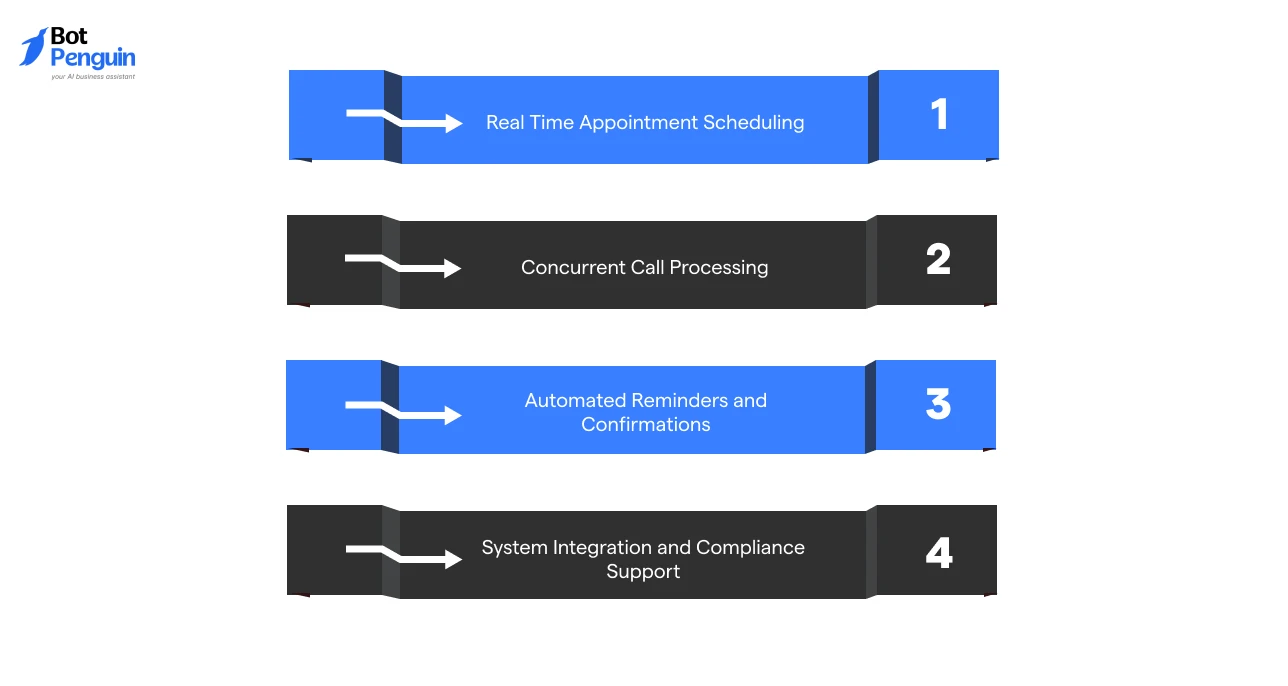
Emitrr is a strong choice for appointment-driven businesses that prioritize booking efficiency. Its value is clear when call volume directly correlates with revenue.
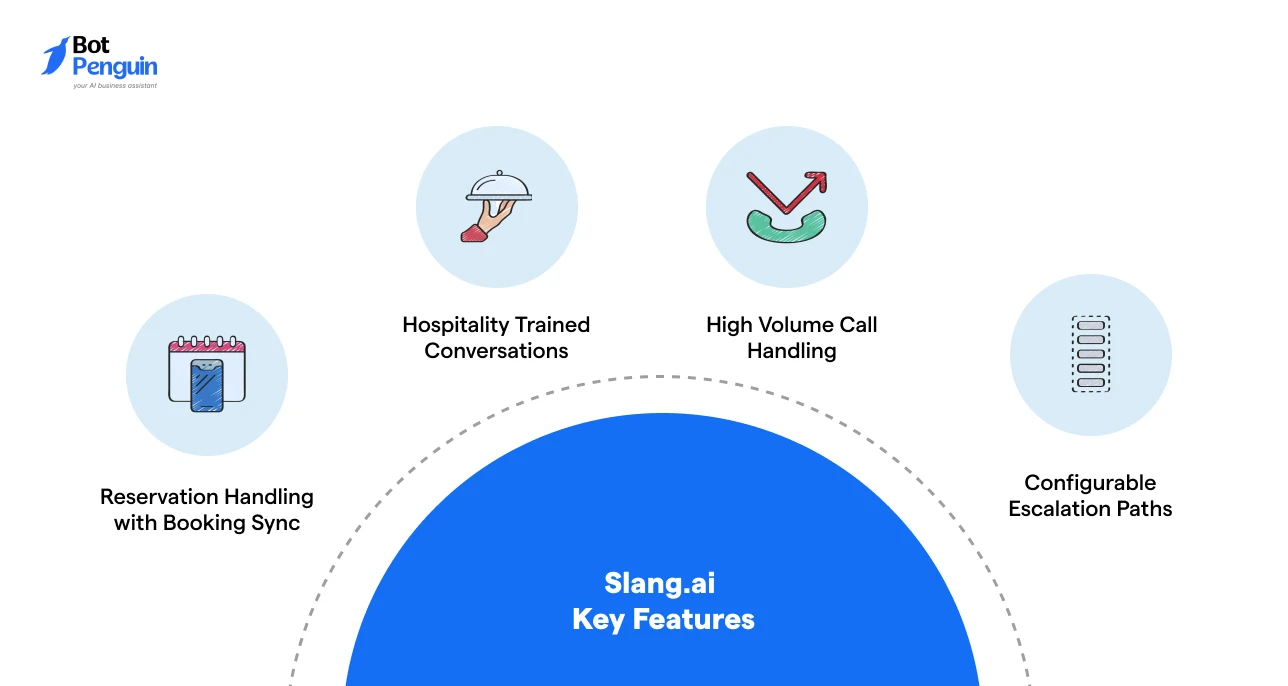
Slang.ai is a specialized AI phone answering system built for restaurants and hospitality businesses.
It acts as a virtual host, handling reservations, answering guest questions, and managing high call volumes during service hours.
Slang focuses on preserving guest experience while reducing interruptions for on-site staff.
Slang.ai delivers strong operational value for restaurants with high inbound call volume. It is a focused solution that performs best within its intended industry.
Numa is a hybrid communication platform that focuses on recovering missed calls through automated text responses.
Instead of relying on voicemail, it converts missed calls into text conversations, allowing businesses to continue engagement asynchronously.
This approach is effective for local businesses where callers prefer texting over waiting on hold.
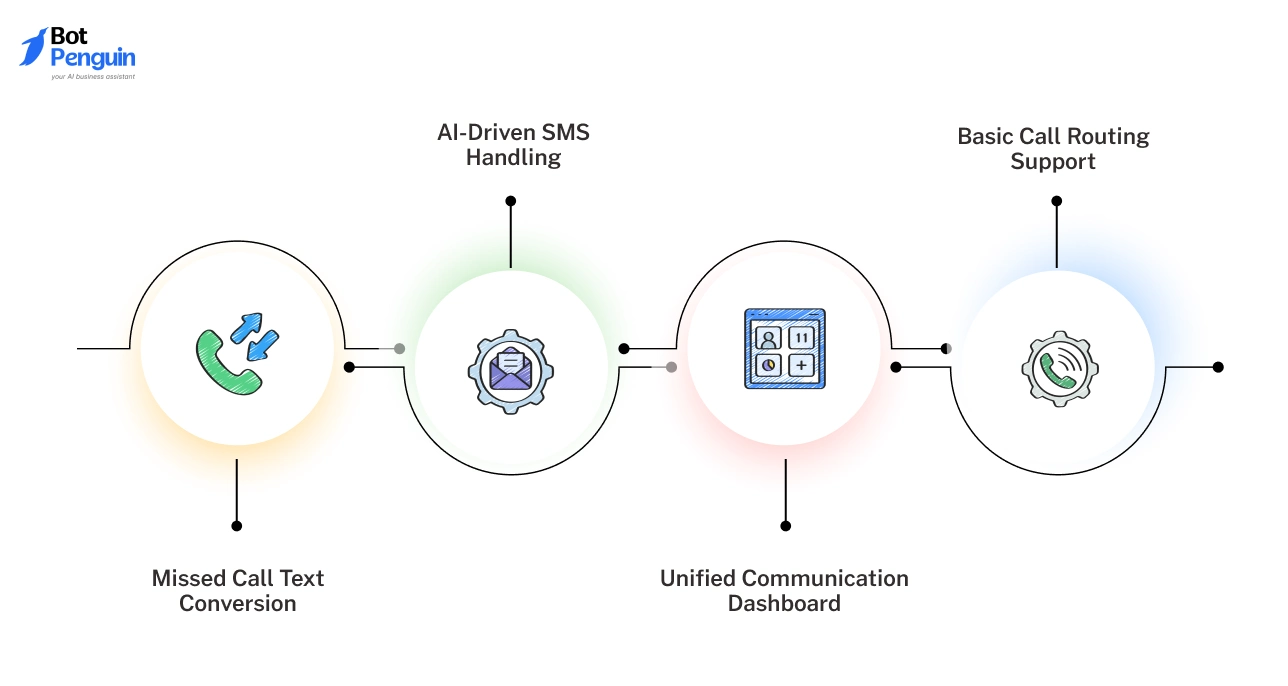
Numa works best as a communication safety net rather than a full AI phone agent.
It is effective for businesses that want to capture missed opportunities without replacing their phone workflow.
Air AI is a conversational AI phone system designed to handle long and complex calls.
It uses advanced language models to manage context-rich conversations, making it suitable for businesses with consultative sales or detailed support interactions.
Air AI is often adopted by technically mature teams willing to manage configuration and oversight.
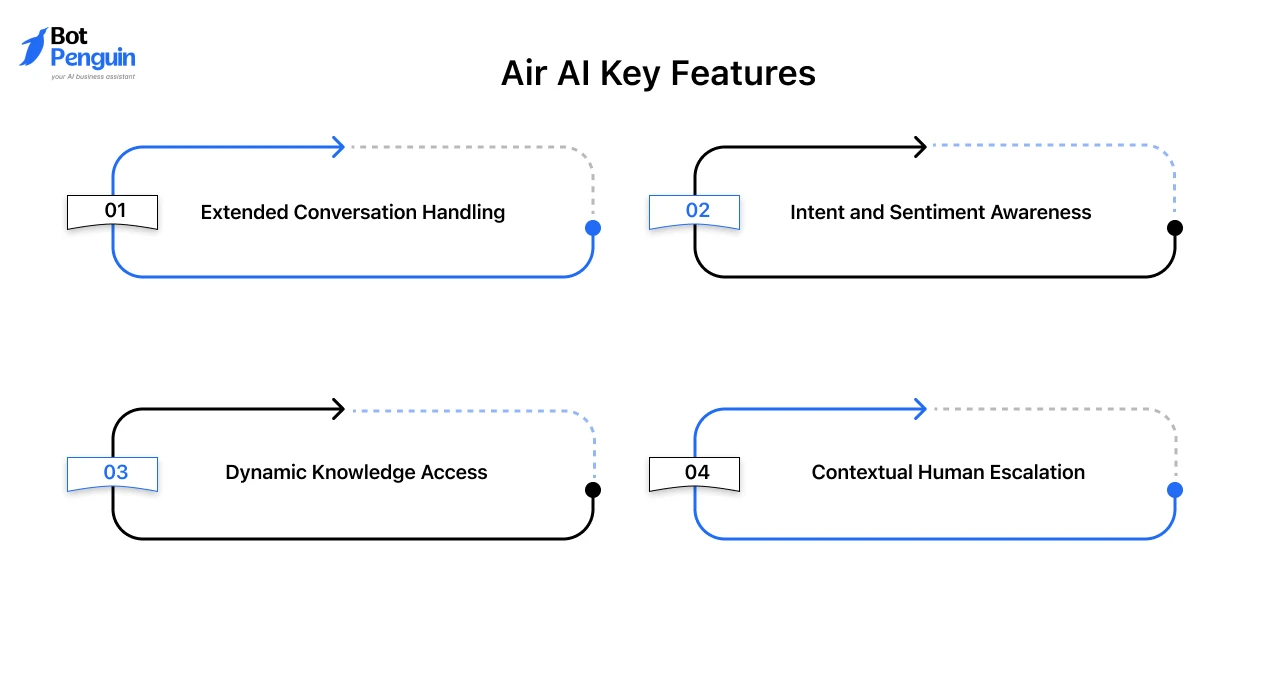
Air AI offers advanced conversational capability but requires careful deployment. It is best for teams that value depth over simplicity.
Smith.ai is a virtual receptionist and AI-assisted call answering service designed for small to mid-sized businesses that still want a strong human component.
It combines AI-driven call handling with trained human receptionists, making it suitable for businesses that want automation without fully replacing human interaction.
Smith.ai is widely used by professional services such as legal firms, consultants, and agencies.
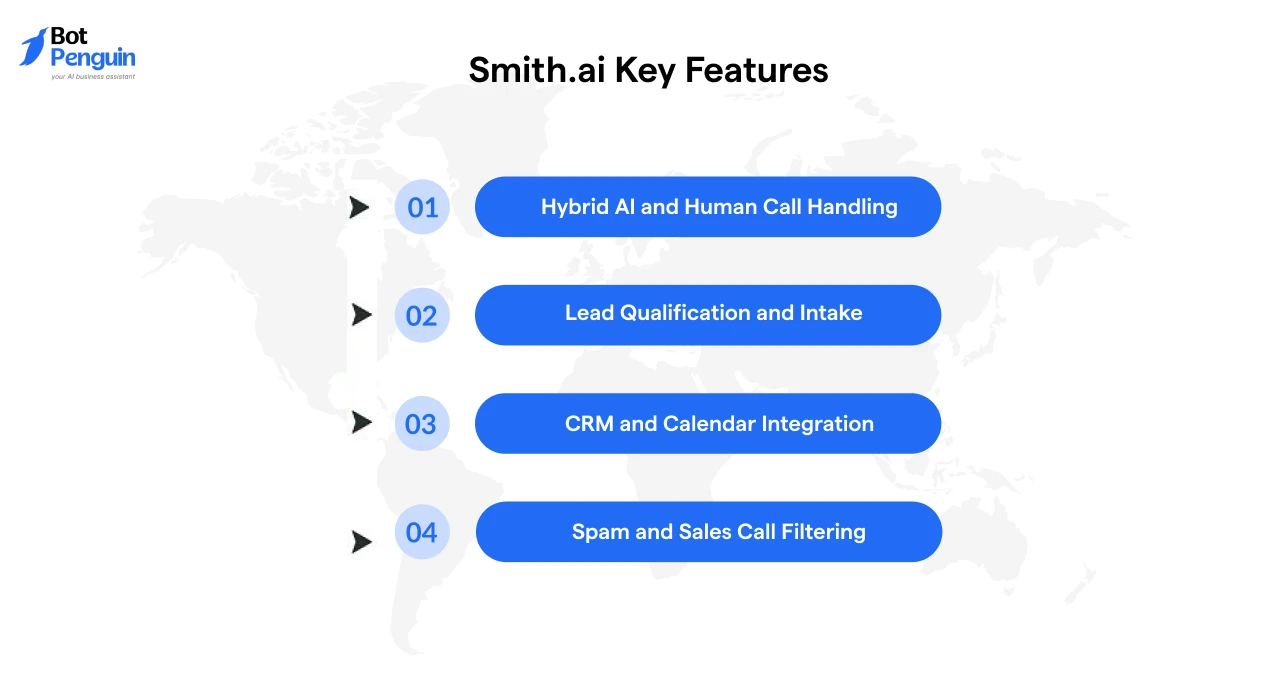
Smith.ai works well for businesses that want AI efficiency without losing human presence. It is best suited for firms where call quality matters more than volume.
Goodcall is an AI phone answering system built to automate inbound calls for small businesses. It focuses on handling common customer inquiries, booking appointments, and routing calls without human agents.
Goodcall positions itself as a fully automated receptionist that operates continuously and reduces dependency on staff availability.
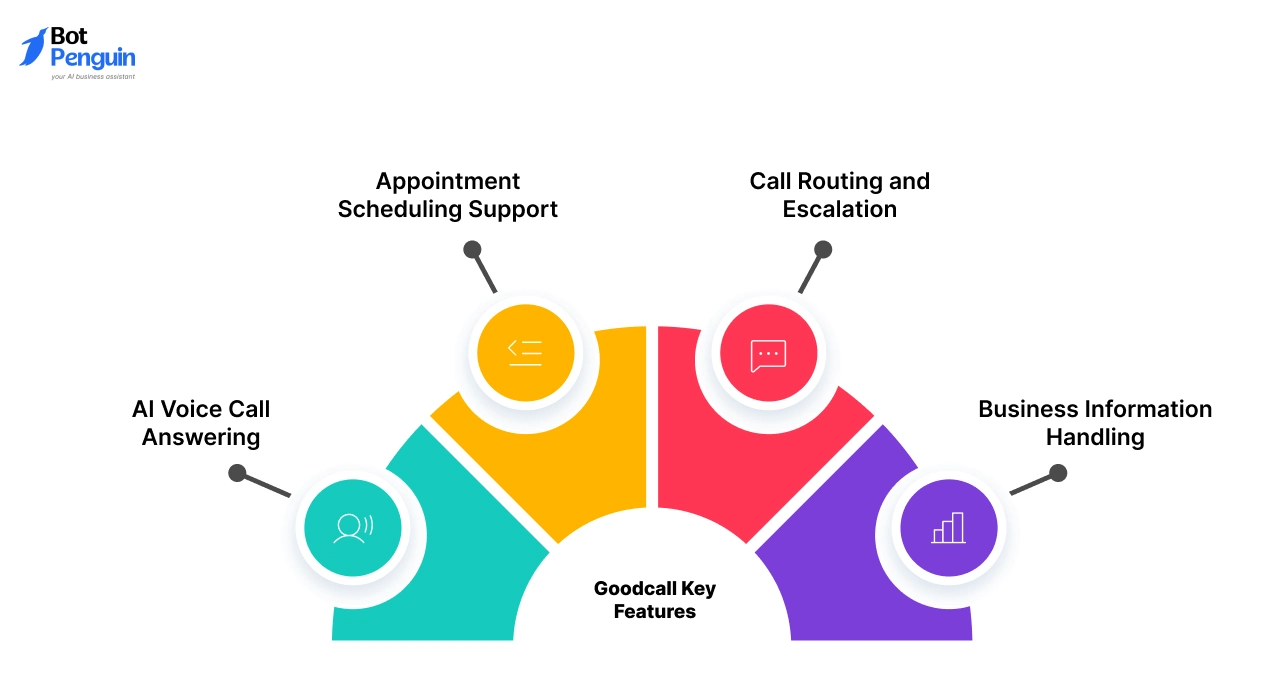
Goodcall is suitable for small businesses seeking basic AI call automation. It performs well for routine inquiries but may require supplements for advanced support needs.
Dialpad AI Voice is part of a broader business communication platform that integrates AI into phone systems. It is designed for businesses that want AI-assisted call handling within a full cloud telephony environment.
Dialpad combines real-time transcription, call insights, and intelligent routing rather than acting as a standalone receptionist.
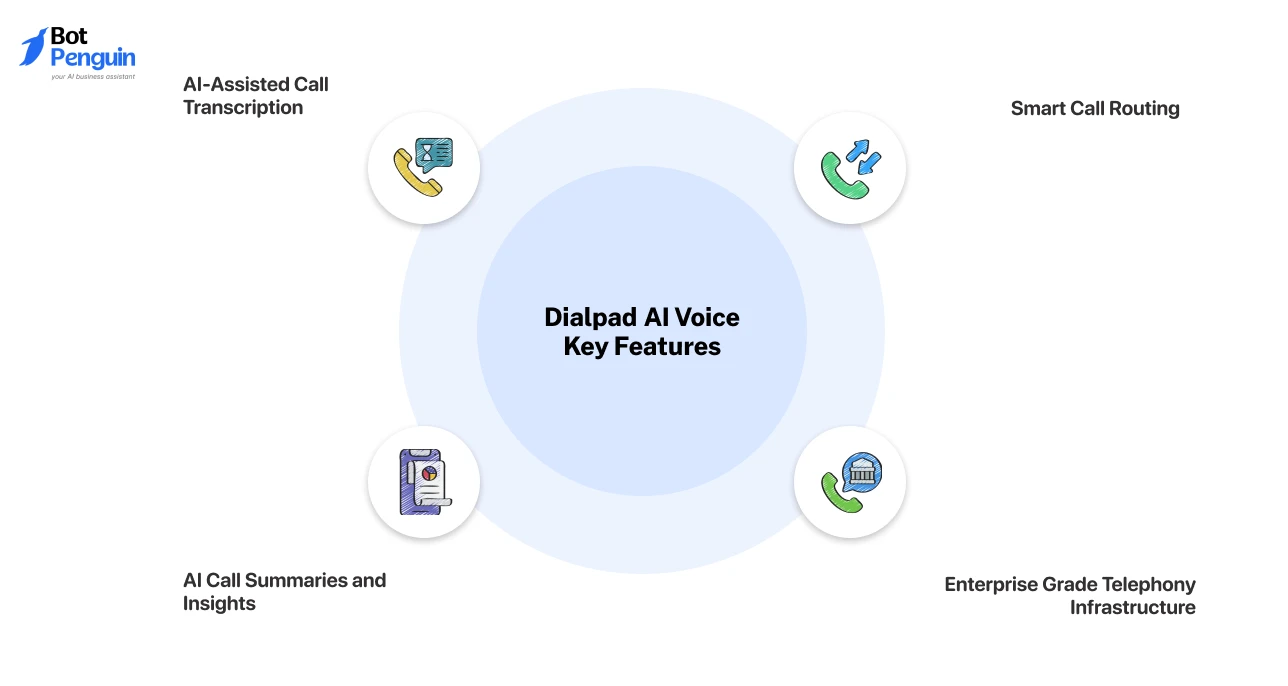
Dialpad AI Voice is best for businesses modernizing their phone infrastructure while adding AI intelligence. It is less focused on full automation and more on assisted efficiency.
Talkdesk AI Voice is an enterprise-oriented AI call handling solution that integrates conversational AI into contact center operations.
While traditionally used by larger organizations, it is increasingly adopted by high-growth SMBs that need advanced routing, analytics, and omnichannel support.
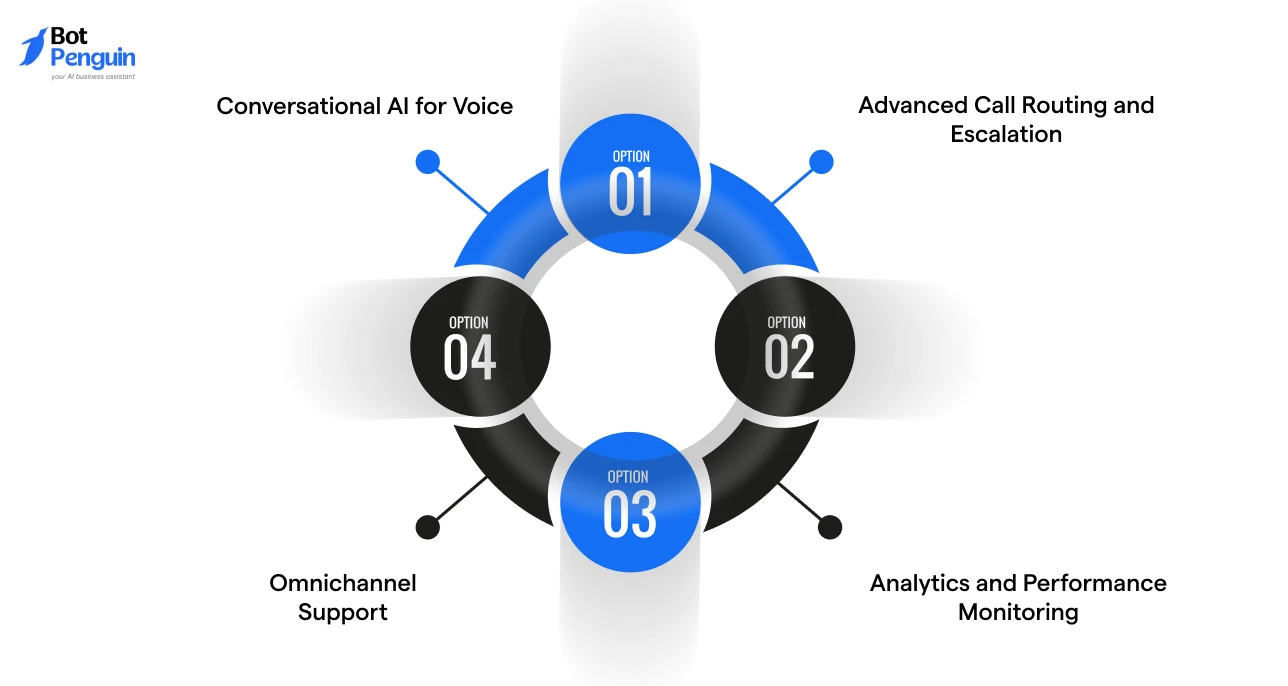
Talkdesk AI Voice is best for scaling organizations that require advanced control and reporting. It may be excessive for simple call answering needs, but it excels in structured environments.
These platforms address different call handling needs, from basic automation to advanced conversation management. The right choice depends on call volume, complexity, and growth goals.
The previous section explained how businesses evaluate AI-driven call solutions based on features and scale. The next step is understanding how these systems are applied in real operating environments.
While call volume and complexity vary by industry, the role of AI remains consistent. It ensures calls are answered, intent is captured, and outcomes are recorded without adding staffing pressure.
Small and mid-sized businesses frequently lose calls outside working hours or during peak service times. A customer calling a clinic to confirm an appointment or a home service provider to request availability expects immediate acknowledgment.
An AI phone answering system handles these calls by sharing business hours, confirming bookings, or capturing request details for follow-up.
Staff receive structured call summaries instead of voicemail recordings. This reduces missed leads and improves response consistency without expanding teams.
SaaS companies receive a mix of sales inquiries and customer support calls. Prospects often call to clarify pricing or product scope. Existing customers call access issues, usage limits, or account changes.
AI-based call handling identifies intent early in the conversation. Sales-related calls are routed to the appropriate team, while support queries are logged with the account context.
This prevents misrouting and shortens resolution time without adding support agents.
Ecommerce and retail businesses experience predictable call spikes during promotions and seasonal sales. Customers frequently call to check order status, delivery timelines, or return eligibility.
AI handles these repetitive requests immediately by pulling order information and policy details. Support teams focus on exceptions rather than routine updates.
This keeps call queues under control and improves customer response times during high-demand periods.
Agencies and consultants manage inquiries across multiple service lines or client accounts. Calls often involve lead qualification, requirement gathering, or service routing.
An AI phone answering system captures caller intent, qualifies leads based on predefined criteria, and routes calls accurately. For agencies offering automation services, this capability also becomes a deployable solution across client portfolios with minimal operational overhead.
Across industries, the benefit is consistent. Calls are answered without delay, information is captured accurately, and human effort is reserved for high-value interactions.
The next section applies these use cases to a direct comparison of leading platforms to identify which solutions perform best under different business conditions.
The comparison above highlights a clear shift. Voice based customer support is no longer optional. As call volumes grow and customer expectations rise, businesses need systems that answer reliably, understand intent, and scale without adding operational cost.
An ai phone answering system improves call handling by reducing missed calls, maintaining consistent responses across time zones, and lowering dependence on growing support teams.
The outcome depends on platform choice. The right solution improves customer experience and efficiency. The wrong one adds complexity without impact.
BotPenguin is built for real customer support, not basic call deflection. It resolves routine inquiries automatically and escalates complex issues with full context preserved.
Automation and human control work together, allowing teams to scale call volume without sacrificing service quality.
BotPenguin also supports white label deployment, enabling agencies and consultants to offer AI phone answering as a branded service. This creates a recurring revenue stream without infrastructure overhead.
Upgrade your phone support with BotPenguin’s AI phone answering system built for growth and resale.
The best systems hold dynamic conversations, adapt to caller responses in real time, and update outcomes across tools. Unlike IVR, they do not rely on fixed menus or keypad inputs.
Most free systems offer limited security controls and minimal data retention policies. Businesses handling sensitive customer information should verify encryption standards, data storage location, and access controls before relying on free tools.
Deployment typically ranges from a few hours to several days, depending on call complexity, integrations, and training requirements.
Systems with prebuilt workflows and templates deploy significantly faster than custom conversational setups.
Advanced platforms support multiple languages and automatically detect the caller's language during the conversation.
This capability is increasingly important for businesses serving diverse or international customer bases without expanding support teams.
ROI is measured through reduced missed calls, lower staffing costs, faster resolution times, and improved conversion rates.
Call analytics and outcome tracking help quantify impact over time.
Businesses choose BotPenguin for its ability to combine AI call automation with CRM integration, human escalation, and white label deployment.
It supports both internal operations and resale models, making it suitable for scaling teams and agencies.
Subscribe to Our Newsletter
Get the latest business insights straight into your inbox.
Checkout our related blogs you will love.
Updated at Sep 24, 2026
10 min to read

Updated at Sep 21, 2026
17 min to read

Updated at Sep 12, 2026
9 min to read
.webp)
Updated at Aug 19, 2026
11 min to read
Updated at Jul 3, 2026
16 min to read
Updated at Jul 3, 2026
14 min to read
Table of Contents
