


Best White-Label AI Agent Platforms for Agencies 2026
Updated at Sep 22, 2026
12 min to read
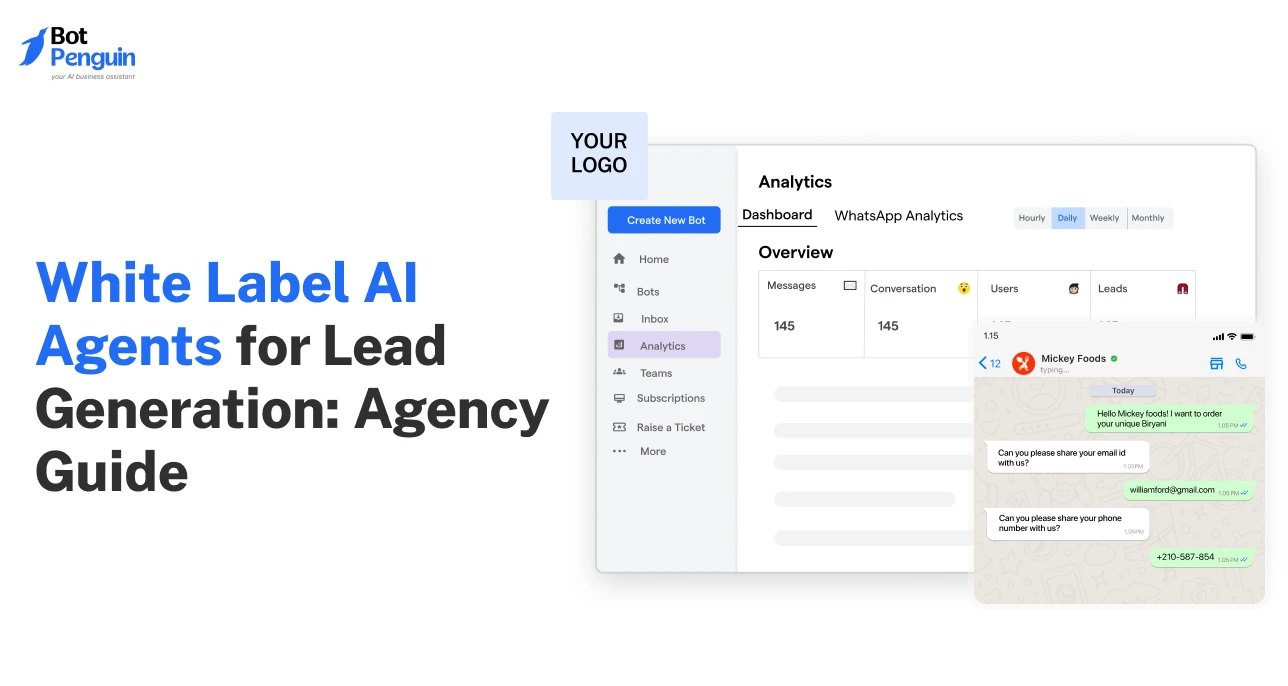
A lead that waits is a lead that’s lost. Yet many businesses still take hours to respond, miss follow-ups, and spend valuable sales time on unqualified prospects.
White label AI agents for lead generation help agencies solve all three problems at once.
Instead of building AI software themselves, agencies can launch branded AI lead generation agents that engage prospects on-the-spot, qualify them, and route sales-ready leads to the right team.
This guide explains how white label AI agents for lead generation work, how agencies can deploy them, which industries deliver the best ROI, and how to package the service.
White label AI lead generation agents engage inbound prospects across websites, WhatsApp, and social channels while allowing agencies to deliver the solution under their own brand.
They qualify leads, capture buying intent, and route sales-ready prospects to clients with full context, all without requiring agencies to build the underlying technology.
But before we dive into how these agents work in practice, it’s worthwhile to understand what sets them apart from the tools most agencies are already using.
Many agencies already deploy contact forms or basic chatbots for clients, but those tools capture leads rather than qualify them in real time.
The table below highlights the key differences:
If you want to offer white label AI agents for lead generation under your own brand, platforms like BotPenguin let you deploy branded AI lead generation agents without building from scratch.
Traditional lead generation depends on staff availability. AI-powered lead qualification depends on predefined logic, creating a clear performance gap between the two.
According to the InsideSales.comLead Response Management Study, leads contacted within five minutes were 21 times more likely to qualify. However, many businesses still respond after 15 minutes or longer and miss after-hours enquiries entirely.
Here’s how to visualize that difference in practice:
*Note: The numbers shown are illustrative benchmarks and may vary based on use case, industry, and implementation.
Curious about the broader model? Explore what white label AI agents are and how they work across different business use cases.
For agencies looking to expand their service portfolio, white label AI lead generation agents provide a way to offer automated lead generation for agencies while delivering measurable improvements in efficiency and lead quality. This includes:
Looking to use AI lead generation for your own business? Explore our AI lead generation solutions.
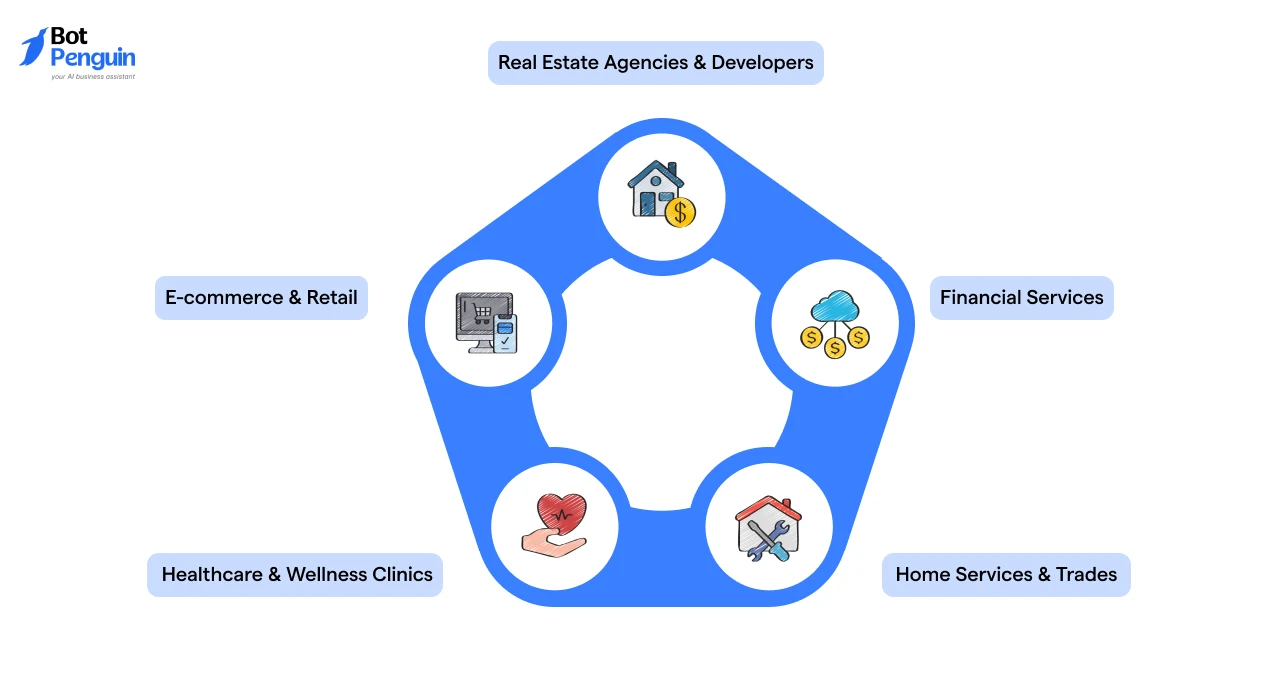
The strongest ROI comes from clients with high inbound demand, high-value conversions, and repeatable qualification patterns.
In these cases, white label AI agents don’t just support sales; they actively improve conversion from existing traffic.
High-value deals and steady inbound flow make this a top-performing segment. A white-labeled lead gen AI agent:
Result: More inquiries progress into actual sales conversations instead of stalling in follow-ups.
Complex screening and high-ticket outcomes make AI agents for insurance agencies especially effective. It:
Result: More time spent on closing, less time spent on qualification
Speed of response directly drives revenue outcomes. A white-labeled lead qualification AI agent:
Result: Faster bookings and fewer lost jobs due to delayed response
White-label AI agents for healthcare clinics support appointment-heavy workflows with limited front-desk bandwidth.
Result: Smoother intake process with reduced administrative load.
White-label AI agents for ecommerce help businesses manage high conversational volumes more efficiently.
Result: Higher conversion from existing WhatsApp traffic without extra ad spend.
These five verticals share one thing: significant inbound volume, repeatable qualification logic, and conversion outcomes tied directly to response speed. For agencies, that's the clearest signal a white-labeled AI lead generation agent will deliver real ROI.
Looking to build an AI business around these services? Explore more white-label AI resources for agencies, resellers, and technology partners.
Next, let’s look at how agencies deploy these agents step by step.
Agencies typically follow a structured workflow when deploying AI lead generation agents for clients.
As AI agents gain traction, agencies are building repeatable systems to deliver them faster.
Gartner predicts that 40% of enterprise applications will be integrated with task-specific AI agents by the end of 2026, up from less than 5% in 2025.
Here’s what a standard deployment process looks like in practice:
Looking to build an AI business around these services? Explore our guide on how to start an AI agent business in 2026.
White label platforms like BotPenguin are built for exactly this workflow: multi-channel support, native CRM integrations, and client workspaces ready within 12 hours. Agencies can brand, deploy, and scale without any custom development.
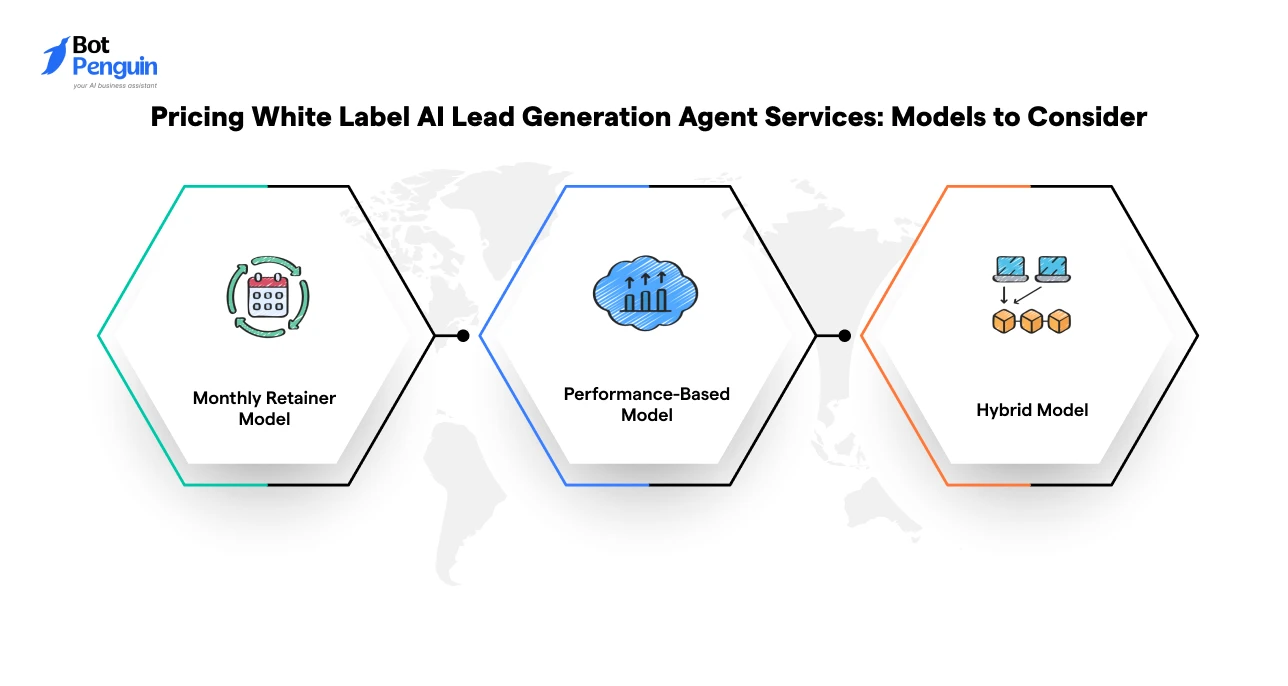
Pricing white label AI lead generation services depends on three factors: lead volume, client value, and how clearly a qualified lead is defined.
Most agencies don’t use a single model; they choose based on client type and predictability of inbound demand.
In this model, agencies may charge a fixed monthly fee, usually in the range of $200-600, along with a one-time setup fee of $400-1000 in the first month.
It works best for clients with steady and predictable inbound flow where the value comes from consistent lead handling rather than per-lead variability.
Common examples include real estate, home services, and healthcare businesses.
Here, pricing is tied directly to outcomes. Agencies may charge a fixed fee per qualified lead based on agreed qualification criteria, lead value, and industry.
This model is typically used in industries where each lead carries high monetary value, such as financial services or high-ticket real estate, where performance is easy to measure and justify.
The hybrid approach combines a setup fee with a lower monthly retainer and an additional per-lead fee after a certain volume threshold.
It is designed for clients with fluctuating or scaling demand, offering agencies stable baseline revenue while still capturing upside during high-performance periods.
The model you choose shapes the client relationship and determines how agencies package their AI lead generation services. Retainers create predictability. Performance-based works when qualification criteria are airtight. Hybrid suits scaling clients who need room to grow without renegotiating terms.
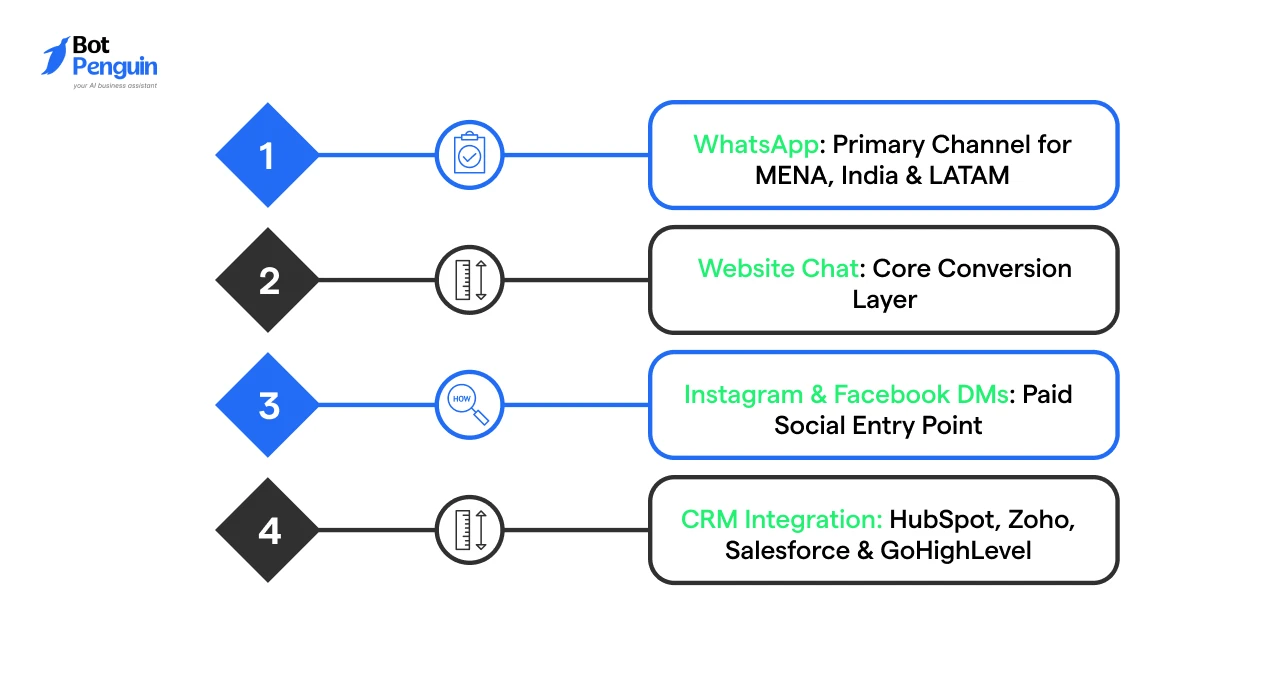
Branded lead generation agents perform best across high-intent channels where prospects are already engaging.
Here's the breakdown of where they work best and how CRM sync ties it all together:
In markets like India, the UAE, Saudi Arabia, Brazil, and Mexico, WhatsApp is the dominant conversion channel with far higher engagement than email or forms.
AI lead generation agents qualify leads inside the chat itself, making it ideal for high-intent inbound and click-to-WhatsApp ad campaigns.
Website chat captures organic and paid traffic the moment users land on a page.
Instead of static forms, white label AI agents start conversations in seconds, qualify intent, and ensure no lead is lost due to delayed response or drop-offs.
For agencies running Meta ads, DM automation becomes a direct extension of campaigns.
Click-to-Message ads flow straight into AI qualification conversations, turning social engagement into structured leads without manual follow-up.
Every qualified lead is pushed into the client's CRM with full conversation context, not just contact data.
This ensures clean attribution, faster follow-ups, and a continuously updated pipeline across all channels.
When WhatsApp, website chat, and social DMs are connected into one system, leads never drop between channels. Combined with instant CRM sync, agencies get faster response times, clearer attribution, and stronger campaign performance visibility.
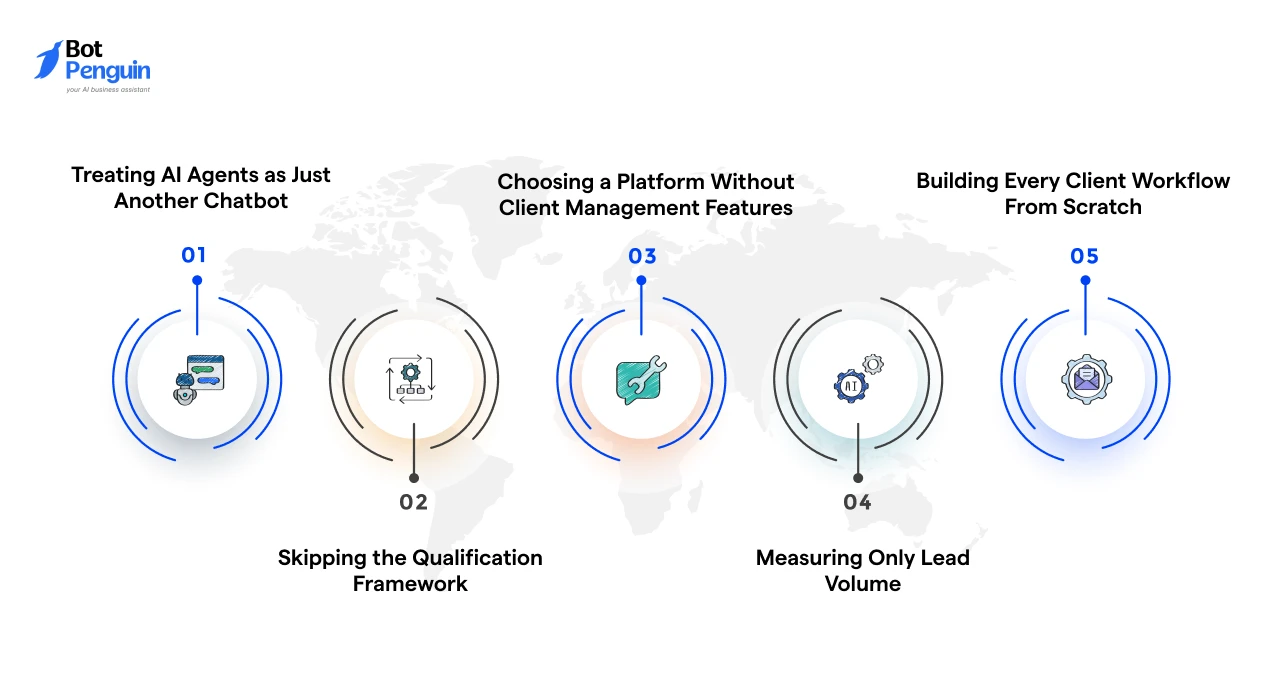
Launching white label AI lead generation services is not just about deploying an AI agent.
Agencies need the right strategy, workflows, and delivery process to create consistent client outcomes.
Many agencies focus only on automating responses instead of building qualification workflows that move prospects closer to conversion.
How to Overcome It: Design AI agents around the client’s sales process, including qualification questions, intent detection, lead scoring, and human handoff rules.
Without clear qualification criteria, AI agents may generate a high volume of leads without delivering sales-ready prospects.
How to Overcome It: Define what makes a lead valuable before deployment. Align qualification questions, scoring criteria, and routing logic with the client’s sales goals.
Some agencies choose tools based only on AI capabilities and overlook features needed to manage multiple client deployments.
How to Overcome It: Choose a white label AI agent platform that supports custom branding, client workspaces, CRM integrations, and scalable deployment workflows.
A higher number of leads does not always translate into better business results. Poor-quality leads can increase sales workload without improving revenue.
How to Overcome It: Track metrics beyond lead count, including qualification rates, response times, conversion rates, and revenue generated.
Creating every AI agent from the ground up makes delivery slower and limits scalability as the agency grows.
How to Overcome It: Build reusable templates, industry-specific workflows, and proven qualification frameworks that can be adapted across client accounts.
Avoiding these pitfalls helps agencies build reliable AI-powered offerings that deliver stronger client outcomes and create long-term business value.
Lead generation has become one of the strongest opportunities for agencies looking to expand their AI service offerings.
By deploying white label AI agents, agencies can help clients engage, qualify, and route prospects instantly while delivering the experience under their own brand.
Choosing from the best white-label AI agent platforms can help agencies launch faster, avoid the complexity of building AI infrastructure, and create a repeatable service model backed by measurable client outcomes.
The opportunity is clear: build a branded AI lead generation offering, help clients convert more opportunities, and create a scalable revenue stream for your agency.
White label agents for lead generation engage website visitors, WhatsApp users, and inbound prospects in real time. They ask qualification questions, capture lead details, assess intent, and route suitable prospects to sales teams with full context. This helps agencies improve response times and lead qualification workflows.
Industries with high-value leads like real estate, insurance, mortgage services, healthcare, home services, and e-commerce benefit most. AI lead generation agents are especially effective where fast response times and structured lead qualification directly impact client outcomes.
Yes. Agencies can use white label AI lead generation platforms like BotPenguin to offer branded AI agents under their own name. This allows them to provide lead qualification, WhatsApp automation, CRM integration, and conversational lead capture services without building the underlying technology themselves.
Pricing varies by industry, lead volume, and deployment complexity. Most agencies charge a setup fee for implementation and either a monthly retainer, a performance-based fee per qualified lead, or a hybrid pricing model that combines recurring revenue with performance incentives.
Yes. WhatsApp is one of the highest-performing channels for AI lead generation, particularly in markets such as India, the UAE, Saudi Arabia, Brazil, and Mexico. AI agents can qualify leads, answer questions, collect contact details, and route high-intent prospects directly to client sales teams within the conversation.
Agencies should avoid treating AI agents as simple chatbots, skipping lead qualification planning, choosing platforms without client management features, and focusing only on lead volume. A scalable approach requires the right workflows, integrations, and a platform that supports branded client deployments.
Launch Your White Label AI Lead Generation Service
Offer branded AI agents that engage prospects, qualify leads, and connect with client CRMs, without building AI infrastructure from scratch.
Explore Now!Checkout our related blogs you will love.
Updated at Sep 22, 2026
12 min to read

Updated at Sep 17, 2026
14 min to read
Updated at Sep 9, 2026
17 min to read
Updated at Aug 7, 2026
14 min to read
Updated at Oct 14, 2026
6 min to read
Table of Contents
