



In MQL vs SQL, an MQL (marketing qualified lead) shows interest but lacks clear buying intent. An SQL (sales qualified lead) meets the business's customer criteria and demonstrates readiness to buy. MQLs need nurturing through relevant follow-ups, while SQLs need timely sales outreach. The key difference is whether a lead is interested or ready to purchase.
Not every interested prospect is ready for a sales conversation. Yet small businesses often treat every inquiry the same way.
Sales teams may spend hours pursuing people who are still researching. Meanwhile, potential buyers who need immediate attention may go unanswered.
Understanding MQL vs SQL helps businesses prioritize leads based on their readiness to buy. It also clarifies when marketing should nurture prospects and when sales should step in.
This guide covers both lead stages, their differences, and practical examples. You'll also get a simple qualification rule, conversion tips, and ways chatbots can help identify sales-ready prospects.
What Is an MQL (Marketing Qualified Lead)?
An MQL (marketing qualified lead) is a prospect who shows interest in your business through marketing activities. They generally match your target audience but haven't demonstrated clear buying intent.
The MQL meaning becomes clearer when you consider where these prospects stand. They are typically exploring options, gathering information, or comparing solutions.
Common signs of an MQL include:
- Downloading resources: Accessing a guide, checklist, or helpful PDF.
- Subscribing to updates: Joining newsletters or signing up for notifications.
- Engaging with content: Attending webinars or watching product videos.
- Browsing your website: Visiting multiple relevant product or service pages.
- Interacting on social media: Responding to posts, stories, or other content.
These activities indicate curiosity and potential interest, not immediate purchase readiness.
Instead of pushing for a sale, businesses should nurture these leads with relevant information and follow-ups. Once they show clear buying intent and meet the required criteria, they can become sales qualified leads (SQLs).
What Is an SQL (Sales Qualified Lead)?
A sales qualified lead is a prospect who shows clear buying intent and meets your customer criteria. Unlike an MQL, an SQL is ready for direct sales engagement.
These leads typically match your service offerings, budget requirements, or target location.
Common signs of an SQL include:
- Pricing requests: Asking about product or service costs.
- Quote inquiries: Requesting a personalized estimate.
- Demo requests: Booking a product demonstration.
- Appointment bookings: Scheduling a consultation or meeting.
- Budget disclosure: Sharing an available spending range.
- Purchase timelines: Indicating when they plan to buy.
SQLs need prompt human follow-up because they are closer to purchasing. Delayed responses can mean losing interested buyers to competitors.
This difference in buying readiness also determines how businesses manage each lead stage.
MQL vs SQL: The Key Differences
Both MQLs and SQLs are qualified leads. The difference is how close they are to a buying decision. In simple terms, MQL and SQL stages help you separate early interest from real purchase intent.
This table shows the core sales qualified lead vs marketing qualified lead difference. One stage needs nurturing. The other needs fast follow-up.
The key distinction is simple. Fit shows whether someone could become a customer. Intent shows whether they are ready to act. That is why the next step is knowing when an MQL should move into the SQL stage.
MQL vs SQL Examples for Small Businesses
Understanding MQL vs SQL becomes easier with real business scenarios. The following examples show how initial interest develops into purchase intent.
Dental Clinic
- MQL: A visitor downloads a guide about teeth-whitening treatments.
- SQL: They request whitening prices and a Saturday appointment.
The visitor moves from researching treatments to actively planning a consultation.
Real Estate Agency
- MQL: Someone subscribes to property listing alerts in their preferred location.
- SQL: They request a property visit, sharing their budget and moving timeline.
Their specific requirements and visit request indicate stronger buying intent.
Coaching Institute or Online Course
- MQL: A student attends a free demonstration class to understand the course.
- SQL: They inquire about course fees, batch starting dates, and installment options.
The student progresses from exploring courses to considering enrollment.
Insurance Agency
- MQL: A visitor uses an online insurance premium calculator.
- SQL: They request a family health insurance quote before their policy renewal.
The quote request and upcoming renewal indicate an immediate purchase need.
In each example, interest develops into a clear buying signal. However, businesses still need consistent criteria to determine when sales should take over.
When Does an MQL Become an SQL?
An MQL becomes an SQL when it meets your customer-fit requirements and demonstrates clear buying intent. A simple qualification rule helps your team identify when sales should take over.
A Simple Handoff Rule
Treat a lead as sales qualified when it meets these three conditions:
Sales Qualification Rule:
- 2 Fit Signals: The lead meets two customer-fit criteria.
- 1 Intent Signal: The lead demonstrates clear purchase interest.
- Valid Contact: The lead provides a working phone number or email.
Fit signals may include:
- Living within your service area.
- Having a budget within your pricing range.
- Needing a product or service you offer.
Intent signals may include:
- Requesting pricing, a quote, demo, or appointment.
- Sharing a purchase timeline of 90 days or less.
For example, a prospect matches your service area and budget. They request a quote and provide their phone number. This lead meets the handoff criteria.
This approach resembles BANT, which considers budget, authority, need, and timeline.
Agree the Definitions in Writing
Marketing and sales may interpret qualification differently. Without shared criteria, promising leads can get overlooked.
Document your MQL and SQL definitions, ownership, and expected response times. Even a small team can maintain one shared document.
Once these rules are established, improving lead conversion becomes the next priority.
How to Improve Your MQL to SQL Conversion
Improving MQL to SQL conversion requires timely responses, better qualification, and consistent follow-ups. These five practices help move interested prospects toward sales-ready conversations.
1. Respond Fast
Delayed responses can cause businesses to lose potential customers.
A Harvard Business Review study found that contacting leads within an hour matters. Companies responding within that window were nearly seven times more likely to qualify leads than those waiting even an hour longer.
Prioritize quick responses, especially when prospects show immediate buying intent.
2. Ask Qualifying Questions in the Conversation, Not in a Long Form
Long forms can discourage prospects from sharing information.
Instead, ask two or three questions during the conversation:
- What product or service do you need?
- What is your approximate budget?
- When are you planning to purchase?
These answers reveal customer fit and buying intent without creating unnecessary friction.
3. Route by Answer
Not every inquiry requires immediate sales attention.
Send SQLs directly to the appropriate sales representative. Keep MQLs in nurturing workflows until they demonstrate stronger intent.
This ensures sales teams prioritize prospects who are ready to act.
4. Nurture the MQLs You Don't Hand Off
Early-stage leads aren't necessarily lost opportunities.
Share relevant information, timely reminders, and useful offers to maintain engagement. Our guide to lead nurturing software covers tools that support these follow-ups.
Consistent nurturing helps prospects progress without unnecessary sales pressure.
5. Review the Handoff Every Month
Review which qualified leads converted and which didn't.
Identify missed opportunities and check whether qualification rules are too strict or loose. Adjust your criteria based on actual customer behavior.
These improvements strengthen qualification, including how automated systems identify promising leads before sales accepts them.
Where Do AQL, SAL and PQL Fit?
Beyond MQLs and SQLs, businesses may use other lead qualification stages. These terms describe how leads are evaluated and moved toward sales.
- AQL (Automation Qualified Lead): A lead qualified through automated tools, such as chatbots. Some businesses also use AQL to mean Activation Qualified Lead.
- SAL (Sales Accepted Lead): A lead reviewed and accepted by sales for follow-up. It typically sits between MQL and SQL.
- PQL (Product Qualified Lead): A prospect whose product usage indicates buying potential. This commonly applies to free trials and software products.
These stages can vary depending on how businesses qualify prospects.
For broader context, what is lead generation explains the fundamentals. The lead generation process covers how prospects move toward conversion.
Automated qualification can also help identify sales-ready leads before human follow-up.
How a Chatbot Qualifies Leads Before They Reach Sales
The difference between an MQL and SQL often comes down to unanswered questions. A chatbot can collect these details before involving your sales team.
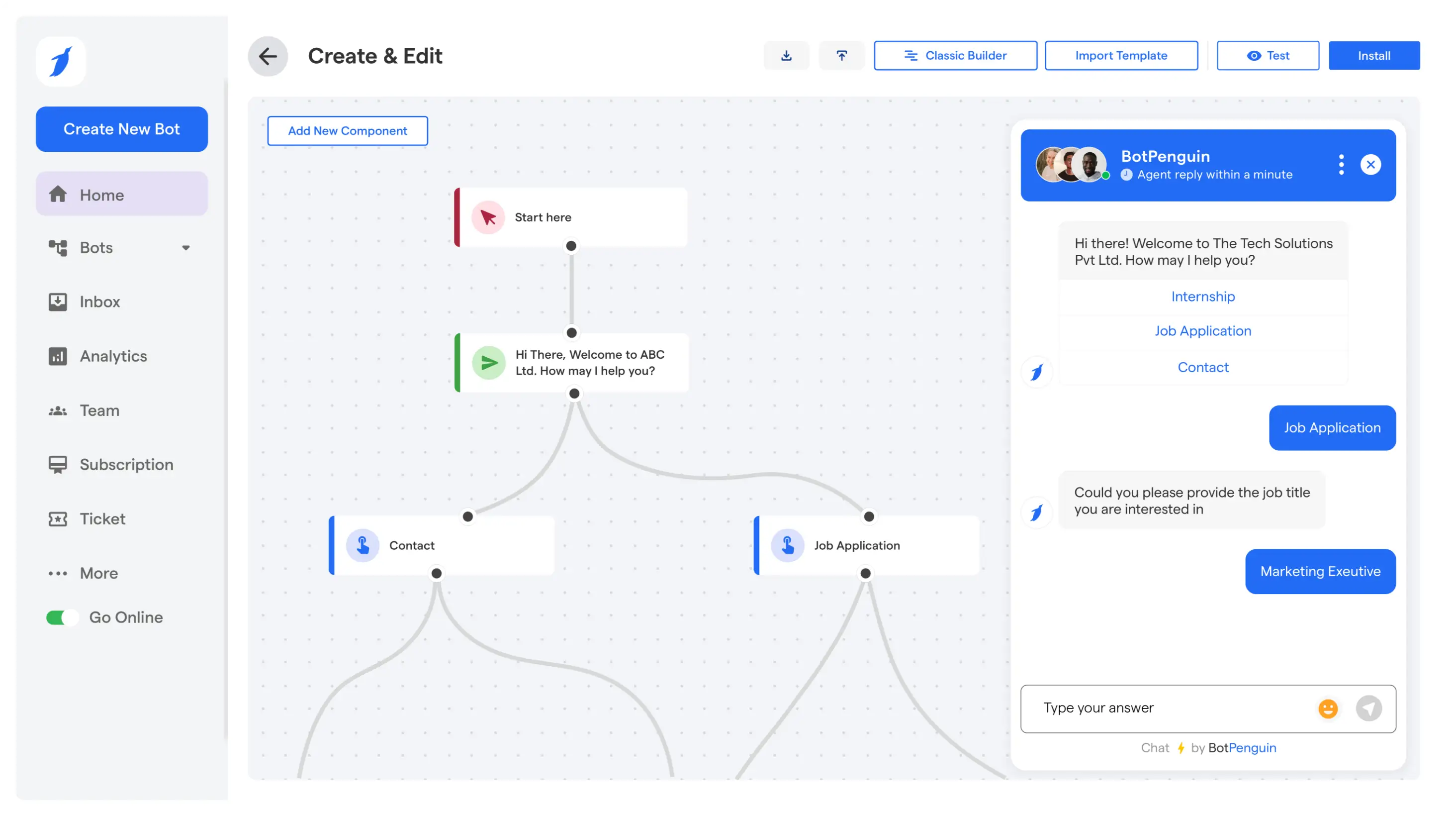
BotPenguin helps businesses qualify leads through automated conversations. With a lead generation chatbot, you can:
- Ask qualifying questions: Collect requirements, budgets, and timelines across websites, WhatsApp, Instagram, and Facebook Messenger.
- Store lead information: Save customer responses in contact profiles for future reference.
- Apply conditional logic: Use if/else rules to determine the next step based on responses.
- Enable human handoff: Transfer sales-ready prospects to agents through the live chat inbox.
- Connect CRM systems: Send qualified lead details to HubSpot, Salesforce, or Zoho CRM on the King plan.
- Nurture early-stage leads: Use opt-in broadcasts and drip messages to maintain engagement.
Businesses can start with BotPenguin's free plan. Paid plans include Little at $29/month and King at $99/month.
Check BotPenguin pricing for plan details. You can also review the AI lead generation chatbot use case.
This approach helps businesses identify buying intent and prioritize sales-ready prospects.
Conclusion: MQL vs SQL Comes Down to Intent
Understanding MQL vs SQL helps businesses prioritize leads based on buying readiness. MQLs need consistent nurturing, while SQLs require timely sales follow-ups.
Start by documenting a simple qualification rule based on customer fit and intent. Make sure everyone understands when a lead should reach sales.
Collect qualification details early through conversations, forms, or chatbots. Review conversion outcomes regularly to identify gaps and improve your handoff process.
With clear criteria and consistent follow-ups, your team can focus on promising prospects without overlooking potential customers.
Frequently Asked Questions
What does MQL stand for in sales?
MQL stands for marketing qualified lead. It refers to a prospect who matches your target audience and shows interest through marketing activities. These include downloading guides or subscribing to updates. However, they need further nurturing before becoming sales-ready.
What is the main difference between an MQL and an SQL?
The main difference is buying intent. MQLs show interest but aren't ready to purchase. SQLs meet your customer criteria and demonstrate purchase intent. Marketing typically nurtures MQLs, while sales handles SQLs through direct conversations and timely follow-ups.
What is a good MQL to SQL conversion rate?
There is no universal conversion benchmark. Rates vary by industry, business model, and qualification criteria. Instead of relying on general averages, track your conversion rate monthly. Review changes to identify gaps in lead qualification, nurturing, and sales follow-ups.
Can a lead skip the MQL stage?
Yes. A prospect can become an SQL without first becoming an MQL. For example, someone requesting an immediate quote may already demonstrate buying intent. If they meet your customer criteria, sales can contact them directly without additional nurturing.
Who decides whether a lead is an SQL?
Sales usually confirms whether a lead qualifies as an SQL. However, marketing and sales should establish the criteria together. In small businesses, owners or individual sales representatives may handle qualification. Clear rules ensure consistent decisions and timely follow-ups.
Can a chatbot qualify leads automatically?
Yes. Chatbots can ask questions about customer needs, budgets, and purchase timelines. Based on predefined rules, they can route qualified prospects to sales representatives or connected CRM systems. BotPenguin also supports human handoff when leads need personal assistance.