


Generative AI Use Cases: 8 Real Applications & Examples for Business
Updated at Oct 8, 2026
14 min to read
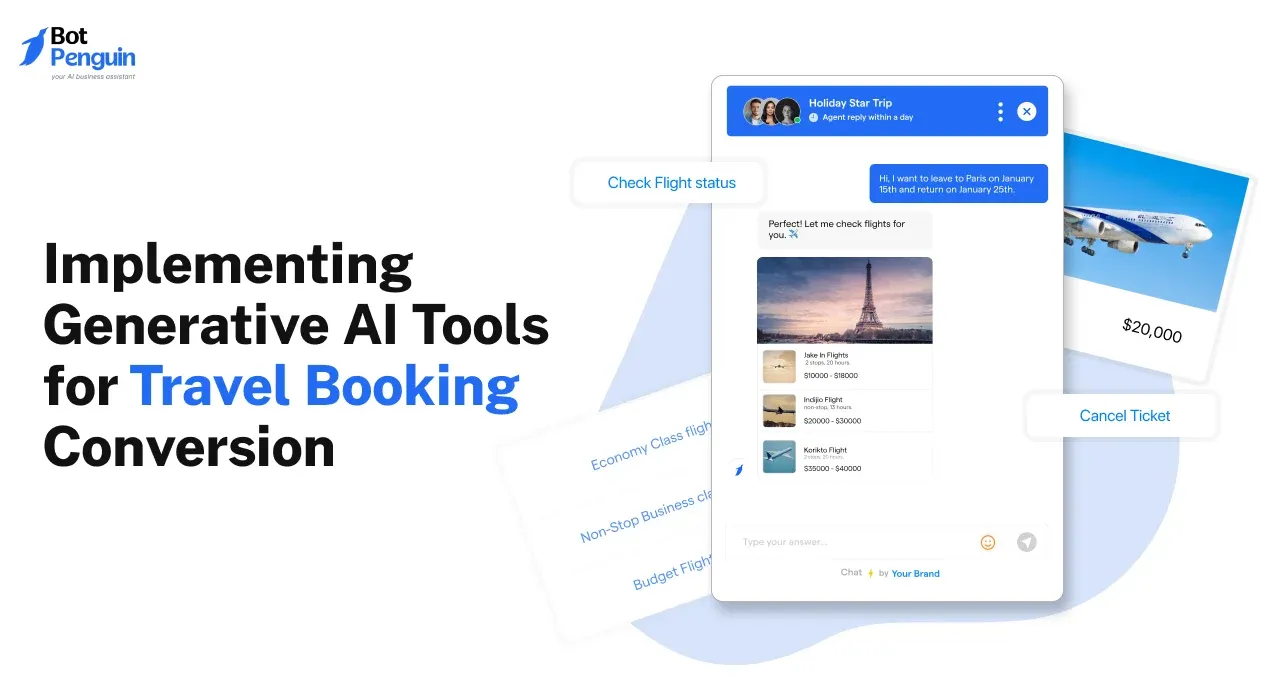
Generative AI in travel helps businesses create personalized itineraries, answer destination questions, recommend travel options, and support booking decisions. By understanding traveler preferences and generating relevant responses, it can improve trip planning and customer engagement. Travel companies can also use generative AI to streamline content creation, customer support, and booking-related communications.
Generative AI is changing how travelers research, compare, and plan trips.
For travel businesses, its value goes beyond generating itineraries. It can personalize recommendations, answer booking questions instantly, and help travelers move through decisions with less friction.
According to Phocuswright, 33% of U.S. travelers used generative AI for trip research, showing that AI-assisted travel planning is already becoming part of the customer journey.
This guide explores how generative AI in travel can support booking conversion, which tools fit the process, and how travel businesses can implement them effectively.
Generative AI in travel uses large language models and connected travel data to understand traveler intent and produce useful responses. It can suggest destinations, build itineraries, summarize options, answer booking questions, and personalize recommendations.
The strongest implementations connect generative AI with live pricing, availability, policies, customer data, and booking systems. This turns a general AI conversation into a travel experience that can move someone closer to booking.
Generative AI can improve several parts of the booking journey. Its value comes from reducing the effort travelers spend researching, comparing, and booking a trip.
That opportunity is especially visible between travel discovery and conversion.
Skift Research found that 71% of travelers were comfortable using AI to generate trip ideas and 67% to narrow their options, while only 16% had used AI to book travel.
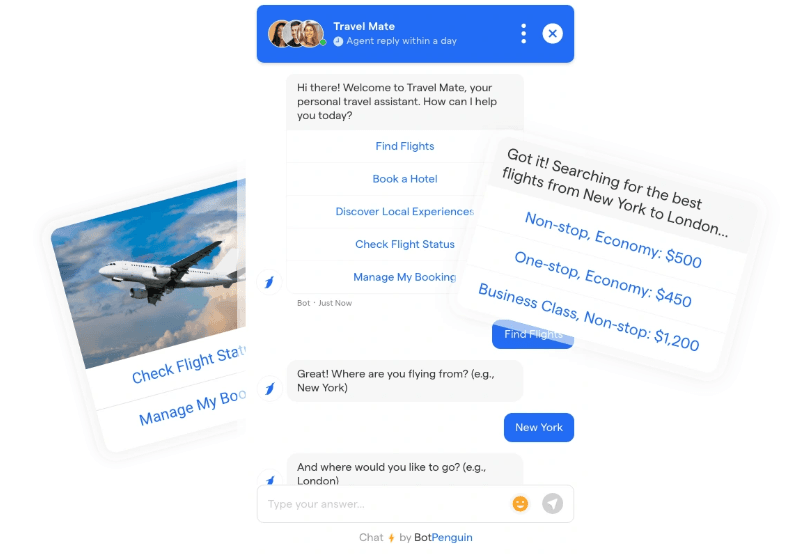
Generative AI can turn preferences, budgets, dates, and trip goals into tailored itinerary suggestions. Instead of showing every available option, travel businesses can surface choices that better match each traveler.
More relevant recommendations reduce unnecessary searching and clarify the next booking step.
Travelers often have questions about dates, baggage, cancellation policies, room types, or local details before booking. Generative AI can answer routine questions instantly when connected to reliable business data.
Faster responses help keep travelers inside the booking journey instead of leaving to search elsewhere.
Pricing decisions usually rely on revenue-management systems, market data, demand signals, and business rules. Generative AI can support that process by explaining offers, comparing options, and presenting relevant choices conversationally.
This helps travelers understand available options without treating generative AI as the pricing engine itself.
Predictive systems can identify patterns across destinations, dates, and traveler segments. Generative AI can make those insights easier for teams to interpret and apply.
Travel businesses can then adjust promotions, inventory priorities, or customer messaging around expected demand.
Generative AI can draft destination summaries, itinerary descriptions, FAQs, and promotional copy. Teams can create booking content faster while keeping human review for accuracy, brand voice, and changing travel information.
Used together, these capabilities can make the travel booking journey more relevant, responsive, and easier to complete.
The right setup usually combines a language model with trusted travel data and booking infrastructure.
Not every platform below is a standalone generative AI model, but each can support an AI-assisted booking experience.
OpenAI models can interpret natural-language travel requests, generate recommendations, summarize options, and support conversational planning.
When connected to current inventory, pricing, and policy data, they can help turn broad travel questions into more actionable booking choices.
Amadeus combines travel data, technology infrastructure, and AI across the travel ecosystem.
Travel businesses can use its data and platform capabilities to support search, offers, operations, and other workflows that need reliable travel information.
Skyscanner's Travel APIs provide search data for flights, hotels, and car hire. Skyscanner also offers an MCP server for selected partners building AI-powered travel experiences.
These services can supply current travel information to AI interfaces, rather than relying on generated answers alone.
IBM watsonx Assistant supports conversational search, question handling, and custom actions.
Travel businesses can use it to build structured customer interactions that connect generative responses with business processes and trusted information.
Travelport TripServices provides API infrastructure for shopping and servicing travel across flights and stays.
Its AI-ready architecture helps travel businesses connect conversational experiences with the travel content and workflows needed to move toward booking.
Implementation should start with one measurable booking problem rather than a broad AI rollout. Here’s a detailed step-by-step guide to help you through the process.
Choose the problem you want AI to address. Examples include unanswered questions, weak itinerary personalization, slow comparisons, or high drop-off before checkout.
Select the language model, travel data sources, and booking systems needed for that use case. Prioritize tools that integrate with your existing workflow.
Integrate the selected tools through APIs or supported connectors. The AI should have access only to the data and actions needed for its booking task.
Ground responses in approved information, including pricing, availability, policies, destination data, and customer preferences. Avoid relying on the language model alone for changing travel details.
Track useful metrics such as assisted bookings, conversation-to-booking rate, drop-off points, response accuracy, and human handoffs. Use those findings to improve prompts, data sources, and workflows.
Expand only after the first use case produces reliable results. Add new channels, destinations, booking stages, or AI workflows based on measured performance.
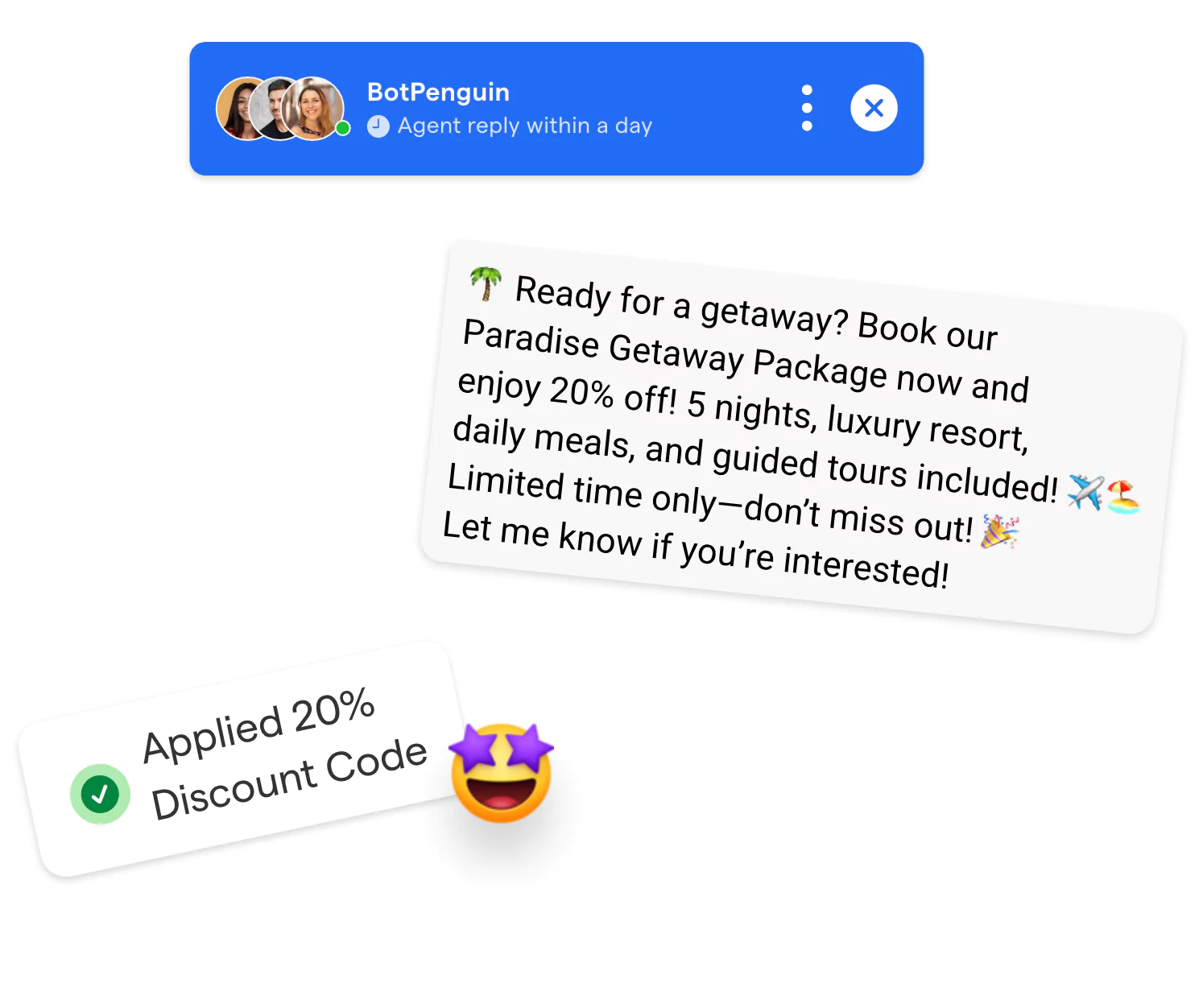
BotPenguin can provide the conversational layer between travelers and connected business systems.
Travel businesses can use AI-powered chat experiences to:
answer common questions
capture traveler requirements
recommend relevant options
guide users toward the next booking step
It can also support conversations across channels and hand off complex cases to human teams when needed.
For travel businesses, the goal is not simply to add AI, but to reduce friction between an inquiry and a completed booking.
Generative AI in travel is most useful when it solves a specific booking problem.
Personalized recommendations, faster answers, better comparisons, and connected travel data can make the journey from research to reservation easier.
The technology works best when generative models are connected to reliable pricing, availability, policies, and booking systems.
Travel businesses should start with one measurable use case, monitor its impact on conversion, and scale only what delivers consistent results.
Generative AI can reduce booking friction by personalizing recommendations, answering questions instantly, comparing options, and guiding travelers toward relevant next steps. Its effectiveness depends on access to accurate travel data and a clear booking workflow.
Travel businesses can use language models such as OpenAI's models alongside platforms and data services such as Amadeus, Skyscanner APIs, IBM watsonx Assistant, and Travelport TripServices. The best combination depends on the booking use case.
Yes, when responses involve changing information such as prices, availability, schedules, or policies. Connecting AI to trusted travel systems reduces the risk of presenting outdated or invented booking information.
Yes. Small travel businesses can start with a focused use case such as answering booking questions, collecting trip requirements, or generating itinerary suggestions. A narrow implementation is easier to test before expanding.
Track metrics connected to the booking journey, including assisted bookings, conversation-to-booking rate, drop-off points, response accuracy, and human handoffs. These measures show whether AI is reducing friction rather than simply increasing conversation volume.
Convert More Travel Bookings
Use BotPenguin to answer travel questions, personalize conversations, and guide more travelers toward faster, smoother booking decisions across channels.
Start NowCheckout our related blogs you will love.
Updated at Oct 8, 2026
14 min to read

Updated at Sep 10, 2026
12 min to read
Updated at Oct 10, 2026
12 min to read
Updated at Oct 9, 2026
11 min to read

Updated at Oct 6, 2026
12 min to read
Table of Contents