



HubSpot AI Agent: How It Works, Use Cases & Integrations
Updated at Oct 6, 2026
9 min to read
Most people searching for 'digital product reselling' already understand the appeal.
They want recurring revenue, no shipping, and no inventory. What they need is a clear business model.
A digital product reseller sells existing software, SaaS, or AI tools. They sell these products to business clients through partner programs. They do not build the product or manage infrastructure.
Their job is to find clients and package the offer. They also manage onboarding, support, and client relationships. The vendor handles hosting, updates, and product maintenance.
This guide explains how a digital reselling business works.
You will learn product types, revenue streams, and startup steps. It also covers what to check before joining a reseller program.
A digital product reseller sells existing software, SaaS tools, or AI products from a vendor to business clients. They do not build the product themselves. They earn through margins, recurring commissions, and service fees for setup, implementation, or support.
The core difference is simple.
A digital product reseller sells something already built. A creator builds and sells their own product.
Creators sell ebooks, courses, templates, or media files. Resellers distribute existing platforms, tools, or software products. Both models work, but the economics are different.
Digital product reselling is common in the software industry.
Value-added resellers have distributed enterprise software for decades. The model is now easier for smaller businesses.
No-code AI tools have lowered the barrier to entry. SaaS platforms now offer structured partner programs. This helps consultants and agencies sell without technical teams.
Here are three practical examples:
In each case, the reseller owns the client relationship. The vendor handles hosting, updates, and infrastructure.
Next, compare the product categories that fit this reseller model.
Not every digital product is built for resale.
The best options come with partner programs, clear commissions, and client-management support. A digital product reseller should first compare the main B2B categories.
The sections below cover the four reseller-friendly product categories worth evaluating.
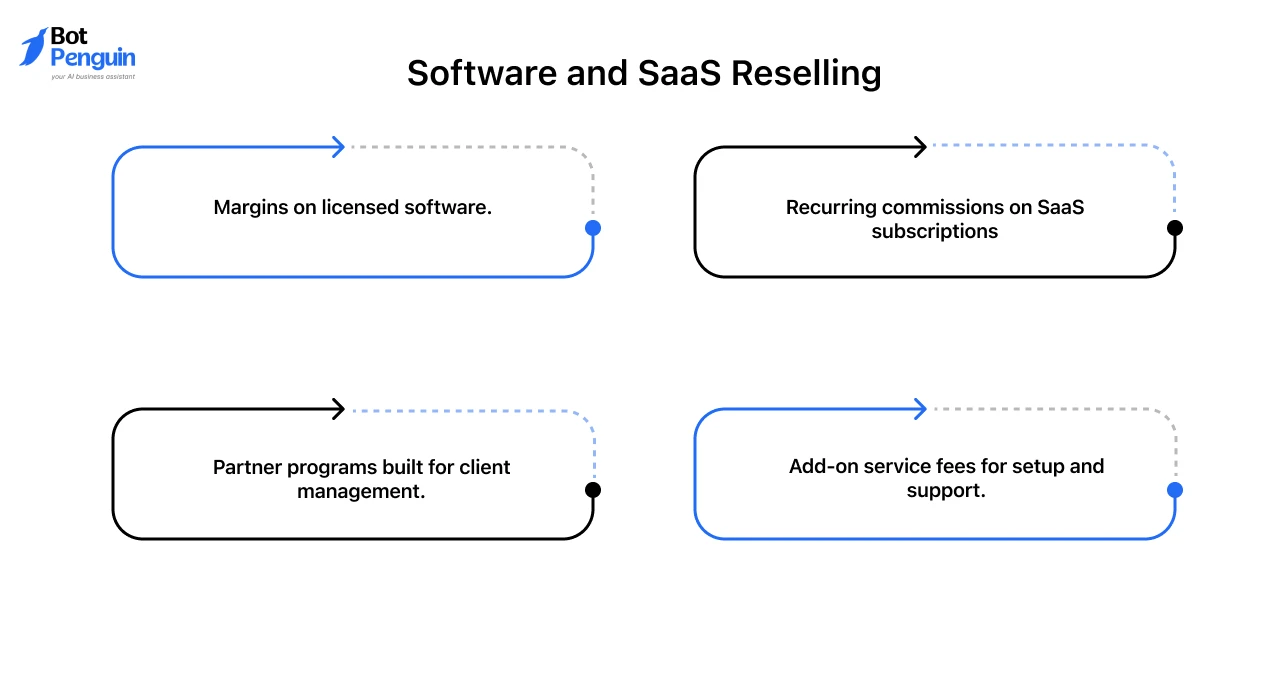
Software reselling is the most established category.
Resellers usually earn through:
SaaS reselling works because subscriptions renew regularly. A reseller with 20 clients at $200/month earns $4,000/month before service fees.
If you want to compare this model in more depth, go through our software reseller guide.
AI tool reselling is a high-demand category in 2026.
Small businesses need AI systems for:
Most SMBs cannot build these tools internally. That gap creates a strong opening for a digital reseller.
AI chatbot partner models let resellers sell omnichannel chatbot platforms. They can earn recurring commissions and add setup fees.
The vendor handles AI infrastructure, model updates, and hosting. The reseller handles client acquisition and client relationships.
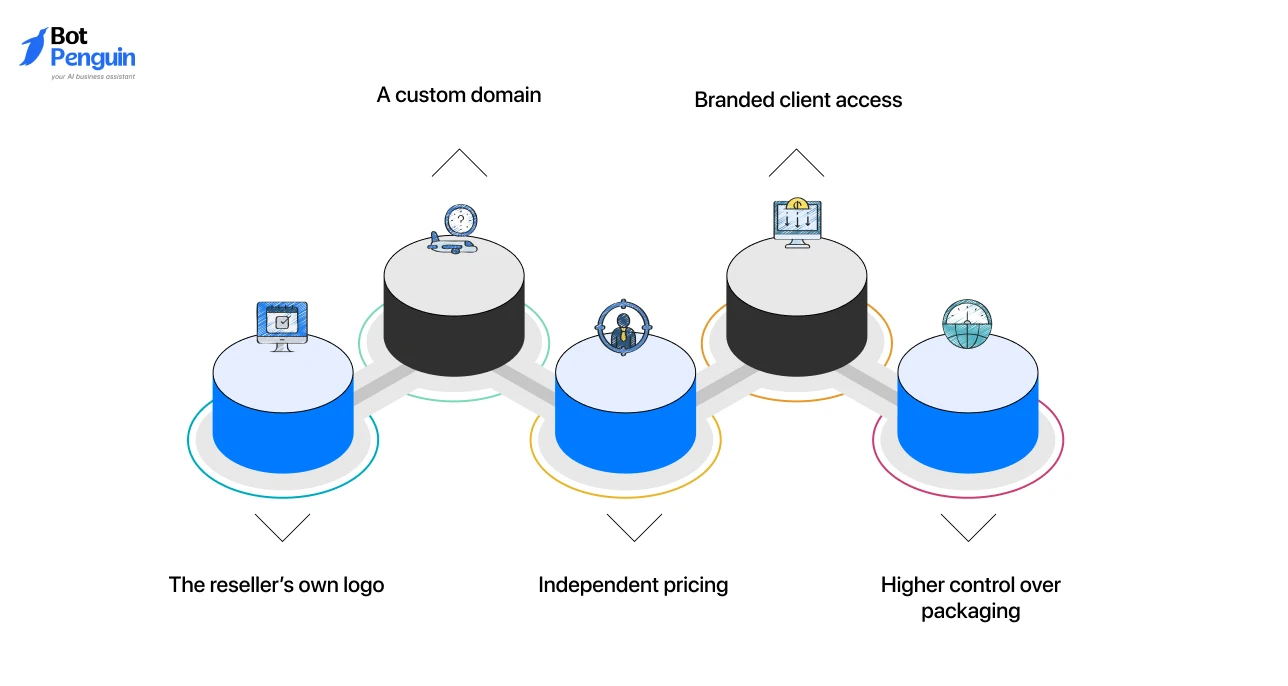
White-label reselling gives the reseller more brand control.
This model usually includes:
This is where a white-label chatbot model can fit. It suits resellers who want ownership beyond commission income.
White-label usually needs more onboarding and investment. But it can create higher margins after demand is validated.
A digital marketing reseller sells marketing software to existing clients.
Common resale categories include:
This model fits agencies already managing client marketing. They can add software revenue without starting a new service line.
Margins are usually lower than AI or SaaS reselling. But active client relationships can make adoption faster.
Once the category is clear, the next step is understanding how resellers actually make money.
Digital product resellers do not rely on one commission source.
They usually combine recurring subscriptions, setup fees, support retainers, and upsells. This mix makes the model stronger than one-time sales.
The table below shows the main revenue streams in a reseller model.
The compounding effect separates reselling from one-time sales.
For example, 15 clients at $150/month create $2,250/month in recurring income. A $400 setup fee also adds front-loaded revenue per new client.
As clients upgrade plans, the revenue base grows further. This is what makes a digital reselling business scalable over time.
Next, let’s go ahead and break down how to start this model step by step.
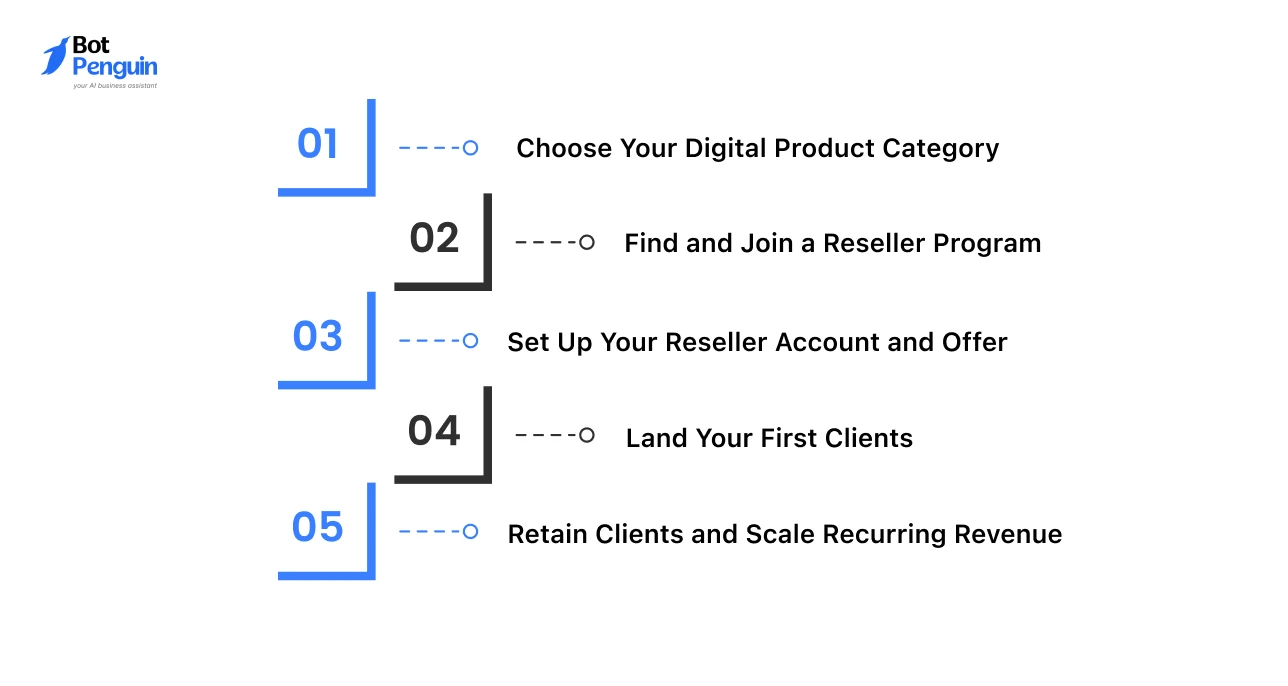
The path follows a clear five-step sequence.
These steps work for SaaS, AI tools, and white-label reselling. Each step changes slightly based on your product category.
The steps below explain how to choose, package, sell, and scale the model.
If you are still comparing reseller models, use our guide on how to make money as a chatbot reseller to understand the different paths and choose the one that best fits your goals.
The product category shapes your margins, audience, and sales cycle.
Compare each category by:
Software and SaaS reselling is established. AI tool and chatbot reselling are growing faster in 2026.
Choose a product your clients already need. Product-channel fit matters more than product hype.
Not every vendor program is worth joining.
Evaluate each program on:
Recurring commissions are stronger than one-time payouts. Tiered commissions are better for long-term growth.
Avoid unclear pricing models. They can reduce margin predictability as usage grows.
Set up your account before approaching prospects.
Your first offer should include:
A niche demo converts better than a generic walkthrough. Show the buyer’s actual workflow.
Clear packaging shortens sales conversations. It also makes the offer easier to trust.
Start with warm relationships first.
Your first clients can come from:
The fastest deal usually comes from existing trust. The buyer should already feel the problem.
Position the product as an upgrade. Lead with outcomes, not technical features.
Retention makes the model profitable.
Track simple outcomes like:
Report results every month. Clients who see value are easier to retain.
Build templates for repeated client types. This makes every new setup faster.
That is how a digital reseller turns early clients into recurring revenue. The next section explains why AI chatbots are among the strongest product categories for this model.
AI chatbots and automation tools offer strong reseller potential in 2026.
Small and mid-sized businesses want AI support, lead capture, and messaging automation. But most cannot build these systems themselves.
That demand creates a clear opening for every digital product reseller.
BotPenguin’s chatbot reseller program gives resellers a ready-to-sell AI chatbot platform. It supports recurring commissions, white-label branding, multi-client management, and sales enablement.
The platform handles AI infrastructure, model updates, and channel integrations. Resellers handle client acquisition, onboarding, and relationships.
The table below shows why BotPenguin fits this reseller model.
This matters because reseller income depends on more than commission. Strong demand, low setup friction, and repeatable client use cases make the model easier to scale.
If you want a high-demand category, AI chatbot reselling is a strong place to start. It combines recurring income, practical business demand, and low technical effort.
Explore the chatbot reseller program to review plans, commissions, and partner options.
Next, answer common questions readers may still have about this model.
These signals show why AI chatbot reselling can support both early testing and long-term recurring revenue.
80,000+ businesses served · 193 countries · 30% commission on closed deals · Reseller plans from $150/month · 5x–20x partner ROI reported
“We started looking for something to resell, landed on AI chatbots, and found no stock to manage and income that kept coming in after the platform handled setup. Seventeen clients later, we are sitting at 12x ROI.” — Webhoper, BotPenguin Reseller Partner
A digital product reseller sells existing software, SaaS, or AI tools through a vendor partner program. They do not build or host the product. They earn through commissions, license markups, setup fees, and support services. The vendor manages infrastructure, while the reseller manages client relationships.
The strongest reseller categories are software licenses, SaaS subscriptions, AI tools, and white-label platforms. These products support recurring revenue, defined partner programs, and no inventory cost. AI chatbots and automation platforms are especially strong because SMBs need them but usually cannot build them internally.
Digital product resellers earn through recurring commissions, setup fees, customization fees, support retainers, and plan upgrades. Subscription commissions create the base income. Setup and service fees add upfront revenue. As clients renew, upgrade, or add integrations, reseller income grows without adding equal delivery work.
No coding is needed for most programs. A digital product reseller needs product knowledge, sales skills, and client management skills. Modern reseller platforms usually provide no-code tools, templates, dashboards, and partner support. Technical knowledge helps with integrations, but the vendor usually handles hosting, updates, and infrastructure.
A digital product reseller sells an existing product made by another vendor. A creator builds and sells their own product, such as ebooks, templates, or courses. Resellers skip product development and earn recurring income faster. Creators own the product but manage creation, updates, and distribution themselves.
AI tools and white-label platforms usually offer the highest margins. They combine recurring subscriptions, setup fees, and service revenue. BotPenguin, for example, offers commissions of 30% depending on tier. SaaS and software programs are also profitable, but AI tools are expected to see stronger SMB demand in 2026.
A digital product reseller does not build products, manage inventory, or handle shipping.
They find clients, match them with software or AI tools, and earn recurring income when clients renew. The vendor manages product development, hosting, updates, and infrastructure.
The key decision is choosing the right category. Software and SaaS reselling is stable. AI tool and chatbot reselling is growing faster in 2026 due to high SMB demand.
White-label reselling adds brand ownership after demand is validated.
If you want strong margins and lower technical effort, explore BotPenguin’s reseller program.
It lets you focus on finding clients, serving them well, and building recurring revenue.
Subscribe to Our Newsletter
Get the latest business insights straight into your inbox.
Checkout our related blogs you will love.
Updated at Oct 6, 2026
9 min to read
Updated at Sep 28, 2026
12 min to read
Updated at Sep 21, 2026
11 min to read
Updated at Sep 12, 2026
8 min to read
Table of Contents

