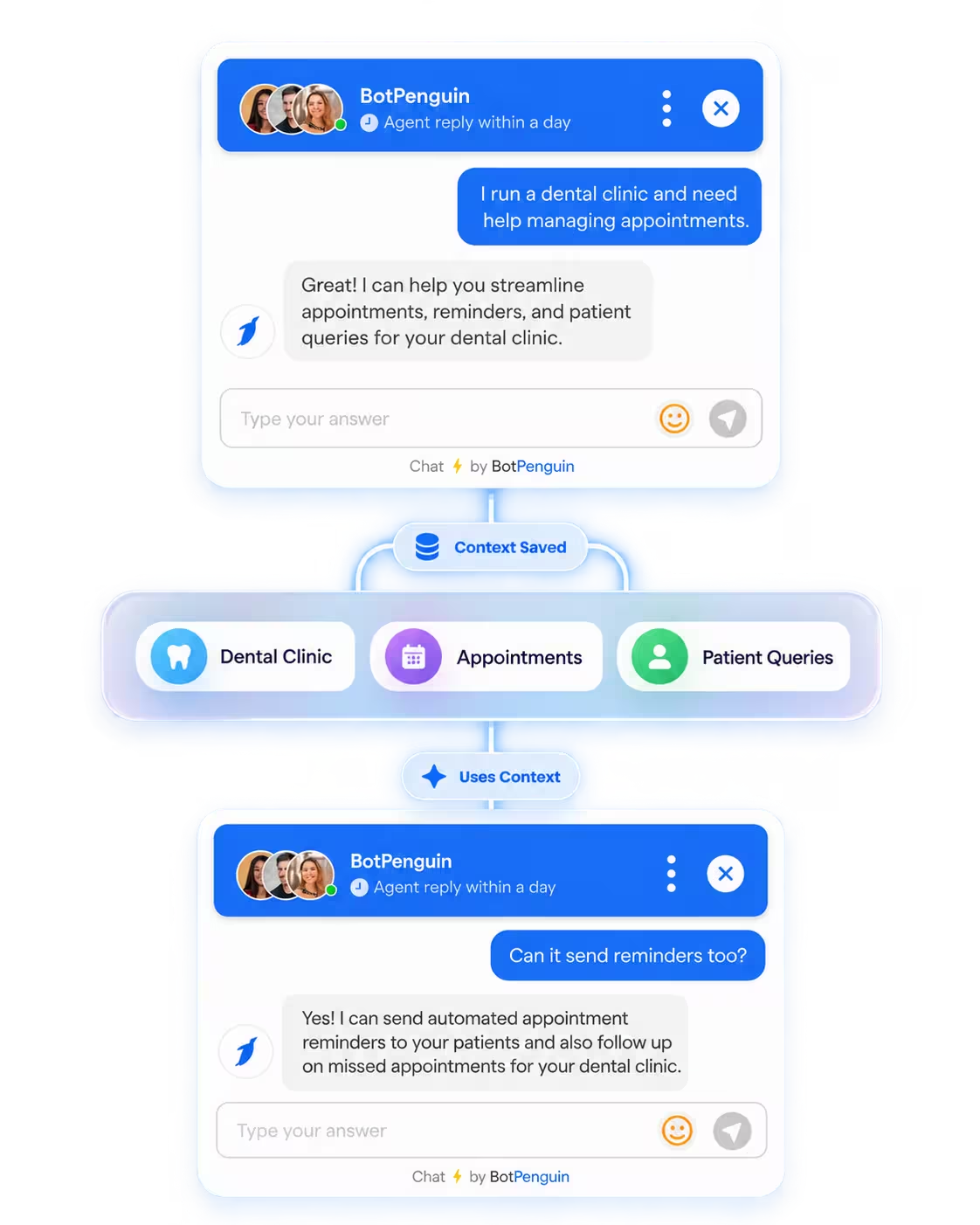
A white label ChatGPT is a custom AI chatbot built on GPT that transforms how businesses interact with customers. Companies can tailor its features, appearance, and responses to match their brand instead of relying on generic solutions.
An ArXiv study found that access to AI tools increased productivity by 15% on average among customer support agents. This reflects the growing prominence of tools like AI chatbots.
However, building an effective white label ChatGPT isn’t as simple as deploying a bot and expecting results. It takes careful planning, clear objectives, and constant improvement. Businesses must follow best practices to ensure their white label ChatGPT solution performs well and delivers value. With the right strategies, companies can fully leverage their white label AI chatbot.
This article will explore steps to create a white label ChatGPT chatbot, which enhances your customer experience and supports business growth.
What is White Label ChatGPT?
A white label ChatGPT is an AI-powered chatbot solution that you can rebrand as your own. It offers the functionality of ChatGPT but with custom branding and features.

Some white label ChatGPT free solutions allow businesses to interact with customers while maintaining their own brand identity.
These solutions are typically made available by white label AI chatbot platform providers, many of which provide customization capabilities.
The look, tone, and language of the white label AI chatbot can be customized to suit your requirements. It is suitable for companies that wants to provide AI-based customer support without building from the ground up.
Want complete control over your AI chatbot? Launch your white label ChatGPT platform with BotPenguin.
Essential Features of a White Label ChatGPT Platform
A white label ChatGPT platform provides everything businesses need to build, brand, deploy, and manage GPT-powered AI chatbots under their own identity.
From customization and integrations to security and analytics, the right platform helps you deliver intelligent customer experiences while maintaining complete control over your brand.
Below are the essential features of a white label ChatGPT platform:
Complete Branding & Customization

A white label ChatGPT platform lets businesses fully customize their GPT-powered chatbot with their own logo, colors, domain, and branding.
This creates a consistent customer experience across every interaction.
Advanced Natural Language Processing (NLP)
A white label ChatGPT platform uses GPT-powered natural language processing (NLP) to understand customer intent and generate accurate, human-like responses.
It can interpret complex queries, slang, and conversational context for more natural interactions.
Multi-Platform Integration
One of the most important features of white label ChatGPT is that it can be used on different platforms.
It enables businesses to deploy GPT-powered chatbots across websites, social media channels, messaging apps, and other digital touchpoints, ensuring customers receive consistent support wherever they engage.
24/7 AI Customer Support

A white label solution for ChatGPT allows businesses to provide round-the-clock AI customer support. GPT-powered chatbots can instantly answer questions, resolve common issues, and assist customers at any time.
Customizable Conversational Flows
A white label chatbot built on ChatGPT enables businesses to design custom GPT-powered conversation flows for lead generation, appointment booking, customer support, product recommendations, and other workflows.
Customizing the flow helps improve the user experience.
AI-Powered Learning
White Label ChatGPT systems learn from every interaction. The more interactions it handles, the better it becomes at generating relevant responses.
It adapts to new queries and improves its responses over time. Thus making it more efficient and accurate as it learns from data.
Seamless Backend Integration
A white label ChatGPT platform integrates with CRMs, databases, help desks, calendars, and other business systems without friction.
It allows GPT-powered chatbots to access customer information and automate workflows.
Multi-Language Support
Multi-language support is a crucial feature for businesses with international clients. White label ChatGPT can be customized to offer support in multiple languages.
Thus, it allows businesses to engage customers from different regions with ease.
Easy Setup and Deployment
Most white label ChatGPT platforms offer no-code or low-code deployment, making it easy to launch GPT-powered chatbots on your website or applications with minimal technical effort.
Security and Data Privacy
A reliable white label ChatGPT platform includes enterprise-grade security features such as encryption, access controls, and secure data handling to protect customer information.
Reporting and Analytics

An ideal branded ChatGPT platform provides analytics dashboards that track chatbot performance, conversations, response quality, and user engagement, helping businesses optimize their GPT-powered AI chatbot.
Scalability
As your business grows, so should your white label AI chatbot. Whether you’re handling hundreds or thousands of customer interactions, the system should easily adapt to increasing demands.
Cost-Effective Automation
A white label ChatGPT platform reduces support costs by automating recurring customer interactions while enabling human agents to focus on more complex requests.
User-Friendly Dashboard
A white label ChatGPT platform includes an intuitive dashboard that makes it easy to build, manage, monitor, and optimize GPT-powered chatbots without extensive technical expertise.
Key Benefits of White Label ChatGPT Solutions
A white label ChatGPT solution helps businesses launch branded AI chatbots quickly without investing in expensive AI development.
Beyond the platform's features, it offers measurable business benefits that improve efficiency, customer experience, and long-term growth.
Faster Time-to-Market
Instead of spending months developing an AI chatbot from scratch, businesses can launch a fully branded ChatGPT solution in days or weeks.
This allows them to adopt AI faster and respond quickly to changing customer expectations.
Lower Development and Maintenance Costs
Building and maintaining an AI chatbot requires significant investment in infrastructure, development, and ongoing updates.
A white label ChatGPT solution eliminates much of this overhead while providing enterprise-ready capabilities.
Stronger Brand Identity
A white label ChatGPT lets businesses deliver AI conversations under their own brand, creating a consistent customer experience across every touchpoint and strengthening brand recognition.
Better Customer Engagement

GPT-powered conversations feel more natural and contextual, enabling businesses to deliver personalized interactions that improve customer satisfaction and encourage repeat engagement.
Increased Team Productivity
By automating repetitive tasks such as answering FAQs, qualifying leads, and scheduling appointments, businesses can free their teams to focus on complex customer issues and strategic initiatives.
Easier Business Scalability
As customer demand grows, a white label ChatGPT solution can handle increasing conversation volumes without requiring proportional increases in support staff, making growth more cost-effective.
Actionable Customer Insights
Every chatbot interaction generates valuable data about customer questions, preferences, and behavior.
Businesses can use these insights to improve products, marketing campaigns, and customer support processes.
New Revenue Opportunities
Agencies, SaaS companies, and solution providers can rebrand and resell white label ChatGPT solutions under their own name, creating recurring revenue streams without building AI technology from scratch.
Now that you understand the features and benefits of a white label ChatGPT platform, let's explore how to build one for your business.
How to Build Your Custom White Label ChatGPT: A Step-by-Step Approach

Building a white label ChatGPT involves more than adding your logo to an AI chatbot.
A successful deployment requires the right platform, well-defined business goals, quality training data, and ongoing optimization. Follow these steps to create a branded AI chatbot that delivers real business value.
Step 1: Choose a White Label ChatGPT Platform
Start by selecting a platform that supports GPT-powered conversations, complete branding, no-code customization, integrations, and enterprise-grade security. Many providers, such as BotPenguin, offer easy-to-integrate solutions that allow full customization.
Not sure which platform to choose? Explore the top white label chatbot platforms.
Step 2: Define Your Use Cases
Identify what you want your chatbot to accomplish. Whether it's customer support, lead qualification, appointment booking, or product recommendations, clear objectives will shape its behavior and knowledge base.
Consider the following:
- What common questions do your customers ask?
- What services or products do you want the white label GPT-powered chatbot to help with?
- Will the white label chatbot assist with simple FAQs or more complex issues?
Step 3: Customize Your Brand Experience
Configure your chatbot to reflect your brand by adding your logo, colors, welcome messages, tone of voice, and custom domain.
A consistent brand experience builds trust and recognition. In fact, your white label chatbot should blend seamlessly with your website or app to provide a cohesive user experience.
Step 4: Build Intelligent Conversation Flows
Design conversation paths that guide users toward specific outcomes. Create workflows for FAQs, lead capture, support requests, bookings, and handoffs to human agents when needed.
Ensure your white-label chatbot offers simple and clear answers to common customer questions while also managing more complex issues when needed.
Step 5: Connect Your Business Tools
Integrate your chatbot with CRMs, help desks, calendars, payment systems, and other business applications to automate workflows and deliver personalized customer interactions.
Doing this allows the white label GPT-driven chatbot to pull customer data for personalized conversations.
Step 6: Train the White-Label GPT-Powered Chatbot
Training your White label ChatGPT is essential. Feed the white label chatbot common questions and answers so it can learn and improve over time.
Upload FAQs, documents, product information, website content, and knowledge base articles so your GPT-powered chatbot can provide accurate, context-aware responses.
Step 7: Test Before Deployment
Review conversations across different user scenarios to identify gaps, improve response quality, and ensure the chatbot delivers a smooth user experience before going live.
After testing, adjust the conversational flow as needed. This step ensures that the white label AI chatbot provides the best possible experience for your customers.
Step 8: Launch Across Customer Channels
Deploy your white label ChatGPT on your website, WhatsApp, social media, and other communication channels where your customers interact with your business.
Step 9: Monitor and Optimize Performance
Track conversations, engagement, resolution rates, and customer feedback. Regular updates to prompts, knowledge sources, and workflows will keep your chatbot accurate and effective as your business evolves.
Once your white label ChatGPT is live, ongoing optimization becomes essential. The following best practices will help you improve performance and user satisfaction over time.
Best Practices for White Label ChatGPT Success

Launching a white label ChatGPT is only the beginning. To maximize its accuracy, user satisfaction, and business impact, follow these best practices throughout implementation and beyond.
Understand Your Users and Define Clear Goals
Start by identifying your audience's most common questions, pain points, and expectations.
Then define measurable objectives: whether it's customer support, lead generation, appointment booking, or sales. Clear goals help shape your chatbot's knowledge, workflows, and success metrics.
Keep Conversations Simple with Human Handoff
Design conversations that are intuitive and easy to follow.
While GPT can resolve many queries independently, your chatbot should seamlessly transfer complex or sensitive conversations to a human agent whenever required.
Personalize Every Interaction
Use customer data, previous conversations, and contextual information to deliver relevant responses.
Personalized conversations improve engagement, build trust, and create a more natural customer experience.
Test with Real Users
Validate your chatbot with real users before deployment to identify gaps in responses, conversation flows, and user experience.
After launch, continue refining prompts, workflows, and AI behavior based on usage patterns and customer feedback.
Keep Your Knowledge Base Up to Date
Regularly update your chatbot with new products, services, policies, FAQs, and business information.
An accurate and current knowledge base helps GPT generate reliable and relevant responses.
Monitor Performance with Analytics
Track key metrics such as conversation volume, resolution rate, customer satisfaction, engagement, and escalation frequency.
Use these insights to identify improvement opportunities and measure business impact.
Use a Clear and Consistent Brand Voice
Ensure every interaction reflects your brand's personality, tone, and communication style.
A consistent voice creates a cohesive customer experience and reinforces brand recognition across every conversation.
Whether you're an agency, SaaS provider, or growing business, a white label ChatGPT helps you deliver AI-powered conversations under your own brand. The right platform enables you to launch quickly, scale confidently, and provide a seamless customer experience.
Conclusion
A white label ChatGPT enables businesses to deliver AI-powered conversations under their own brand without the complexity of building an AI solution from scratch.
By choosing the right platform, defining clear objectives, customizing the chatbot experience, and following proven implementation best practices, you can create an AI assistant that improves customer engagement and operational efficiency.
The key to long-term success lies in continuous optimization through regular updates, performance monitoring, and user feedback.
As AI adoption continues to grow, investing in a scalable white label ChatGPT platform can help your business stay competitive while delivering smarter, faster, and more personalized customer experiences.
Frequently Asked Questions (FAQs)
How do I build a white label ChatGPT?
To build a white label ChatGPT, choose a white label platform, customize your branding, train the chatbot with your data, integrate business tools, test workflows, and deploy it across your preferred channels.
How much does a white label ChatGPT cost?
The cost depends on the platform, AI model, integrations, and customization requirements. Most providers offer subscription-based pricing, while enterprise plans include advanced branding and automation features.
Can I customize a white label ChatGPT with my own branding?
Yes. Most white label ChatGPT platforms let you customize your logo, colors, domain, chatbot interface, and conversation style to create a fully branded AI experience.
Can I integrate a white label ChatGPT with my existing business tools?
Yes. Most platforms integrate with CRMs, help desks, calendars, payment gateways, databases, and other business applications to automate workflows and personalize customer interactions.
How do I improve the performance of a white label ChatGPT?
Regularly update your knowledge base, review analytics, monitor conversations, refine prompts, and collect user feedback to improve response quality and chatbot accuracy over time.
Which businesses should use a white label ChatGPT?
White label ChatGPT is ideal for agencies, SaaS companies, enterprises, and service providers that want to offer branded AI chatbots without developing their own AI infrastructure.