



HubSpot AI Agent: How It Works, Use Cases & Integrations
Updated at Oct 6, 2026
9 min to read
Many people assume you need to own a product to sell it. Not true.
What really matters is access, distribution, and the ability to deliver value to the end customer.
In fact, a large part of the software industry runs on this exact model. Companies build products, but others handle selling, onboarding, and support.
This is where software resellers come in. They act as the bridge between software vendors and customers.
In this guide, you’ll learn what a software reseller is, how the model works, how resellers make money, and how to become one step by step.
A software reseller is a company or individual that buys software from a vendor and sells it to end users.
They don’t build the software. They distribute it, often with added expertise, services, or support.
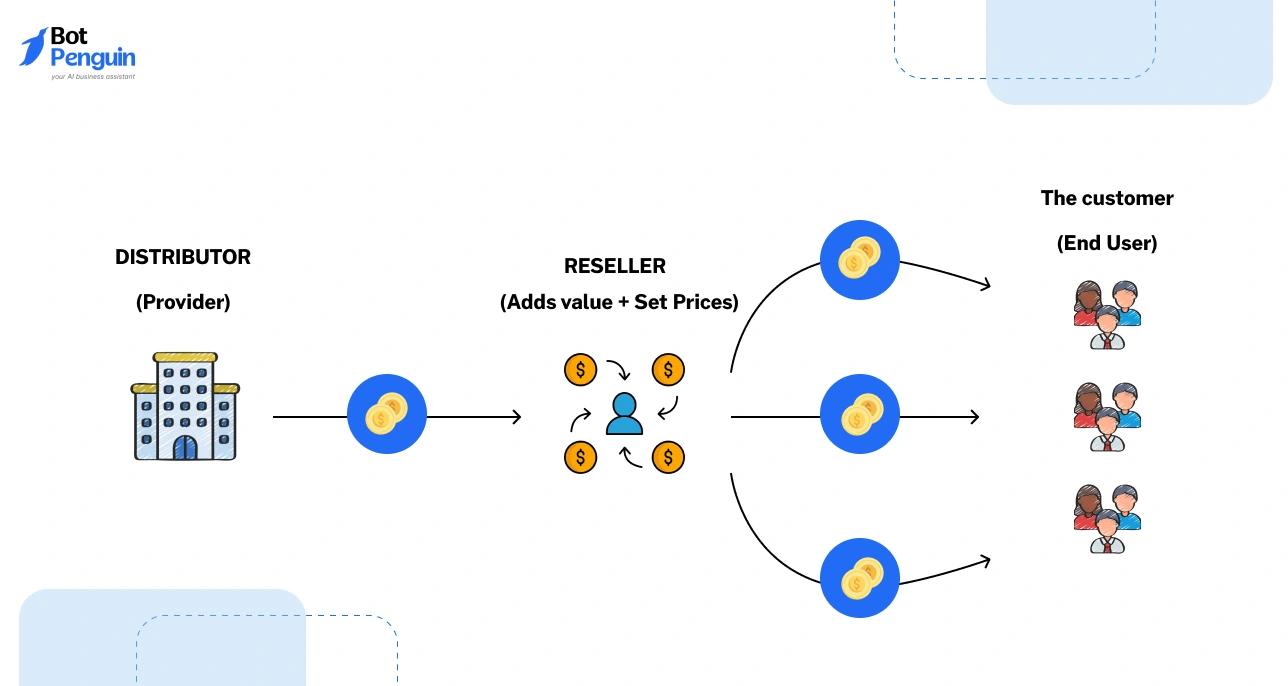
A software reseller is like a middleware layer between the software product and the market. He manages the entire distribution chain, from acquiring licenses to delivering them to the right businesses.
Here's how the reseller ensures software reaches the end user without friction:
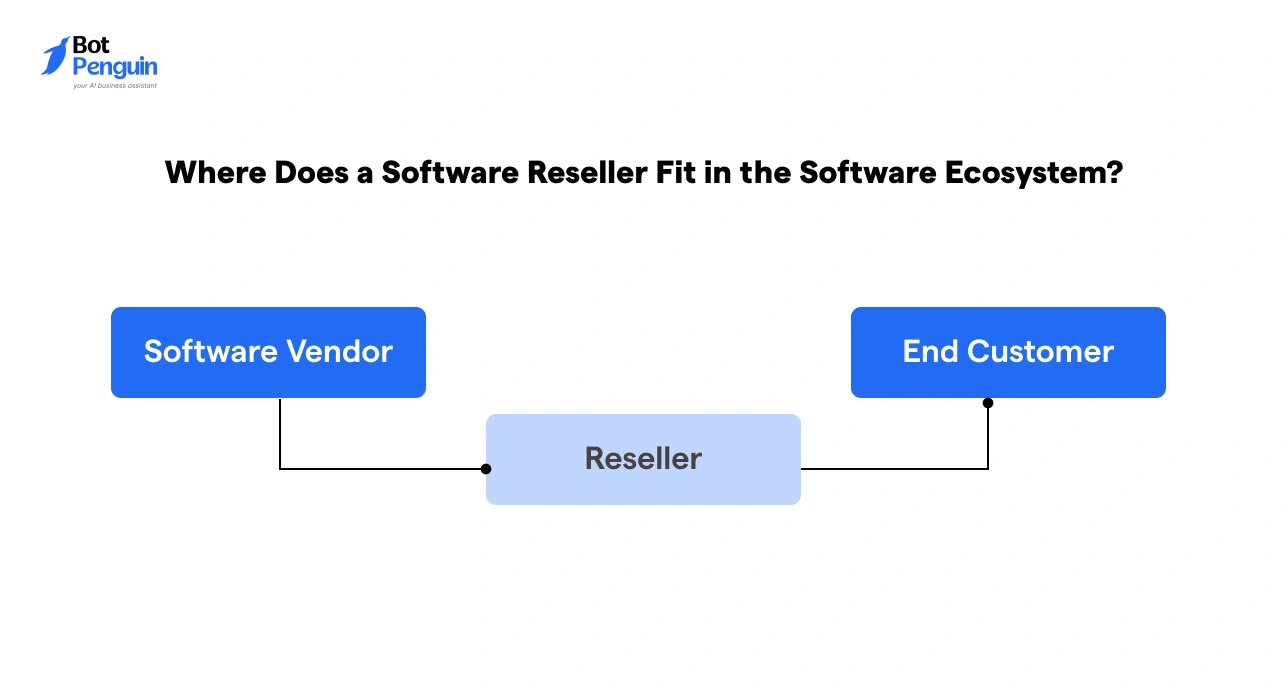
The diagram above shows exactly where a reseller sits: right between the vendor and the customer.
Looking to become a software reseller without starting from scratch? BotPenguin’s chatbot reseller program lets you sell AI chatbot solutions and earn a 30% commission on every successful sale.
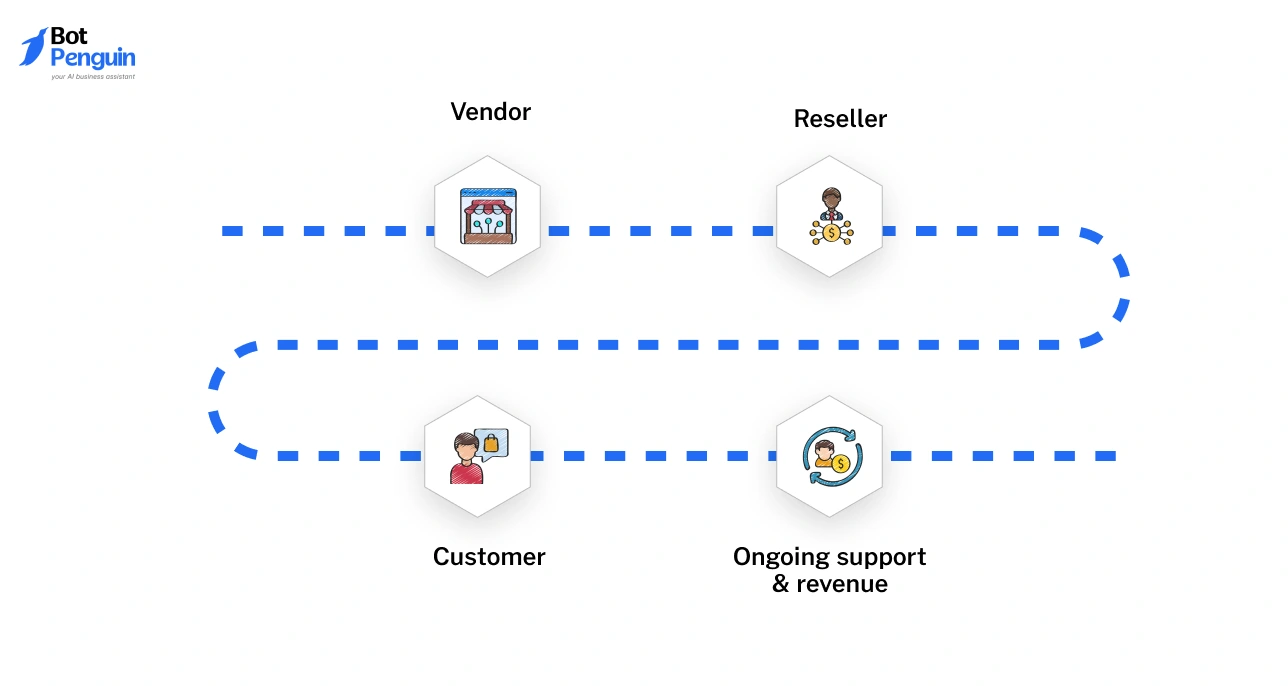
The software reseller model follows a simple flow. One party builds the product, another sells it, and the customer receives both the software and added support.
Flow: Vendor → Reseller → Customer → Ongoing support & revenue
This model works because it splits product creation and distribution, allowing each party to focus on what they do best.
As per Future Market Insights, the global software distribution market stands at $147.4 billion in 2026 and is projected to reach $536.2 billion by 2036, reflecting the growing prominence of software reselling.
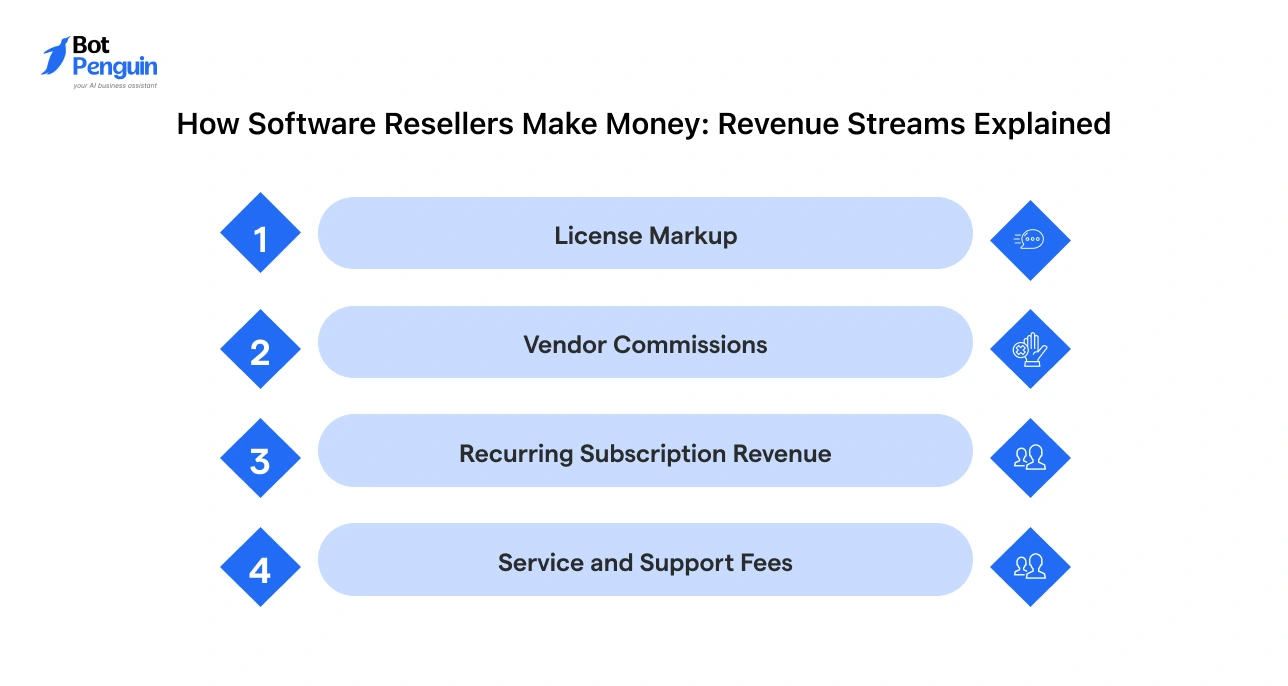
Software resellers don’t rely on a single income source. Most build revenue across multiple streams, making the model more stable and scalable over time.
We’ve explained these revenue streams for anyone looking to understand or enter the software reseller business:
Resellers buy software licenses at a discounted rate and sell them at a higher price. The difference becomes their profit margin.
A prominent example is Microsoft's CSP program, where resellers purchase licenses at partner pricing and set their own retail price, keeping the margin on every seat they sell.
Some vendors pay resellers a commission for every sale or referral. This is common in partner and affiliate-based reseller programs.
BotPenguin, for instance, offers a 30% reseller commission. Its separate white-label program lets partners set their own pricing and keep all the revenue they generate.
For software and SaaS products, resellers earn ongoing revenue from monthly or yearly subscriptions instead of relying solely on one-time sales.
As customers renew, many reseller programs continue paying commissions, making this model particularly well suited for consultants, agencies, and IT service providers who already manage long-term client relationships and want to build a steady stream of recurring income.
Resellers charge for setup, customization, training, and ongoing support. These services often bring higher margins than the software itself.
Think: A reseller buys a CRM license at $50/user, resells it at $80/user, charges a $500 onboarding fee, and collects a monthly support retainer - all from a single client.
In simple terms, software reselling combines product margins with recurring income and services to build a scalable revenue model.
After understanding how software resellers make money, it’s now time to look at the different reselling options available.
The table below helps narrow down which type fits your business model and how each approach generates revenue.
Thus, each type offers a different balance of control, effort, and profit potential, so the right choice depends on your goals and capabilities.
Want more control over branding, pricing, and client relationships? Explore BotPenguin’s white-label chatbot partner program.
Before we look at how a software reseller differs from a value-added reseller (VAR), we’ll first look at what the latter actually means.
A value-added reseller (VAR) doesn’t just sell software - they extend it. They combine the core product with services like setup, customization, and support to solve real business needs.
Meaning: Instead of just handing a business a CRM license and walking away, a VAR sets it up, maps it to the client's sales process, trains the team, and stays on for support.
The table below depicts how a standard software reseller and a value-added reseller differ across the key dimensions that matter most, including role, revenue, and customer relationship.
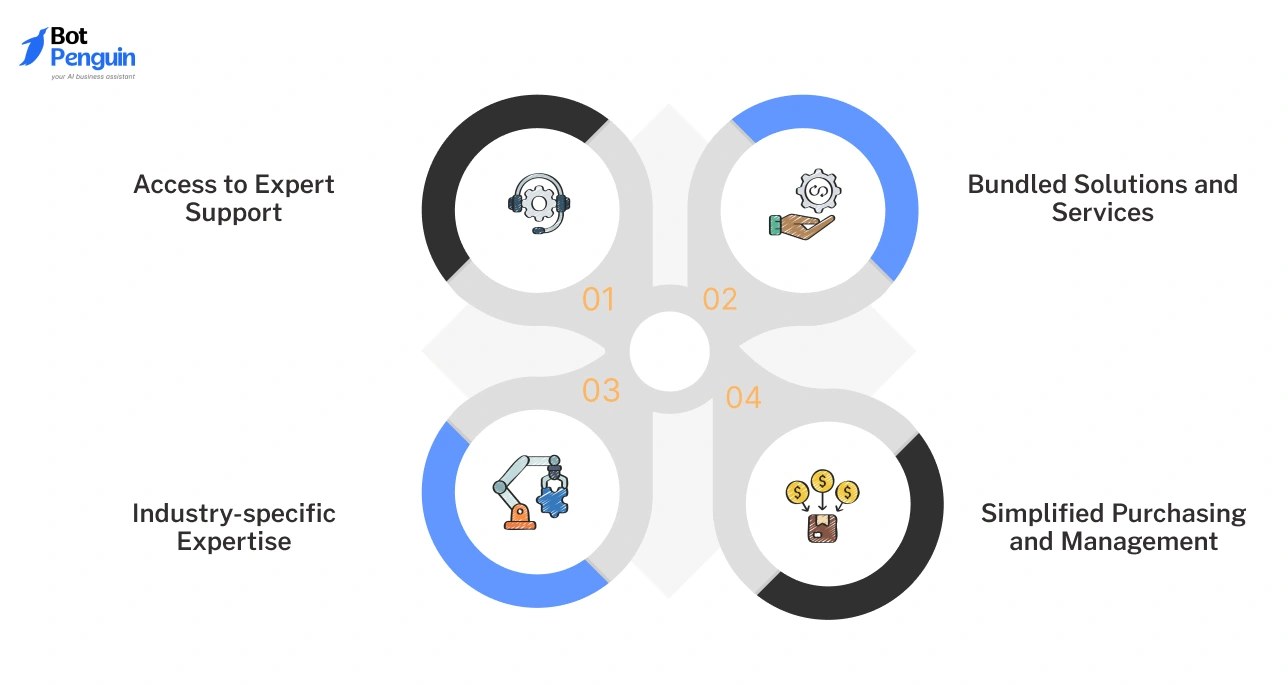
As we discuss the varied aspects of software reselling, it's befitting to ask: why do businesses choose to buy through resellers instead of going straight to the source?
In practice, businesses don’t just buy software. They look for guidance, speed, and reliability. That’s why many prefer working with software resellers instead of going directly to vendors.
Here’s how you should look at it:
In simple terms, resellers reduce effort and add clarity, making software easier to adopt and manage.
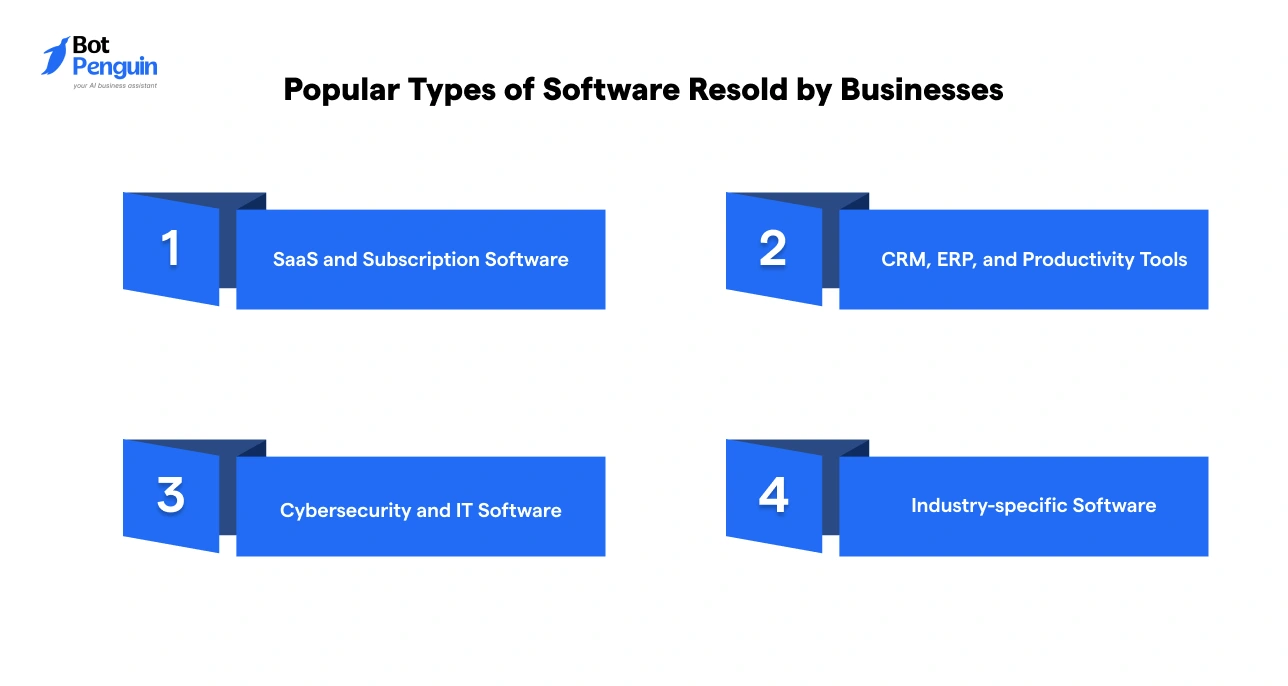
Software resellers work across multiple types of software, depending on demand, industry, and vendor partnerships.
This section breaks down the common reseller software categories resellers sell:
This is one of the most common categories for a SaaS reseller. Resellers sell cloud-based tools with monthly or yearly plans. Revenue usually comes from margins, commissions, or revenue share.
The SaaS reseller business model works well for recurring income. Renewals can keep revenue flowing after the first sale.
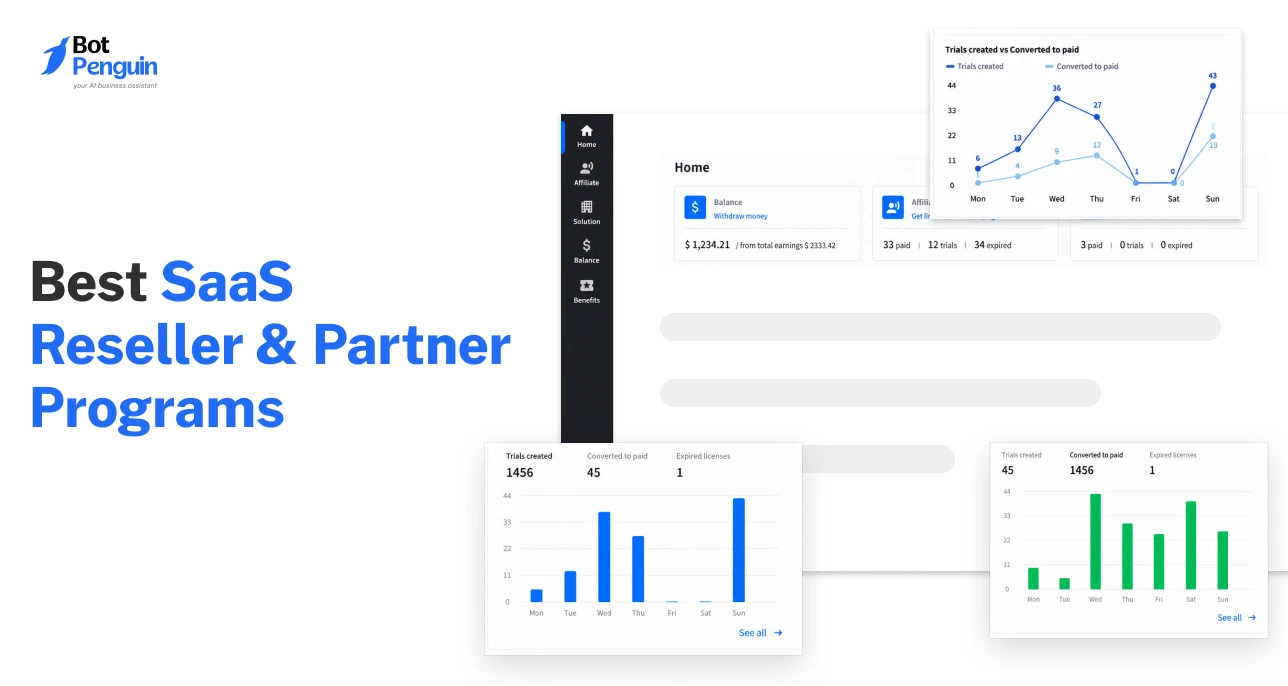
Tools like Slack and HubSpot are often sold through partner programs. Comparing the best SaaS reseller programs can help you review commissions, renewals, and vendor fit before choosing one.
Business software tools like CRM, ERP, and collaboration tools are widely resold. These are essential for daily operations, making them easier to sell and support.
Reselling CRM has become one of the most in-demand niches as businesses of every size now depend on customer management tools to track pipelines, automate follow-ups, and retain clients.
Resellers often partner with vendors offering security tools, backup systems, and IT management software. These products require guidance, creating more service opportunities.
Some resellers focus on niche solutions built for industries like healthcare, finance, or real estate. These tools solve specific problems, allowing resellers to position themselves as specialists.
In most cases, resellers choose software based on demand, ease of selling, and their ability to add value through support or services.
Software reselling isn’t limited to one type of business. If you already sell services, manage clients, or work in tech, adding software reselling is a natural next step.
Here’s who should consider this model:
The common thread across all four? An existing relationship with the end customer. Software reselling works best when trust is already there. You're simply adding more value to it.
Becoming a software reseller starts with a focused plan.
You need the right niche, vendor, offer, and client base. These steps keep the process simple:
Once the foundation is in place, consistent execution and customer value determine long-term success.
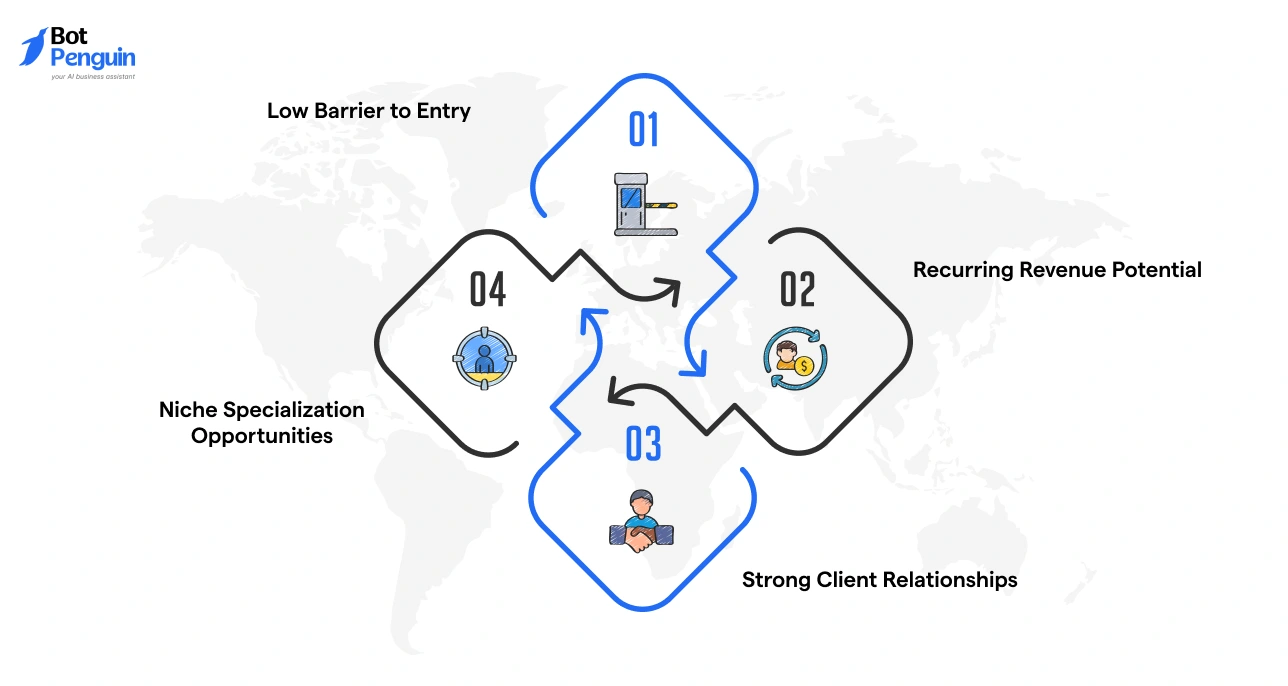
Software reselling is popular because it offers a simple way to start and scale without building a product. It fits well with service-based and client-focused businesses.
Here are the top advantages of choosing the software reselling business:
In simple terms, software reselling combines ease of entry with long-term growth and consistent revenue. It’s a model that rewards both distribution and long-term customer value.
If you're looking for a reseller program that checks all these boxes, BotPenguin offers a ready-to-sell white-label chatbot with recurring commissions and full partner support, so you can start building revenue without building a product.
Also, BotPenguin is GDPR, HIPAA, and CCPA compliant, ISO certified, SOC 2 attested, and VAPT-assessed by a CERT-In empanelled auditor, helping your business operate on secure, compliance-ready infrastructure.
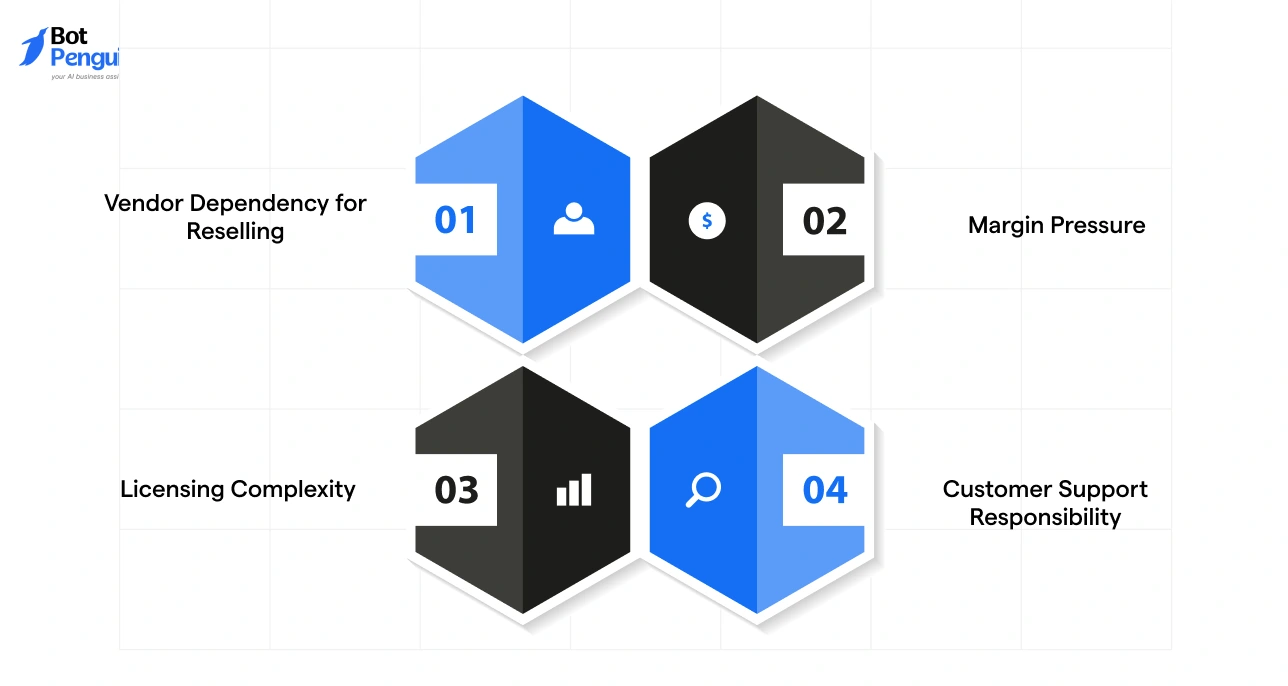
Software reselling is simple to start, but it comes with trade-offs. Understanding these challenges early helps you build a more stable and scalable business.
Resellers rely heavily on vendors for pricing, product updates, and policies. This limits control.
Solution: Work with multiple vendors and choose partners with transparent pricing and strong support.
Competition and vendor-set pricing can reduce profit margins over time.
Solution: Focus on value-added services like onboarding, customization, and support to increase overall revenue.
Different vendors have different licensing models, which can be confusing to manage.
Solution: Standardize your offerings and work with vendors that have clear, flexible licensing structures.
Customers often expect the reseller to handle issues, even if the problem is with the vendor.
Solution: Set clear expectations and build a support system that balances vendor escalation with your own service.
Irrespective of the business model, challenges exist at every stage of the software reseller journey. But with the right approach, they can be managed and even turned into advantages.
Theory only goes so far. Real-world examples make the model easier to understand and easier to apply to your own business.
*VAR Source: CDW Official
The pattern is clear: The more value a reseller adds, the deeper the client relationship and the higher the earning potential.
Whether this model is right for you or not boils down to a few key factors you should consider.
These include your strengths, your business model, and how you deliver value to customers.
This model works well if you already have access to customers and can influence their software decisions.
It's a strong fit for service-based businesses, consultants, and IT providers who can bundle software with what they already offer.
You may want to explore other models if you don’t have an existing audience or sales channel.
It can also be limiting if you want full control over pricing, product direction, or margins. In such cases, building your own product or choosing a white-label SaaS model might be a better fit.
In the end, the right choice depends on how you create and deliver value, not just what you sell.
Software reselling is one of the easiest ways to get into the software space without building anything from scratch. You focus on selling, helping, and growing relationships.
But just reselling isn’t enough. What really matters is how you add value: through support, services, or the niche you choose.
If you already work with clients, this can grow fast. If you don’t, it will take time to build trust and demand.
At the end of the day, people don’t buy software. They buy solutions. The more clearly you solve their problems, the more this model works.
A software reseller sells software products from vendors to customers without building them. They earn through margins, commissions, subscriptions, and added services.
Software resellers make money through license markups, vendor commissions, recurring subscriptions, and service fees like setup, customization, and ongoing support.
Yes, software reselling can be profitable with strong margins, recurring revenue, and added services. Profitability depends on niche focus, pricing, and customer retention.
Not always. Basic product knowledge is enough to start, but technical skills help when offering services like integration, customization, or ongoing customer support.
A reseller sells software products, while a value-added reseller adds services like customization, integration, and support to deliver complete business solutions.
Common categories include SaaS tools, CRM and ERP systems, cybersecurity software, productivity tools, and industry-specific solutions tailored to specific business needs.
Agencies, consultants, IT providers, and businesses with existing clients benefit most. They can easily add software reselling to their offerings and generate extra revenue.
Subscribe to Our Newsletter
Get the latest business insights straight into your inbox.
Checkout our related blogs you will love.
Updated at Oct 6, 2026
9 min to read
Updated at Sep 28, 2026
12 min to read
Updated at Sep 12, 2026
8 min to read
Updated at Aug 21, 2026
9 min to read
Table of Contents

